Texas General Warranty Deed - One Individual to Four Individuals with reserved Life Estate in Grantor
About this form
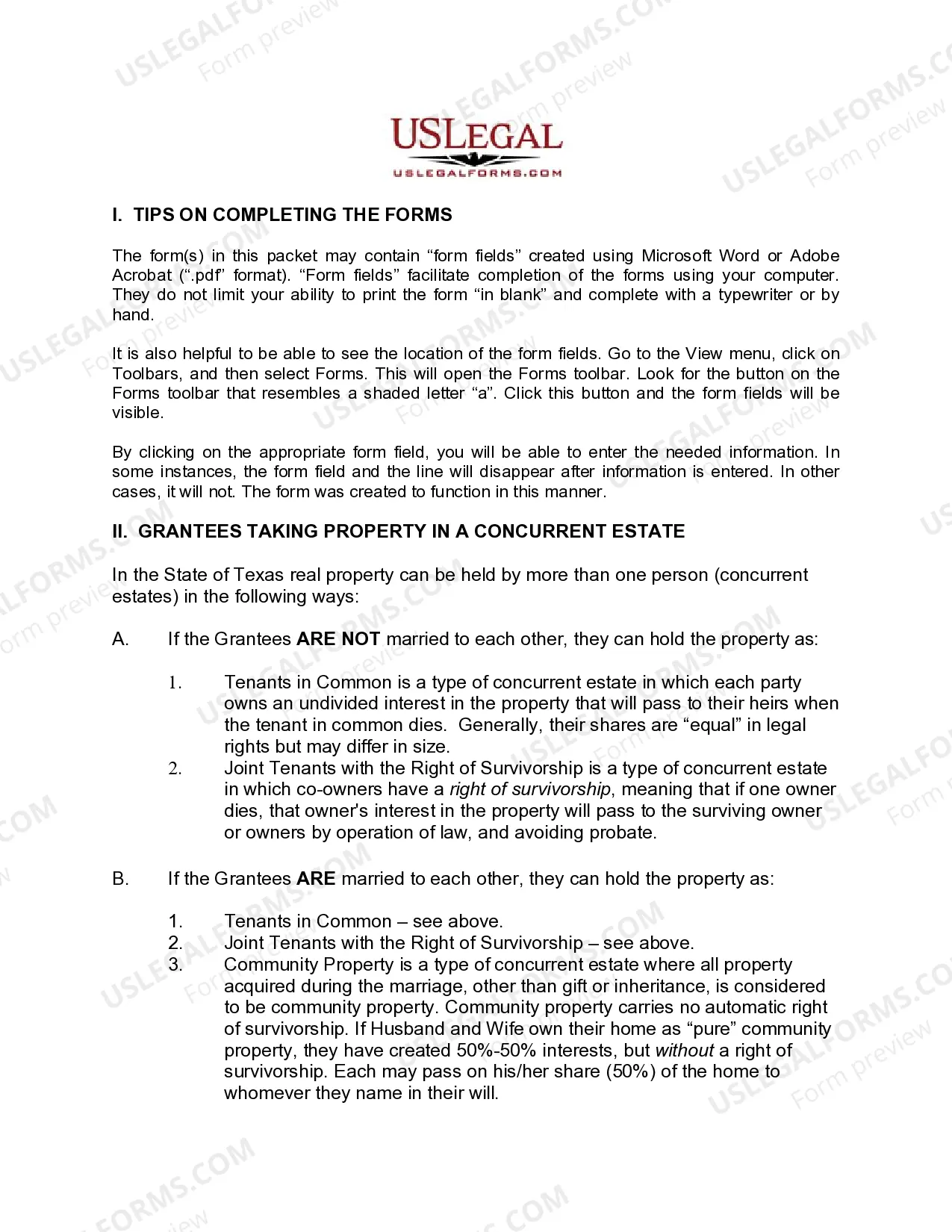
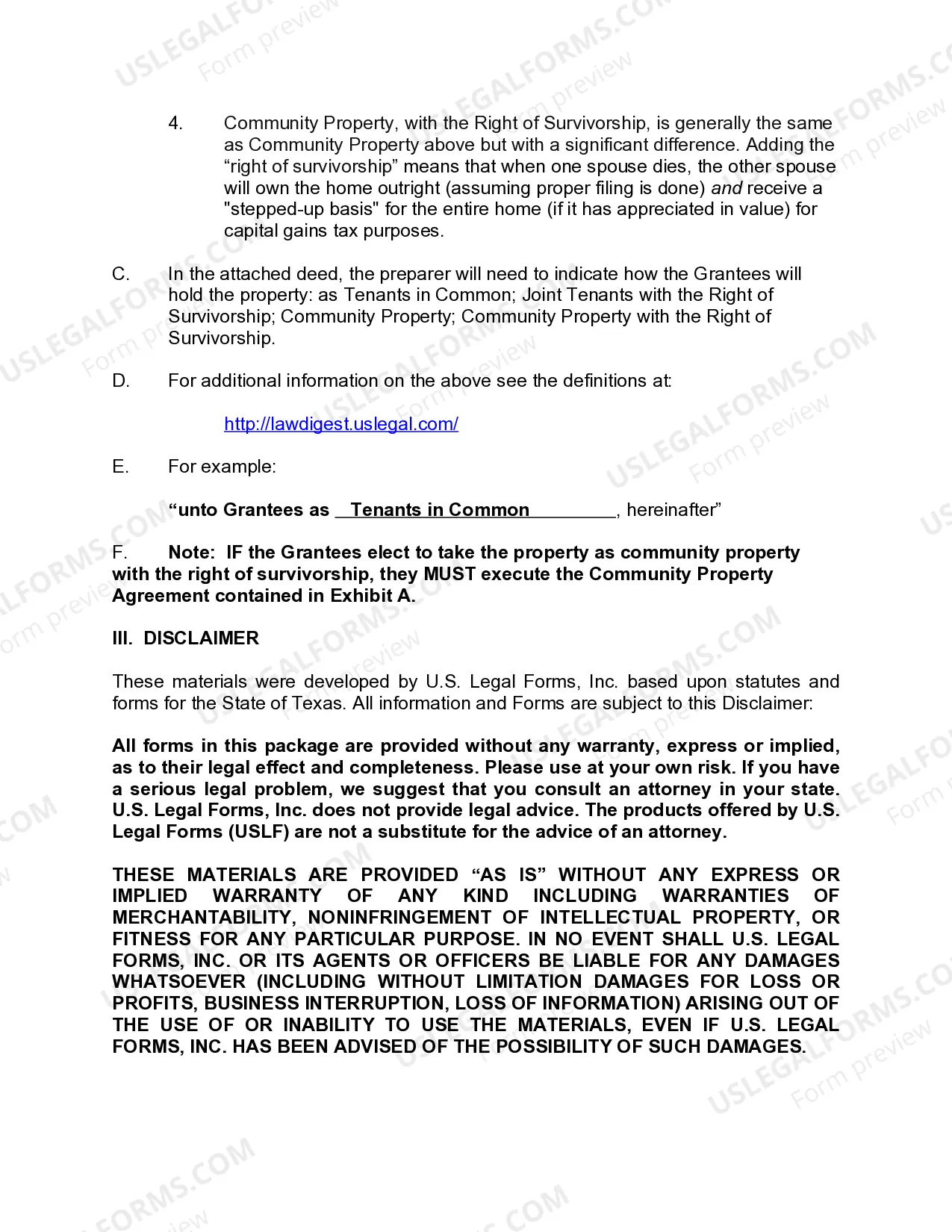
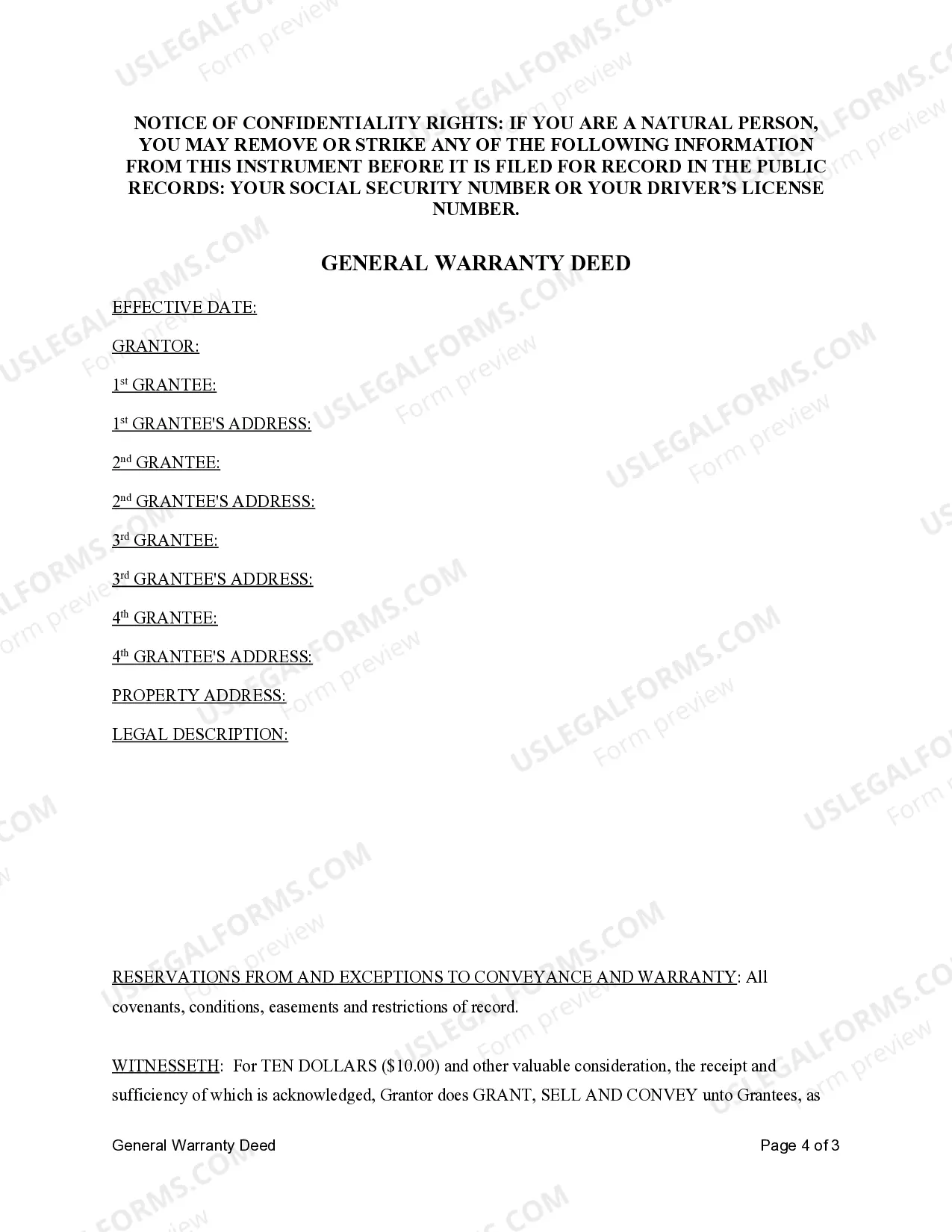
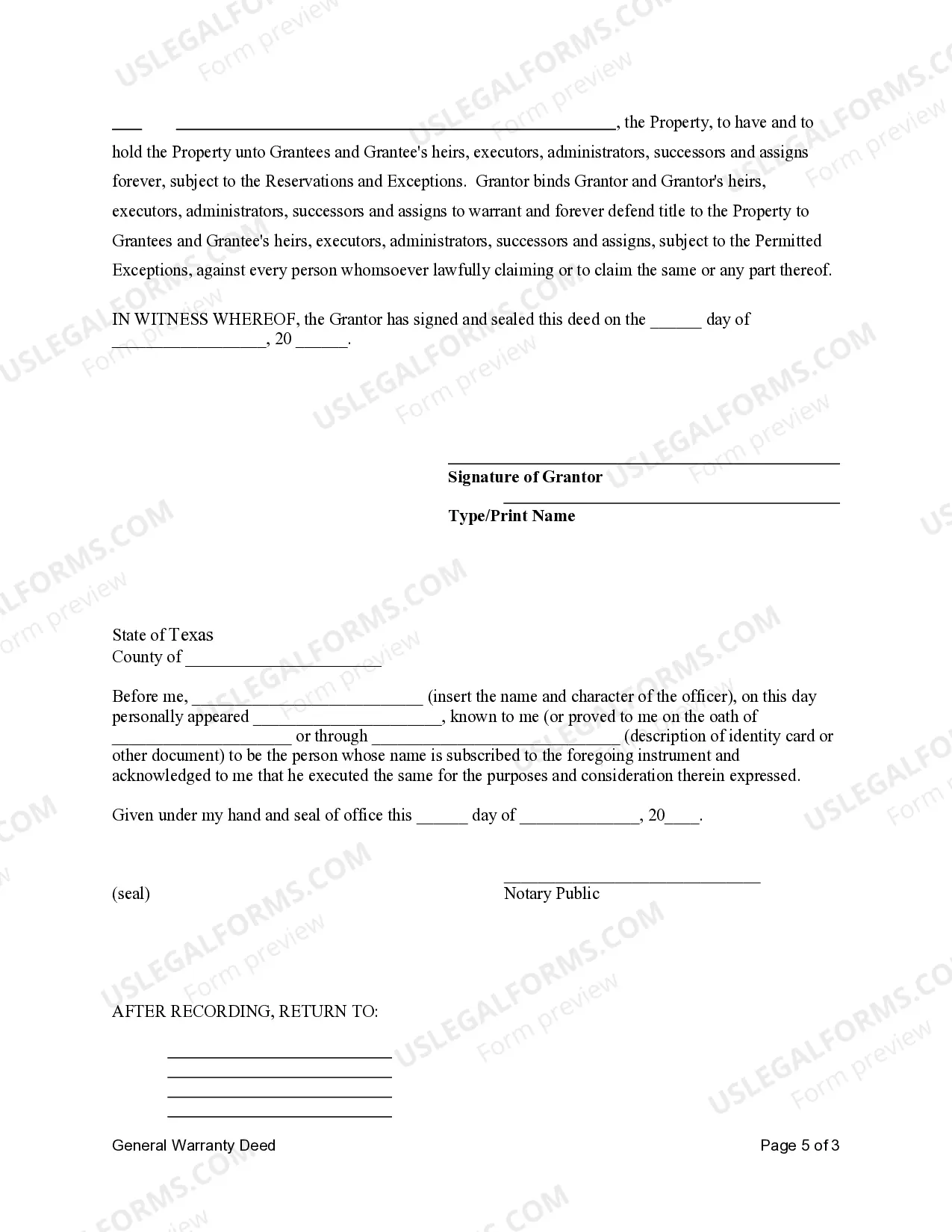
The General Warranty Deed is a legal document used to transfer property from one individual (the Grantor) to four individuals (the Grantees), while reserving a life estate for the Grantor. This form provides extensive protections to the Grantees, ensuring that the Grantor warrants clear title to the property. Unlike other deeds, this form is structured to allow joint tenancy or tenancy in common, giving flexibility to co-owners. It is compliant with state laws, making it a reliable choice for real estate transactions.
Key parts of this document
- Identification of the Grantor and Grantees
- Details of the property being conveyed
- Designation of property ownership as joint tenants or tenants in common
- Reservation of a life estate for the Grantor
- Signatures of the Grantor and a notary




Situations where this form applies
This form is appropriate when an individual wishes to transfer property ownership to four others while reserving the right to use the property during their lifetime. It is commonly used among family members or close friends who intend to co-own real estate together, ensuring that rights are protected through survivorship or inheritance clauses.
Intended users of this form
- Individuals transferring property to multiple co-owners
- Anyone wanting to establish rights of survivorship among Grantees
- Homeowners who wish to retain use of their property during their lifetime
- Family members planning to manage property together after a Grantor's passing
Completing this form step by step
- Identify the Grantor and Grantee(s) by entering their full names and addresses.
- Describe the property being conveyed, including its legal description.
- Specify how the Grantees will hold the property (as joint tenants or tenants in common).
- Include any additional terms or reservations, such as the life estate.
- Ensure the Grantor signs the form in the presence of a notary public.
Notarization guidance
Yes, this form must be notarized to be legally valid. U.S. Legal Forms offers online notarization services that are available 24/7 through secure video calls, providing a convenient solution to those needing notarized documents without the need for in-person visits.
Get your form ready online
Our built-in tools help you complete, sign, share, and store your documents in one place.
Make edits, fill in missing information, and update formatting in US Legal Forms—just like you would in MS Word.
Download a copy, print it, send it by email, or mail it via USPS—whatever works best for your next step.
Sign and collect signatures with our SignNow integration. Send to multiple recipients, set reminders, and more. Go Premium to unlock E-Sign.
If this form requires notarization, complete it online through a secure video call—no need to meet a notary in person or wait for an appointment.
We protect your documents and personal data by following strict security and privacy standards.

Make edits, fill in missing information, and update formatting in US Legal Forms—just like you would in MS Word.

Download a copy, print it, send it by email, or mail it via USPS—whatever works best for your next step.

Sign and collect signatures with our SignNow integration. Send to multiple recipients, set reminders, and more. Go Premium to unlock E-Sign.

If this form requires notarization, complete it online through a secure video call—no need to meet a notary in person or wait for an appointment.

We protect your documents and personal data by following strict security and privacy standards.
Common mistakes
- Failing to accurately describe the property being conveyed.
- Not specifying the ownership type for the Grantees.
- Overlooking the need for notarization before submitting the deed.
- Neglecting to reserve the life estate clearly within the document.
Why complete this form online
- Convenient access to forms that can be completed at your own pace.
- Editable fields allow quick updates and corrections to information.
- Legally reviewed templates ensure compliance with state laws.
- Immediate downloading of forms saves time and effort compared to traditional methods.
What to keep in mind
- The General Warranty Deed is ideal for transferring property while retaining a life estate.
- Clear designation of ownership type among Grantees is crucial for effective management.
- Ensure notarization to uphold the legality of the deed upon transfer.
Looking for another form?



Form popularity
FAQ
Now, people can convey clear title to their property by completing a transfer on death deed form, signing it in front of a notary, and filing it in the deed records office in the county where the property is located before they die at a cost of less than fifty dollars.
In order to make the Warranty Deed legally binding, the Seller needs to sign it front of a notary public. Then signed and notarized deed must be filed at the city or county office for recording property documents. Before filing with this office all previously billed property taxes must be paid in full.
The deed and any related agreements should be filed in the land records of the county where the property is located. The county clerk will require a recording fee. Recording fees can vary, but usually range from $11.00 to $30.00 for the first page and $4.00 for each additional page.
You should complete a 'Deceased joint proprietor' form on the government's website and then send the form to the Land Registry, with an official copy of the death certificate. The other joint owner then becomes the sole owner of the property.
Texas state law allows real property owners to record a Transfer on Death Deed naming a beneficiary to own that real property after they die. With a properly recorded Transfer on Death Deed, you do not need to go through probate court to transfer real property.
In Texas, you can't add your spouse's name to an existing deed, but you can create a new deed by transferring the property from yourself to you and your spouse jointly. You can do this by using either a deed without warranty or a quit claim deed.
Write the county where the property is located on line provided next to the words "County of" beneath the words "The State of Texas." Write the name and address of the grantor on the lines provided after the words "Know all men by these presents, That I."
1The name and address of the seller (called the grantor)2The name and address of the buyer (called the grantee)3A legal description of the property (found on the previous deed)4A statement that the grantor is transferring the property to the grantee.How to Use a General Warranty Deed .com\nwww..com > articles > how-to-use-a-general-warranty-deed