North Carolina Security Contract for Contractor
What this document covers
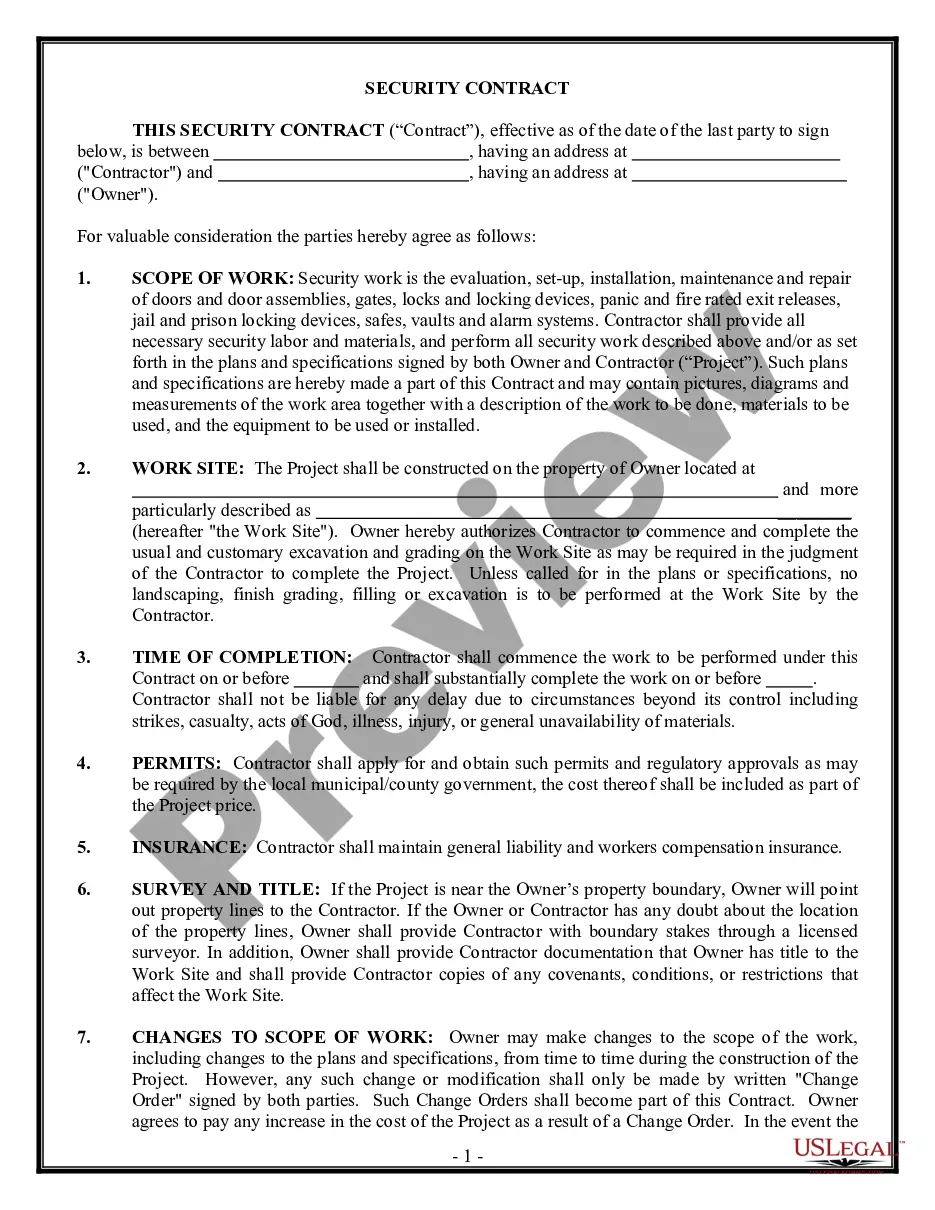
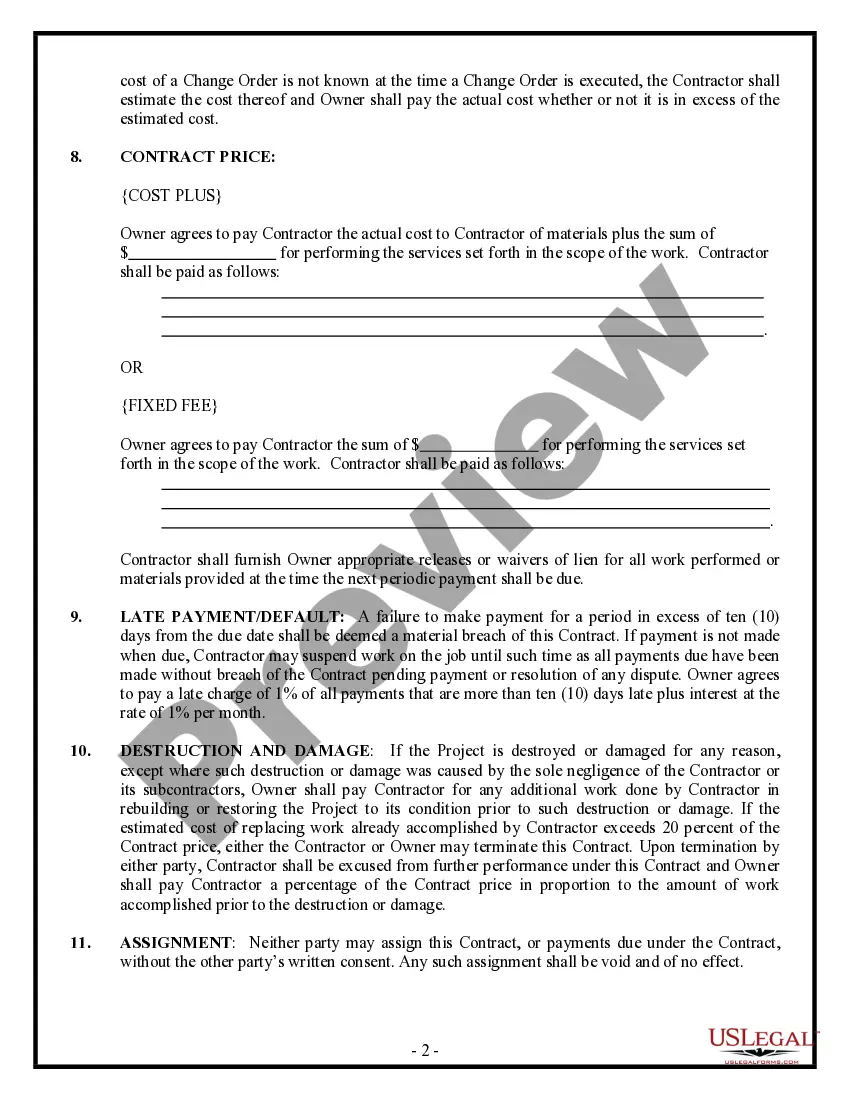
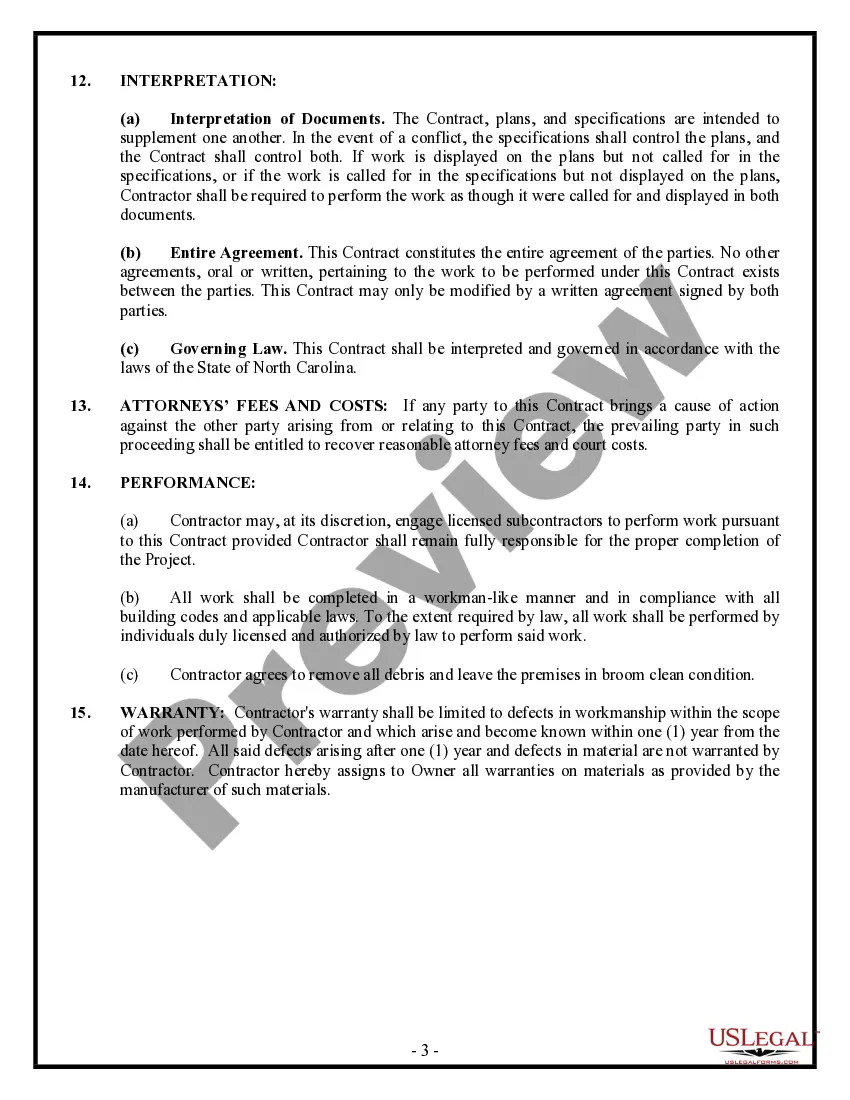
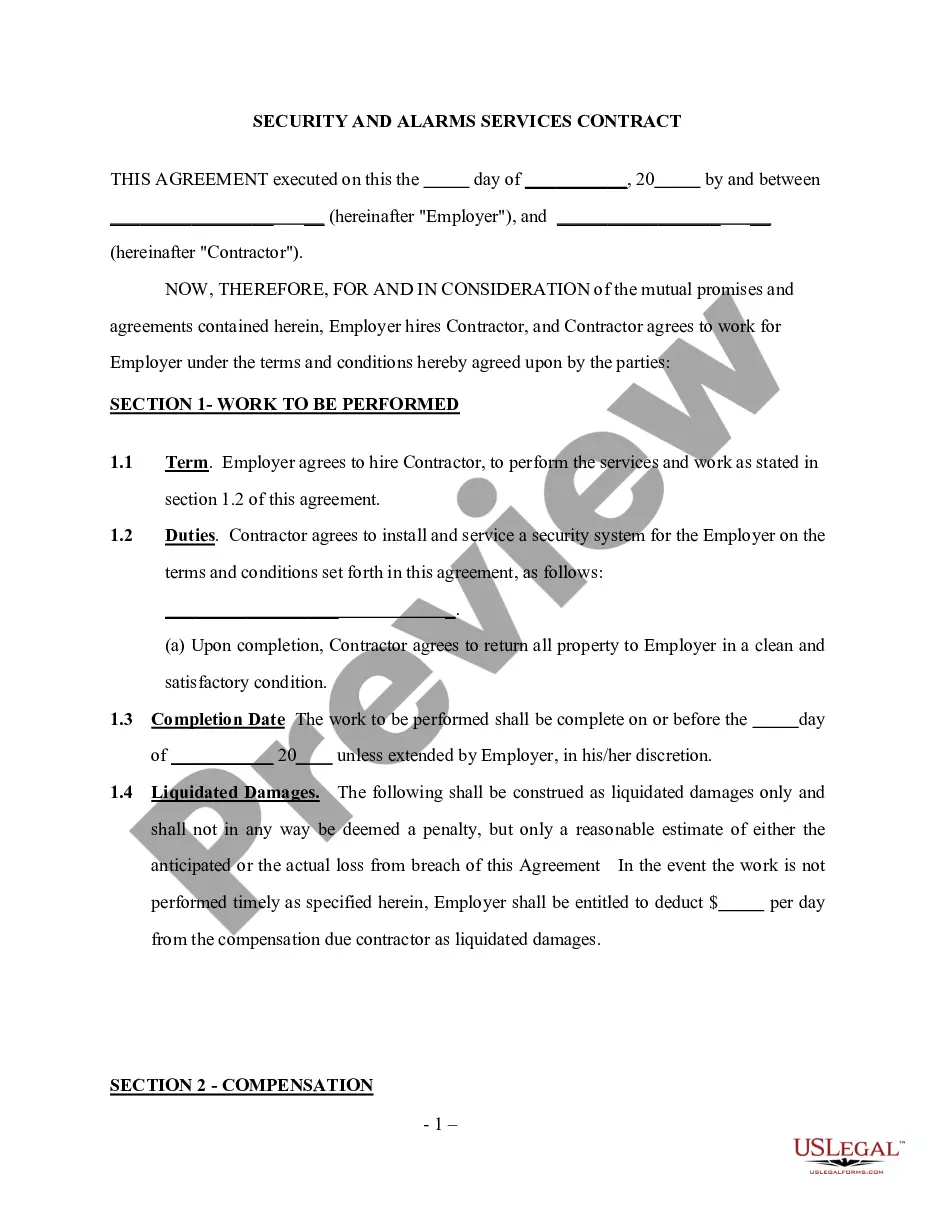
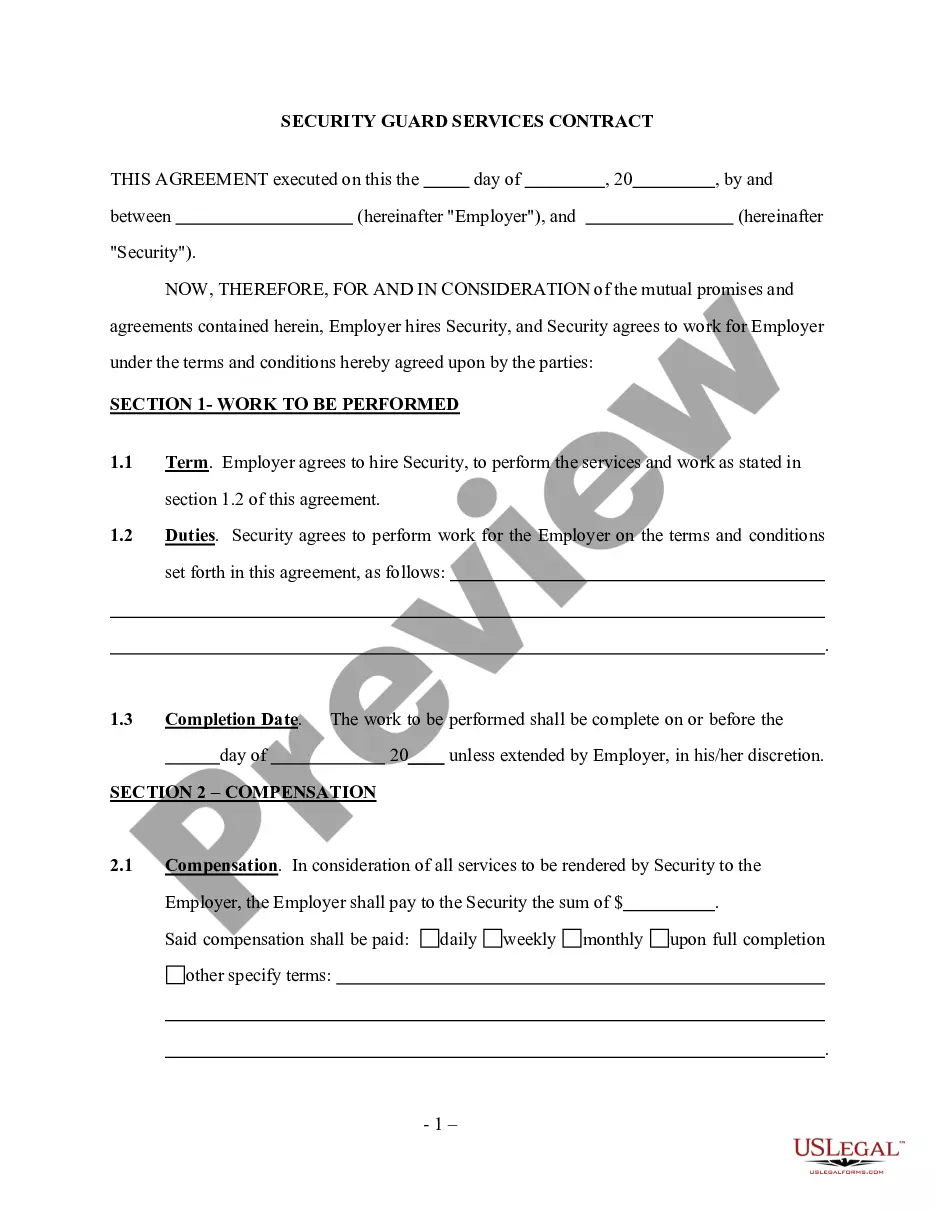
The Security Contract for Contractor is a legally binding agreement between security contractors and property owners, outlining the terms of service, payment arrangements, and responsibilities of both parties. This contract is tailored to meet the legal requirements of the State of North Carolina, ensuring compliance with local laws. Unlike basic agreements, this contract covers critical aspects such as change orders, insurance obligations, and title verification, making it essential for professional security engagements.
Form components explained
- Permits: Requirement for the contractor to secure necessary permits.
- Insurance: Obligation for the contractor to maintain liability and workers' compensation insurance.
- Change Orders: Procedure for modifying the scope of work or contract terms.
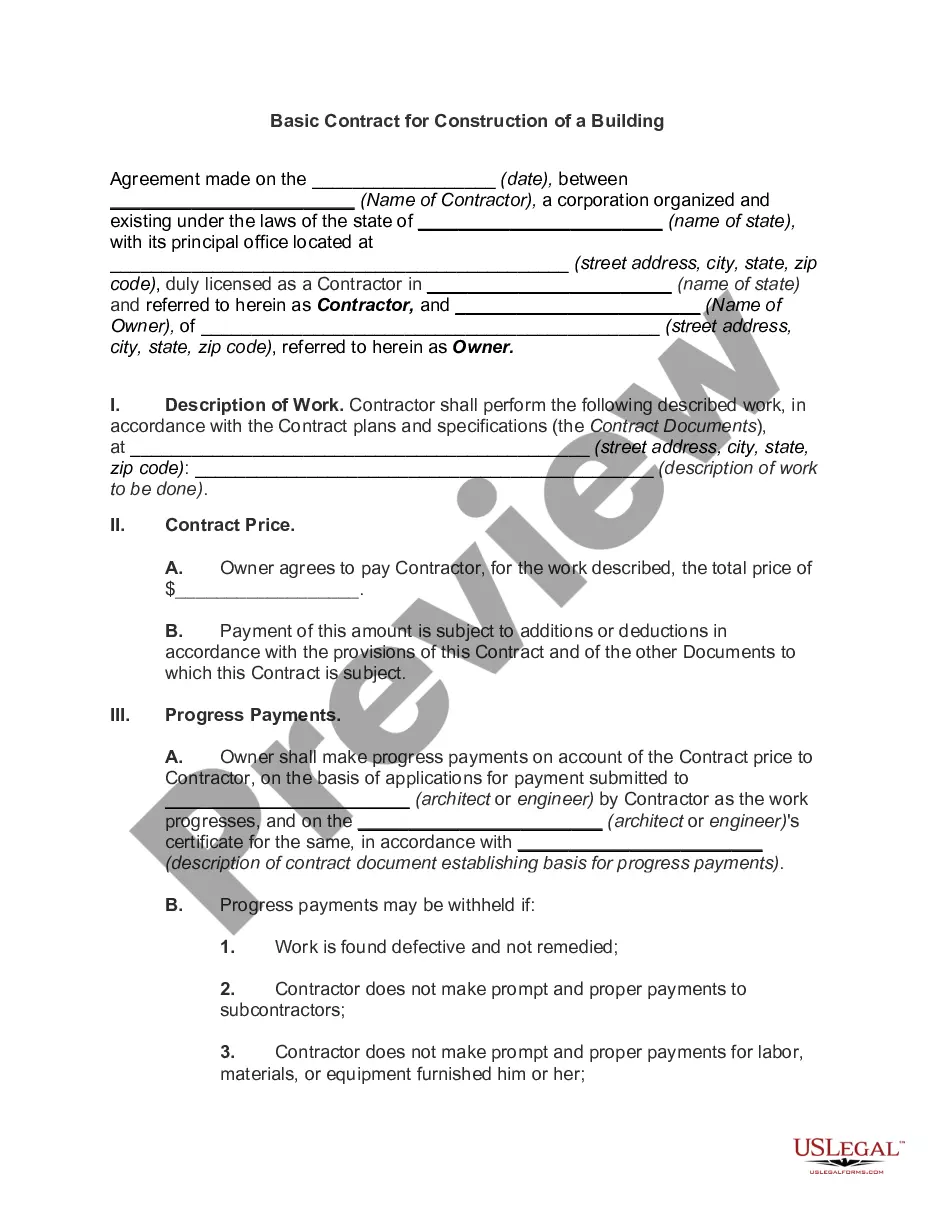
- Contract Price: Details on payment agreements and adjustment clauses.
- Destruction and Damage: Provisions for handling unexpected project damage.
- Assignment: Restrictions on transferring contract obligations.
When to use this form
This form should be used when hiring a security contractor for a property, particularly when the project may require changes in scope or when permits and insurance are needed. It is ideal for situations where clear documentation of responsibilities and payment arrangements is necessary to protect both the contractor and property owner.
Who this form is for
This form is suitable for:
- Property owners seeking to hire a security contractor.
- Security contractors looking for a comprehensive agreement to outline their services.
- Parties in North Carolina needing to comply with state-specific legal requirements.
How to prepare this document
- Identify the parties involved: Ensure both contractor and property owner are clearly named.
- Specify the project details: Outline the scope of work and any specific requirements.
- Include payment terms: Decide whether the payment will be a fixed fee or cost plus and specify amounts.
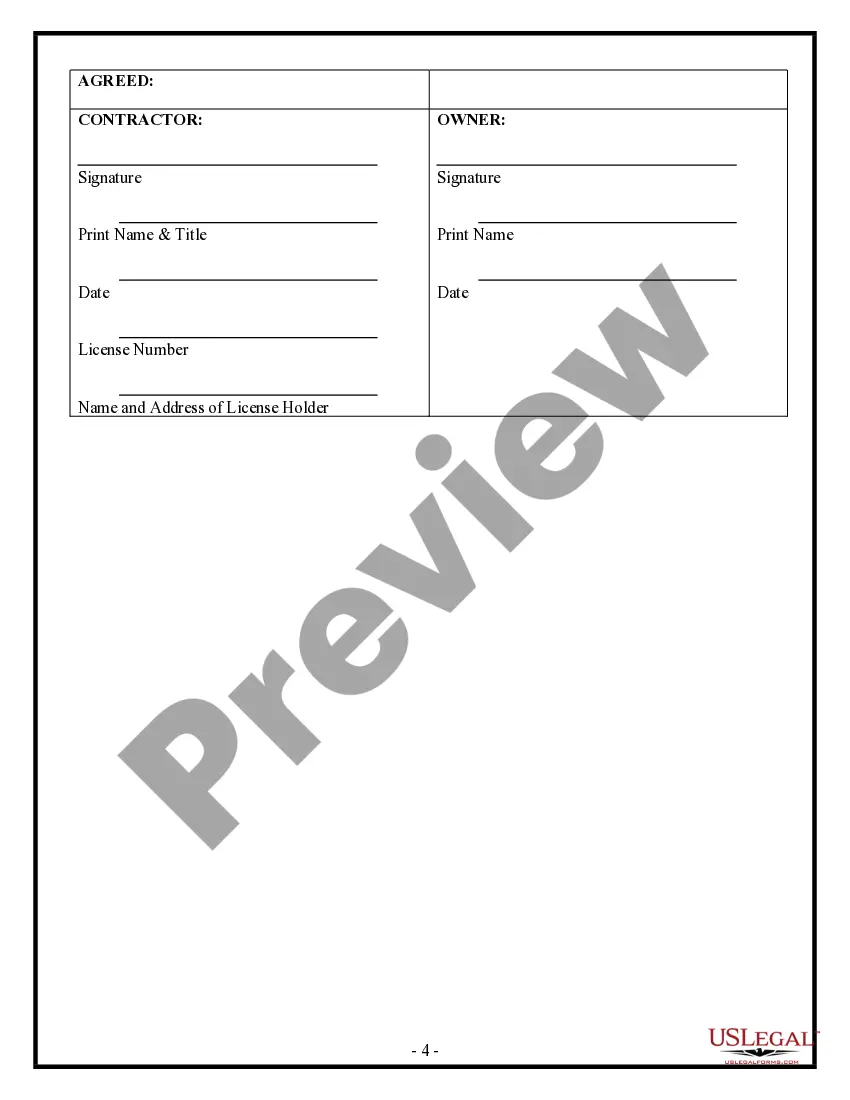
- Review and sign: Both parties must sign to make the contract valid.
- Attach necessary documentation: Include proof of insurance and any required permits.
Is notarization required?
Notarization is not commonly needed for this form. However, certain documents or local rules may make it necessary. Our notarization service, powered by Notarize, allows you to finalize it securely online anytime, day or night.
Get your form ready online
Our built-in tools help you complete, sign, share, and store your documents in one place.
Make edits, fill in missing information, and update formatting in US Legal Forms—just like you would in MS Word.
Download a copy, print it, send it by email, or mail it via USPS—whatever works best for your next step.
Sign and collect signatures with our SignNow integration. Send to multiple recipients, set reminders, and more. Go Premium to unlock E-Sign.
If this form requires notarization, complete it online through a secure video call—no need to meet a notary in person or wait for an appointment.
We protect your documents and personal data by following strict security and privacy standards.

Make edits, fill in missing information, and update formatting in US Legal Forms—just like you would in MS Word.

Download a copy, print it, send it by email, or mail it via USPS—whatever works best for your next step.

Sign and collect signatures with our SignNow integration. Send to multiple recipients, set reminders, and more. Go Premium to unlock E-Sign.

If this form requires notarization, complete it online through a secure video call—no need to meet a notary in person or wait for an appointment.

We protect your documents and personal data by following strict security and privacy standards.
Typical mistakes to avoid
- Failing to specify the payment structure clearly.
- Not including provisions for change orders.
- Omitting necessary permits and insurance clauses.
- Neglecting to define the scope of work adequately.
Benefits of using this form online
- Convenience: Download and fill out the form from anywhere.
- Editability: Easily customize the agreement to fit specific project needs.
- Reliability: Forms drafted by licensed attorneys ensure legal compliance.
Legal use & context
- The contract serves as a binding agreement that can be enforced in court.
- It provides a clear outline of responsibilities, minimizing disputes.
- Failure to comply with the terms may lead to legal consequences for either party.
Main things to remember
- The Security Contract for Contractor is essential for establishing clear terms in security engagements.
- It is specifically tailored to meet North Carolina's legal requirements.
- Proper completion and understanding of the form can prevent future disputes.
Looking for another form?



Form popularity
FAQ
The short answer is yes. North Carolina law allows a person or company who improves real estate to file a lien against the owner of the property if the owner will not or cannot pay for the work.If you do not owe the contractor, and prove it in court, the lien is dissolved.
North Carolina has a three-year statute of limitations period on actions for breach of contract and negligence. This means that claims based on a contract with the builder must be brought within this period, or they are barred.
The employment rates for self-employment grow at an average rate, and due to the rarity of a security guard being self-employed (about one percent of security guards are unemployed), smaller businesses that may not want to go through an agency will be more receptive to hiring a self-employed guard.
You shouldn't pay more than 10 percent of the estimated contract price upfront, according to the Contractors State License Board.
An attorney or accountant who has his or her own office, advertises in the yellow pages of the phone book under Attorneys or Accountants, bills clients by the hour, is engaged by the job or paid an annual retainer, and can hire a substitute to do the work is an example of an independent contractor.
The general rule is that an individual is an independent contractor if the payer has the right to control or direct only the result of the work and not what will be done and how it will be done. The earnings of a person who is working as an independent contractor are subject to Self-Employment Tax.
Pay basis: If you pay a worker on an hourly, weekly, or monthly basis, the IRS will consider it a sign the worker is your employee. An independent is generally paid by the job, project, assignment, etc., or receives a commission or similar fee.
A security guard may not act as an independent contractor to provide security services. A security guard must be employed as an employee of either a PPO, or the person, or business for whom the guard is providing security services.A bodyguard is a security guard.
The maximum allowed is $10,000. Also, contractors that have provided materials and labor to property may have lien rights against the real property.