Minnesota Lease Subordination Agreement
Understanding this form
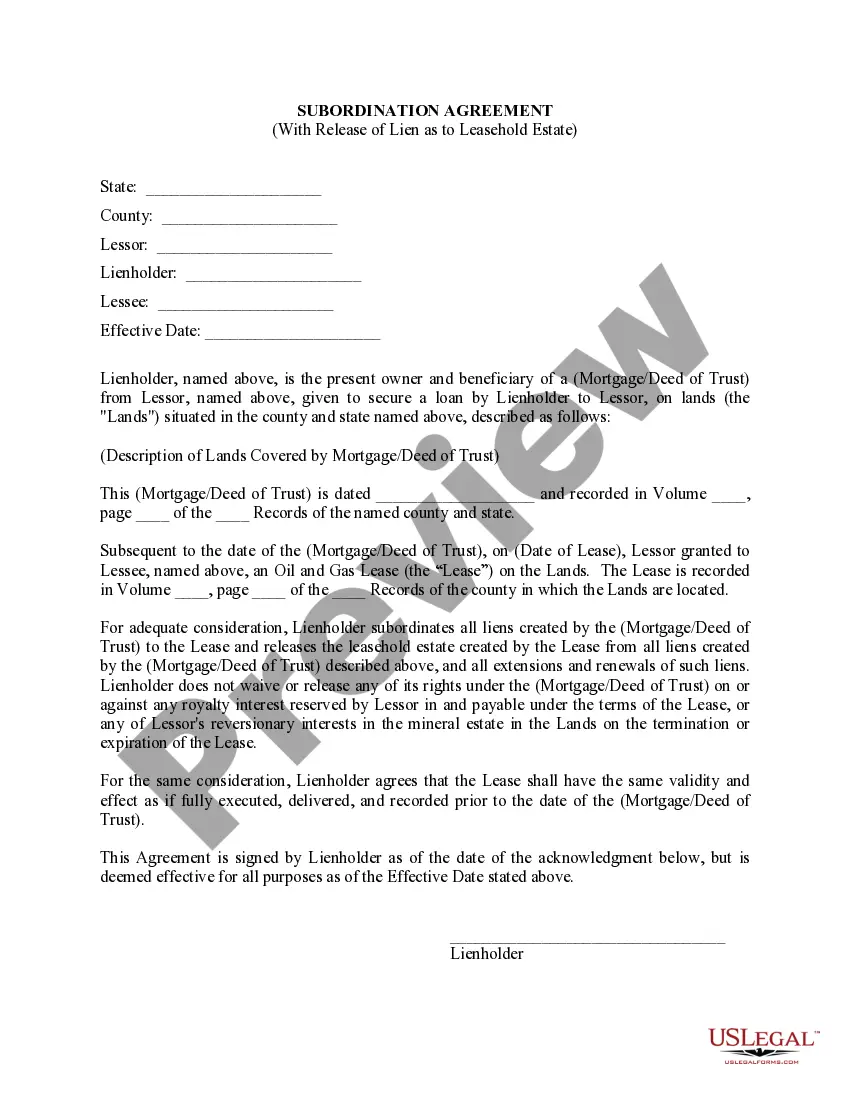
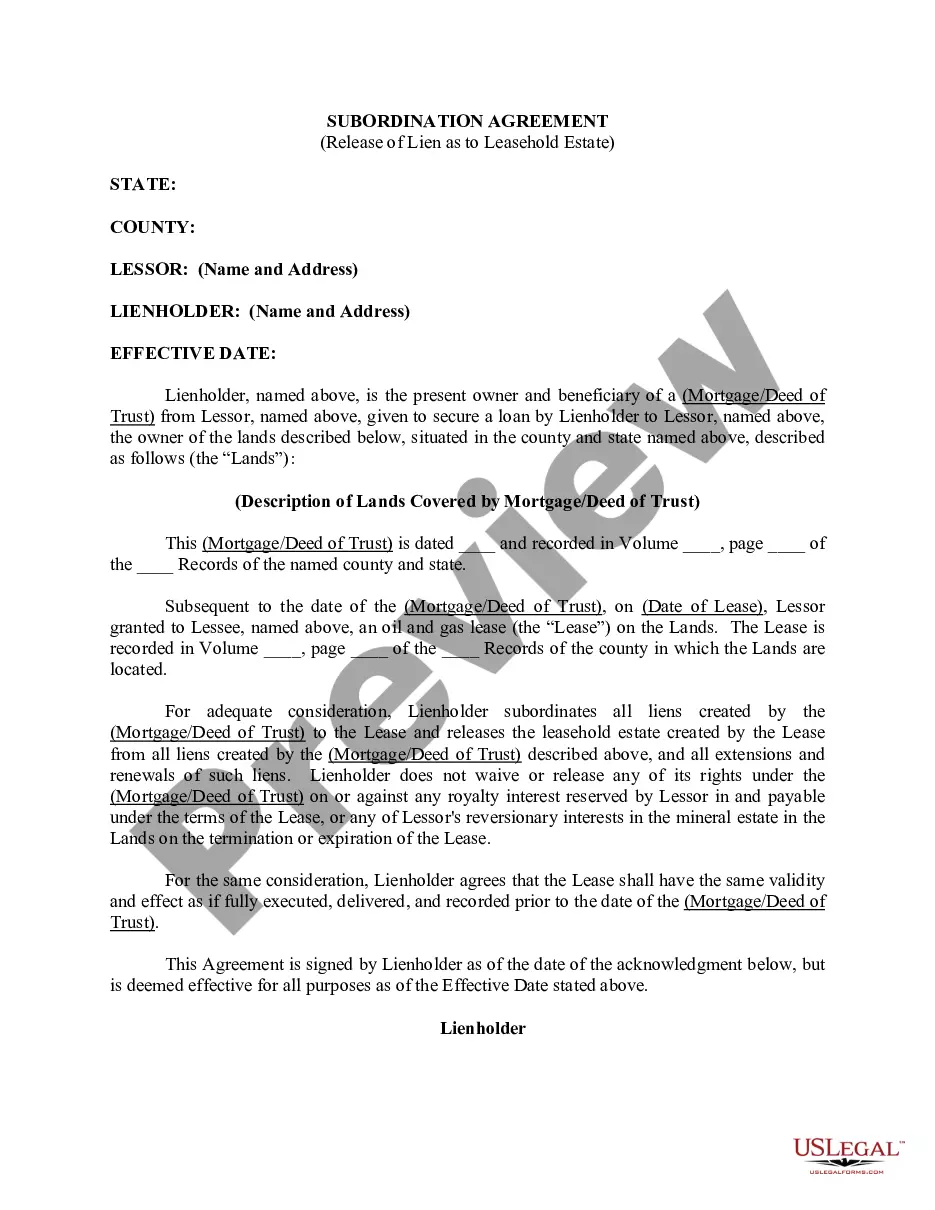
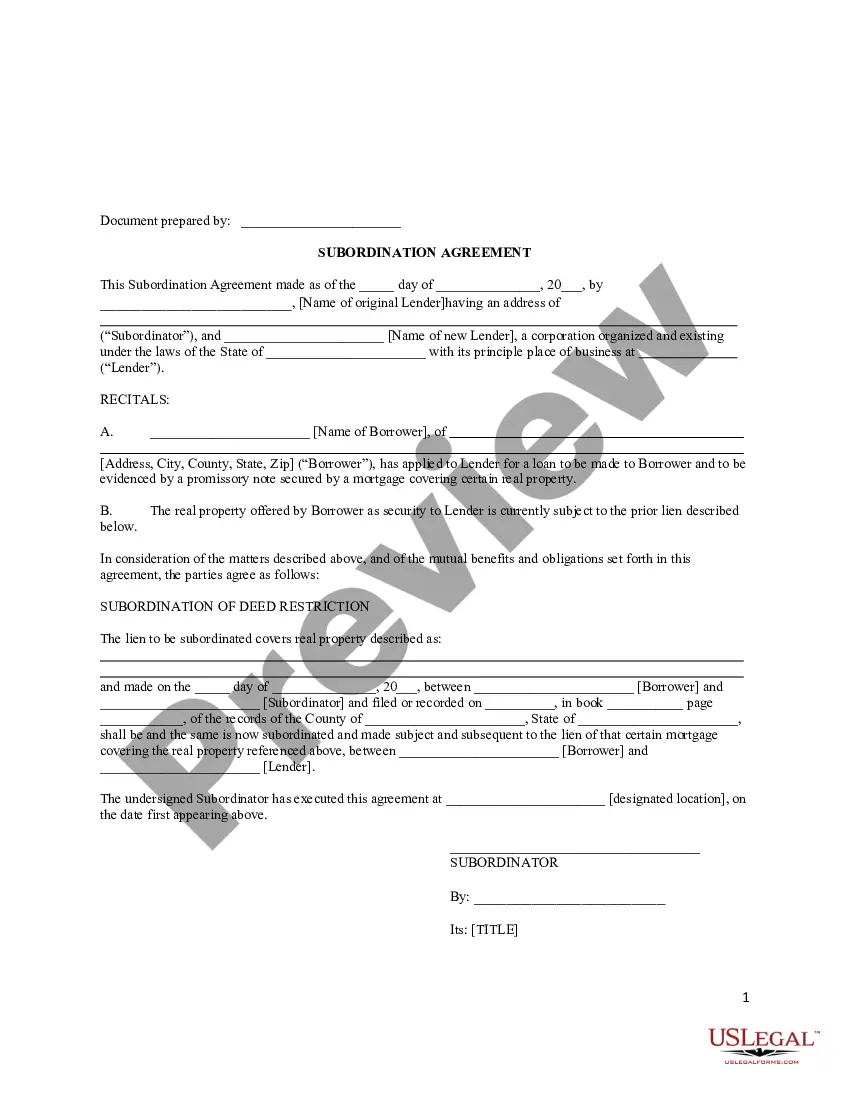
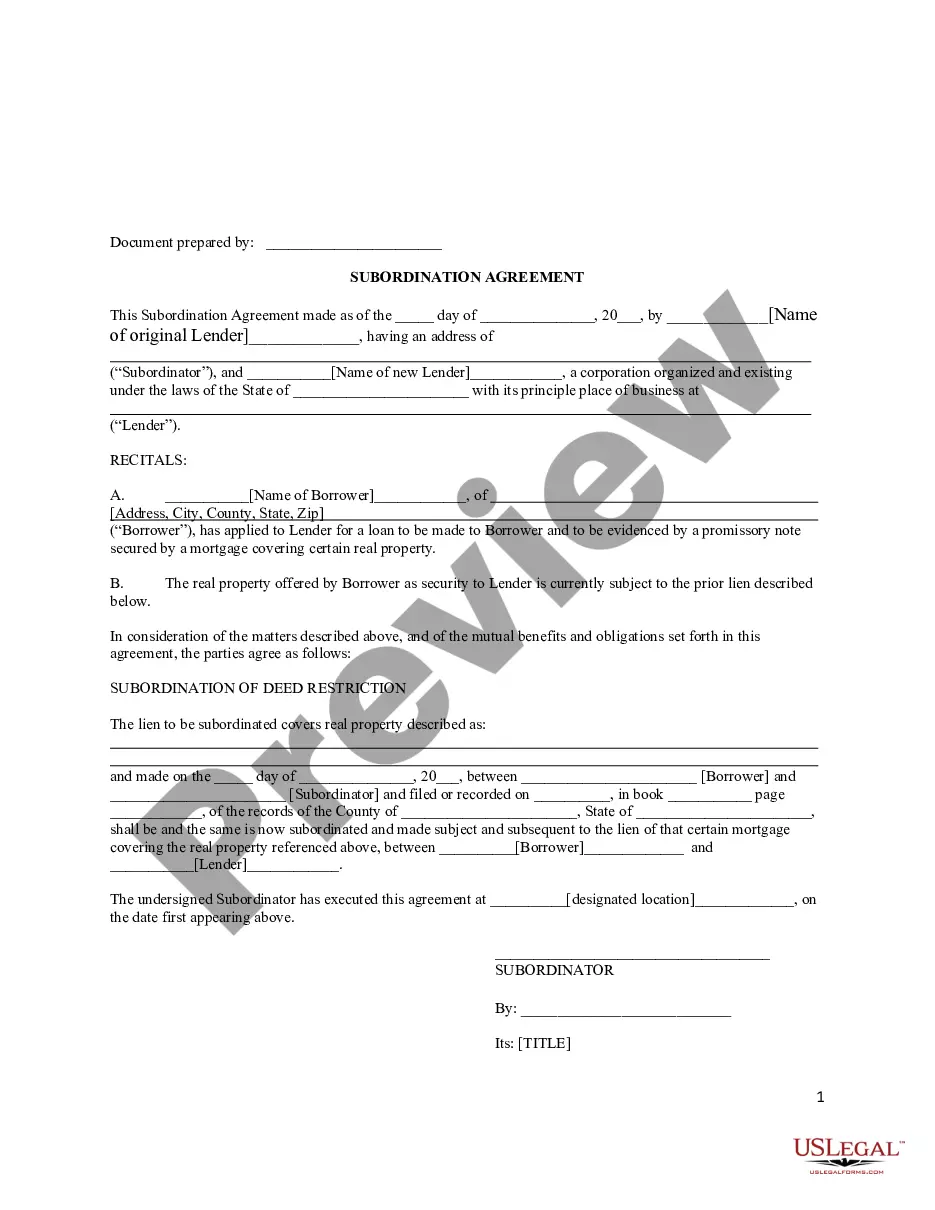
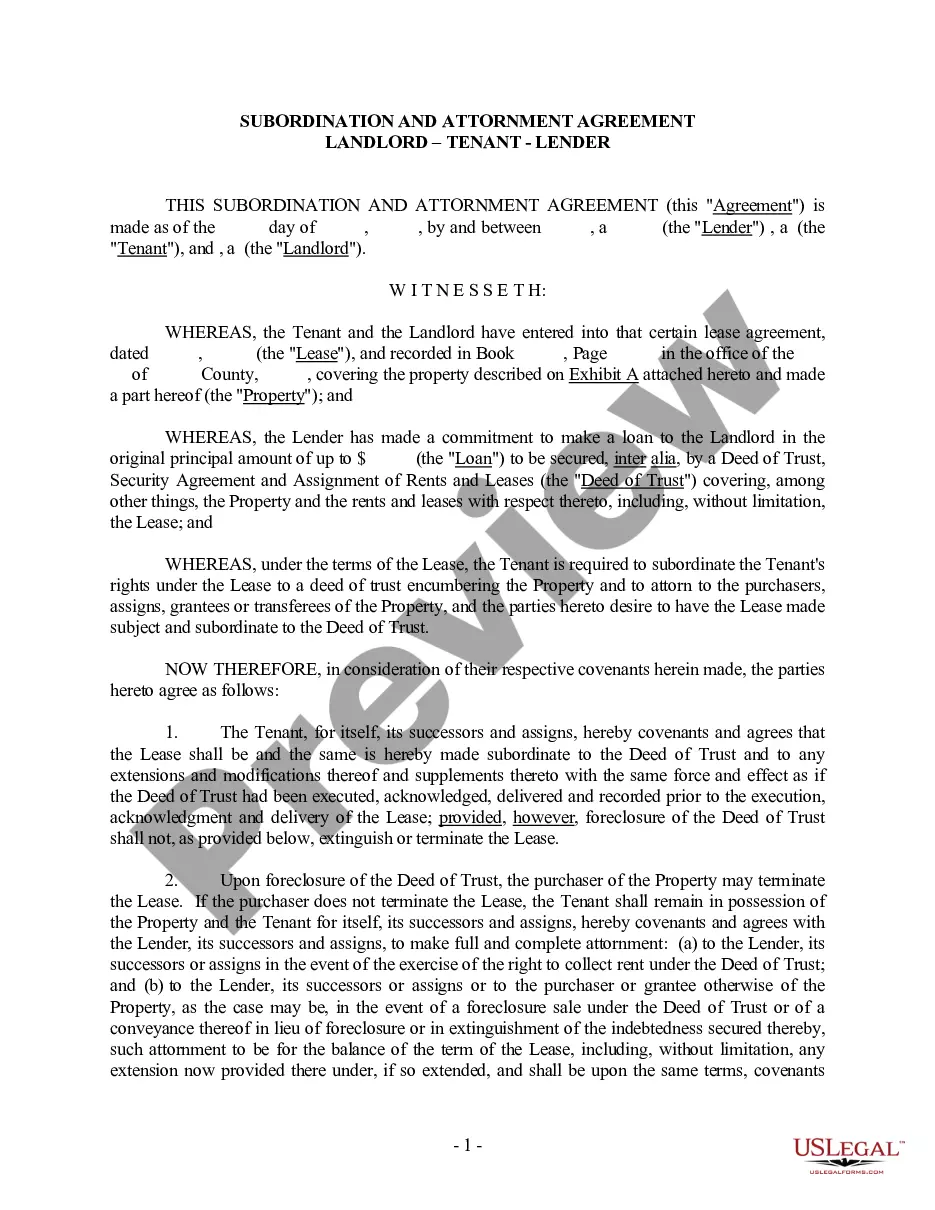
A Lease Subordination Agreement is a legal document that establishes the priority of a lienholder's claim in relation to an oil, gas, or mineral lease. This agreement allows the lease to take precedence over existing liens from a mortgage or deed of trust. It ensures that the mineral or oil lease is free from the liens created by the original mortgage, which is essential for the lessee and the lessor to proceed with the lease activities without the encumbrance of the prior debt. This form is distinct from standard subordination agreements, as it specifically addresses mineral rights and leasehold interests.
Key parts of this document
- Parties involved: Identification of the Lessor, Lessee, and Lienholder.
- Property description: Details of the lands covered by the mortgage or deed of trust.
- Effective date: The date when the subordination agreement takes effect.
- Release of lien: Confirmation that the leasehold estate is released from existing liens.
- Retention of rights: Maintains the lienholder's rights against lease royalty interests.
When to use this form
This form is necessary when a property owner wishes to lease mineral, oil, or gas rights but has an existing mortgage or deed of trust. Using this agreement ensures that the new lease has priority over the mortgage, allowing the lessee to operate without concerns of prior liens interfering with the lease agreement. It is commonly used in real estate transactions involving mineral rights, especially when seeking a second mortgage or refinancing options that require subordination of existing liens.
Who should use this form
- Property owners (Lessors) looking to lease mineral rights.
- Lessee seeking to secure a lease without existing liens interfering.
- Lienholders with a mortgage or deed of trust that need to subordinate their interest.
- Attorneys preparing documents for clients involved in mineral lease agreements.
How to prepare this document
- Identify the parties: Fill in the names of the Lessor, Lessee, and Lienholder.
- Specify the property: Provide a detailed description of the lands covered by the mortgage or deed of trust.
- Enter the effective date: Include the date when the agreement should take effect.
- Release existing liens: Confirm the lienholder's agreement to subordinate current liens in favor of the lease.
- Obtain signatures: Ensure that all parties sign the form for it to be legally valid.
Is notarization required?
This form does not typically require notarization unless specified by local law. It is essential to check local regulations to ensure compliance with all applicable legal requirements.
Get your form ready online
Our built-in tools help you complete, sign, share, and store your documents in one place.
Make edits, fill in missing information, and update formatting in US Legal Forms—just like you would in MS Word.
Download a copy, print it, send it by email, or mail it via USPS—whatever works best for your next step.
Sign and collect signatures with our SignNow integration. Send to multiple recipients, set reminders, and more. Go Premium to unlock E-Sign.
If this form requires notarization, complete it online through a secure video call—no need to meet a notary in person or wait for an appointment.
We protect your documents and personal data by following strict security and privacy standards.

Make edits, fill in missing information, and update formatting in US Legal Forms—just like you would in MS Word.

Download a copy, print it, send it by email, or mail it via USPS—whatever works best for your next step.

Sign and collect signatures with our SignNow integration. Send to multiple recipients, set reminders, and more. Go Premium to unlock E-Sign.

If this form requires notarization, complete it online through a secure video call—no need to meet a notary in person or wait for an appointment.

We protect your documents and personal data by following strict security and privacy standards.
Common mistakes to avoid
- Failing to provide accurate property descriptions, which can cause legal issues later.
- Not including all necessary parties in the agreement.
- Leaving the effective date blank, which can lead to confusion about when the agreement takes effect.
- Not obtaining signatures from all parties involved.
Benefits of using this form online
- Convenience: Easily download and customize the form from anywhere.
- Editability: Modify the form fields to match your specific situation.
- Reliability: Utilize a legally sound document drafted by licensed attorneys.
Legal use & context
- The Lease Subordination Agreement ensures the lessee's rights to the leasehold are preserved even with existing liens.
- It is an important tool in the energy sector for managing conflicts between lease agreements and mortgage obligations.
- Proper completion and adherence to local laws ensure the agreement is enforceable.
Quick recap
- The Lease Subordination Agreement is essential for prioritizing mineral leases over existing mortgages.
- You must accurately complete all sections of the form to ensure its validity.
- Consult local laws to ensure compliance and avoid common errors in form completion.
Definitions you should know
- Subordination: The act of placing a lien or debt in a lower priority than another lien or debt.
- Lienholder: A person or entity that has a legal right to take possession of the property if the terms of a loan are not fulfilled.
- Leasehold estate: An interest in real property held by a tenant under a lease.
Looking for another form?
Form popularity
FAQ
The new contract for deed law in Minnesota introduces important changes aimed at protecting buyers and sellers in real estate transactions. This law enhances transparency and ensures that both parties clearly understand their rights and obligations. As part of this process, a Minnesota Lease Subordination Agreement may be relevant for individuals involved in lease agreements tied to property financing. Utilizing uslegalforms can help you navigate these changes effectively, ensuring you have the right documentation to protect your interests.
To fill out a sublease agreement, start by gathering the necessary information about the original lease and the subtenant. Clearly outline the terms, including rent amount, duration, and any rules specific to the property. Using a platform like UsLegalForms can simplify this process, providing templates for a Minnesota Lease Subordination Agreement that ensure compliance with local laws and protect all parties involved.
A subordination agreement typically involves a property owner agreeing that their mortgage will take precedence over a previously established lease. For instance, in a Minnesota Lease Subordination Agreement, a landlord may allow a bank's claim to take priority over a tenant's lease rights. This ensures that the lender has security in the event of default while maintaining the lease's validity.
When reviewing a lease agreement, watch for vague terms, excessive fees, or unclear maintenance responsibilities. A Minnesota Lease Subordination Agreement may signal potential issues if it lacks clear subordination terms. Always ensure the lease outlines the rights of both parties clearly to avoid misunderstandings later.
In the context of real estate, a Minnesota Lease Subordination Agreement typically refers to a legal document that modifies the order of claims against a property. For instance, if a lease states that it is subordinate to a mortgage, that indicates the lease will take second priority. To identify whether you have a subordination agreement, look for clauses that mention the hierarchy of interests. If you need assistance, US Legal Forms offers templates to help you create a valid subordination agreement.
The purpose of a Minnesota Lease Subordination Agreement is to establish the priority of rights between a tenant and a lender. This agreement allows a lender's interest in the property to take precedence over the tenant's lease. In simple terms, it ensures that if a property goes into foreclosure, the lender's rights are upheld. By understanding this agreement, you can better protect your interests as a tenant.
To obtain a subordination agreement, start by talking to your landlord and lender regarding your lease situation. They will outline their requirements for a Minnesota Lease Subordination Agreement. It's crucial to have this agreement documented formally to protect everyone’s interests. You can simplify this process by using uslegalforms, which offers essential tools and templates for drafting your agreement efficiently.
Yes, a lender can refuse to subordinate if they believe it poses a risk to their investment. In a Minnesota Lease Subordination Agreement, the lender’s decision depends on their assessment of the lease terms and tenant's reliability. If you encounter this situation, it may be beneficial to negotiate with your lender or seek legal assistance to explore alternative options. Services from uslegalforms can aid you in understanding your rights and options.
To get a subordination agreement, you first need to discuss your needs with your lender and landlord. They will provide the necessary terms for the Minnesota Lease Subordination Agreement. After that, it is essential to document the agreement in writing to ensure clarity and legal validity. Platforms like uslegalforms can provide templates and guidance to help you create this important document.
A subordination agreement works by allowing a lender's interest in a property to take priority over a tenant's lease. In a Minnesota Lease Subordination Agreement, the tenant acknowledges that their lease will be subordinate to the mortgage, enabling the lender to foreclose on the property if necessary. This agreement protects the lender's investment while providing the tenant with continued lease rights, assuming the new owner honors the lease terms. Utilizing resources from uslegalforms can help you draft a solid agreement.