South Carolina Closing Statement

What this document covers
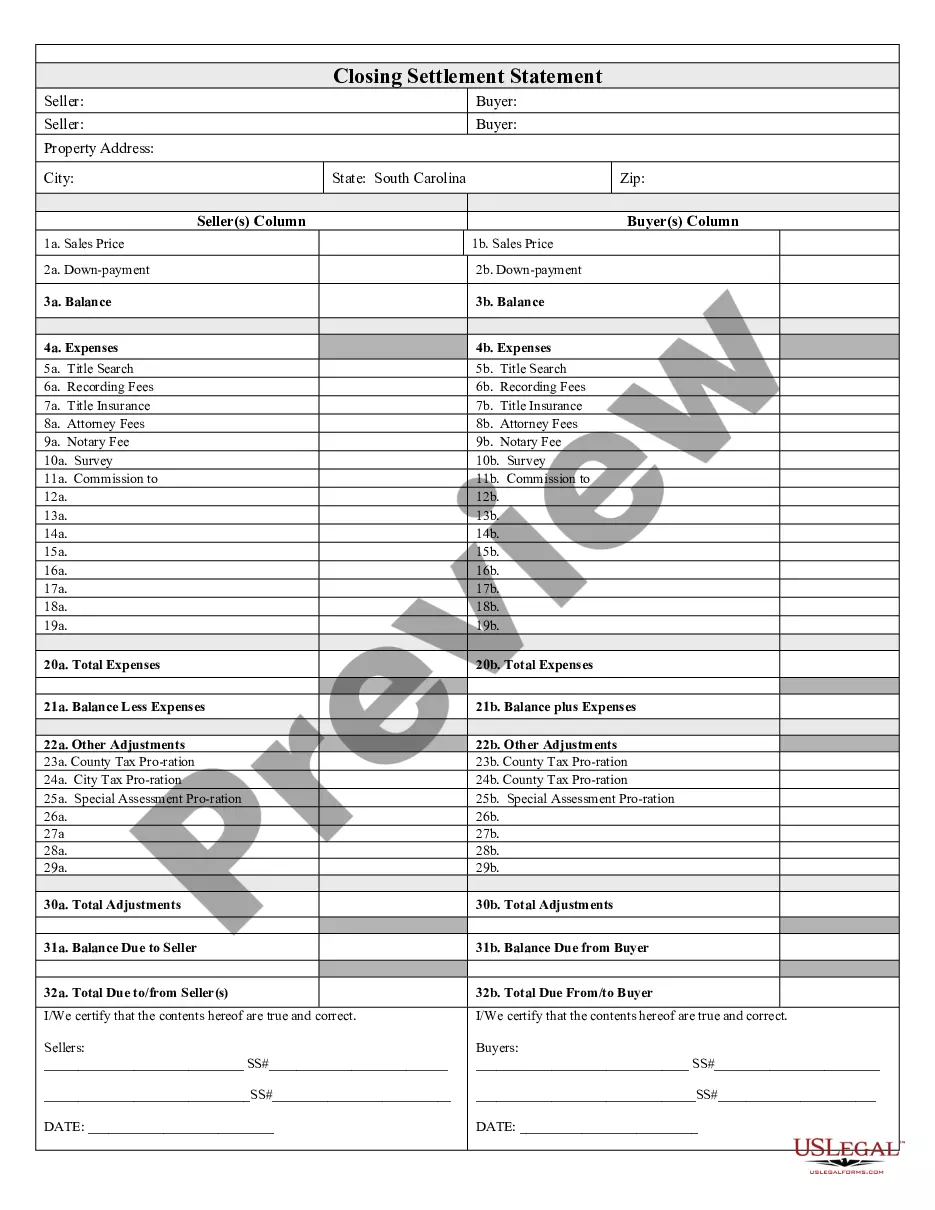
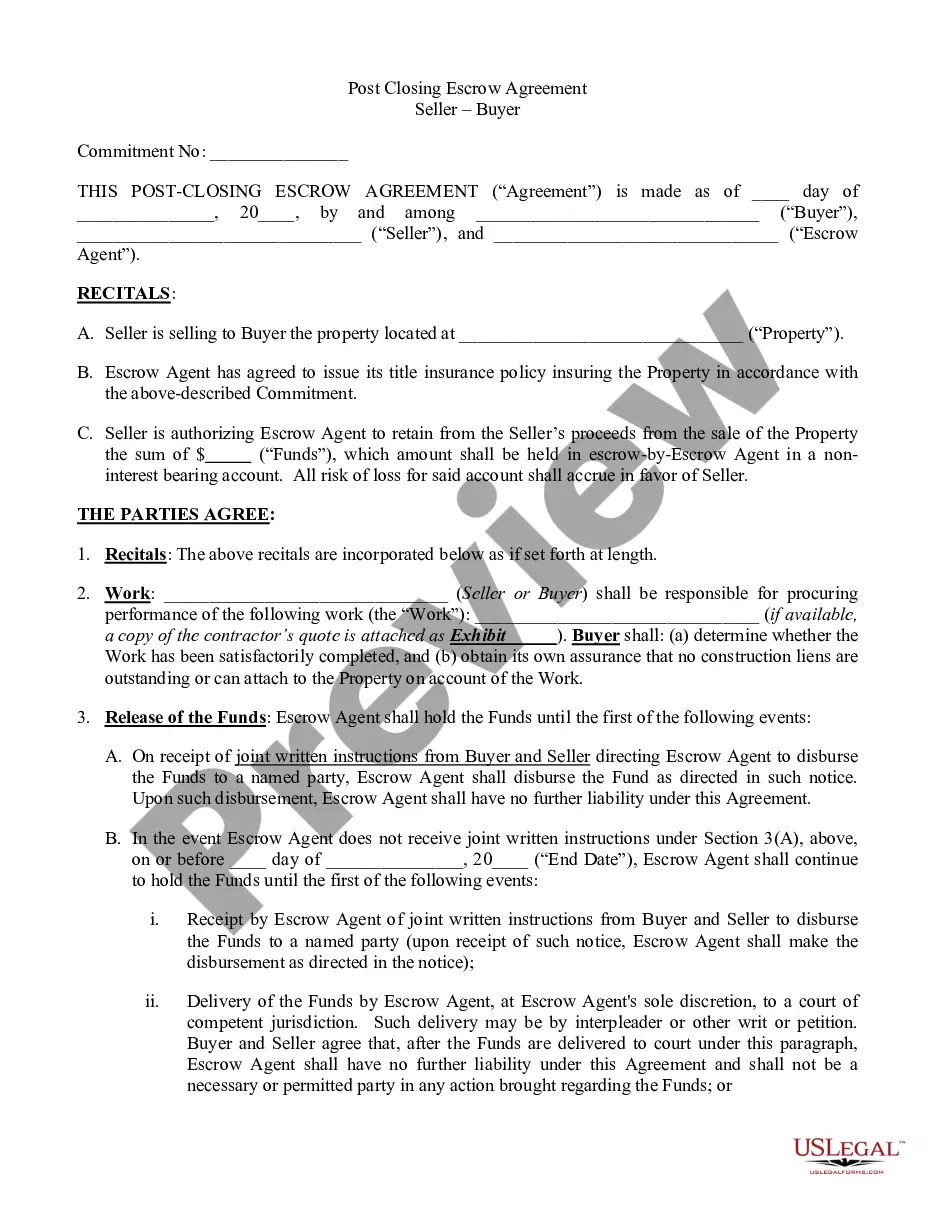
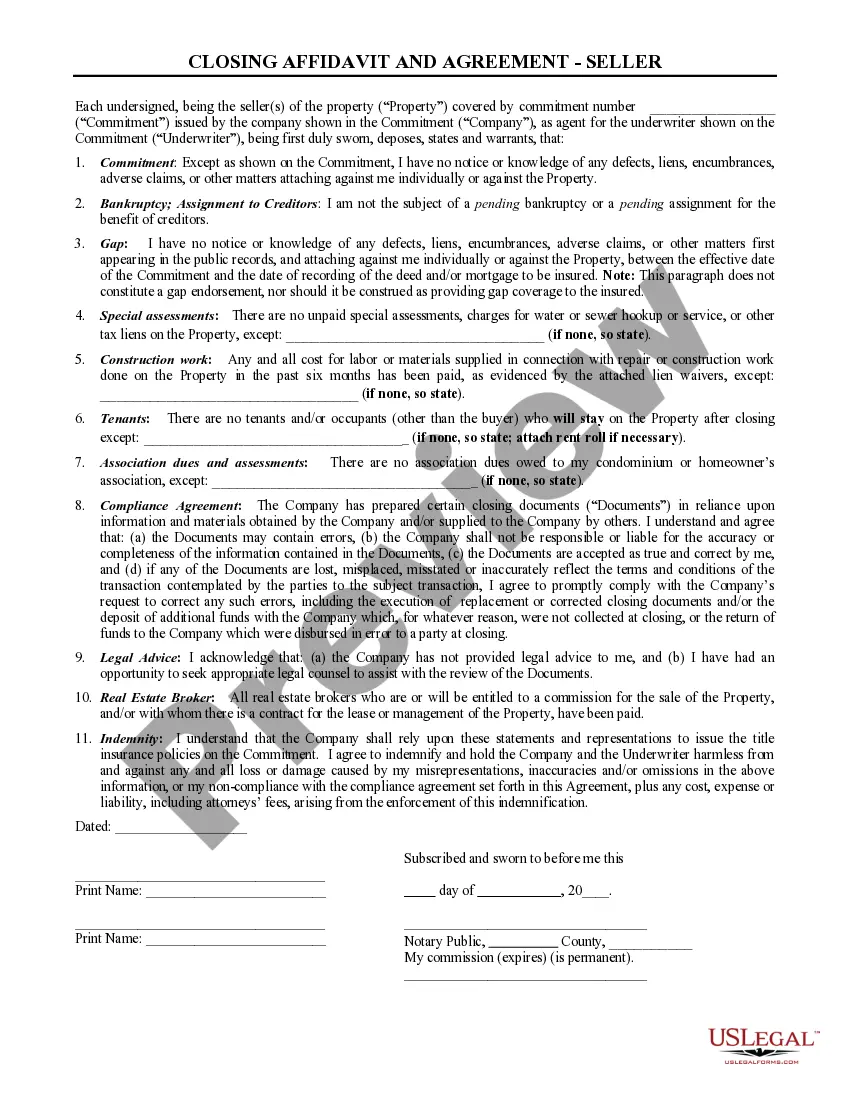
The Closing Statement is a legal document used in real estate transactions, specifically for cash sales or owner financing arrangements. It details the financial aspects of the transaction and is signed by both the seller and the buyer, ensuring that all terms are agreed upon. This form serves to summarize the closing costs, payments, and any adjustments made during the sale, distinguishing it from other real estate forms by its focus on finalizing the financial settlement.
What’s included in this form
- Expenses: Lists various expenses associated with the transaction, including title search fees, recording fees, and attorney fees.
- Title Insurance: Details any title insurance costs incurred during the sale.
- Commission: Records commissions owed to real estate agents or brokers.
- Taxes: Covers prorated county and city taxes as well as any special assessments relevant to the transaction.
- Balancing Statement: Shows the balances due to and from the seller and buyer after expenses and adjustments.

Common use cases
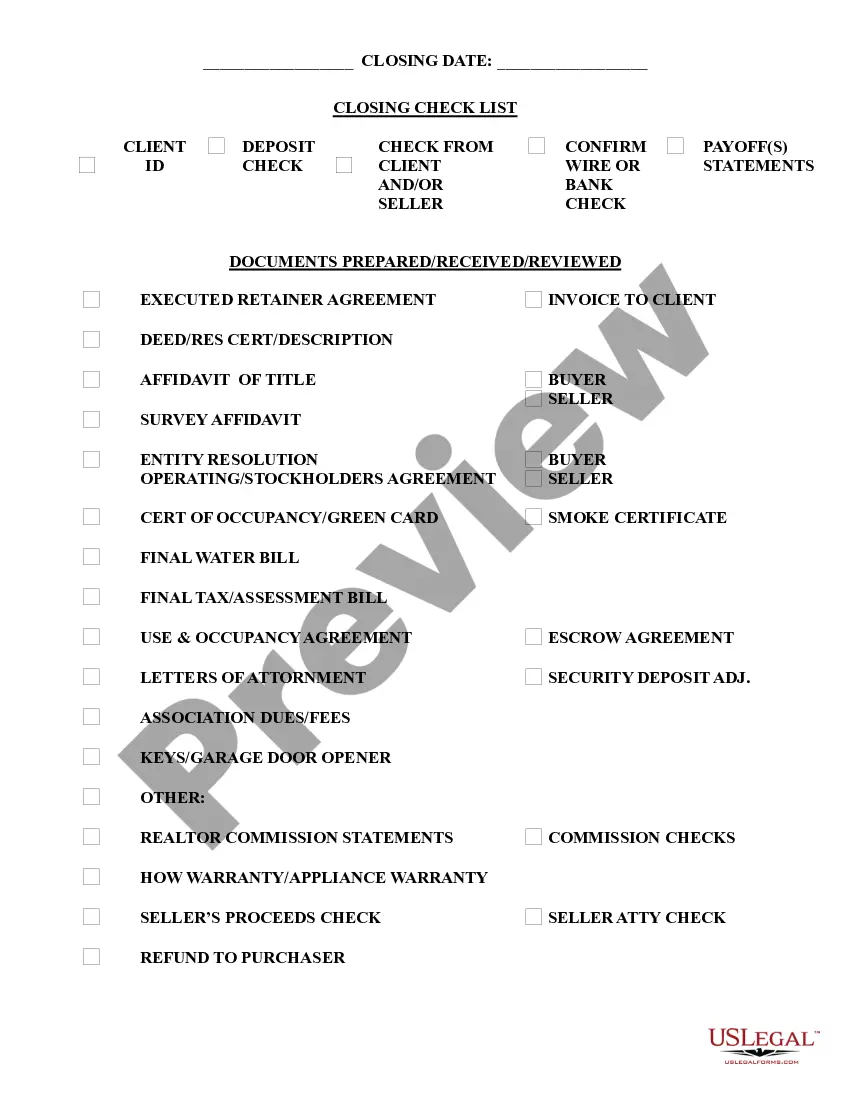
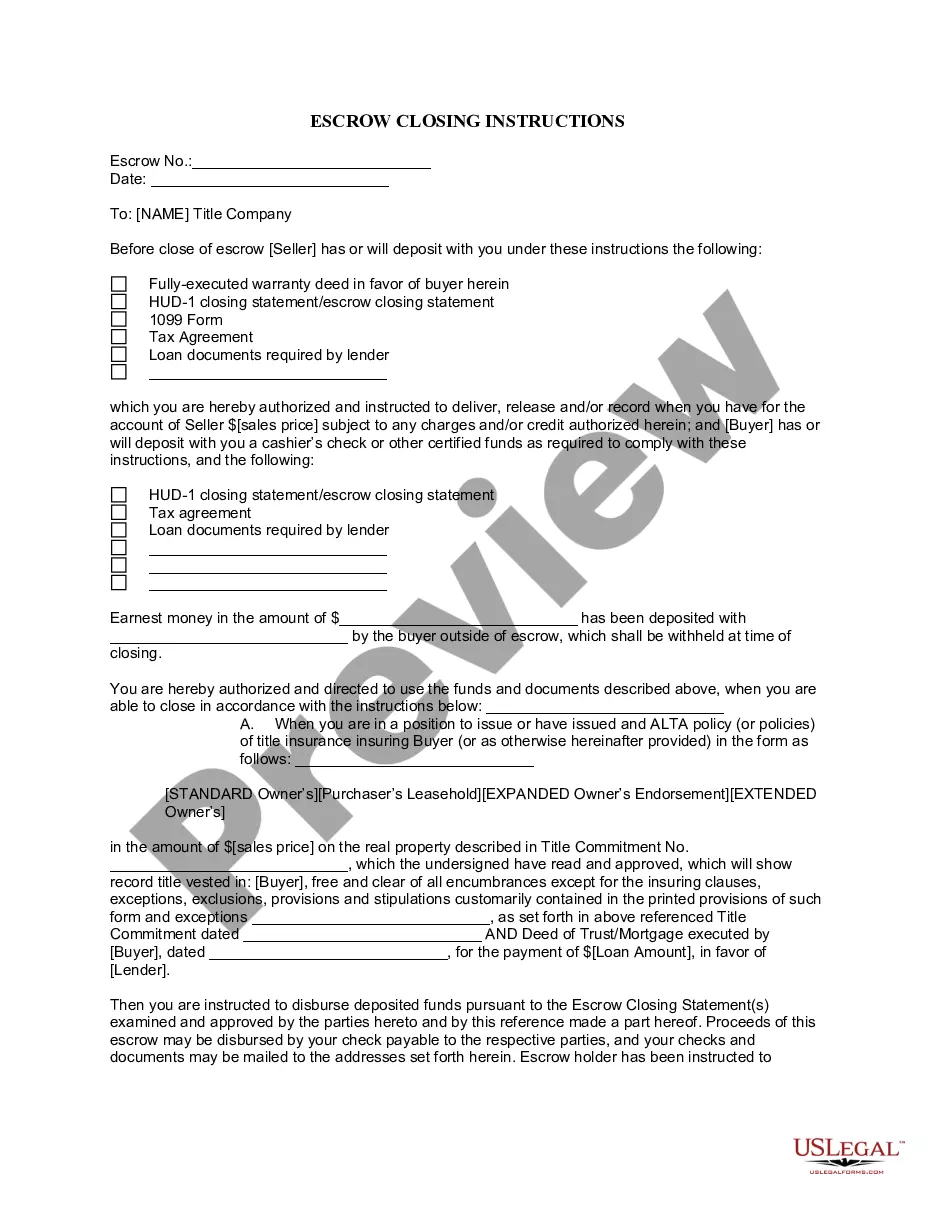
This form is essential when finalizing a real estate transaction involving a cash sale or owner financing. It is used at the closing stage of the sale to confirm the financial details, ensuring that all parties are aware of their financial obligations and rights. If you are buying or selling property and need a clear record of all costs incurred, use the Closing Statement to finalize the transaction.
Intended users of this form
This form is intended for:
- Property sellers who need to document the financial aspects of their sale.
- Buyers participating in cash transactions or owner-financed purchases.
- Real estate agents facilitating the closing process.
- Attorneys involved in the transaction who need to ensure compliance with local laws.
How to complete this form
- Identify the parties: List the names of the seller(s) and buyer(s) involved in the transaction.
- Specify the property: Clearly describe the property being bought or sold.
- Detail the expenses: Fill in all associated expenses for the transaction, including fees for title search, recording, and attorney services.
- Calculate balances: Determine the total expenses, balances due to/from the seller, and any prorated taxes or assessments.
- Obtain signatures: Ensure that all parties verify and sign the document, certifying that the information is correct.
Is notarization required?
This form must be notarized to be legally valid. US Legal Forms provides secure online notarization powered by Notarize, allowing you to complete the process through a verified video call.
Get your form ready online
Our built-in tools help you complete, sign, share, and store your documents in one place.
Make edits, fill in missing information, and update formatting in US Legal Forms—just like you would in MS Word.
Download a copy, print it, send it by email, or mail it via USPS—whatever works best for your next step.
Sign and collect signatures with our SignNow integration. Send to multiple recipients, set reminders, and more. Go Premium to unlock E-Sign.
If this form requires notarization, complete it online through a secure video call—no need to meet a notary in person or wait for an appointment.
We protect your documents and personal data by following strict security and privacy standards.

Make edits, fill in missing information, and update formatting in US Legal Forms—just like you would in MS Word.

Download a copy, print it, send it by email, or mail it via USPS—whatever works best for your next step.

Sign and collect signatures with our SignNow integration. Send to multiple recipients, set reminders, and more. Go Premium to unlock E-Sign.

If this form requires notarization, complete it online through a secure video call—no need to meet a notary in person or wait for an appointment.

We protect your documents and personal data by following strict security and privacy standards.
Common mistakes to avoid
- Failing to include all relevant expenses, leading to inaccurate financial representations.
- Not obtaining signatures from all parties, which can invalidate the document.
- Incorrectly calculating prorated taxes or assessments, resulting in disputes.
- Neglecting to update the form according to specific state requirements.
Why complete this form online
- Convenience: Easily download and complete the form at your own pace, avoiding the need for in-person meetings.
- Editability: Make necessary adjustments to the form as needed before finalizing the transaction.
- Reliability: Get access to professionally drafted legal templates created by licensed attorneys.
Looking for another form?
Form popularity
FAQ
A closing statement is a document that records the details of a financial transaction. A home buyer who finances the purchase will receive a closing statement from the bank, while the home seller will receive one from the real estate agent who handled the sale.
What is the seller's closing statement, aka settlement statement? The seller's closing statement is an itemized list of fees and credits that shows your net profits as the seller, and summarizes the finances of the entire transaction.
As of October 3, 2015, the Closing Disclosure form replaced the HUD-1 form for most real estate transactions. However, if you applied for a mortgage on or before October 3, 2015, you received a HUD-1.
The state of South Carolina requires an attorney to be present at the closing of a real estate transaction and has issued extensive best practices guidelines.
Alabama. Connecticut. Delaware. District of Columbia. Florida. Georgia. Kansas. Kentucky.
A closing statement, also called a HUD-1 statement or settlement sheet, is a form used in real estate transactions with an itemized list of all the costs to the buyer and seller.
Unlike other states, the closing attorney in South Carolina is a totally separate party from the title insurance company. The actual 45 minute closing, where the closing documents are signed, represents only about one-fifth to one-tenth of the services your attorney is providing you for your real estate transaction.
You Need Not Hire an Attorney, Although You Might Want To While some states require that an each party to a real estate transaction retain a lawyer to represent their interests at the closing; California does not.
A mortgage closing disclosure is a type of standard settlement statement that is formulated and regulated for the mortgage lending market. The HUD-1 settlement statement is a type of closing statement used in reverse mortgages.