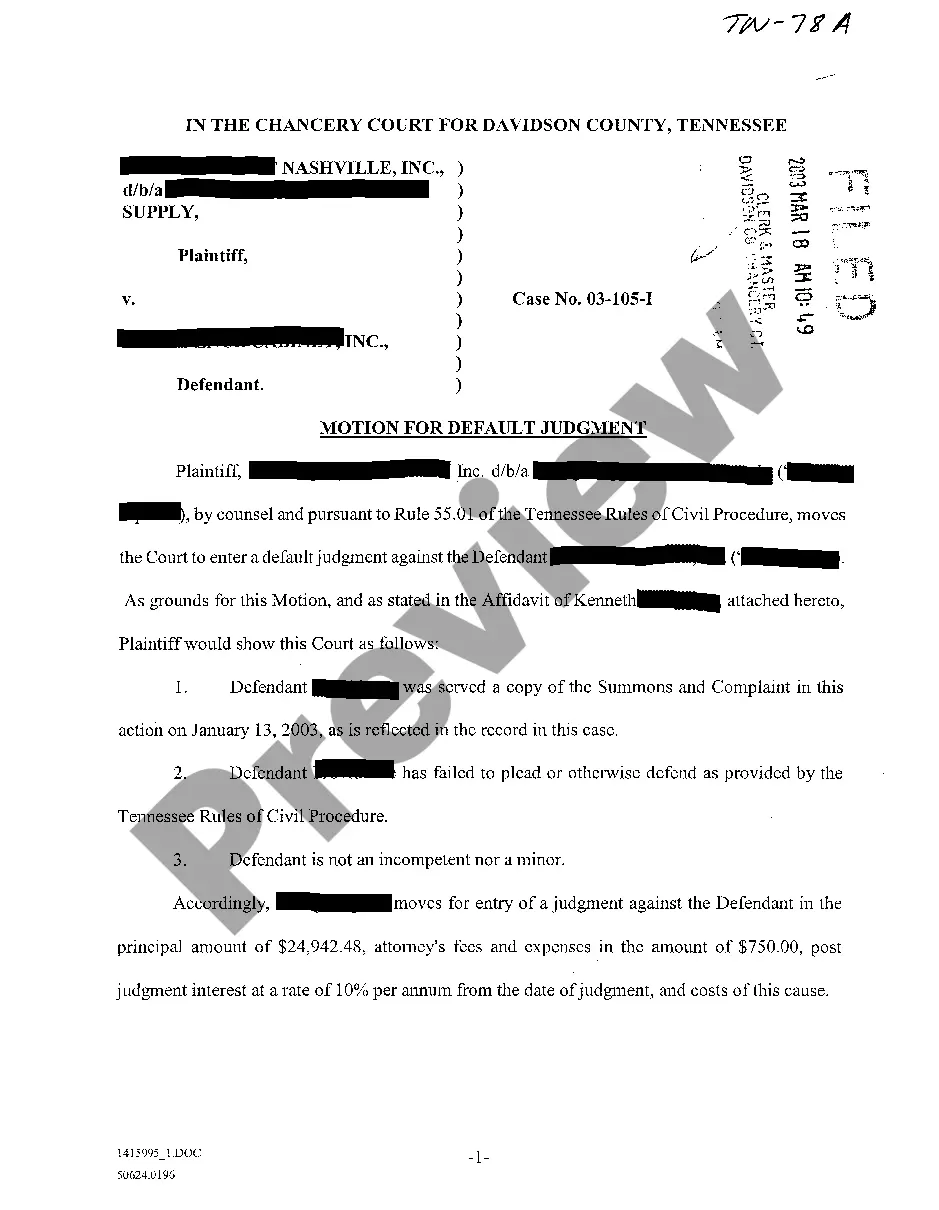
Utah Marital Domestic Separation and Property Settlement Agreement Minor Children Parties May have Joint Property or Debts where Divorce Action Filed
What this document covers
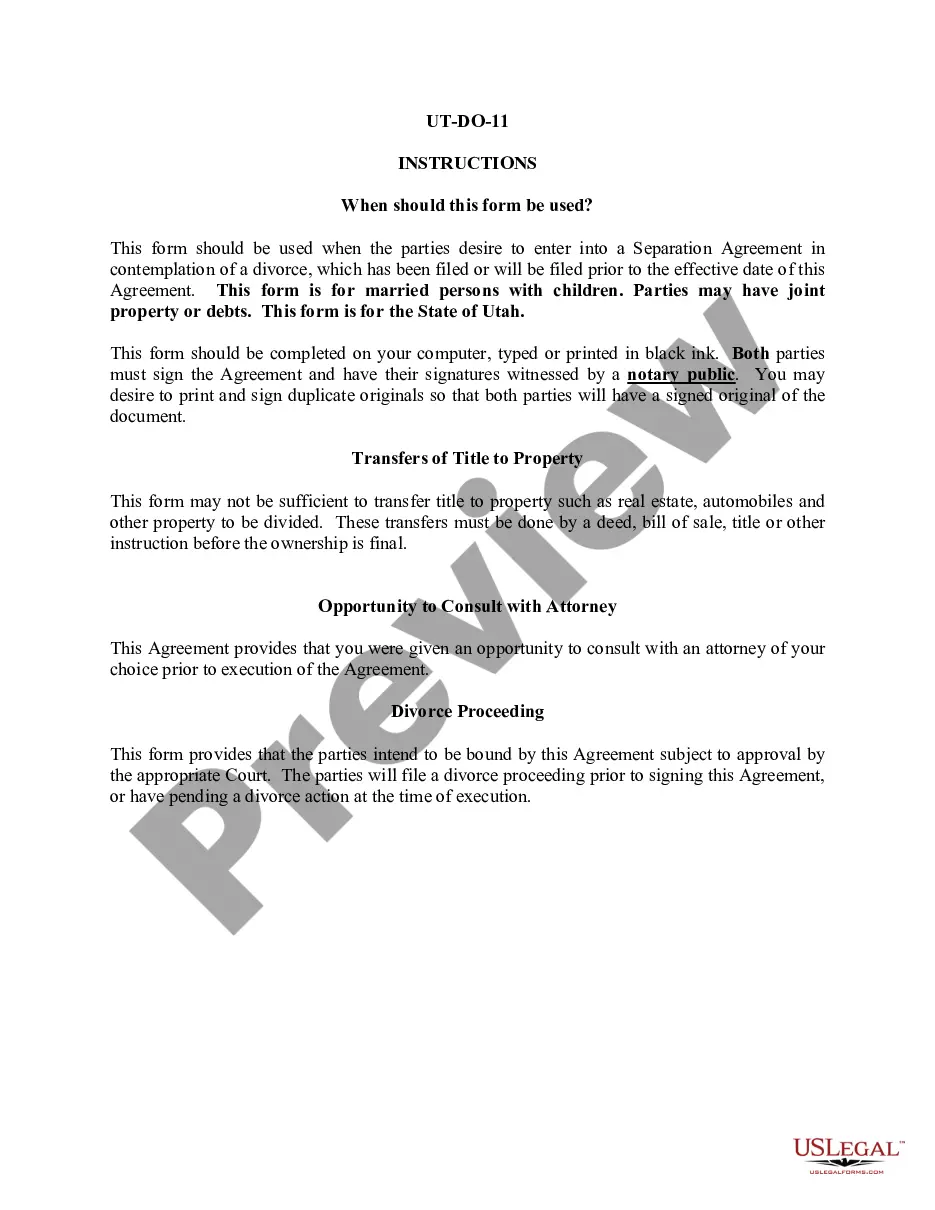
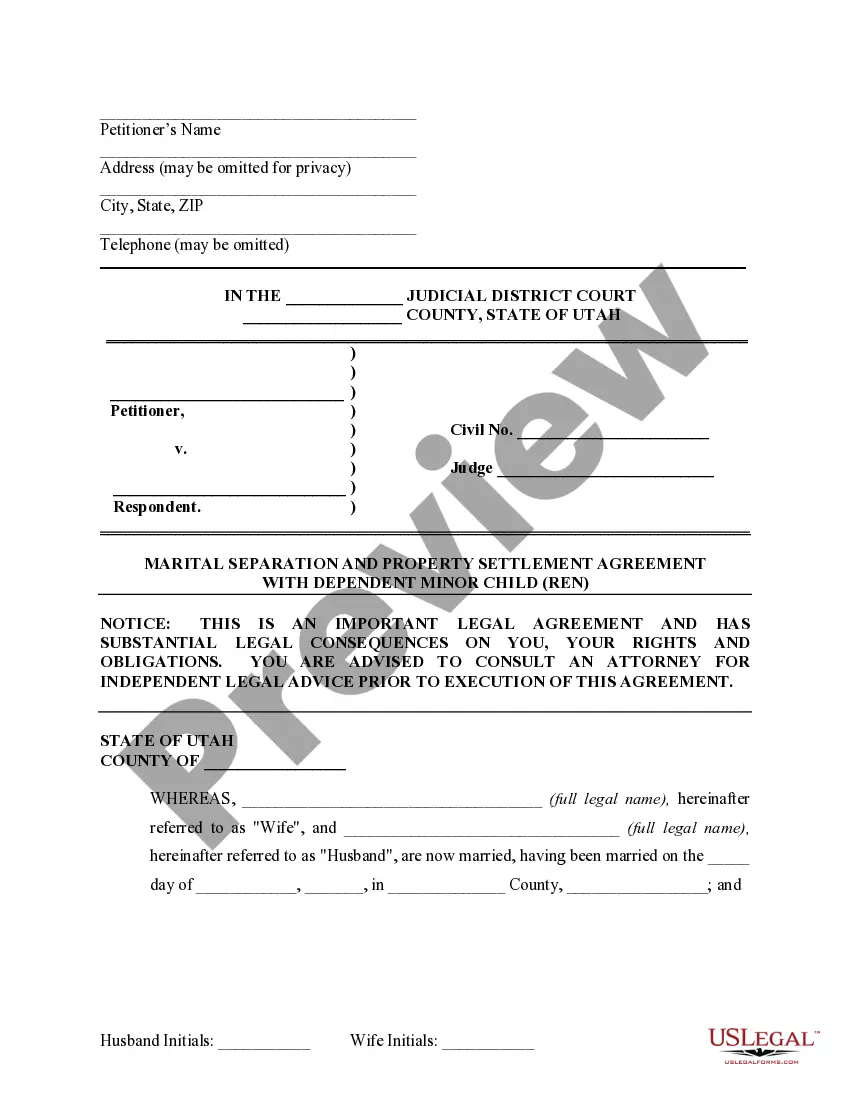
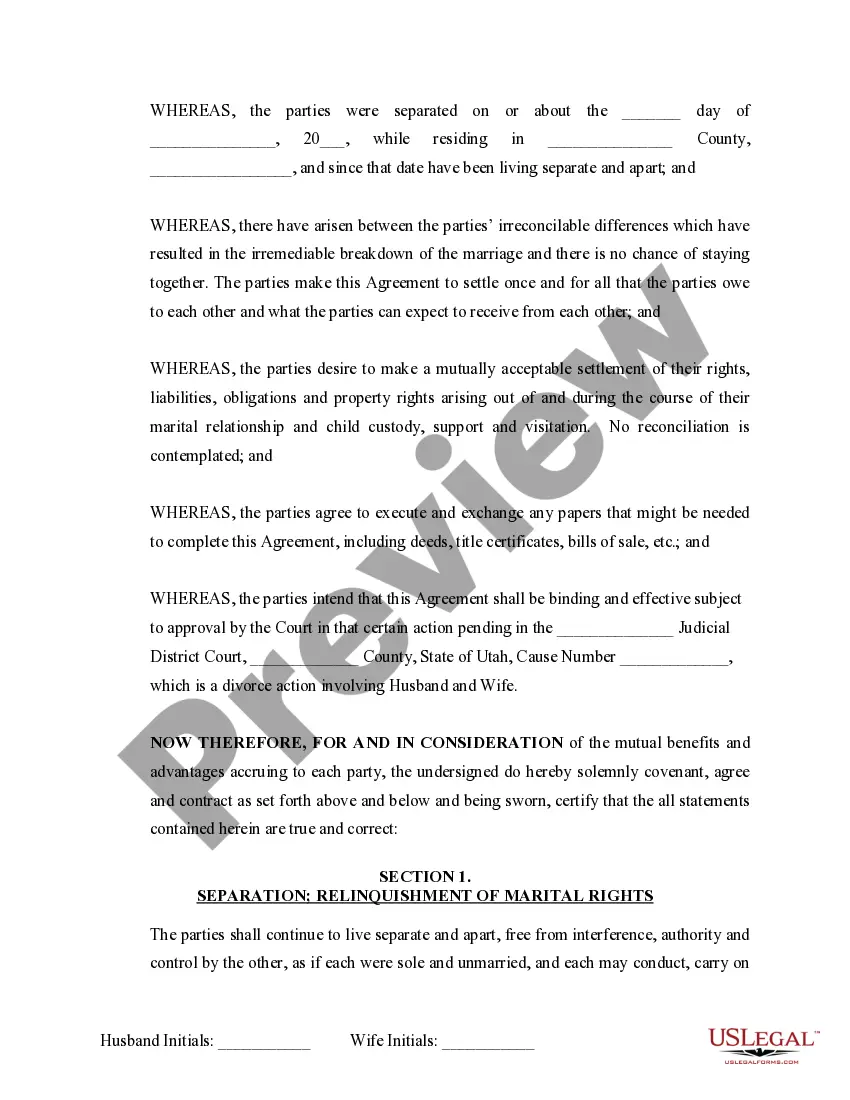
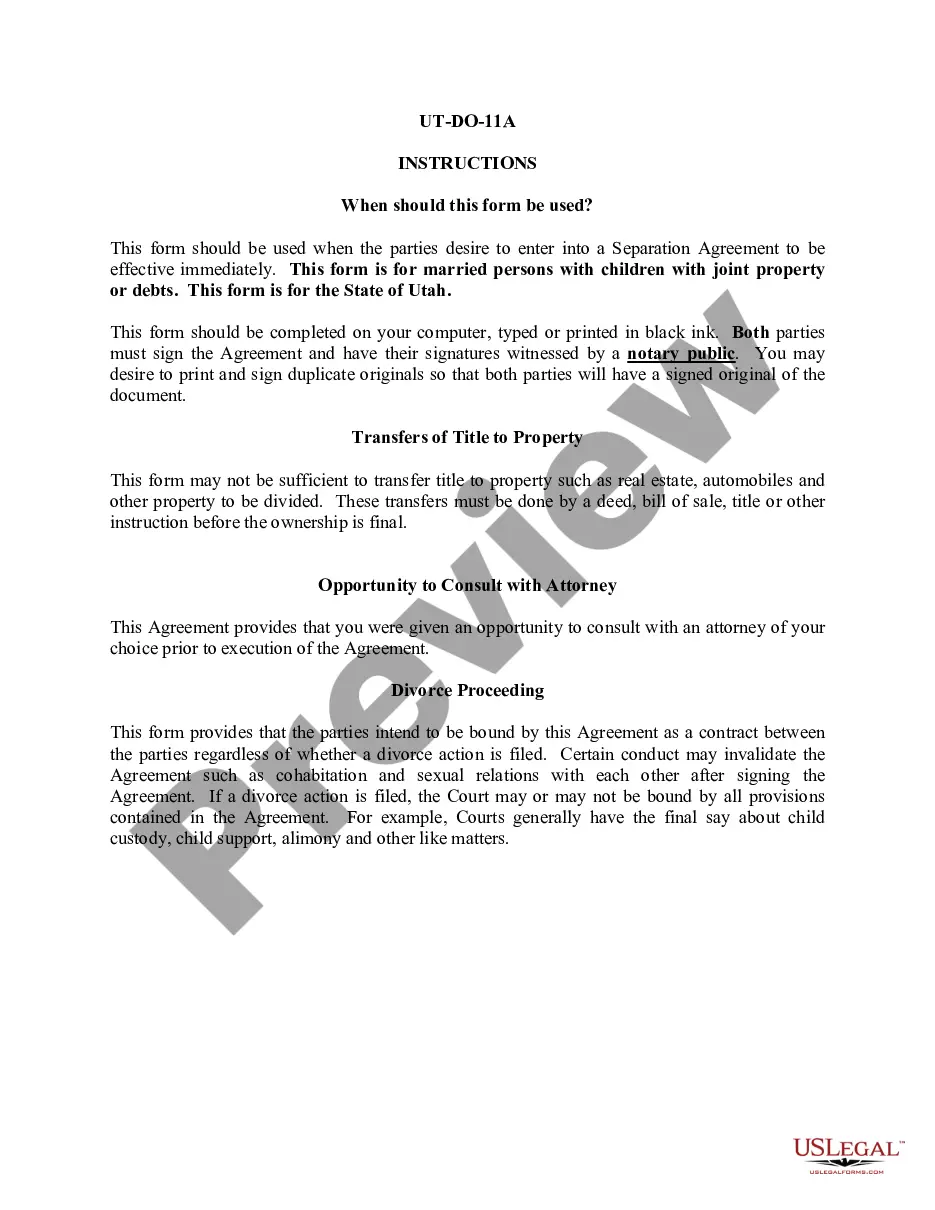
The Marital Domestic Separation and Property Settlement Agreement is a legal document designed for married couples pursuing divorce who have minor children and joint property or debts. This form outlines the terms for asset division, child custody, visitation rights, and child support, specifying each party's obligations and rights during the divorce process. It is essential for ensuring a comprehensive understanding and mutual agreement between the parties involved before finalizing their separation.
Form components explained
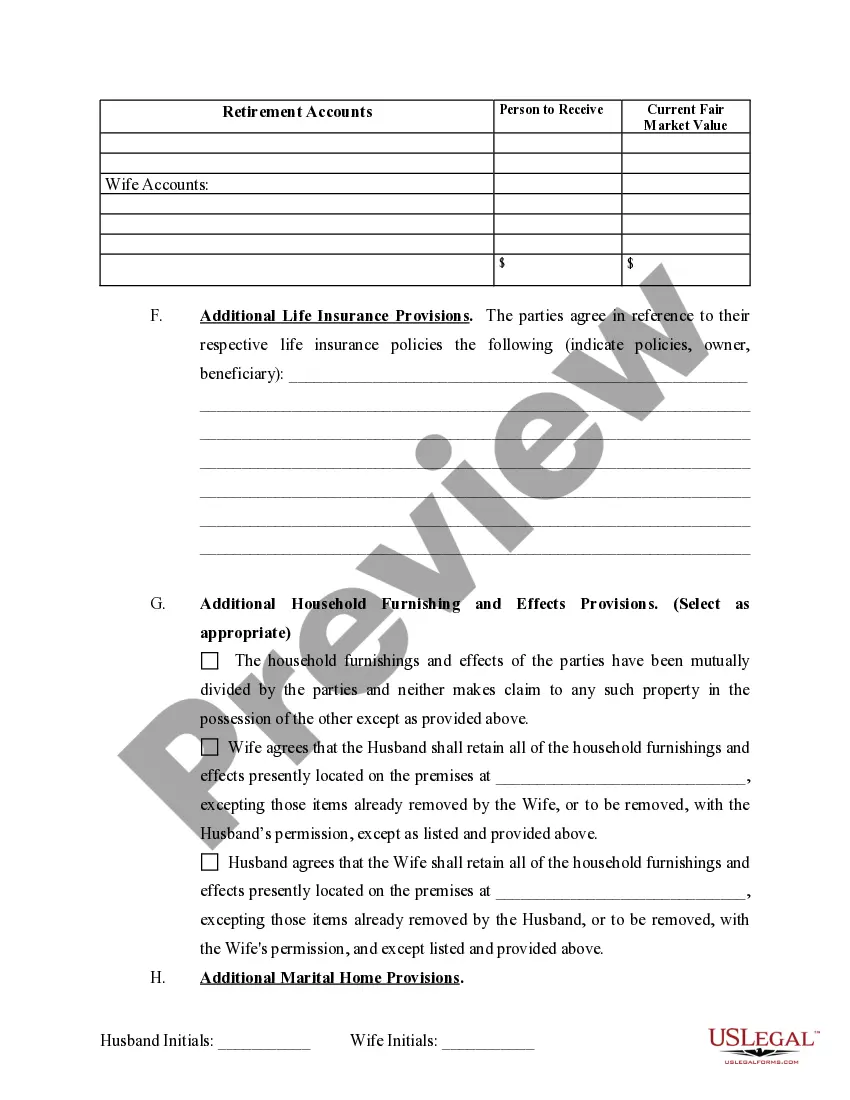
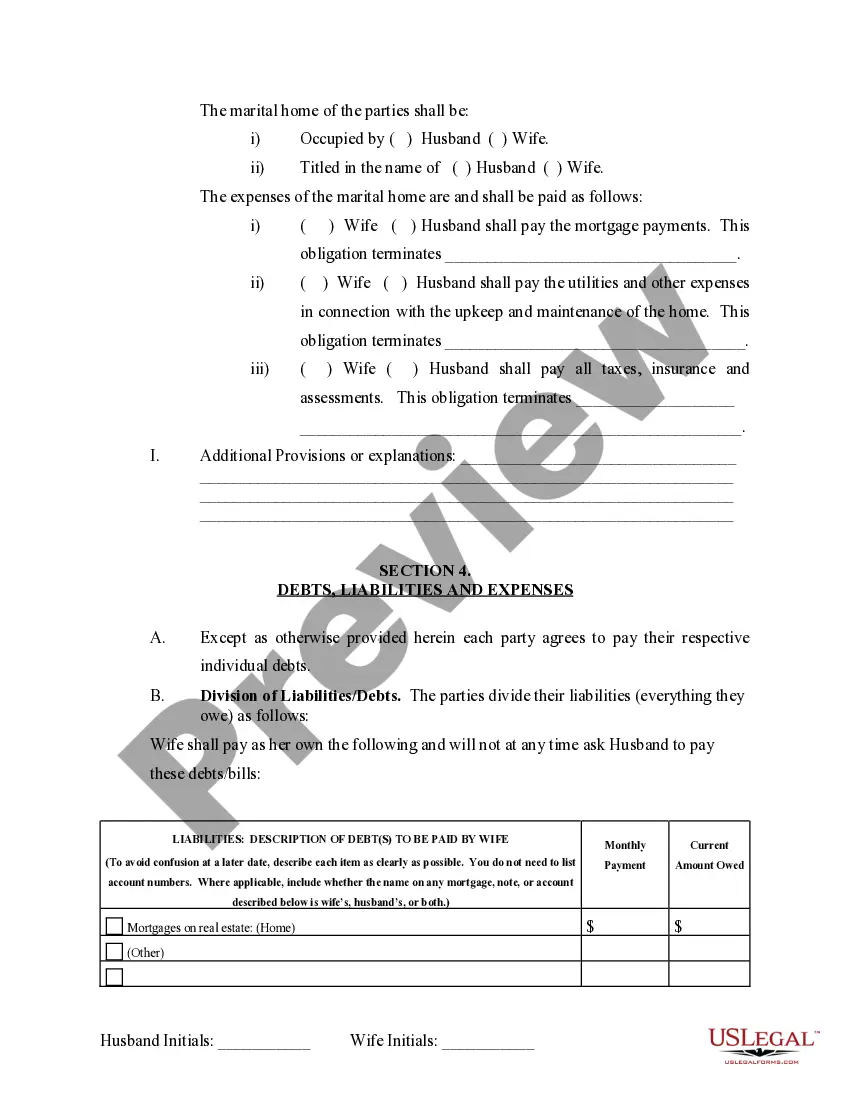
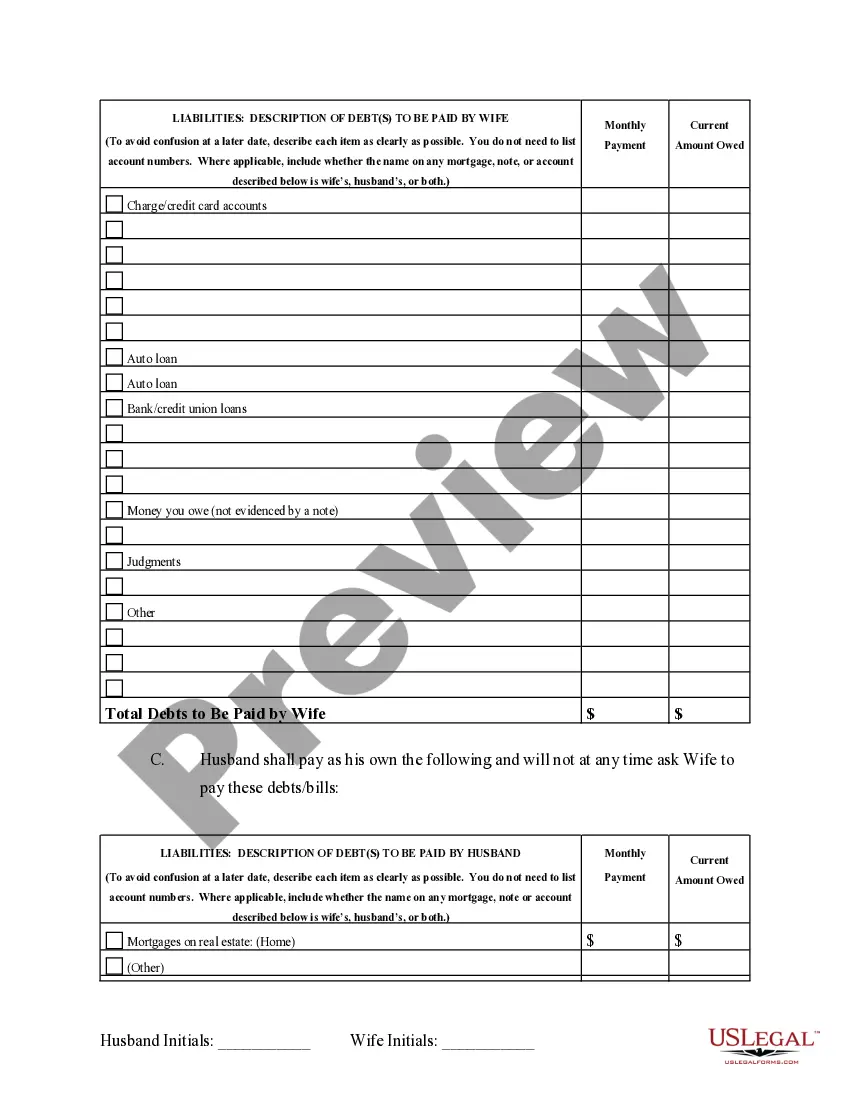
- Details about joint property and debts.
- Provisions regarding custody and visitation of minor children.
- Child support obligations and amounts.
- Spousal support (alimony) terms, if applicable.
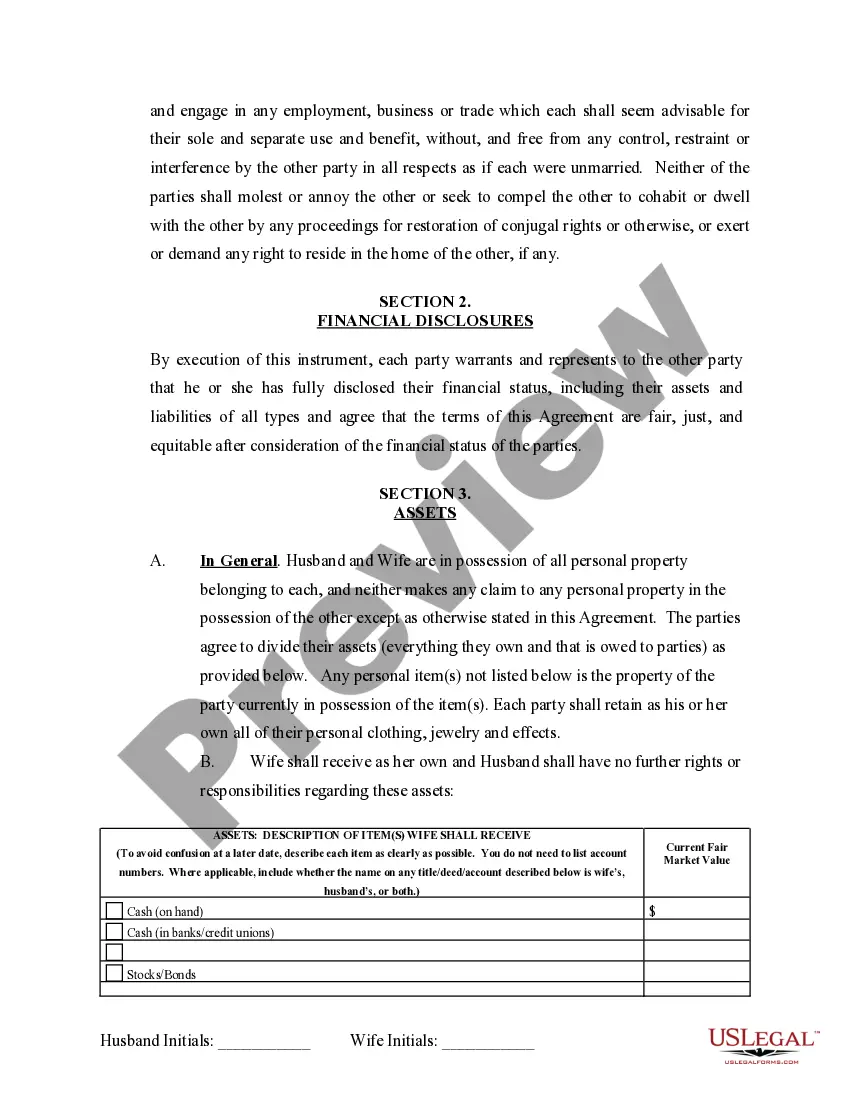
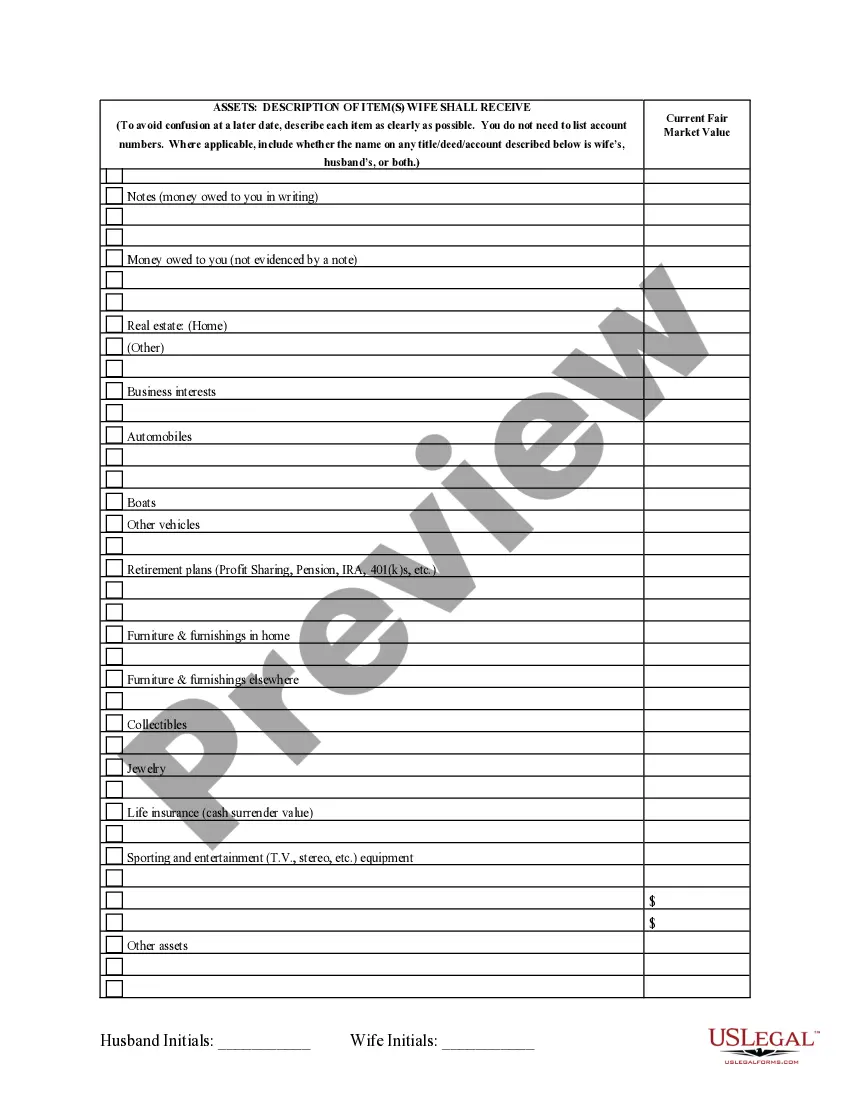
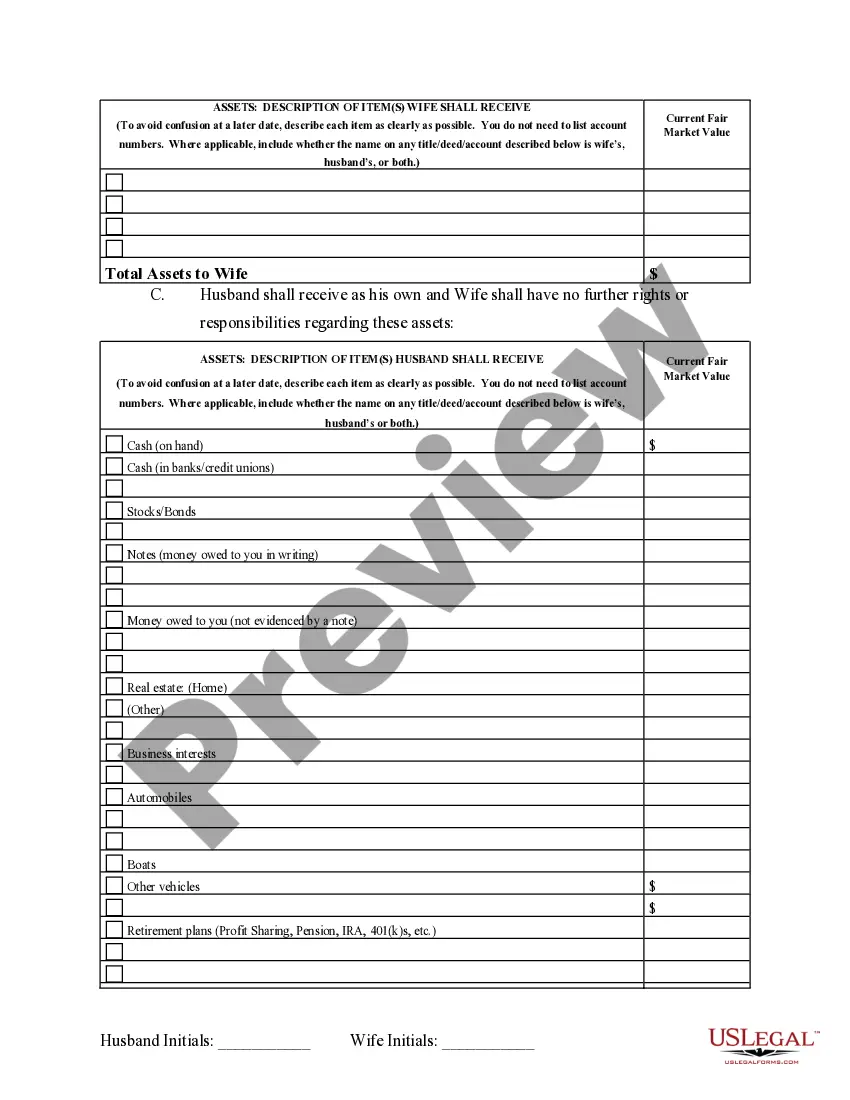
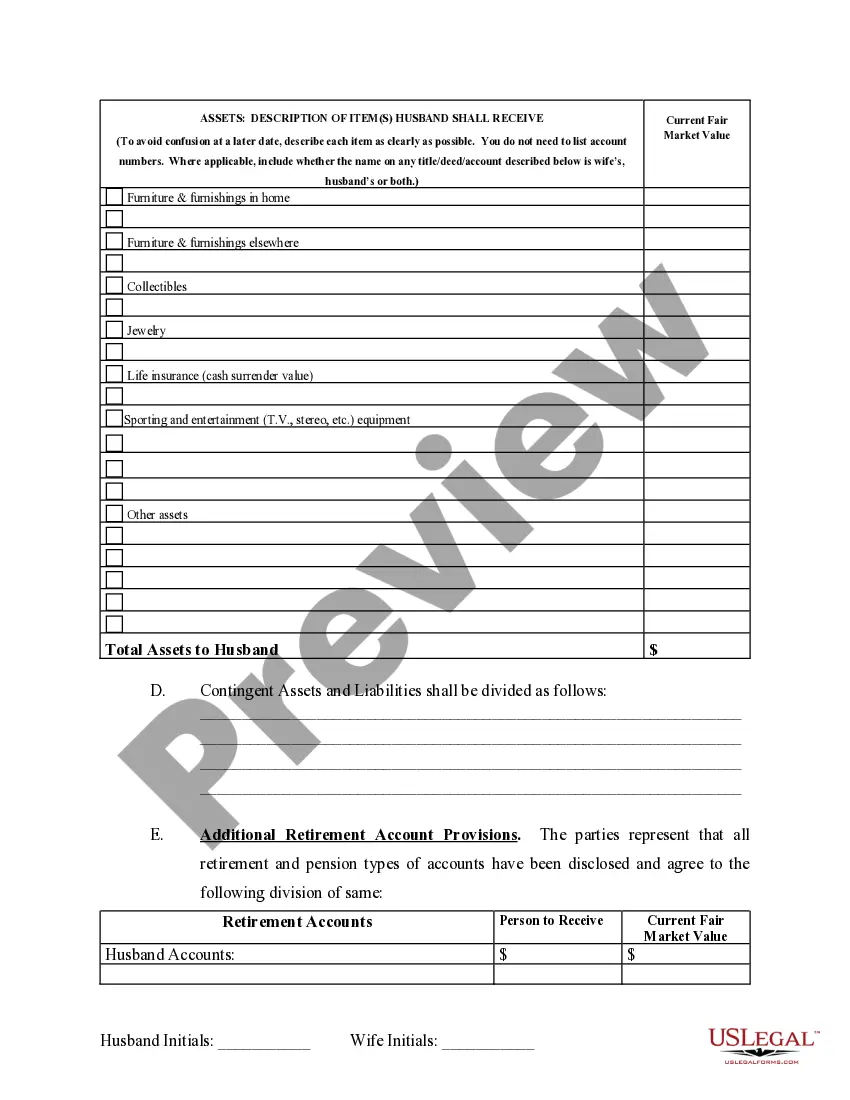
- Division of assets and debts between the parties.
- Legal acknowledgments and notary requirements for validation.

Common use cases
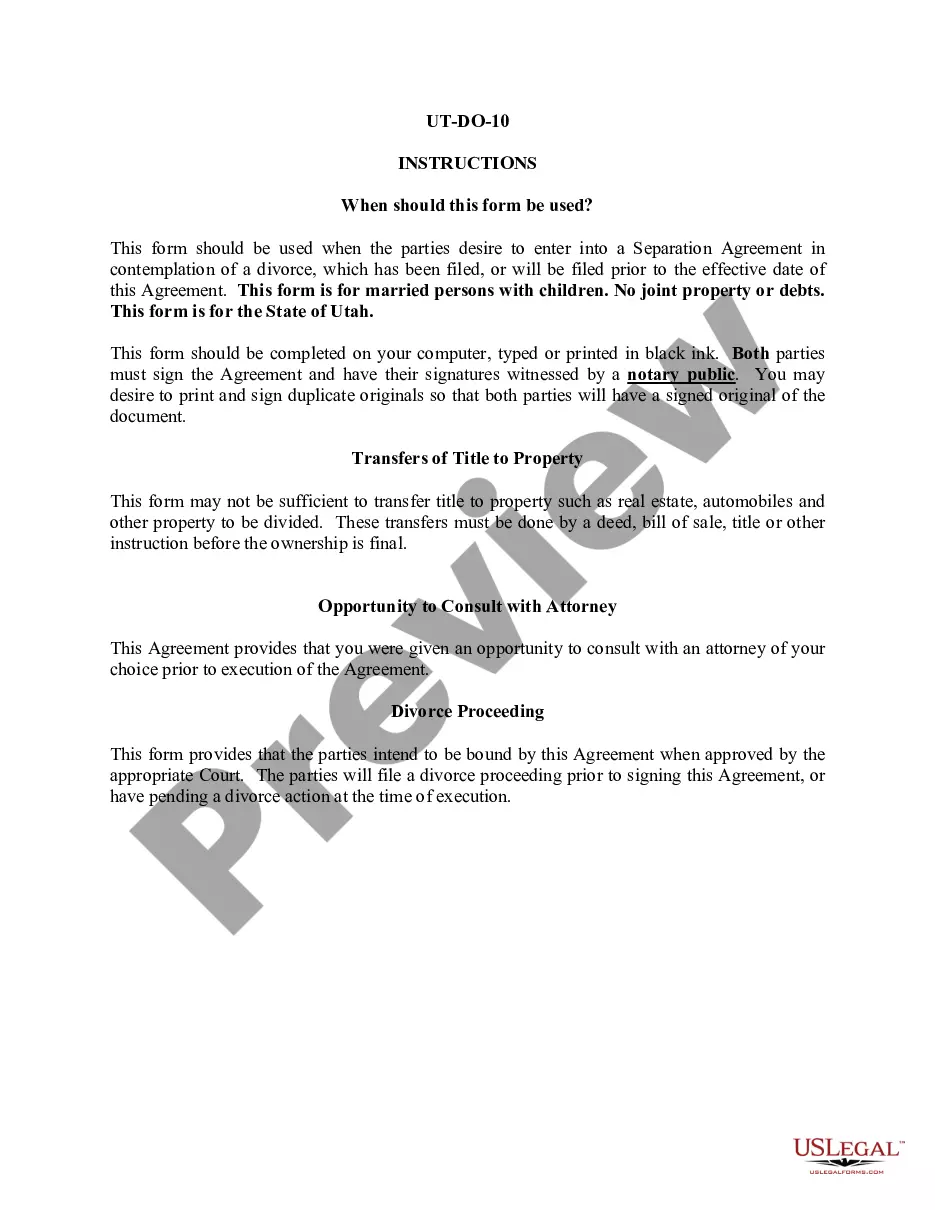
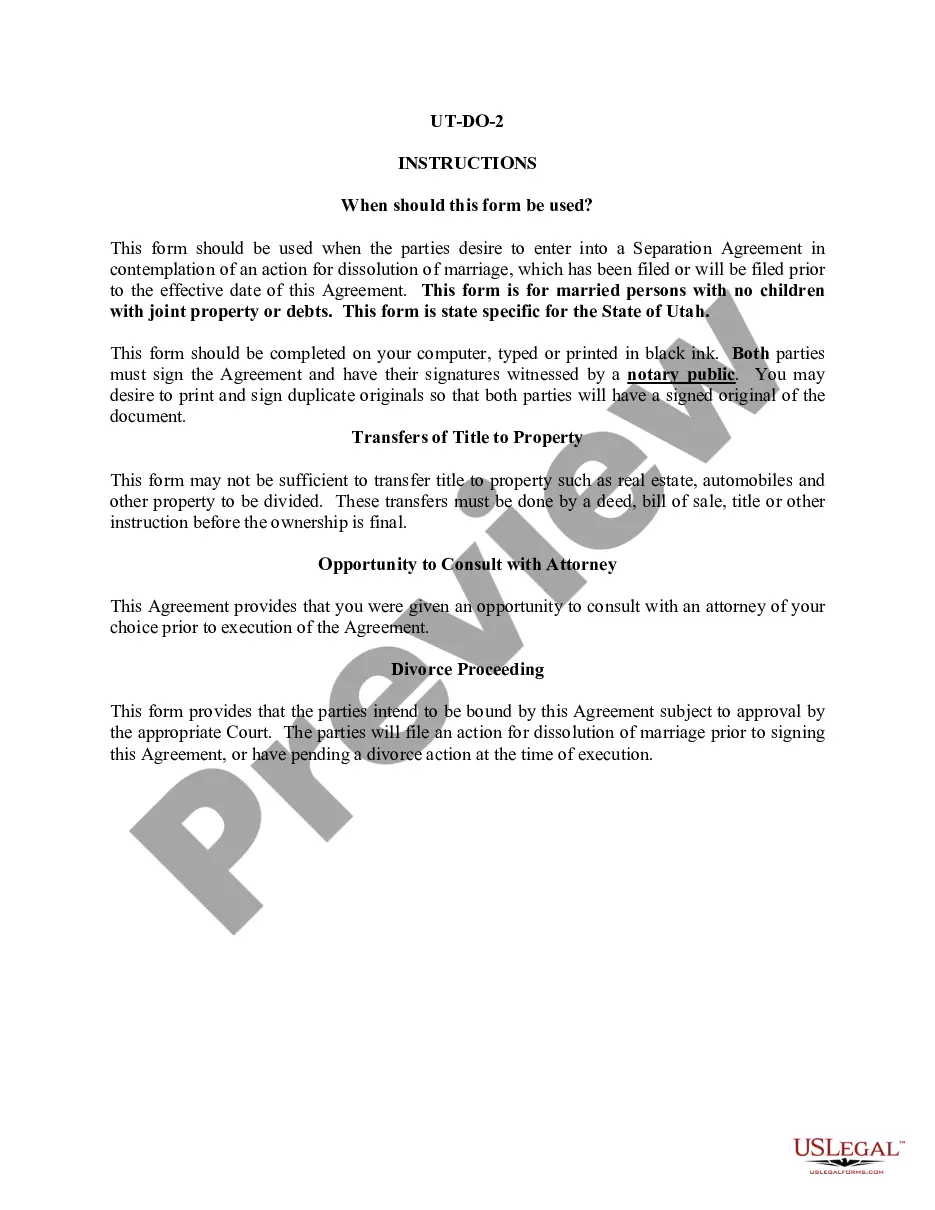
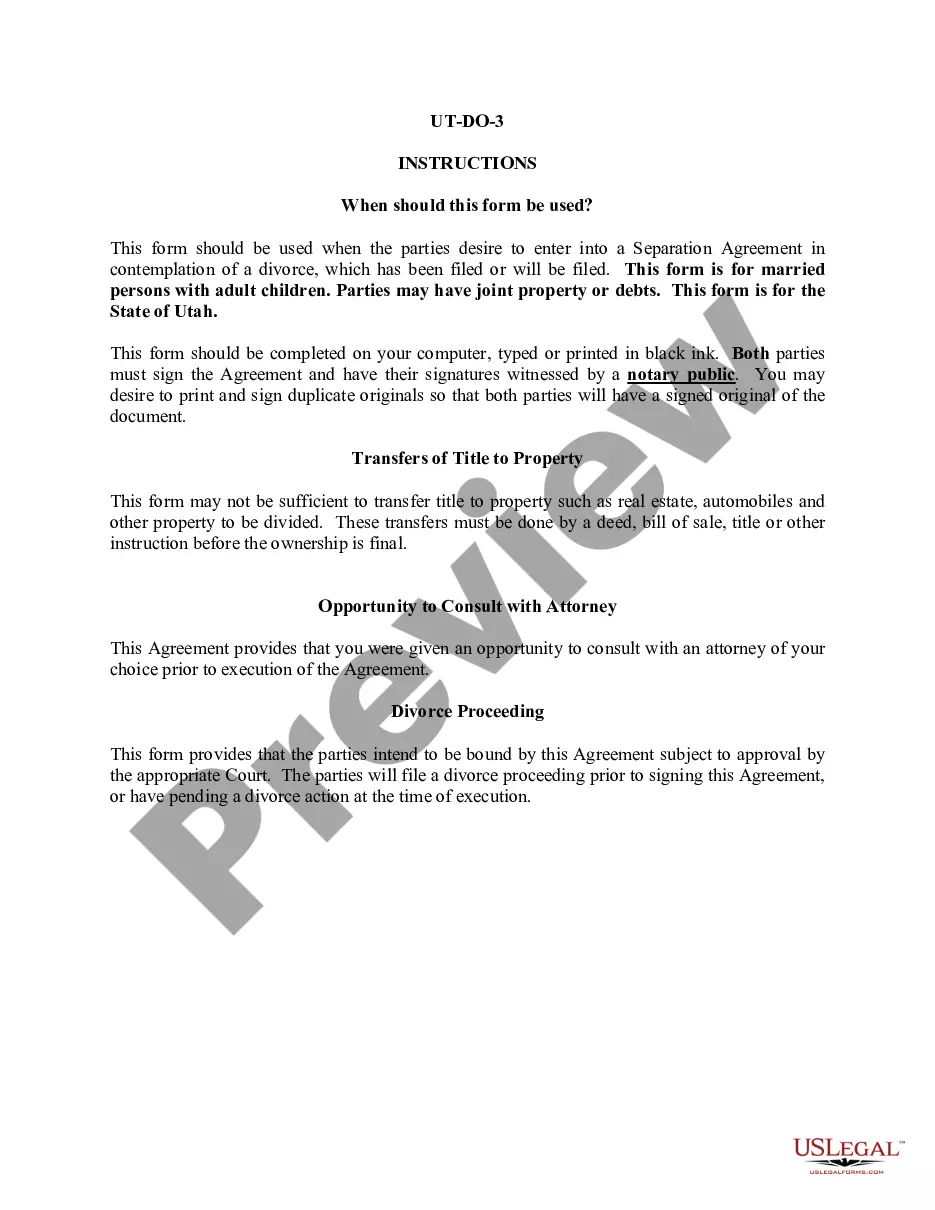
This form should be utilized when a couple with minor children is contemplating divorce and has already filed or plans to file for divorce in the near future. It is critical in scenarios where both parties need to address and finalize property division, child custody arrangements, and support obligations as part of their separation agreement.
Intended users of this form
- Married individuals seeking a legal separation before divorce.
- Couples with minor children who require custody and support arrangements.
- Parties who own joint property or have shared debts to resolve.
- Individuals residing in Utah or those familiar with Utah laws.
How to prepare this document
- Identify the parties involved, including full legal names and addresses.
- Clearly outline the division of assets and debts, specifying which items are assigned to which party.
- Detail custody arrangements and visitation schedules for minor children.
- Determine and record child and spousal support amounts, along with payment frequencies.
- Ensure both parties sign the agreement and have their signatures notarized for legal validity.
Notarization guidance
Notarization is required for this form to take effect. Our online notarization service, powered by Notarize, lets you verify and sign documents remotely through an encrypted video session, available 24/7.
Get your form ready online
Our built-in tools help you complete, sign, share, and store your documents in one place.
Make edits, fill in missing information, and update formatting in US Legal Forms—just like you would in MS Word.
Download a copy, print it, send it by email, or mail it via USPS—whatever works best for your next step.
Sign and collect signatures with our SignNow integration. Send to multiple recipients, set reminders, and more. Go Premium to unlock E-Sign.
If this form requires notarization, complete it online through a secure video call—no need to meet a notary in person or wait for an appointment.
We protect your documents and personal data by following strict security and privacy standards.

Make edits, fill in missing information, and update formatting in US Legal Forms—just like you would in MS Word.

Download a copy, print it, send it by email, or mail it via USPS—whatever works best for your next step.

Sign and collect signatures with our SignNow integration. Send to multiple recipients, set reminders, and more. Go Premium to unlock E-Sign.

If this form requires notarization, complete it online through a secure video call—no need to meet a notary in person or wait for an appointment.

We protect your documents and personal data by following strict security and privacy standards.
Common mistakes
- Failing to include all joint debts and assets in the agreement.
- Not specifying visitation terms clearly, leading to potential disputes.
- Omitting the need for notarization, which may invalidate the agreement.
Advantages of online completion
- Convenient access to legal documents from anywhere at any time.
- Editable templates that allow customization to fit specific needs.
- Reliability of documents drafted by licensed attorneys to ensure legal compliance.
Looking for another form?


Form popularity
FAQ
Couples who are separated, whether informally or legally, are still married in the eyes of the law, regardless of how independent their lives have become. This means that if either spouse has a sexual relationship with another person during the separation period, they have probably committed adultery.
Legally you cannot be married to more then one person at the same time. Therefore, until your divorce decree is entered (no sooner then 91 days upon filing for divorce) you cannot remarry. The decision to begin dating again is a personal decision that only you can decide when the time is right.
Couples seeking legal separation must resolve issues similar to that of divorce, including child custody and visitation, dividing up property and child support, and paying debts. A separation agreement is a legal binding contract signed by spouses, which is intended to resolve property, debt and child related issues.
The court will consider the child's wishes to the extent that the child is sufficiently mature to express reasoned and independent preferences as to the parenting time schedule. Usually the court will not consider child's preference unless the child is at least 14 years old.
Cohabitation is defined as two individuals that live together and are not married. According to the Utah Supreme Court case of Myers v. Myers, this is when two people are engaged in a romantic relationship and spend most or all of their time living together.
Both parents are entitled to regular time with their child and neither parent can prevent visits.
There is nothing illegal or wrong about dating while married and waiting for your divorce as long as you are living separate and apart. Many people choose to start dating again at some point during their separation and before the final divorce decree are entered.
In order to file a Petition for Temporary Separation, you and your spouse must be lawfully married and both have been residents of Utah for at least 90 days prior to the date of filing the petition.
In cases where parents can't agree, a judge will decide visitation and custody based on the child's best interests.Both parents are bound by the terms of a custody order. If your child refuses to go to visits with the other parent, you could still be on the hook for failing to comply with a custody order.