Utah Marital Domestic Separation and Property Settlement Agreement Minor Children Parties May have Joint Property or Debts effective Immediately
What is this form?
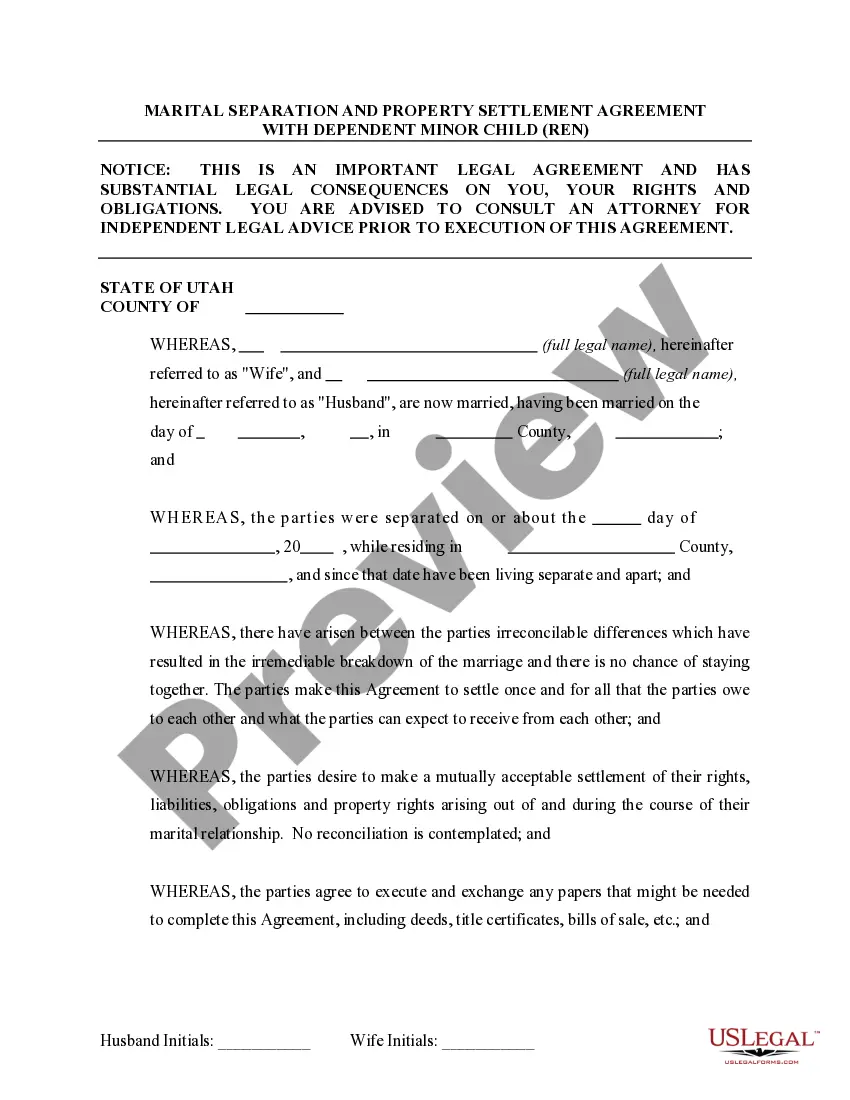
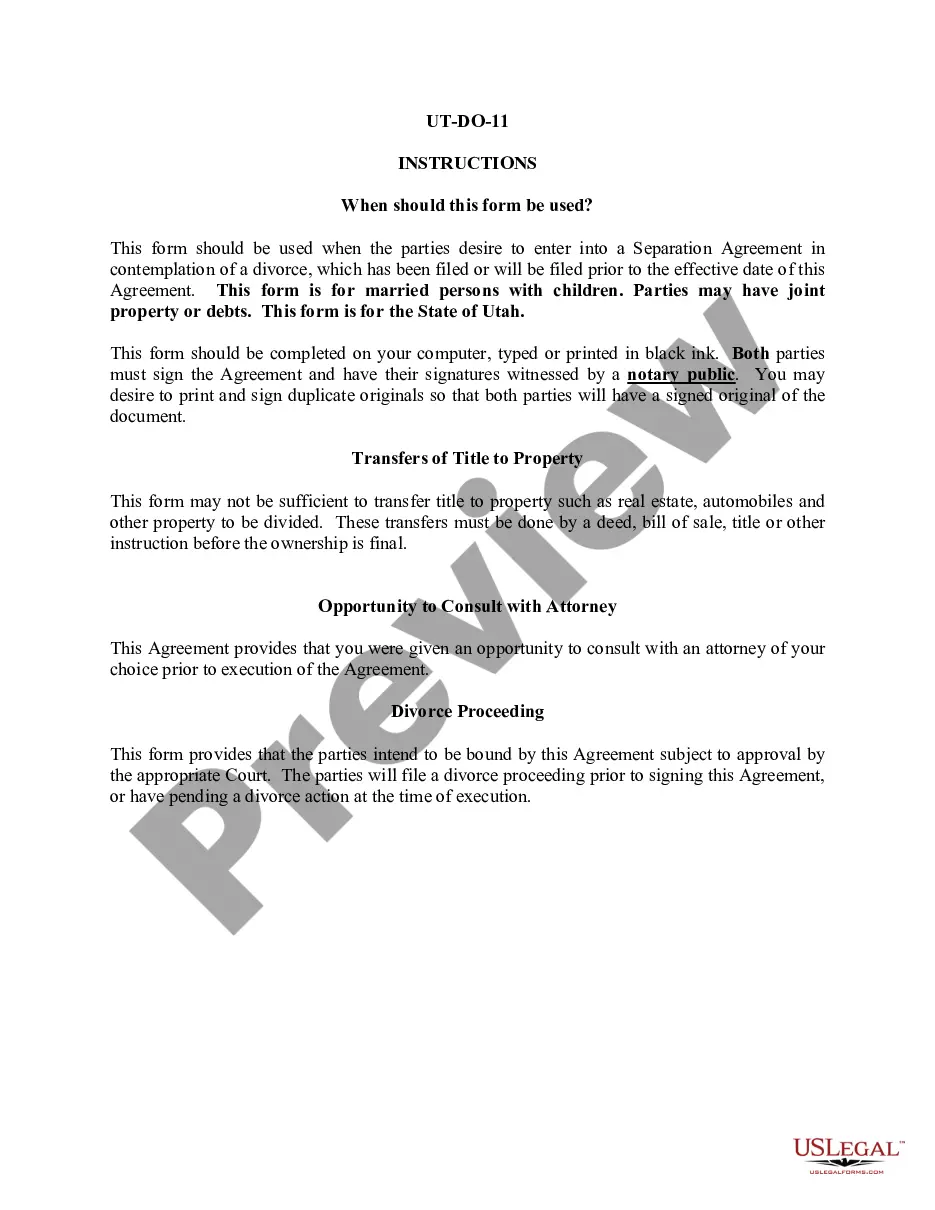
This Marital Domestic Separation and Property Settlement Agreement is a legal document designed for married couples with minor children who wish to separate and settle property and debt division immediately. Unlike traditional separation agreements, this form ensures that, if a divorce action follows, the terms will be incorporated into the Final Judgment of Divorce. The agreement addresses custody, visitation, child support, and division of assets and liabilities with a focus on protecting the interests of both parties and their children.
Key components of this form
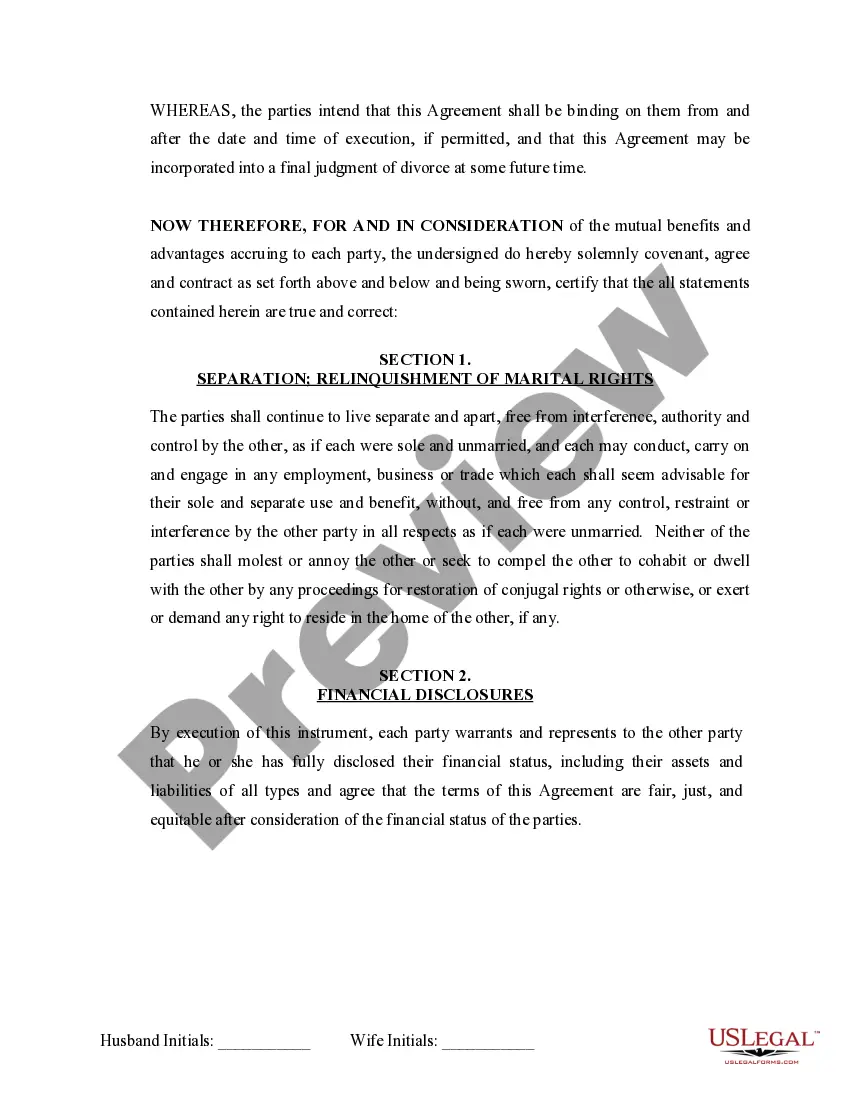
- Separation terms: Outlines the parties' intent to live separately and manage their affairs independently.
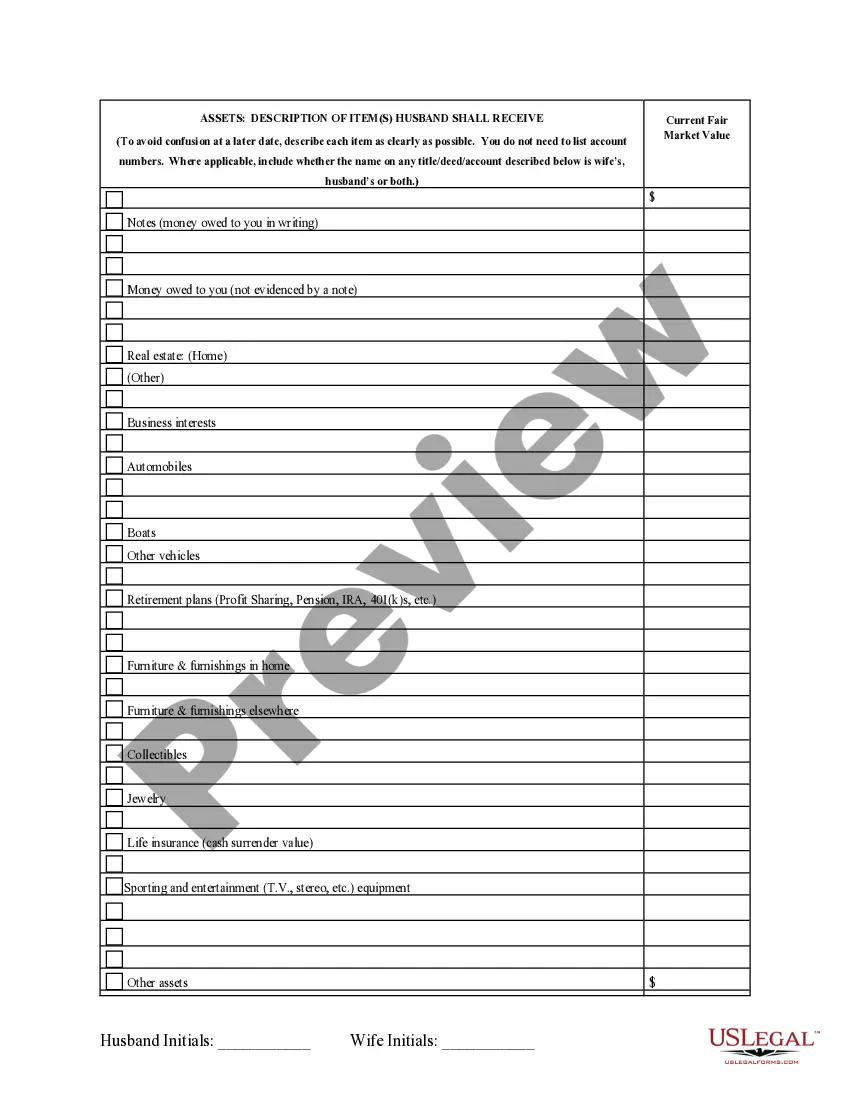
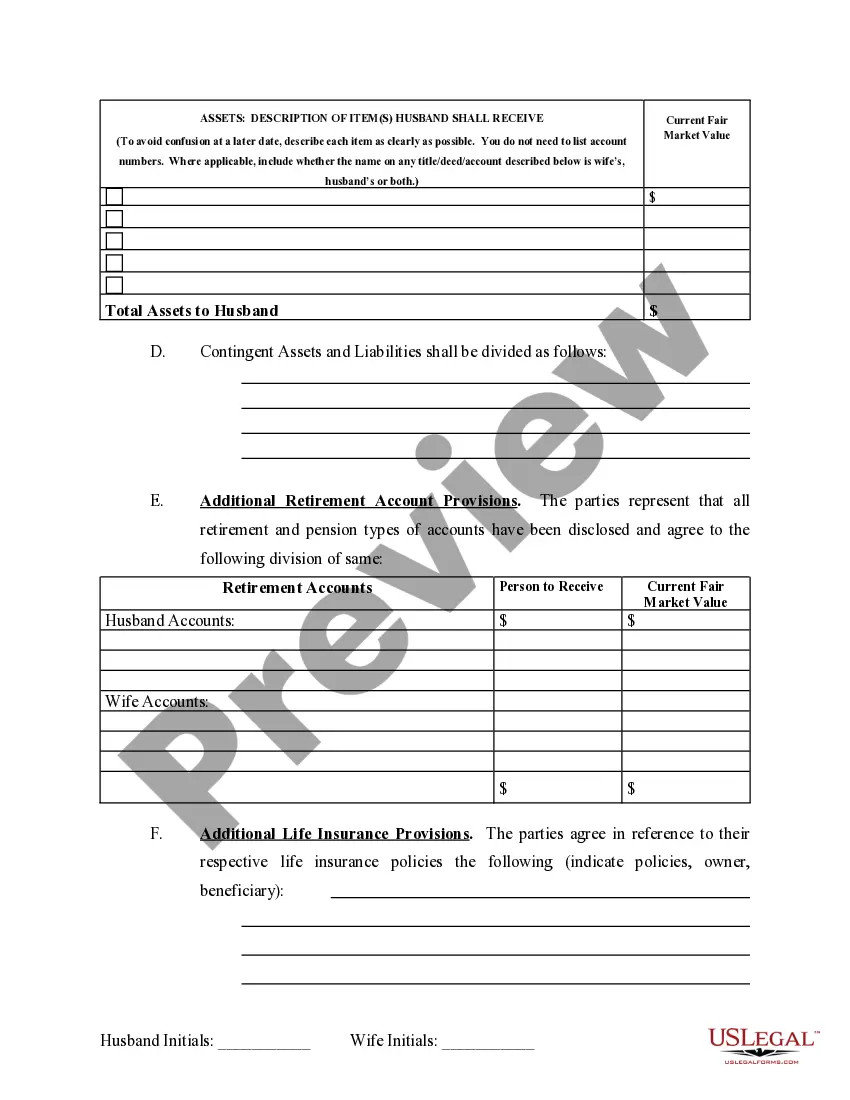
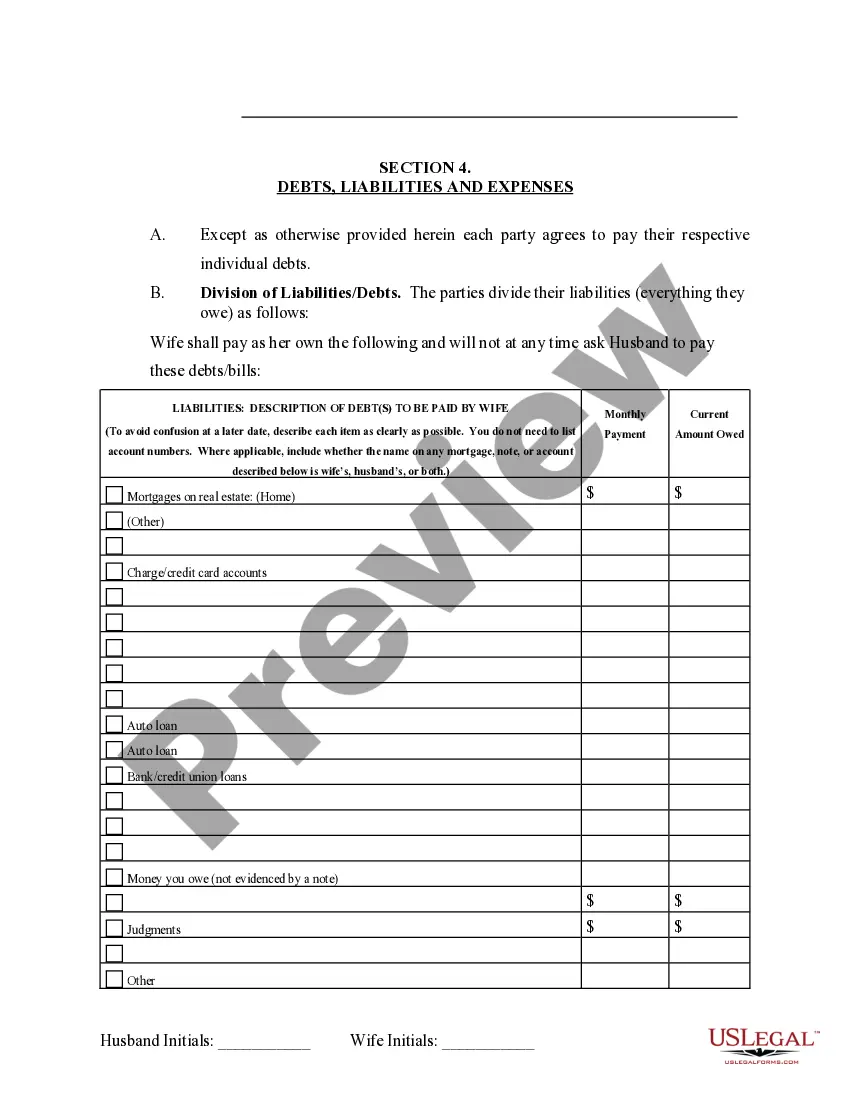
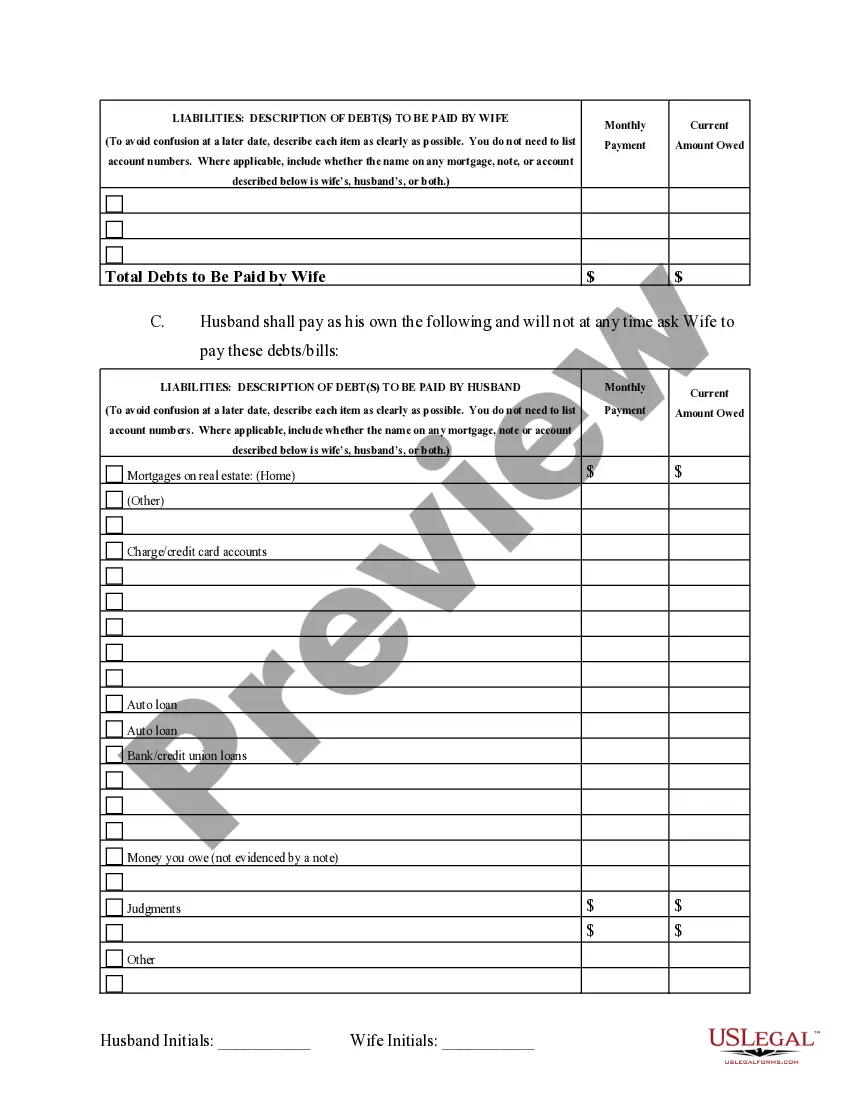
- Financial disclosures: Requires full disclosure of assets and liabilities to ensure fairness in the settlement.
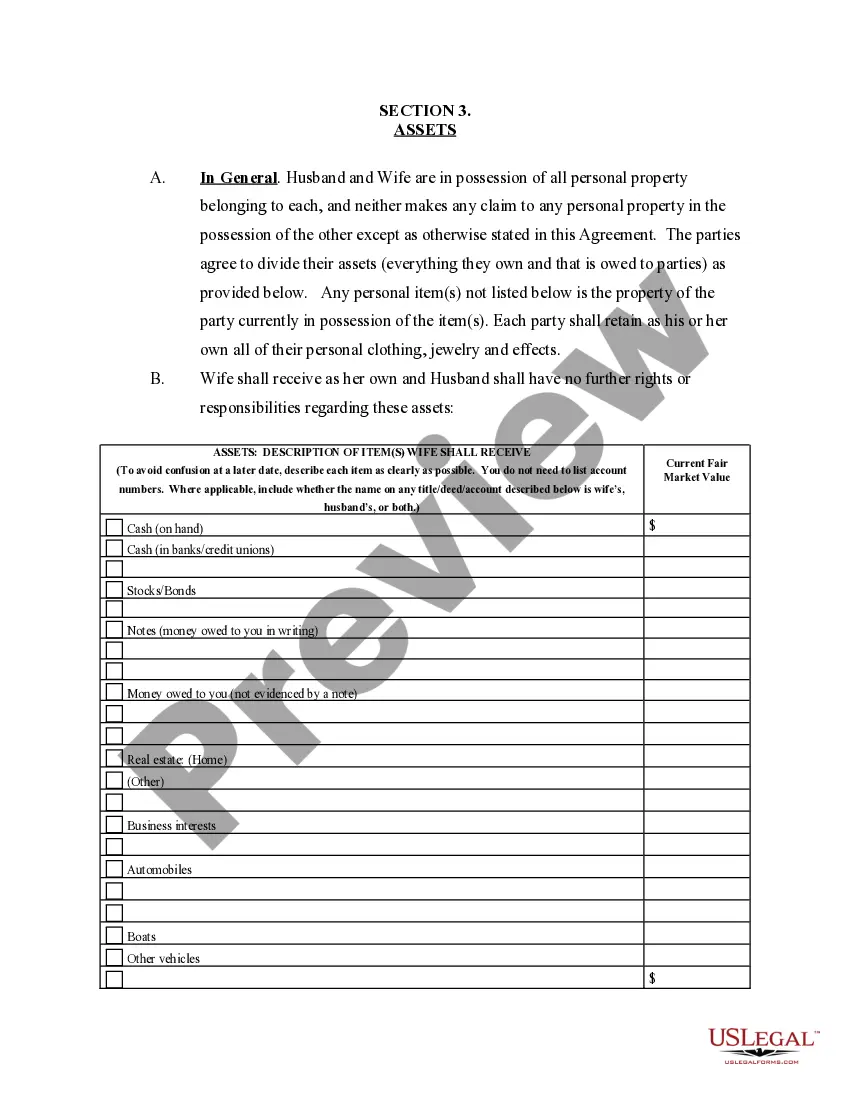
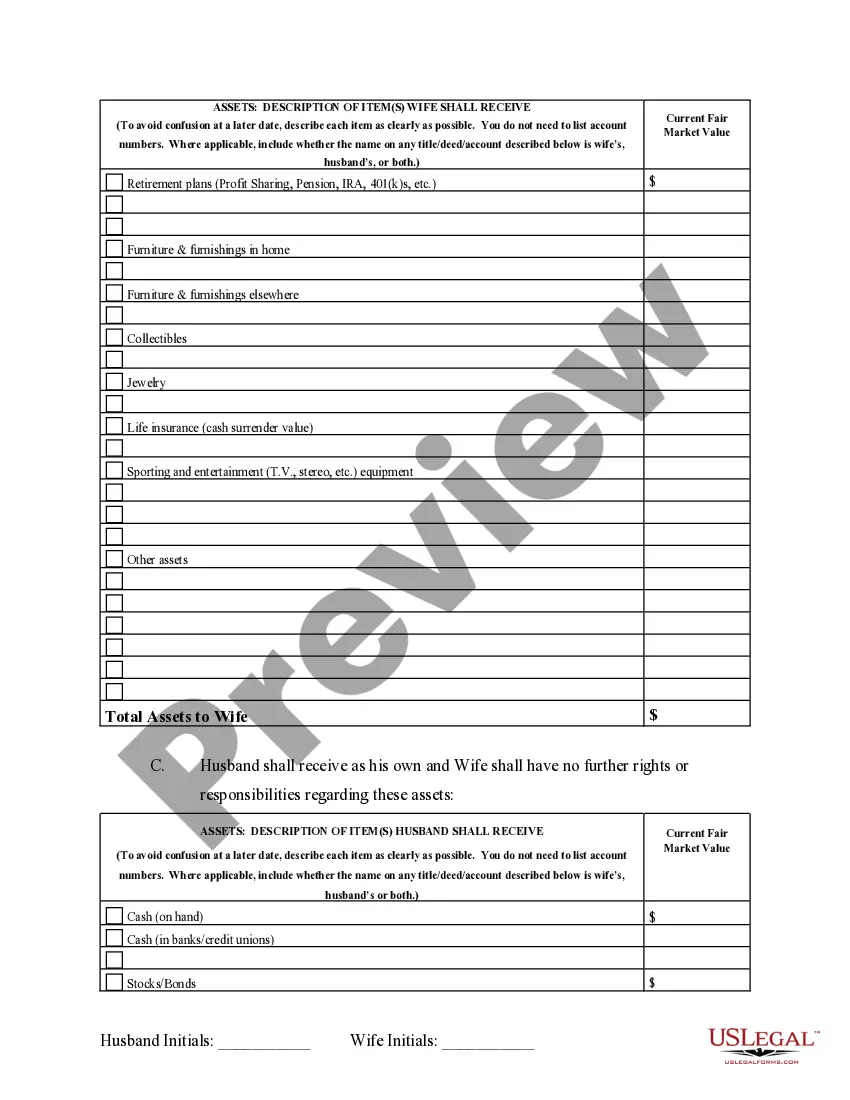
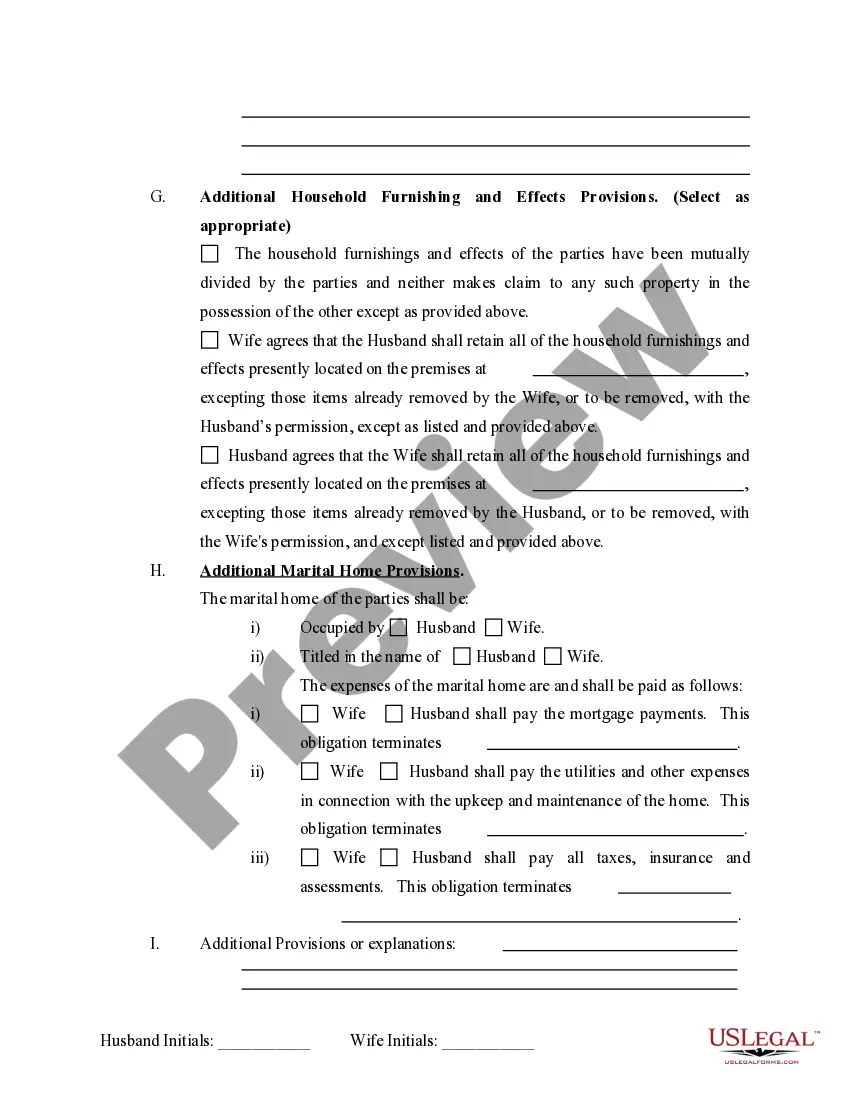
- Asset division: Specifies how joint property will be divided between the parties.
- Child custody and support: Details arrangements for child custody, visitation, and child support obligations.
- Spousal support: Addresses any alimony claims and the waiving of rights to such support.

When to use this document
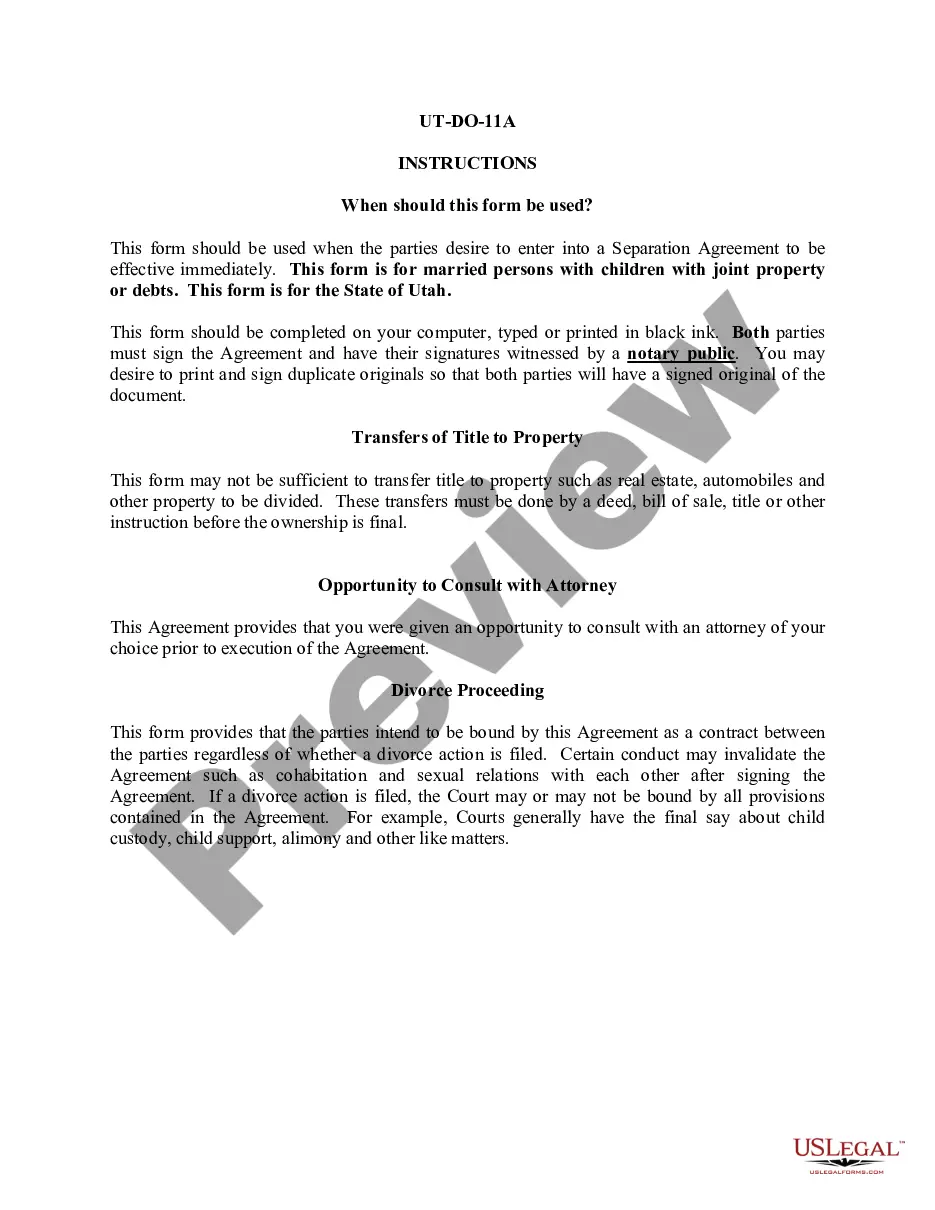
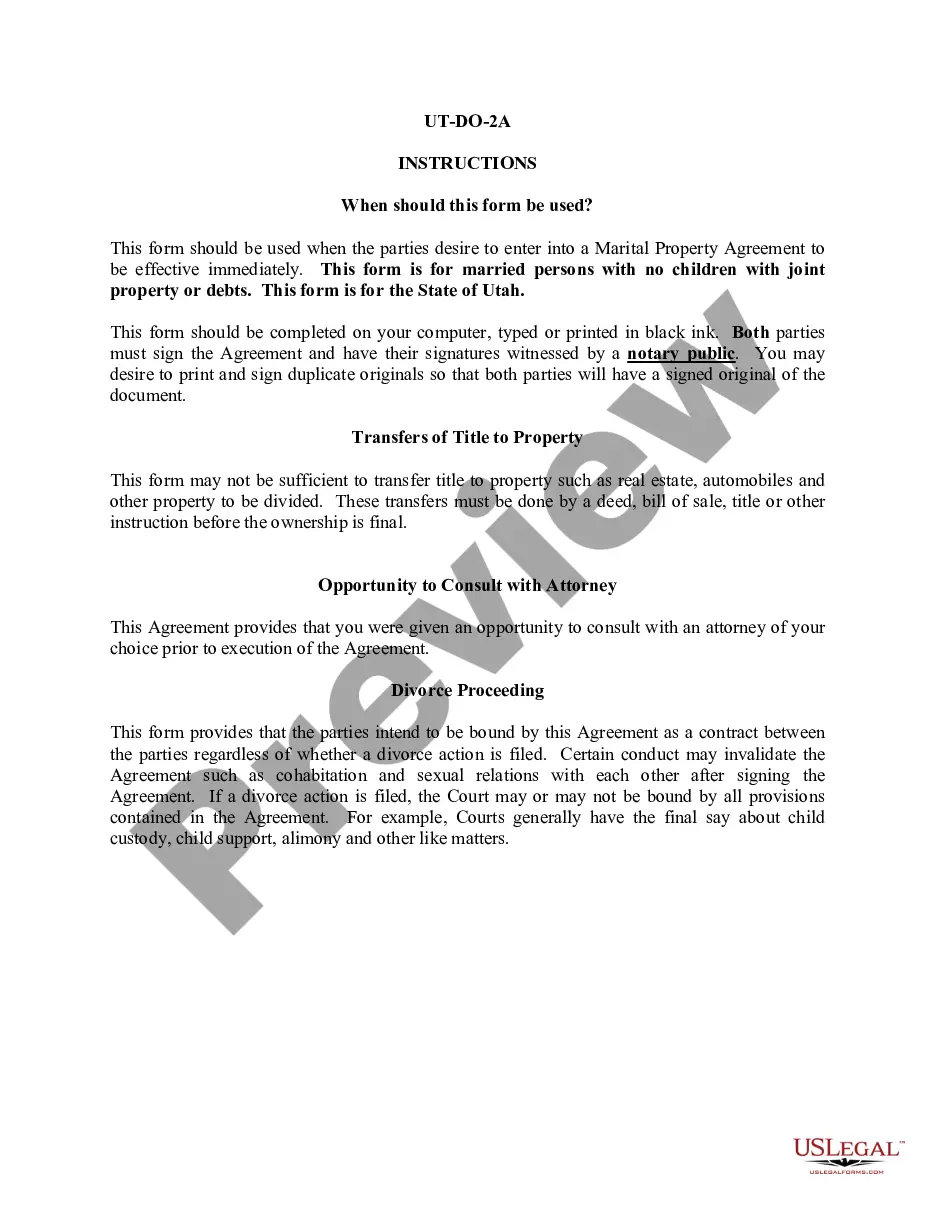
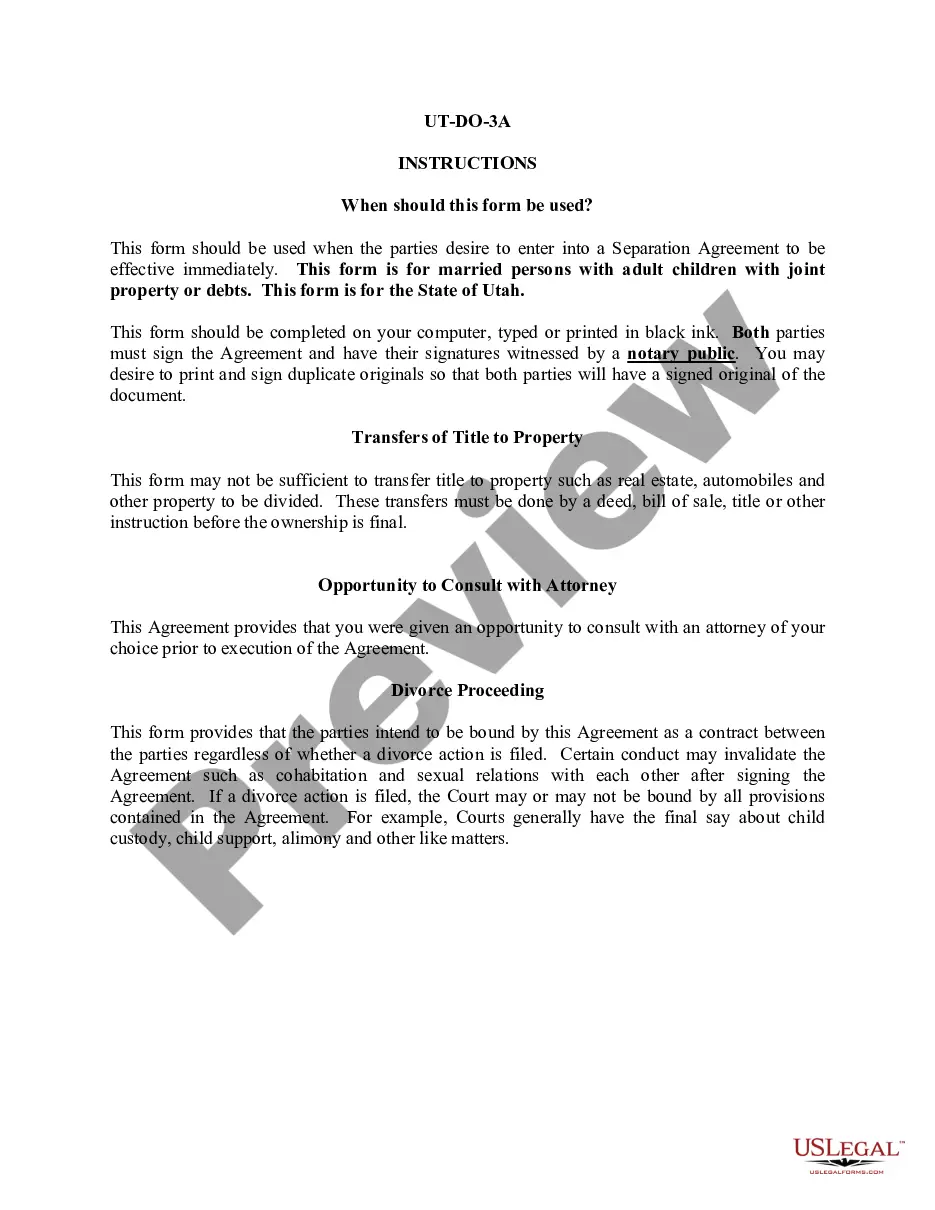
This form should be used when a married couple with minor children decides to separate and needs to establish a clear agreement regarding the division of assets, debts, and child custody arrangements. It is ideal for situations where both parties agree on the terms and desire them to be effective immediately, providing clarity and legal standing as they navigate their separation.
Who this form is for
- Married couples with minor children seeking immediate separation.
- Couples who have jointly owned property and debts they need to settle.
- Parties in the State of Utah looking to formalize their separation agreement legally.
How to complete this form
- Identify the parties involved and their respective addresses.
- Document all jointly owned assets and liabilities to be divided.
- Specify custody, visitation schedules, and child support terms for minor children.
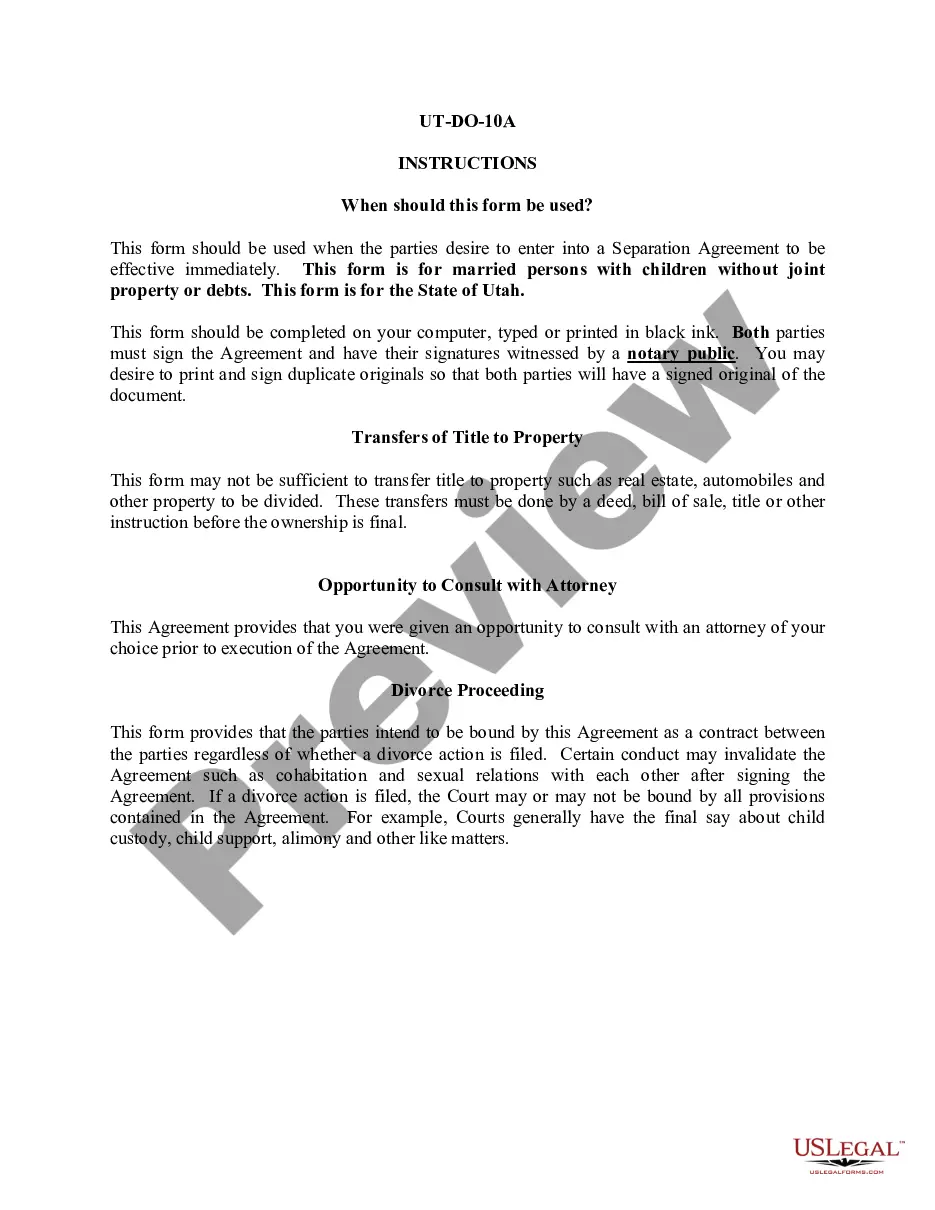
- Both parties must sign the agreement in the presence of a notary public.
- Consider making duplicate originals of the signed agreement for each party's records.
Notarization guidance
Yes, this form must be notarized to be legally valid. Both parties are required to sign in the presence of a notary public to verify their identities and willingness to enter into the agreement. US Legal Forms offers integrated online notarization services for your convenience.
Get your form ready online
Our built-in tools help you complete, sign, share, and store your documents in one place.
Make edits, fill in missing information, and update formatting in US Legal Forms—just like you would in MS Word.
Download a copy, print it, send it by email, or mail it via USPS—whatever works best for your next step.
Sign and collect signatures with our SignNow integration. Send to multiple recipients, set reminders, and more. Go Premium to unlock E-Sign.
If this form requires notarization, complete it online through a secure video call—no need to meet a notary in person or wait for an appointment.
We protect your documents and personal data by following strict security and privacy standards.

Make edits, fill in missing information, and update formatting in US Legal Forms—just like you would in MS Word.

Download a copy, print it, send it by email, or mail it via USPS—whatever works best for your next step.

Sign and collect signatures with our SignNow integration. Send to multiple recipients, set reminders, and more. Go Premium to unlock E-Sign.

If this form requires notarization, complete it online through a secure video call—no need to meet a notary in person or wait for an appointment.

We protect your documents and personal data by following strict security and privacy standards.
Common mistakes
- Failing to fully disclose all assets and debts, which can lead to future disputes.
- Not having the agreement notarized, which may affect its enforceability.
- Overlooking specific provisions for child custody or support that could impact the children's well-being.
Benefits of using this form online
- Convenience of downloading and completing the form at your own pace.
- Editability allows for customization based on specific needs and circumstances.
- Reliability, with forms drafted by licensed attorneys ensuring legal validity.
Looking for another form?
Form popularity
FAQ
While some states use community property laws to dictate property division in a divorce, Utah is an equitable division state. This means that you will not necessarily split your marital property equally. These laws simply require that you and your husband divide your property in a way that is fair to each of you.
Utah is NOT a community property state, which means that marital property is not automatically divided 50/50 between the spouses in a divorce case.
Required Conditions. Many people want to get a "common law marriage." Utah does not have common law marriage; instead, you may petition the court to recognize your relationship as a marriage even though you never had a marriage ceremony.
Alimony is calculated from net income instead of gross income. Net income is your gross income minus your taxes paid to the state and federal government. And not all income needs to be included in determining alimony. Only up to 40 hours per work per week should be factored into alimony.
However, some states make a legal distinction between dating during separation and dating while living together as man and wife. In Utah, unless one spouse is clinically insane, couples can only file for divorce after a one-year separation period.If the adultery occurs after the date of separation, it does not.
How property is divided in a divorce. Utah law requires an equitable division of marital property. Equitable means fair, which is not necessarily equal.For long-term marriages, equitable may mean a 50-50 split, or the court may decide that it is fair to give one party more or less than 50% of the property.
Nineteen states and the District of Columbia don't require their retirees to notify their spouses or get their spouse's consent when they elect a single-life annuity: Alabama, the District of Columbia, Colorado, Georgia, Indiana, Kentucky, Maryland, Mississippi, Montana, Nebraska, New York, North Carolina, North Dakota
Utah is NOT a community property state, which means that marital property is not automatically divided 50/50 between the spouses in a divorce case.Factors such as one spouse's economic misconduct may also be considered.