Utah Marital Domestic Separation and Property Settlement Agreement Minor Children no Joint Property or Debts effective Immediately
What is this form?
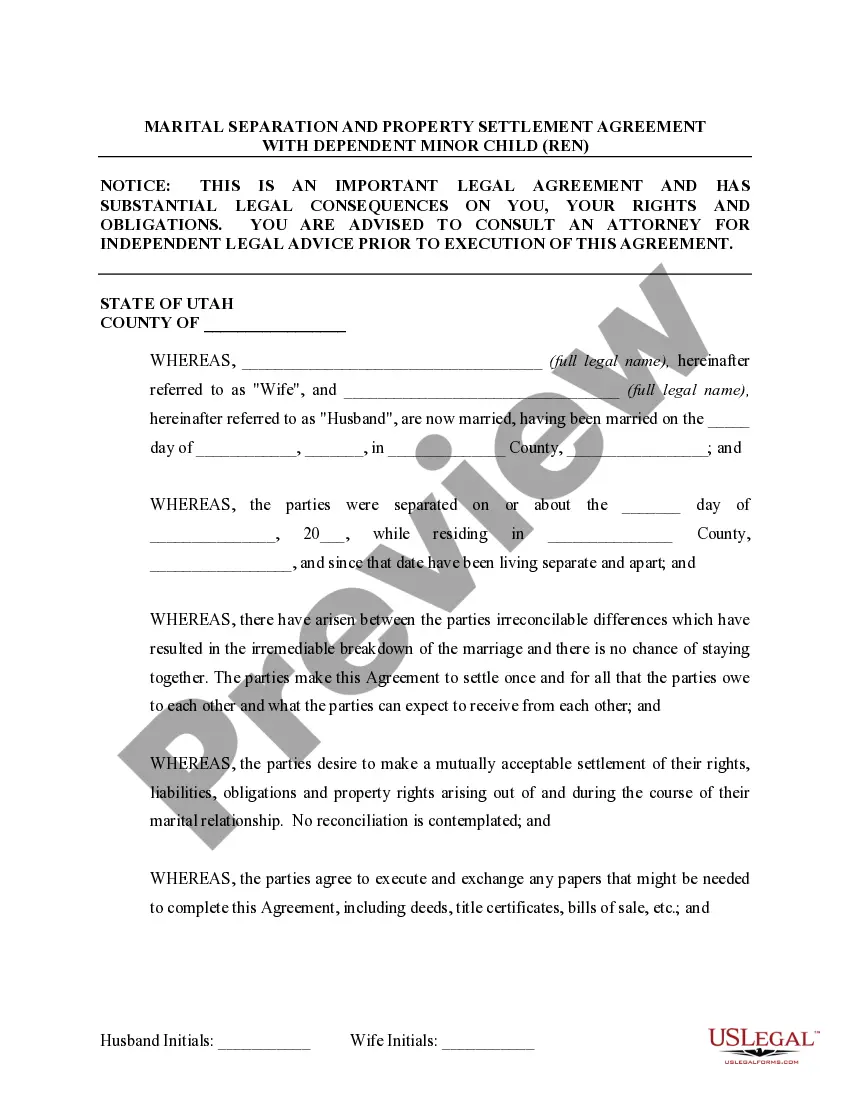
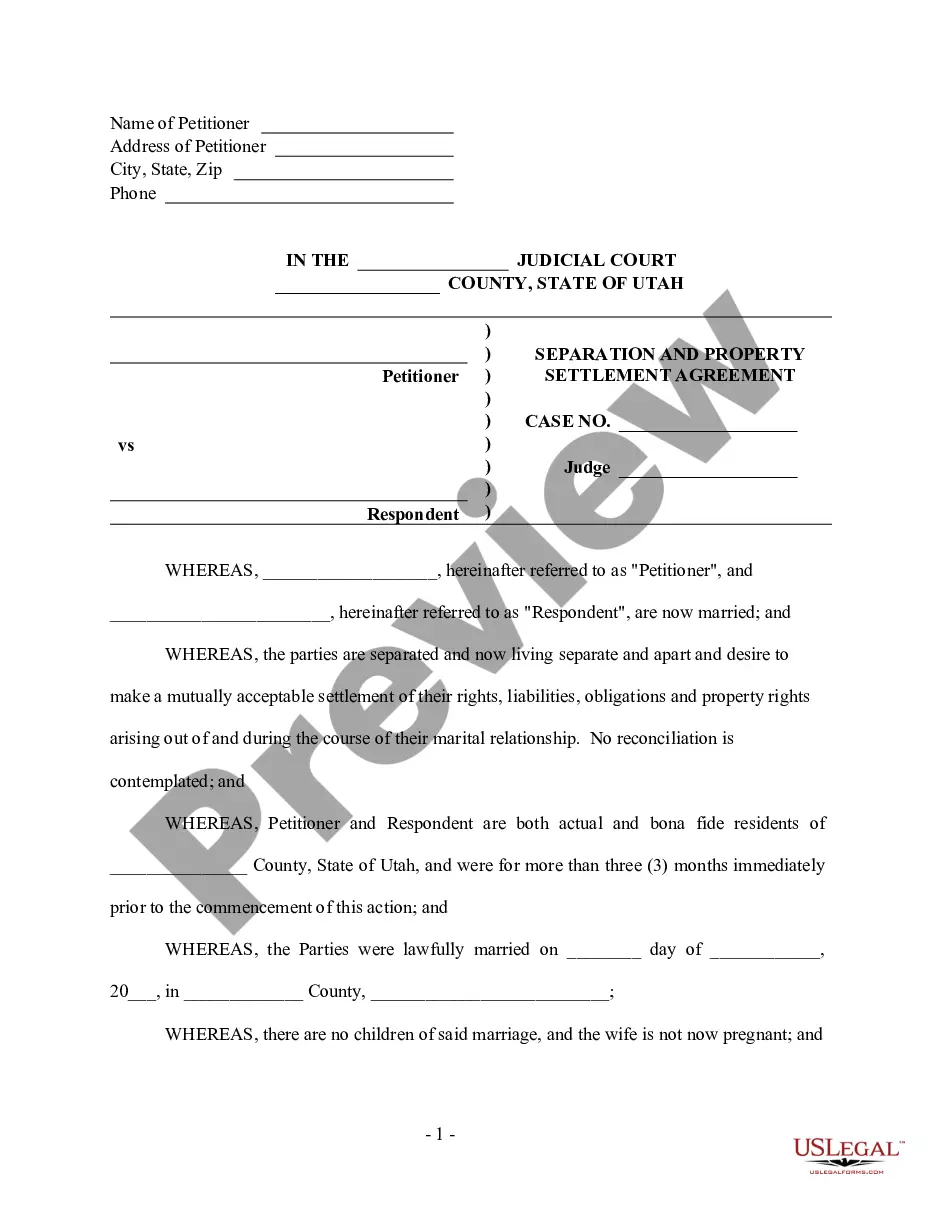
This Marital Domestic Separation and Property Settlement Agreement is a legal document designed for married couples with minor children who wish to separate without joint property or debts. It establishes the terms of guardianship, visitation rights, child support, and financial responsibilities, ensuring that both parties have a clear understanding of their obligations. This agreement is effective immediately upon execution, differing from similar documents that may require court approval or delay in implementation.
Main sections of this form
- Details of the parties involved, including names and marriage details.
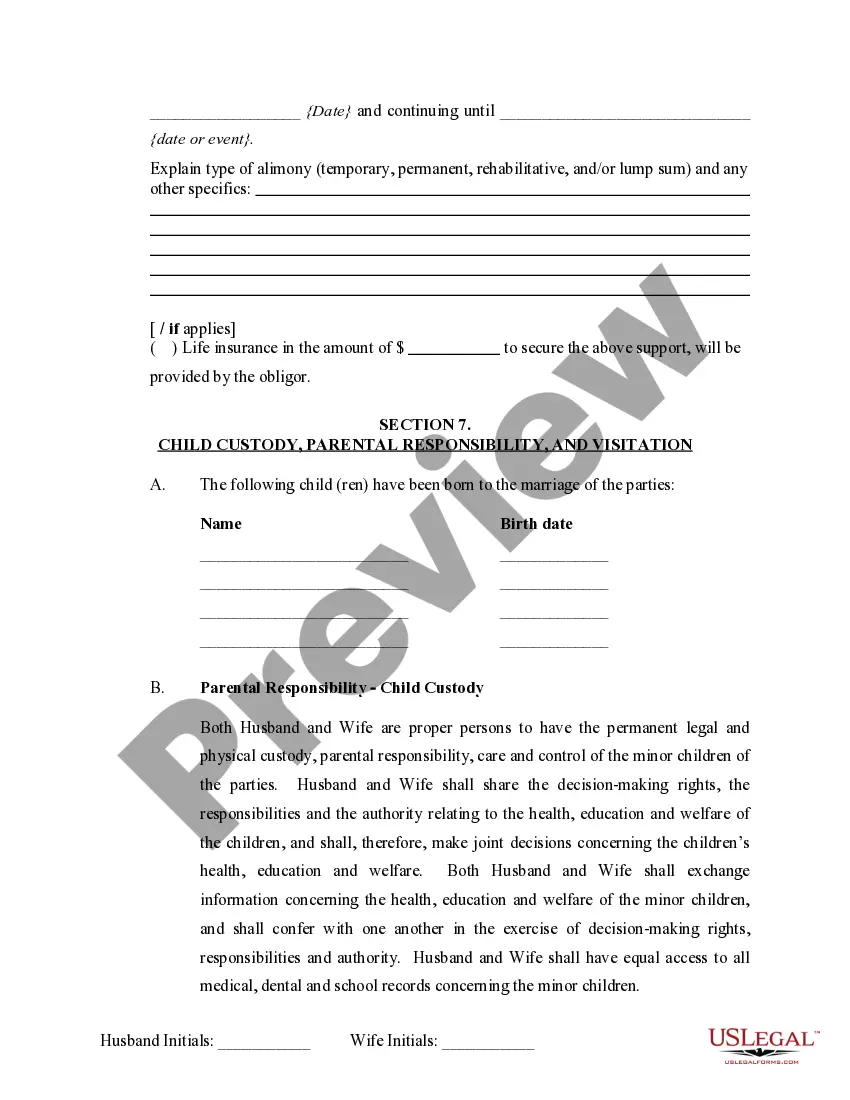
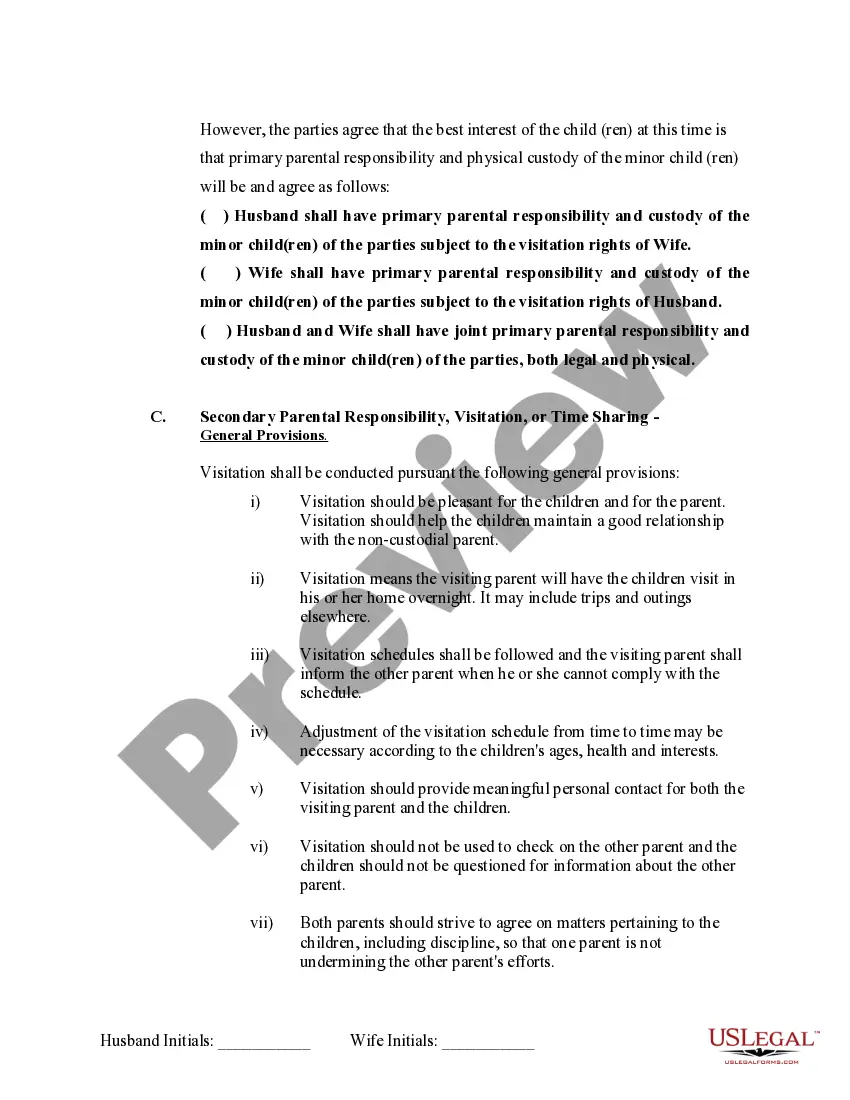
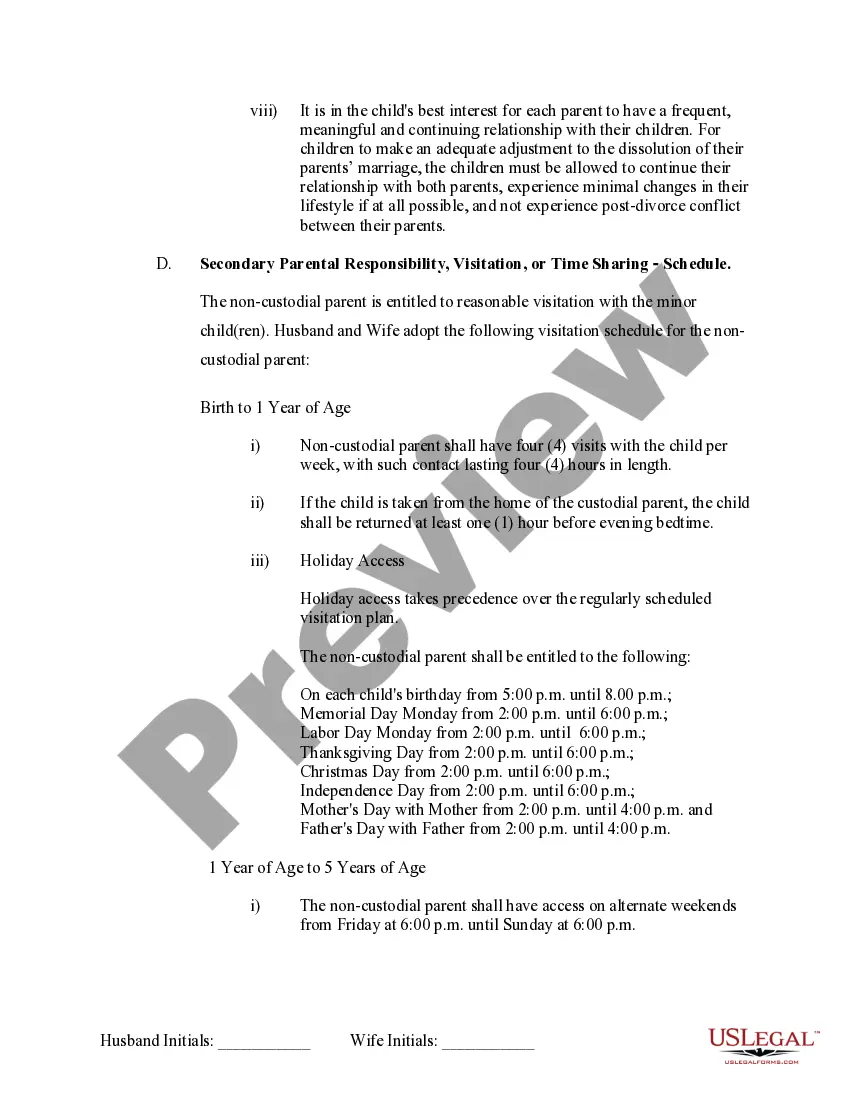
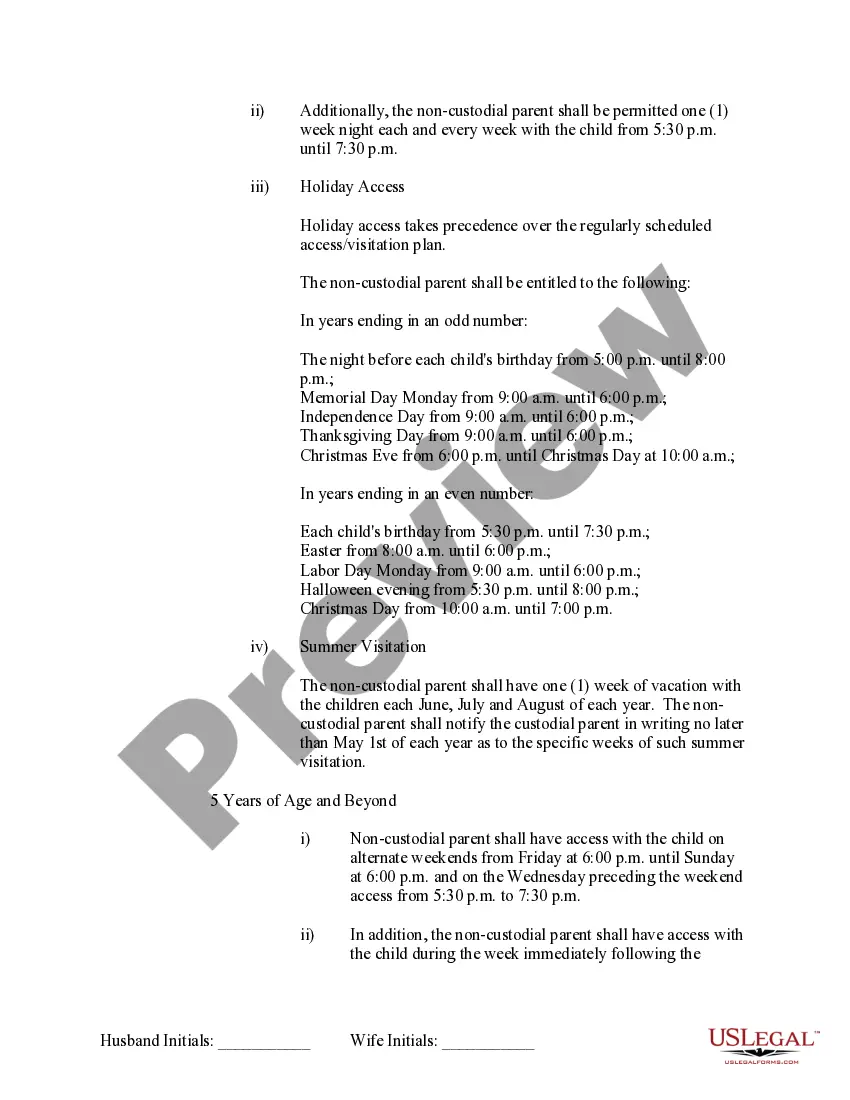
- Sections defining child custody, visitation schedules, and parental responsibilities.
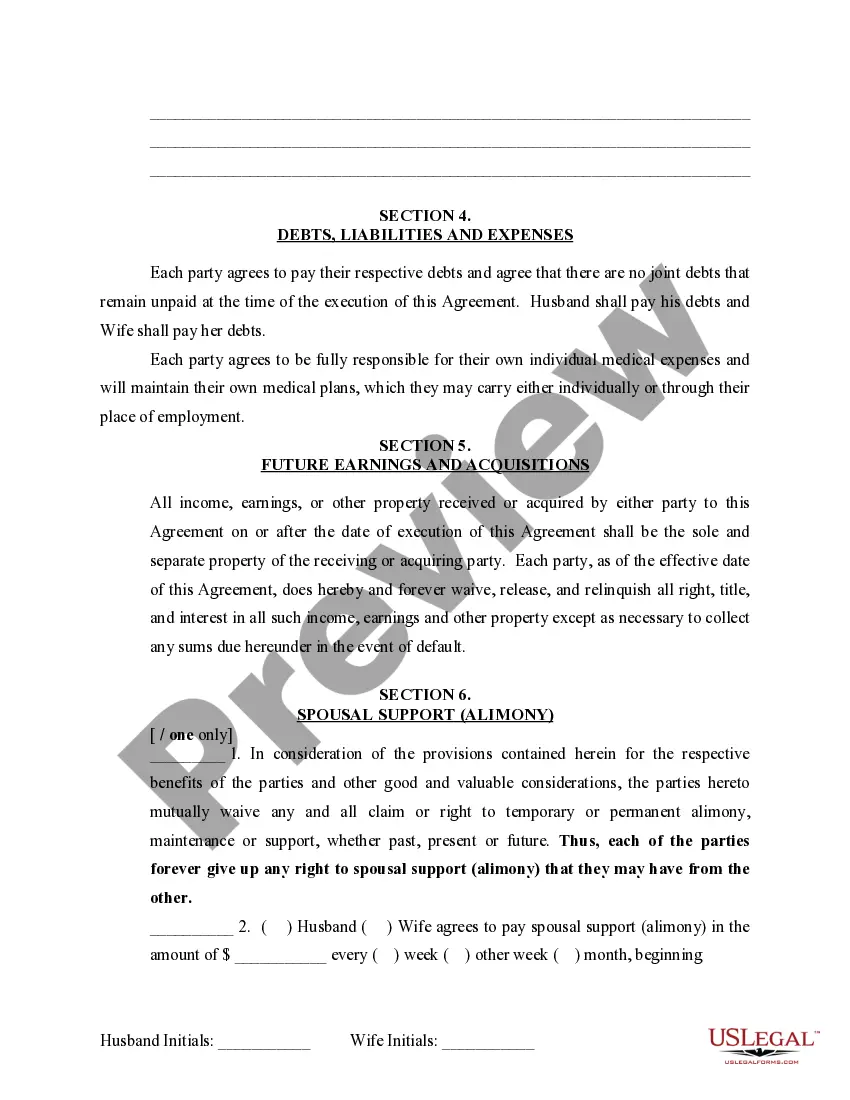
- Provisions for child support, including amounts and payment schedules.
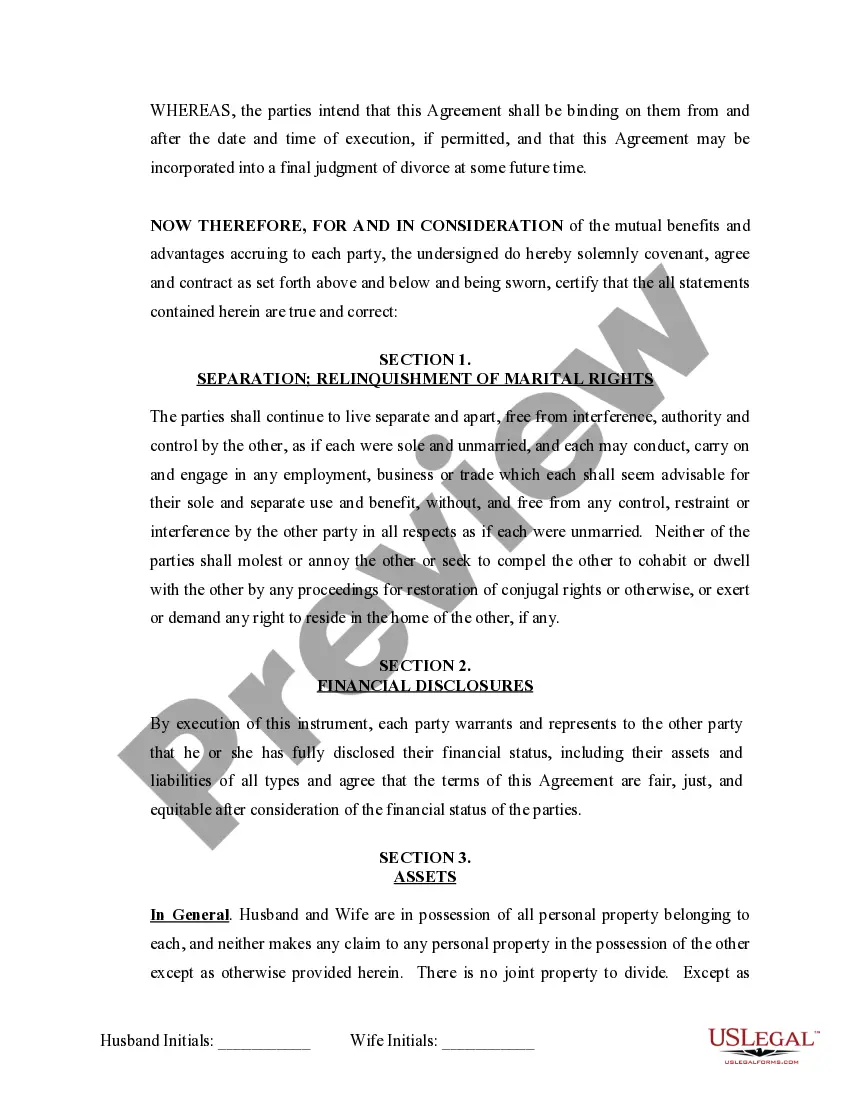
- Financial disclosure requirements to ensure transparency regarding assets and debts.
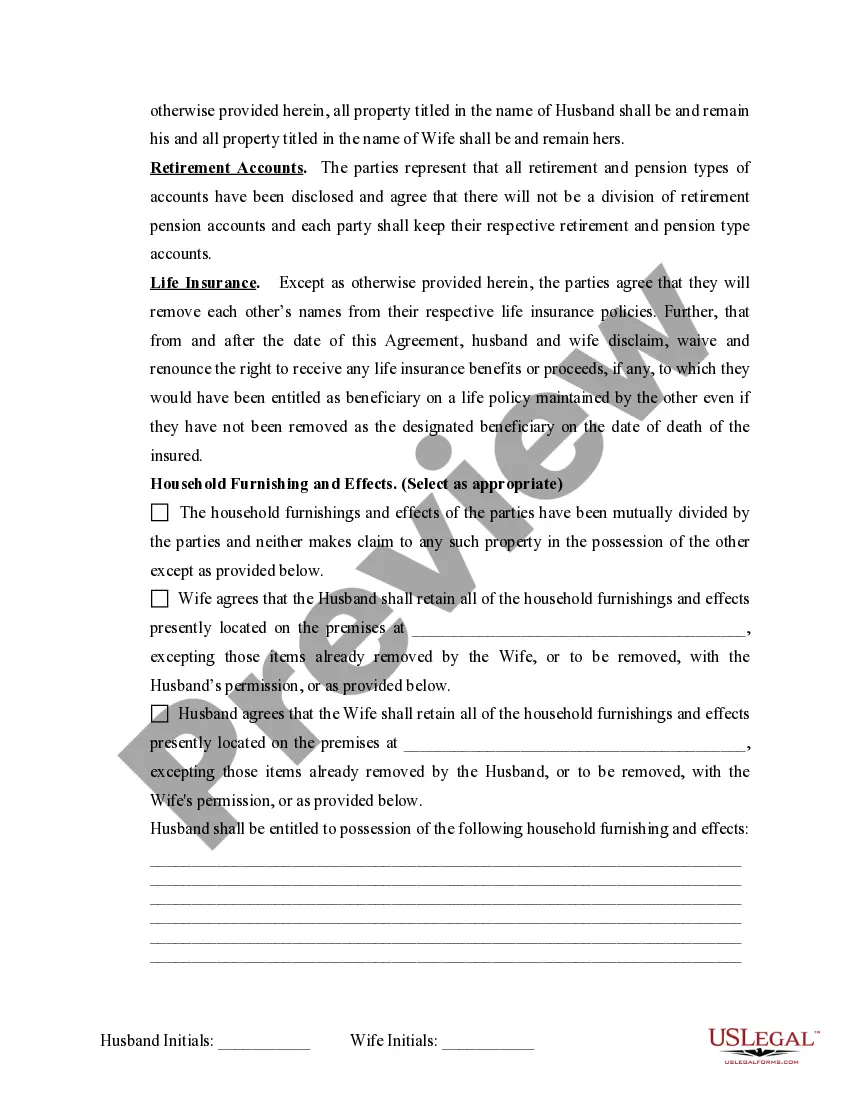
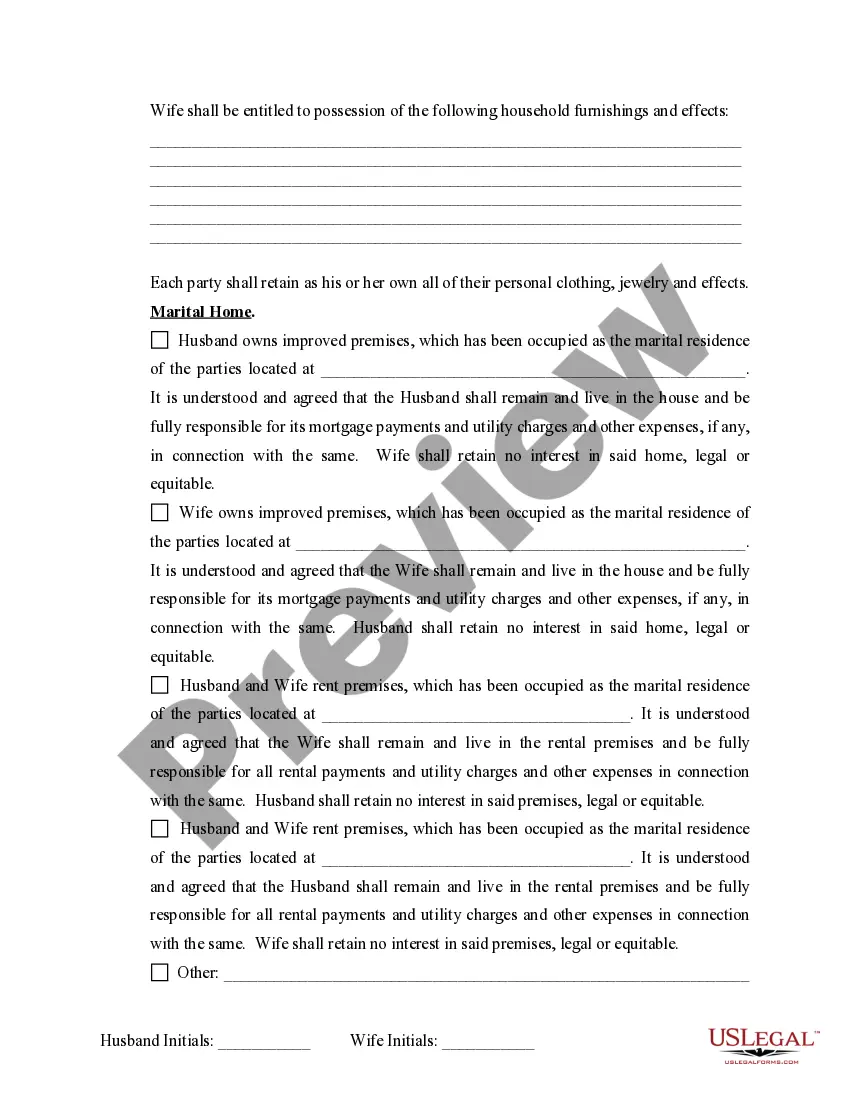
- Provisions regarding the division of property and other financial obligations, including alimony clauses.
- Notarization requirements for legal validation of signatures.

When to use this document
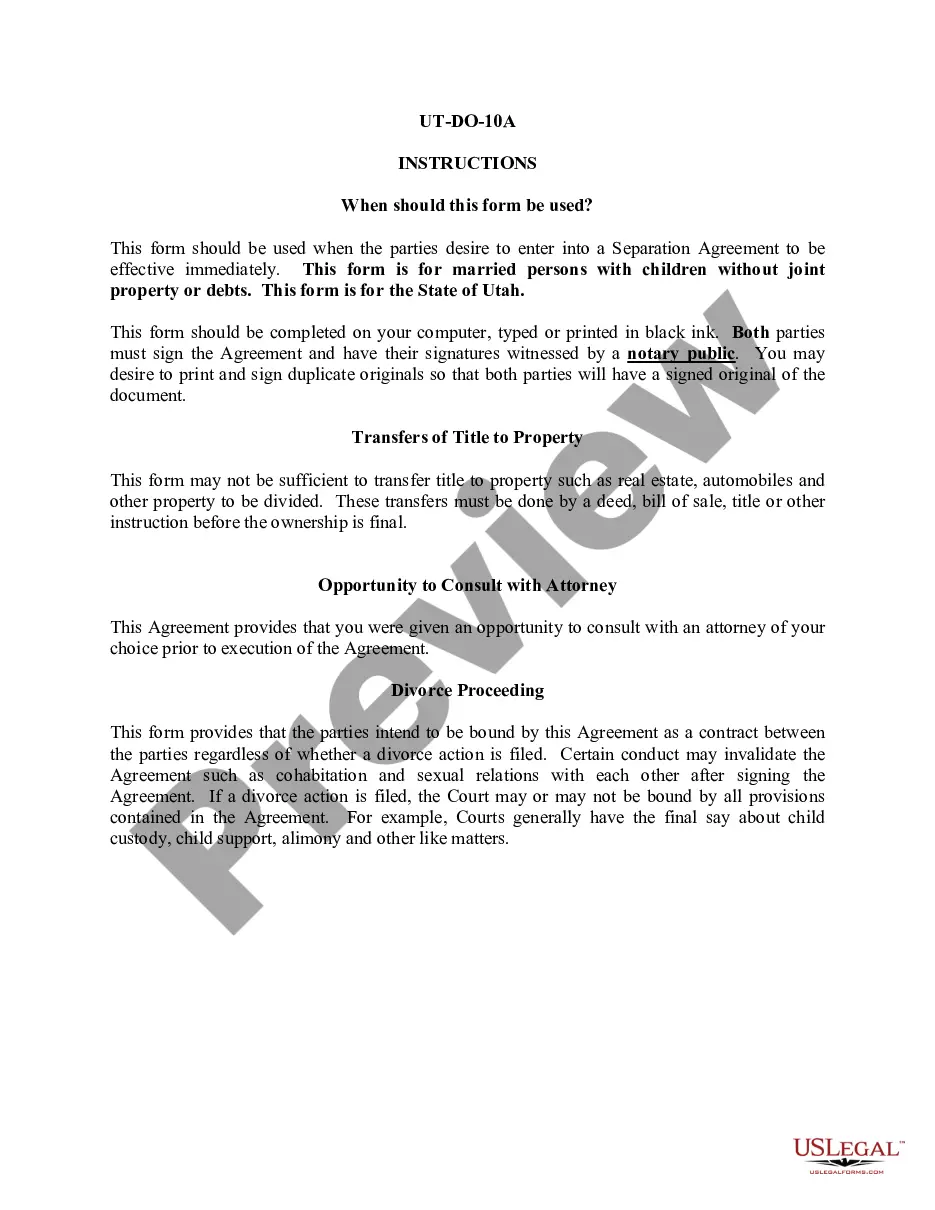
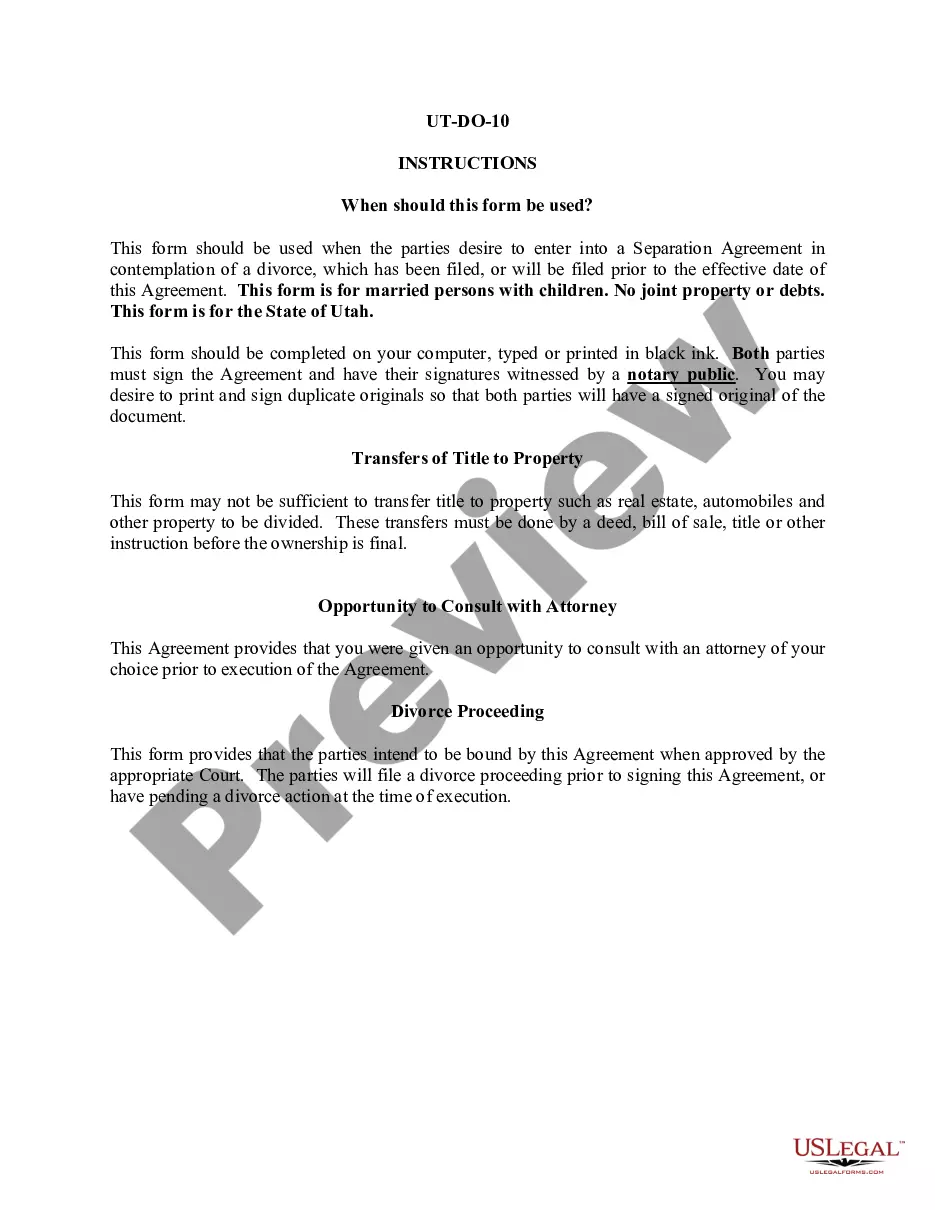
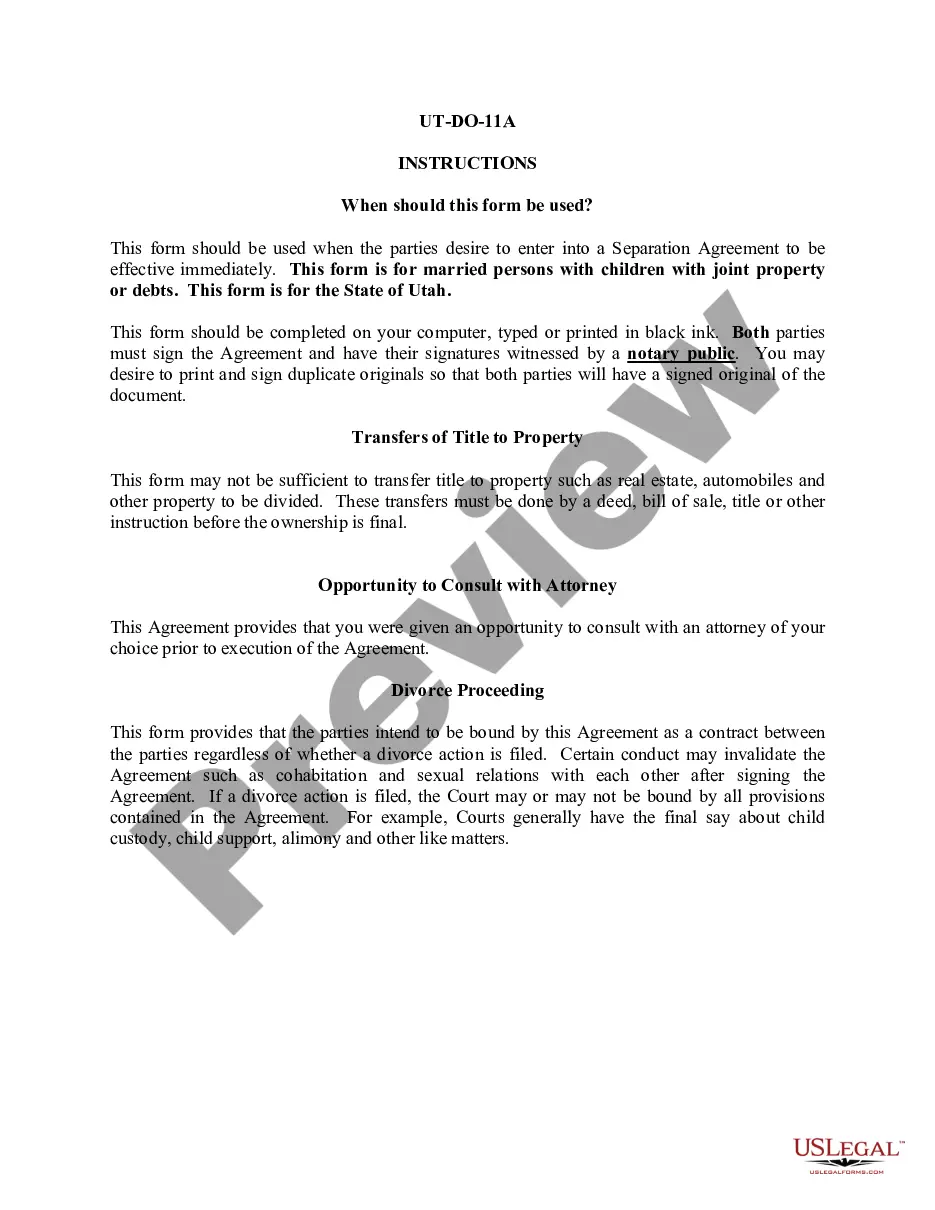
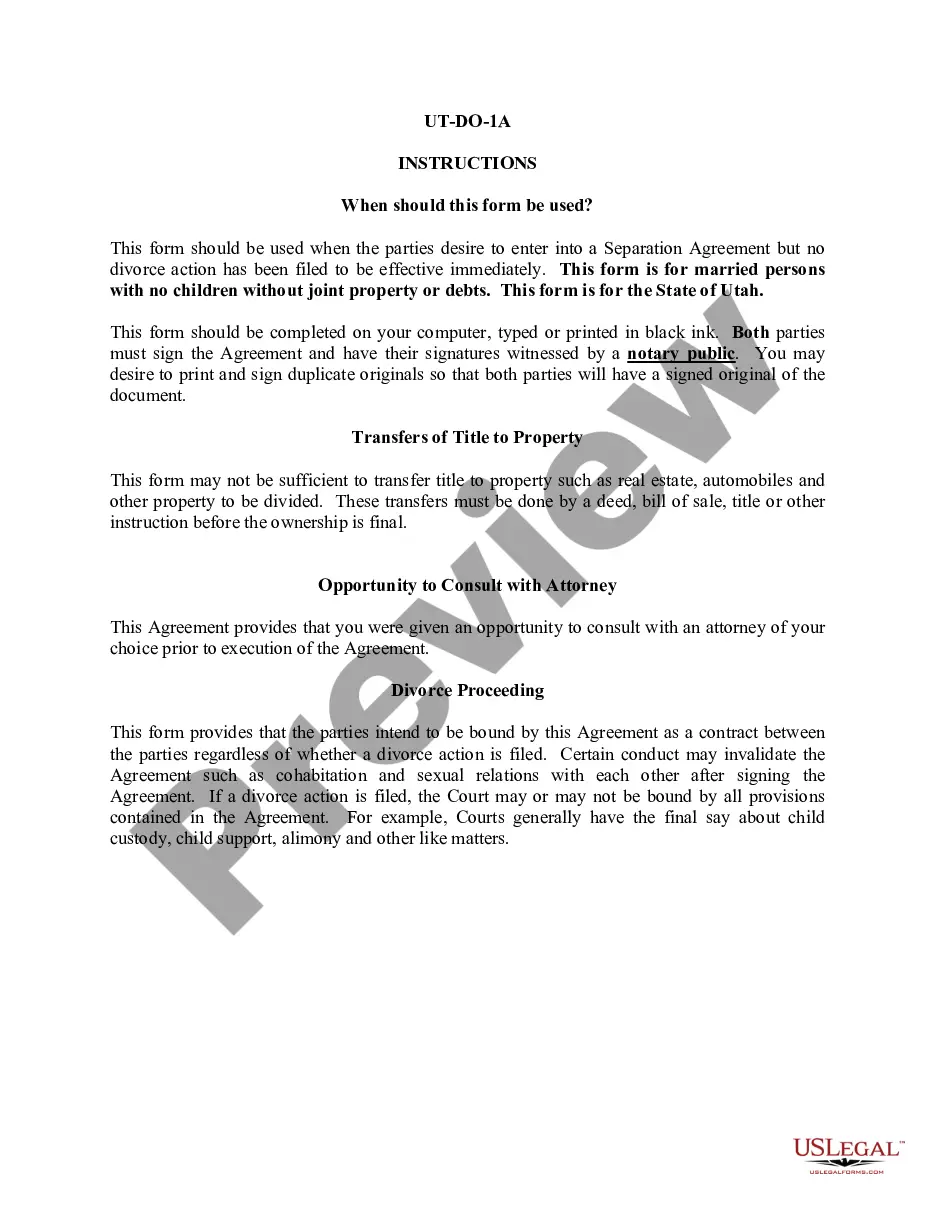
This form should be used when married parents with minor children decide to separate but do not have shared property or debts. It is applicable if the parties want the agreement to become effective immediately, allowing them to outline their roles and responsibilities regarding child custody, support, and other pertinent decisions without court intervention.
Intended users of this form
- Married couples with minor children seeking a separation.
- Parents who have no joint property or debts.
- Individuals looking for a legally recognized agreement summarizing custody and child support provisions.
- Couples who wish to formalize their separation without a divorce proceeding.
How to complete this form
- Identify the full names of both parties and their marital details.
- Clearly state the custody arrangements for any minor children.
- Specify the agreed-upon child support amounts, including payment frequency.
- Ensure both parties disclose their financial statuses fully.
- Have the completed document signed by both parties in the presence of a notary public.
Does this document require notarization?
This document requires notarization to meet legal standards. US Legal Forms provides secure online notarization powered by Notarize, allowing you to complete the process through a verified video call, available 24/7.
Get your form ready online
Our built-in tools help you complete, sign, share, and store your documents in one place.
Make edits, fill in missing information, and update formatting in US Legal Forms—just like you would in MS Word.
Download a copy, print it, send it by email, or mail it via USPS—whatever works best for your next step.
Sign and collect signatures with our SignNow integration. Send to multiple recipients, set reminders, and more. Go Premium to unlock E-Sign.
If this form requires notarization, complete it online through a secure video call—no need to meet a notary in person or wait for an appointment.
We protect your documents and personal data by following strict security and privacy standards.

Make edits, fill in missing information, and update formatting in US Legal Forms—just like you would in MS Word.

Download a copy, print it, send it by email, or mail it via USPS—whatever works best for your next step.

Sign and collect signatures with our SignNow integration. Send to multiple recipients, set reminders, and more. Go Premium to unlock E-Sign.

If this form requires notarization, complete it online through a secure video call—no need to meet a notary in person or wait for an appointment.

We protect your documents and personal data by following strict security and privacy standards.
Mistakes to watch out for
- Failing to fully disclose financial information which can lead to disputes.
- Not including specific details regarding visitation schedules, which can cause confusion later.
- Neglecting to have the form notarized, which may invalidate the agreement.
- Forgetting to keep copies of the signed document for both parties.
Why complete this form online
- Convenience of completing the form from home at your own pace.
- Editability allows for easy updates before finalizing the agreement.
- Access to legally vetted templates drafted by licensed attorneys.
- Faster process for obtaining a legally recognized separation agreement.
Looking for another form?
Form popularity
FAQ
Though the term non-marital property often refers to any personal or real property owned prior to, and brought into the marriage, it can also refer to things such as inheritances and gifts made to only one spouse.
In Alberta, the Court applies the Matrimonial Property Act (MPA) to divide assets fairly. The MPA only applies to legally married spouses in Alberta. It does not apply to individuals in a common-law relationship. So, following a divorce or legal separation, who gets to keep the house?
She can't take everything from you, but only her share of community property that is acquired during marriage. Your separate property won't go to her unless in some specific cases like family businesses.
Couples going through a divorce must decide how to divide their property and debtsor ask a court to do it for them. Under California's community property laws, assets and debts spouses acquire during marriage belong equally to both of them, and they must divide them equally in a divorce.
Cohabitation is an arrangement where two people are not married but live together. They are often involved in a romantic or sexually intimate relationship on a long-term or permanent basis.More broadly, the term cohabitation can mean any number of people living together.
Cohabitation is defined as two individuals that live together and are not married. According to the Utah Supreme Court case of Myers v. Myers, this is when two people are engaged in a romantic relationship and spend most or all of their time living together.
Identify all of your assets and clarify what's yours. Identify your assets. Get copies of all your financial statements. Make copies. Secure some liquid assets. Go to the bank. Know your state's laws. Build a team. Decide what you want and need.
Because California law views both spouses as one party rather than two, marital assets and debts are split 50/50 between the couple, unless they can agree on another arrangement.
Marital Settlement Agreements, reached between the parties in writing and signed by the parties, become legally binding when approved by the court at the time of the final court hearing.Once approved by the court, such post judgment stipulations do become legally binding and enforceable between the parties.