Utah Marital Domestic Separation and Property Settlement Agreement for persons with no Children, no Joint Property, or Debts Effective Immediately
Overview of this form
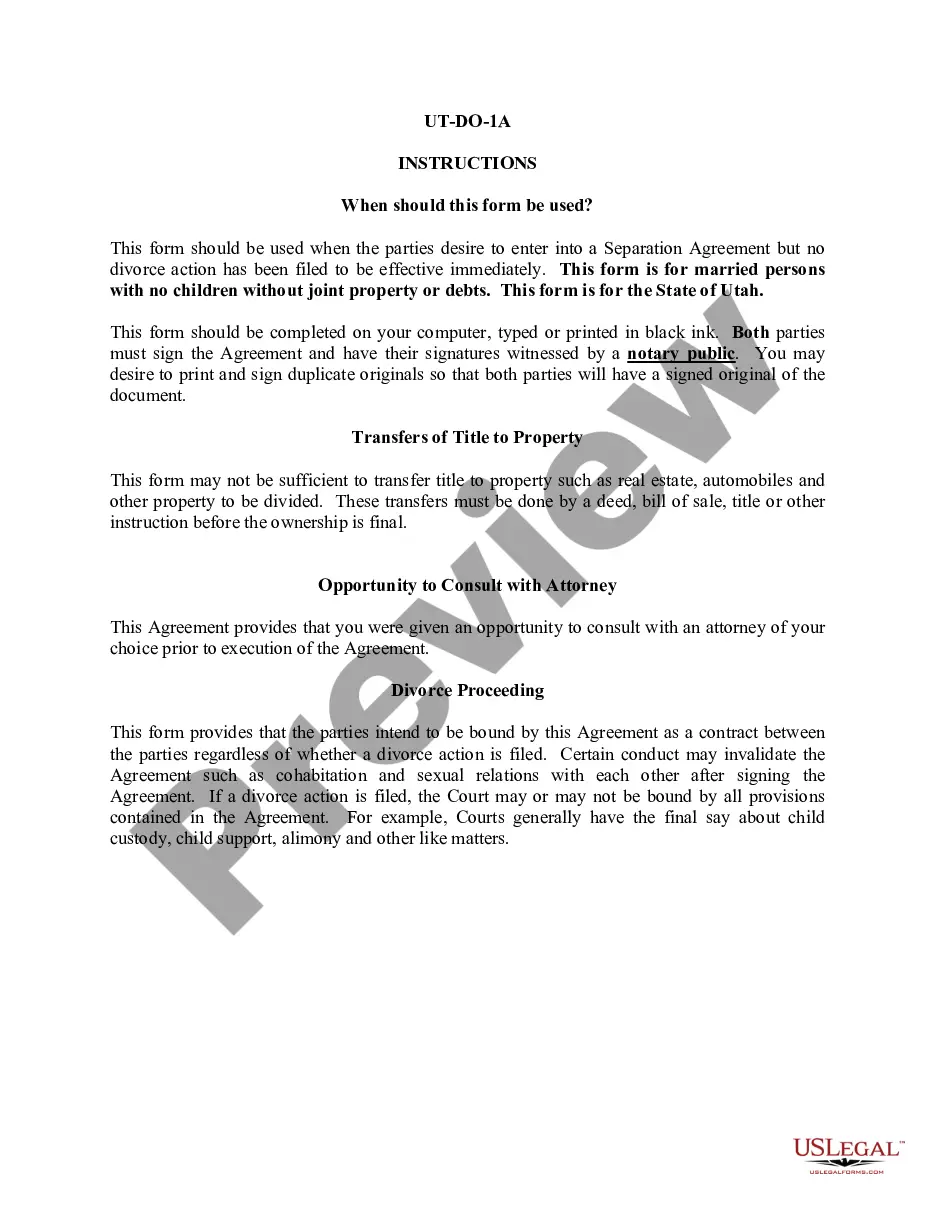
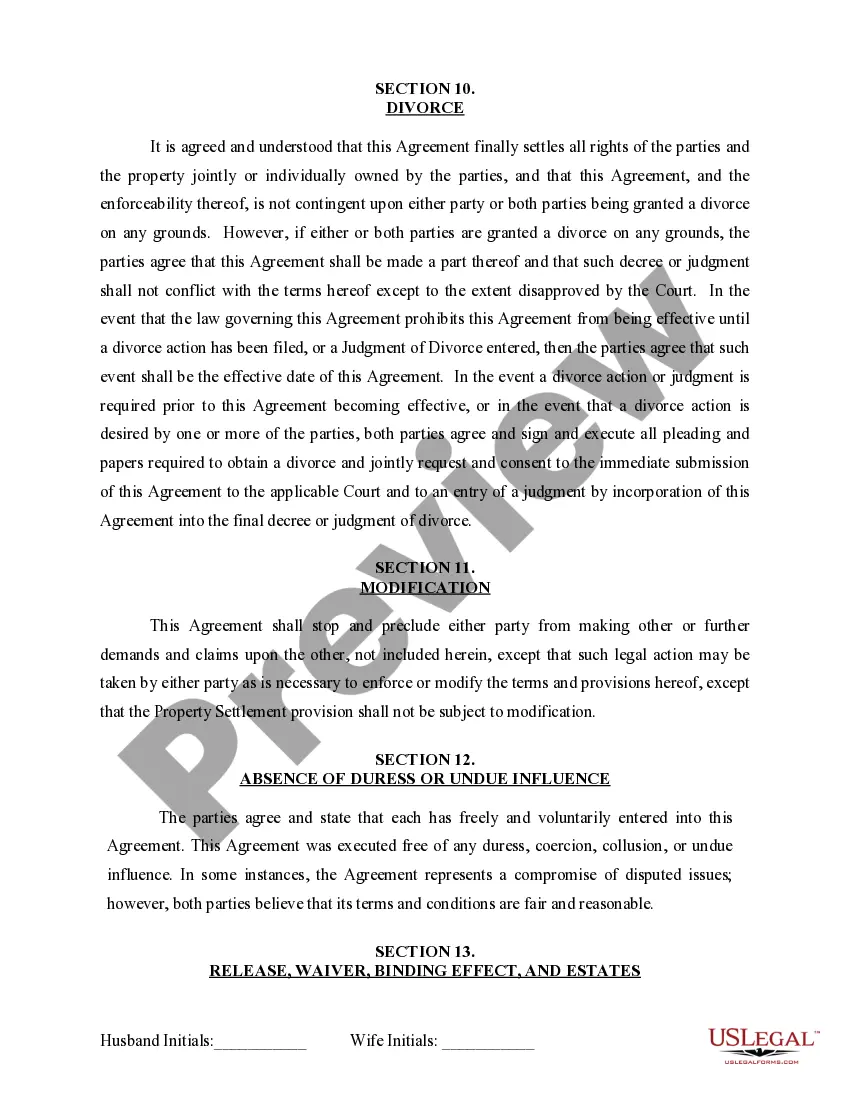
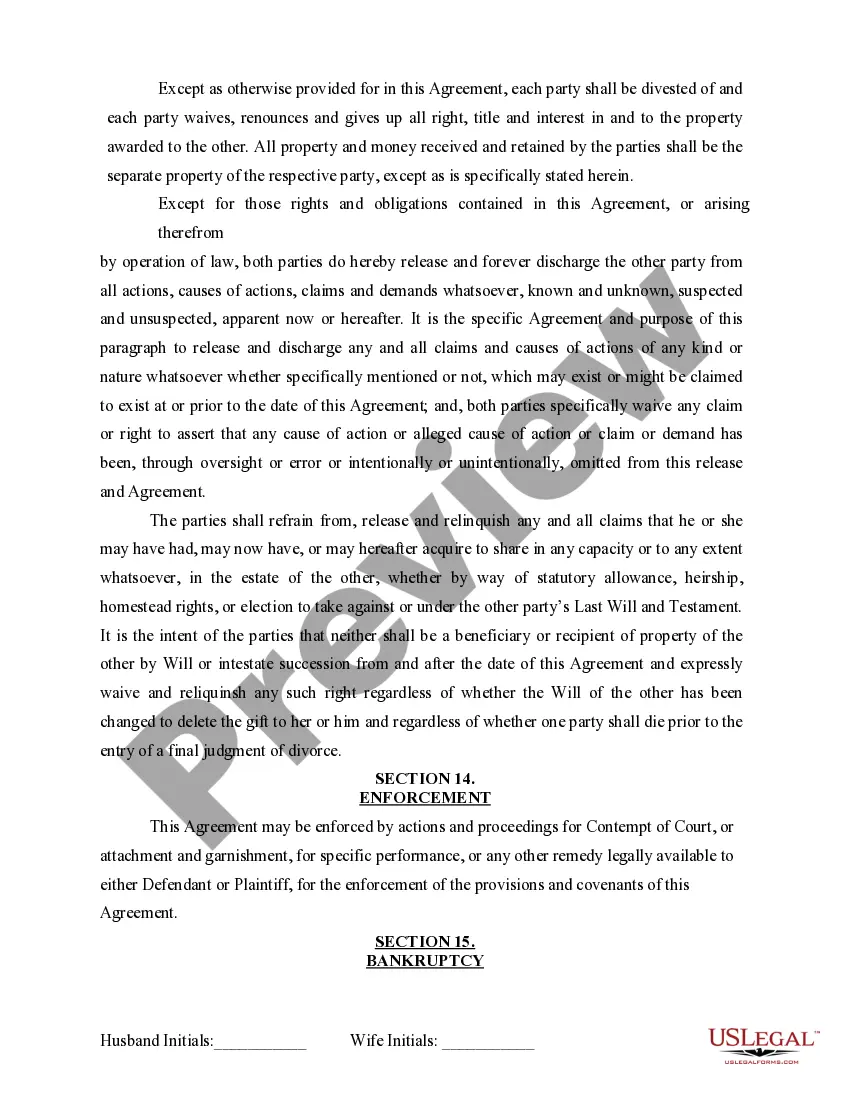
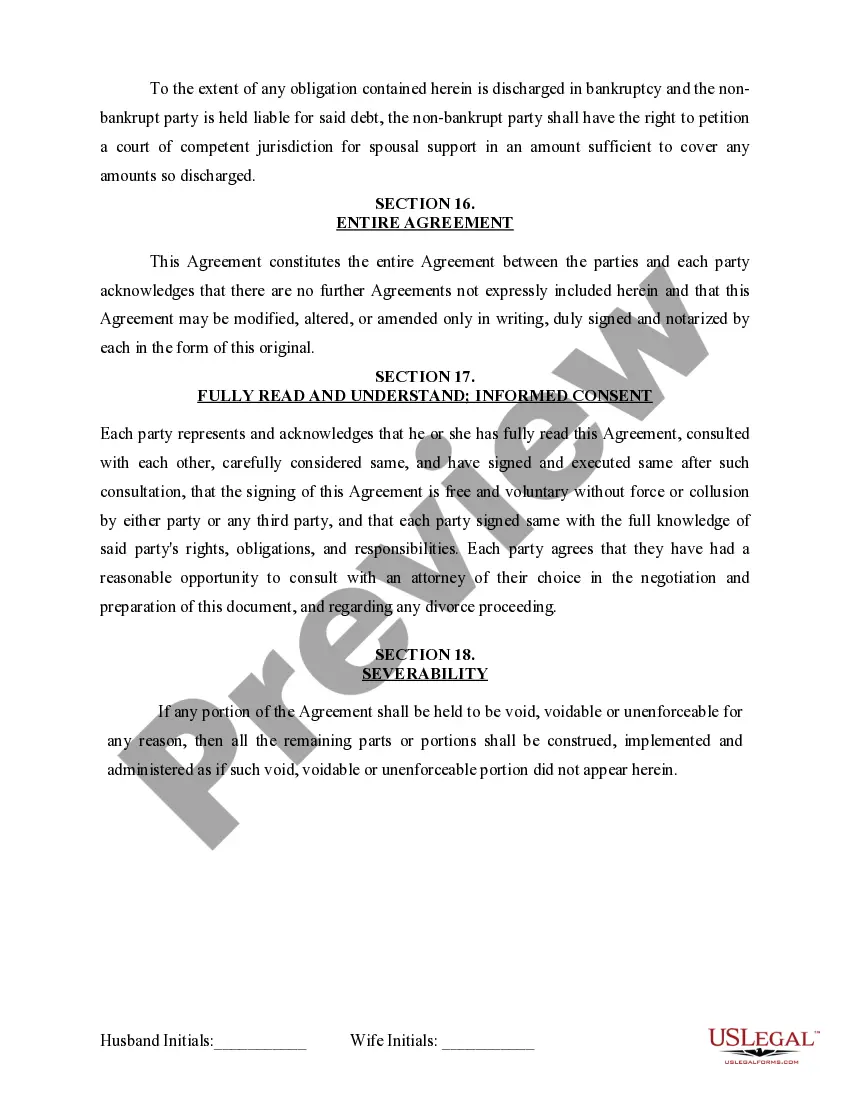
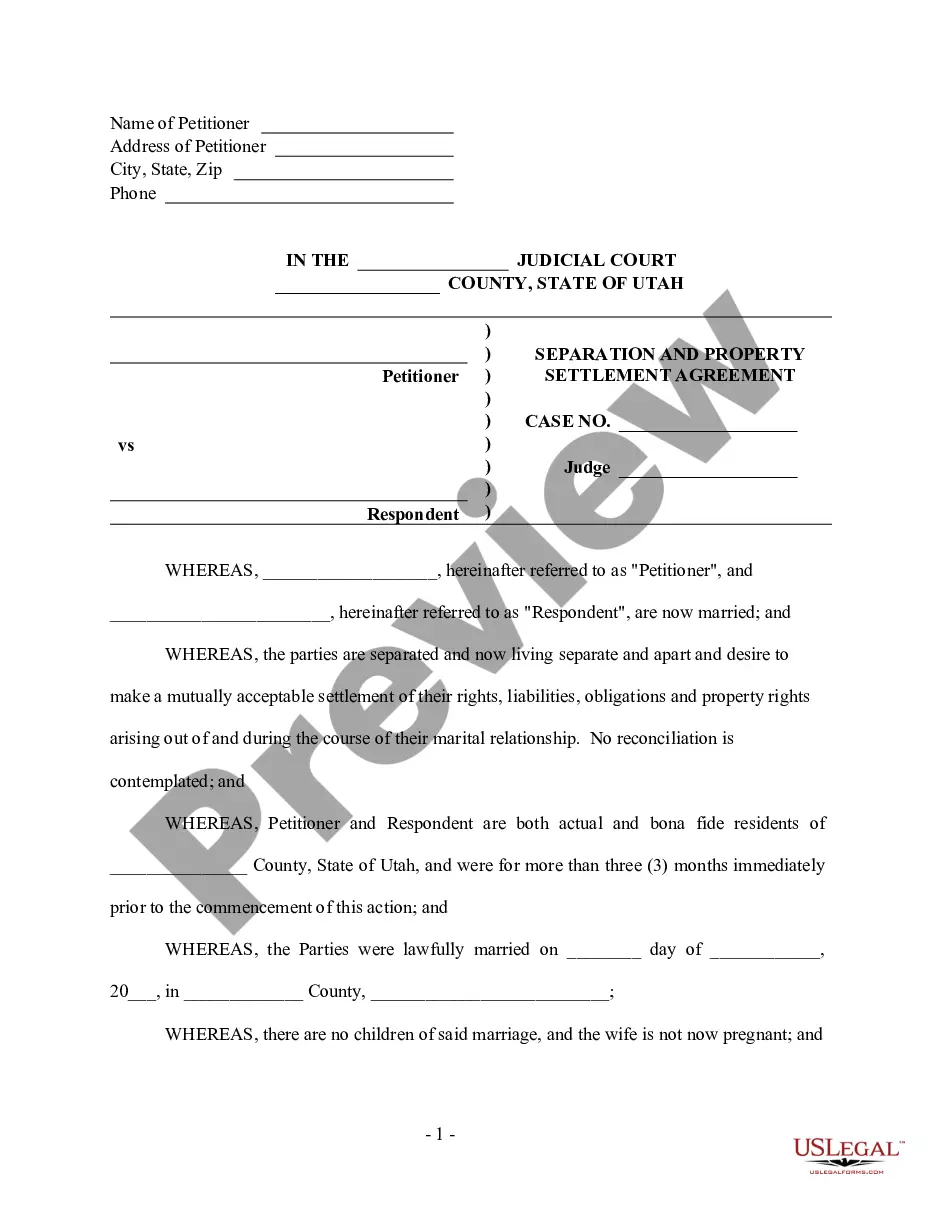
The Marital Domestic Separation and Property Settlement Agreement is a legal document designed for married couples in Utah who wish to outline the terms of their separation. This form specifically caters to couples with no children, joint property, or debts, making it focused and straightforward. Unlike a divorce decree, this agreement enables parties to formalize their separation while retaining their separate assets and responsibilities.
Form components explained
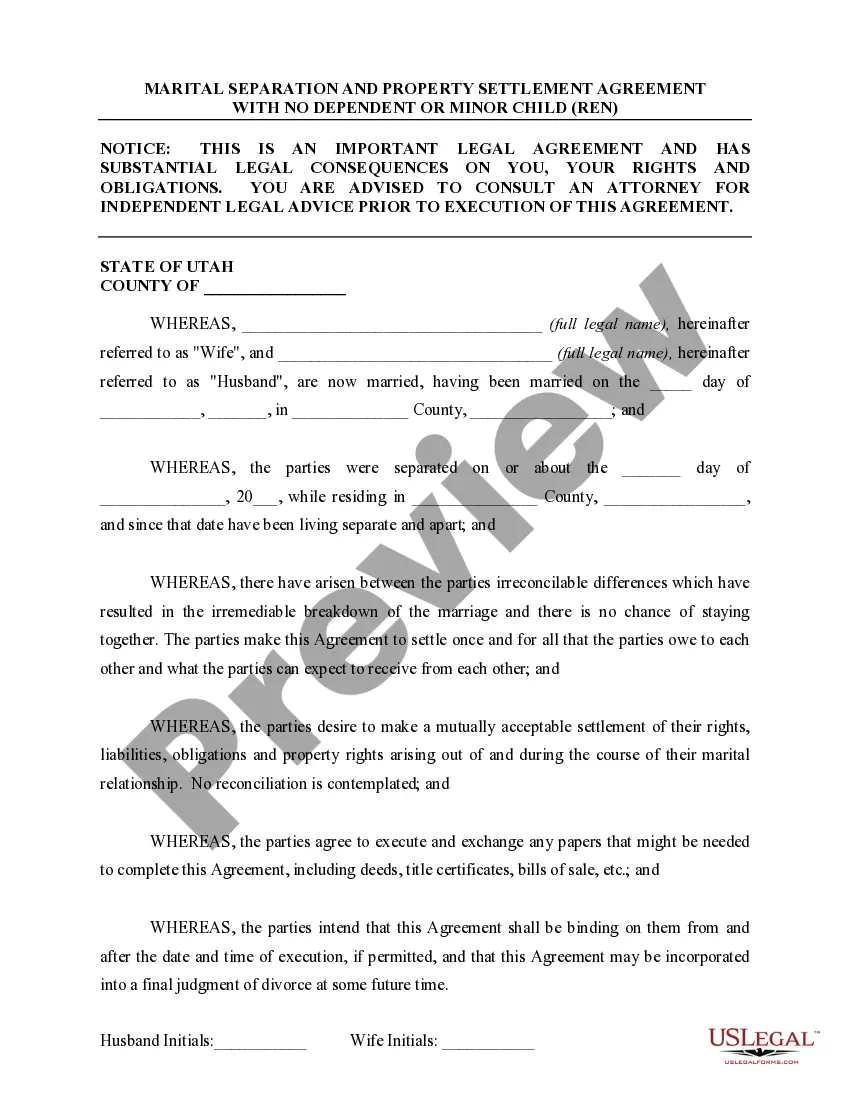
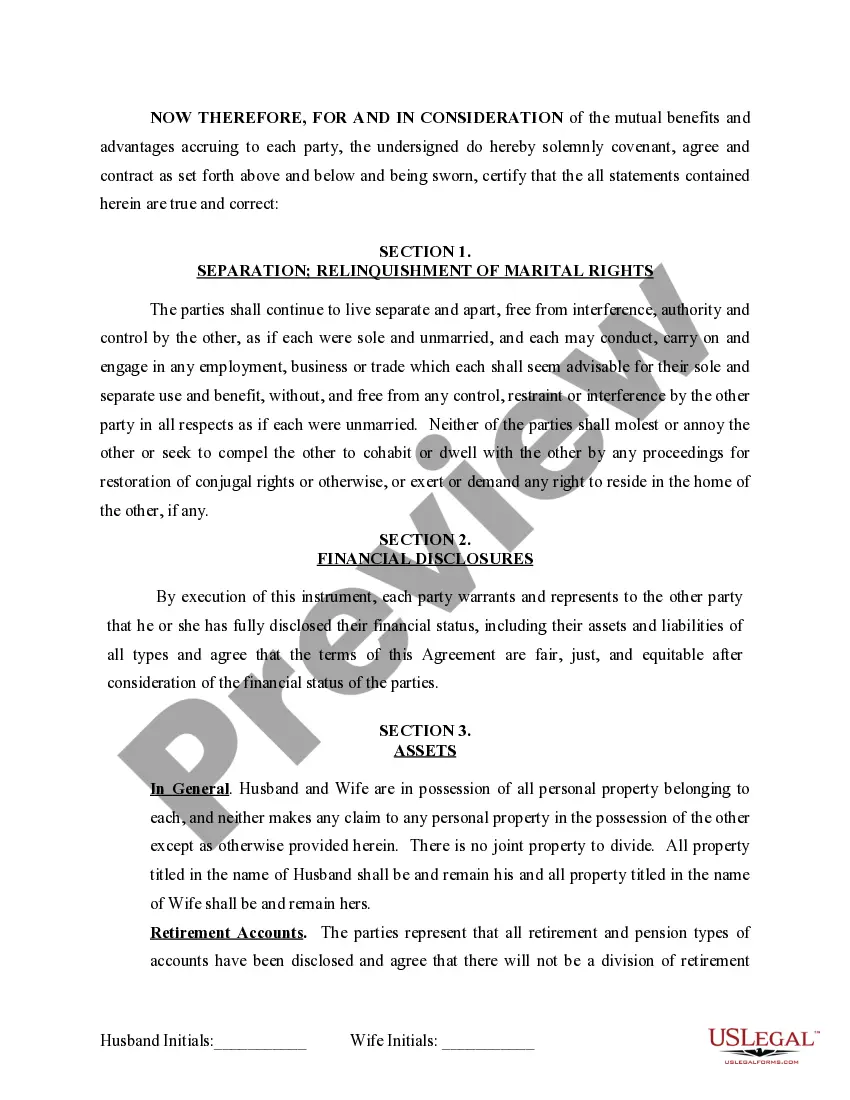
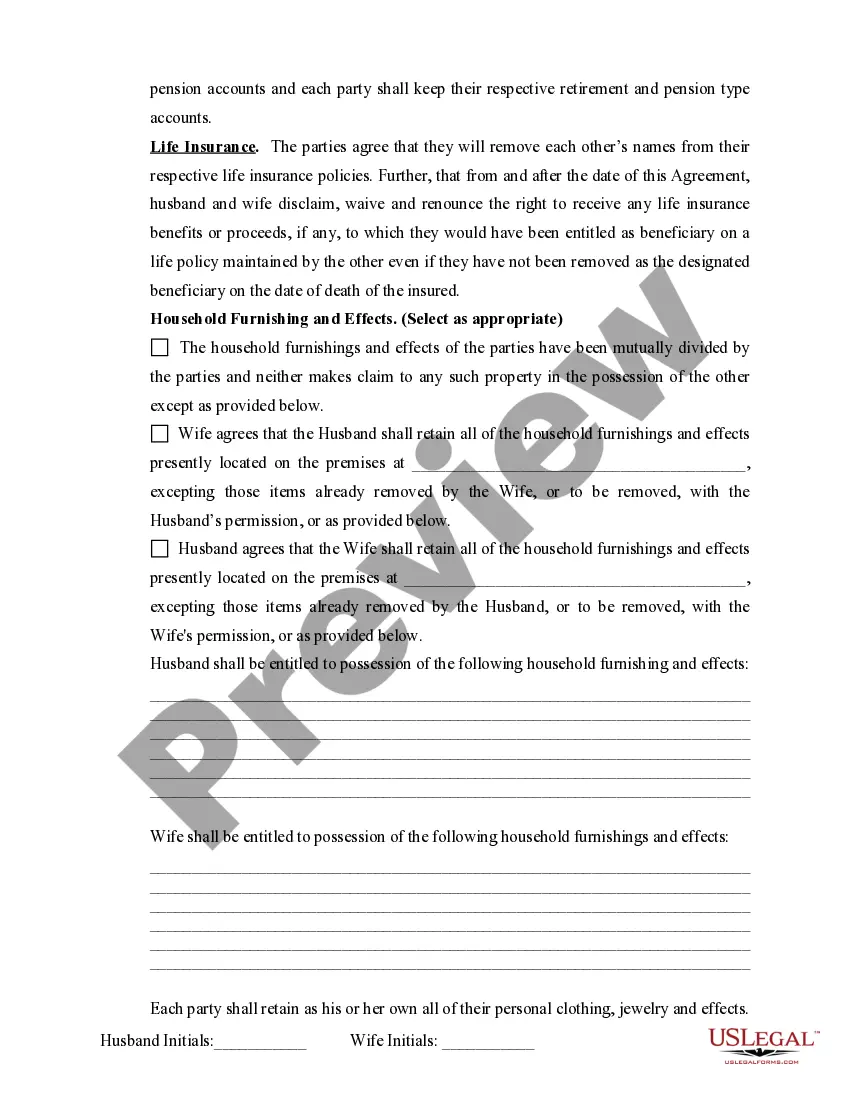
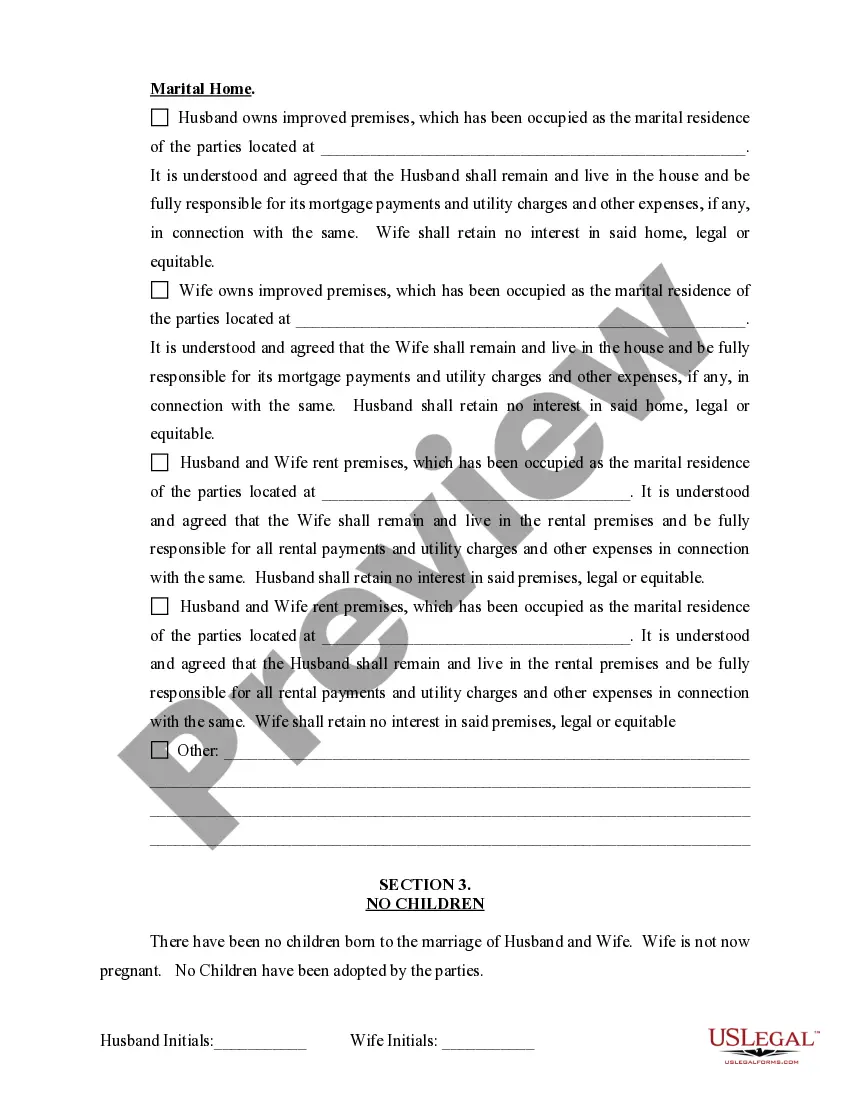
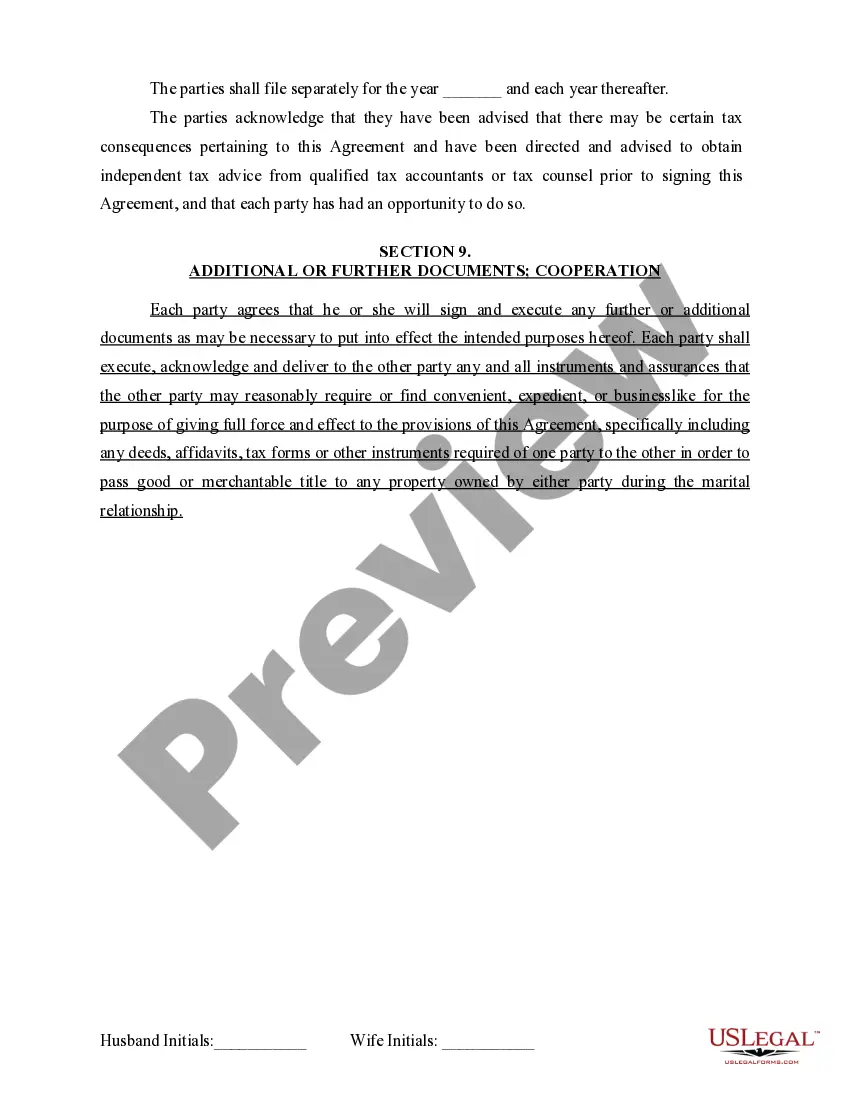
- Separation terms and relinquishment of marital rights.
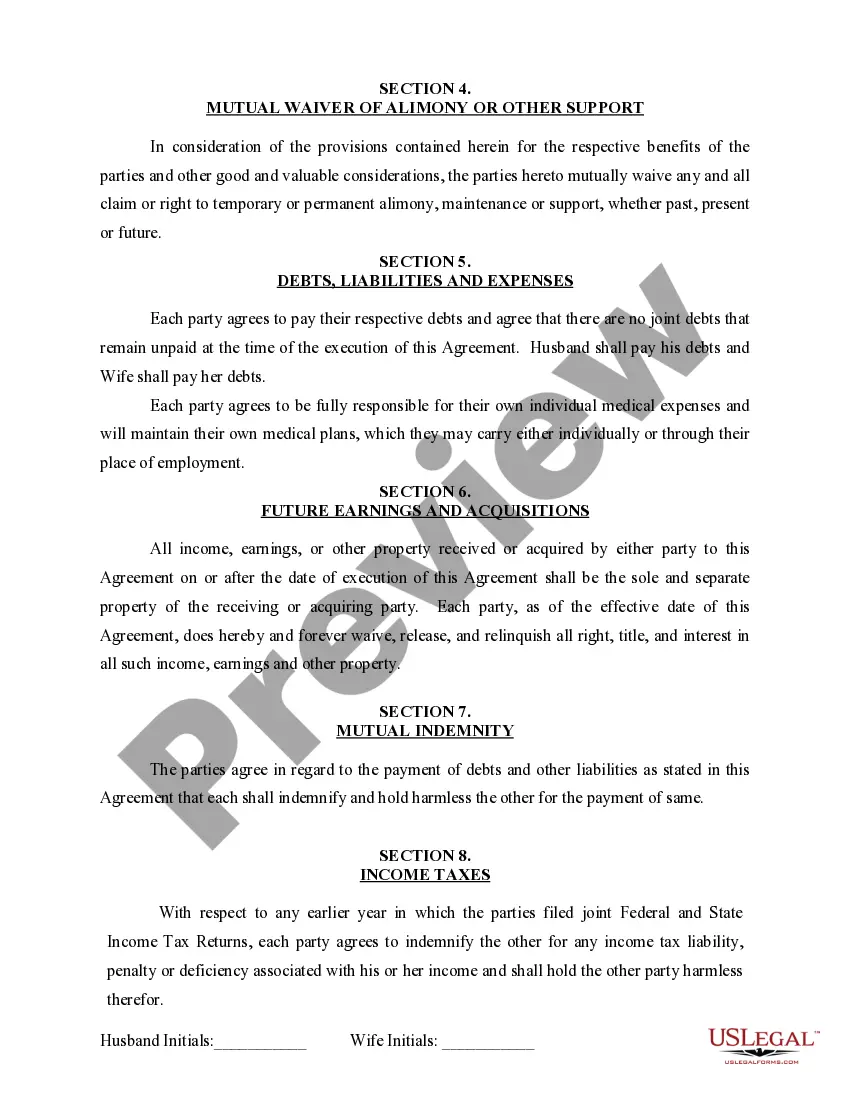
- Financial disclosures regarding assets and liabilities.
- Division of personal property and retirement accounts.
- Mutual waiver of alimony and support.
- Clarification on no children involved.

When to use this form
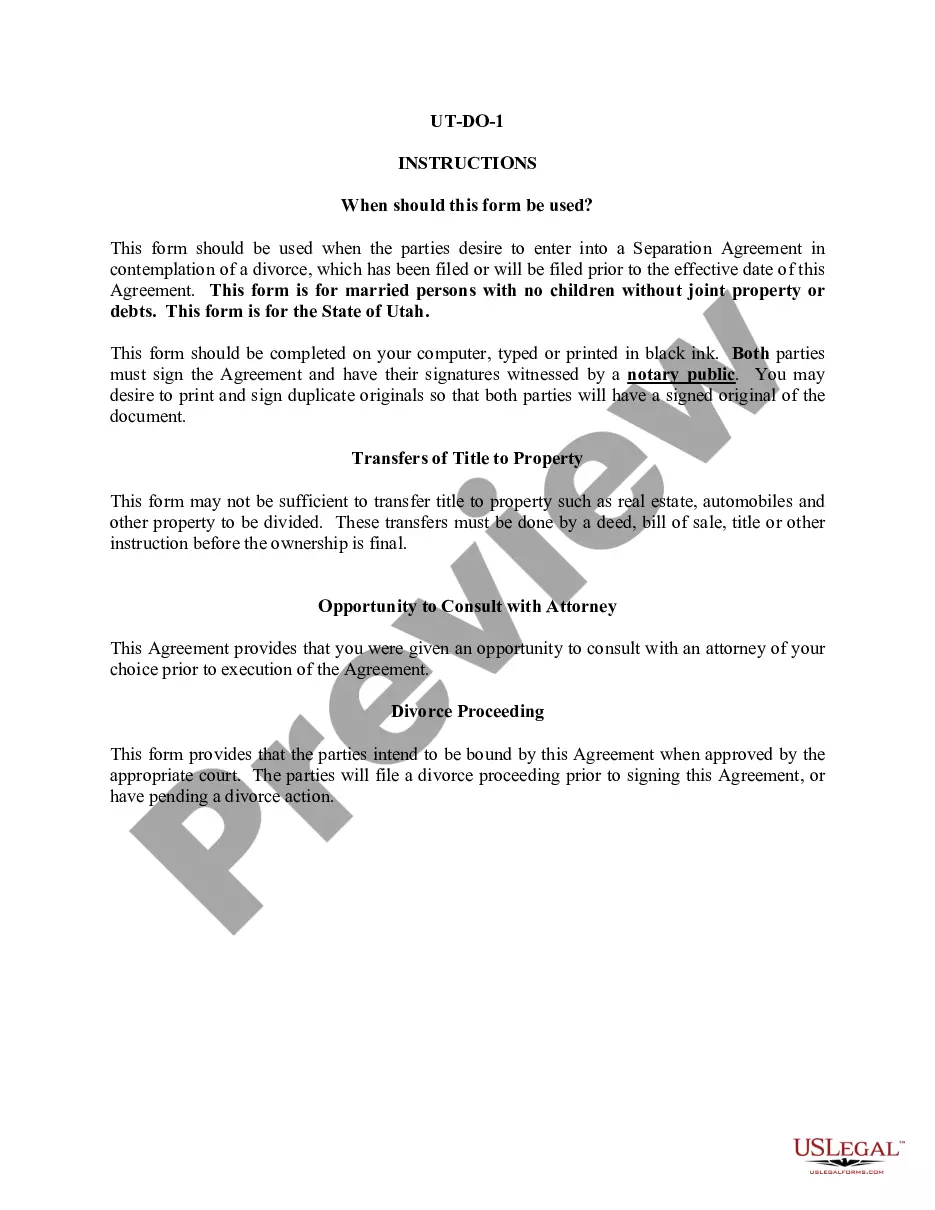
This form should be used when both parties are married but have decided to live apart and agree upon the terms of their separation without pursuing a divorce at this time. It is practical for situations where no children are involved and no joint property or debts exist, ensuring a clean break with clear responsibilities.
Intended users of this form
Eligible parties:
- Married couples in Utah without children.
- Couples with no joint property or debts.
- Individuals who wish to document their separation immediately without filing for divorce.
Steps to complete this form
Steps to complete this form:
- Identify the parties involved by filling in their full legal names.
- Document the date and location of marriage and separation.
- Detail any financial disclosures relating to assets and liabilities.
- Ensure both parties sign the agreement in front of a notary public to validate it.
- Keep a copy of the signed agreement for both parties' records.
Notarization requirements for this form
Yes, this form must be notarized to be legally valid. It requires both parties' signatures to be witnessed by a notary public, which ensures its authenticity and binding nature. US Legal Forms offers integrated online notarization services, providing a secure and convenient way to complete this process without needing to travel.
Get your form ready online
Our built-in tools help you complete, sign, share, and store your documents in one place.
Make edits, fill in missing information, and update formatting in US Legal Forms—just like you would in MS Word.
Download a copy, print it, send it by email, or mail it via USPS—whatever works best for your next step.
Sign and collect signatures with our SignNow integration. Send to multiple recipients, set reminders, and more. Go Premium to unlock E-Sign.
If this form requires notarization, complete it online through a secure video call—no need to meet a notary in person or wait for an appointment.
We protect your documents and personal data by following strict security and privacy standards.

Make edits, fill in missing information, and update formatting in US Legal Forms—just like you would in MS Word.

Download a copy, print it, send it by email, or mail it via USPS—whatever works best for your next step.

Sign and collect signatures with our SignNow integration. Send to multiple recipients, set reminders, and more. Go Premium to unlock E-Sign.

If this form requires notarization, complete it online through a secure video call—no need to meet a notary in person or wait for an appointment.

We protect your documents and personal data by following strict security and privacy standards.
Common mistakes
- Failing to check that both parties have disclosed all financial assets and liabilities.
- Not having the agreement notarized, leading to potential invalidation.
- Overlooking the specifics of property division, particularly personal items.
Benefits of using this form online
- Convenience of downloading the form and filling it out at home.
- Editable fields allow for customization to meet specific needs.
- Assurance that the form is drafted by licensed attorneys to comply with legal standards.
- This form serves as a binding contract between the parties regarding their separation terms.
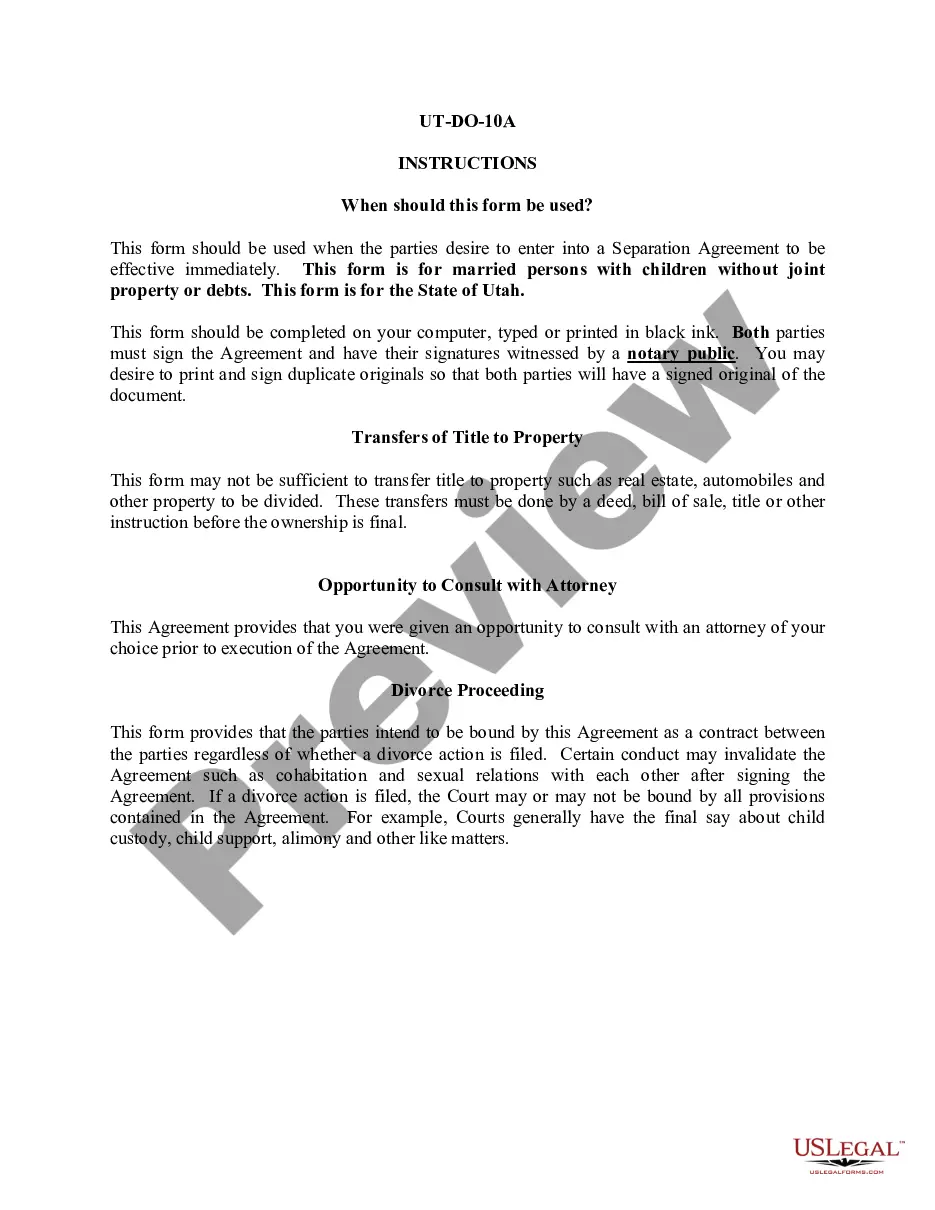
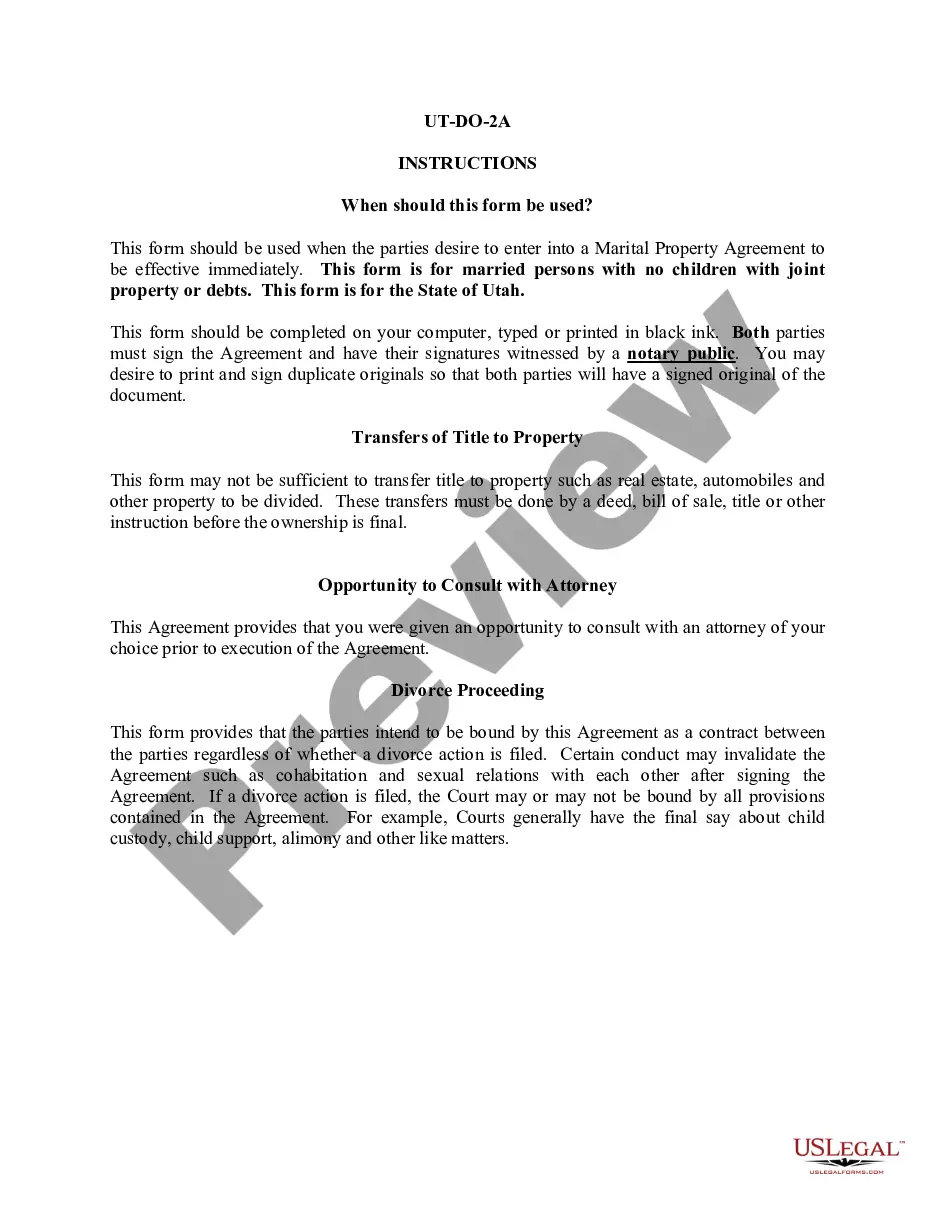
- While it outlines the separation, it does not replace a legal divorce; the court retains the authority to adjust terms if a divorce is filed in the future.
- Parties risk the validity of this agreement by resuming cohabitation or intimate relations.
Key takeaways
- This Marital Domestic Separation and Property Settlement Agreement is essential for clarifying rights and obligations post-separation.
- Both parties need to fully disclose their financial situations to ensure fairness in the agreement.
- Consulting legal advice before signing is highly recommended to ensure understanding and compliance.
Looking for another form?

Form popularity
FAQ
Now, if the husband makes good money and is able to pay that entire amount each month, wife's alimony award will be no more than $1,000. Utah divorce law is clear that the maximum alimony award a recipient spouse may receive is the amount of his or her demonstrated need, which in our example is $1,000 per month.
Is Utah a community property state? Utah is NOT a community property state, which means that marital property is not automatically divided 50/50 between the spouses in a divorce case.
The financial condition and needs of your spouse do not meet the required threshold under Utah law; Your spouse's earning capacity allows him or her to earn a living and produce income on their own;
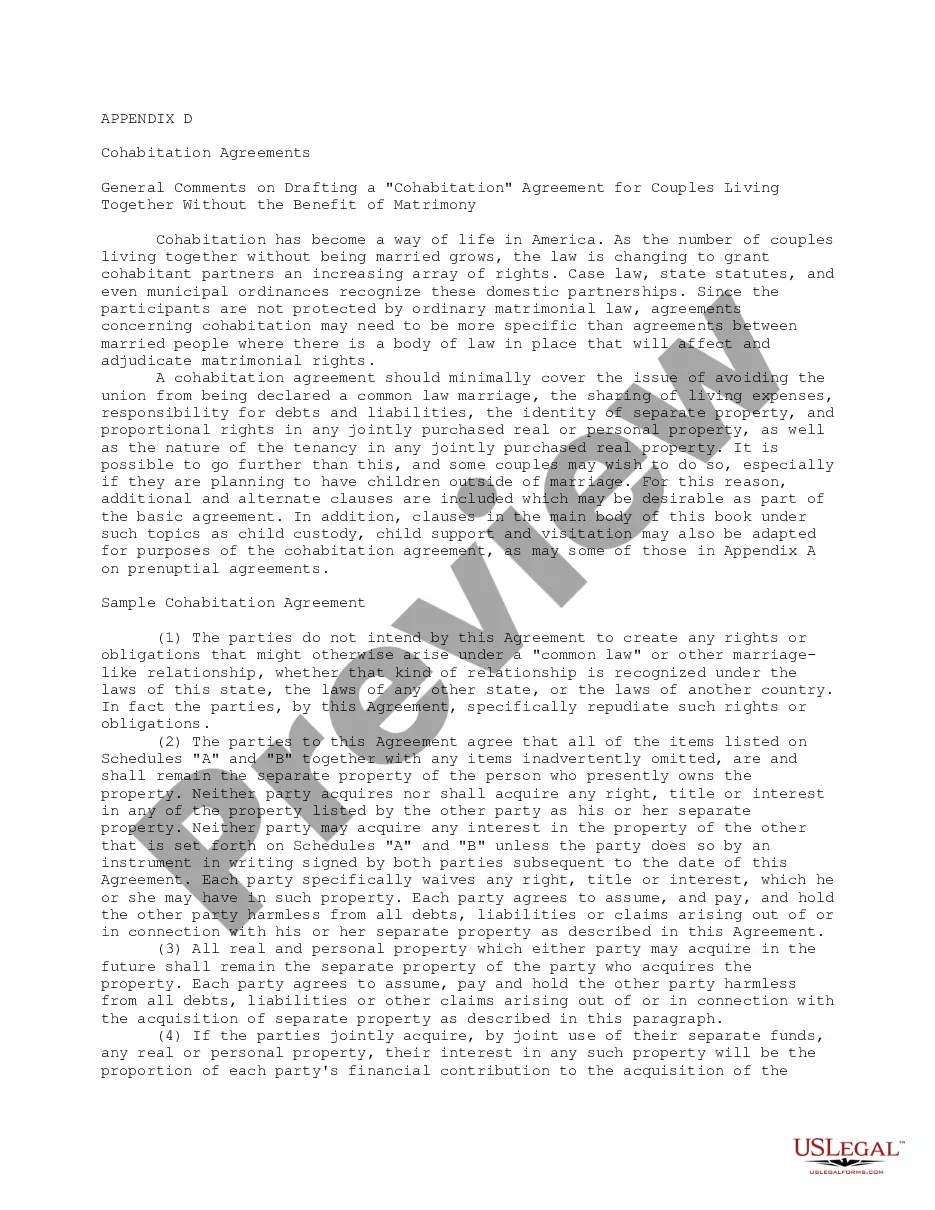
Cohabitation is an arrangement where two people are not married but live together. They are often involved in a romantic or sexually intimate relationship on a long-term or permanent basis.More broadly, the term cohabitation can mean any number of people living together.
Alimony is calculated from net income instead of gross income. Net income is your gross income minus your taxes paid to the state and federal government. And not all income needs to be included in determining alimony. Only up to 40 hours per work per week should be factored into alimony.
Cohabitation is defined as two individuals that live together and are not married. According to the Utah Supreme Court case of Myers v. Myers, this is when two people are engaged in a romantic relationship and spend most or all of their time living together.
However, some states make a legal distinction between dating during separation and dating while living together as man and wife. In Utah, unless one spouse is clinically insane, couples can only file for divorce after a one-year separation period.If the adultery occurs after the date of separation, it does not.
The financial condition and needs of the party who would receive alimony. The recipient's earning capacity or ability to produce income. The ability of the paying spouse to provide support. The length of the marriage. Whether the recipient party has custody of minor children who need support.
Alimony is gender-neutral in Utah, meaning either spouse can request support during the divorce process.the paying spouse's ability to pay support while maintaining financial independence. the length of the marriage. whether the recipient is a custodial parent of a child who requires child support.