Minnesota Notice of Intent to Enforce Forfeiture Provisions of Contact for Deed
About this form
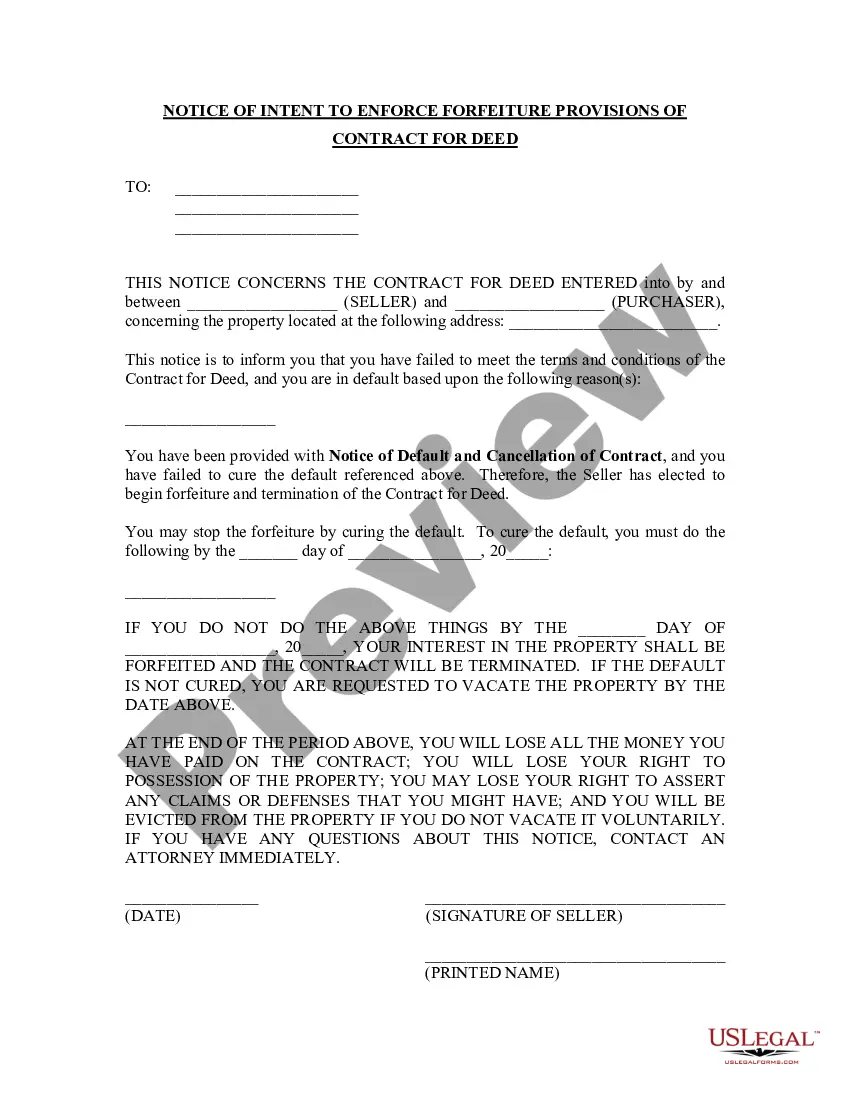
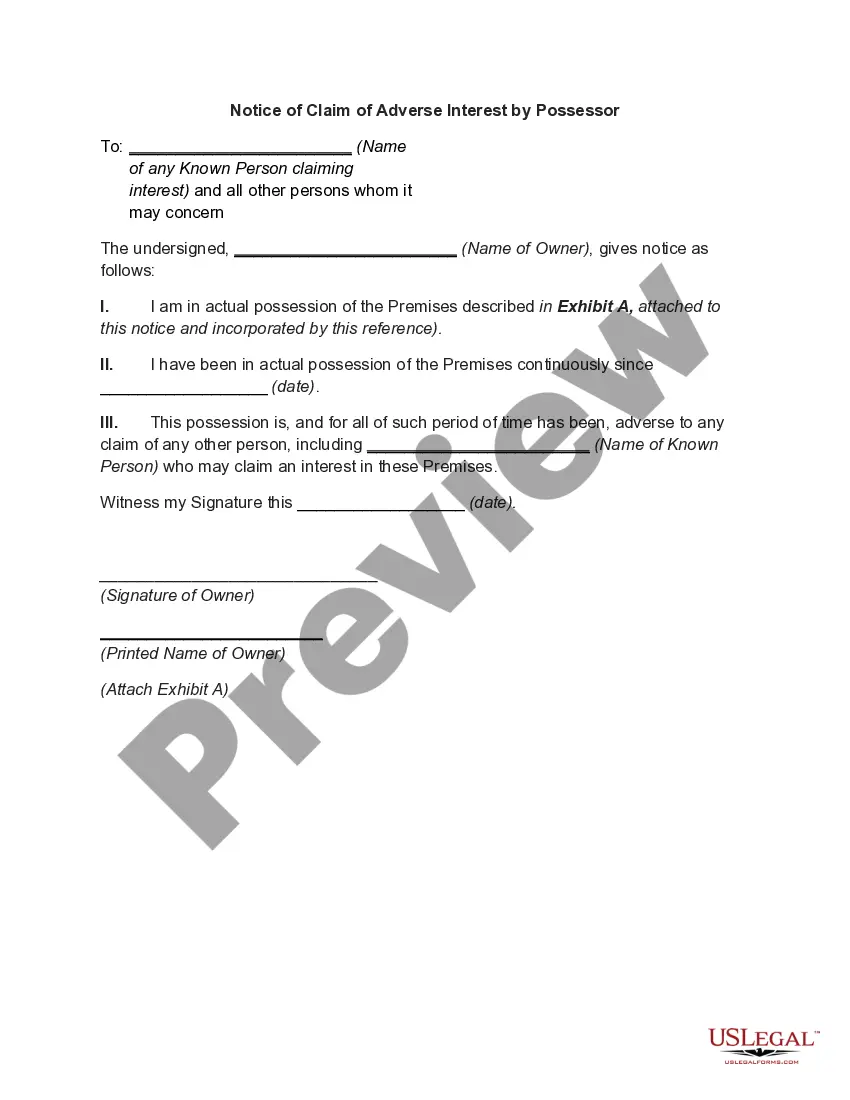
The Notice of Intent to Enforce Forfeiture Provisions of Contract for Deed is a legal document used by sellers to inform the buyer of their intent to enforce forfeiture rights when the buyer fails to comply with payment or other terms of the contract. This notice is crucial as it officially outlines the seller's position regarding a breach, distinguishing it from other types of notices and legal forms related to property agreements.
Key components of this form
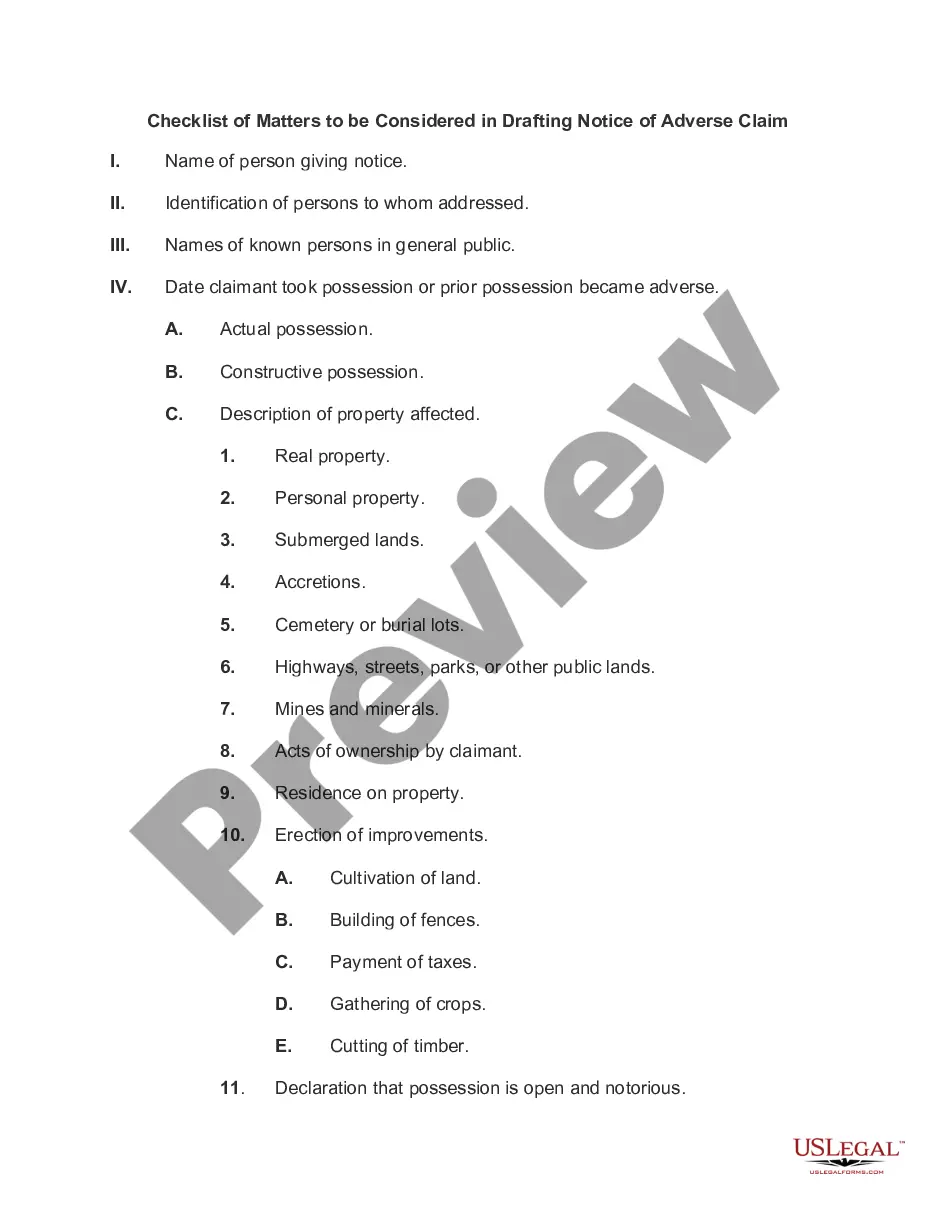
- Identification of the seller and buyer involved in the contract.
- Specific reasons for the notice, detailing the breach of contract.
- A statement of the sellerâs intent to enforce forfeiture provisions.
- Clear deadlines for the buyer to remedy the identified breach.
- Signature lines for the seller to date and sign the notice.

When this form is needed
This form is necessary when a seller has determined that a buyer is in default of their obligations under a contract for deed. It is commonly used after missed payments or failure to address other specific contractual terms, allowing the seller to formally communicate their intention to enforce the forfeiture provisions as outlined in the contract.
Intended users of this form
- Property sellers engaged in a contract for deed agreement.
- Buyers who have breached the terms of their contract and received a default notice.
- Real estate professionals advising clients on contract enforcement issues.
Completing this form step by step
- Identify both the seller and buyer by entering their full names and addresses.
- Clearly outline the specific reasons for the enforcement action, citing relevant terms from the contract.
- State the seller's intent to enforce forfeiture provisions if the breach is not cured.
- Specify a deadline by which the buyer must remedy the breach to avoid further action.
- Sign and date the notice, ensuring all information is accurately filled out.
Is notarization required?
This form does not typically require notarization unless specified by local law. Always check state-specific requirements to ensure compliance.
Get your form ready online
Our built-in tools help you complete, sign, share, and store your documents in one place.
Make edits, fill in missing information, and update formatting in US Legal Forms—just like you would in MS Word.
Download a copy, print it, send it by email, or mail it via USPS—whatever works best for your next step.
Sign and collect signatures with our SignNow integration. Send to multiple recipients, set reminders, and more. Go Premium to unlock E-Sign.
If this form requires notarization, complete it online through a secure video call—no need to meet a notary in person or wait for an appointment.
We protect your documents and personal data by following strict security and privacy standards.

Make edits, fill in missing information, and update formatting in US Legal Forms—just like you would in MS Word.

Download a copy, print it, send it by email, or mail it via USPS—whatever works best for your next step.

Sign and collect signatures with our SignNow integration. Send to multiple recipients, set reminders, and more. Go Premium to unlock E-Sign.

If this form requires notarization, complete it online through a secure video call—no need to meet a notary in person or wait for an appointment.

We protect your documents and personal data by following strict security and privacy standards.
Common mistakes to avoid
- Failing to clearly specify the reasons for the breach, which may cause confusion.
- Not providing sufficient time for the buyer to remedy the breach as required by state law.
- Neglecting to properly identify the parties involved, leading to potential legal disputes.
Why use this form online
- Immediate access to a professionally drafted legal form, saving time and effort.
- Editability to ensure all specific details are formatted correctly to fit your situation.
- Reliability through a template created by licensed attorneys, ensuring legal compliance.
Legal Use & Context:
- The Notice of Intent serves to protect the sellerâs rights under the Contract for Deed.
- Issuing this notice is often a prerequisite to pursue legal remedies for forfeiture.
- Failure to issue this notice properly may affect the enforceability of the forfeiture provisions.
Summary of main points
Key Takeaways:
- The form is essential for sellers to formally notify buyers of default.
- It outlines the seller's intent to enforce forfeiture provisions.
- Proper completion and delivery are crucial for legal effectiveness.
Looking for another form?
Form popularity
FAQ
The forfeiture clause on a land contract allows a seller to reclaim the property if the buyer fails to meet the terms of the agreement. This clause is crucial for protecting the seller's interests and ensuring compliance. In Minnesota, the Notice of Intent to Enforce Forfeiture Provisions of Contract for Deed is a legal requirement that the seller must follow before proceeding with forfeiture. Understanding this process can help both buyers and sellers navigate their rights and obligations effectively.
If someone defaults on a contract for deed, the seller has specific rights under Minnesota law. This may include the right to enforce forfeiture provisions, as outlined in the Minnesota Notice of Intent to Enforce Forfeiture Provisions of Contract for Deed. It is crucial to understand these implications to protect your interests, and resources like US Legal Forms can provide valuable guidance.
The new contract for deed law in Minnesota includes several provisions aimed at protecting buyers and sellers. Key changes emphasize transparency and the requirements for notices, including the Minnesota Notice of Intent to Enforce Forfeiture Provisions of Contract for Deed. Staying informed about these laws can help you navigate your real estate transactions more effectively.
The tax forfeiture process in Minnesota occurs when property taxes go unpaid for a specified period. The county may seize the property, and the owners receive a notice that includes the Minnesota Notice of Intent to Enforce Forfeiture Provisions of Contract for Deed. Understanding this process is essential for property owners to avoid losing their investment.
Filling out a contract for a deed involves detailing the buyer and seller's information, property details, and financial terms. Ensure that all sections are completed accurately, and consider referencing the Minnesota Notice of Intent to Enforce Forfeiture Provisions of Contract for Deed for clarity on enforcement. Utilizing templates from US Legal Forms can simplify this process.
To write a contract for a deed, begin with the identification of the parties and the property description. Clearly outline the payment terms, duration, and any contingencies. Furthermore, it is wise to include the Minnesota Notice of Intent to Enforce Forfeiture Provisions of Contract for Deed to protect your interests. You can find helpful resources on the US Legal Forms site.
While it is not strictly necessary to hire a lawyer for a contract for deed, it is highly recommended. A legal professional can ensure that your contract adheres to Minnesota laws, including the Minnesota Notice of Intent to Enforce Forfeiture Provisions of Contract for Deed. Their expertise can help you avoid pitfalls and misunderstandings.
To write a simple legally binding contract, include clear terms, the parties involved, and the purpose of the agreement. It should also state the conditions for enforcement and consider incorporating the Minnesota Notice of Intent to Enforce Forfeiture Provisions of Contract for Deed if applicable. You can find useful templates on the US Legal Forms platform to help guide you.
Yes, you can write your own land contract. However, it is important to ensure that the contract complies with Minnesota law, especially regarding the Minnesota Notice of Intent to Enforce Forfeiture Provisions of Contract for Deed. Using a template or seeking help from a legal professional can provide clarity and structure to your document.
The property tax forfeiture process in Minnesota occurs when property taxes remain unpaid for a specific period. The county can take ownership of the property, selling it to recover unpaid taxes. If you are involved in a contract for deed, knowing about the Minnesota Notice of Intent to Enforce Forfeiture Provisions of Contact for Deed is crucial, as it can affect your rights regarding the property.