Employee Evaluation Form for Realtor
What is this form?
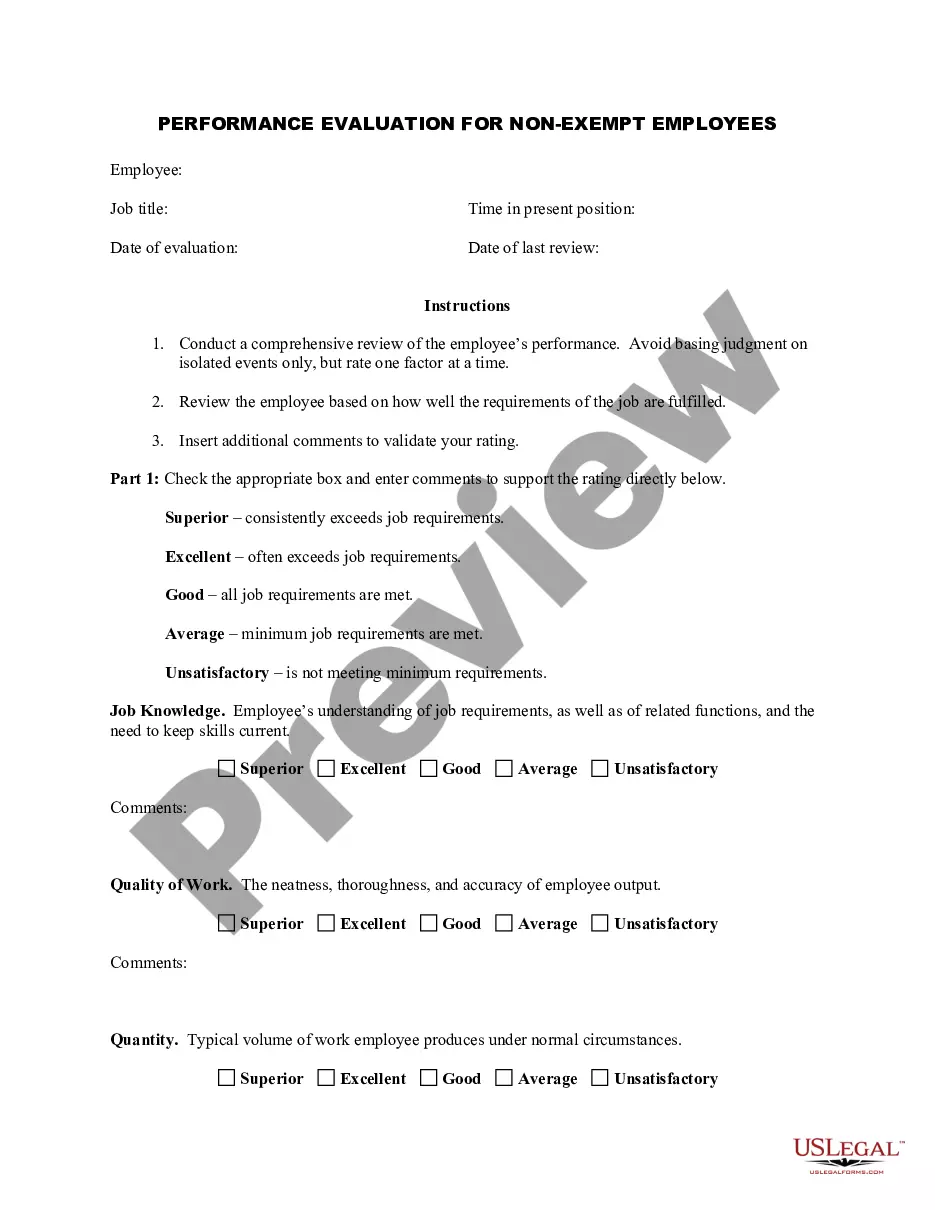
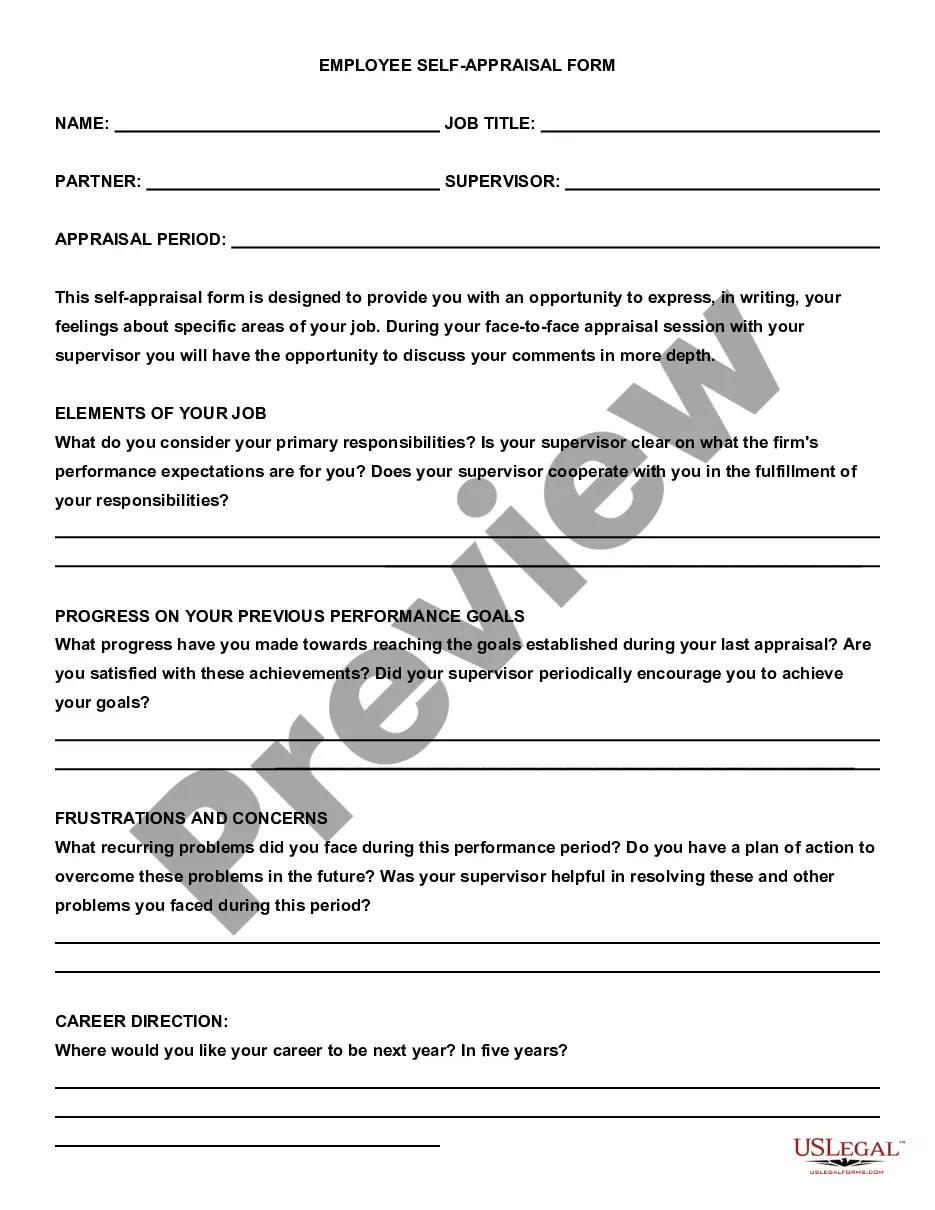
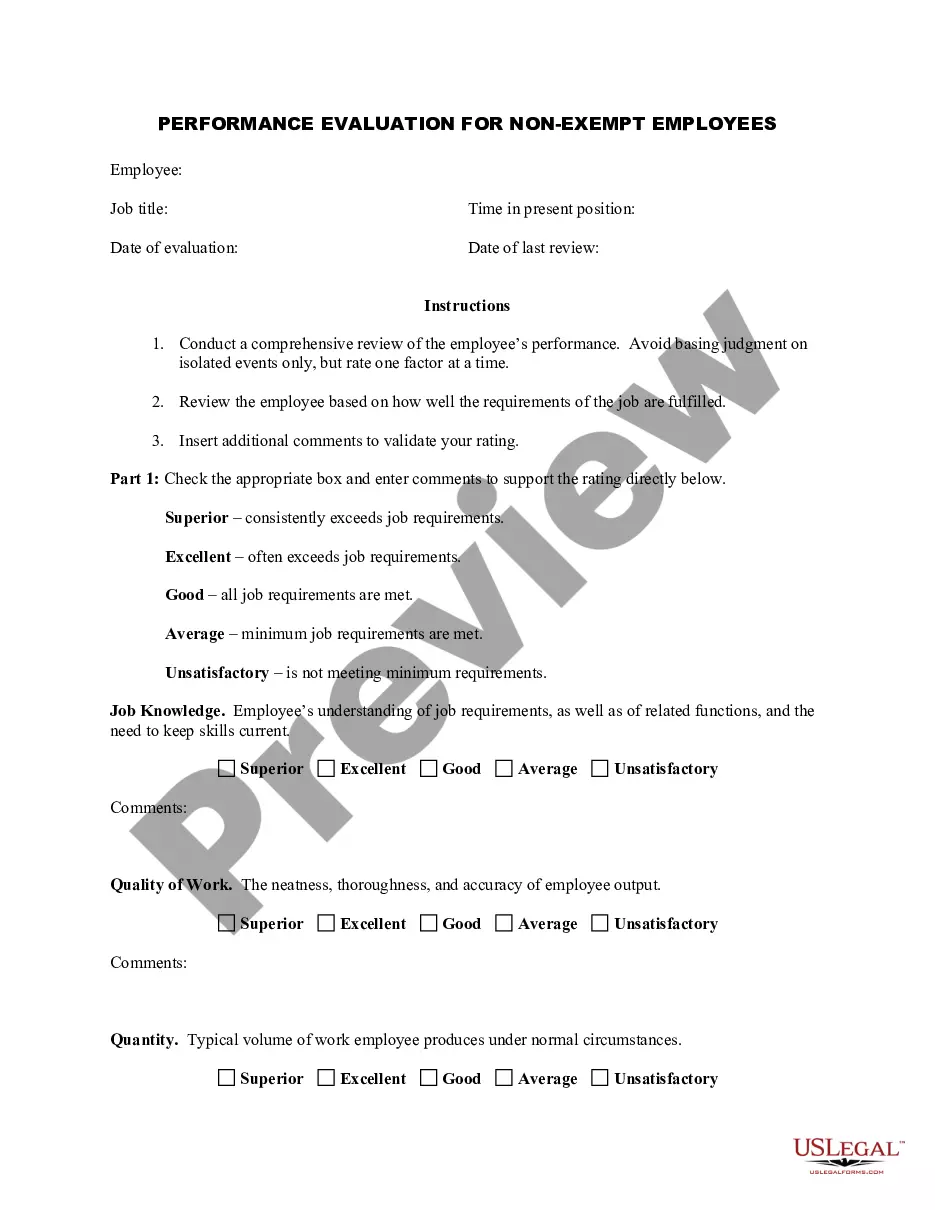
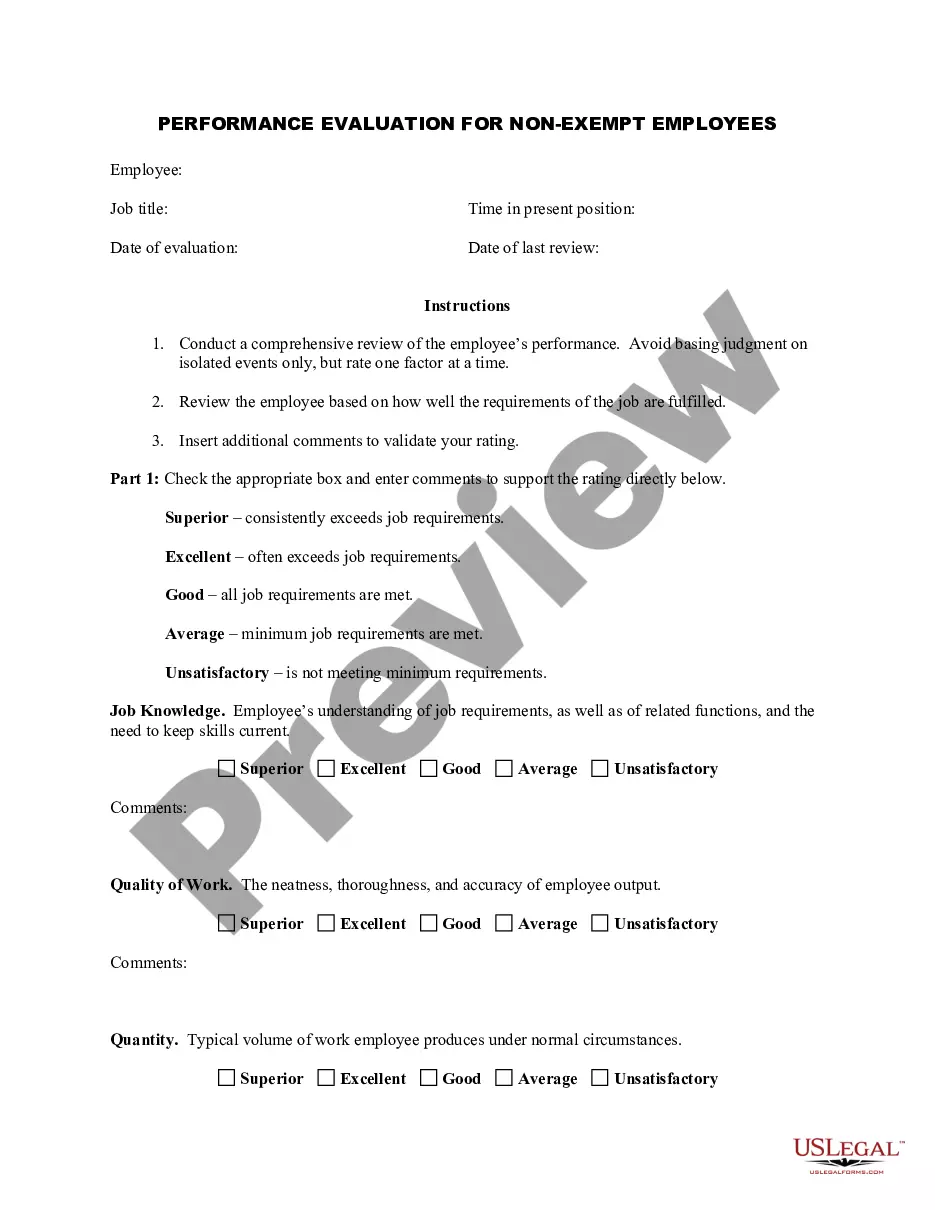
The Employee Evaluation Form for Realtor is a performance review tool specifically designed for non-exempt employees in the real estate sector. This form helps employers assess how well an employee meets the requirements of their job, focusing on various performance metrics such as job knowledge, quality of work, cooperation, and initiative. Unlike generic evaluation forms, this template is tailored to address the nuances of the real estate industry, making it an essential tool for office managers and human resources personnel in real estate companies.
Key components of this form
- Employee information section, including job title and tenure.
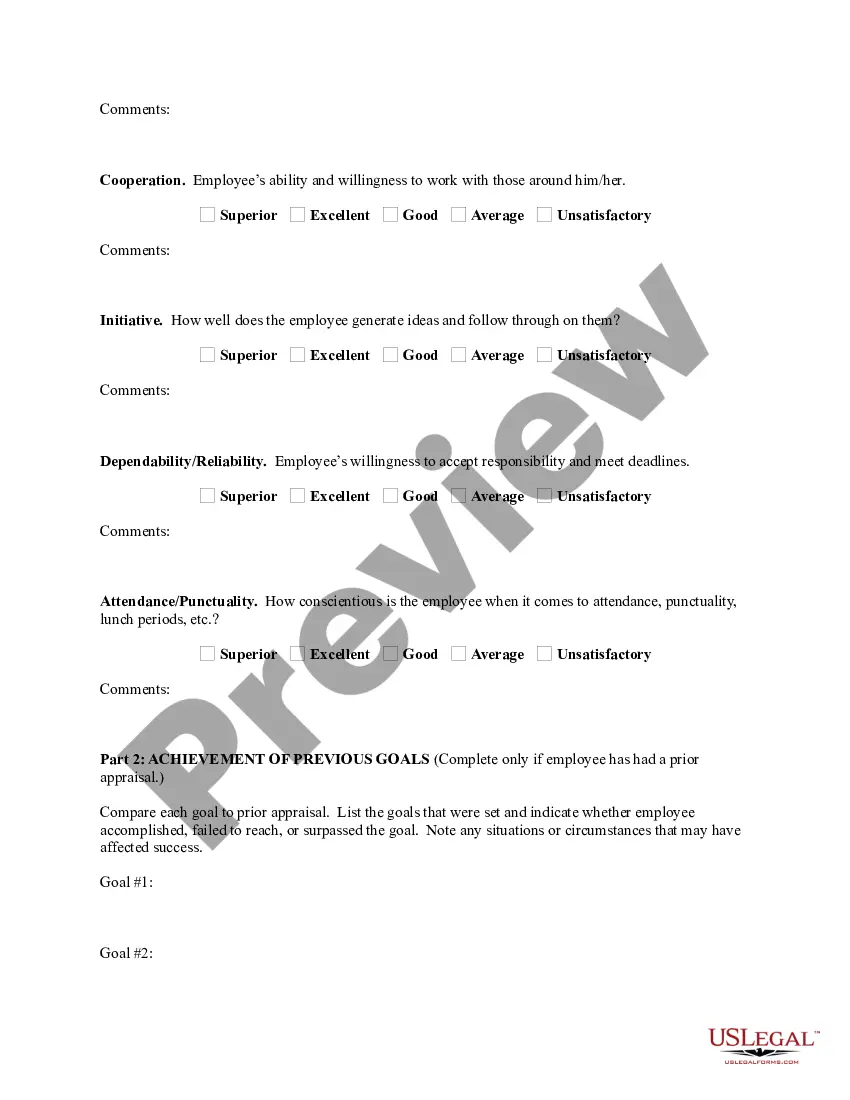
- Evaluation criteria covering performance metrics such as job knowledge, quality of work, and initiative.
- Rating scale that allows for assessments ranging from superior to unsatisfactory.
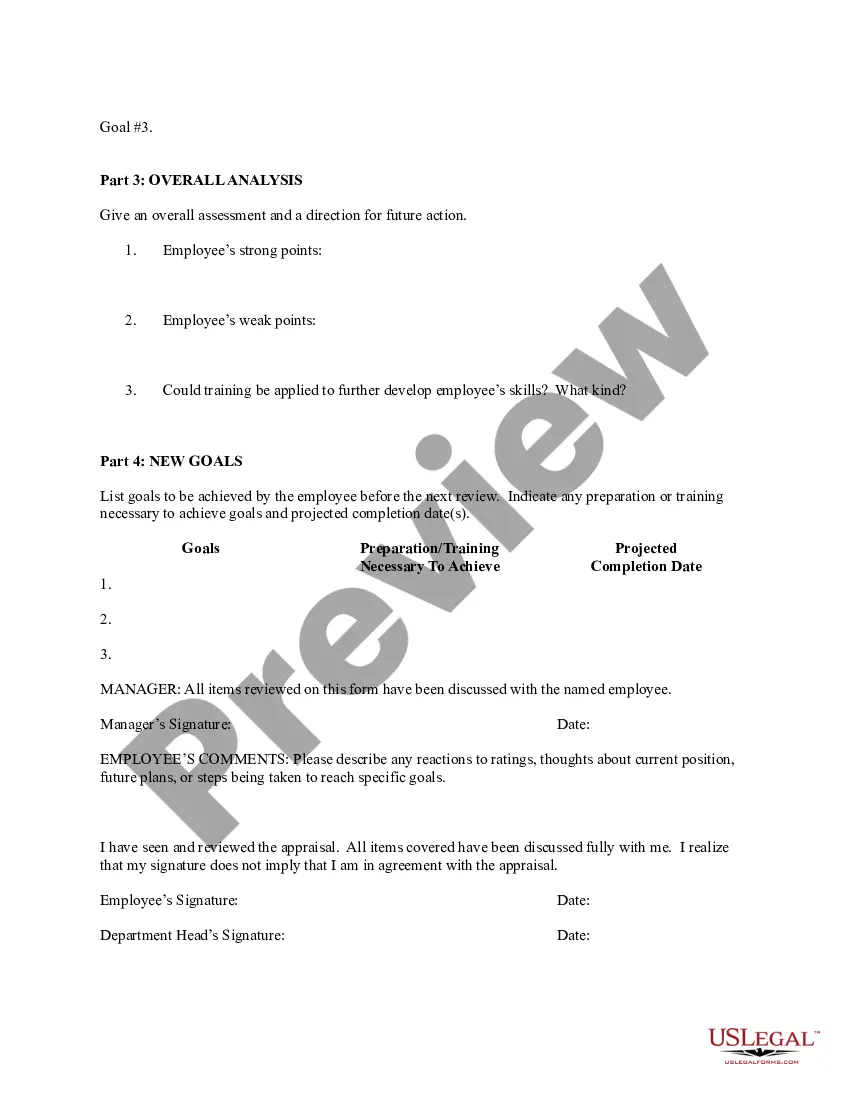
- Comments section for evaluators to provide specific feedback and justification for ratings.
- Goal-setting area to define objectives for future performance and development.
When to use this form
This form should be used during regular performance reviews to evaluate the effectiveness and contributions of realtors within the organization. It is especially relevant during annual reviews, initial hiring assessments, and when addressing specific performance issues. Utilizing this form allows for structured feedback and encourages transparency in discussions about employee performance and career progression.
Who should use this form
- Office managers and supervisors in real estate firms.
- Human resources personnel responsible for employee evaluations.
- Team leaders who want to provide constructive feedback and set performance goals for their team members.
How to complete this form
- Identify the employee being evaluated and complete the personal details at the top of the form.
- Review each evaluation criterion one at a time, rating the employee's performance according to the provided scale.
- Provide specific comments and examples to support each rating, which assists in discussing the evaluation with the employee.
- Discuss previous goals, and indicate whether they were achieved, not met, or surpassed.
- Set new goals for the upcoming evaluation period, providing necessary training or resources needed for achievement.
- Complete and sign the form, ensuring both the evaluator and employee receive a copy.
Is notarization required?
This form does not typically require notarization unless specified by local law. It is a standard evaluation tool and should be kept within company records for performance reviews.
Get your form ready online
Our built-in tools help you complete, sign, share, and store your documents in one place.
Make edits, fill in missing information, and update formatting in US Legal Forms—just like you would in MS Word.
Download a copy, print it, send it by email, or mail it via USPS—whatever works best for your next step.
Sign and collect signatures with our SignNow integration. Send to multiple recipients, set reminders, and more. Go Premium to unlock E-Sign.
If this form requires notarization, complete it online through a secure video call—no need to meet a notary in person or wait for an appointment.
We protect your documents and personal data by following strict security and privacy standards.

Make edits, fill in missing information, and update formatting in US Legal Forms—just like you would in MS Word.

Download a copy, print it, send it by email, or mail it via USPS—whatever works best for your next step.

Sign and collect signatures with our SignNow integration. Send to multiple recipients, set reminders, and more. Go Premium to unlock E-Sign.

If this form requires notarization, complete it online through a secure video call—no need to meet a notary in person or wait for an appointment.

We protect your documents and personal data by following strict security and privacy standards.
Common mistakes to avoid
- Failing to provide specific examples to justify ratings.
- Relying solely on recent performance rather than considering the employee's overall contributions.
- Neglecting to set clear and achievable goals for future evaluations.
- Underestimating the importance of a follow-up discussion with the employee post-evaluation.
Benefits of using this form online
- Convenient access to the form anytime, enabling timely evaluations.
- Easy to edit and customize the form according to specific team or organizational needs.
- Secure electronic storage of completed forms ensures compliance and organized record-keeping.
Quick recap
- The Employee Evaluation Form for Realtor is tailored for assessing real estate professionals.
- It includes structured criteria and a rating system to facilitate employee feedback.
- Using this form can help improve performance tracking and goal setting for employees.
Looking for another form?
Form popularity
FAQ
You deliver instructions and explain expectations with clarity and purpose. You listen well in meetings with colleagues. You frequently interrupt colleagues when they offer opinions or suggestions.
1) Attendance. 2) Innovation and Creativity. 3) Leadership. 4) Communication Skills. 5) Collaboration and Teamwork. 6) Time Management. 7) Customer Experience. 8) Problem Solving.
Employee evaluation forms are used to formally review and document an employee's performance and get their acknowledgment that the evaluation took place. This is important in establishing a paper trail to support important HR decisions.
1) Attendance. Punctuality is one of the strongest virtues an employee can possess. 2) Innovation and Creativity. 3) Leadership. 4) Communication Skills. 5) Collaboration and Teamwork. 6) Time Management. 7) Customer Experience. 8) Problem Solving.
The purpose of an employee evaluation is to measure job performance. Many evaluations provide quantitative measurements essential for a production-oriented work environment. Other employee evaluations provide employers with metrics regarding the quality of employees' work.
Review the employee's job description. Get a current copy of each person's job description and review the requirements. Highlight areas of improvement. Compare strengths and weaknesses. Recommend actionable goals. Provide constructive feedback. Welcome employee input.
Be proud. One major goal of the self-evaluation is to highlight your accomplishments and recollect milestones in your professional development. Be honest and critical. Continuously strive for growth. Track your accomplishments. Be professional.
Gather information. List employee responsibilities. Use objective language. Use action verbs. Compare performance ratings. Ask open-ended questions. Use a point system.
Communication. Collaboration and teamwork. Problem-solving. Quality and accuracy of work. Attendance, punctuality and reliability. The ability to accomplish goals and meet deadlines.