Nebraska Amendment to Living Trust
About this form
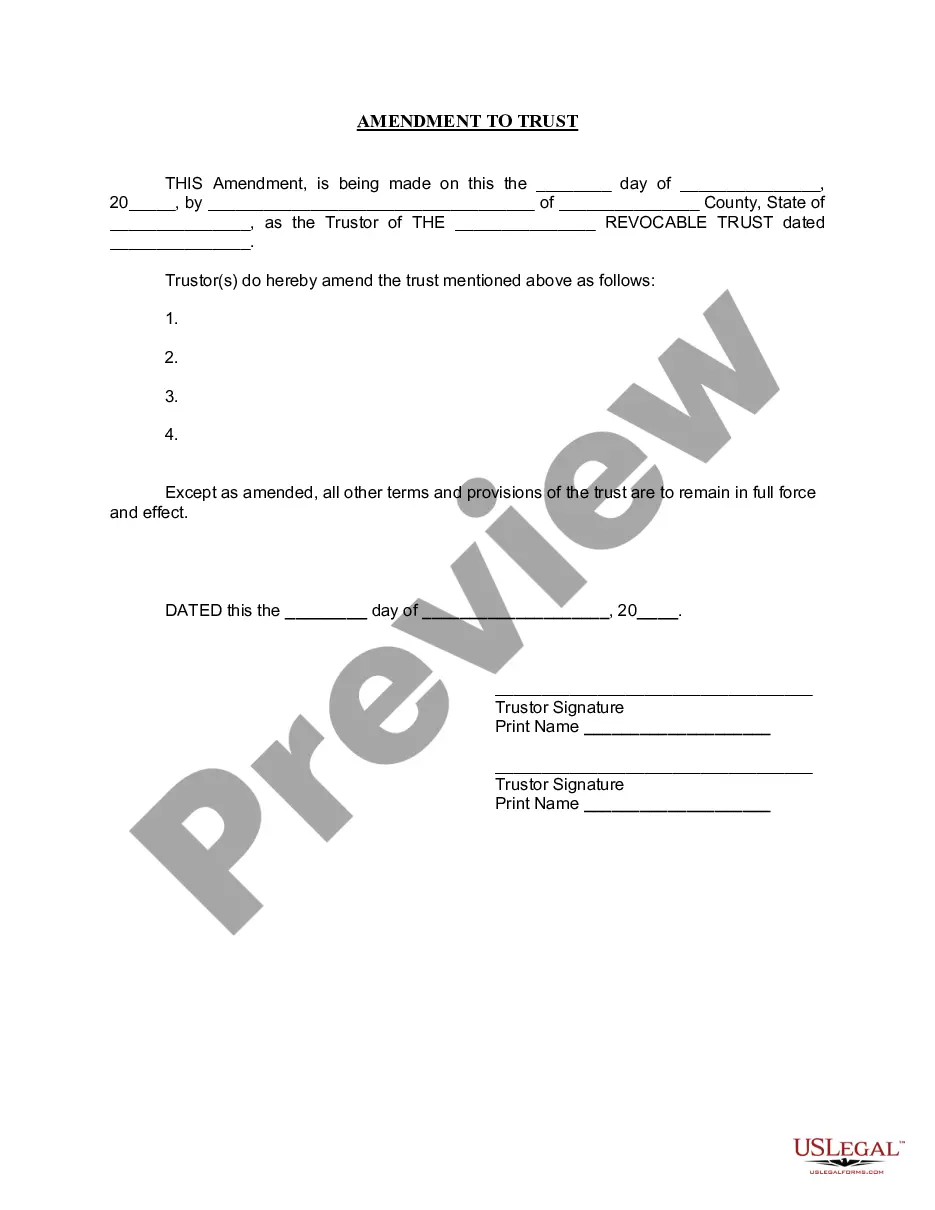
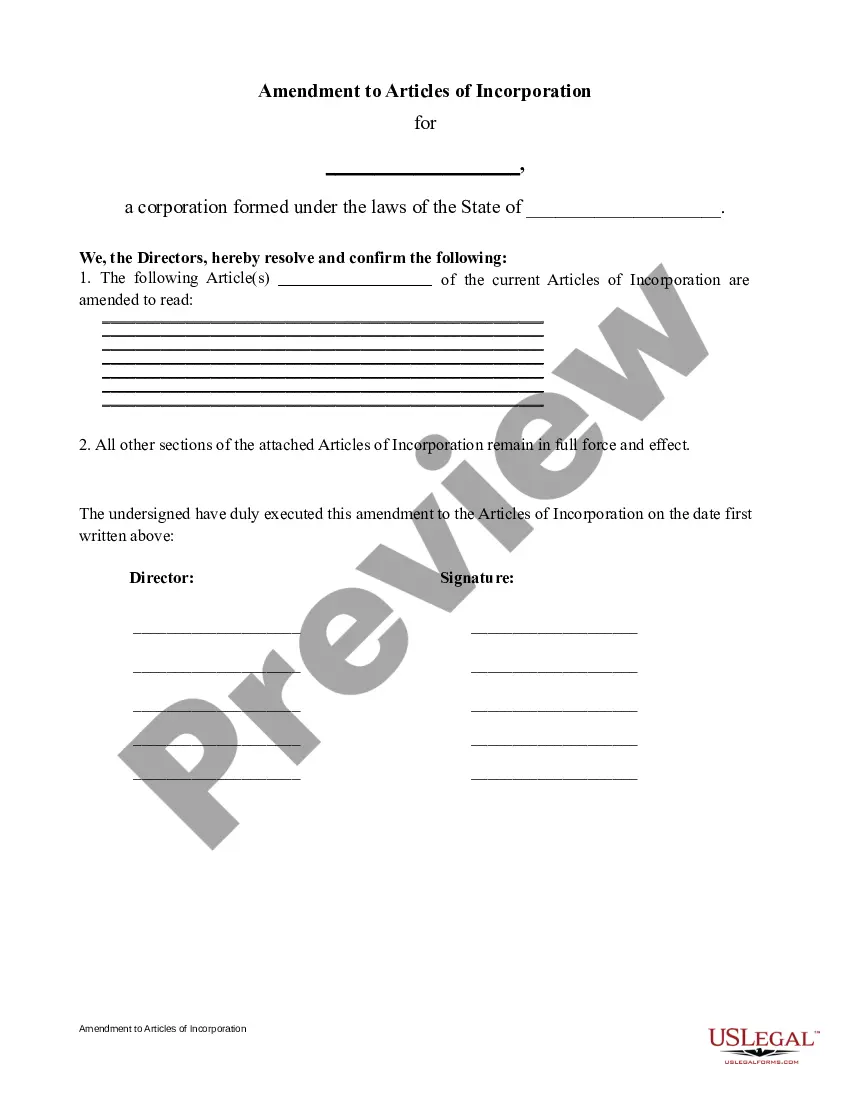
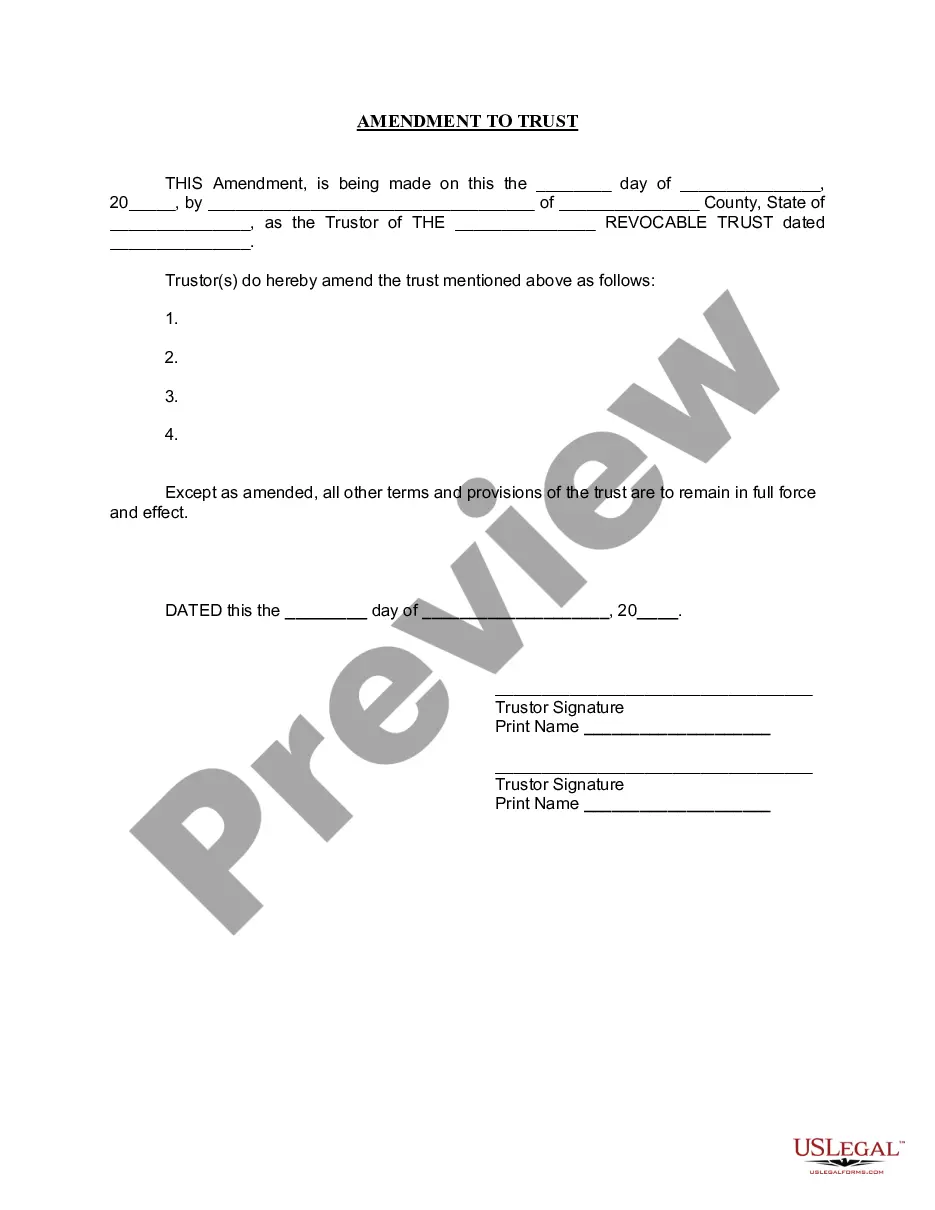
This Amendment to Living Trust form is designed for individuals looking to make changes to their existing revocable trust without altering its fundamental purpose. Living trusts play a crucial role in estate planning by allowing individuals to manage their assets during their lifetime and facilitating the distribution of those assets after their death. Unlike creating a new trust, this amendment allows the Trustor to modify specific provisions while keeping the remainder of the trust intact and active.
What’s included in this form
- Details of the Trustor, including name and county.
- Name and date of the original revocable trust being amended.
- Specific provisions of the trust that are being amended.
- Signature lines for the Trustor(s).
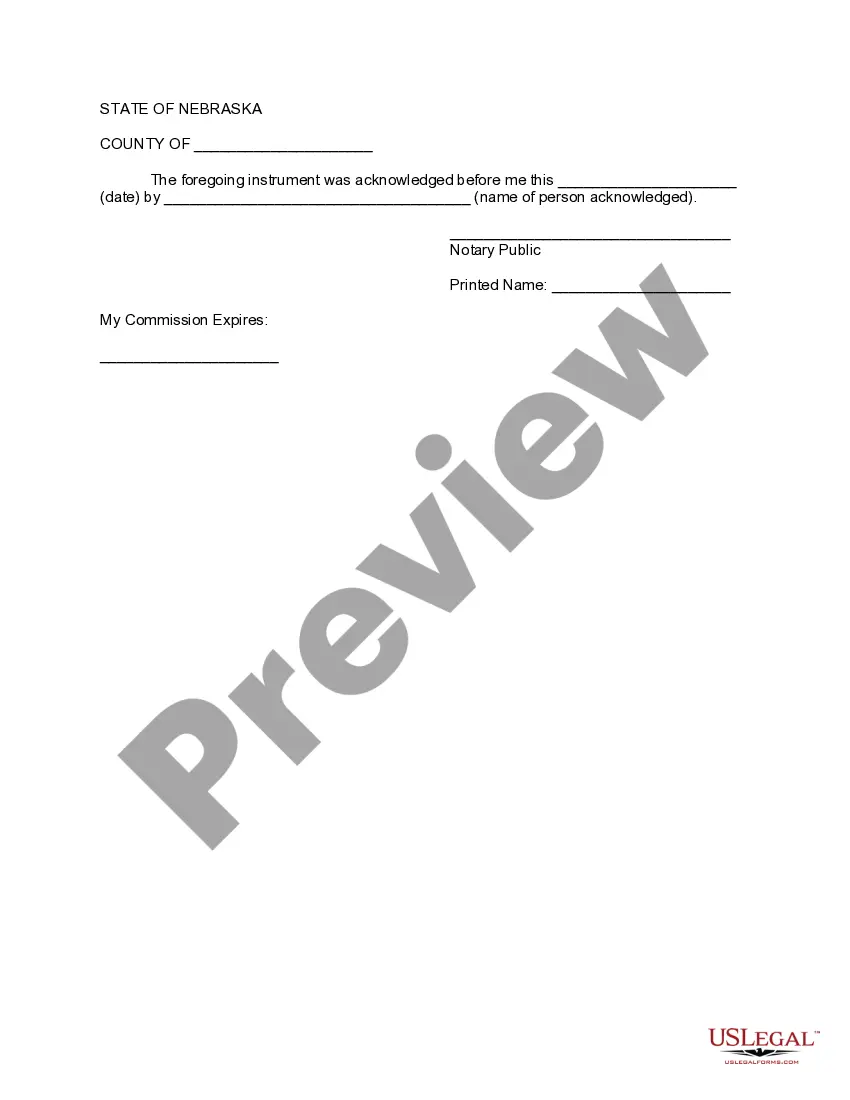
- Notary acknowledgment section to validate the amendment.

When to use this form
This form is necessary when a Trustor needs to change terms or provisions in an existing living trust. Common scenarios include updating beneficiaries, adjusting asset allocations, or changing trustee details. This amendment provides a straightforward way to reflect changes in circumstances or intentions regarding the trust.
Who should use this form
- Individuals currently acting as Trustors of a living trust.
- People looking to update their estate planning documents.
- Trustors who want to change specific terms without revoking the entire trust.
Steps to complete this form
- Enter the date of the amendment at the top of the form.
- Fill in your name, county, and state as the Trustor of the original revocable trust.
- Specify the name and date of the original trust being amended.
- Clearly outline the amendments being made to the trust.
- Sign and print your name in the designated sections.
- Have your signature notarized by a public notary.
Is notarization required?
Notarization is required for this form to take effect. Our online notarization service, powered by Notarize, lets you verify and sign documents remotely through an encrypted video session, available 24/7.
Get your form ready online
Our built-in tools help you complete, sign, share, and store your documents in one place.
Make edits, fill in missing information, and update formatting in US Legal Forms—just like you would in MS Word.
Download a copy, print it, send it by email, or mail it via USPS—whatever works best for your next step.
Sign and collect signatures with our SignNow integration. Send to multiple recipients, set reminders, and more. Go Premium to unlock E-Sign.
If this form requires notarization, complete it online through a secure video call—no need to meet a notary in person or wait for an appointment.
We protect your documents and personal data by following strict security and privacy standards.

Make edits, fill in missing information, and update formatting in US Legal Forms—just like you would in MS Word.

Download a copy, print it, send it by email, or mail it via USPS—whatever works best for your next step.

Sign and collect signatures with our SignNow integration. Send to multiple recipients, set reminders, and more. Go Premium to unlock E-Sign.

If this form requires notarization, complete it online through a secure video call—no need to meet a notary in person or wait for an appointment.

We protect your documents and personal data by following strict security and privacy standards.
Typical mistakes to avoid
- Failing to clearly state the amendments made to the trust.
- Not completing the notary acknowledgment section properly.
- Omitting the date of the amendment.
- Not signing the document in front of the notary public.
Why use this form online
- Immediate access to a professionally drafted legal document.
- Convenient download for easy editing and customization.
- Reduced need for in-person visits to legal offices or courthouses.
- Secure and reliable legal templates prepared by licensed attorneys.
Summary of main points
- The Amendment to Living Trust is crucial for legally modifying an existing trust.
- Proper completion is necessary to avoid potential legal issues.
- Notarization is required to validate the amendment.
Looking for another form?


Form popularity
FAQ
List Your Assets and Decide Which You'll Include in the Trust. Gather the Paperwork. Decide Whether You Will Be the Sole Grantor. Choose Beneficiaries. Choose a Successor Trustee. Choose Someone to Manage Property for Minor Children. Prepare the Trust Document. Sign and Notarize.
Find living trust forms online. Be as clear as possible. Include specific language. Have the amendment notarized. Keep your trust document and amendment together in a safe place. Alternatively, do what is called a restatement of the trust. Revoke your trust.
Of course you can, however, "Codicil" is an amendment to a will. Amending a trust called "Amendment" to the trust, even if it is just amending a trustee's name. It needs to be notarized and some specific language to be sufficient.
Just about any writing will suffice to make a valid Trust amendment. Having the writing typed is not legally required. That's really the point of Trust amendments, to allow a Settlor to express his or her intent as easily as possible. As long as the Trust terms are followed, any writing will do.
You can change your living trust, usually without incurring lawyer bills.Because you and your spouse made the trust together, you should both sign the amendment, and when you sign it, get your signatures notarized, just like the original. Another way to go is to create a "restatement" of your trust.
A court can, when given reasons for a good cause, amend the terms of irrevocable trust when a trustee and/or a beneficiary petitions the court for a modification.Such modification provisions are common with charitable trusts, to allow modifications when federal tax law changes.
Locate the original trust. The grantor must locate the original trust documents and identify the specific provisions that require amendment. Prepare an amendment form. Get the amendment form notarized. Attach amendment form to original trust.
An amendment to a trust is not required to be notarized or witnessed unless the terms of the original trust require it.