Florida Estate Planning Questionnaire and Worksheets
Understanding this form
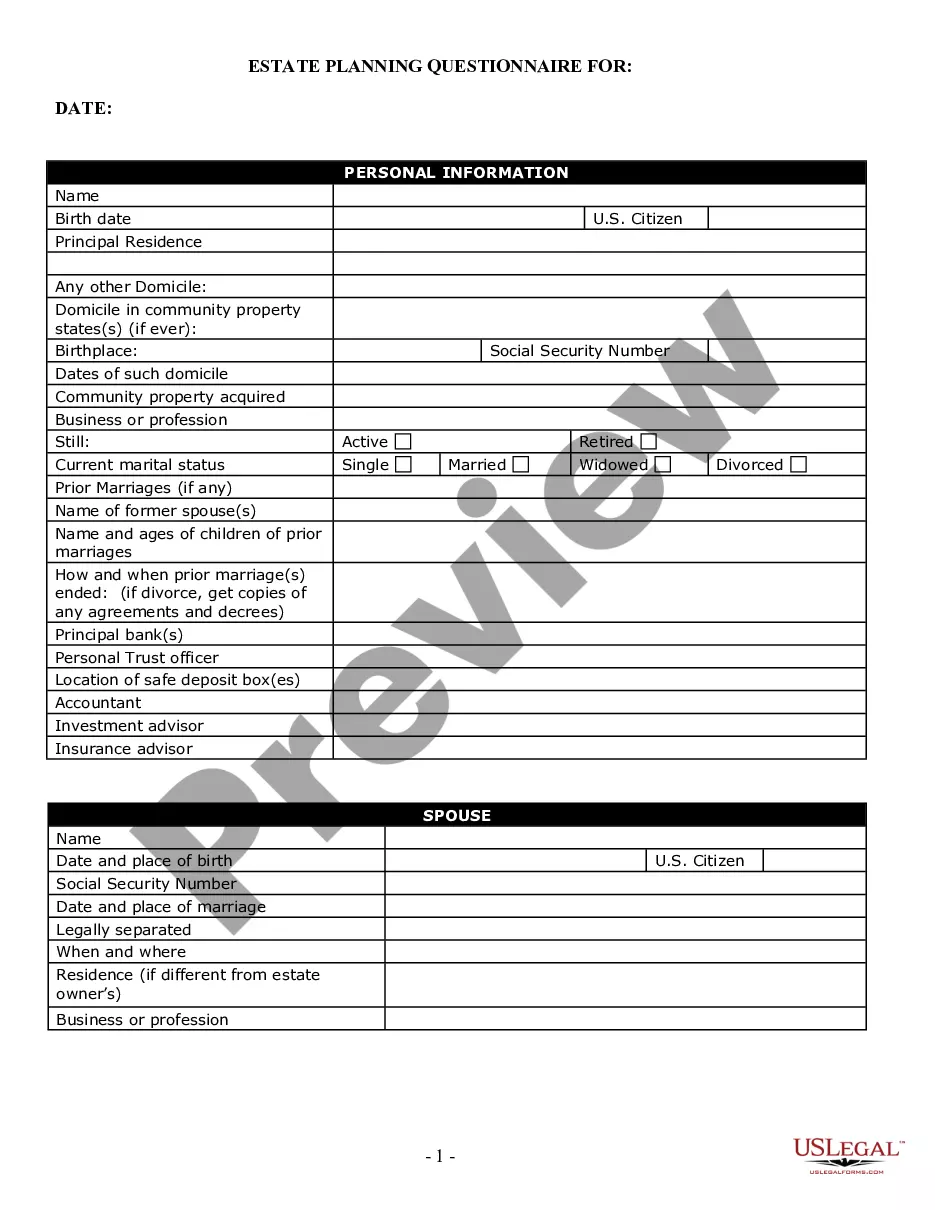
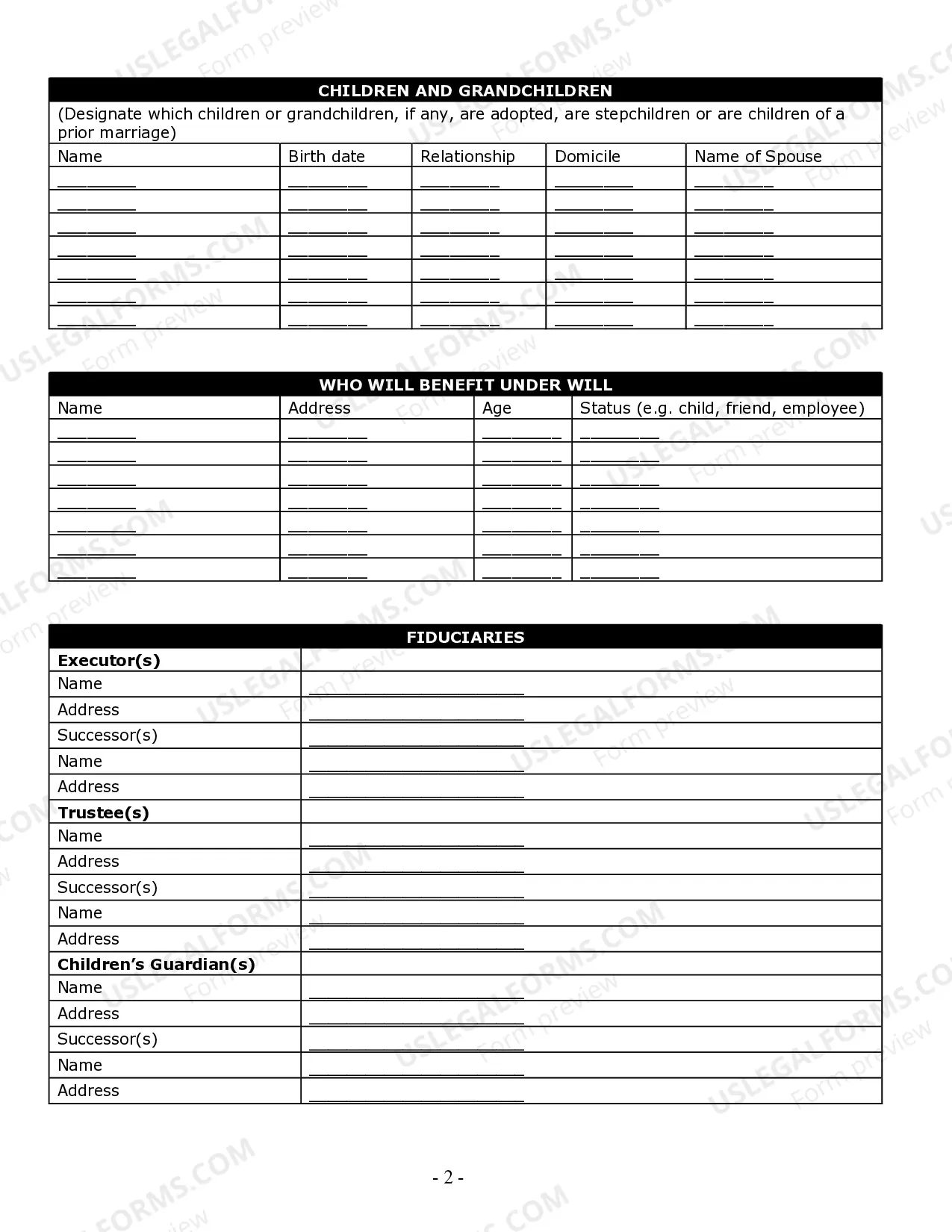
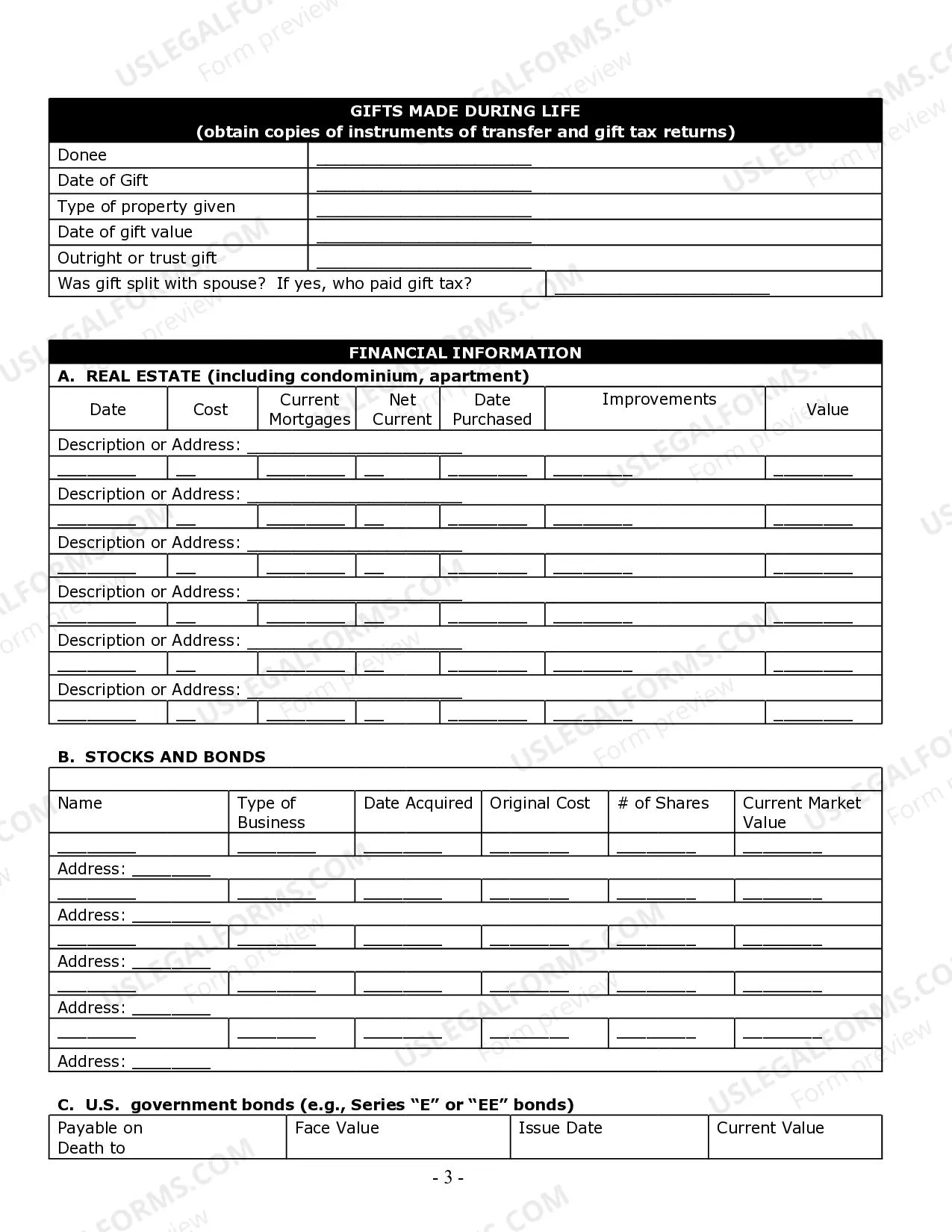
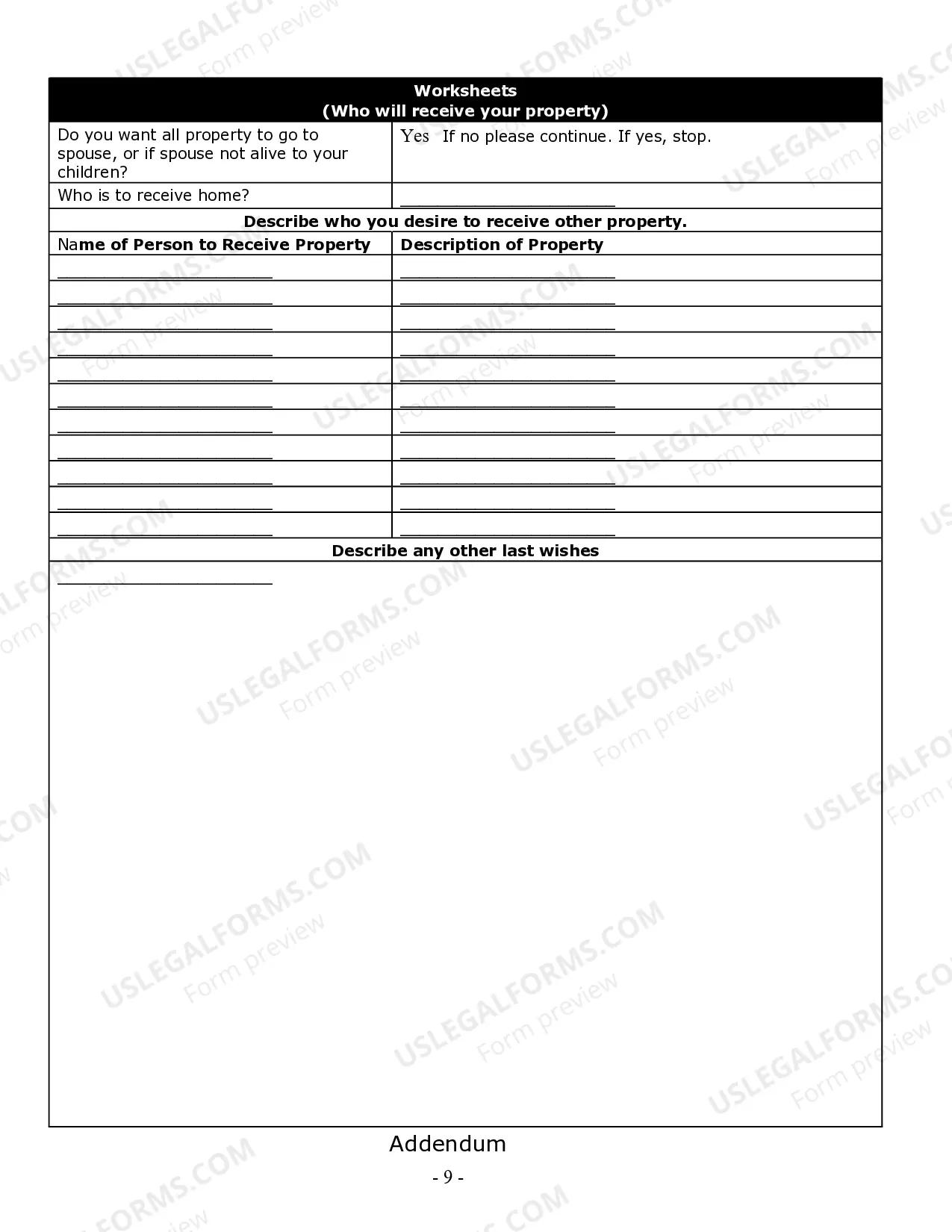
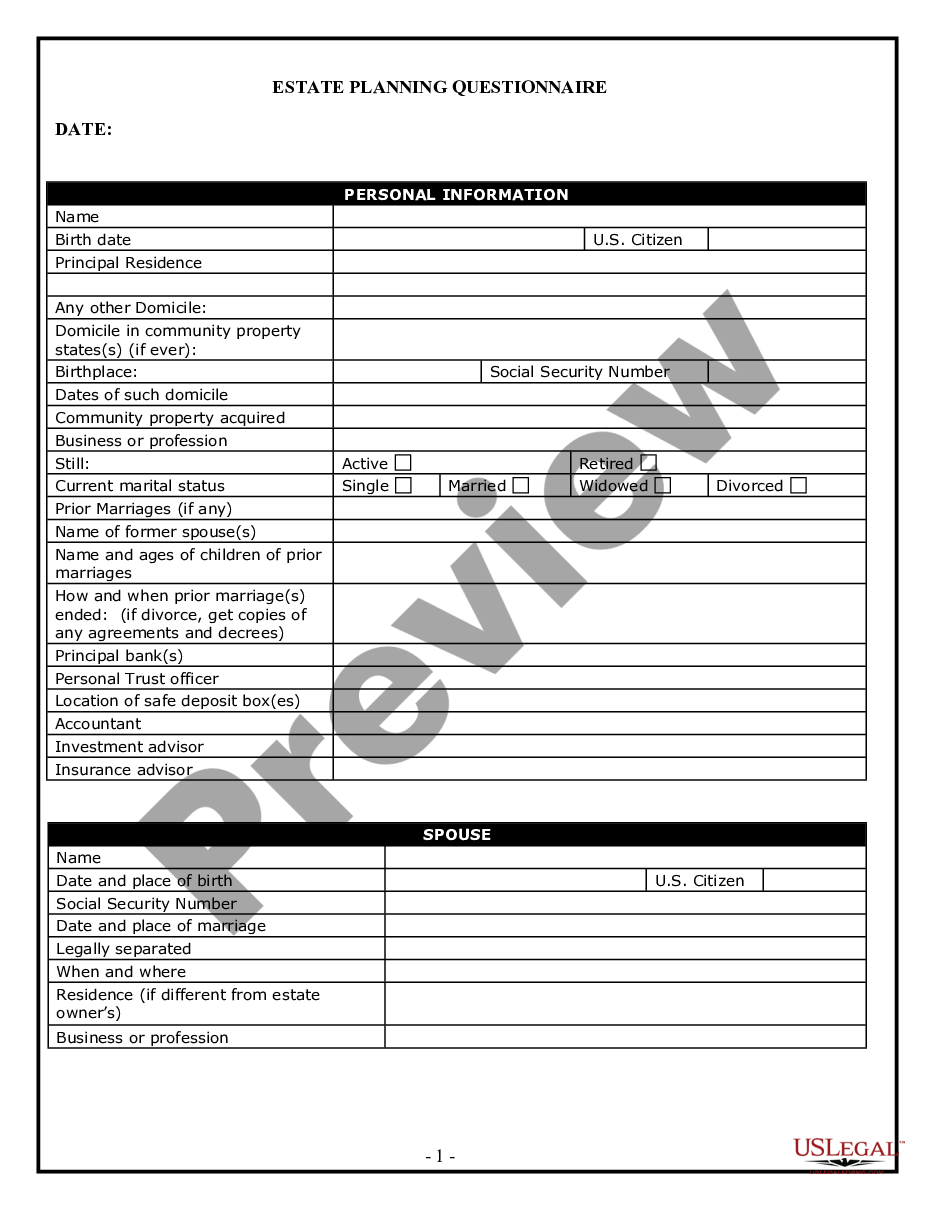
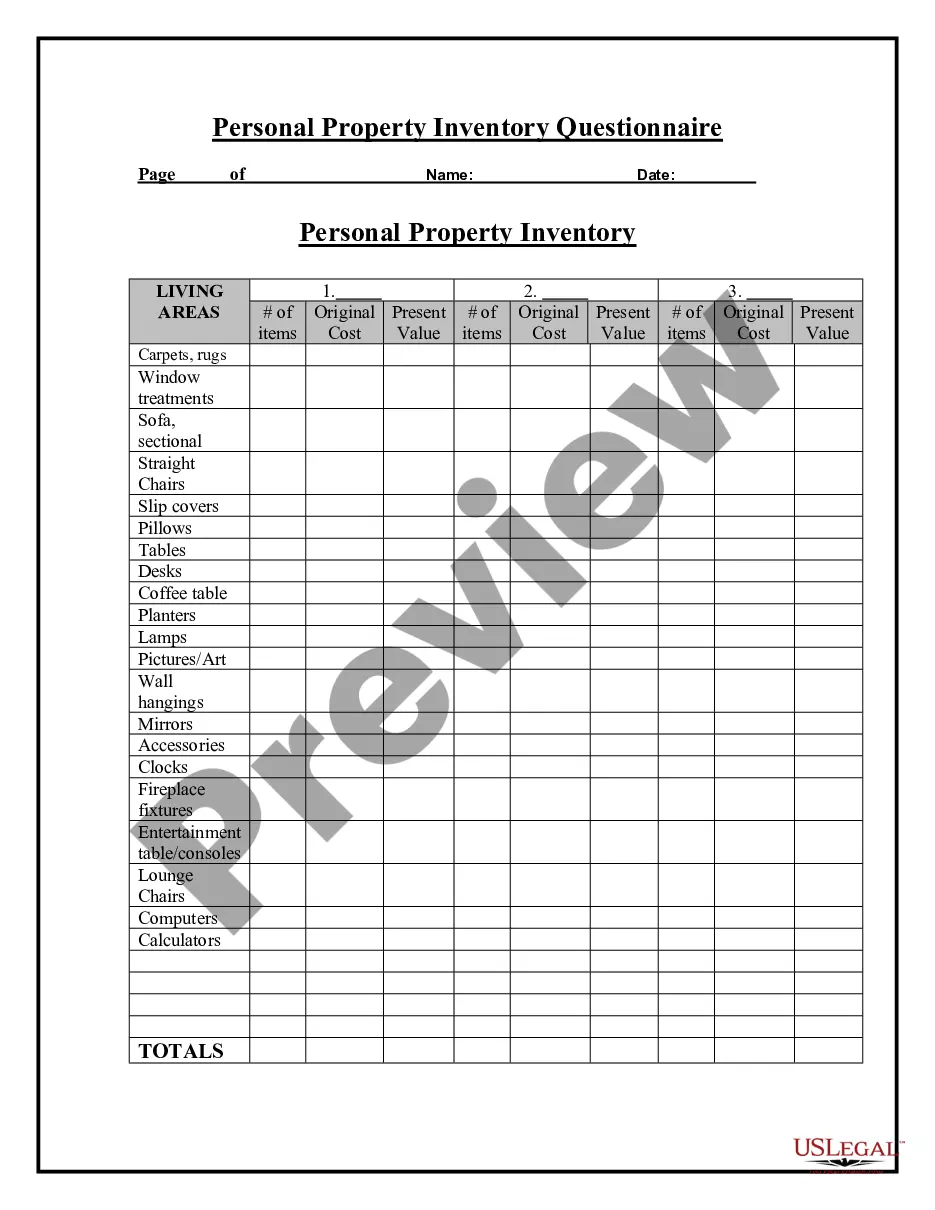
The Estate Planning Questionnaire and Worksheets is a comprehensive tool designed to gather essential personal and financial information relevant to estate planning. This form is tailored for both client interviews and individual use, allowing users to assess their overall financial situation. It provides several benefits by making the estate planning process more organized and informed compared to similar forms that may not cover detailed information as thoroughly.
What’s included in this form
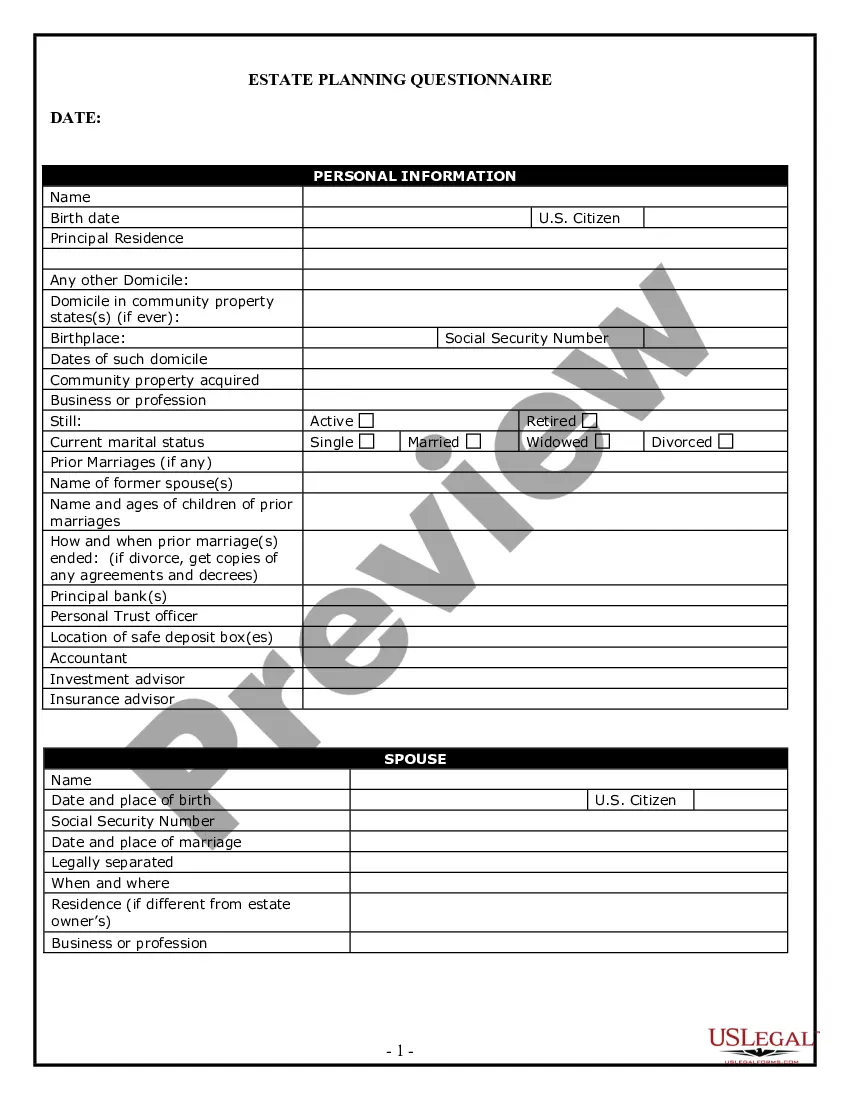
- Personal information section for identifying family members and key associates.
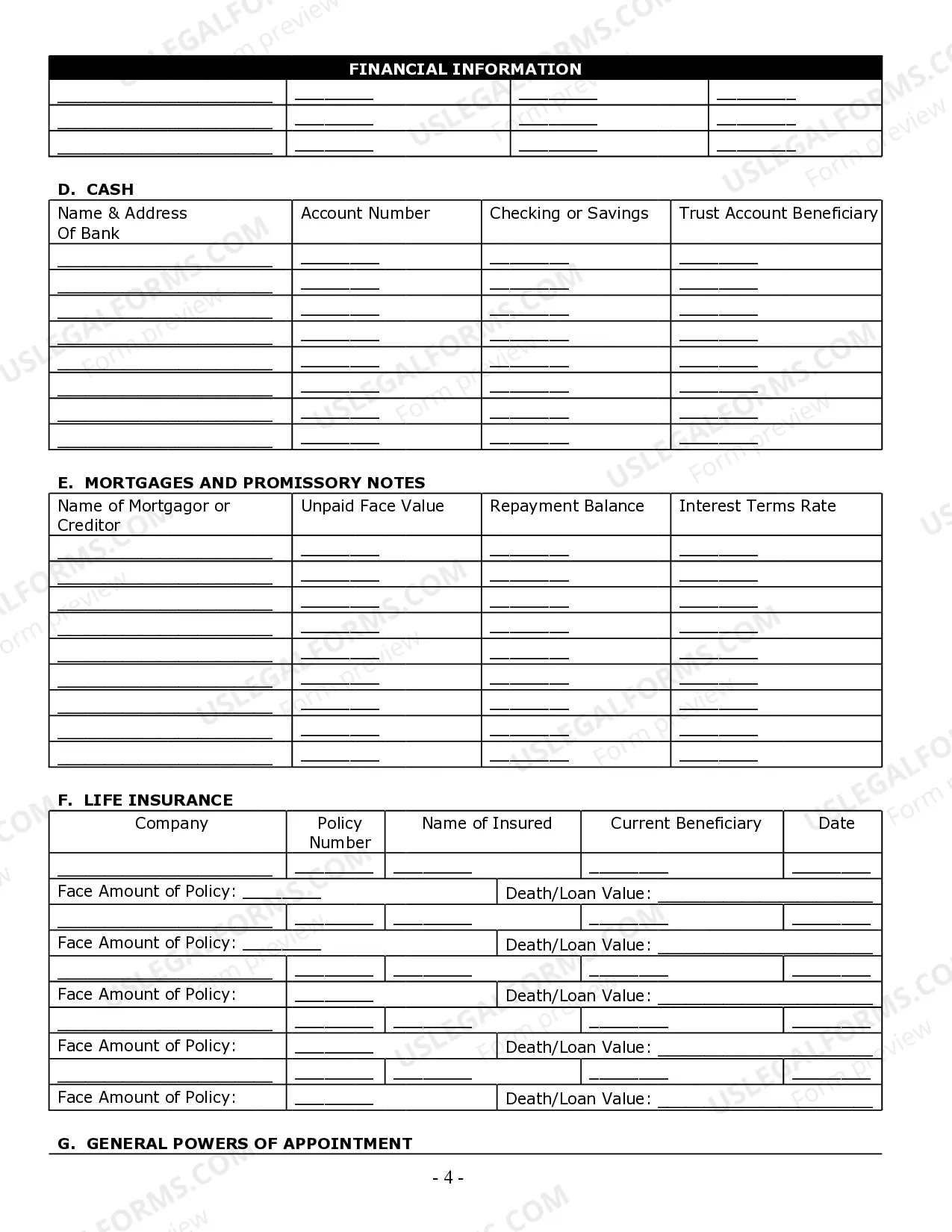
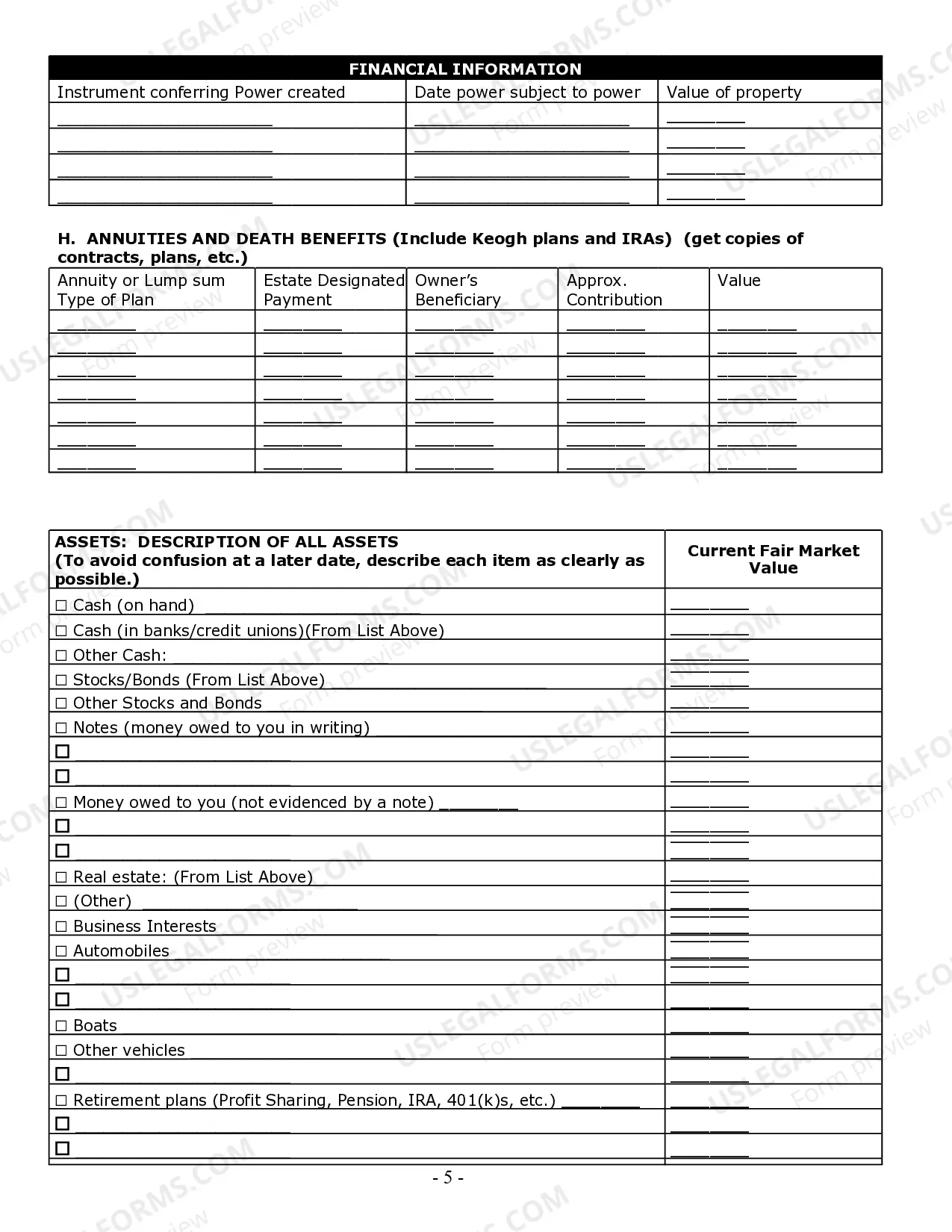
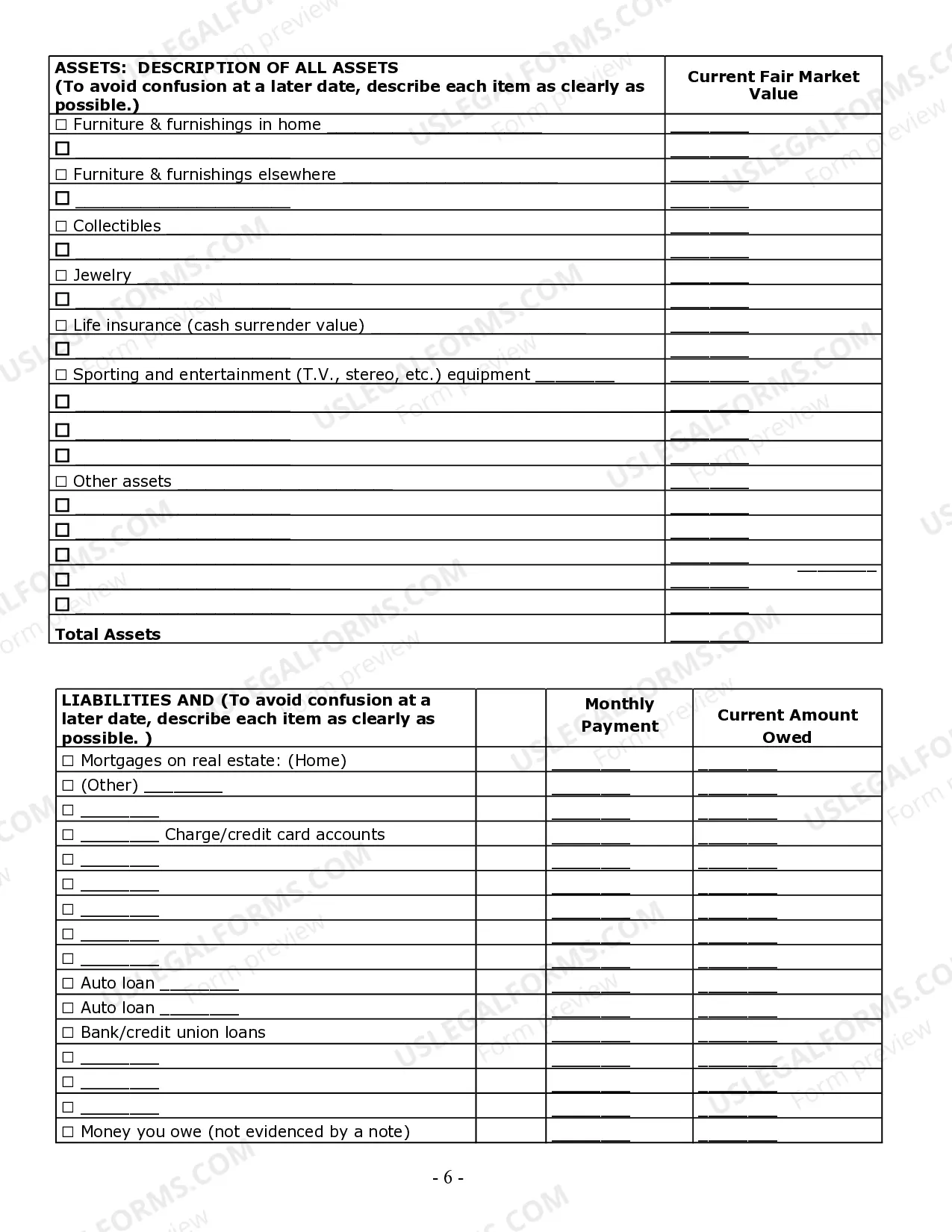
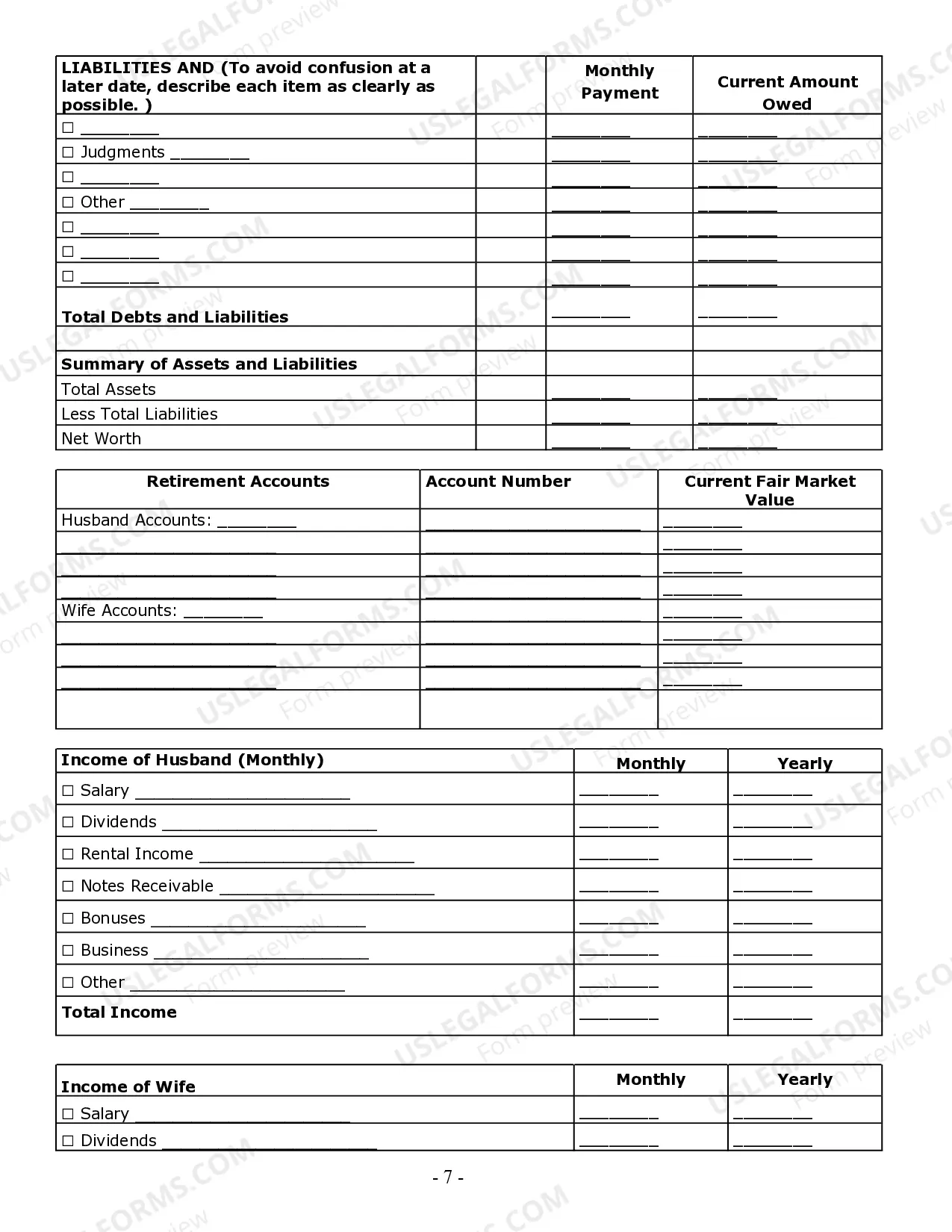
- Financial details, including assets, debts, and income streams.
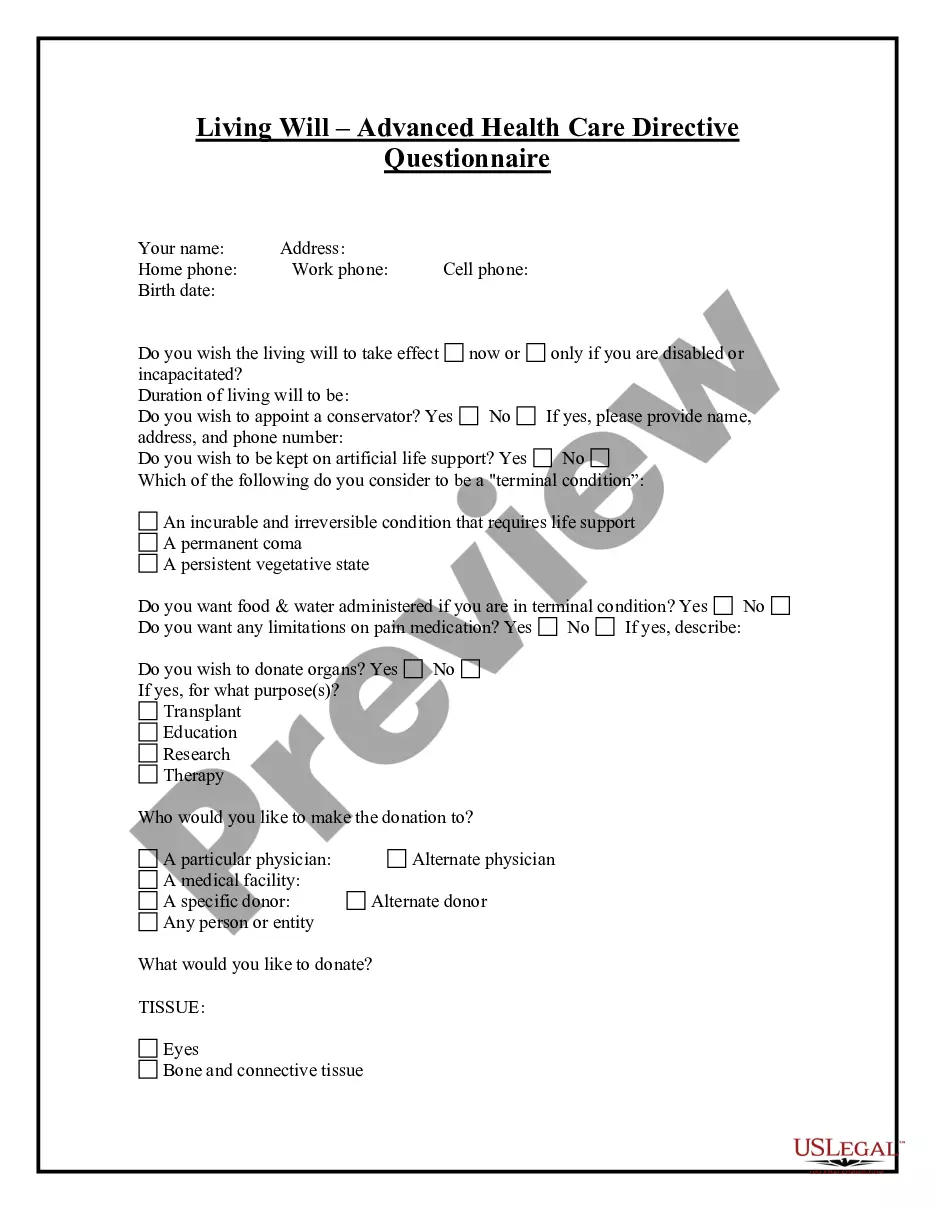
- Questions regarding healthcare preferences and power of attorney designations.
- Instructions for completing the worksheet for future estate planning meetings.
- Space for additional notes relevant to the estate planning process.



Common use cases
This form is ideal for anyone beginning the estate planning process, whether it is for a person organizing their own affairs or for professionals conducting client interviews. It is beneficial for users who want to gain insight into their financial situation and ensure all relevant information is collected for comprehensive estate planning.
Intended users of this form
- Individuals looking to plan their estates responsibly.
- Families wanting to clarify financial roles and responsibilities.
- Legal professionals conducting estate planning sessions with clients.
- Anyone who needs to evaluate their financial status for future planning needs.
Instructions for completing this form
- Begin by entering your personal details, including your name and contact information.
- List out all financial assets such as bank accounts, properties, and investments.
- Record any outstanding debts and obligations to get a clear financial picture.
- Detail your preferences for healthcare directives and appoint a power of attorney.
- Review the completed questionnaire for any necessary additions or corrections before final use.
Notarization requirements for this form
This form does not typically require notarization unless specified by local law. It is advised to consult local regulations for confirmation regarding notarization needs.
Get your form ready online
Our built-in tools help you complete, sign, share, and store your documents in one place.
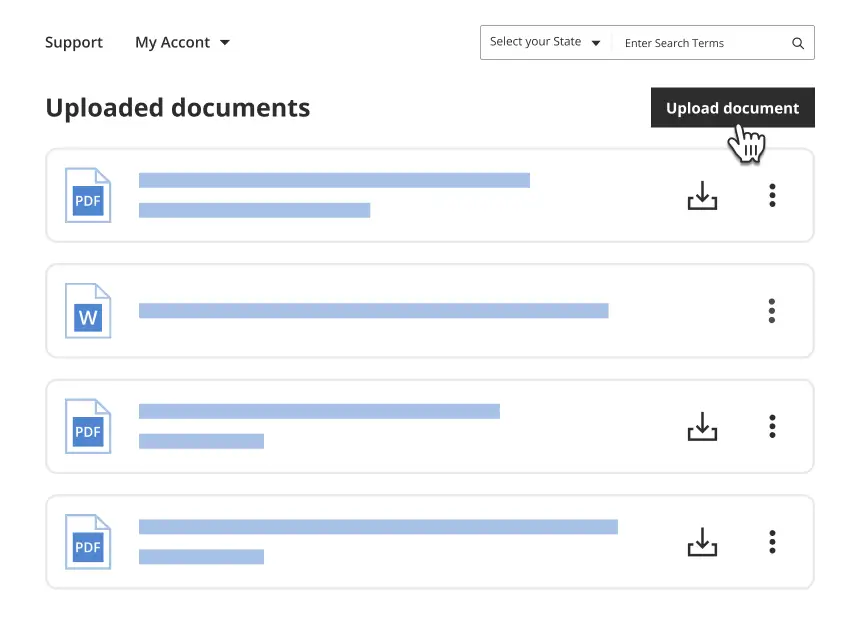
Make edits, fill in missing information, and update formatting in US Legal Forms—just like you would in MS Word.
Download a copy, print it, send it by email, or mail it via USPS—whatever works best for your next step.
Sign and collect signatures with our SignNow integration. Send to multiple recipients, set reminders, and more. Go Premium to unlock E-Sign.
If this form requires notarization, complete it online through a secure video call—no need to meet a notary in person or wait for an appointment.
We protect your documents and personal data by following strict security and privacy standards.
Make edits, fill in missing information, and update formatting in US Legal Forms—just like you would in MS Word.
Download a copy, print it, send it by email, or mail it via USPS—whatever works best for your next step.
Sign and collect signatures with our SignNow integration. Send to multiple recipients, set reminders, and more. Go Premium to unlock E-Sign.

If this form requires notarization, complete it online through a secure video call—no need to meet a notary in person or wait for an appointment.
We protect your documents and personal data by following strict security and privacy standards.
Avoid these common issues
- Omitting important financial assets or liabilities.
- Failing to update the form as financial situations change.
- Not clearly specifying healthcare wishes or power of attorney roles.
- Leaving sections incomplete or unclear, which may hinder the estate planning process.
Why use this form online
- Convenience of filling out the form at your own pace from any location.
- Edit your responses easily to ensure accuracy and completeness.
- Access to reliable legal forms drafted by licensed attorneys specifically for estate planning.
Quick recap
- The Estate Planning Questionnaire is crucial for gathering estate-related information.
- It can be used by individuals and legal professionals alike.
- Completing the form accurately is essential for effective estate planning.
Looking for another form?
Form popularity
FAQ
The 5 and 5 rule for irrevocable trusts permits a beneficiary to withdraw the greater of $5,000 or 5% of the trust's value without affecting the tax-exempt status. This rule can be beneficial for financial planning, offering beneficiaries a balance between access to funds and adherence to tax law. The Florida Estate Planning Questionnaire and Worksheets can guide you in incorporating this rule effectively into your estate plans.
The 5 by 5 rule specifies that beneficiaries can withdraw up to $5,000 or 5% of the total trust value each year without incurring penalties. This allows for a degree of financial freedom while maintaining the integrity of the trust. Using the Florida Estate Planning Questionnaire and Worksheets can help you establish a clear strategy that aligns with this rule.
The 5 or 5 rule allows a donor to withdraw a sum of up to $5,000 or 5% of the trust principal each year without penalizing the trust. This flexibility can help beneficiaries manage their funds more effectively while still adhering to gift tax regulations. Incorporating insights from the Florida Estate Planning Questionnaire and Worksheets can clarify how this rule applies to your specific situation.
One major mistake parents often make is not clearly defining the terms of the trust. This can lead to confusion and disputes among beneficiaries down the line. It's crucial to utilize resources like the Florida Estate Planning Questionnaire and Worksheets to ensure all details are laid out effectively, minimizing potential conflicts.
Creating an estate plan is a lot like getting into better shape. Step 1: Sign a will. Step 2: Name beneficiaries. Step 3: Dodge estate taxes. Step 4: Leave a letter. Step 5: Draw up a durable power of attorney. Step 6: Create an advance health care directive.
What Property Can Go in a Living Trust? Who Should Be My Trustee? Does a Living Trust Avoid Estate and Probate Taxes? What Are the Benefits of a Living Trust? What Are the Drawbacks of a Living Trust? Do I Still Need a Power of Attorney?
Bank accounts. Brokerage or investment accounts. Retirement accounts and pension plans. A life insurance policy.
A will may be a relatively simple document that sets forth your wishes regarding the distribution of property; it may also include instructions regarding the care of minor children. An estate plan goes much further than a will.
There are four main elements of an estate plan; these include a will, a living will and healthcare power of attorney, a financial power of attorney, and a trust.
Lay out Your Assets & Think About Final Wishes. Consider Your Digital Assets. Gather Documents Needed for Will Preparation. Choose Your Executor & Beneficiaries. Nominate Guardians. Sign Your Will. Store Your Will. Update or Amend Your Will.