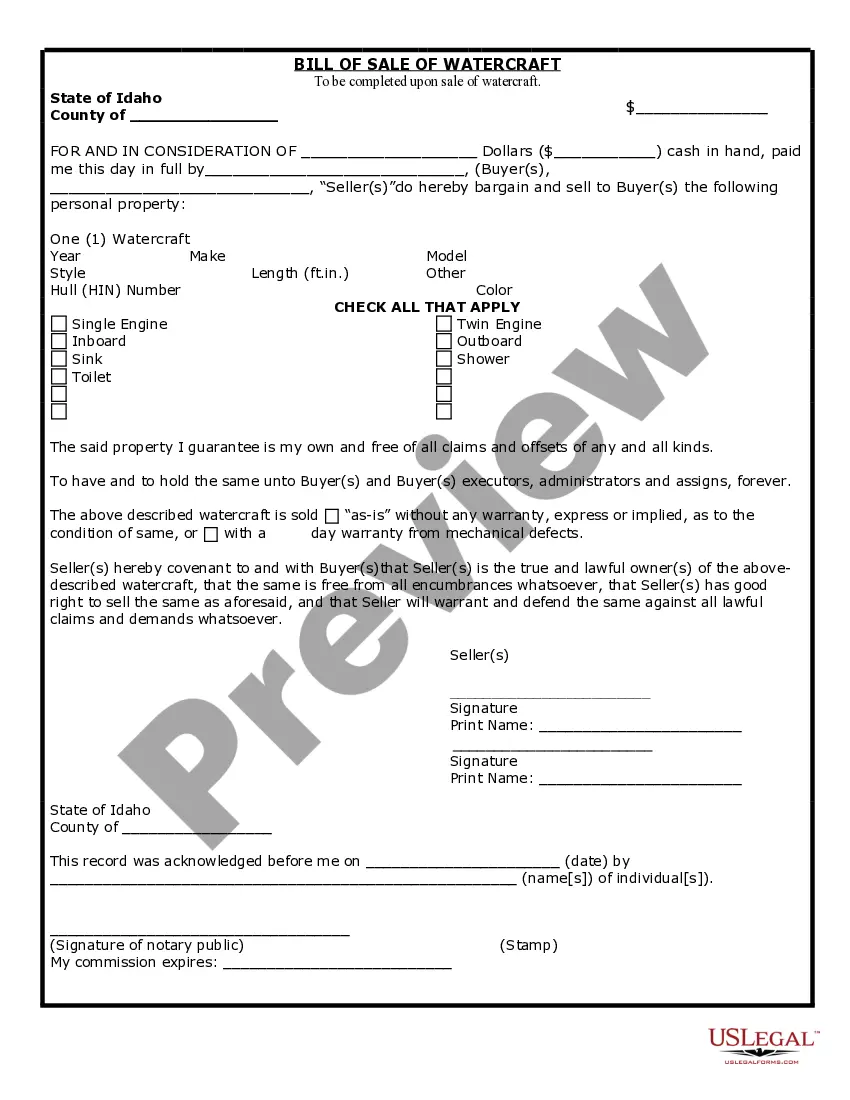
Partnership Agreement for Startup
What this document covers
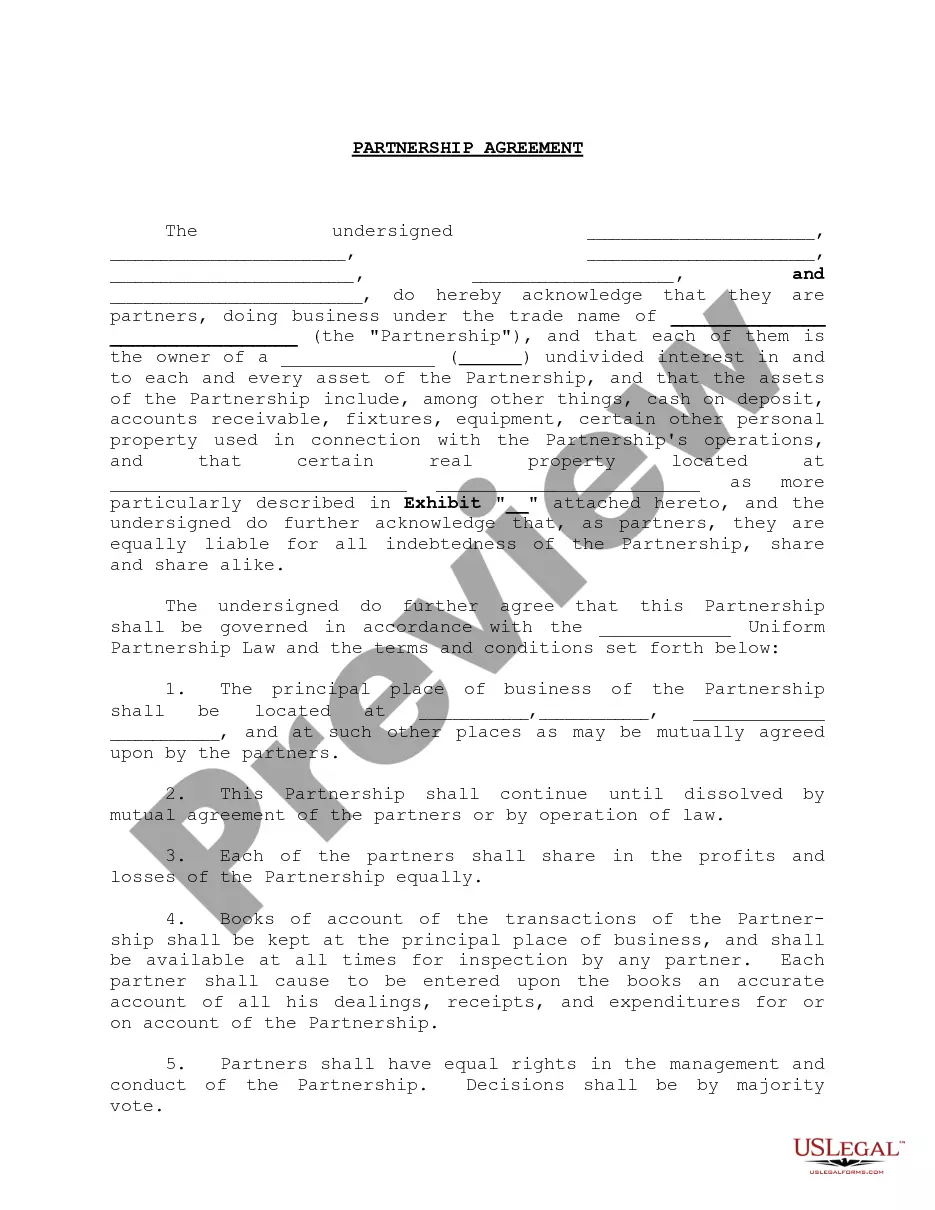
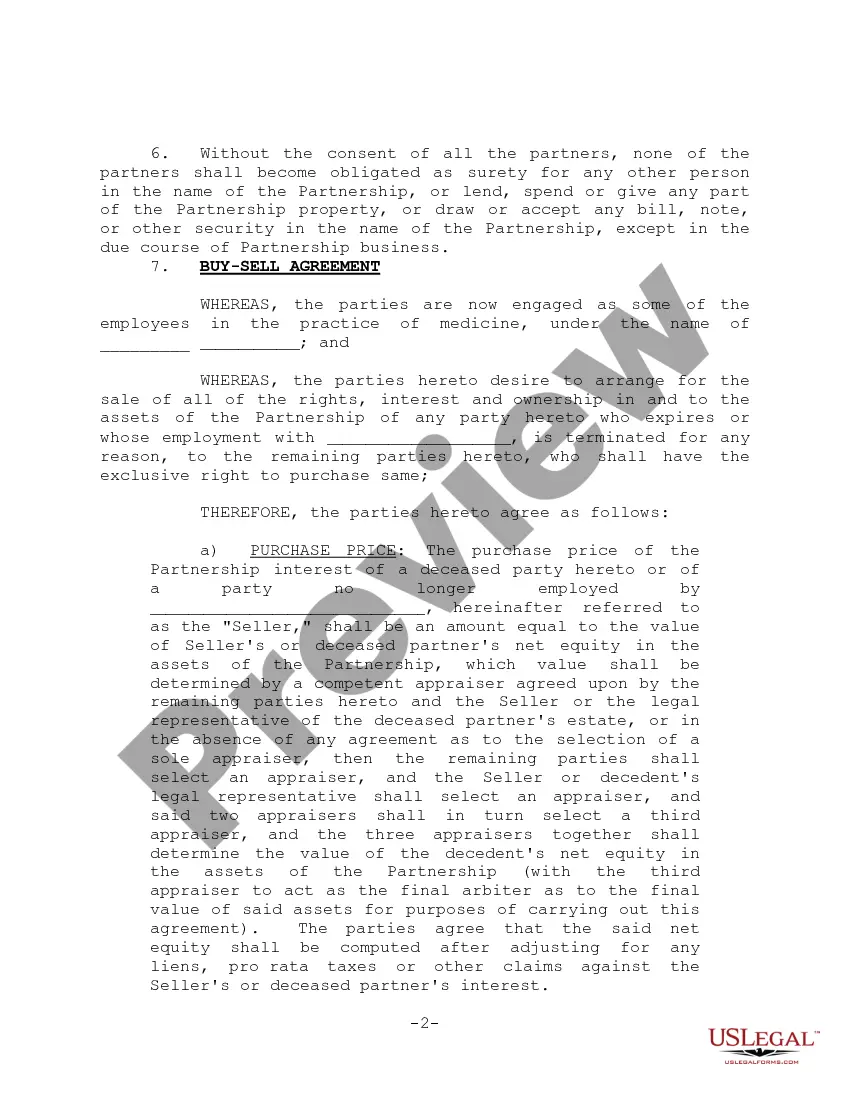
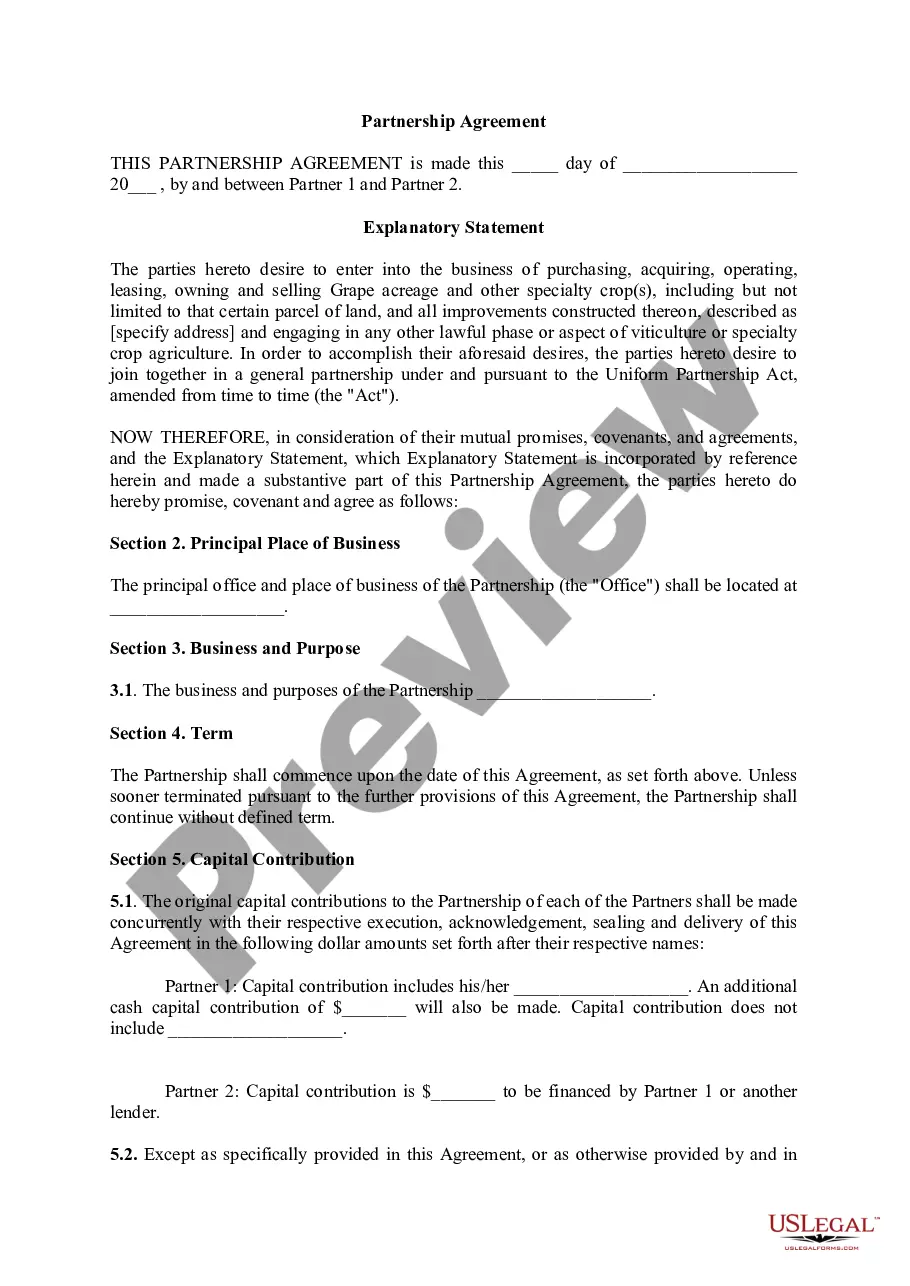
The Partnership Agreement for Startup is a legal document that formalizes the relationship between partners in a new business venture. This agreement specifies each partner's ownership percentage, capital contributions, and responsibilities within the partnership. It ensures that all parties are aligned on management decisions and profit-sharing arrangements, distinct from other business agreements like operating agreements or shareholder agreements. This partnership agreement lays the groundwork for successful collaboration and helps avoid conflicts in the future.
Form components explained
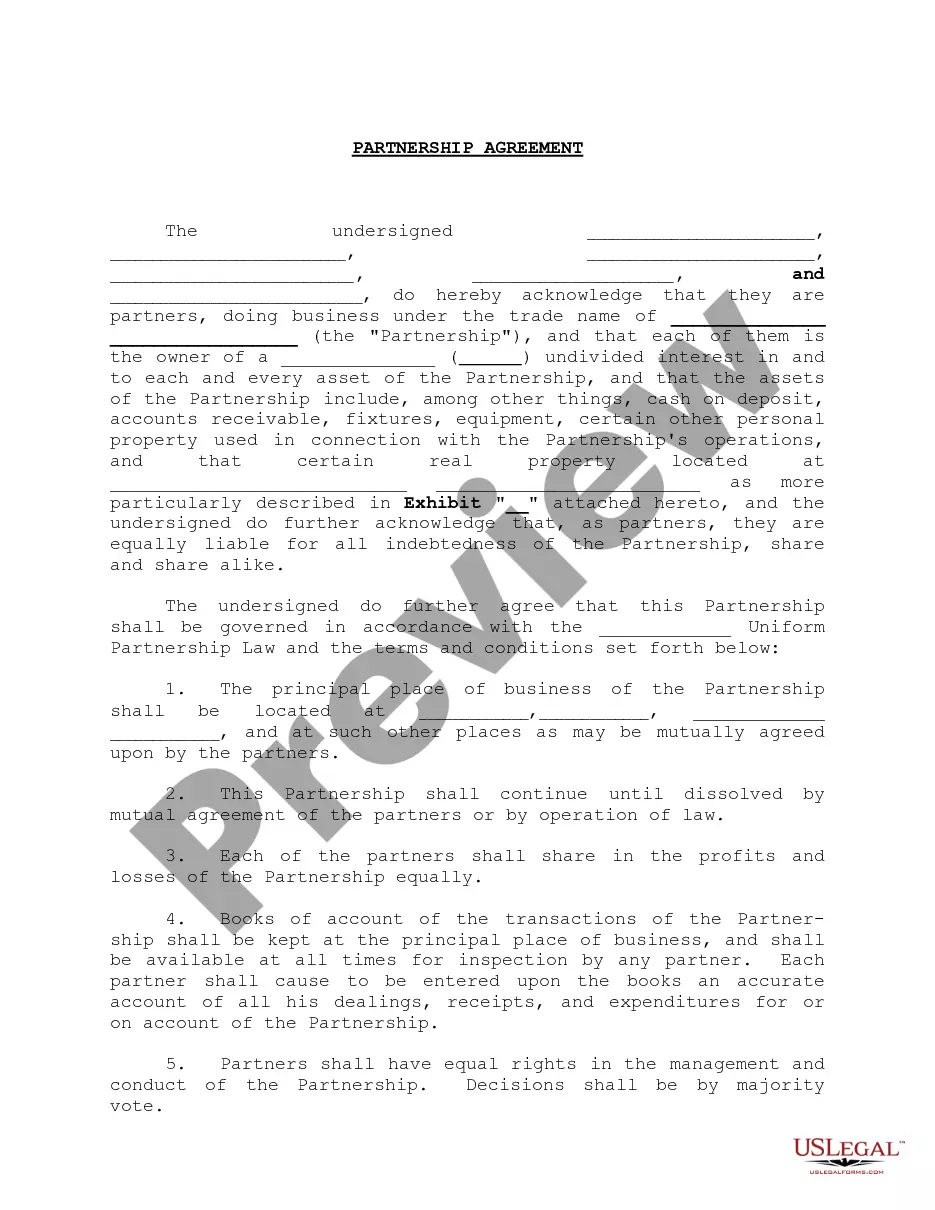
- Acknowledgment of partners and percentage ownership.
- Description of partnership assets, including cash, property, and equipment.
- Provisions for management and decision-making.
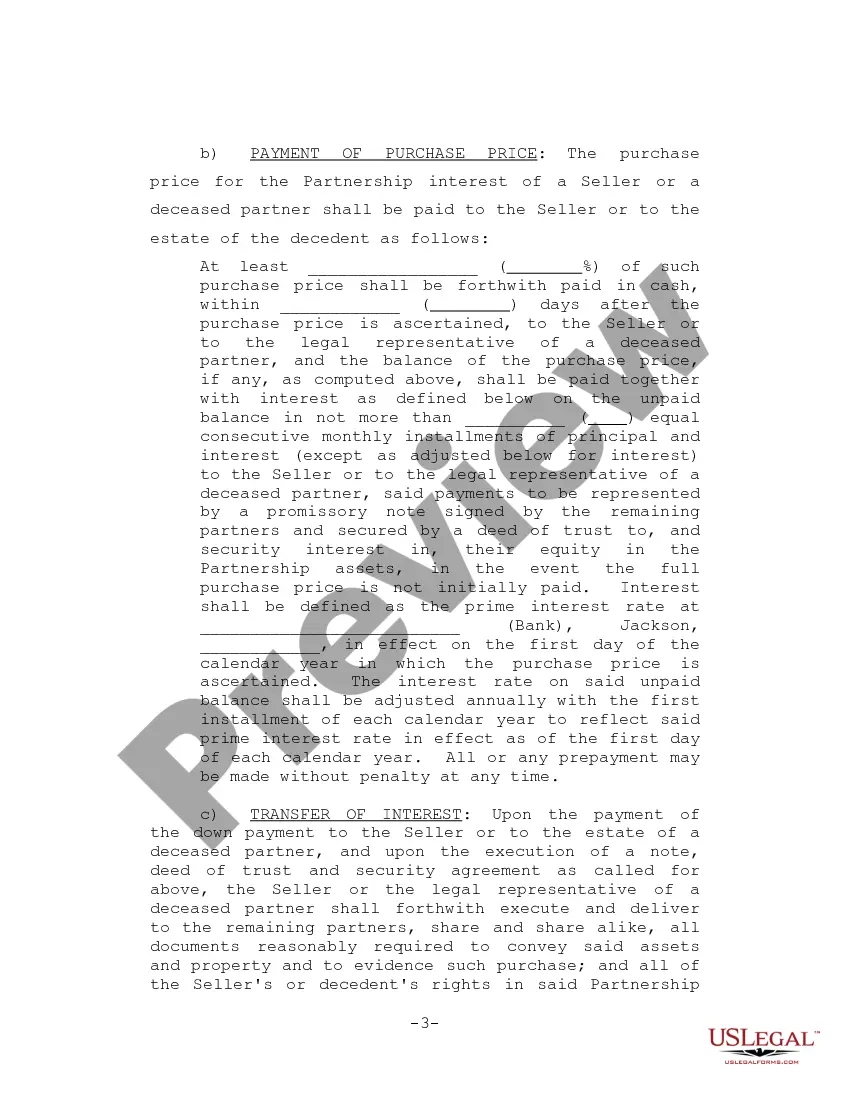
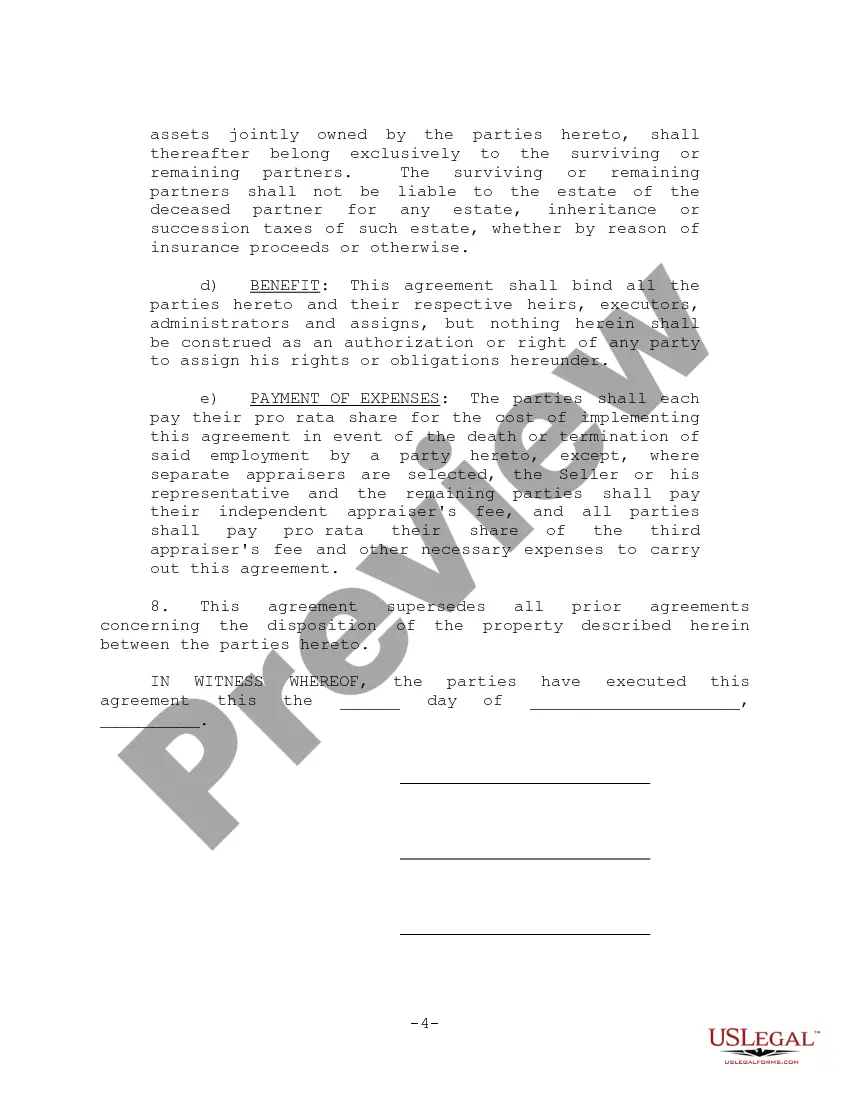
- Buy-sell agreement terms in case of a partner's exit or passing.
- Details on profit and loss sharing among partners.
- Terms governing books of accounts and financial records.

Situations where this form applies
This form is essential when two or more individuals decide to collaborate and invest in a new business. Use this partnership agreement when you aim to clearly define ownership stakes, financial contributions, and operational roles. It is particularly useful for startups in various industries that need structured guidelines to manage potential disputes or business transitions, such as if a partner leaves or passes away.
Intended users of this form
This form is intended for:
- Individuals starting a new business as partners.
- Existing partners in a business seeking to formalize their partnership.
- Entrepreneurs looking for clarity on ownership and responsibilities.
- Partners who wish to protect their interests and outline procedures for investment and profit-sharing.
How to complete this form
- Identify the partners involved and fill in their names.
- Specify the partnership name and address.
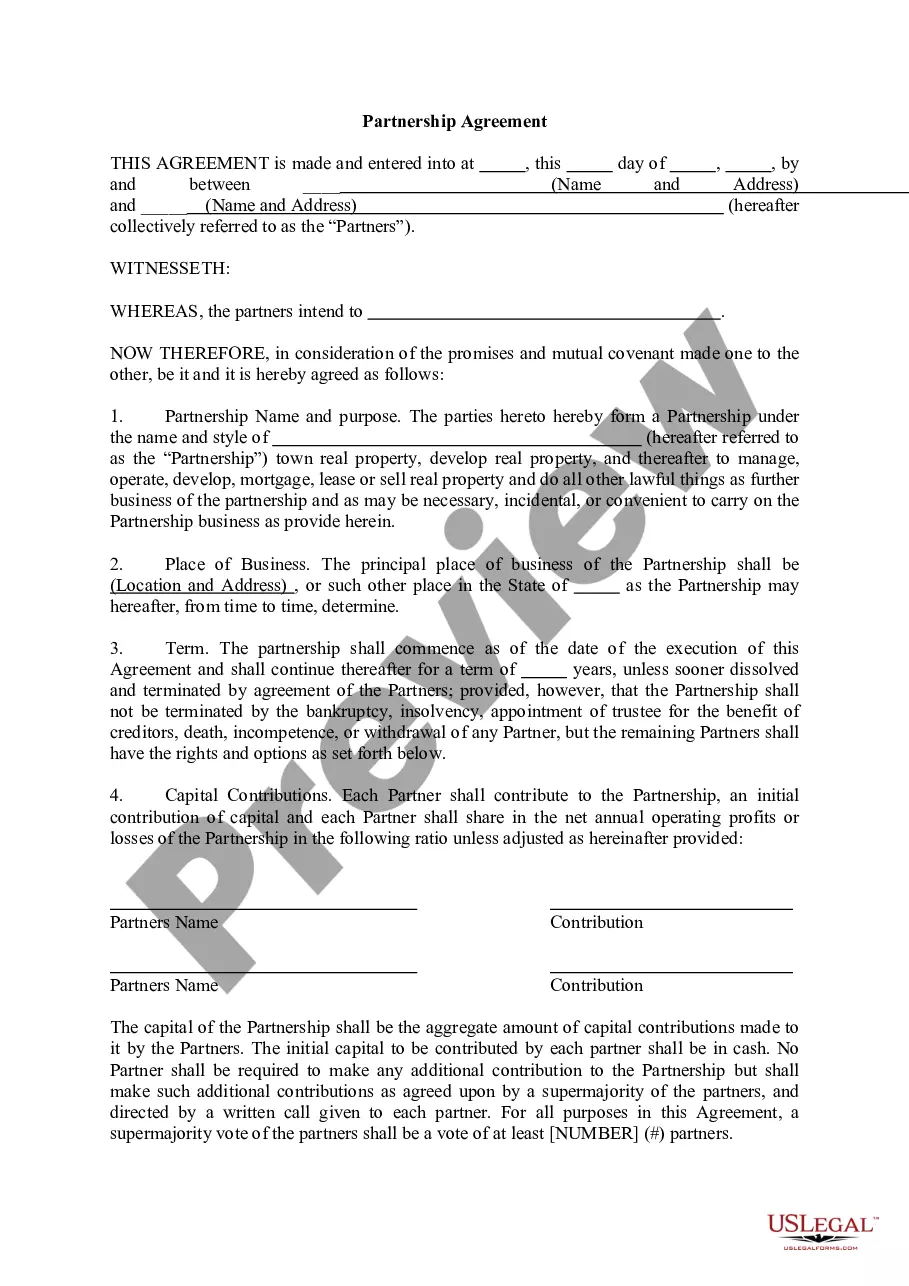
- Define the percentage of ownership each partner holds.
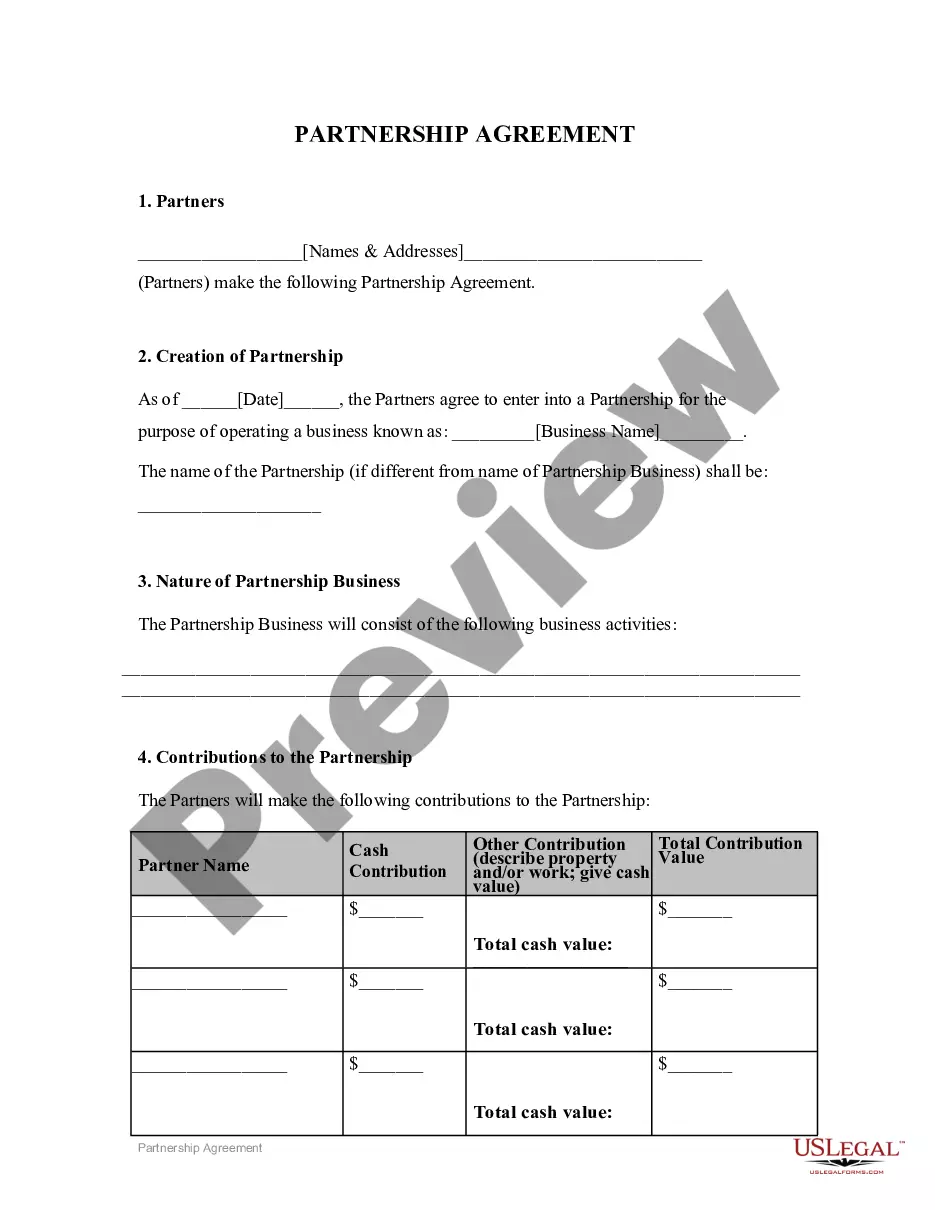
- List the capital contributions made by each partner.
- Include clauses on partnership management, profit sharing, and buy-sell agreements.
- Ensure all partners sign and date the form to validate the agreement.
Is notarization required?
This form does not typically require notarization unless specified by local law. However, having the document notarized may enhance its validity and enforceability, providing additional security for all parties involved.
Get your form ready online
Our built-in tools help you complete, sign, share, and store your documents in one place.
Make edits, fill in missing information, and update formatting in US Legal Forms—just like you would in MS Word.
Download a copy, print it, send it by email, or mail it via USPS—whatever works best for your next step.
Sign and collect signatures with our SignNow integration. Send to multiple recipients, set reminders, and more. Go Premium to unlock E-Sign.
If this form requires notarization, complete it online through a secure video call—no need to meet a notary in person or wait for an appointment.
We protect your documents and personal data by following strict security and privacy standards.

Make edits, fill in missing information, and update formatting in US Legal Forms—just like you would in MS Word.

Download a copy, print it, send it by email, or mail it via USPS—whatever works best for your next step.

Sign and collect signatures with our SignNow integration. Send to multiple recipients, set reminders, and more. Go Premium to unlock E-Sign.

If this form requires notarization, complete it online through a secure video call—no need to meet a notary in person or wait for an appointment.

We protect your documents and personal data by following strict security and privacy standards.
Typical mistakes to avoid
- Not clearly specifying each partner's ownership percentage.
- Failing to outline responsibilities and decision-making processes.
- Overlooking the buy-sell provisions, leading to disputes later.
- Not keeping financial records accessible to all partners.
- Skipping legal review to ensure compliance with local laws.
Benefits of using this form online
- Instant access to professionally drafted legal templates.
- Easy customization options to fit your specific partnership needs.
- Secure downloading and storage of essential legal documents.
- Reduced time and cost compared to traditional legal services.
- Access to customer support for any questions or concerns.
Summary of main points
- The Partnership Agreement for Startup clarifies ownership, contributions, and responsibilities among partners.
- Using this agreement helps prevent disputes and ensures smooth business operations.
- Ensure the form is thoroughly completed and signed by all partners for validity.
- Consult state-specific regulations to ensure compliance with local partnership laws.
- Consider notary services to enhance the legitimacy of your agreement.
Looking for another form?

Form popularity
FAQ
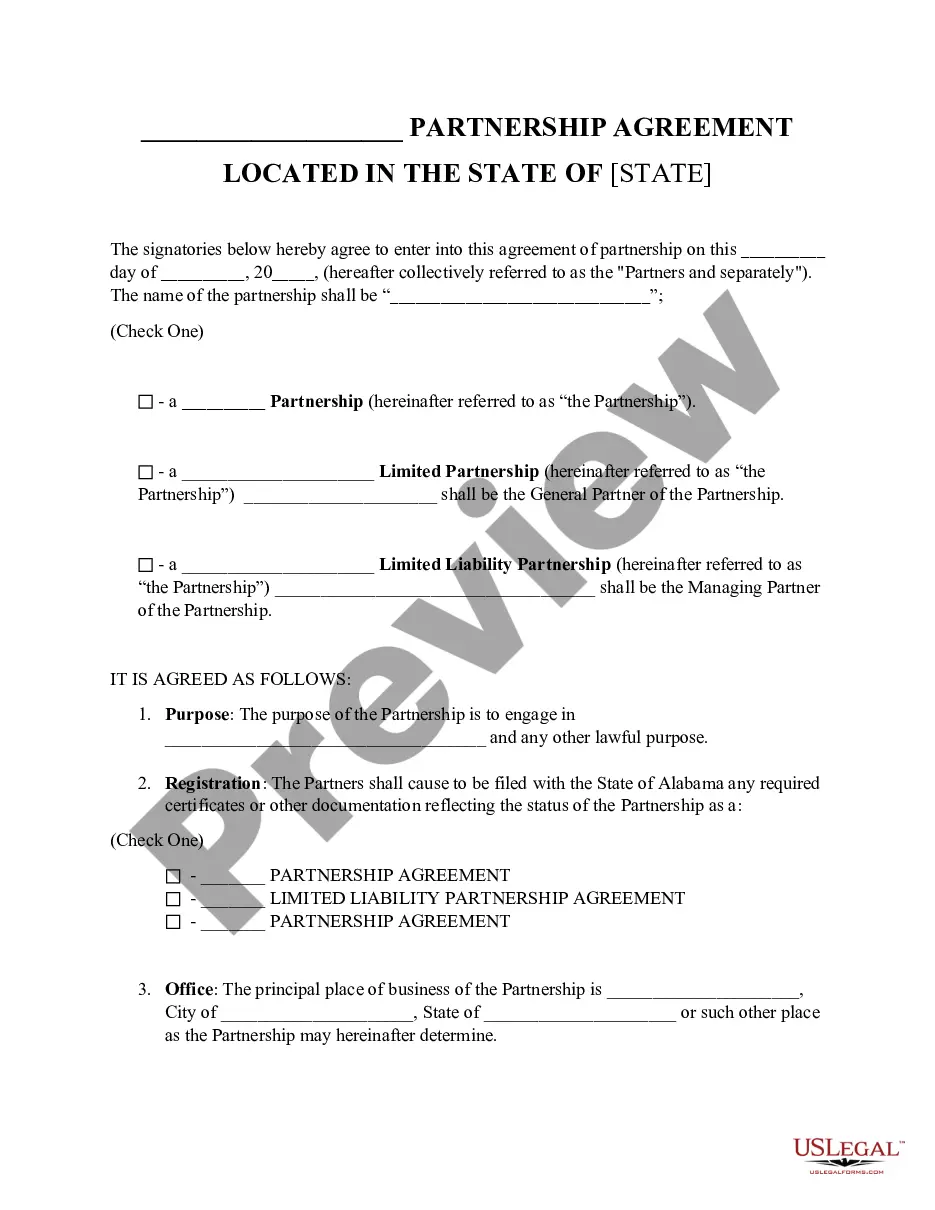
Name of the partnership. Contributions to the partnership. Allocation of profits, losses, and draws. Partners' authority. Partnership decision-making. Management duties. Admitting new partners. Withdrawal or death of a partner.
Forming a PartnershipPartnerships exist between two or more people who want to go into business together. In most states, creating a legally binding partnership requires nothing more than a verbal agreement and a handshake.
Although there's no requirement for a written partnership agreement, often it's a very good idea to have such a document to prevent internal squabbling (about profits, direction of the company, etc.) and give the partnership solid direction. Limited liability partnerships do have a writing requirement.
Name of your partnership. Contributions to the partnership and percentage of ownership. Division of profits, losses and draws. Partners' authority. Withdrawal or death of a partner.
A Founders' Agreement is an official contract that is signed between all the co-founders of a firm. This document states all the responsibilities, ownership, and initial investments made by each of the founders of the company.
Like any contractual agreement, partnership agreements do not have to be in writing, as verbal agreements are also legally binding.In a partnership, each person is liable for the debts and actions of the other partners, so the contractual relationship and obligations need to be completely transparent.
Your Partnership's Name. Partnership Contributions. Allocations profits and losses. Partners' Authority and Decision Making Powers. Management. Departure (withdrawal) or Death. New Partners. Dispute Resolution.
Share the same values. Choose a partner with complementary skills. Have a track record together. Clearly define each partner's role and responsibilities. Select the right business structure. Put it in writing. Be honest with each other.
Although each partnership agreement differs based on business objectives, certain terms should be detailed in the document, including percentage of ownership, division of profit and loss, length of the partnership, decision making and resolving disputes, partner authority, and withdrawal or death of a partner.