Similar Acts
Understanding this form
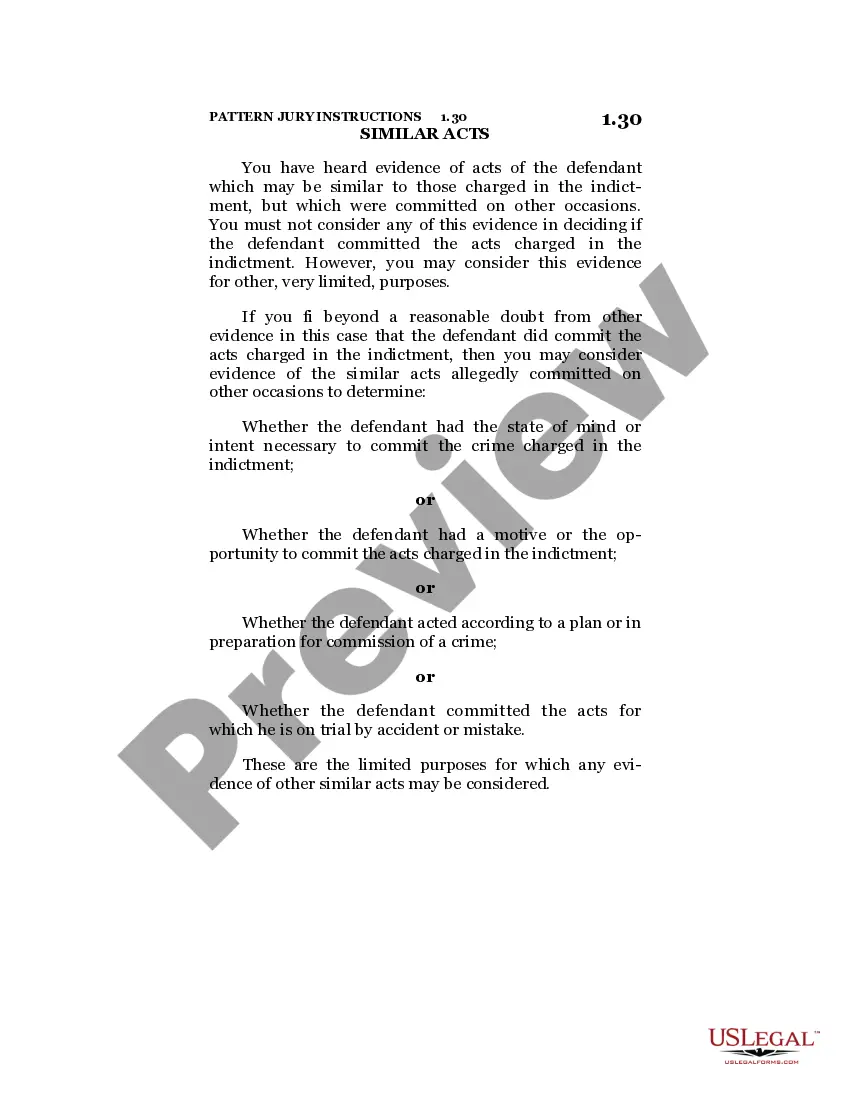
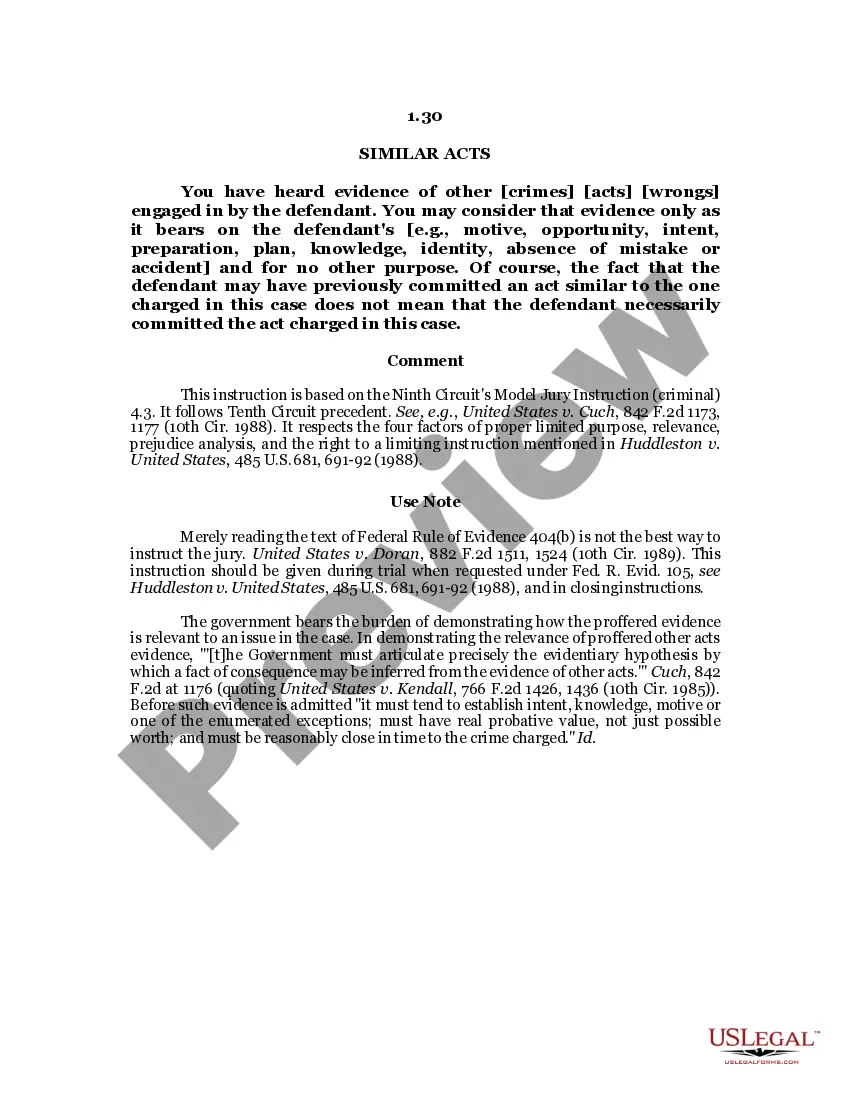
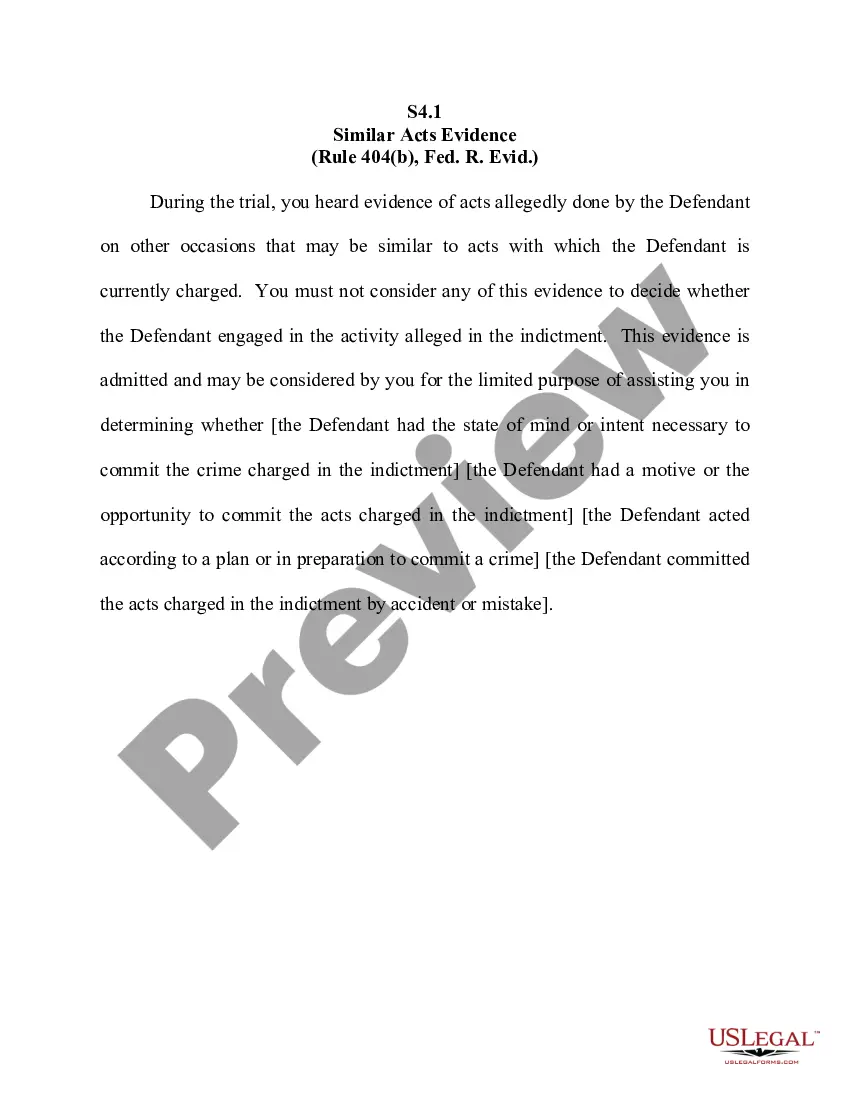
The Similar Acts form provides jury instructions regarding the consideration of evidence related to acts committed by a defendant that are similar to the charges brought against them. This form is specifically designed to guide jurors on how to assess such evidence in a fair and limited manner during a trial, ensuring that it does not unduly influence their judgment regarding the crimes charged. Unlike other forms that address general evidence rules, this form focuses on the specific use of similar acts as they relate to intent, motive, or opportunity in legal proceedings.
Key parts of this document
- Definition of similar acts evidence and its permissible use in court.
- Guidelines on not considering similar acts for determining the defendant's guilt on the charges.
- Clarifications on limited purposes for considering similar acts, such as motive and intent.
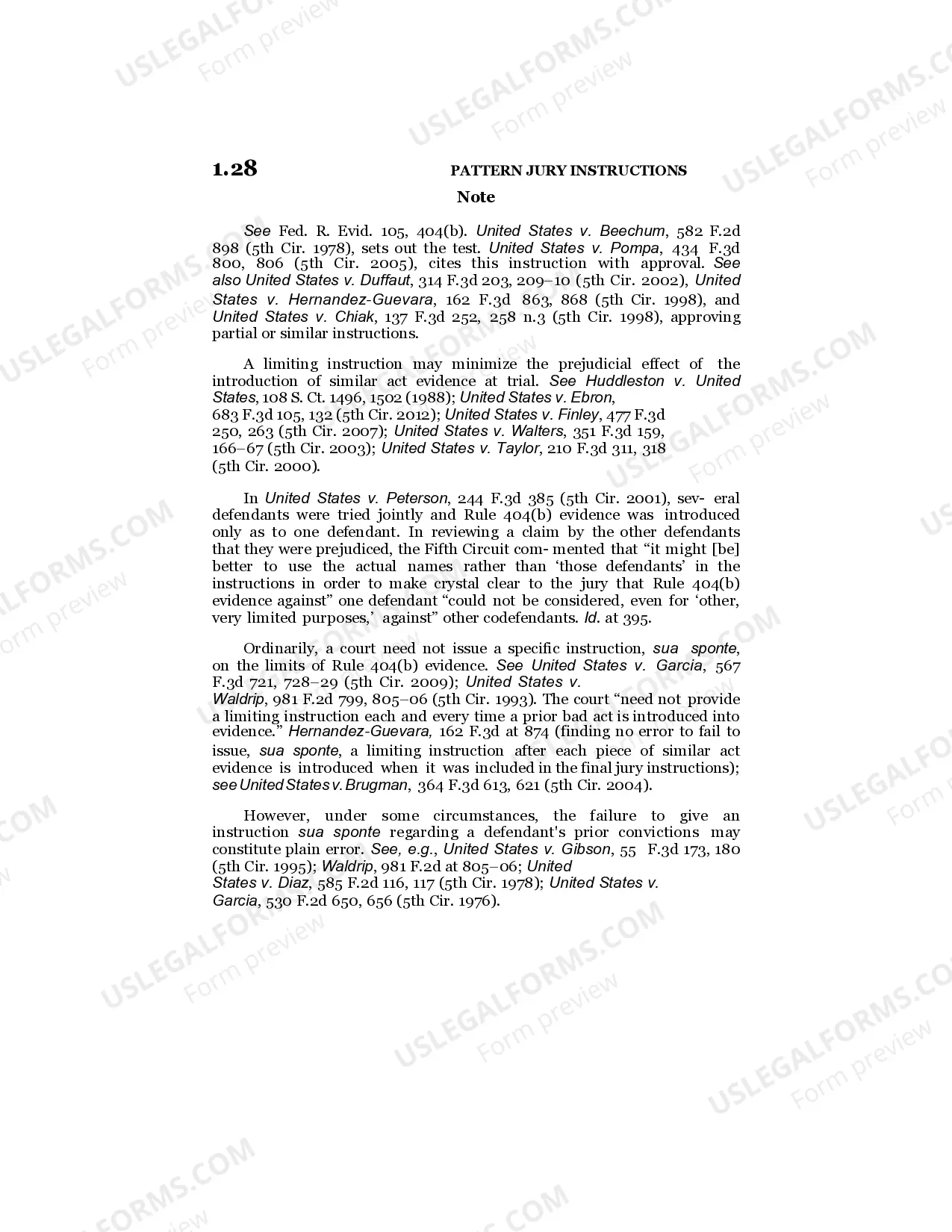
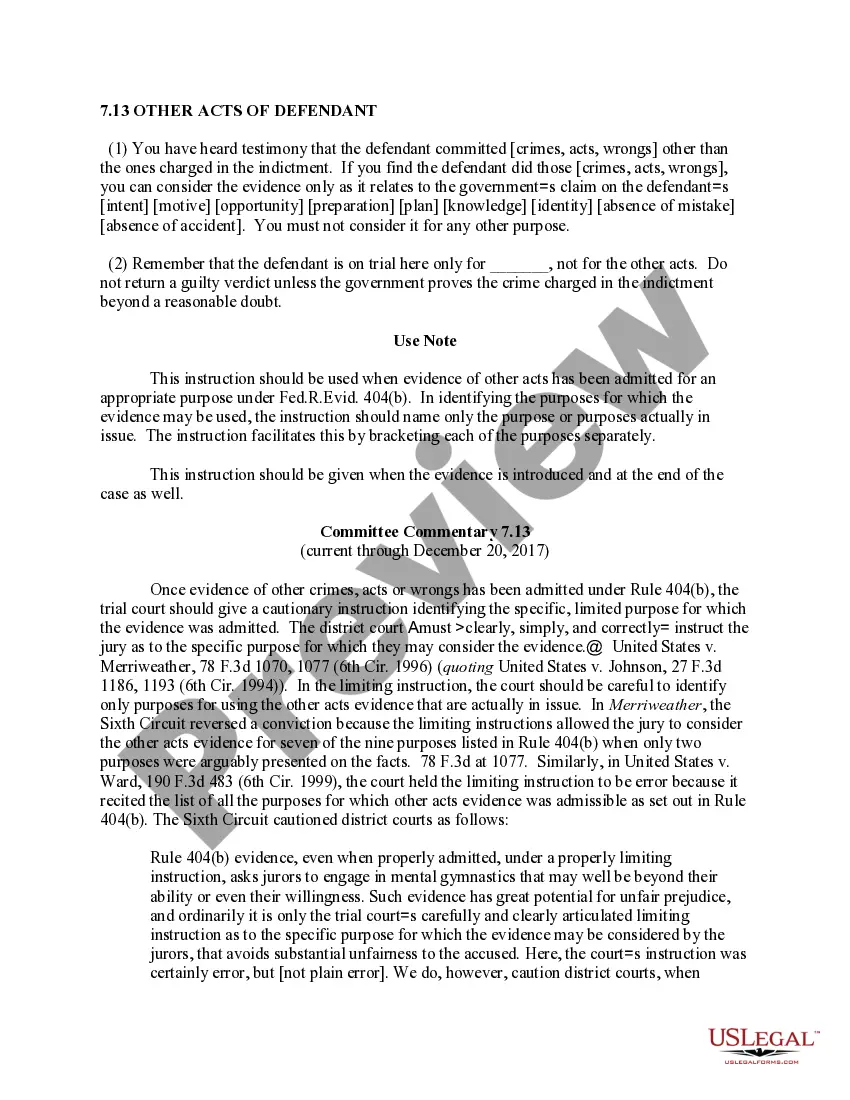
- References to relevant federal rules and case law supporting the instructions.
When to use this form
This form is utilized during criminal trials when the prosecution wishes to introduce evidence of prior acts by the defendant that are similar to those for which they are currently being tried. It helps jurors understand how to properly evaluate such evidence and emphasizes that this evidence should only be considered within specific, limited contexts, protecting the fairness of the trial process.
Who should use this form
- Judges presiding over criminal cases involving similar acts evidence.
- Prosecutors seeking to present similar acts as part of their case.
- Defense attorneys who want to understand how to challenge the admissibility of such evidence.
- Jurors requiring clarification on the role of similar acts in their deliberations.
Completing this form step by step
- Review the evidence of similar acts presented in the trial.
- Determine if the evidence can be legally considered under federal rules.
- Provide clear written instructions to the jury, emphasizing the limited purpose of the similar acts evidence.
- Include relevant case law references to support the instructions provided.
- Ensure the instructions are understandable for all jurors.
Is notarization required?
This form usually doesn’t need to be notarized. However, local laws or specific transactions may require it. Our online notarization service, powered by Notarize, lets you complete it remotely through a secure video session, available 24/7.
Get your form ready online
Our built-in tools help you complete, sign, share, and store your documents in one place.
Make edits, fill in missing information, and update formatting in US Legal Forms—just like you would in MS Word.
Download a copy, print it, send it by email, or mail it via USPS—whatever works best for your next step.
Sign and collect signatures with our SignNow integration. Send to multiple recipients, set reminders, and more. Go Premium to unlock E-Sign.
If this form requires notarization, complete it online through a secure video call—no need to meet a notary in person or wait for an appointment.
We protect your documents and personal data by following strict security and privacy standards.

Make edits, fill in missing information, and update formatting in US Legal Forms—just like you would in MS Word.

Download a copy, print it, send it by email, or mail it via USPS—whatever works best for your next step.

Sign and collect signatures with our SignNow integration. Send to multiple recipients, set reminders, and more. Go Premium to unlock E-Sign.

If this form requires notarization, complete it online through a secure video call—no need to meet a notary in person or wait for an appointment.

We protect your documents and personal data by following strict security and privacy standards.
Typical mistakes to avoid
- Failing to clearly define the limited purposes for which similar acts evidence can be considered.
- Inadequately distinguishing between the acts charged and similar acts.
- Not citing relevant legal precedents that support the instruction.
- Overgeneralizing the applicability of similar acts evidence, leading to potential juror confusion.
Benefits of completing this form online
- Immediate access to professionally drafted jury instructions.
- Convenient editing features to customize the form for specific cases.
- Reliable legal language that meets court standards.
- Time-efficient downloading, enabling preparation for trial without delays.
Legal use & context
- Allows jurors to draw inferences about the defendant's state of mind or intent.
- Guides the jury on legal standards related to the consideration of evidence from previous acts.
- Ensures adherence to the rules of evidence, minimizing potential prejudice to the defendant.
- Facilitates a fair trial process by clearly outlining the limits for using similar acts evidence.
Summary of main points
- The Similar Acts form is crucial for instructing jurors on the use of similar acts evidence.
- Properly defining and limiting the use of such evidence protects the integrity of the trial.
- This form aids in ensuring that jurors focus only on relevant and permissible evidence.
- Adaptations may be necessary to reflect specific state rules and legal standards.
Looking for another form?

Form popularity
FAQ
(a) Permitted Uses. In a criminal case in which a defendant is accused of a sexual assault, the court may admit evidence that the defendant committed any other sexual assault. The evidence may be considered on any matter to which it is relevant.
3 Types of Evidence & How They're Used For Investigations Physical Evidence. The first thing investigators look for is physical evidence at or near the crime site.Forensic Evidence.Digital Evidence.
For example, a defendant's illicit affair with a homicide victim's wife is an other-act which tends to show "motive," and a person with a motive is more likely to have intentionally killed than a person without a motive.
Similar fact evidence is a pattern of behaviour that supports an allegation that a particular event likely occurred on the basis that the Respondent has engaged in similar behaviours in the past. Similar fact evidence is subject to a special set of rules regarding admissibility in a hearing.
Similar Fact Evidence (SFE) is a form of character evidence that relates to "extrinsic misconduct by an accused" and is presumed inadmissible. The SFE rule is described as an exception to the general rule against bad character evidence. It has also been described as the "rule against general bad character".
In the law of evidence, similar fact evidence (or the similar fact principle) establishes the conditions under which factual evidence of past misconduct of the accused can be admitted at trial for the purpose of inferring that the accused committed the misconduct at issue.
There are two types of evidence; namely, direct evidence and circumstantial evidence.