Employee Evaluation Form for Designer
Understanding this form
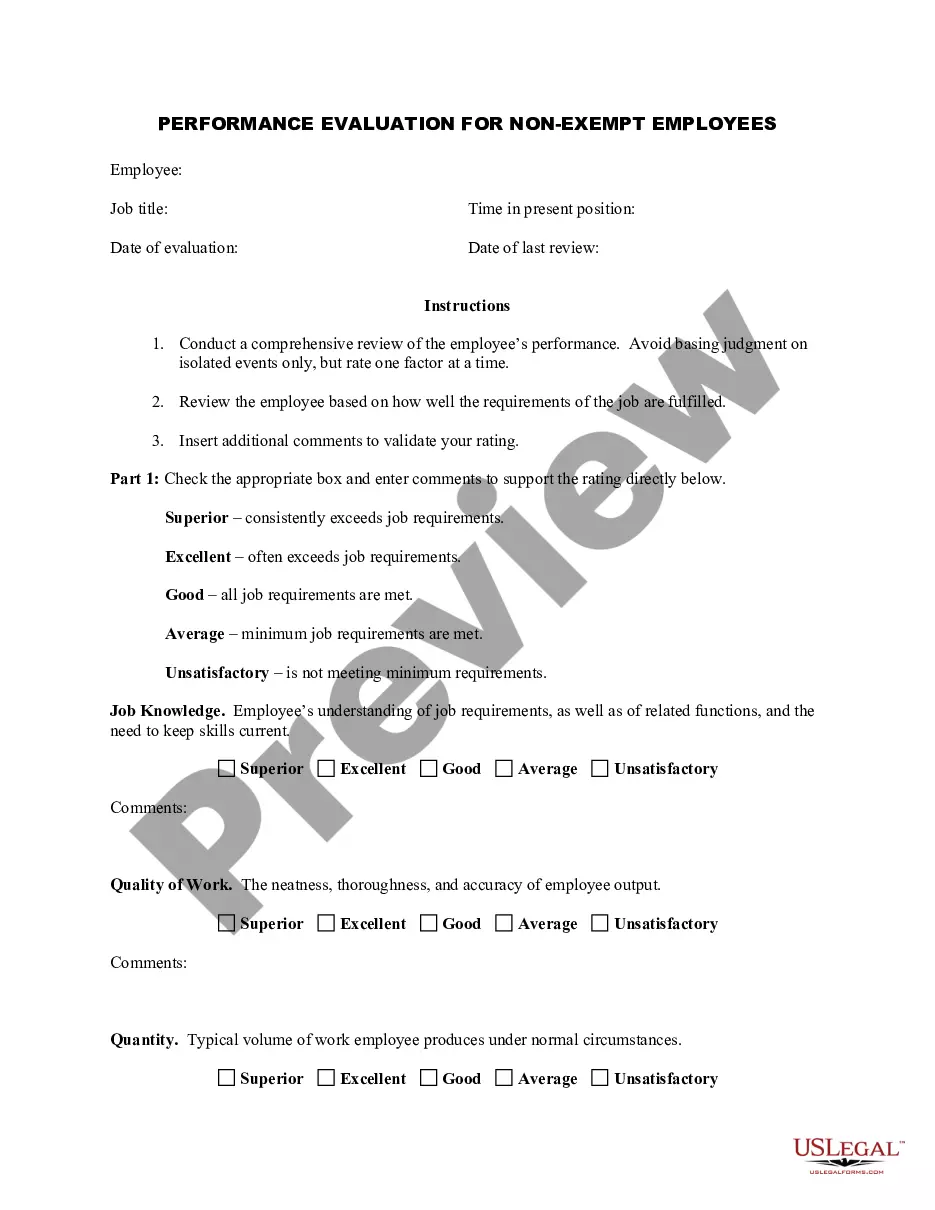
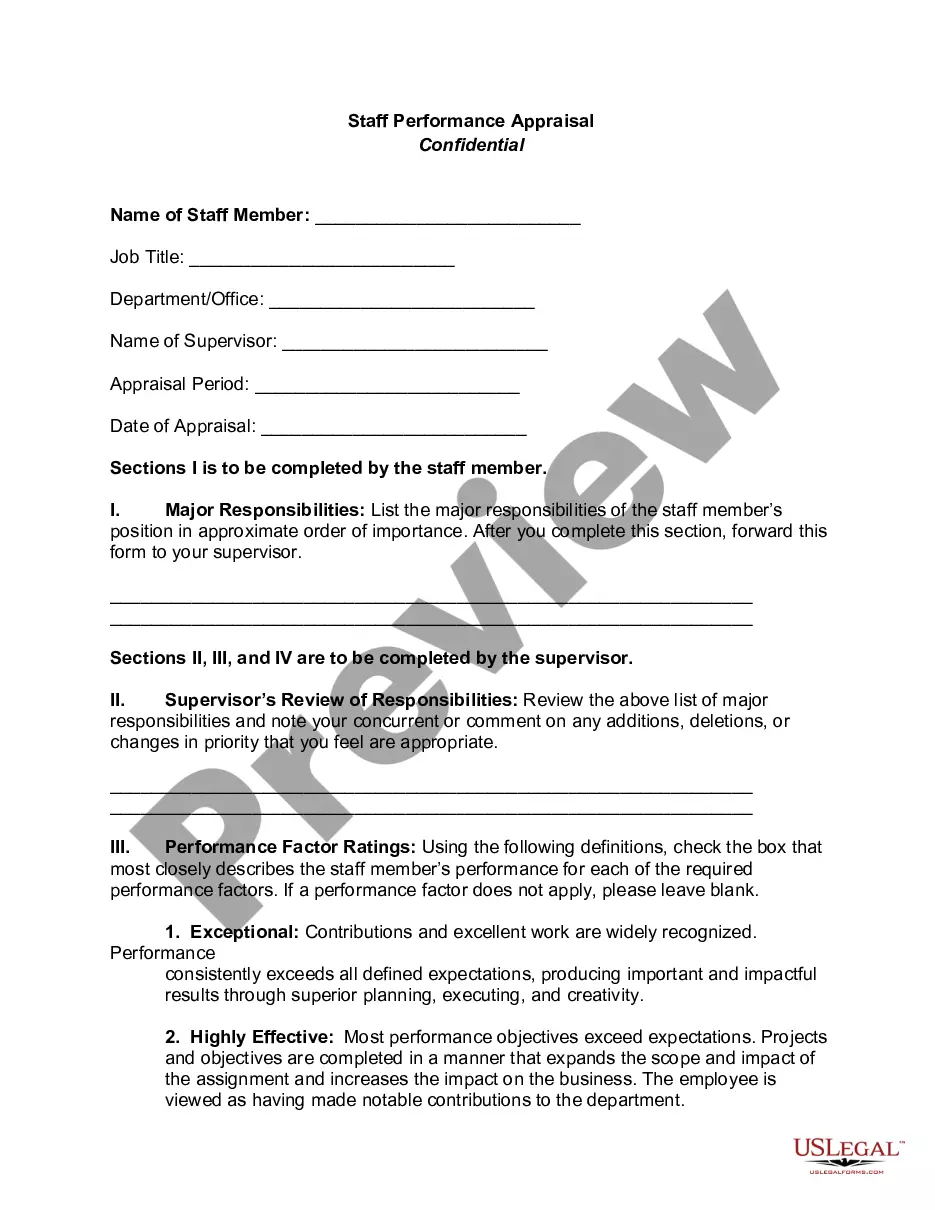
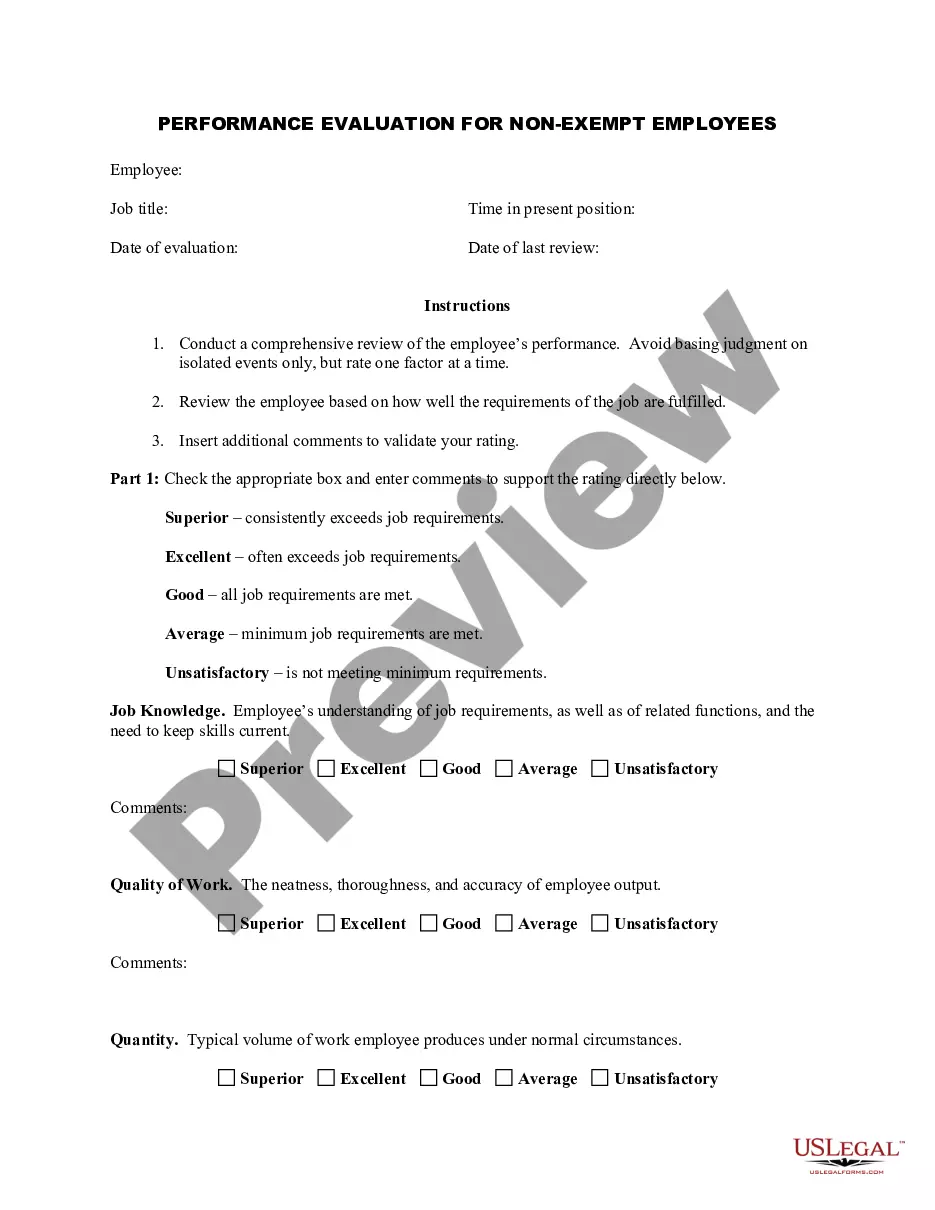
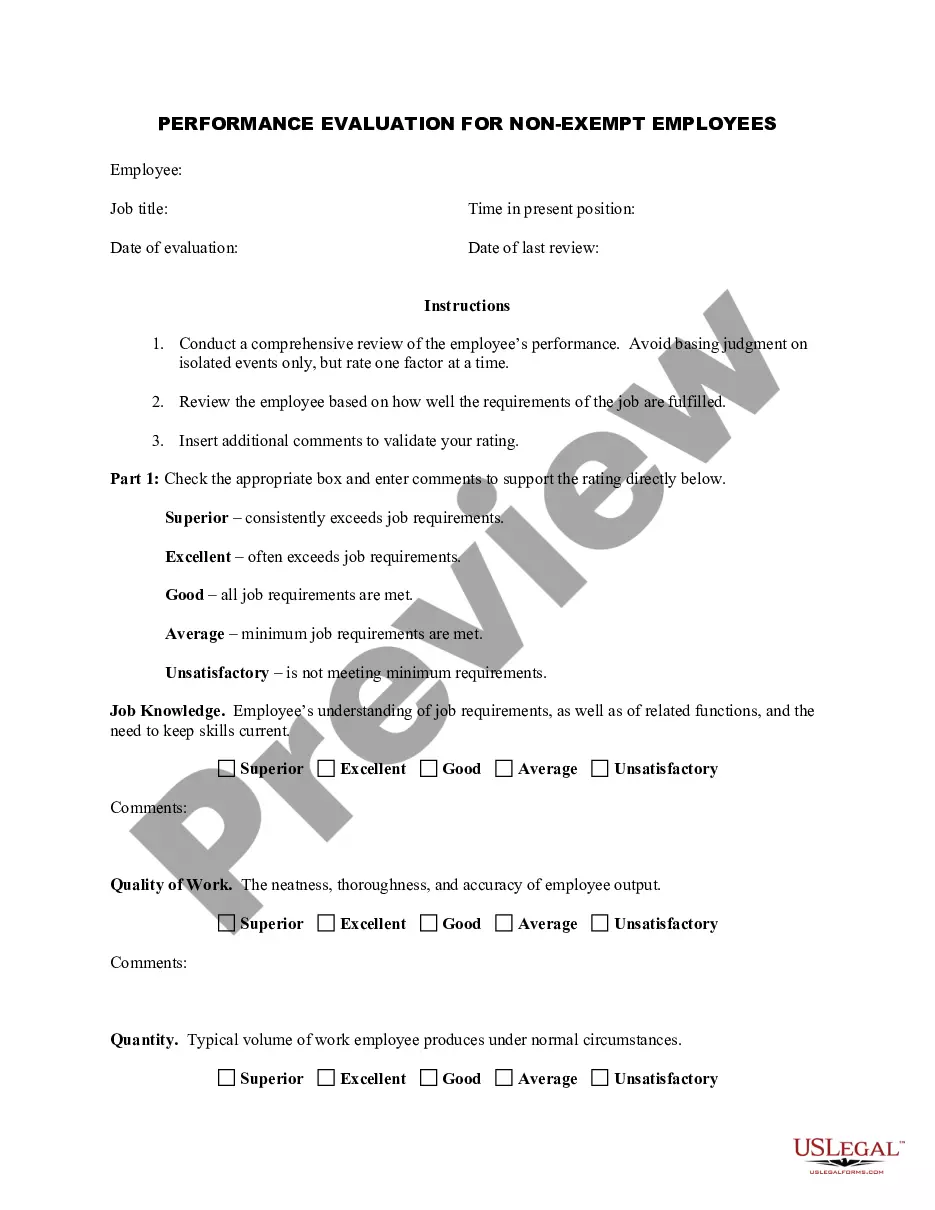
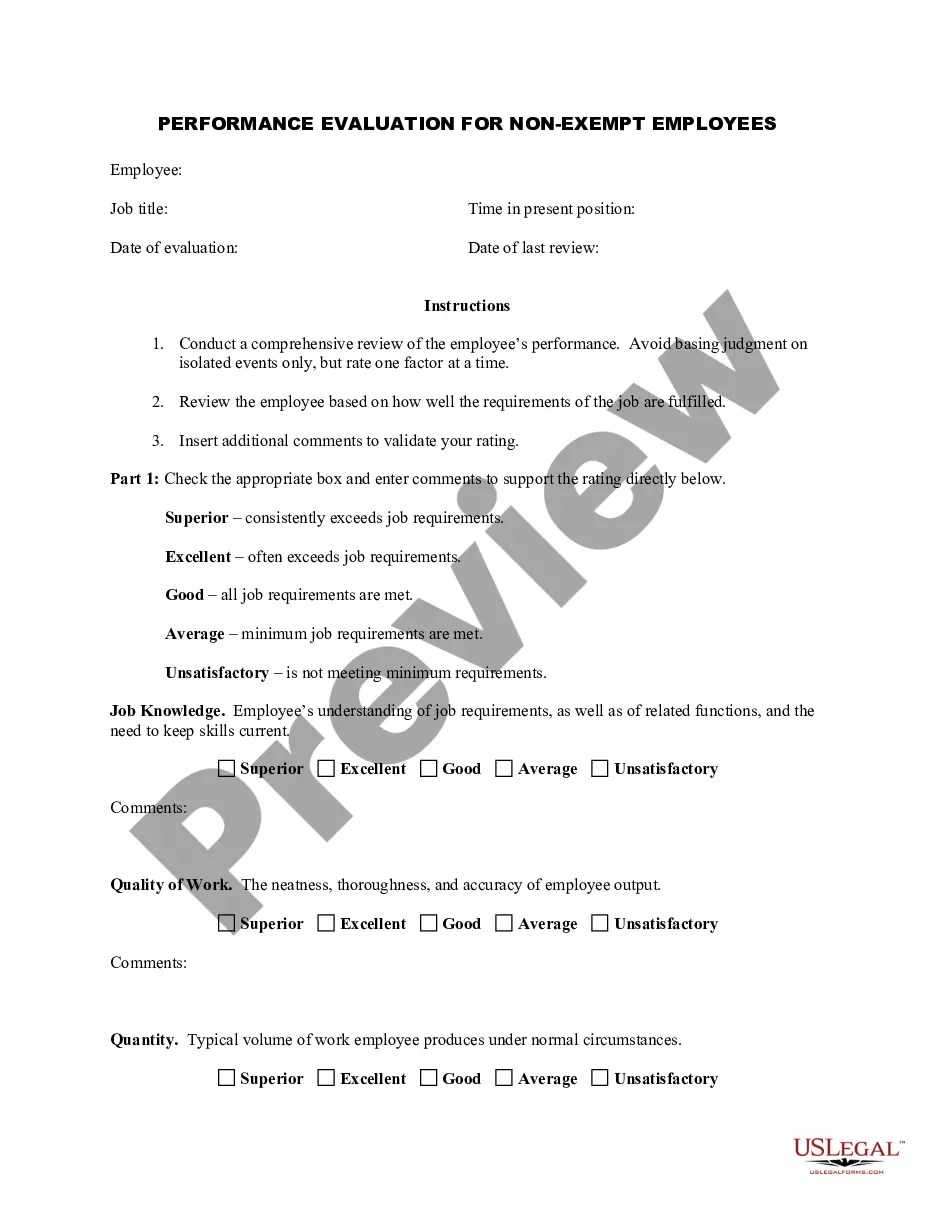
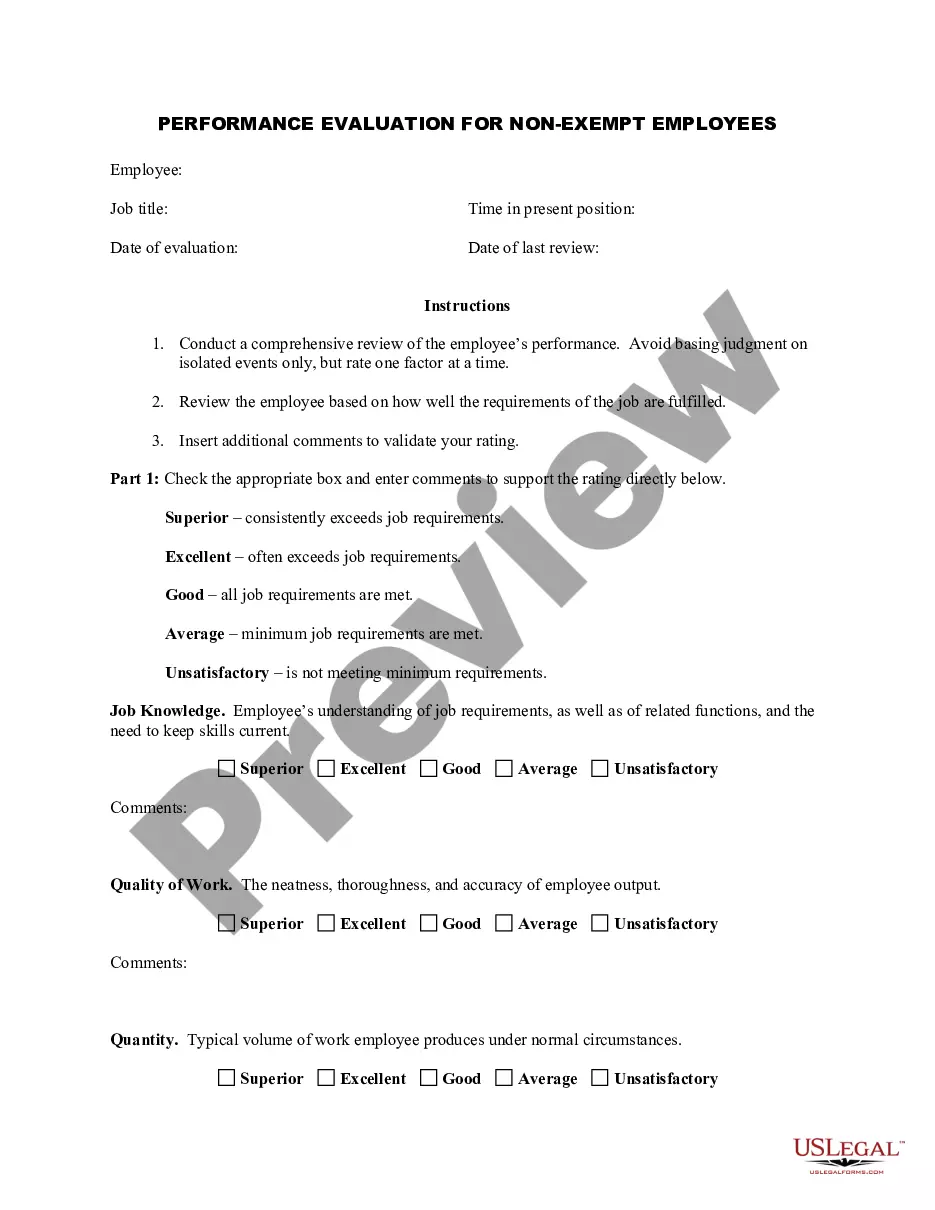
The Employee Evaluation Form for Designer is a structured tool utilized to assess the performance of a non-exempt employee in a design role. This form helps employers gauge how effectively an employee meets job requirements over a specified period. Unlike general performance reviews, this form focuses on specific competencies and skills relevant to design, facilitating more tailored feedback for improvement and development.
Key components of this form
- Personal details section for employee and evaluator information.
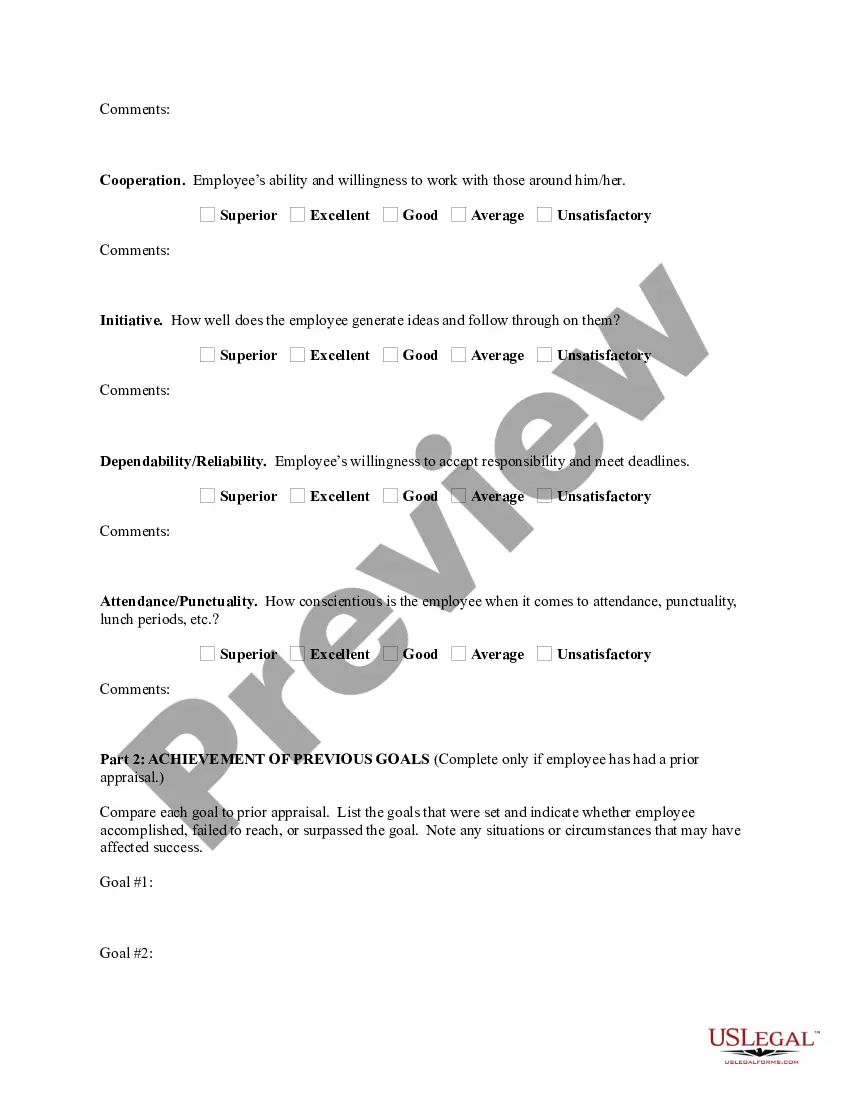
- Evaluation criteria split across multiple competencies such as job knowledge, quality of work, and initiative.
- Rating system with options ranging from superior to unsatisfactory.
- Sections for comments supporting the ratings provided.
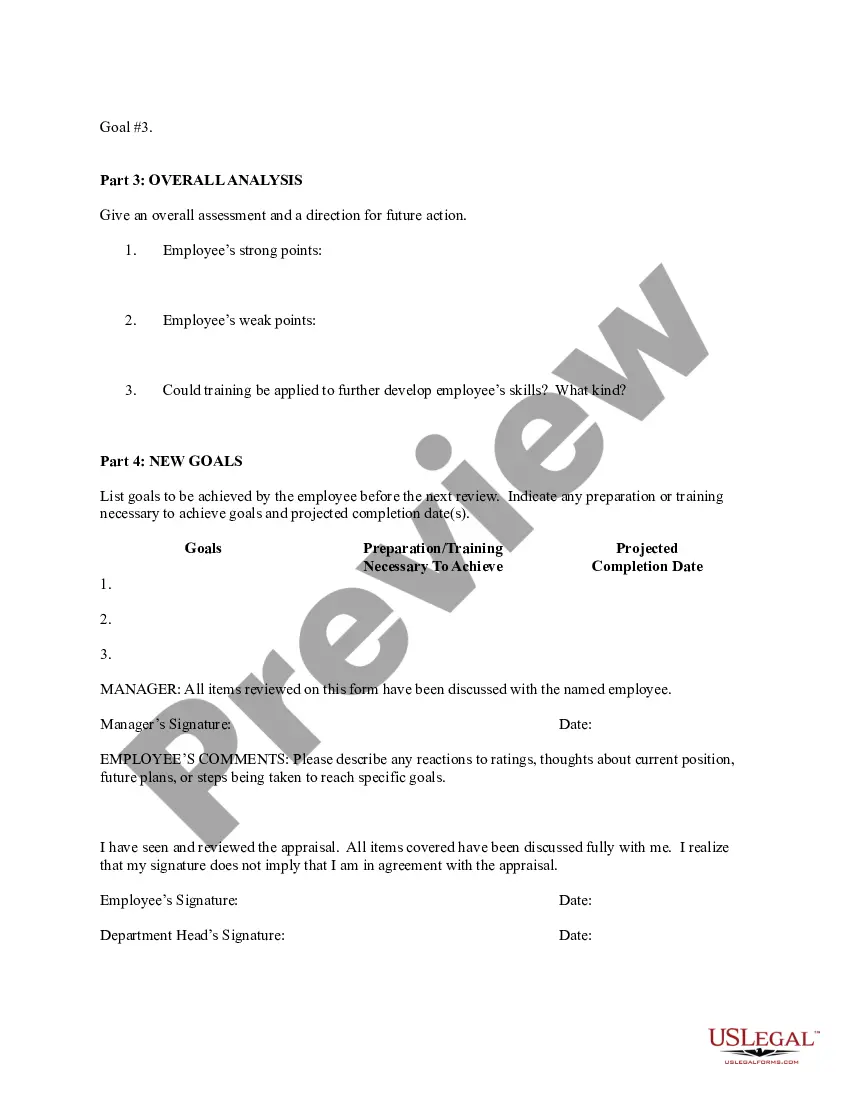
- Analysis and goal-setting based on the employee's previous performance and future aspirations.
When to use this form
This form is particularly useful during formal performance review cycles, when assessing an employeeâs development progress, or as an annual evaluation tool. It should be utilized every time an employer seeks to provide structured feedback and establish actionable goals to enhance an employee's effectiveness in their role.
Who needs this form
- Managers and supervisors responsible for employee evaluations.
- Human resources professionals looking to formalize appraisal processes.
- Team leaders who want to provide constructive feedback to enhance performance in design-focused roles.
How to prepare this document
Follow these steps to complete the Employee Evaluation Form:
- Begin by filling out employee and evaluator information.
- Rate each competency using the provided scale and include comments to clarify the rating.
- Review past goals achieved by the employee, noting successes or areas needing improvement.
- Analyze the employeeâs strengths and weaknesses, and specify areas for future development.
- Set new goals for the employee to achieve before the next review period.
Does this document require notarization?
This form does not typically require notarization unless specified by local law. However, it serves as an official record of the performance evaluation process, and it is essential to maintain confidentiality during its completion.
Get your form ready online
Our built-in tools help you complete, sign, share, and store your documents in one place.
Make edits, fill in missing information, and update formatting in US Legal Forms—just like you would in MS Word.
Download a copy, print it, send it by email, or mail it via USPS—whatever works best for your next step.
Sign and collect signatures with our SignNow integration. Send to multiple recipients, set reminders, and more. Go Premium to unlock E-Sign.
If this form requires notarization, complete it online through a secure video call—no need to meet a notary in person or wait for an appointment.
We protect your documents and personal data by following strict security and privacy standards.

Make edits, fill in missing information, and update formatting in US Legal Forms—just like you would in MS Word.

Download a copy, print it, send it by email, or mail it via USPS—whatever works best for your next step.

Sign and collect signatures with our SignNow integration. Send to multiple recipients, set reminders, and more. Go Premium to unlock E-Sign.

If this form requires notarization, complete it online through a secure video call—no need to meet a notary in person or wait for an appointment.

We protect your documents and personal data by following strict security and privacy standards.
Common mistakes to avoid
- Failing to provide specific examples to back up ratings, which can lead to misunderstandings.
- Rating all employees using the same standard instead of tailoring evaluations based on individual performance and specific job requirements.
- Not involving the employee in the review process, which can prevent open communication about performance.
Benefits of completing this form online
- Easy access to a standardized form that ensures consistency in employee evaluations.
- Encourages objective assessments by providing clear rating criteria.
- Helps document performance history, making future evaluations simpler and more informed.
- This form can be utilized to support HR practices and ensure compliance with labor regulations.
- It contributes to fair employment practices by systematically evaluating employee performance.
Main things to remember
- The Employee Evaluation Form for Designer focuses on specific competencies relevant to design roles.
- It provides a framework for giving structured, constructive feedback to enhance employee growth.
- Evaluating performance systematically helps both the employee and employer track progress and set future goals effectively.
Looking for another form?


Form popularity
FAQ
Communication. Collaboration and teamwork. Problem-solving. Quality and accuracy of work. Attendance, punctuality and reliability. The ability to accomplish goals and meet deadlines.
Make it easy to use. Ensure that the information your evaluation form seeks is clear and concise. Determine the focus of the form. There needs to be a clear purpose. Establish a clearly defined rating scale.
The form provides a tool for employees and supervisors to review the current job duties of a particular position and any external obstacles that an employee is encountering to complete their work.
Make it easy to use. Ensure that the information your evaluation form seeks is clear and concise. Determine the focus of the form. There needs to be a clear purpose. Establish a clearly defined rating scale.
Employee evaluation forms are used to formally review and document an employee's performance and get their acknowledgment that the evaluation took place. This is important in establishing a paper trail to support important HR decisions.
Be proud. One major goal of the self-evaluation is to highlight your accomplishments and recollect milestones in your professional development. Be honest and critical. Continuously strive for growth. Track your accomplishments. Be professional.
Develop an evaluation form. Identify performance measures. Set guidelines for feedback. Create disciplinary and termination procedures. Set an evaluation schedule.
Set Performance Standards. Set Specific Goals. Take Notes Throughout the Year. Be Prepared. Be Honest and Specific with Criticism. Don't Compare Employees. Evaluate the Performance, Not the Personality. Have a Conversation.
Develop an evaluation form. Identify performance measures. Set guidelines for feedback. Create disciplinary and termination procedures. Set an evaluation schedule.