Certain Personal Injury Liability Assignments IRS Code 130
Understanding this form
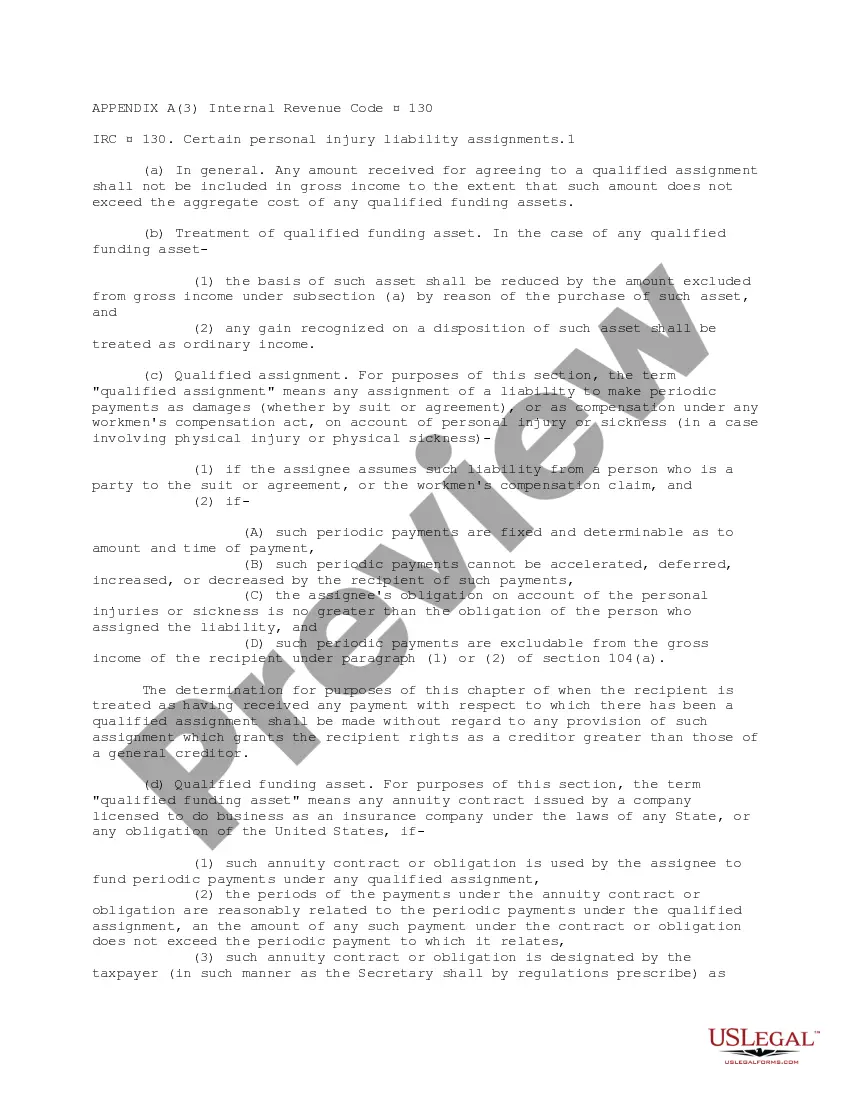
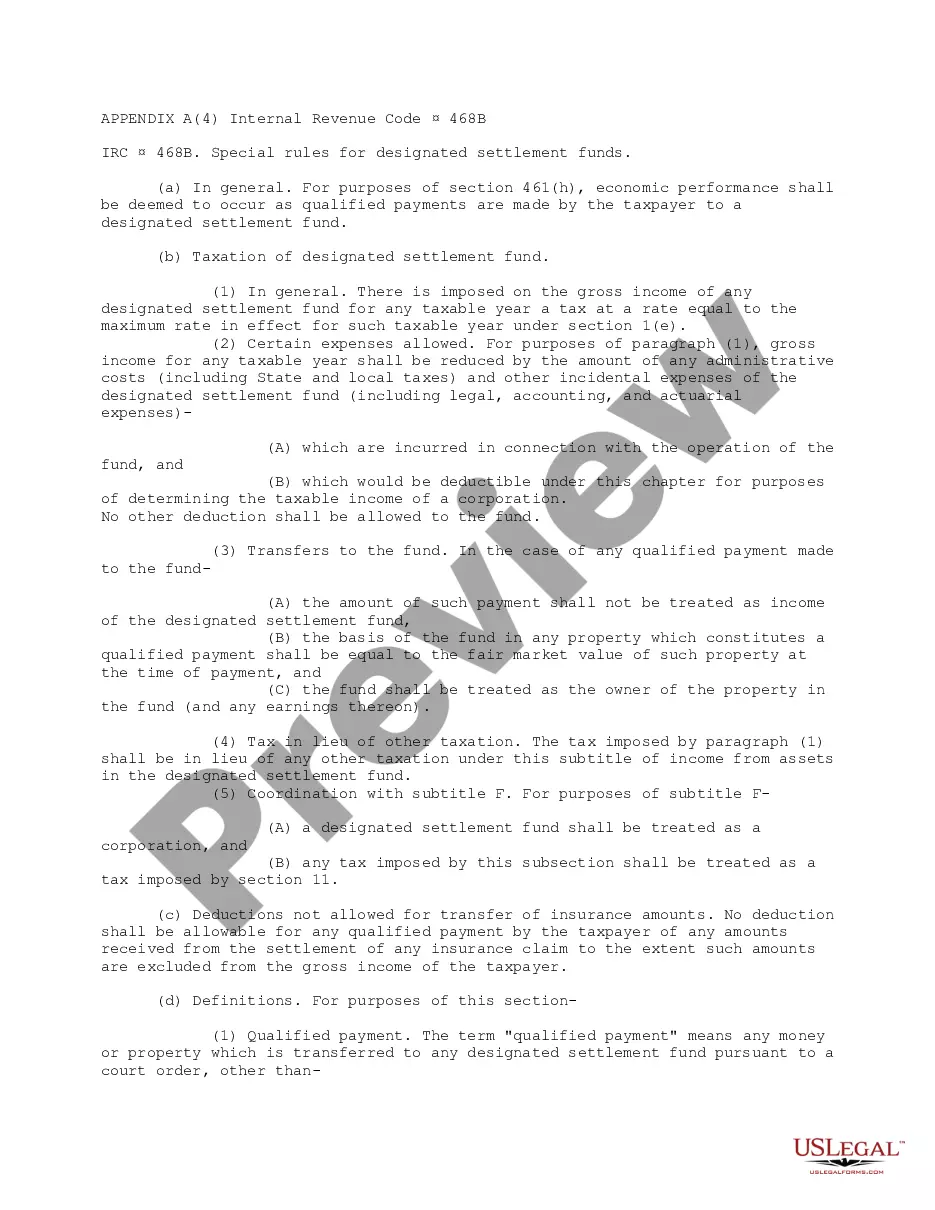
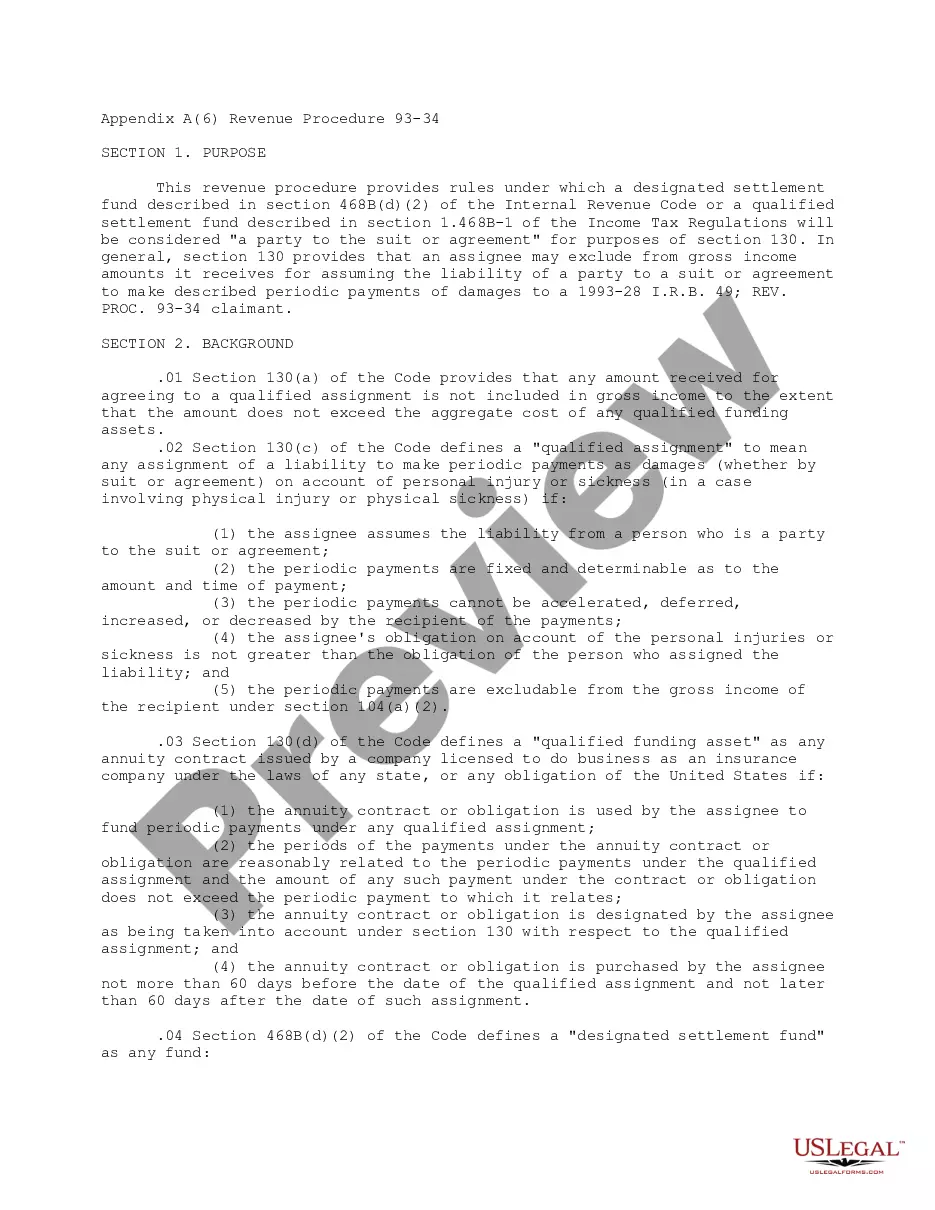
The Certain Personal Injury Liability Assignments IRS Code 130 form outlines statutory guidelines related to qualifying assignments of personal injury liability. This form allows individuals who are parties in a lawsuit or compensation claim to assign their rights to receive periodic payments for damages due to personal injury or sickness. It is crucial to understand how this form differs from other legal documents that deal with personal injury settlements and their tax implications.
Key parts of this document
- Definition of a qualified assignment and its tax exclusions.
- Guidelines on the handling of qualified funding assets within the tax framework.
- Criteria for the structure and timing of periodic payments to be considered qualified.
- Requirements for the designation and purchase of qualified funding assets.
- Provisions regarding the assignee's obligations and restrictions on payment modifications.

When this form is needed
This form should be used when an individual or entity intends to assign their rights to receive damages from a personal injury or sickness claim. It is particularly relevant when the assignment involves structured settlements or periodic payments and needs to comply with IRS regulations under the Internal Revenue Code section 130. This form ensures that the associated payments can be received without tax implications as long as they adhere to the defined criteria.
Intended users of this form
- Individuals who have an obligation to receive periodic payments due to a personal injury settlement.
- Beneficiaries of a structured settlement who wish to assign their payment rights.
- Attorneys facilitating the assignment of personal injury claims or settlements on behalf of clients.
- Insurance companies handling the periodic payments for qualified assignments.
Steps to complete this form
- Identify the parties involved in the assignment, including the assignor and assignee.
- Clearly define the liability being assigned, focused on the periodic payment amount and schedule.
- Ensure that the terms of payment adhere to the statutory requirements established by the IRS.
- Specify any conditions or limitations related to the assignment, especially regarding modifications to payments.
- Sign and date the form, ensuring that all parties retain copies for their records.
Does this document require notarization?
This form usually doesn’t need to be notarized. However, local laws or specific transactions may require it. Our online notarization service, powered by Notarize, lets you complete it remotely through a secure video session, available 24/7.
Get your form ready online
Our built-in tools help you complete, sign, share, and store your documents in one place.
Make edits, fill in missing information, and update formatting in US Legal Forms—just like you would in MS Word.
Download a copy, print it, send it by email, or mail it via USPS—whatever works best for your next step.
Sign and collect signatures with our SignNow integration. Send to multiple recipients, set reminders, and more. Go Premium to unlock E-Sign.
If this form requires notarization, complete it online through a secure video call—no need to meet a notary in person or wait for an appointment.
We protect your documents and personal data by following strict security and privacy standards.

Make edits, fill in missing information, and update formatting in US Legal Forms—just like you would in MS Word.

Download a copy, print it, send it by email, or mail it via USPS—whatever works best for your next step.

Sign and collect signatures with our SignNow integration. Send to multiple recipients, set reminders, and more. Go Premium to unlock E-Sign.

If this form requires notarization, complete it online through a secure video call—no need to meet a notary in person or wait for an appointment.

We protect your documents and personal data by following strict security and privacy standards.
Avoid these common issues
- Failing to clearly define the liability or payment structure, which can lead to misunderstandings.
- Ignoring IRS requirements for qualified assignments, potentially resulting in tax liabilities.
- Not including all necessary signatures or dates, which can invalidate the form.
- Misunderstanding the implications of changing payment amounts or schedules after assignment.
Advantages of online completion
- Convenient downloadable format allows for quick access and completion.
- Easy editing ensures that the form can be customized to specific situations.
- Reliability of obtaining a legally sound form drafted by licensed attorneys.
- Accessible guidance throughout the form-filling process to prevent errors.
Looking for another form?


Form popularity
FAQ
Yes. California law requires drivers and vehicle owners to mandatory bodily injury liability insurance with a minimum of 15/30/5 limits. Such insurance also covers: Someone other than the policyholder who drives a covered vehicle with the policy holder's permission; and.
If you cause a car accident that injures another person, bodily injury liability coverage helps pay for their medical expenses and lost income as a result of their injuries. This coverage may also help pay for your legal fees if you're taken to court over an accident.
Bodily injury liability is car insurance coverage that pays for injuries a driver causes to other people, including other drivers, passengers and pedestrians. The policy covers medical expenses and lost wages as well as legal and funeral expenses in some cases.
If you cause a car accident that injures another person, bodily injury liability coverage helps pay for their medical expenses and lost income as a result of their injuries.Most states have laws that require you to have bodily injury liability coverage on your car insurance policy.
To break it down a bit more, Liability coverage is made up of two parts: Bodily Injury and Property Damage. Bodily Injury is what pays for any injuries to others from the accident. This includes everything from medical expenseslike doctor visits and physical therapyto lost wages.
Bodily injury liability can cover medical bills, funeral expenses, lost wages, legal fees, and other related costs.In most states, if your bodily injury limits are not high enough to pay for all the medical bills from an accident, the not-at-fault driver and their passengers can sue you for any uncompensated expenses.
State minimums don't come close to covering the cost of a serious accident. You should carry bodily-injury coverage of at least $100,000 per person, and $300,000 per accident, and property-damage coverage of $50,000, or a minimum of $300,000 on a single-limit policy.
Personal injury protection (PIP) insurance coverage includes payment for injury-related medical and rehabilitation expenses, loss of income, and funeral and burial expenses. Bodily injury liability coverage includes payment for any physical injuries that occur in an accident you cause.
Bodily injury liability coverage pays for other drivers' and passengers' injuries when the policyholder is at-fault in an accident. Bodily injury liability can cover medical bills, funeral expenses, lost wages, legal fees, and other related costs.