Special Rules for Designated Settlement Funds IRS Code 468B
What this document covers
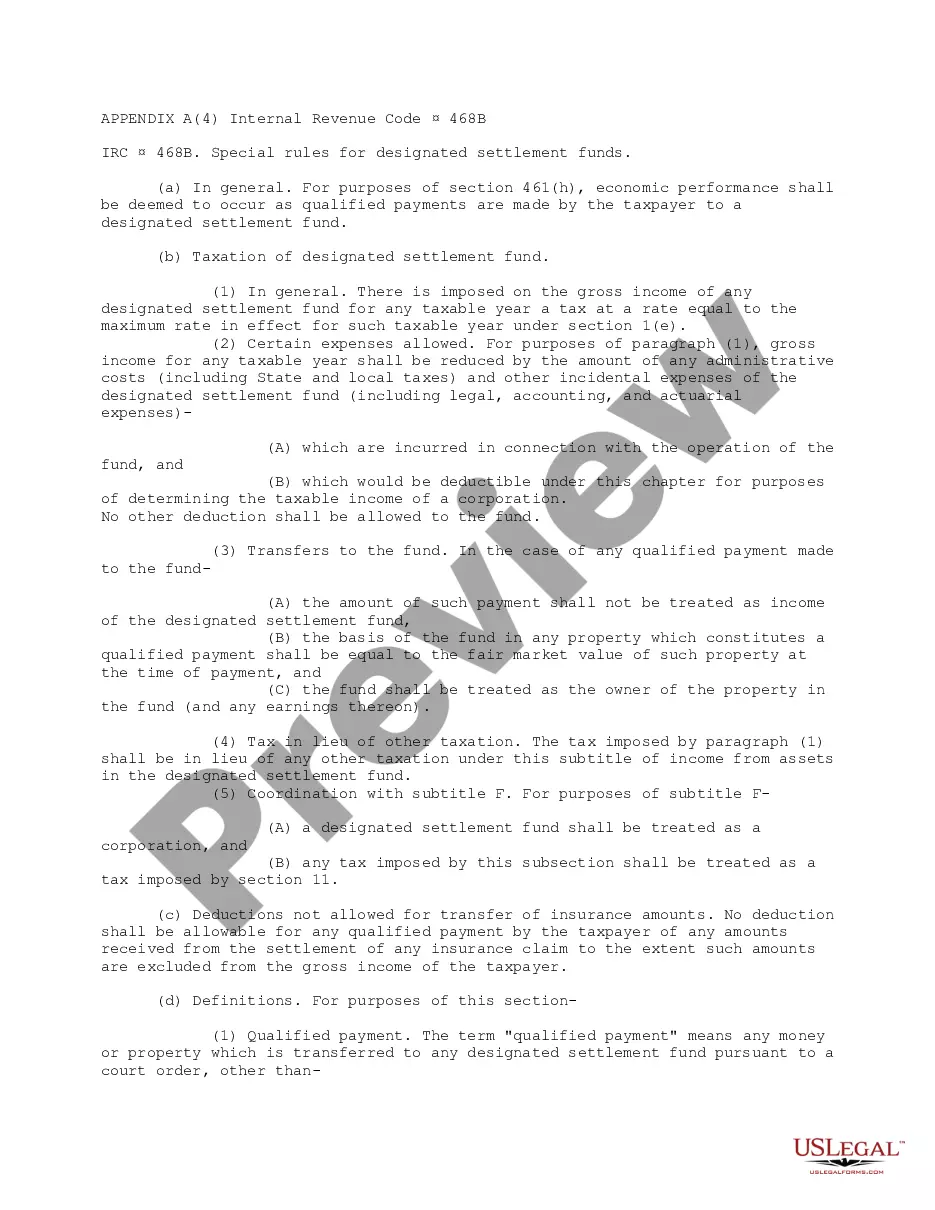
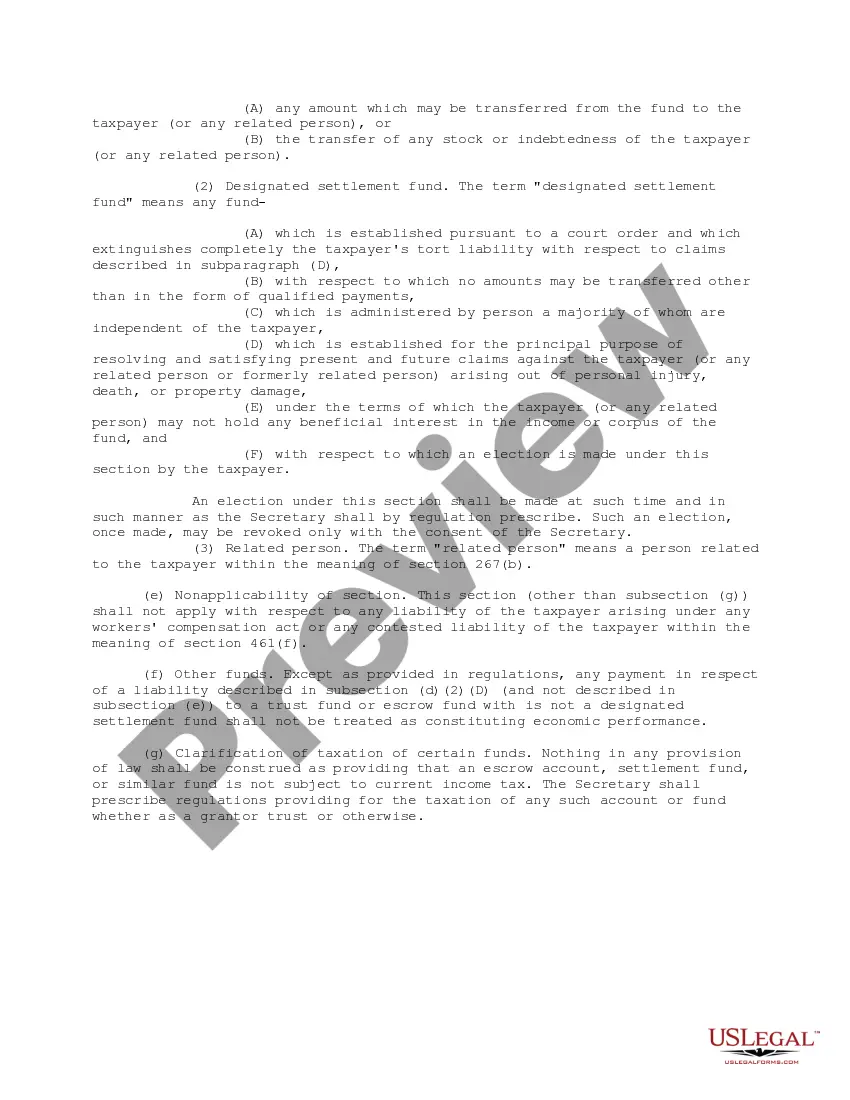
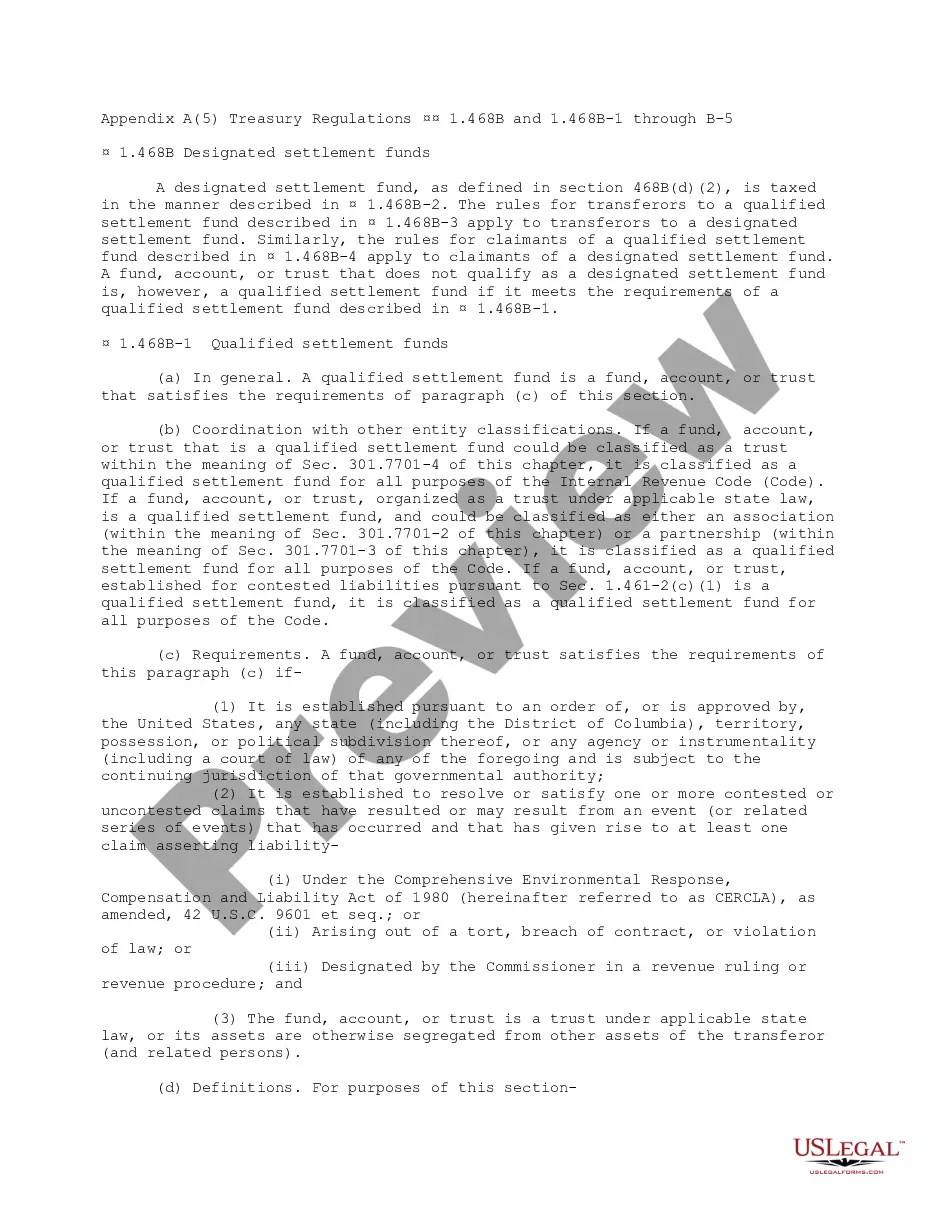
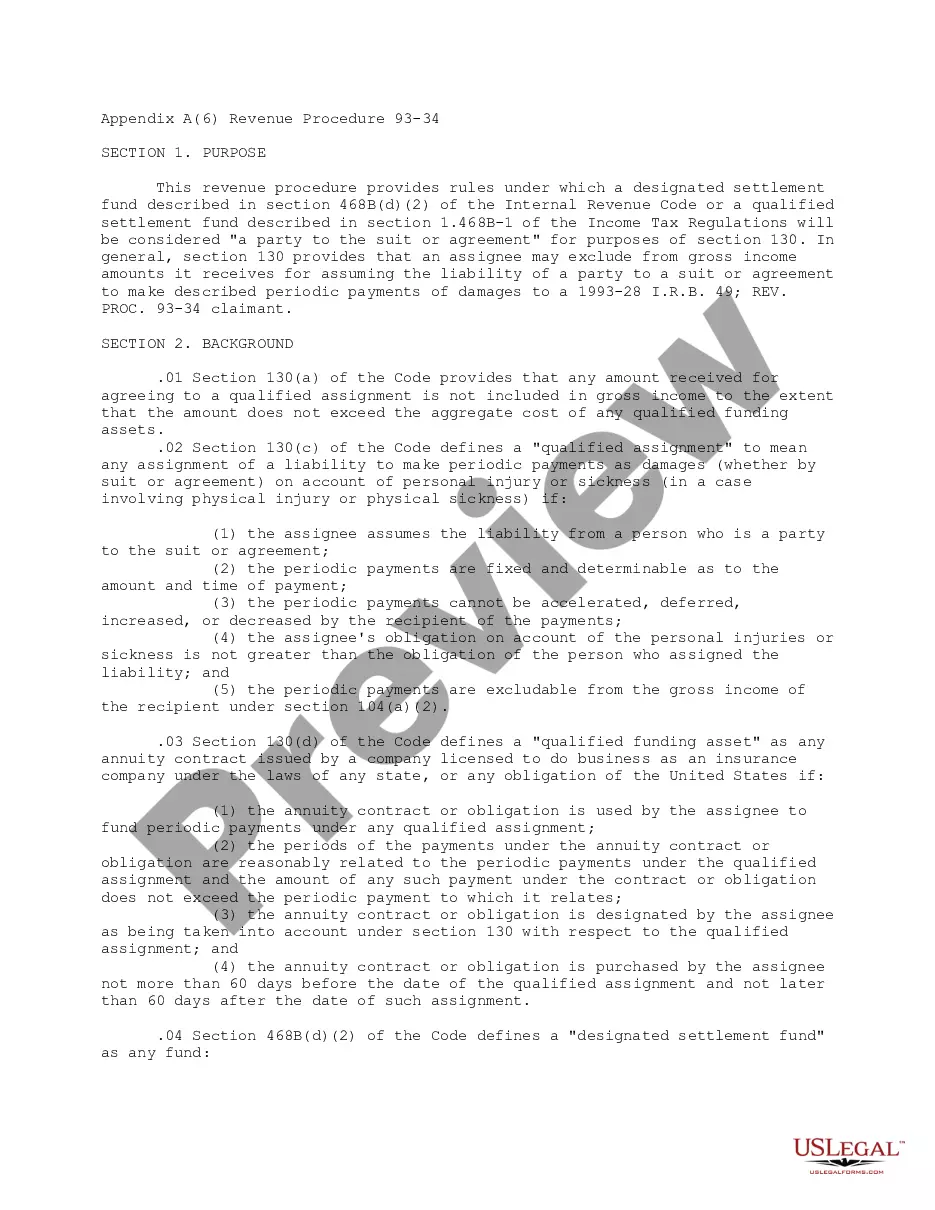
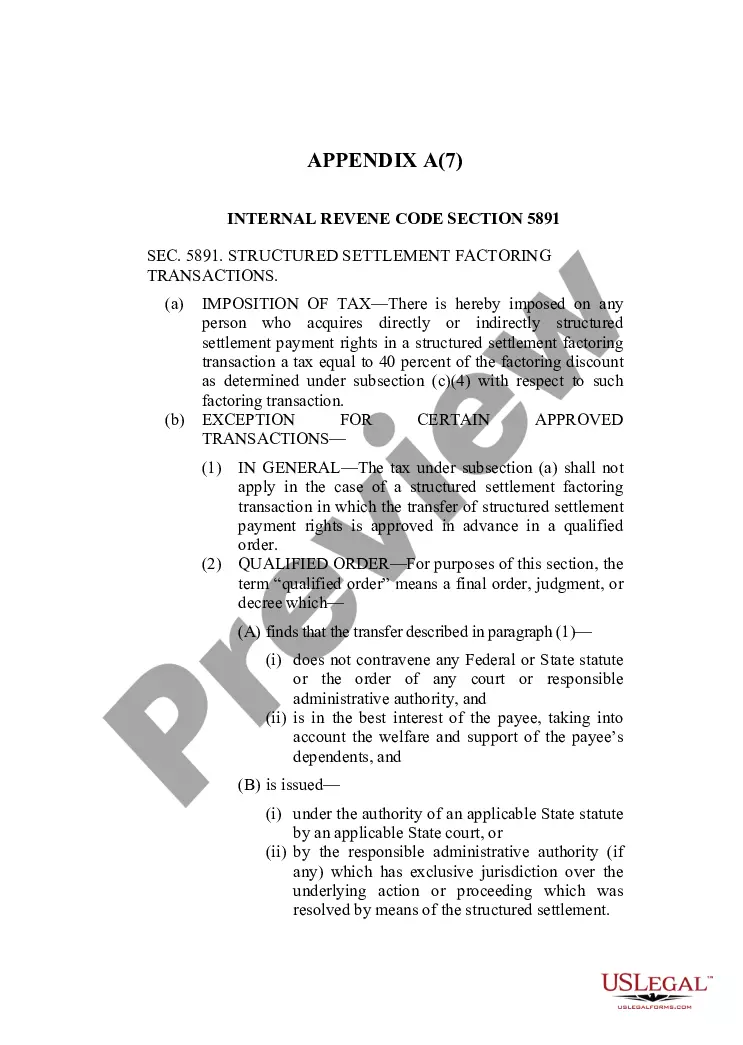
The Special Rules for Designated Settlement Funds IRS Code 468B form outlines the statutory guidelines regarding designated settlement funds. It provides specific tax rules and treatment for funds established to resolve claims arising from personal injury, death, or property damage. Unlike general tax forms, this form focuses solely on settlement funds and their unique tax implications, ensuring compliance with the Internal Revenue Code.
Form components explained
- Definition of qualified payments that do not constitute gross income for the fund.
- Taxation rules applicable to the gross income of designated settlement funds.
- Conditions and requirements for establishing a designated settlement fund.
- Administrative expenses allowed and limitations on other deductions.
- Clarifications regarding the ownership and basis of transferred property.
When to use this form
This form is required when establishing a designated settlement fund as part of a legal resolution to address tort liabilities. It applies in scenarios where a party is looking to satisfy claims related to personal injuries, fatalities, or property damage through a fund administered by independent entities. It should be used when there is a court order specifying the establishment of such a fund to ensure adherence to tax regulations.
Who can use this document
This form is intended for:
- Taxpayers who have been instructed by a court to establish a designated settlement fund.
- Legal representatives managing settlements related to personal injury claims.
- Administrators of settlement funds seeking to ensure legal compliance with IRS regulations.
How to prepare this document
- Review the court order that mandates the establishment of the settlement fund.
- Determine the total amount of qualified payments to be contributed to the fund.
- Gather documentation for any administrative costs that will be deducted from gross income.
- Complete and file the form in accordance with IRS guidelines for designated settlement funds.
- Retain copies of all documents related to the fund for future reference and compliance checks.
Does this document require notarization?
In most cases, this form does not require notarization. However, some jurisdictions or signing circumstances might. US Legal Forms offers online notarization powered by Notarize, accessible 24/7 for a quick, remote process.
Get your form ready online
Our built-in tools help you complete, sign, share, and store your documents in one place.
Make edits, fill in missing information, and update formatting in US Legal Forms—just like you would in MS Word.
Download a copy, print it, send it by email, or mail it via USPS—whatever works best for your next step.
Sign and collect signatures with our SignNow integration. Send to multiple recipients, set reminders, and more. Go Premium to unlock E-Sign.
If this form requires notarization, complete it online through a secure video call—no need to meet a notary in person or wait for an appointment.
We protect your documents and personal data by following strict security and privacy standards.

Make edits, fill in missing information, and update formatting in US Legal Forms—just like you would in MS Word.

Download a copy, print it, send it by email, or mail it via USPS—whatever works best for your next step.

Sign and collect signatures with our SignNow integration. Send to multiple recipients, set reminders, and more. Go Premium to unlock E-Sign.

If this form requires notarization, complete it online through a secure video call—no need to meet a notary in person or wait for an appointment.

We protect your documents and personal data by following strict security and privacy standards.
Common mistakes to avoid
- Failing to define what qualifies as a payment to the designated settlement fund.
- Not keeping proper records of administrative costs that can reduce gross income.
- Misunderstanding the tax implications for transfers into the fund.
- Overlooking the requirement for independent administration of the fund.
- Not adhering to court orders that specify fund limitations and distributions.
Why use this form online
- Convenient and easy access to the form anytime and anywhere.
- Edit and customize the form easily to fit specific legal circumstances.
- Reliable, with updates reflecting current IRS regulations on designated settlement funds.
Looking for another form?
Form popularity
FAQ
While the fund holds onto the payout from the defendant, the trustee will likely invest the funds in a secure, interest-bearing account. Because qualified settlement funds are separate tax entities they pay tax on any interest or dividend income.
The tax liability for recipients of lawsuit settlements depends on the type of settlement. In general, damages from a physical injury are not considered taxable income. However, if you've already deducted, say, your medical expenses from your injury, your damages will be taxable.
Settlement money and damages collected from a lawsuit are considered income, which means the IRS will generally tax that money, although personal injury settlements are an exception (most notably: car accident settlement and slip and fall settlements are nontaxable).
There are only three requirements for establishing a QSF. It must be created by a court order with continuing jurisdiction over the QSF. i The trust is set up to resolve tort or other legal claims prescribed by the Treasury regulations. ii Finally, it must be a trust under applicable state law.
A qualified settlement fund is a United States person and is subject to tax on its modified gross income for any taxable year at a rate equal to the maximum rate in effect for that taxable year under section 1(e).
A Qualified Settlement Fund (QSF), also referred to as a 468B Trust, is an exceptionally useful settlement tool that allows time to properly resolve mass tort litigation and other cases involving multiple claimants.