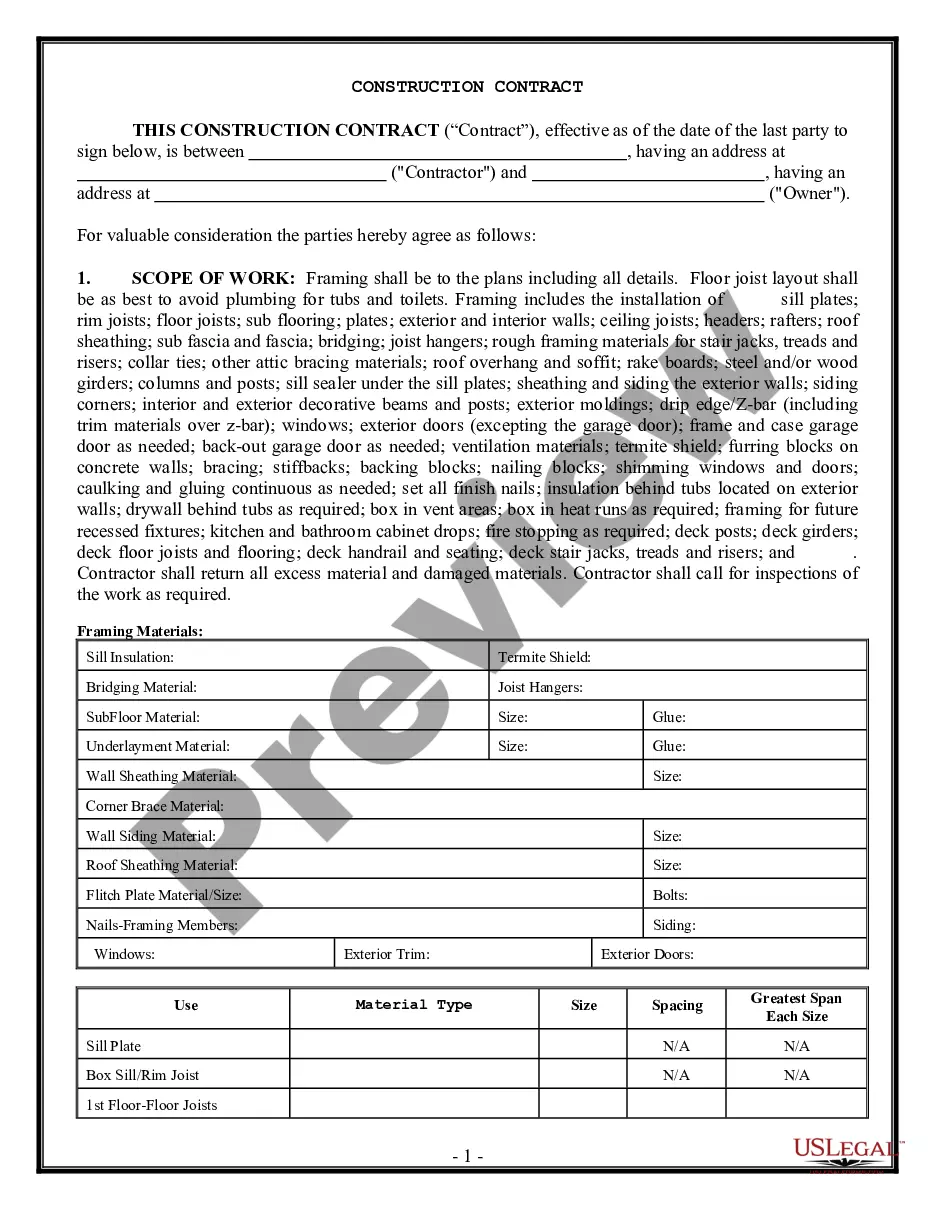
Partnership Agreement for Profit Sharing
What this document covers
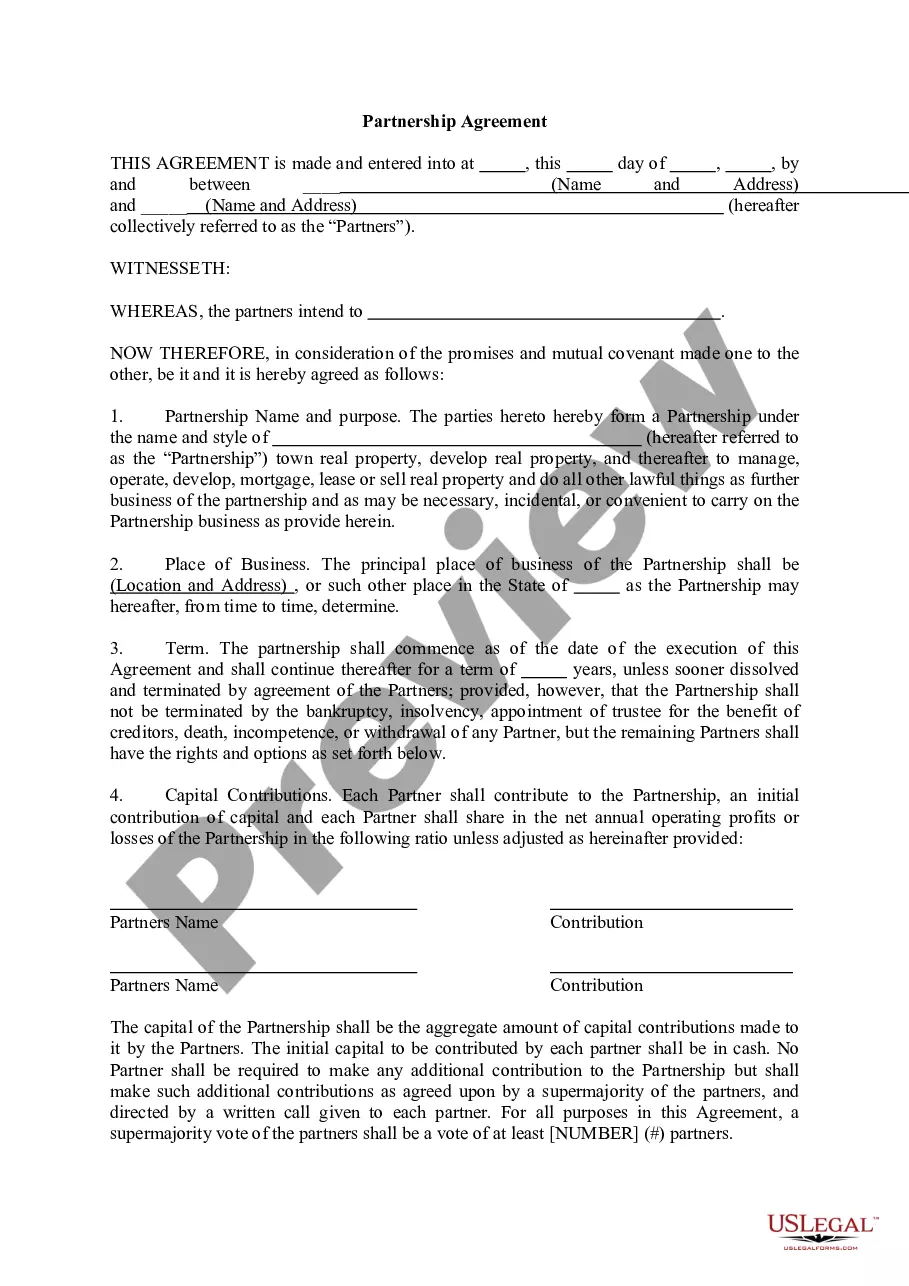
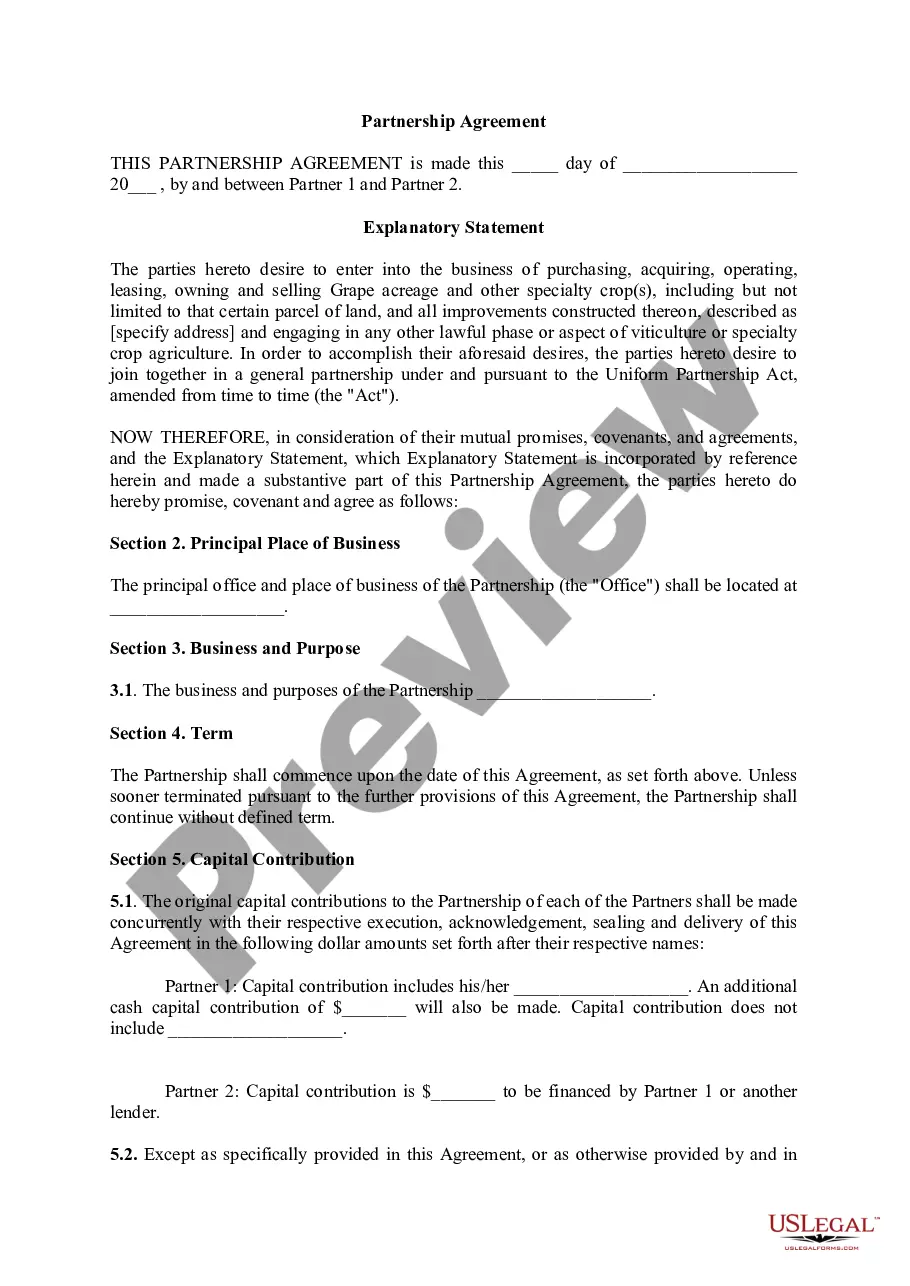
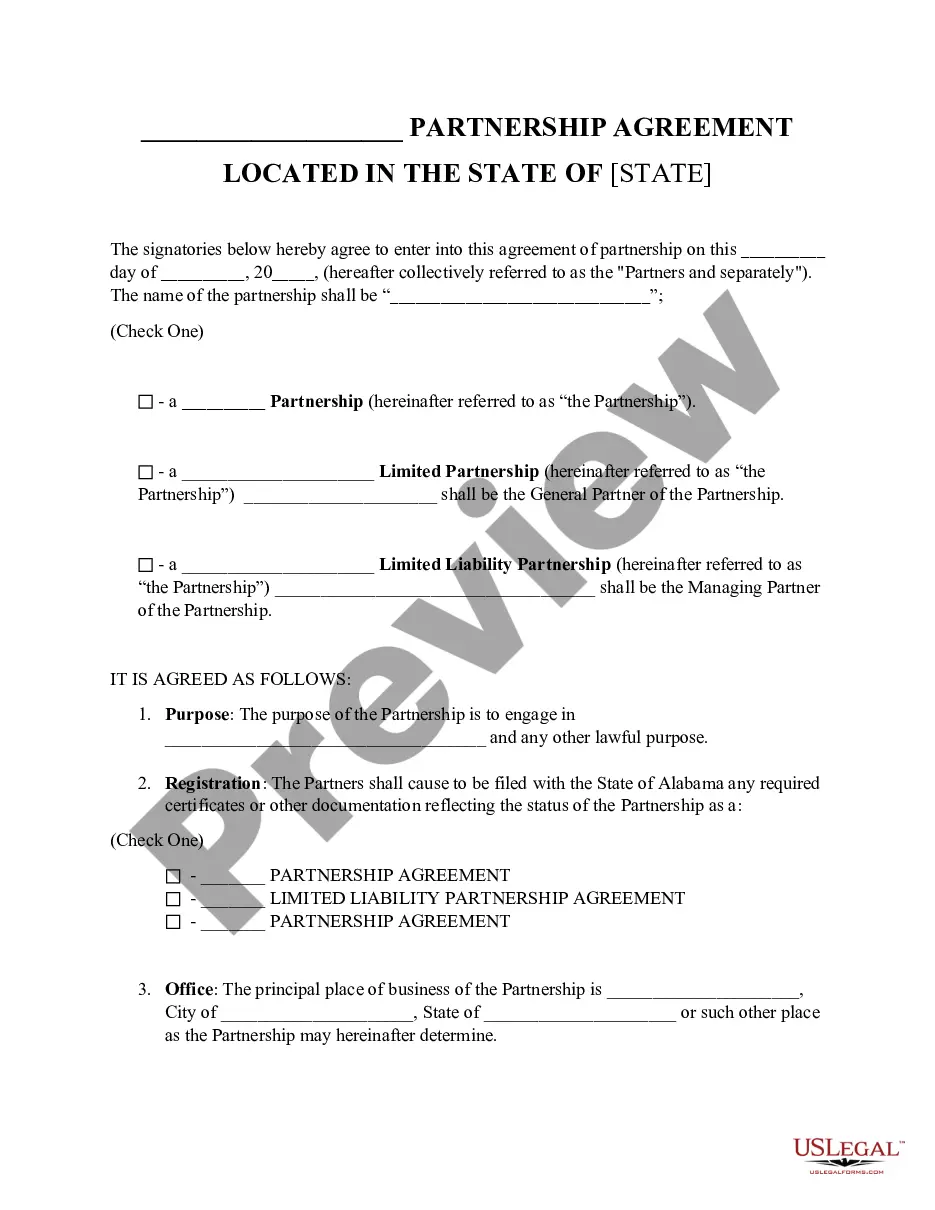
The Partnership Agreement for Profit Sharing is a legal document that formalizes the relationship between business partners. This agreement details how profits and losses are shared, ownership percentages, and the responsibilities of each partner. It sets clear expectations and fosters clarity in the partnership, distinguishing it from other business agreements, such as general partnership agreements that may not specify profit sharing explicitly.
Main sections of this form
- Identification of partners involved in the partnership.
- Details on the ownership percentage of each partner.
- Provision of how profits and losses will be shared equally among partners.
- Terms regarding the management and decision-making process within the partnership.
- Clauses addressing the continuation and dissolution of the partnership.
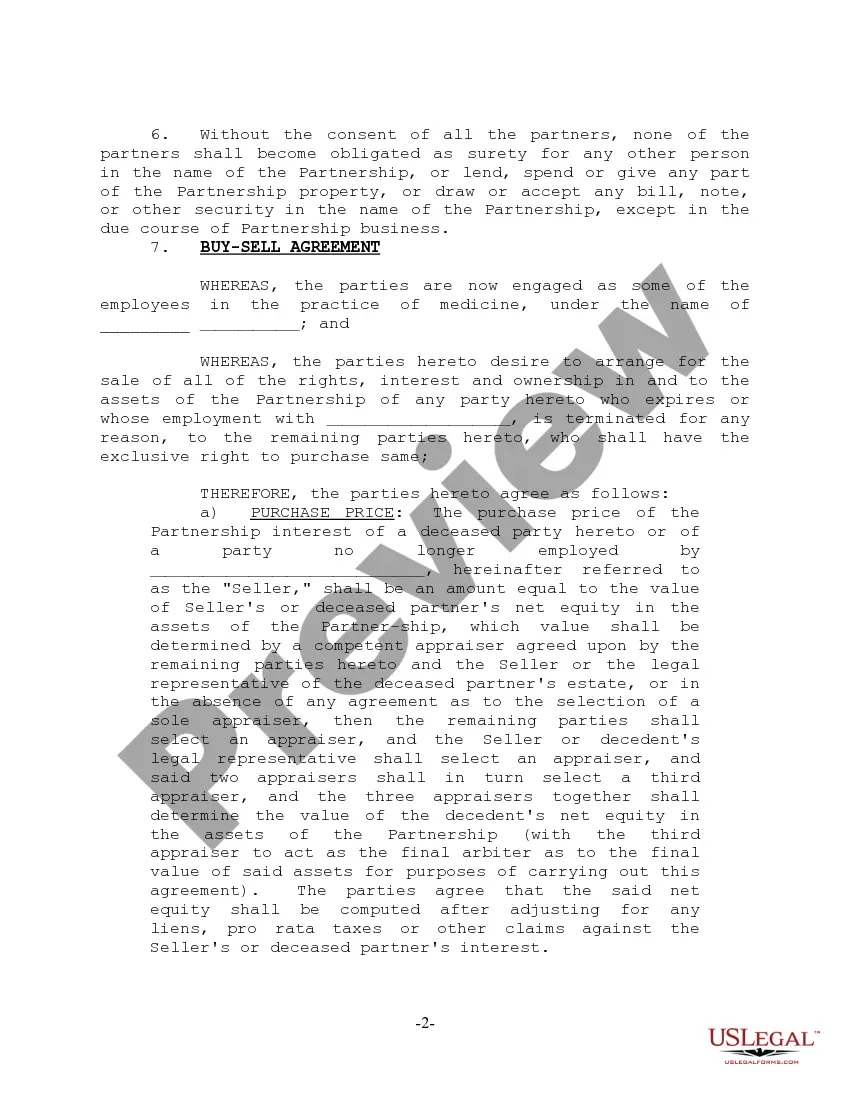
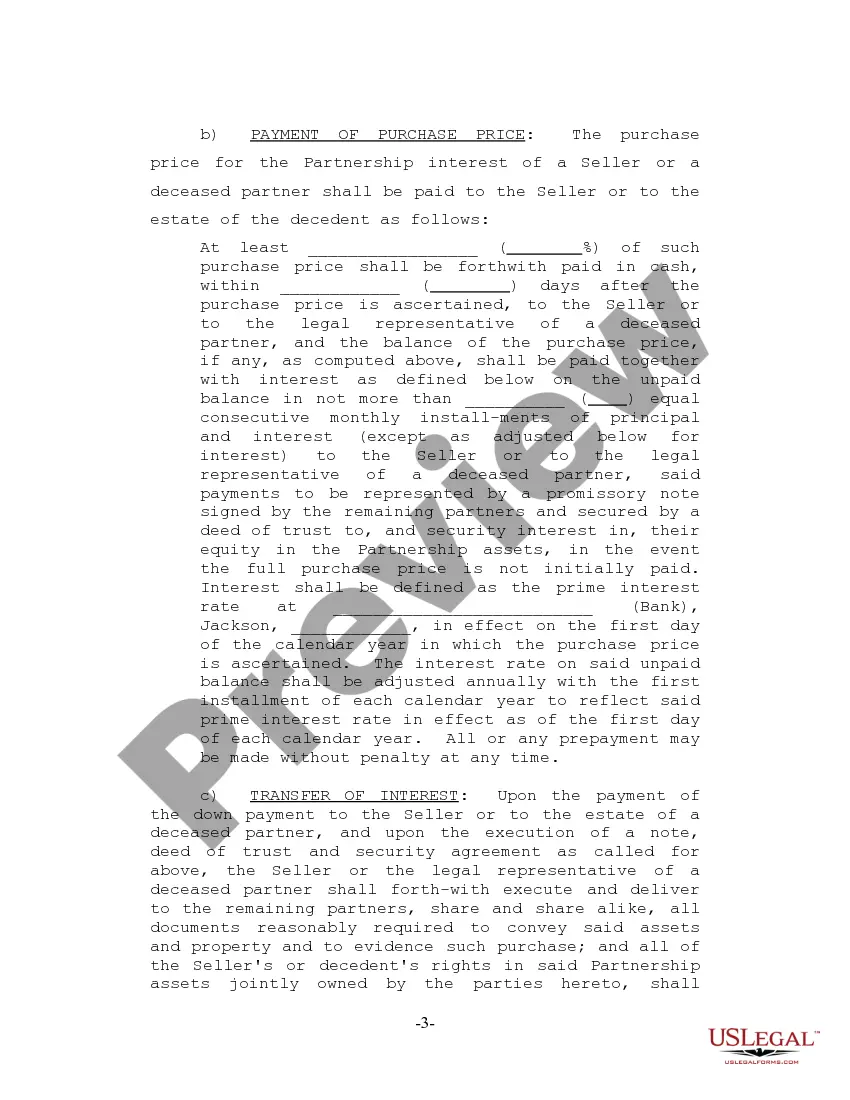
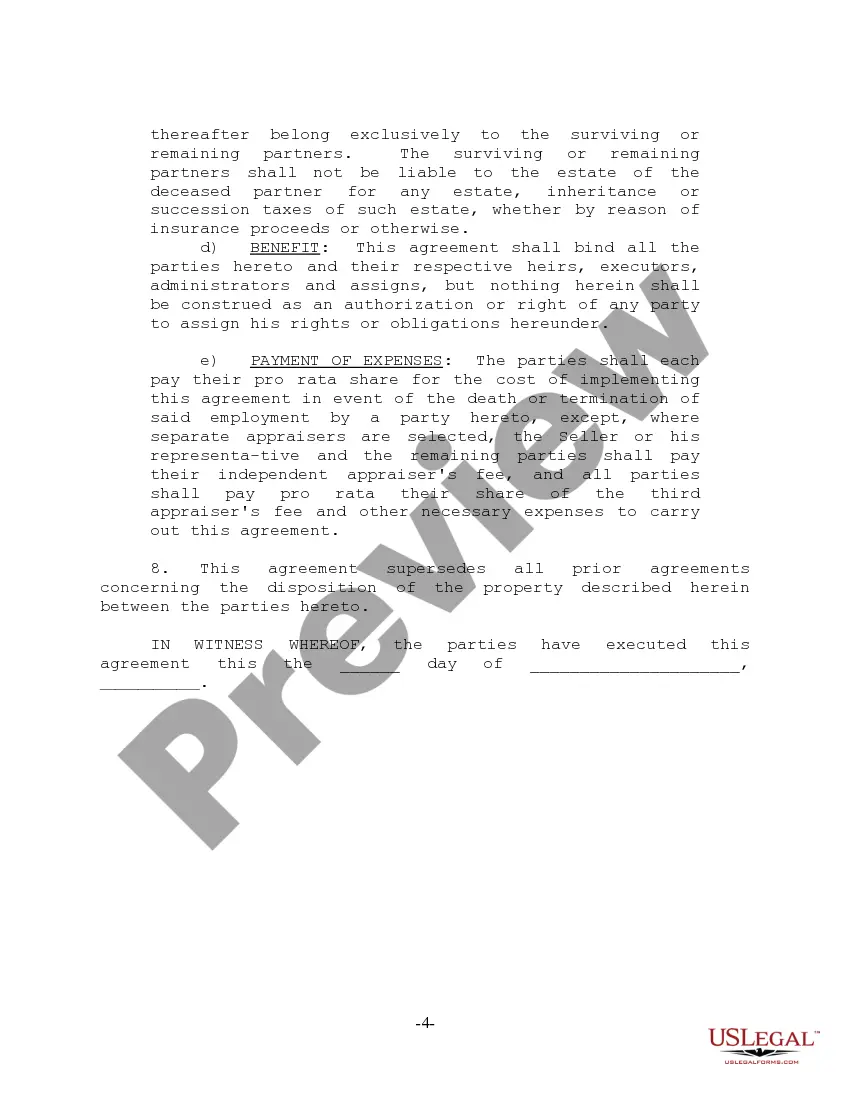
- Buy-sell agreement stipulations for transferring partnership interests in cases of employment termination or death.




Common use cases
This form should be used when two or more individuals or entities decide to establish a partnership for profit-sharing purposes. It is essential when partners are contributing varying amounts of money, assets, or services and need to define their investment and return expectations clearly. It can facilitate smooth operations and prevent disputes regarding profit distribution and responsibilities.
Who can use this document
- Individuals planning to enter a business partnership.
- Business owners seeking to formalize an informal agreement with partners.
- Associates who wish to clarify ownership percentages and profit sharing.
- Partners in fields such as consulting, law, medicine, or any other profession where partnerships are common.
Steps to complete this form
- Identify and list all partners by providing their names in the designated fields.
- Specify the trade name under which the partnership will operate.
- Enter the percentage of ownership each partner holds in the partnership.
- Describe the assets contributed by each partner, including money and property.
- Include the principal place of business and outline the management structure as noted in the agreement.
- Ensure all partners sign and date the agreement to validate it.
Notarization requirements for this form
This form does not typically require notarization unless specified by local law. However, having it notarized can add an extra layer of validity and may be beneficial during any legal proceedings concerning the partnership.
Get your form ready online
Our built-in tools help you complete, sign, share, and store your documents in one place.
Make edits, fill in missing information, and update formatting in US Legal Forms—just like you would in MS Word.
Download a copy, print it, send it by email, or mail it via USPS—whatever works best for your next step.
Sign and collect signatures with our SignNow integration. Send to multiple recipients, set reminders, and more. Go Premium to unlock E-Sign.
If this form requires notarization, complete it online through a secure video call—no need to meet a notary in person or wait for an appointment.
We protect your documents and personal data by following strict security and privacy standards.

Make edits, fill in missing information, and update formatting in US Legal Forms—just like you would in MS Word.

Download a copy, print it, send it by email, or mail it via USPS—whatever works best for your next step.

Sign and collect signatures with our SignNow integration. Send to multiple recipients, set reminders, and more. Go Premium to unlock E-Sign.

If this form requires notarization, complete it online through a secure video call—no need to meet a notary in person or wait for an appointment.

We protect your documents and personal data by following strict security and privacy standards.
Common mistakes to avoid
- Failing to specify the percentage of ownership for each partner.
- Not clearly defining the roles and responsibilities of each partner.
- Neglecting to include clauses on the management of the partnership.
- Overlooking buy-sell provisions for transferring partnership interests.
Benefits of completing this form online
- Convenient access to legal templates tailored for various partnership needs.
- Editability allows personalized modifications to fit unique circumstances.
- Instant downloads ensure immediate availability for use.
- Designed by licensed attorneys, enhancing reliability and legal compliance.
Legal use & context
- This partnership agreement is enforceable under applicable state laws governing business partnerships.
- Itâs essential for partners to adhere to the terms explicitly stated in the document to prevent legal disputes.
- Understanding local laws can influence the operations and dissolution processes embedded in this agreement.
Key takeaways
- Partnership Agreement for Profit Sharing is essential for defining roles and profit distributions.
- Using this form can prevent potential disputes among partners.
- Customize the agreement according to specific business needs while adhering to legal standards.
Looking for another form?




Form popularity
FAQ
According to the Partnership Act, 1932, when these is no agreement, the partners are to share the profit and loss equally among themselves.
Although each partnership agreement differs based on business objectives, certain terms should be detailed in the document, including percentage of ownership, division of profit and loss, length of the partnership, decision making and resolving disputes, partner authority, and withdrawal or death of a partner.
When there is no agreement among the partners, the profit or loss of the firm will be shared in their capital ratio.
Solution. When there is no partnership agreement between partners, the division of Profits takes place in equal ratio.
In a partnership, profits and losses made by the business are shared among the partners based on their initial contribution percentage, unless agreed otherwise and set out in the partnership agreement.
Name of the partnership. Contributions to the partnership. Allocation of profits, losses, and draws. Partners' authority. Partnership decision-making. Management duties. Admitting new partners. Withdrawal or death of a partner.
Share the same values. Choose a partner with complementary skills. Have a track record together. Clearly define each partner's role and responsibilities. Select the right business structure. Put it in writing. Be honest with each other.
In a business partnership, you can split the profits any way you wantif everyone is in agreement. You could split the profits equally, or each partner could receive a different base salary and then split any remaining profits.All partners should agree and sign, to prevent problems later.
Decide How You'll Split Profits In a business partnership, you can split the profits any way you wantif everyone is in agreement. You could split the profits equally, or each partner could receive a different base salary and then split any remaining profits.