Sample Basic Partnership Agreement
What this document covers
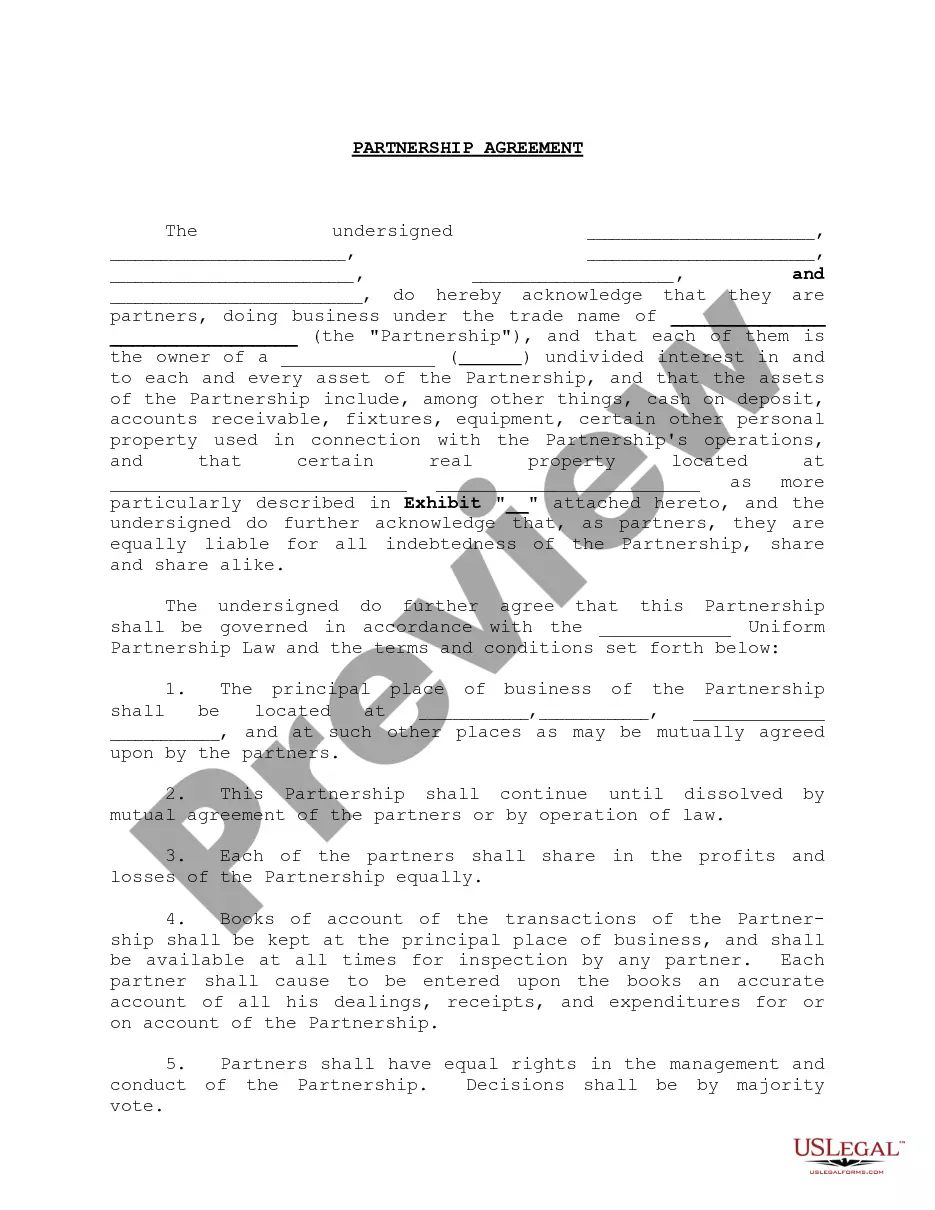
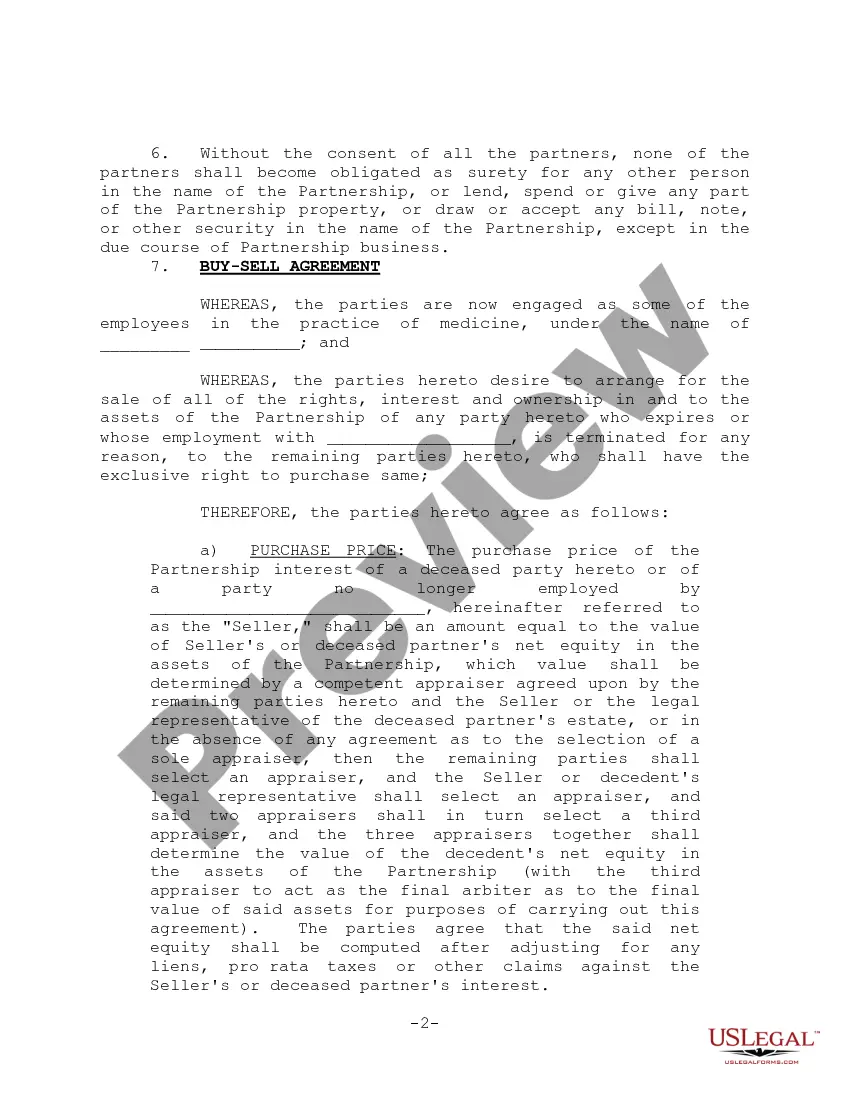
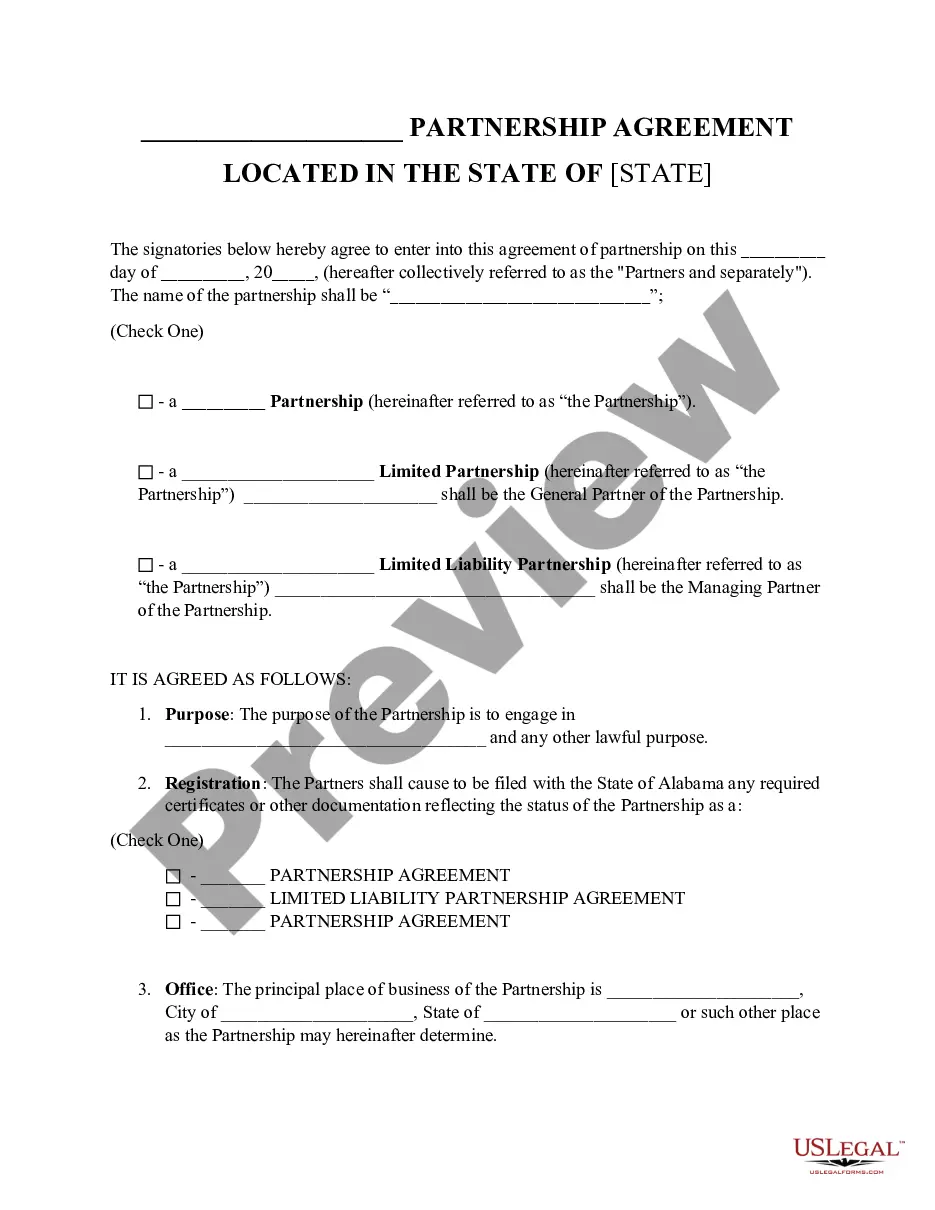
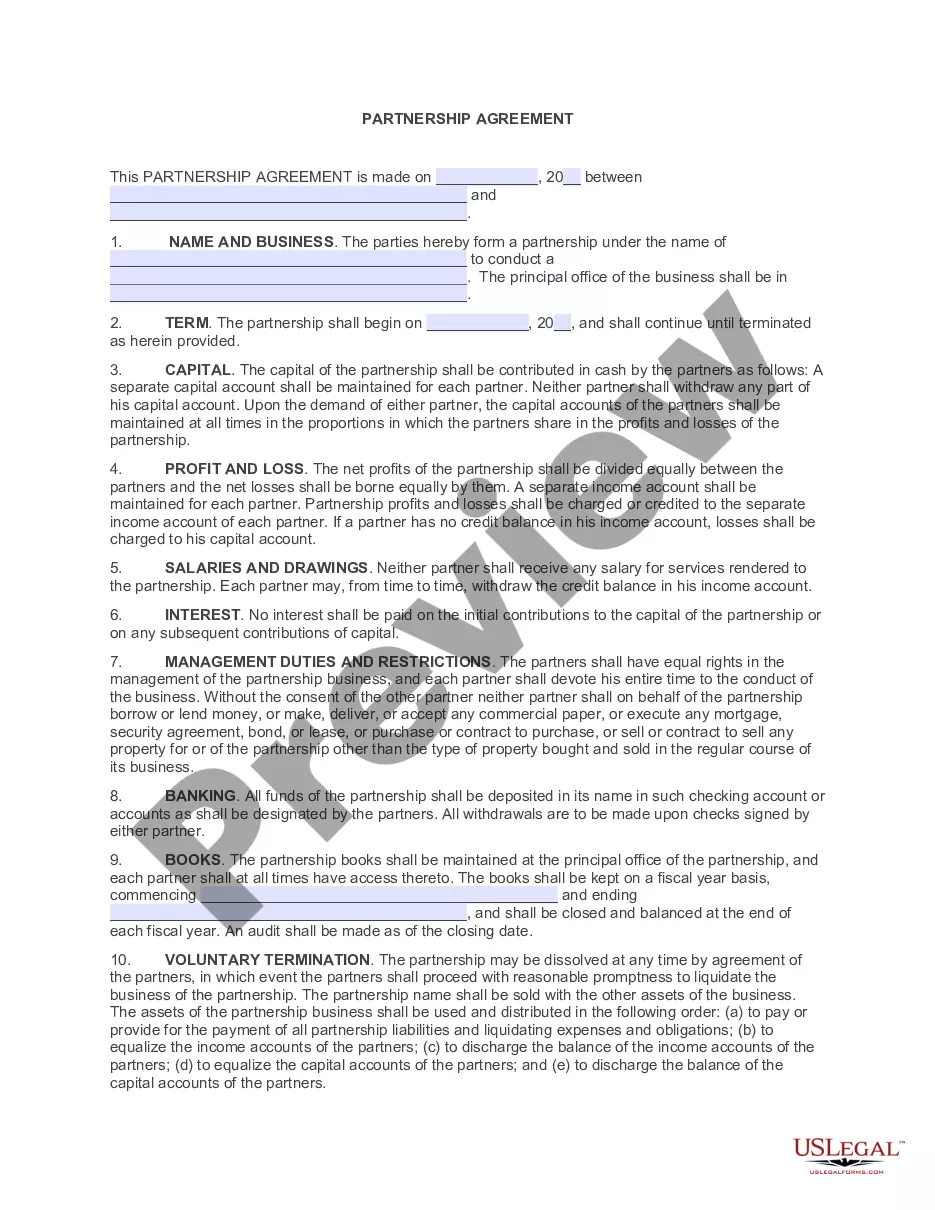
The Sample Basic Partnership Agreement is a legal document that outlines the terms and conditions of a partnership between two or more individuals. This form establishes each partner's ownership percentage, investment contributions, and responsibilities for the partnership's debts and management. Unlike other partnership agreements, this basic form lays a foundation for general partners, ensuring shared decision-making and profit/loss distribution based on investment proportions.
Key components of this form
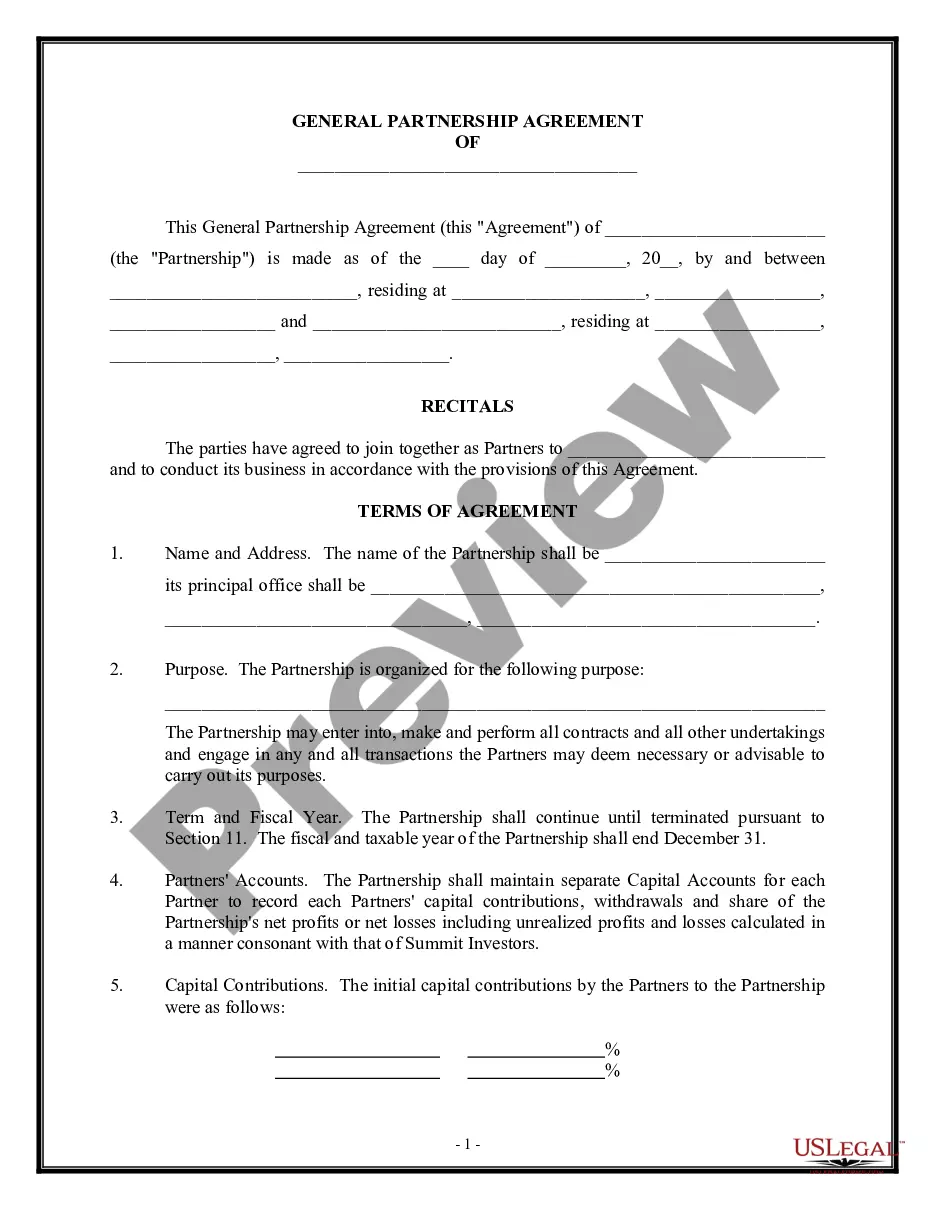
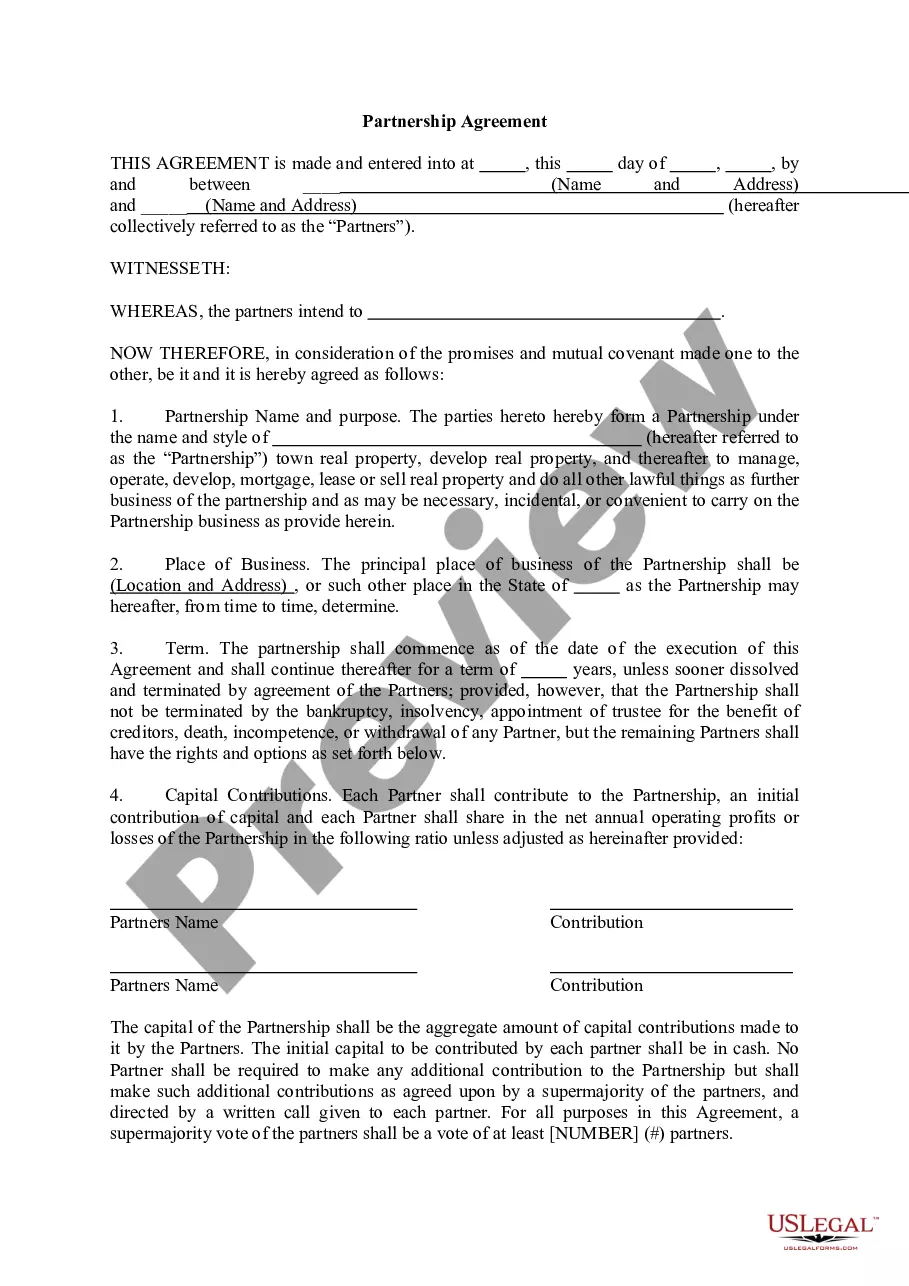
- Identification of partners and partnership name.
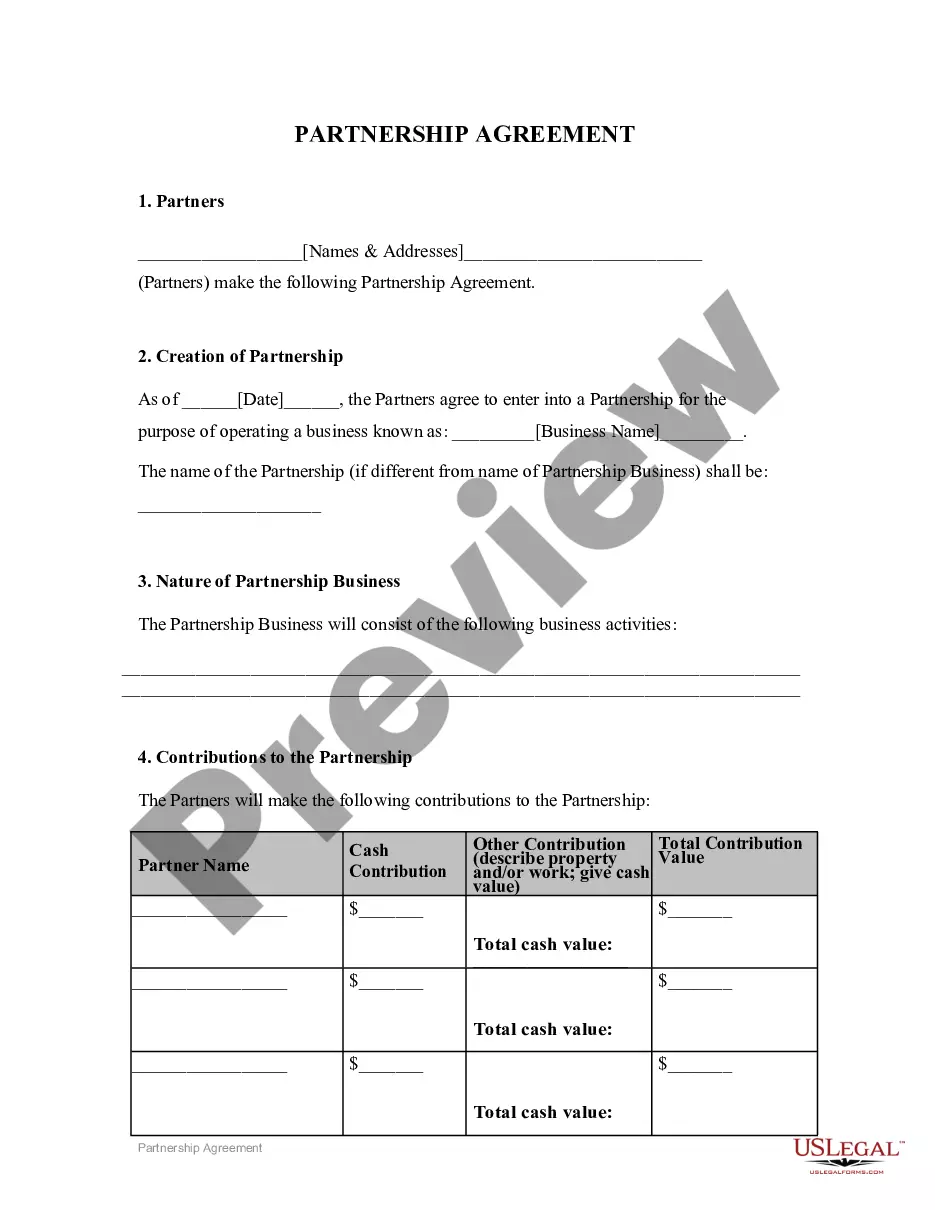
- Ownership and investment percentages of each partner.
- Responsibilities concerning debts and liabilities.
- Management structure and decision-making process.
- Profit and loss sharing arrangement.
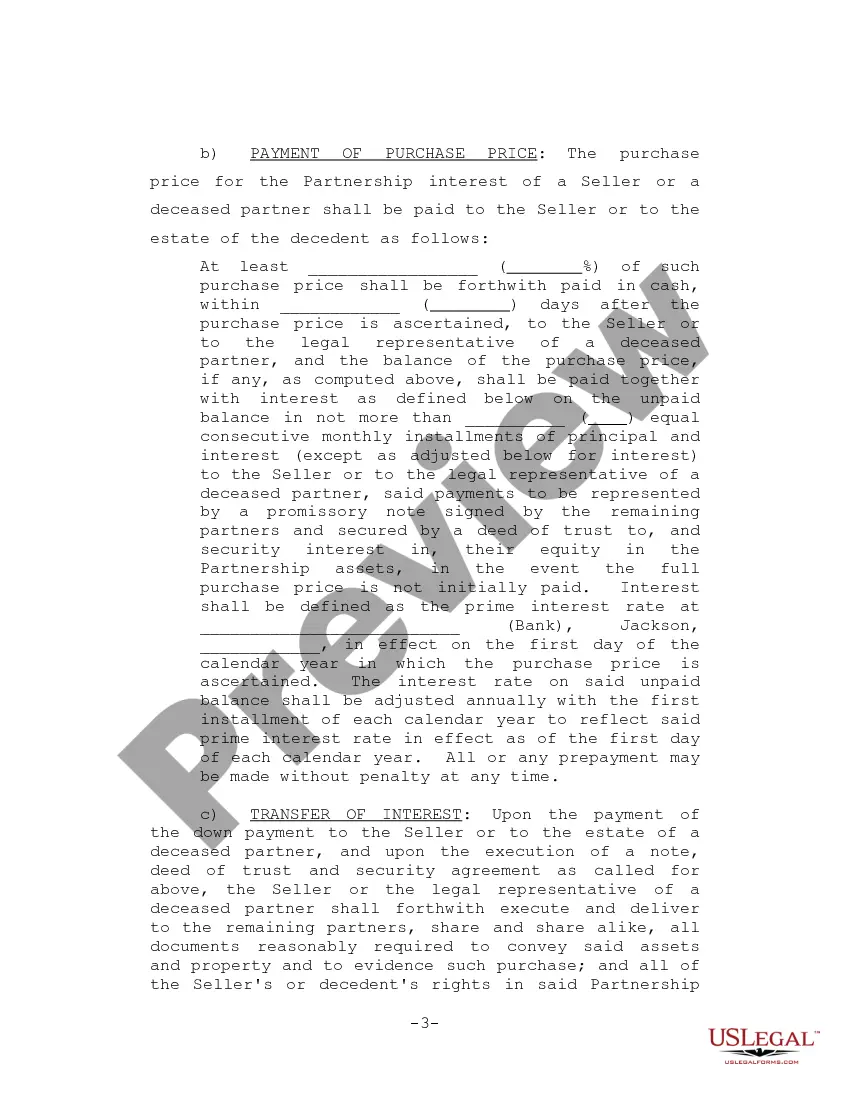
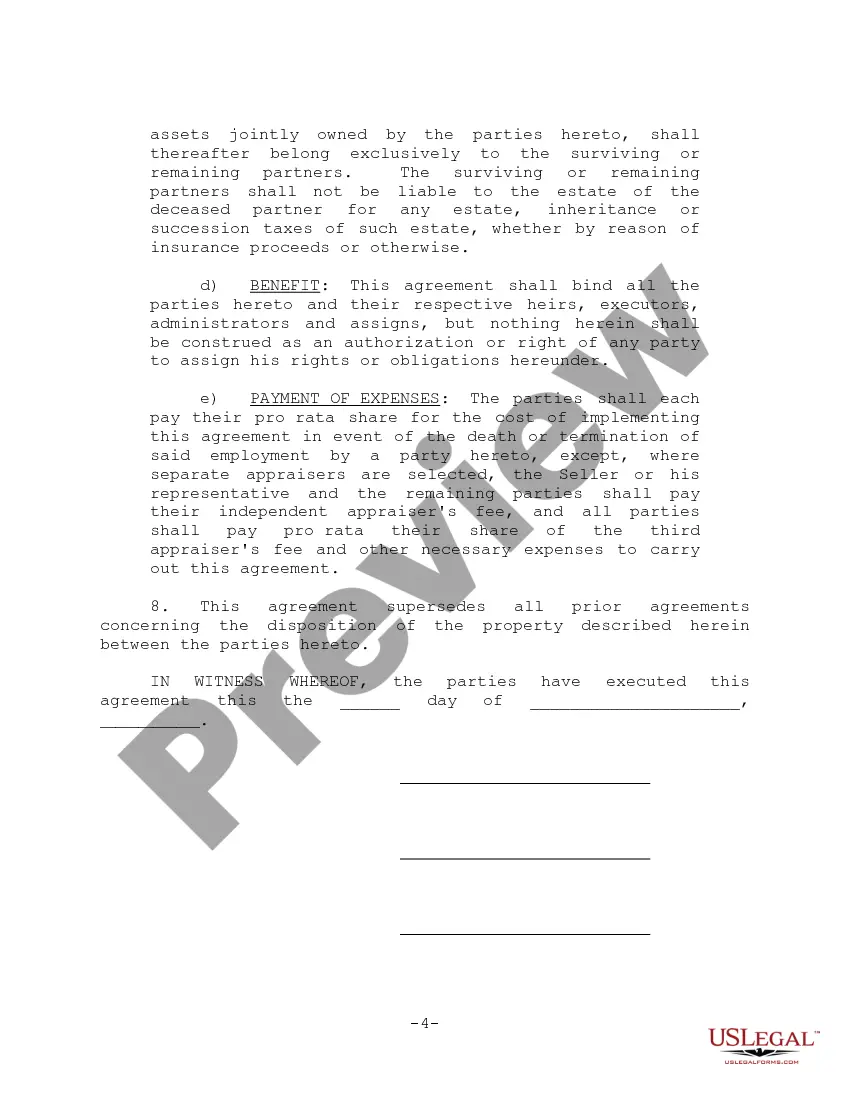
- Procedures for the buy-sell agreement in case of death or employment termination of a partner.

When this form is needed
This Sample Basic Partnership Agreement is used when two or more individuals decide to enter into a partnership for business purposes. It is essential when partners want to clarify their ownership stakes, financial contributions, roles, and responsibilities from the outset. This form is particularly useful for small businesses, joint ventures, or any cooperative endeavor where partners share profits and liabilities.
Who needs this form
This partnership agreement is suitable for:
- Individuals entering into a new business partnership.
- Existing partnerships needing to formalize terms or clarify responsibilities.
- Small business owners looking to outline management and financial arrangements.
- Professionals working together under a shared business structure.
Steps to complete this form
- Identify and list all partners' names and addresses.
- Input the trade name of the partnership.
- Specify the ownership percentage and investment contributions for each partner.
- Detail the principal place of business of the partnership.
- Include the terms for profit and loss sharing among partners.
- Ensure all partners sign and date the agreement to validate it.
Does this document require notarization?
This form does not typically require notarization unless specified by local law. However, notarization may add an additional layer of authenticity and could be beneficial in certain circumstances to ensure validity in case of disputes.
Get your form ready online
Our built-in tools help you complete, sign, share, and store your documents in one place.
Make edits, fill in missing information, and update formatting in US Legal Forms—just like you would in MS Word.
Download a copy, print it, send it by email, or mail it via USPS—whatever works best for your next step.
Sign and collect signatures with our SignNow integration. Send to multiple recipients, set reminders, and more. Go Premium to unlock E-Sign.
If this form requires notarization, complete it online through a secure video call—no need to meet a notary in person or wait for an appointment.
We protect your documents and personal data by following strict security and privacy standards.

Make edits, fill in missing information, and update formatting in US Legal Forms—just like you would in MS Word.

Download a copy, print it, send it by email, or mail it via USPS—whatever works best for your next step.

Sign and collect signatures with our SignNow integration. Send to multiple recipients, set reminders, and more. Go Premium to unlock E-Sign.

If this form requires notarization, complete it online through a secure video call—no need to meet a notary in person or wait for an appointment.

We protect your documents and personal data by following strict security and privacy standards.
Mistakes to watch out for
- Failing to clearly define each partnerâs contribution and ownership percentage.
- Not specifying how profits and losses will be distributed.
- Omitting provisions for decision-making processes and management responsibilities.
- Neglecting to account for what happens in case of a partner's departure or death.
Benefits of using this form online
- Convenience of filling out the form from anywhere at any time.
- Editability allows for customization specific to your partnership needs.
- Access to reliable templates drafted by licensed attorneys ensures legal compliance.
Legal use & context
- This agreement governs the relationships and responsibilities of partners in the business.
- It is enforceable once all parties have signed and agreed to the terms.
- Partnership agreements often require updates as the business evolves or as partners enter or exit.
Key takeaways
- The Sample Basic Partnership Agreement formalizes the terms of a partnership.
- Clear definitions of duties and responsibilities are crucial for maintaining business operations.
- Customization to state laws enhances the agreement's enforceability.
- Accessibility and convenience of online forms can expedite the partnership establishment process.
Legal terms and meanings
- Partnership: A business arrangement where two or more parties share profits and liabilities.
- Ownership interest: The percentage of the partnership that belongs to each partner.
- Buy-sell agreement: A provision detailing the sale of a partner's interest upon certain events like death or resignation.
- Liability: Legal responsibility for debts and actions of the partnership.
Looking for another form?
Form popularity
FAQ
Name of the partnership. Contributions to the partnership. Allocation of profits, losses, and draws. Partners' authority. Partnership decision-making. Management duties. Admitting new partners. Withdrawal or death of a partner.
Step 1: Do Your Research. You might have a few companies of interest in mind. Step 2: Explain How Your Values Align. Step 3: Focus on the Value Proposition. Step 4: Discuss How the Partnership Will Conclude.
A partnership agreement is a contract between partners in a partnership which sets out the terms and conditions of the relationship between the partners, including: Percentages of ownership and distribution of profits and losses. Description of management powers and duties of each partner.
Although each partnership agreement differs based on business objectives, certain terms should be detailed in the document, including percentage of ownership, division of profit and loss, length of the partnership, decision making and resolving disputes, partner authority, and withdrawal or death of a partner.
Name of your partnership. Contributions to the partnership and percentage of ownership. Division of profits, losses and draws. Partners' authority. Withdrawal or death of a partner.
Like any contractual agreement, partnership agreements do not have to be in writing, as verbal agreements are also legally binding.In a partnership, each person is liable for the debts and actions of the other partners, so the contractual relationship and obligations need to be completely transparent.
Name of the partnership. Contributions to the partnership. Allocation of profits, losses, and draws. Partners' authority. Partnership decision-making. Management duties. Admitting new partners. Withdrawal or death of a partner.
Types of Partnership General Partnership, Limited Partnership, Limited Liability Partnership and Public Private Partnership.