New Mexico Parenting Plan
About this form
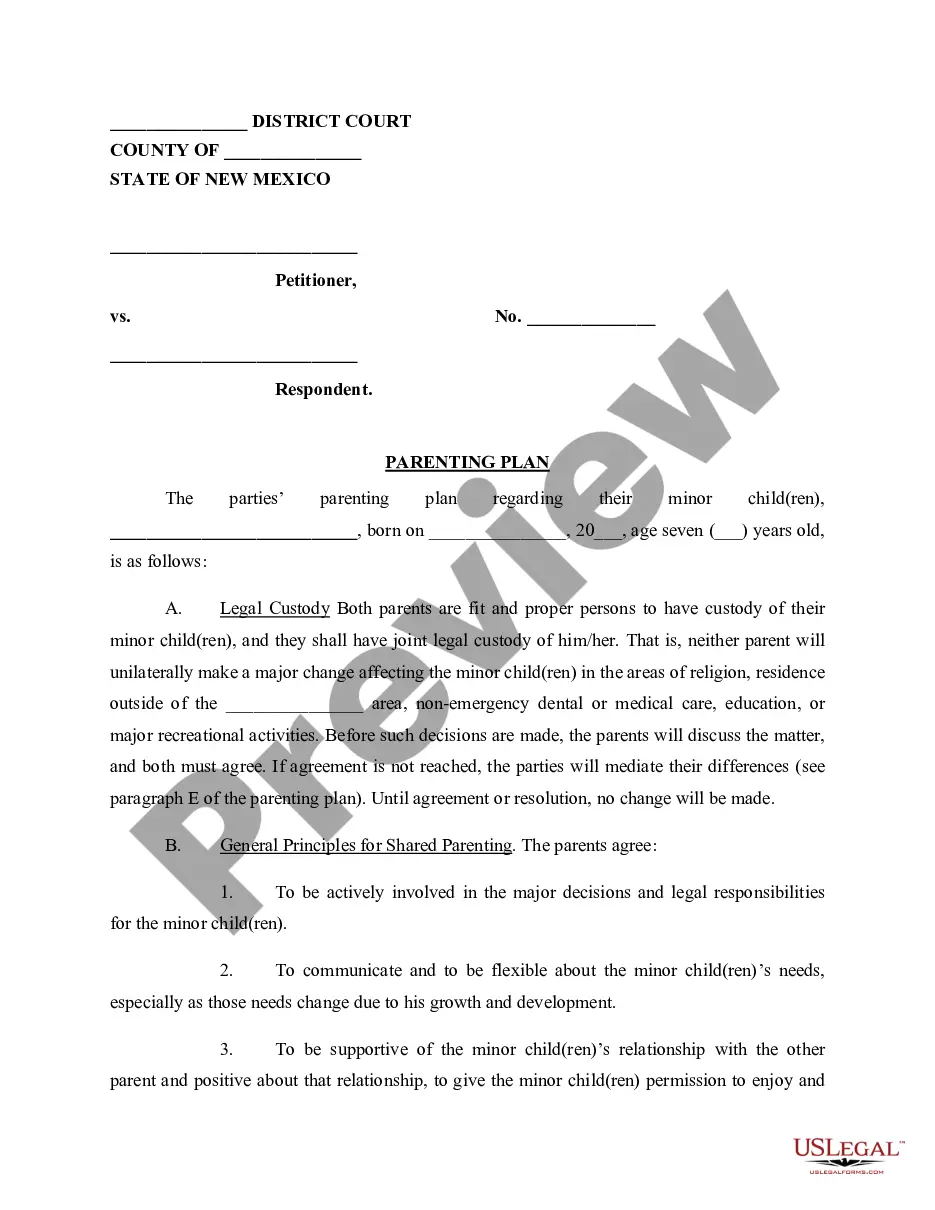
The Parenting Plan is a legal document that outlines the agreements made by parents regarding the upbringing of their minor children in situations where they are separating. This form is essential for establishing joint legal custody, defining timesharing schedules, and ensuring both parents remain involved in significant decisions affecting their child(ren). Unlike general custody agreements, this plan is tailored to specify the day-to-day responsibilities and commitments of each parent, making it a vital tool for maintaining a cooperative parenting dynamic post-separation.
What’s included in this form
- Legal custody agreement outlining joint responsibilities of both parents.
- General principles for shared parenting emphasizing cooperation and communication.
- Consideration of the minor child(ren)âs wishes in decision-making.
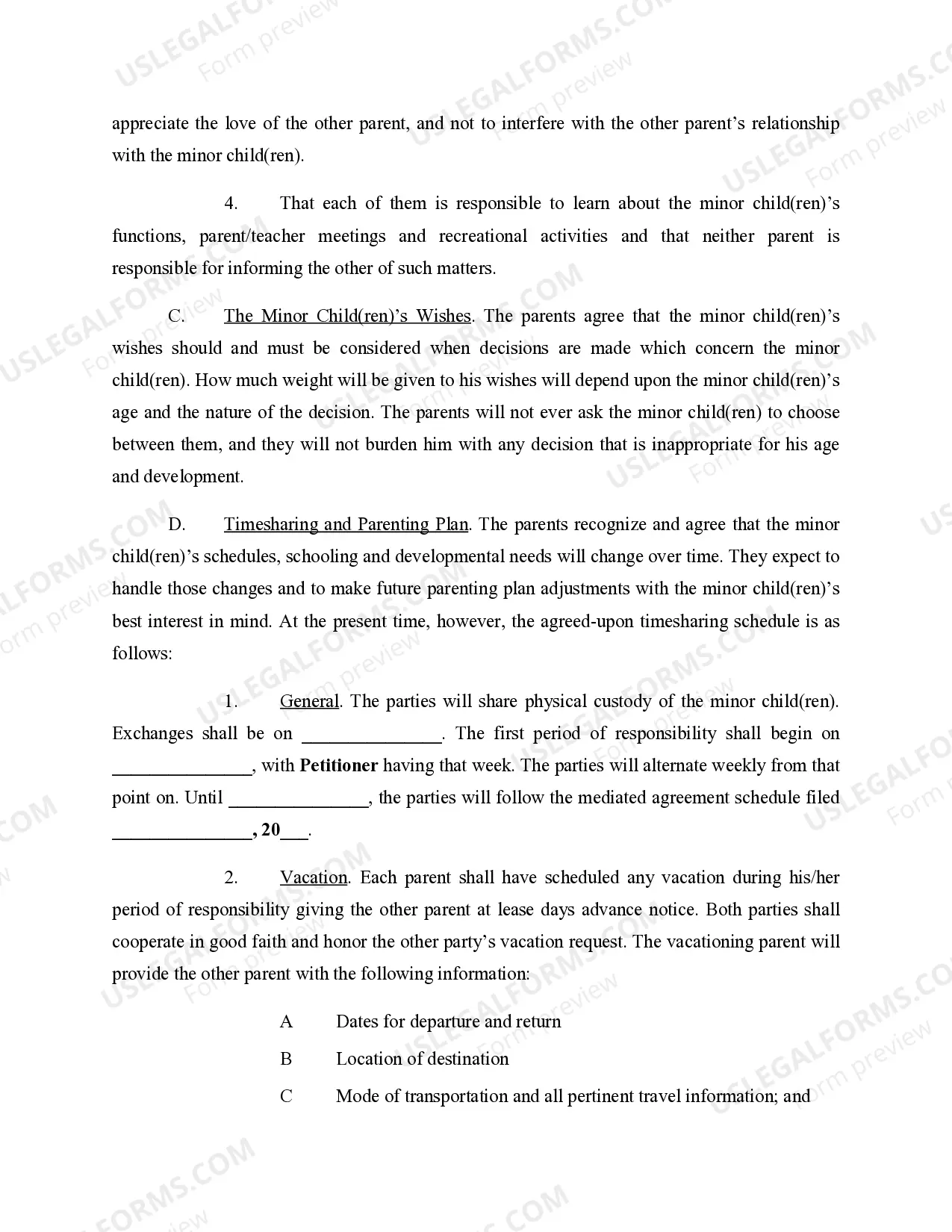
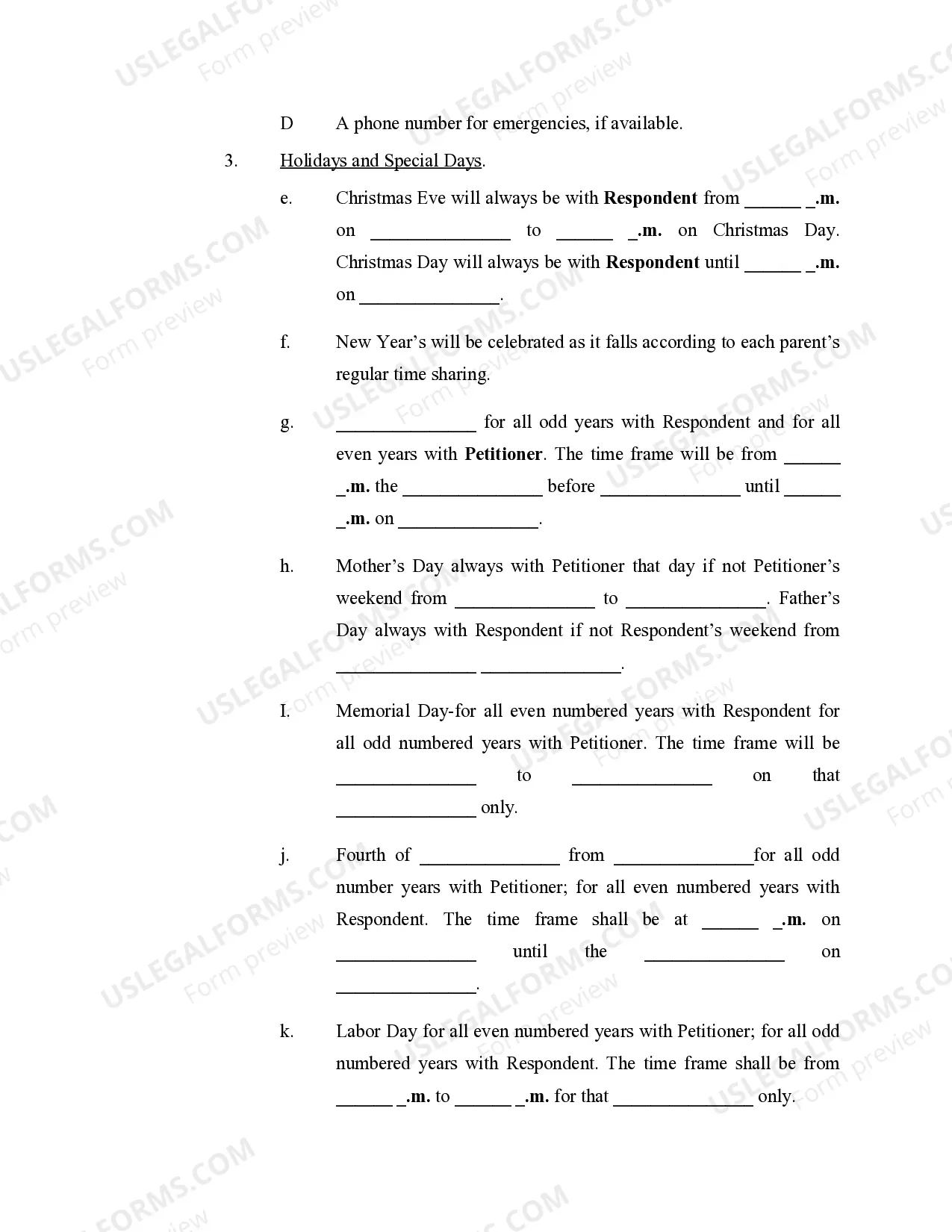
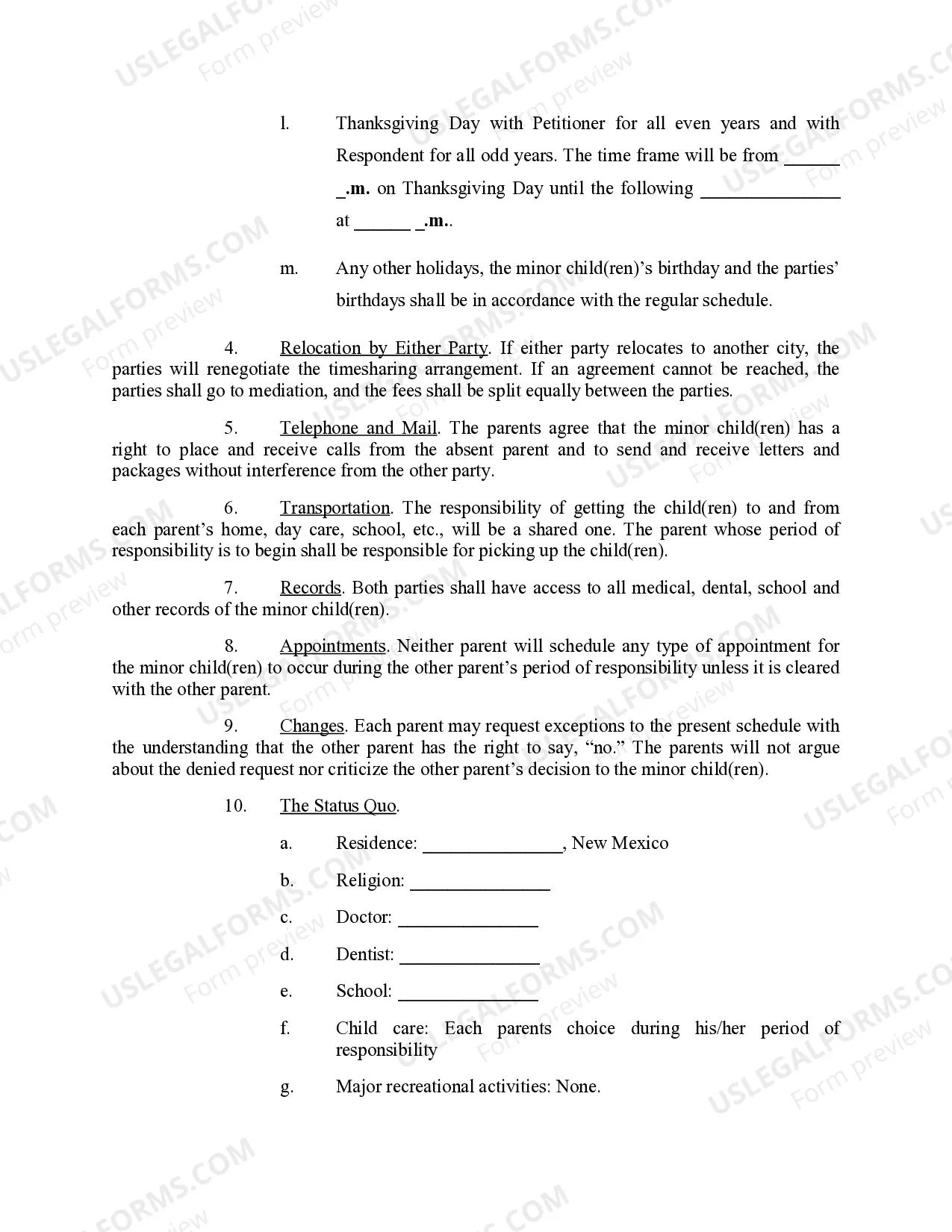
- Details on timesharing, including holiday schedules and vacations.
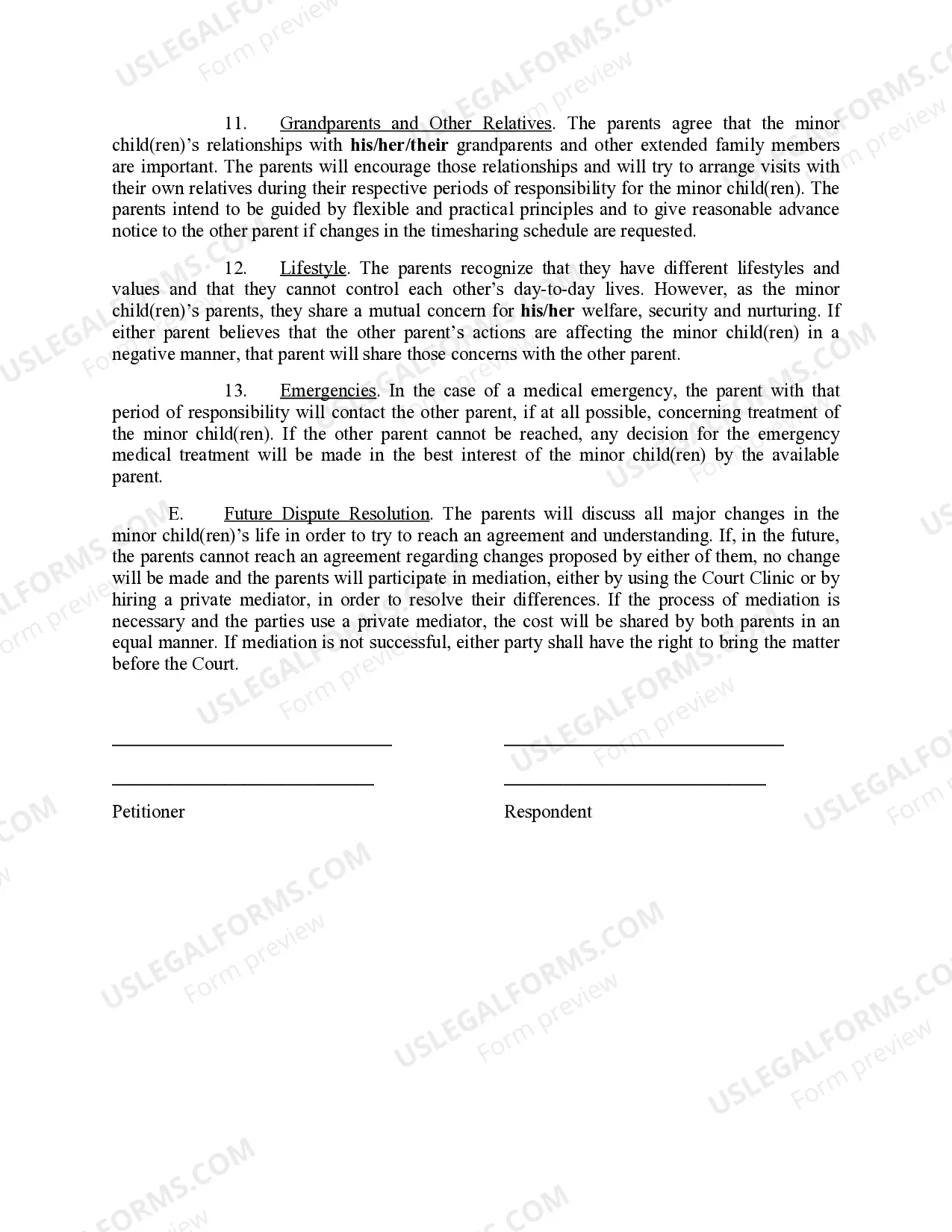
- Provisions for resolving disputes through mediation.
- Responsibilities regarding transportation and communication between parents.
When to use this document
This Parenting Plan should be used when parents of minor children are separating or divorcing and need to establish a clear outline of how they will share parenting duties and responsibilities. It is particularly important when both parents want to ensure the well-being of their children during and after the transition to separate homes.
Intended users of this form
This form is suitable for:
- Parents who are seeking separation or divorce and have minor children.
- Guardians looking to formalize their parenting responsibilities.
- Couples who wish to create a structured co-parenting plan for the future.
Completing this form step by step
- Identify the names of both parents and the minor child(ren) involved.
- Fill in the custody agreement section, noting the joint custody details.
- Define the timesharing schedule, including holidays and special occasions.
- Outline the communication methods and decision-making processes.
- Both parents must review, sign, and date the document before notarization.
Is notarization required?
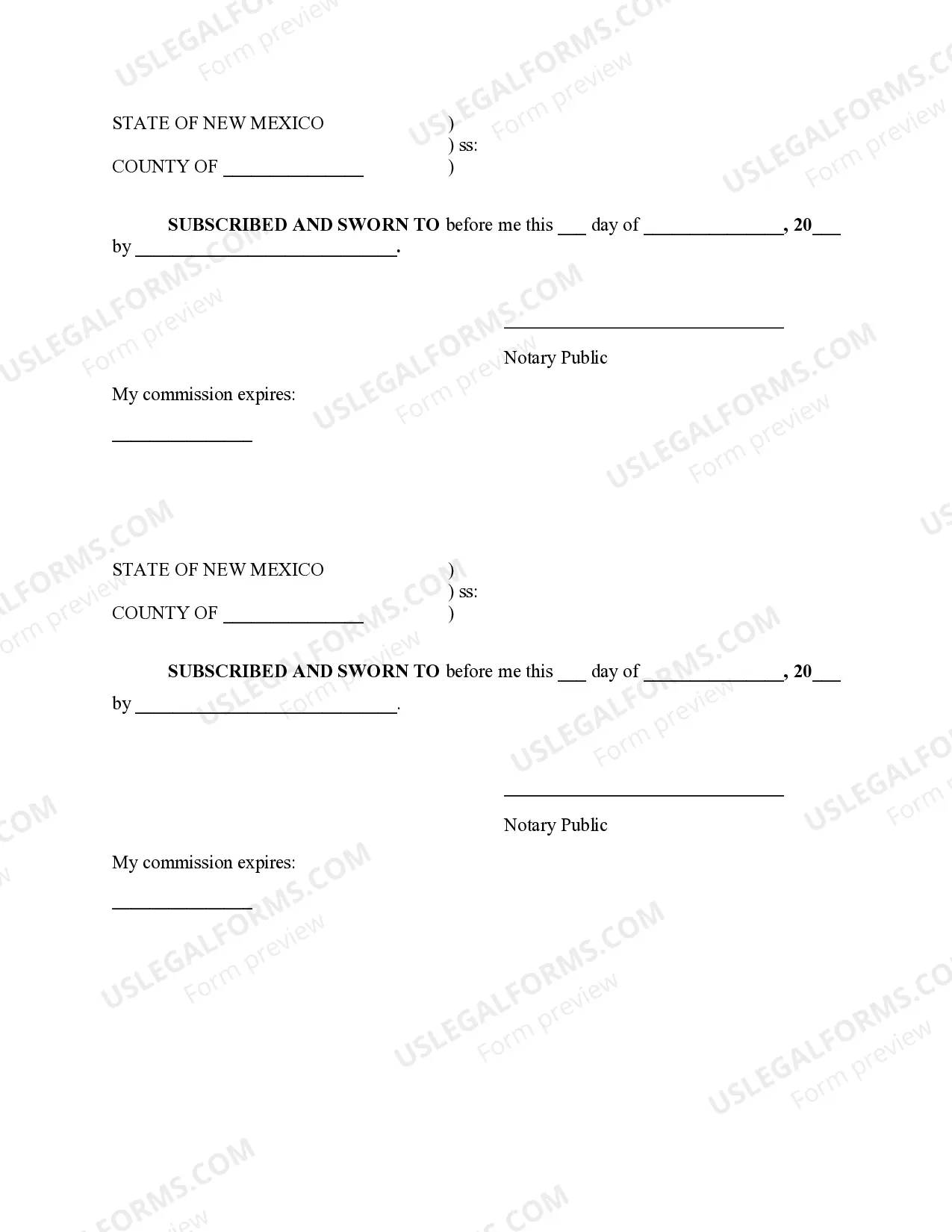
Yes, this form must be notarized to be legally valid. US Legal Forms offers integrated online notarization, allowing you to schedule secure video calls with notaries for a hassle-free experience without the need for in-person visits.
Get your form ready online
Our built-in tools help you complete, sign, share, and store your documents in one place.
Make edits, fill in missing information, and update formatting in US Legal Forms—just like you would in MS Word.
Download a copy, print it, send it by email, or mail it via USPS—whatever works best for your next step.
Sign and collect signatures with our SignNow integration. Send to multiple recipients, set reminders, and more. Go Premium to unlock E-Sign.
If this form requires notarization, complete it online through a secure video call—no need to meet a notary in person or wait for an appointment.
We protect your documents and personal data by following strict security and privacy standards.

Make edits, fill in missing information, and update formatting in US Legal Forms—just like you would in MS Word.

Download a copy, print it, send it by email, or mail it via USPS—whatever works best for your next step.

Sign and collect signatures with our SignNow integration. Send to multiple recipients, set reminders, and more. Go Premium to unlock E-Sign.

If this form requires notarization, complete it online through a secure video call—no need to meet a notary in person or wait for an appointment.

We protect your documents and personal data by following strict security and privacy standards.
Common mistakes to avoid
- Not addressing the child(ren)âs wishes appropriately based on their age.
- Failing to specify detailed timesharing schedules for holidays.
- Overlooking the need for mediation clauses in case of future disputes.
Benefits of completing this form online
- Immediate access to a professionally drafted Parenting Plan.
- Convenient download and edit options to tailor the form to your needs.
- Reliability in ensuring comprehensive coverage of parenting responsibilities.
Looking for another form?

Form popularity
FAQ
Paternity is the legal equivalent of fatherhood, and in the state of New Mexico, it means a government agency or court has determined someone to be a child's father. However, in addition to this legal process, parents can also voluntarily establish paternity.
B. Abandonment of a child consists of the parent, guardian or custodian of a child intentionally leaving or abandoning the child under circumstances whereby the child may or does suffer neglect.If the abuse results in great bodily harm to the child, the person is guilty of a first degree felony.
In New Mexico, is there a bias favoring mothers in custody cases? In child custody cases and any domestic proceedings involving the custody or visitation of children, the State of New Mexico does not favor one parent over another based on gender (NMSA § 40-4-9.1C).
The court estimates that the cost of raising one child is $1,000 a month. The non-custodial parent's income is 66.6% of the parent's total combined income. Therefore, the non-custodial parent pays $666 per month in child support, or 66.6% of the total child support obligation.
Alternating weeks are one of the simplest 50/50 schedules. In this pattern, one week is spent with Parent A while the following week is spent with Parent B. This keeps parenting exchanges to an absolute minimum while still allowing both parents to have robust relationships with their children.
New Mexico is a no-fault community property state, meaning the judge only looks at assets and debts, and incomes to determine child support and possibly alimony.
Child May Assert Their Own Preference Starting at Age 14 When evaluating a child's best interests, the New Mexico court will give the child an opportunity to be heard on their own preferences for a custody arrangement. At a young age, this information is obtained through a private discussion with the judge.