Parent - Child Domestic Rules Contract
Understanding this form
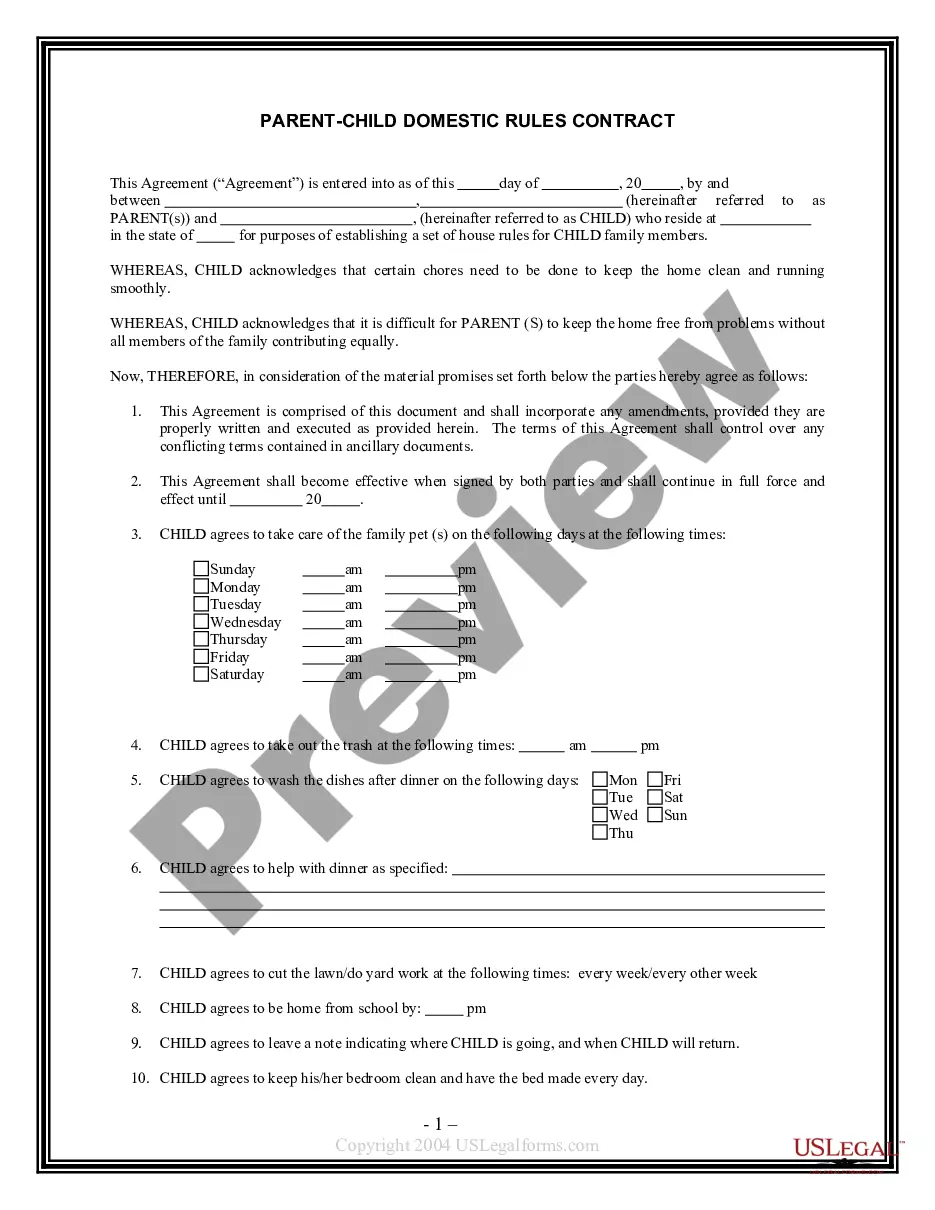
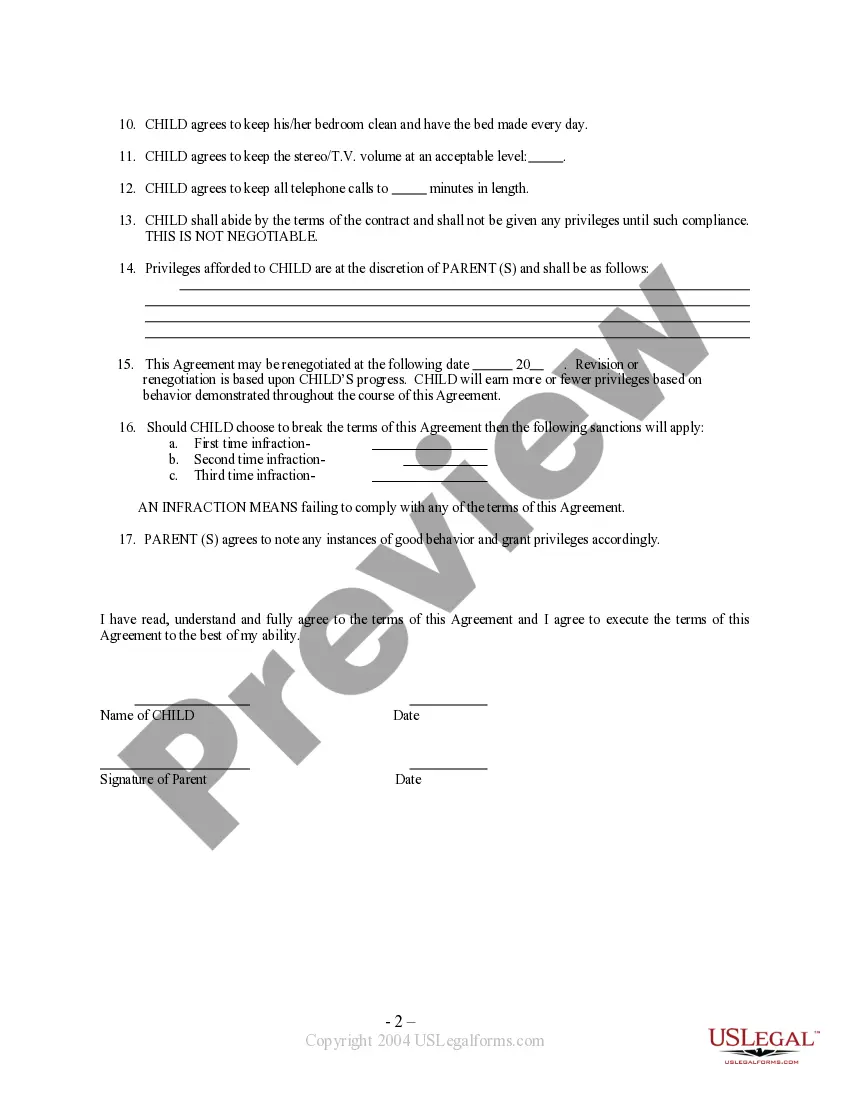
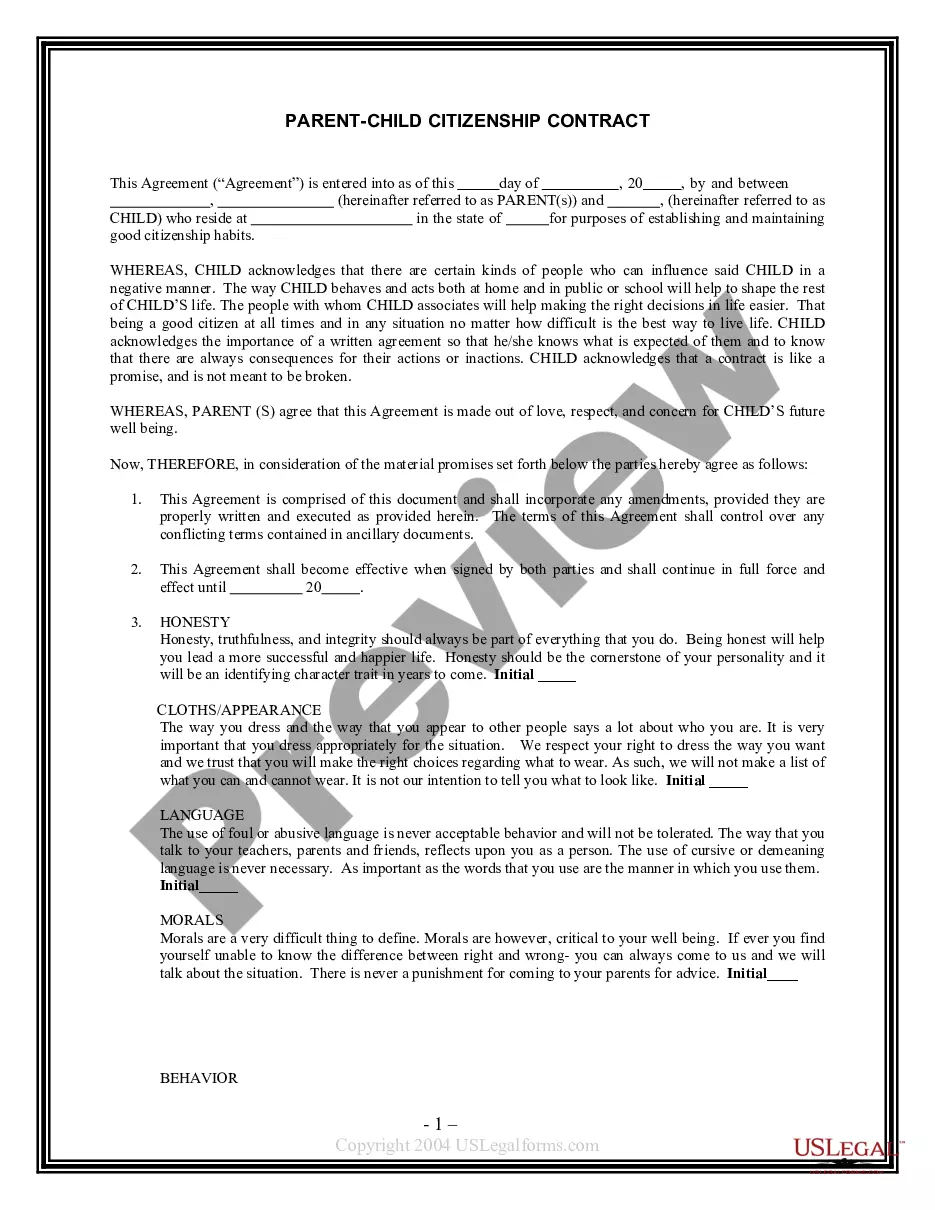
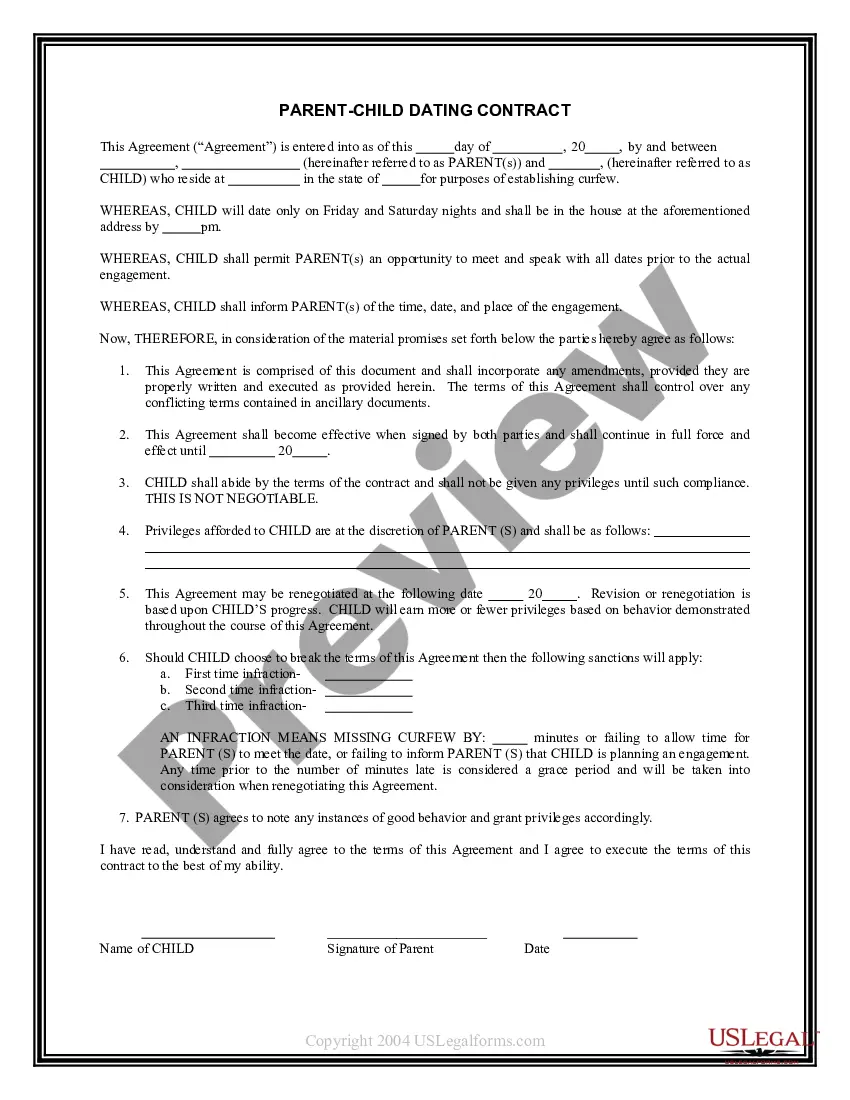
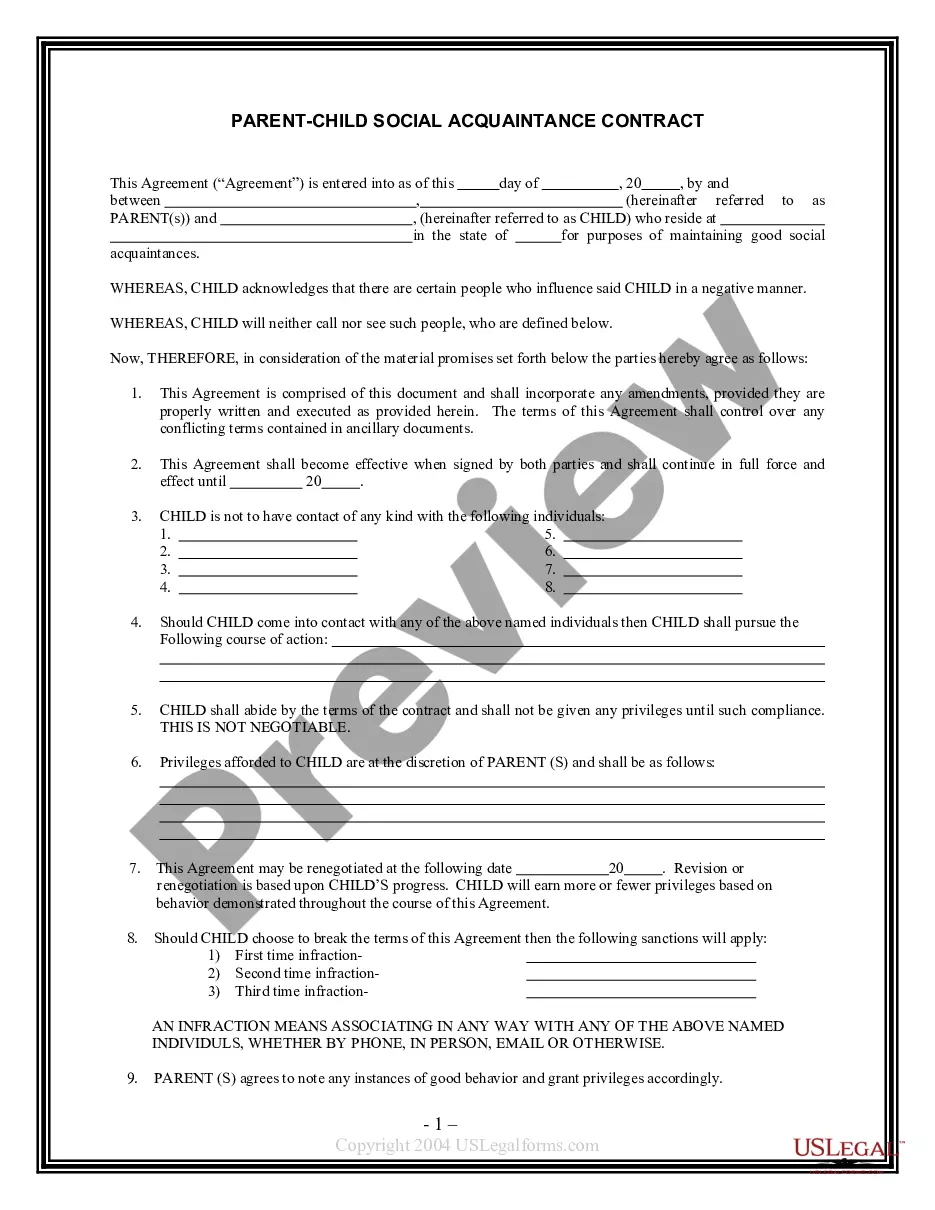
The Parent - Child Domestic Rules Contract is a formal agreement between parents and their child. This contract clearly outlines expected chores, including specific days and times for completion. It also details the privileges a child may gain for adhering to these responsibilities and the consequences of failing to meet them, ensuring that family roles are understood and maintained.
Main sections of this form
- Parties involved: Identifies the parent(s) and child as parties to the contract.
- Chores: Specifies the chores expected of the child, including times and days for completion.
- Privileges: Lists the rewards or privileges granted to the child for following the contract.
- Consequences: Outlines the repercussions the child will face if chores are not completed as agreed.
When to use this document
This form is useful in situations where parents want to instill a sense of responsibility in their children. It is ideal for families looking to clarify expectations regarding household chores and establish a structured approach to domestic duties. Parents may use this contract when introducing new responsibilities or adjusting existing ones to improve family cooperation.
Who needs this form
This contract is suitable for:
- Parents who want to set clear expectations for their child's chores.
- Children who are old enough to understand and agree to the terms of the contract.
- Families aiming to promote responsibility, teamwork, and respect within the household.
How to complete this form
- Identify the parties: Clearly state the names of the parent(s) and the child.
- Detail the chores: Specify the chores expected from the child along with the days and times they are to be completed.
- Outline privileges: List the privileges the child will receive for adhering to the contract.
- State repercussions: Clearly define the consequences for failing to meet the chore expectations.
Is notarization required?
Notarization is generally not required for this form. However, certain states or situations might demand it. You can complete notarization online through US Legal Forms, powered by Notarize, using a verified video call available anytime.
Get your form ready online
Our built-in tools help you complete, sign, share, and store your documents in one place.
Make edits, fill in missing information, and update formatting in US Legal Forms—just like you would in MS Word.
Download a copy, print it, send it by email, or mail it via USPS—whatever works best for your next step.
Sign and collect signatures with our SignNow integration. Send to multiple recipients, set reminders, and more. Go Premium to unlock E-Sign.
If this form requires notarization, complete it online through a secure video call—no need to meet a notary in person or wait for an appointment.
We protect your documents and personal data by following strict security and privacy standards.

Make edits, fill in missing information, and update formatting in US Legal Forms—just like you would in MS Word.

Download a copy, print it, send it by email, or mail it via USPS—whatever works best for your next step.

Sign and collect signatures with our SignNow integration. Send to multiple recipients, set reminders, and more. Go Premium to unlock E-Sign.

If this form requires notarization, complete it online through a secure video call—no need to meet a notary in person or wait for an appointment.

We protect your documents and personal data by following strict security and privacy standards.
Avoid these common issues
- Failing to clearly define chores, leading to confusion.
- Not outlining consequences, which may result in non-compliance.
- Omitting dates and times for chore completion, making enforcement difficult.
Why use this form online
- Easy access: Download the form instantly from anywhere.
- Editability: Customize the contract to fit your family dynamics.
- Legally compliant: Ensures the contract meets general legal standards applicable in multiple states.
Legal use & context
- This contract is enforceable in a court of law as it clearly outlines responsibilities and consequences.
- It helps reduce potential conflicts within the household by setting clear expectations.
- Both parties should understand their rights and obligations under the agreement.
Key takeaways
- This contract clarifies chores expected of your child and the associated privileges and consequences.
- It is suitable for use by families seeking to promote responsibility and cooperation.
- Ensure clarity and specificity when outlining chores and consequences to avoid misunderstandings.
Looking for another form?

Form popularity
FAQ
Verbal agreements can be just as binding as written agreements, but only if both parties are willing to honestly acknowledge the agreement. However, words really have no meaning in the legal system, unless they are backed up by documentation.
You do not have to do any official paperwork if you agree about child arrangements. You can write down what you've agreed in a Parenting Plan if you want a record. If you want to make your agreement legally binding, a solicitor can help with the paperwork.
A written agreement is only legally binding when you have finalised all of the essential terms of the agreement. Essential terms are the terms necessary to hold the parties accountable for their promises.
Once a judge has issued a child custody order, the agreement is legally bindingmeaning that unless a child custody modification has been approved by the court, both parents must abide by the terms of that agreement.Sometimes, circumstances change so significantly that a child custody modification is needed.
As long as the contract spells out specific details and both parties have signed that they agree to the contract's terms, a handwritten contract is legally binding and enforceable in court.While handwritten contracts are generally enforceable, there may be instances under the law they are not.
Even though wills are considered more complicated contracts, they can still be handwritten to be considered legally enforceable.It is important to note that even if a written requirement is required under the Statute of Frauds, a handwritten agreement will still work to make the document legally binding.
A declaration of custody. The division of parental authority and decision-making abilities. A child visitation schedule. Methods for reviewing and modifying the custody agreement. A method of dispute resolution. Any additional provisions you would like to include.
A parenting time schedule. Information about how the parents will make decisions for the child. Information about finances and expenses. Parenting provisions (rules about raising the child) Any other information you want to include.