Self-Employed Personal Trainer or Training Services Contract
What this document covers
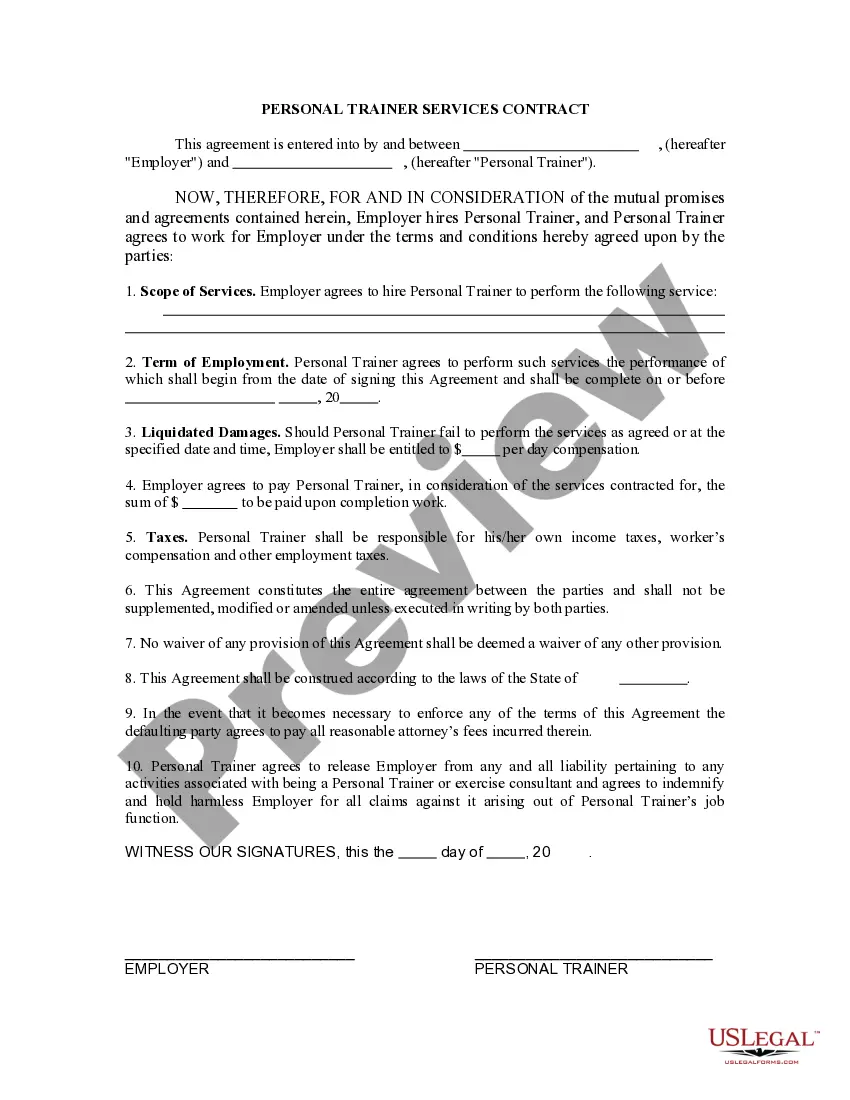
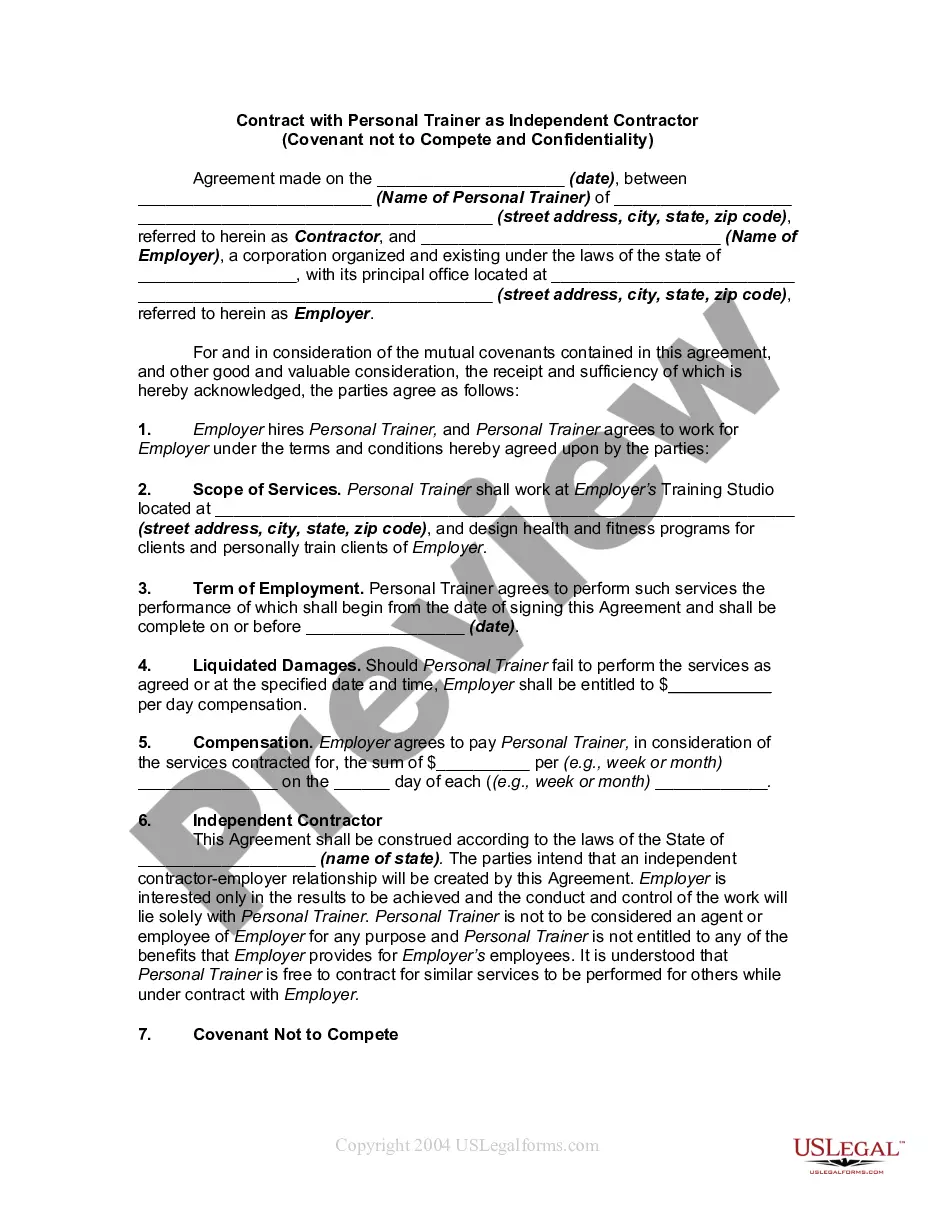
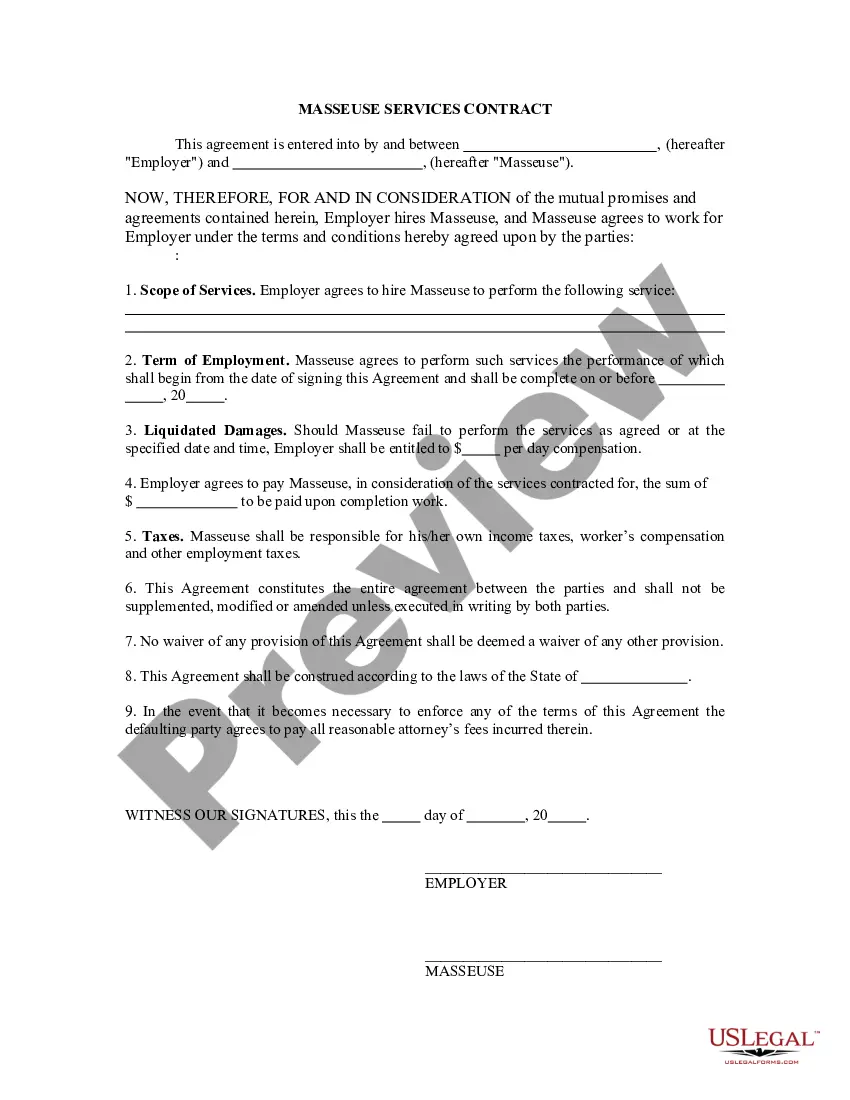
The Self-Employed Personal Trainer or Training Services Contract is a legal document that formalizes the relationship between a personal trainer and their employer, typically a gym or fitness facility. This contract establishes the expectations and responsibilities of both parties while also including a release from liability clause to protect the employer from claims related to client injuries. Unlike informal agreements, this contract provides a structured framework that helps prevent misunderstandings and disputes in a professional training environment.
What’s included in this form
- Scope of services: Details the specific training services to be provided by the personal trainer.
- Responsibilities of the trainer: Outlines the trainer's duties and obligations under the agreement.
- Compensation terms: Specifies how and when the trainer will be paid for their services.
- Release from liability: Contains provisions that protect the employer from lawsuits arising from client injuries.
- Duration of the contract: Indicates the length of time the contract will remain in effect.
- Termination conditions: Describes the circumstances under which the contract can be ended by either party.

When this form is needed
This contract should be used when hiring a personal trainer for a fitness facility or gym. It is essential for protecting both the trainer and the employer in cases of injury or disputes. Use this contract when entering into a formal agreement with a personal trainer, whether for short-term or long-term engagements, to ensure clarity and legal protection for both parties involved.
Who needs this form
- Gym owners and fitness facility operators looking to hire personal trainers.
- Self-employed personal trainers working with clients in a gym environment.
- Fitness professionals seeking clear terms of service and liability protection.
- Any individual or organization that requires a formalized agreement for training services.
Completing this form step by step
- Identify the parties: Fill in the names and contact information of the employer and the personal trainer.
- Specify the scope of services: Clearly outline the training services the personal trainer will provide.
- Complete compensation details: Enter the agreed-upon payment structure, including amounts and payment schedule.
- Include the liability release: Ensure the liability waiver is properly worded for clarity and effectiveness.
- Enter contract duration: Specify how long the contract will be valid.
- Review and sign: Both parties should review the completed contract before signing it to ensure mutual agreement.
Notarization requirements for this form
This form usually doesn’t need to be notarized. However, local laws or specific transactions may require it. Our online notarization service, powered by Notarize, lets you complete it remotely through a secure video session, available 24/7.
Get your form ready online
Our built-in tools help you complete, sign, share, and store your documents in one place.
Make edits, fill in missing information, and update formatting in US Legal Forms—just like you would in MS Word.
Download a copy, print it, send it by email, or mail it via USPS—whatever works best for your next step.
Sign and collect signatures with our SignNow integration. Send to multiple recipients, set reminders, and more. Go Premium to unlock E-Sign.
If this form requires notarization, complete it online through a secure video call—no need to meet a notary in person or wait for an appointment.
We protect your documents and personal data by following strict security and privacy standards.

Make edits, fill in missing information, and update formatting in US Legal Forms—just like you would in MS Word.

Download a copy, print it, send it by email, or mail it via USPS—whatever works best for your next step.

Sign and collect signatures with our SignNow integration. Send to multiple recipients, set reminders, and more. Go Premium to unlock E-Sign.

If this form requires notarization, complete it online through a secure video call—no need to meet a notary in person or wait for an appointment.

We protect your documents and personal data by following strict security and privacy standards.
Common mistakes
- Failing to clearly define the scope of services, leading to misunderstandings.
- Not including specific compensation terms, causing payment disputes.
- Neglecting to include a release from liability clause, which can expose the employer to legal risks.
- Leaving out the termination conditions, which can complicate ending the agreement.
Advantages of online completion
- Convenient access: Easily download the contract from anywhere at any time.
- Editability: Customize the contract to suit specific needs without hassle.
- Professional quality: Forms are created by licensed attorneys, ensuring legal compliance and effectiveness.
- Instant updates: Obtain the most current legal provisions and requirements effortlessly.
Legal use & context
- This contract serves as a binding legal agreement outlining the responsibilities and rights of both parties.
- It is enforceable in a court of law, provided both parties agree to its terms.
- Seek legal advice if you have concerns regarding enforceability in your specific jurisdiction.
What to keep in mind
- This contract clarifies the relationship between personal trainers and employers, detailing services and responsibilities.
- Inclusion of a liability release protects the employer from potential legal claims.
- Completing the form correctly ensures that both parties are on the same page regarding terms and conditions.
Looking for another form?






Form popularity
FAQ
The general rule is that an individual is an independent contractor if the payer has the right to control or direct only the result of the work and not what will be done and how it will be done. The earnings of a person who is working as an independent contractor are subject to Self-Employment Tax.
An important statistic to be aware of is that 62% of personal trainers are self-employed.
A personal fitness trainer falls under the business code of NAICS 812990. The code does not strictly refer to health and fitness professions. Rather, the code refers to all personal services. In addition to personal trainers, house sitters, wedding planners, and the like would use this category.
California AB 5 Law for Personal Trainers A worker, personal trainer, or fitness instructor can be classified as an independent contractor if: (a) the worker is free from control and direction in the performance of services; and.
As a personal trainer, you can work as an employee, a 1099 independent contractor or be self-employed. You can work as all three if you work in multiple settings. An independent contractor is sort of the middle between an employee and being self-employed.
According to pay scale the average personal training salary per hour is £23.97 rising to around A£44.00 an hour at the higher end of the scale. This varies according to your location, with personal trainers in London and large cities in the UK attracting a premium wage.
Being a self-employed personal trainer Being self-employed means that the reins are off and you are free to forge your own path.Tax If you want to be considered as self-employed then you must register with HM Revenue and Customs (HMRC).
As a business owner, you can claim a lot of deductions. As a personal training client, you can write off your training sessions if they are deemed a medical necessity.