Agreement Between Personal Trainer and Client
Overview of this form
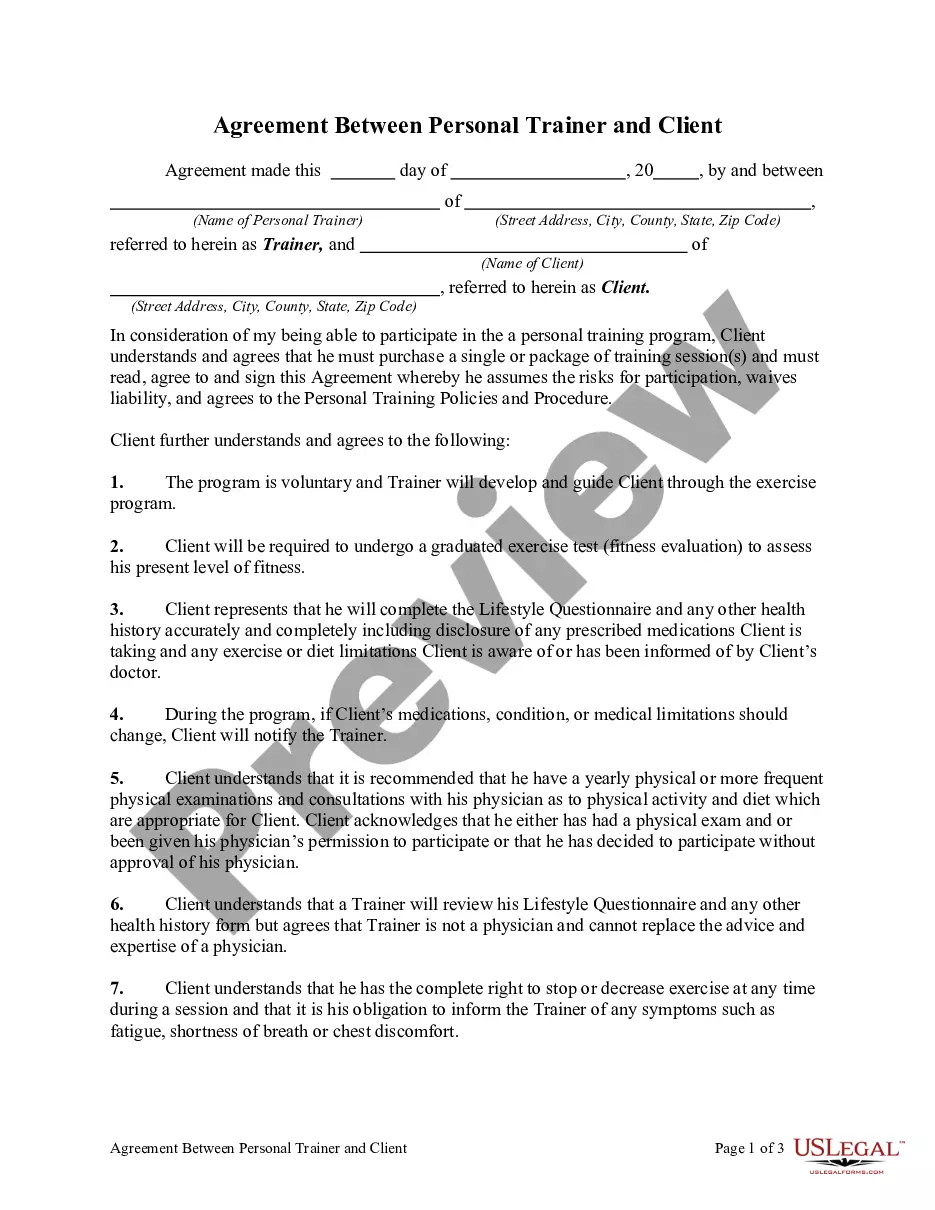
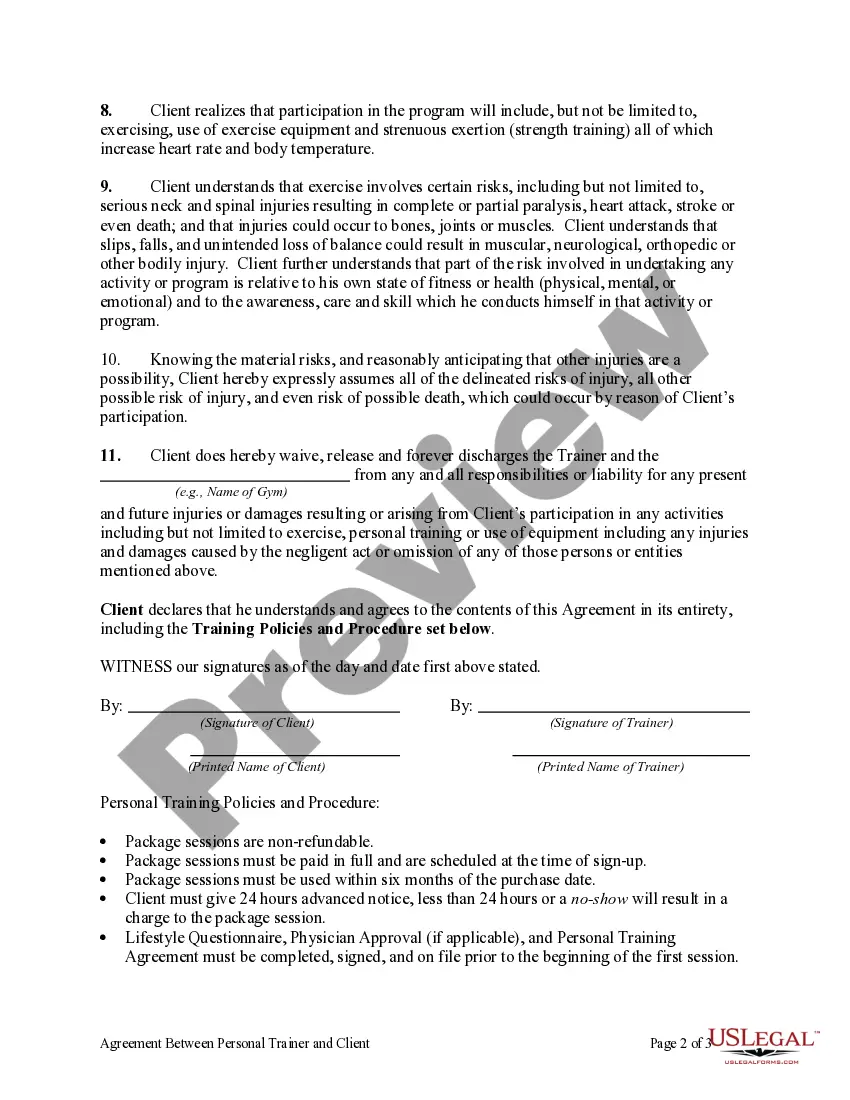
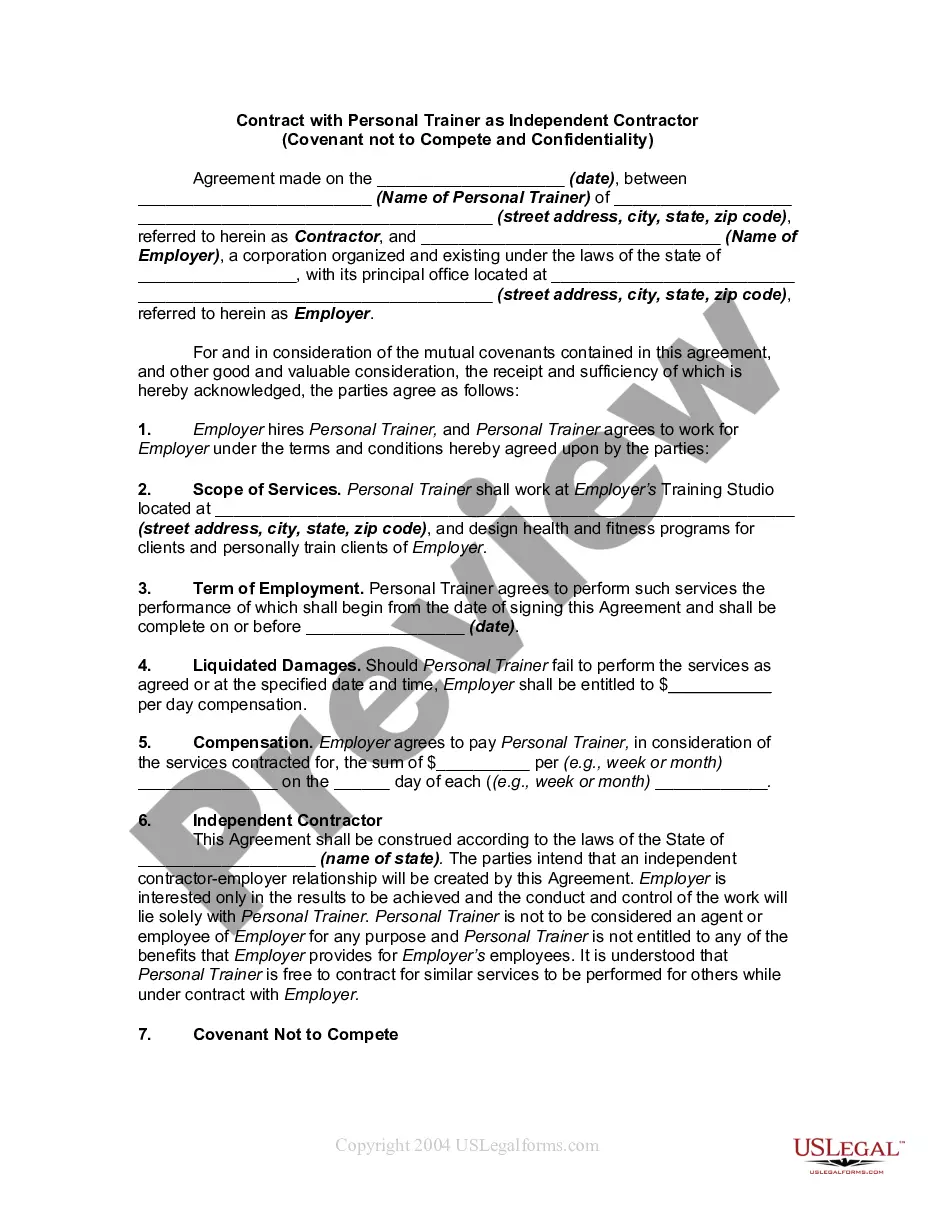
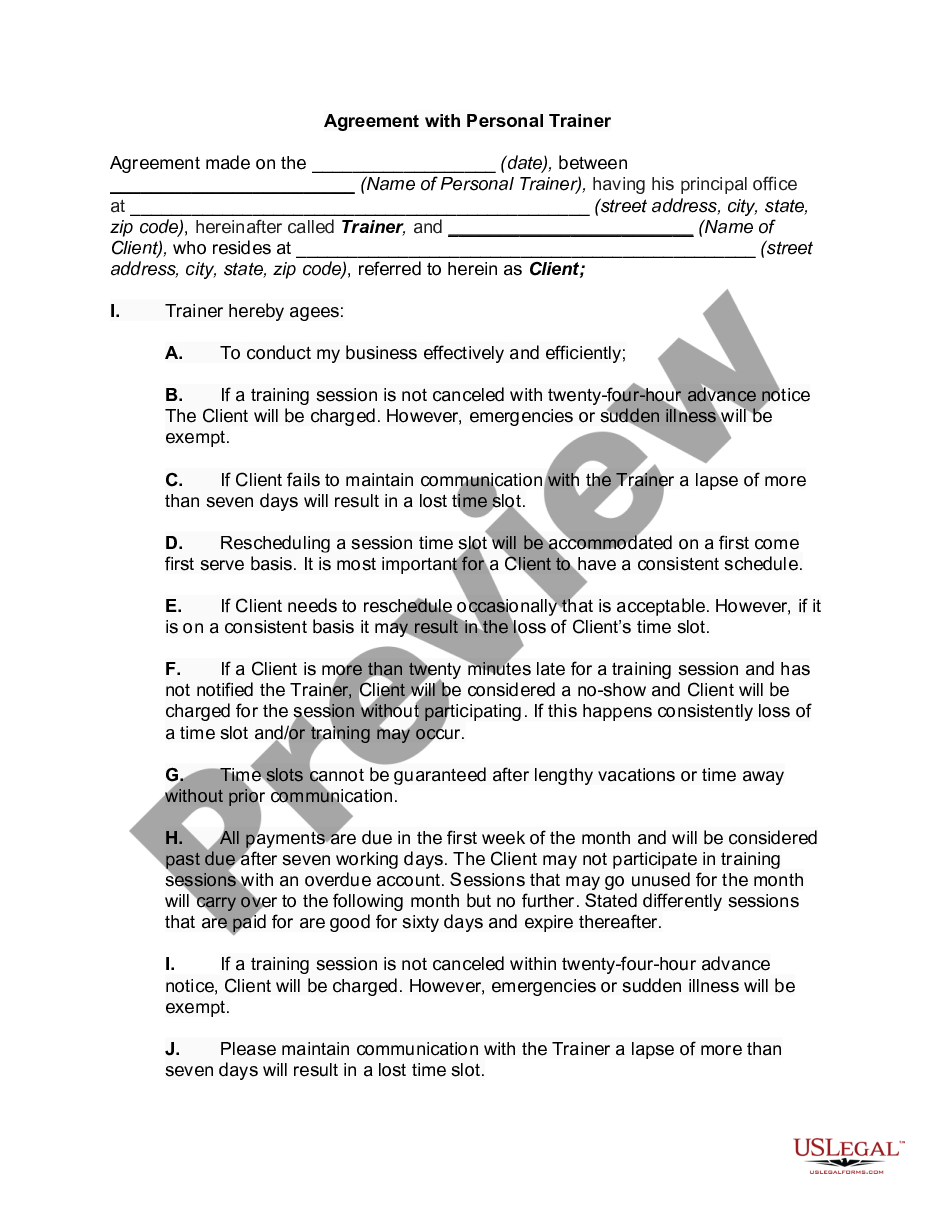
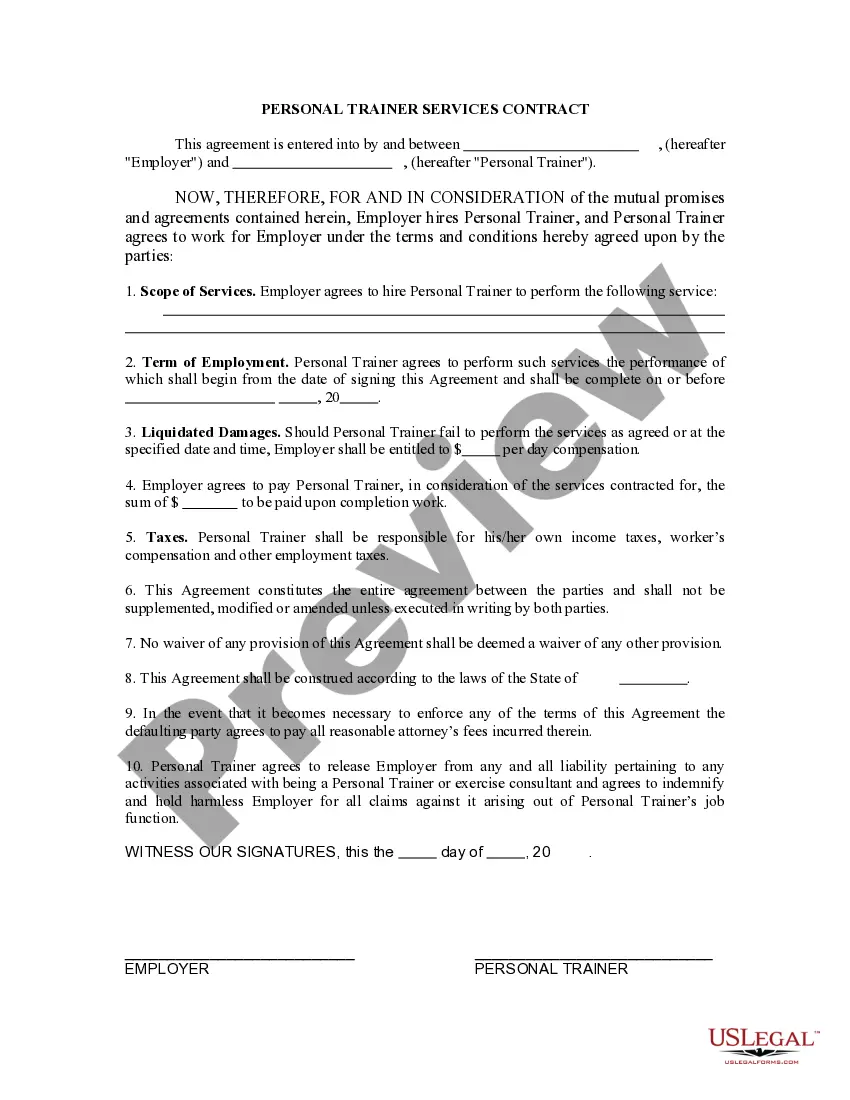
The Agreement Between Personal Trainer and Client is a legally binding document that outlines the terms of service between a personal trainer and their client. It details the responsibilities of both parties, ensuring clear communication and mutual understanding of fitness goals, health assessments, and safety protocols. This agreement helps protect both the trainer and the client by establishing rules regarding participation in a fitness program, making it distinct from generic contracts or personal training coupons found elsewhere.
Key components of this form
- Overview of the voluntary exercise program and the trainer's role.
- Client's obligation to complete a fitness evaluation and health history questionnaire.
- Disclosure requirements regarding medical conditions and medications.
- Risk acknowledgment for potential injuries associated with exercise.
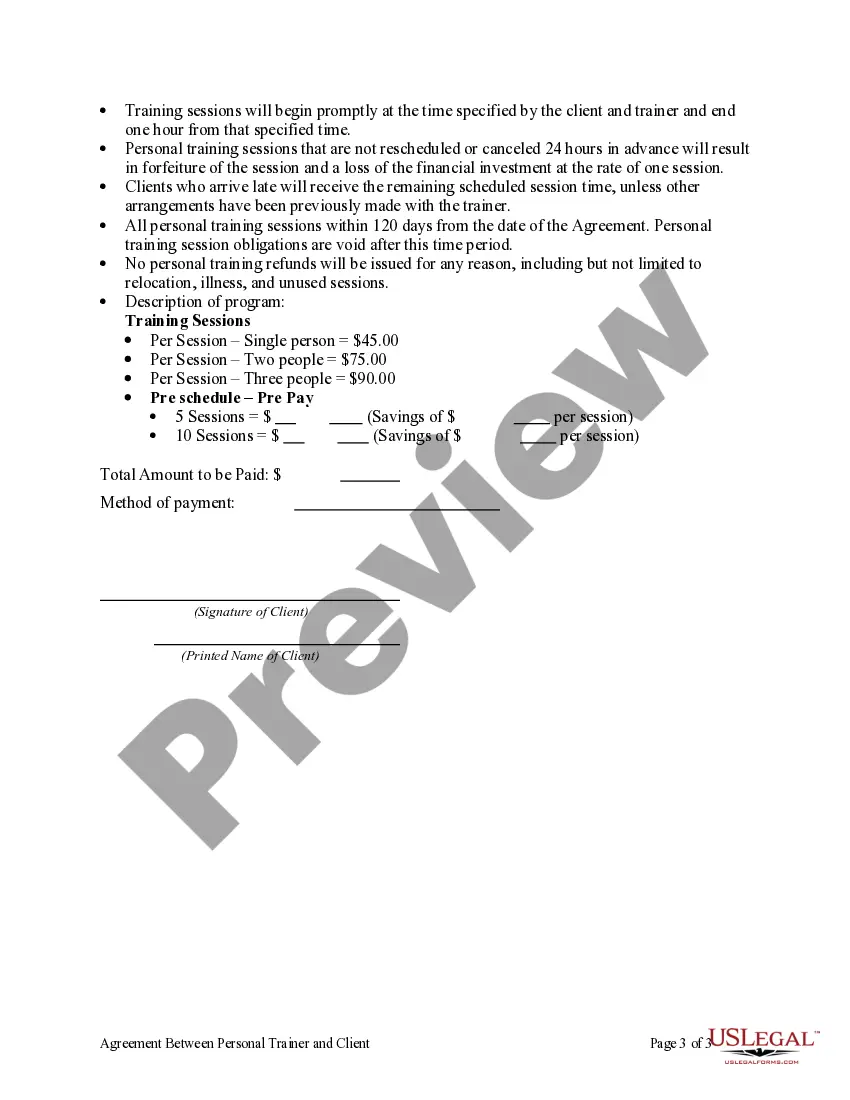
- Details on scheduling, cancellation policies, and financial commitments.
- Signature section for both the client and trainer to affirm understanding and agreement.
When to use this document
This form should be used when entering into a personal training agreement to ensure both the trainer and client are on the same page. It is ideal for new clients starting a fitness program or for current clients adjusting their training regimen. The agreement is essential for clarifying expectations, rights, and responsibilities in a personal training relationship and mitigating potential disputes over services rendered.
Who this form is for
This form is suitable for:
- Personal trainers who wish to formalize their agreements with clients.
- Clients seeking personal training services and wanting to understand their rights and obligations.
- Fitness facilities that offer personal training and need a standardized agreement.
Steps to complete this form
- Enter the names of the personal trainer and client at the top of the agreement.
- Complete the Lifestyle Questionnaire accurately, including health history and medications.
- Review the sections outlining risks and responsibilities, ensuring understanding.
- Both parties must sign and date the agreement to validate it.
- Keep a copy for personal records and provide one to your trainer for their files.
Notarization guidance
This form usually doesn’t need to be notarized. However, local laws or specific transactions may require it. Our online notarization service, powered by Notarize, lets you complete it remotely through a secure video session, available 24/7.
Get your form ready online
Our built-in tools help you complete, sign, share, and store your documents in one place.
Make edits, fill in missing information, and update formatting in US Legal Forms—just like you would in MS Word.
Download a copy, print it, send it by email, or mail it via USPS—whatever works best for your next step.
Sign and collect signatures with our SignNow integration. Send to multiple recipients, set reminders, and more. Go Premium to unlock E-Sign.
If this form requires notarization, complete it online through a secure video call—no need to meet a notary in person or wait for an appointment.
We protect your documents and personal data by following strict security and privacy standards.

Make edits, fill in missing information, and update formatting in US Legal Forms—just like you would in MS Word.

Download a copy, print it, send it by email, or mail it via USPS—whatever works best for your next step.

Sign and collect signatures with our SignNow integration. Send to multiple recipients, set reminders, and more. Go Premium to unlock E-Sign.

If this form requires notarization, complete it online through a secure video call—no need to meet a notary in person or wait for an appointment.

We protect your documents and personal data by following strict security and privacy standards.
Mistakes to watch out for
- Failing to accurately complete the Lifestyle Questionnaire.
- Not reviewing the agreement thoroughly before signing.
- Ignoring the risks associated with physical training and not communicating medical issues.
Why complete this form online
- Convenience of easily downloading and filling out the form.
- Editability to customize terms to suit specific training arrangements.
- Reliable format vetted by licensed attorneys to ensure legal compliance.
Legal use & context
- This agreement establishes the legal relationship between clients and personal trainers.
- It may be used in legal proceedings to clarify responsibilities and expectations.
- Consulting a legal expert is advisable for customized adjustments based on specific state laws or circumstances.
Summary of main points
- The Agreement Between Personal Trainer and Client is essential for defining the roles and responsibilities of both parties.
- Clients must openly disclose their health status for a safe training experience.
- Following the outlined procedures and understanding the potential risks are critical for successful participation in fitness programs.
Looking for another form?




Form popularity
FAQ
Personal trainers can get very close with their clients. (That may happen whether the trainer likes it that way or not"I've had a lot of people definitely share more than I wanted to," she adds.) But Toffolo sees the client-trainer relationship as more of a friendship than a straight business relationship.
Define Your Specific Service. Know your Product Completely. Determine Your Perfect Client. Showcase Your Value as a Personal Trainer. Create Your Personal Training Brand and Stay True to It. Decide the Right Marketing Channels to Reach New Clients.
There is a lot to unpack and that's going unsaid with this question but the definitive answer is YES, personal fitness trainers do sleep with their clients more often than is being mentioned.Because it's easy to see that contact proximity makes personal training an easy target for intimate interactions to occur.
Set Some Ground Rules. Choose Your Battles. Acknowledge Positive Change. Manage Expectations. Change Your Body Language. Consider Their Perspective.
It's a Fitness Contract, and here's what you should include in it. Start with one thing you're going to change and be specific. Don't write down, "I want to lose weight." Instead say, "I will lose 37 pounds of fat" or "I will put on 10 pounds of muscle." Write a simple statement about why you want to make that change.
Offer Monthly Emails with Tips and Tricks. Offer a Free Class or Teach Group Exercise Classes. Create a 6 or 8 Week Program. Send Handwritten "Thank You" Notes. Start a Facebook Business/Fan Page. Use Video. Pick Another Social Media Platform to Use. Write Guest Posts.
Boost Client Motivation via Social Media. Motivate with Fitness Challenges. Use Personal Training Apps. Be Positive and Patient. Set Attainable Goals. Set Fitness Rewards. Offer Something New.
Demonstrate each movement using correct form and full range of motion. Talk your client through each movement, point out any issues you notice and recommend adjustments, and explain how your training will help improve flexibility and range of motion. Assess strength: There's more than one way to assess strength.
Create Loyal Clients. Ask for Referrals. Write Articles for Local Magazines or Fitness Websites. Send Weekly Emails. Engage with Clients Through Facebook. Offer a Free Trial. Develop a Working Relationship with Health Professionals. Post Testimonials on Your Website.