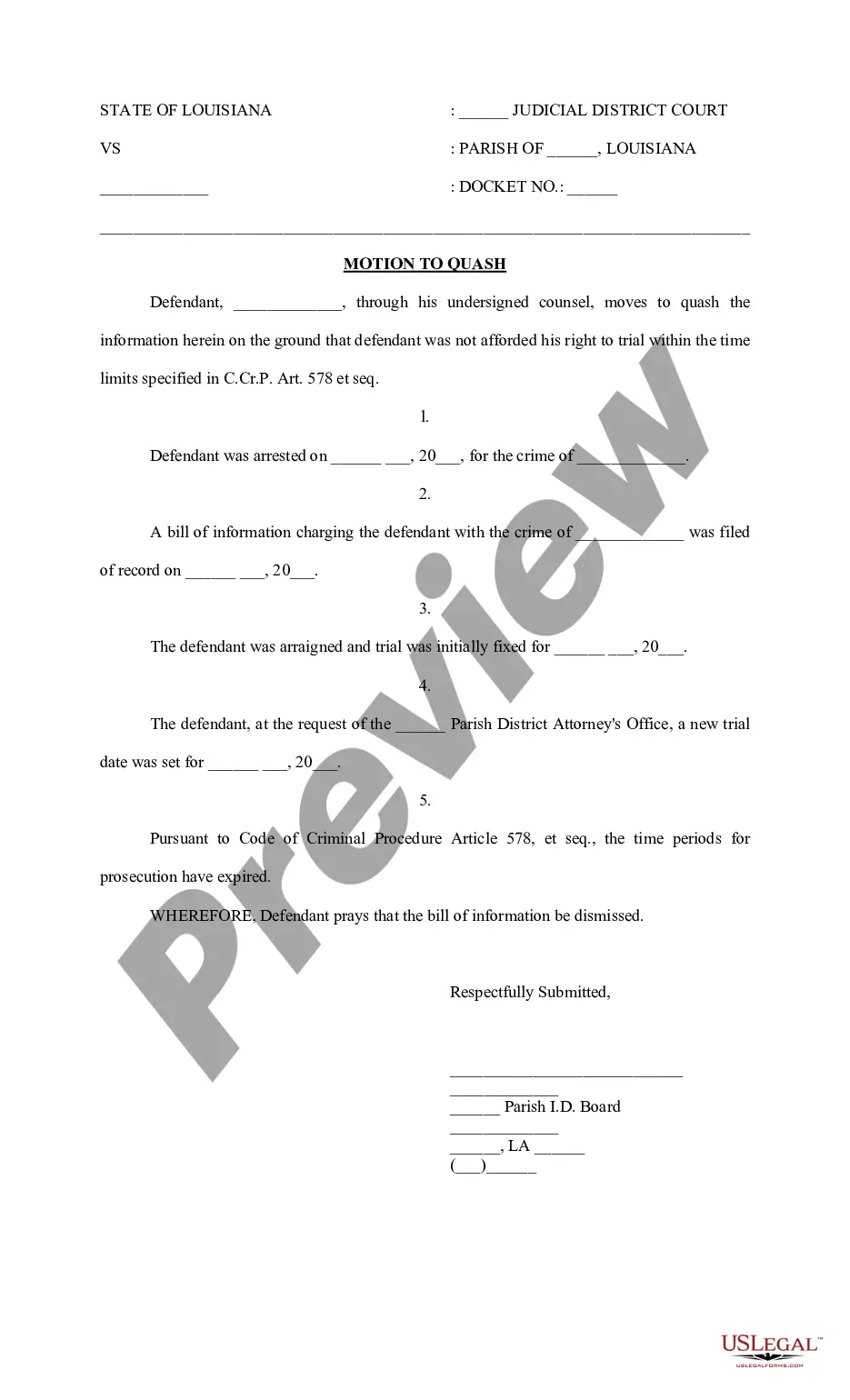
Agreement for Installation, Maintenance, and Operation of Fire Detection and Alarm System
What this document covers
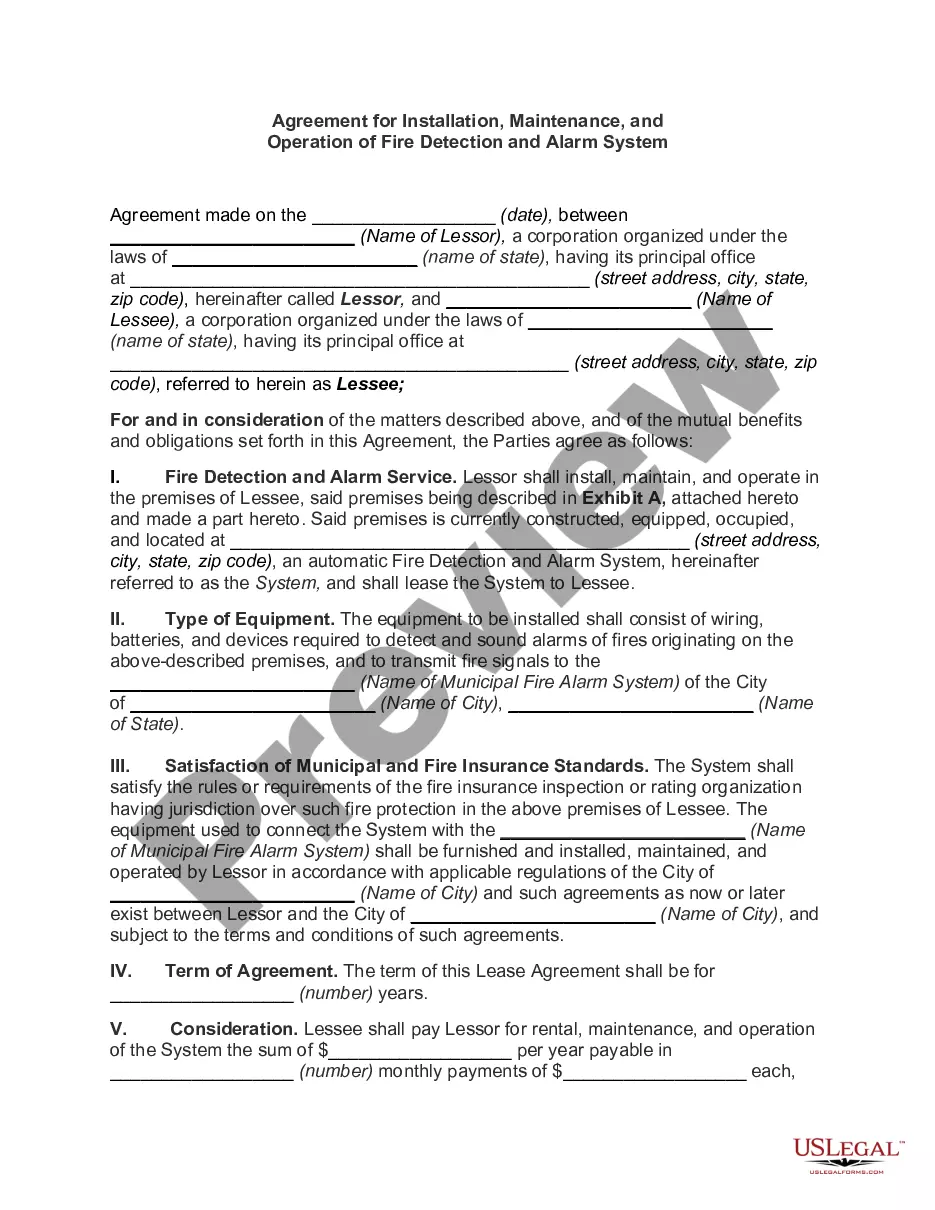
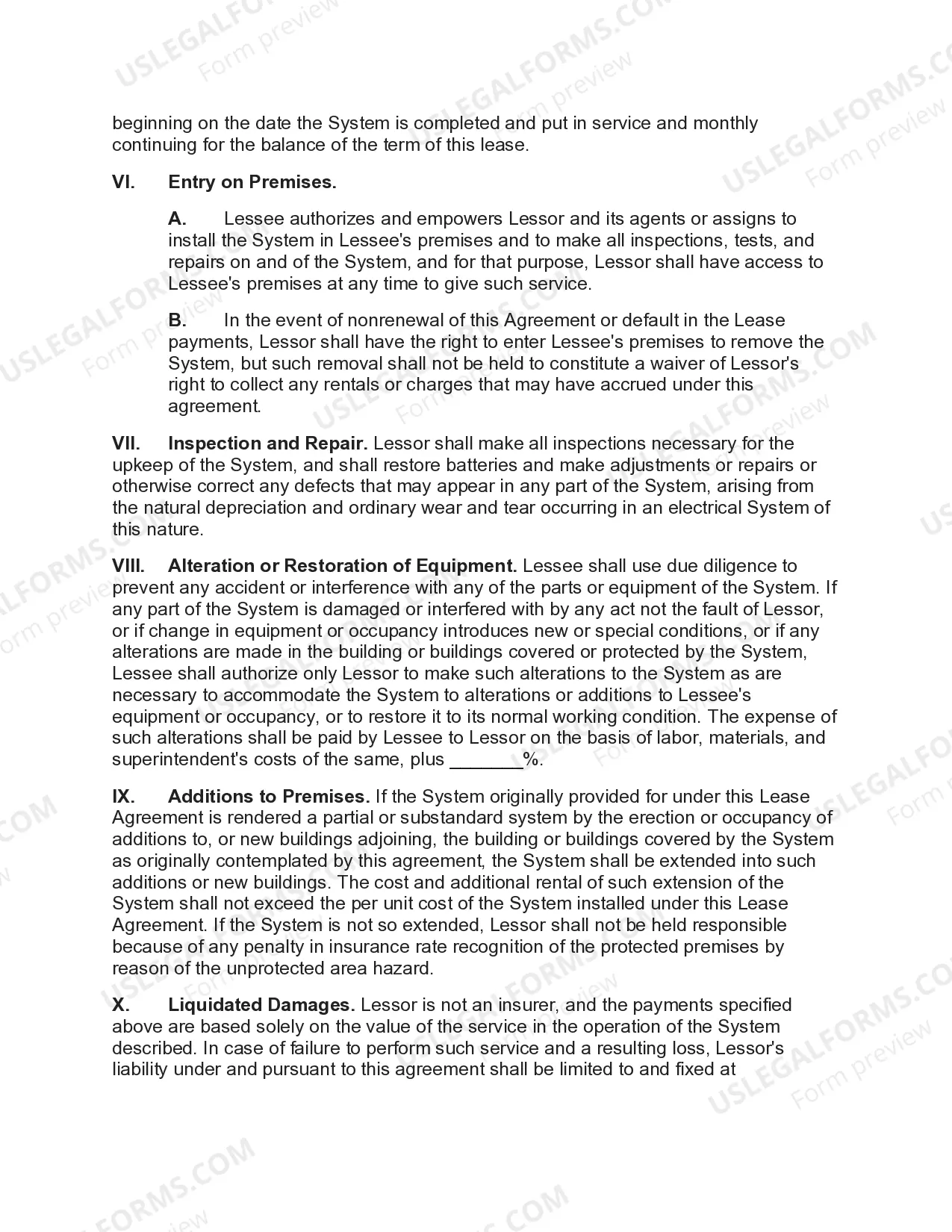
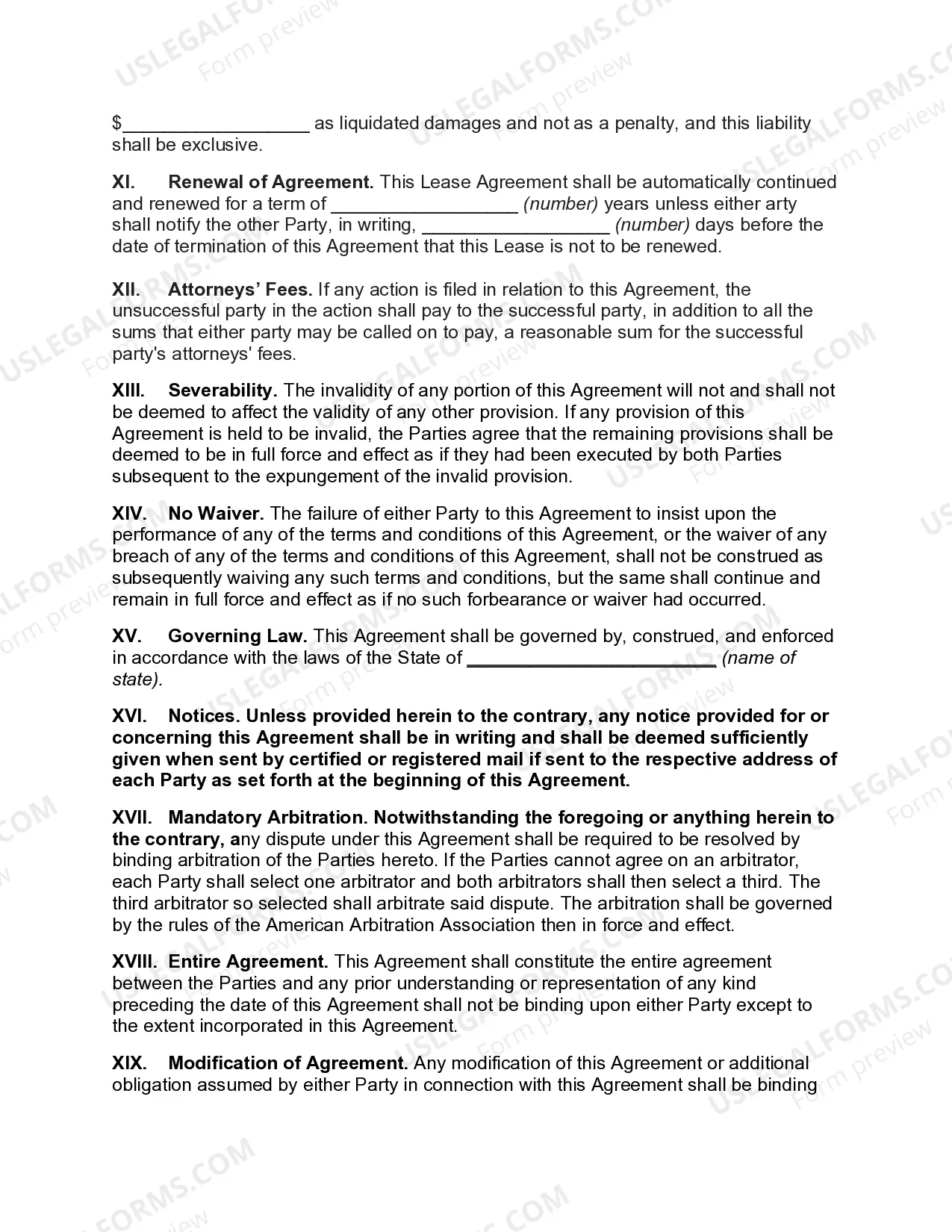
The Agreement for Installation, Maintenance, and Operation of Fire Detection and Alarm System is a legal document that sets the terms between a lessor and a lessee regarding the installation and upkeep of a fire alarm system. This agreement ensures that the fire detection system operates effectively, thus safeguarding the property and its occupants from fire hazards. Unlike general rental agreements, this form specifically addresses the installation, maintenance, and operational responsibilities for fire detection systems, highlighting safety expectations and compliance with municipal regulations.
Form components explained
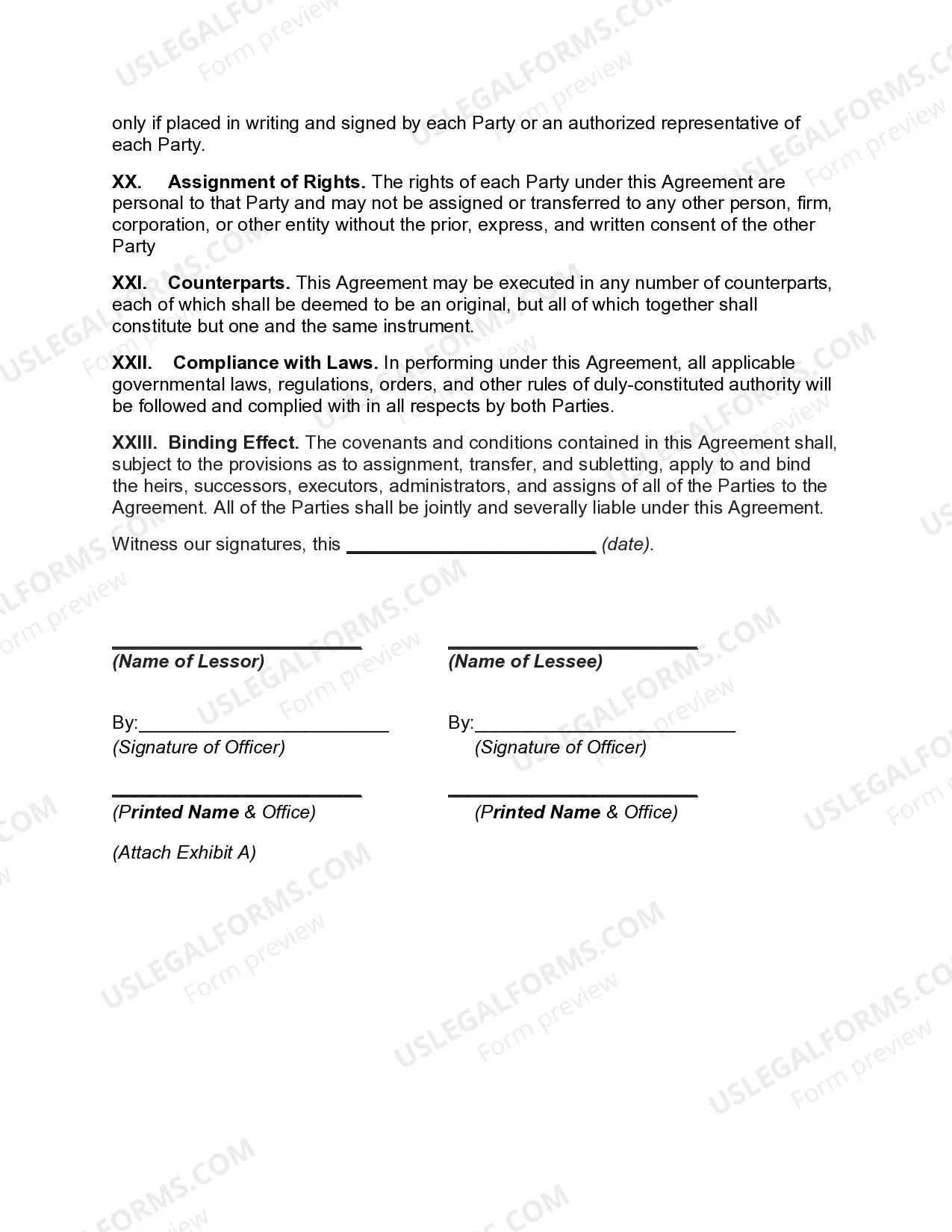
- Fire Detection and Alarm Service: Details the responsibilities of the lessor to install and maintain the fire detection system.
- Type of Equipment: Specifies the equipment included in the system, such as wiring and alarms.
- Satisfaction of Standards: Ensures the system meets local fire safety regulations and insurance requirements.
- Term of Agreement: Defines the duration of the lease for the fire detection system.
- Consideration: Outlines payment terms for the rental and maintenance of the system.
- Legal Compliance & Binding Effect: States the governing law and ensures the agreement is enforceable by parties involved.
When to use this document
This agreement is essential when a property owner or manager wishes to install a fire detection and alarm system through a leasing arrangement. It is particularly important for commercial properties, residential complexes, or any facility where fire safety is a priority. Use this form to formalize the responsibilities of both parties regarding the installation, maintenance, and operation of the system to ensure compliance with safety regulations and insurance standards.
Who can use this document
This agreement is appropriate for:
- Property owners or lessors seeking to install fire detection systems in their properties.
- Lessee companies or organizations responsible for maintaining safety standards in their premises.
- Commercial landlords and tenants who require a formal agreement surrounding fire safety measures.
Completing this form step by step
- Identify the parties involved: Ensure both the lessor and lessee information is filled out correctly, including names and addresses.
- Specify the premises: Clearly describe the location for the installation of the fire detection system.
- Detail the equipment: Note the type and specifications of the fire detection system being installed.
- Enter payment details: Define the rental payment structure, including amounts and frequency.
- Review and sign: Ensure both parties review the agreement and sign it, indicating their acceptance of the terms.
Notarization requirements for this form
This form does not typically require notarization unless specified by local law, making it easier for parties to execute the agreement without additional steps. Ensure to confirm any specific requirements based on the city or state regulations.
Get your form ready online
Our built-in tools help you complete, sign, share, and store your documents in one place.
Make edits, fill in missing information, and update formatting in US Legal Forms—just like you would in MS Word.
Download a copy, print it, send it by email, or mail it via USPS—whatever works best for your next step.
Sign and collect signatures with our SignNow integration. Send to multiple recipients, set reminders, and more. Go Premium to unlock E-Sign.
If this form requires notarization, complete it online through a secure video call—no need to meet a notary in person or wait for an appointment.
We protect your documents and personal data by following strict security and privacy standards.

Make edits, fill in missing information, and update formatting in US Legal Forms—just like you would in MS Word.

Download a copy, print it, send it by email, or mail it via USPS—whatever works best for your next step.

Sign and collect signatures with our SignNow integration. Send to multiple recipients, set reminders, and more. Go Premium to unlock E-Sign.

If this form requires notarization, complete it online through a secure video call—no need to meet a notary in person or wait for an appointment.

We protect your documents and personal data by following strict security and privacy standards.
Avoid these common issues
- Failing to clearly specify the type of equipment included in the agreement.
- Neglecting to outline maintenance responsibilities adequately.
- Not including local fire code compliance requirements.
- Omitting dates for the term of the agreement and payment schedules.
Advantages of online completion
- Convenience: Download and complete the form from anywhere, at any time.
- Editability: Customize the agreement to fit specific needs and circumstances readily.
- Reliability: Ensure compliance with legal formatting and standards by using professionally drafted documents.
Looking for another form?
Form popularity
FAQ
Basically, preventative maintenance comprises the physical inspection of each piece of fire protection equipment in your company's buildings to ensure it is not corroded, broken, or missing any parts, and that it works as it should.
Smoke alarms inside each bedroom, outside each sleeping area and on every level of the home, including the basement. On levels without bedrooms, alarms in the living room (or den or family room) or near the stairway to the upper level, or in both locations.
Maintenance of a fire alarm system Batteries of the emergency power supply must be replaced every 4 years ing to the manufacturer's instructions. Fire detectors with contamination compensation must be replaced after 8 years at the latest, without contamination compensation after 5 years at the latest.
1 NFPA 72 covers the application, installation, location, performance, inspection, testing, and maintenance of fire alarm systems, supervising station alarm systems, public emer- gency alarm reporting systems, fire warning equipment and emergency communications systems (ECS), and their compo- nents.
The four ways your fire alarm system works to protect your property and its occupants from the dangers of fire are by detecting fire, alerting occupants, managing risk, and notifying the fire department.
The maintenance activities for fire alarm systems can be summed up in five steps. Test and calibrate alarm sensors, such as flame and smoke detectors, per manufacturer specifications. This requires knowing about the different sensors?and their testing requirements, failure modes, and re-installation requirements.
Maintenance of a fire alarm system is mandatory at least once a year. For maintenance, the main detector is switched off so that no alarm is sent to the local fire brigade.
The NFPA 101 provisions cover the basic functions of a complete fire alarm system, including fire detection, alarm, and communications.