Delaware Renunciation And Disclaimer of Property received by Intestate Succession
Understanding this form
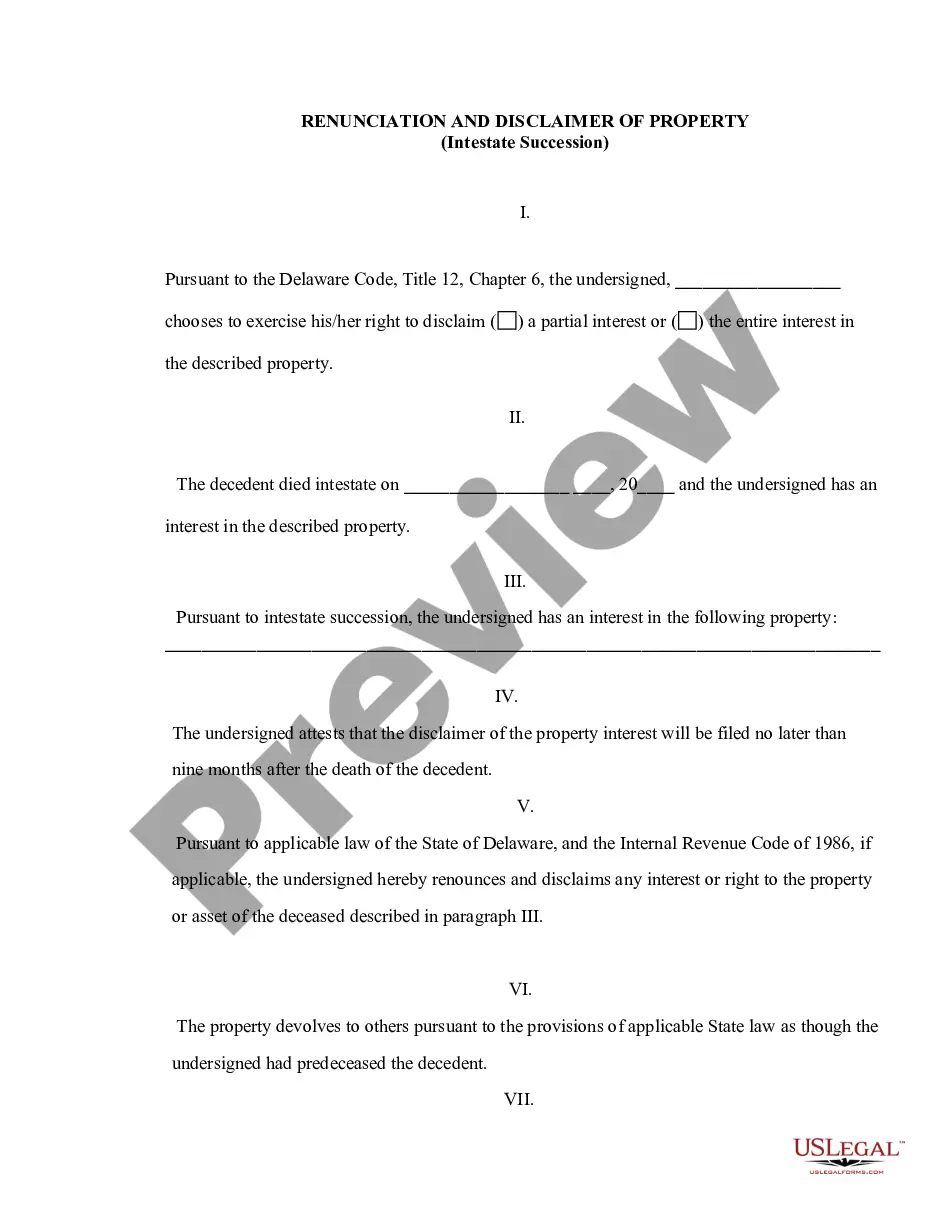
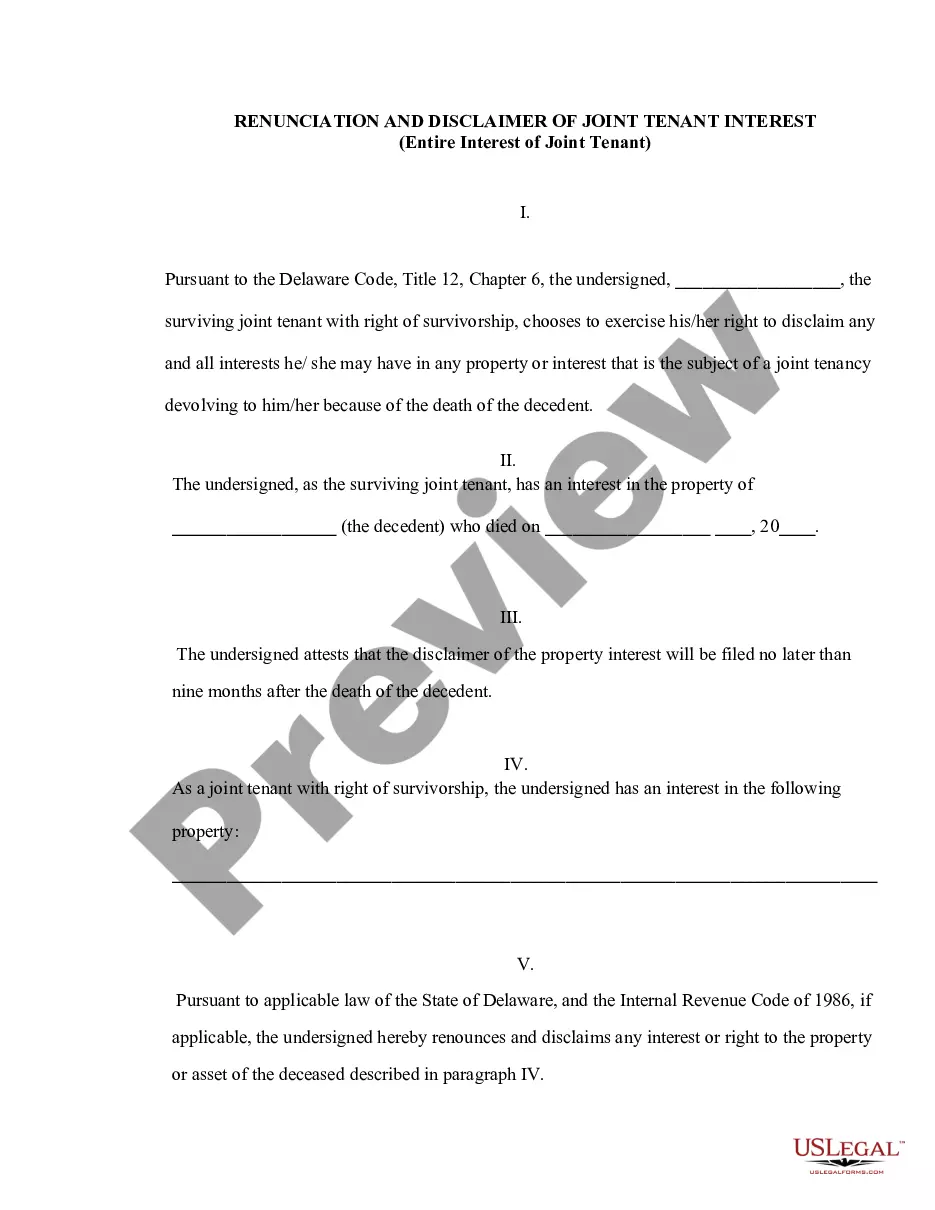
The Delaware Renunciation and Disclaimer of Property received by Intestate Succession is a legal document that allows beneficiaries to renounce an interest they have acquired in property after someone dies without a will (intestate). This form is essential for individuals who wish to disclaim their share, either fully or partially, in the deceased person's assets, ensuring that the property is passed to other heirs as specified by Delaware law. This form is distinct from other inheritance documents as it specifically addresses the renunciation of rights rather than the acceptance of an inheritance.
What’s included in this form
- User's decision to disclaim partial or full interest in the property.
- Details of the decedent, including the date of death.
- Description of the property being disclaimed.
- Attestation that the disclaimer will be filed within the required timeframe.
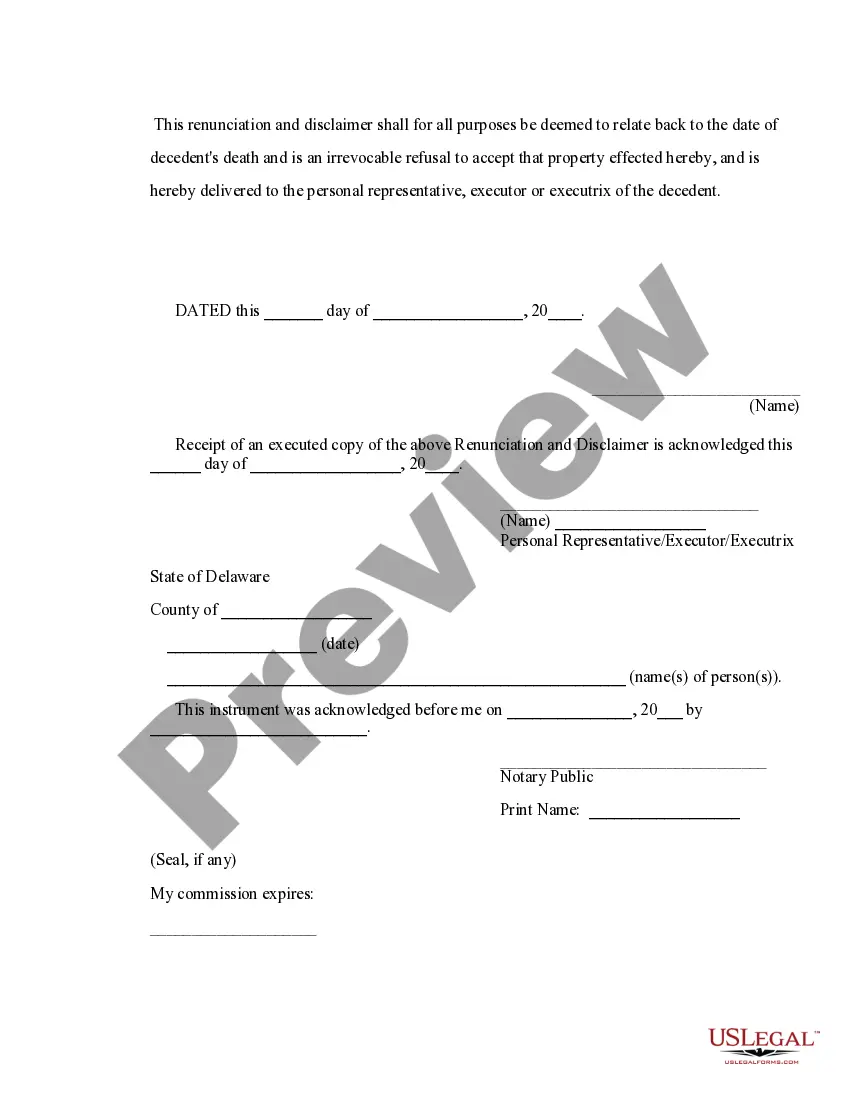
- Legal acknowledgment that renunciation is irrevocable.
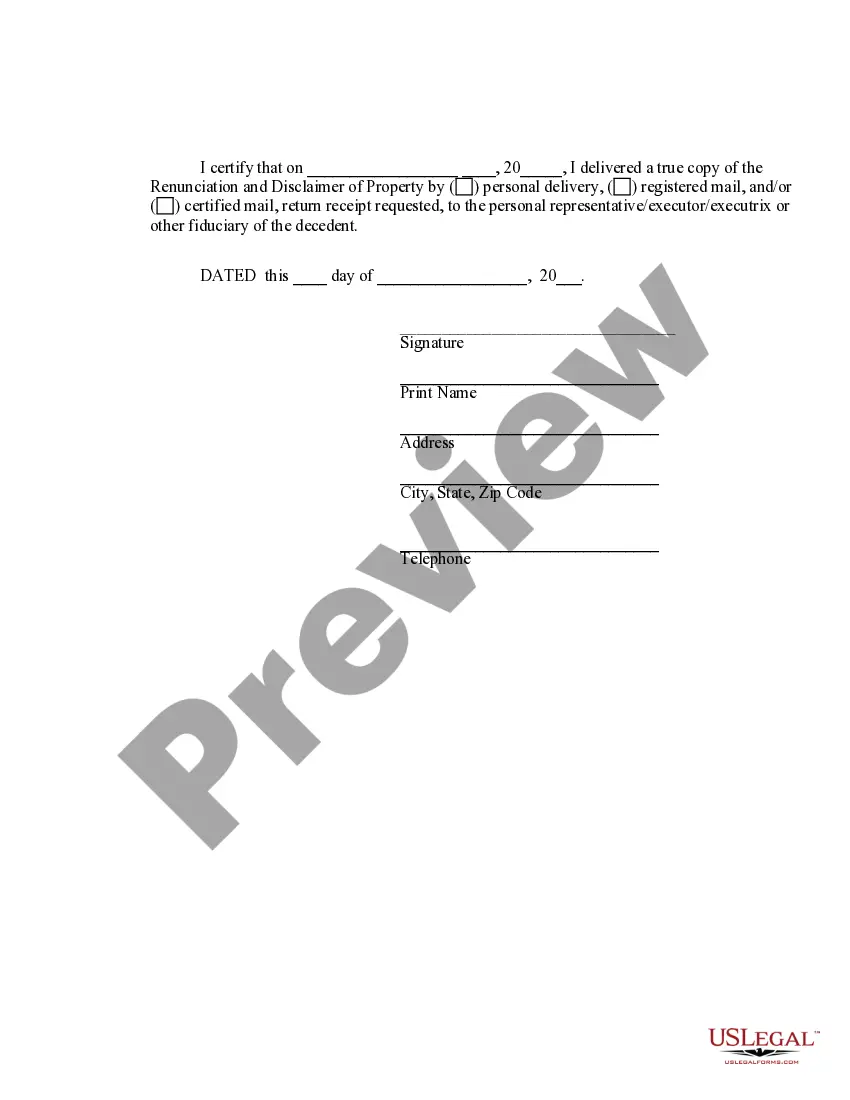
- Notarization and delivery certification requirements.

Situations where this form applies
This form should be used when an individual has inherited property from a decedent who has died without a will and wishes to reject the inheritance. Common scenarios include situations where accepting the property may lead to unwanted financial obligations or tax burdens. It may also be suitable when the beneficiary prefers that the property be passed directly to other heirs or beneficiaries under Delawareâs intestate succession laws.
Intended users of this form
This form is intended for:
- Beneficiaries of a deceased person who died intestate in Delaware.
- Individuals who are inheriting property but do not wish to accept it.
- Heirs who need to follow the legal guidelines for disclaiming property interests.
Instructions for completing this form
- Identify yourself as the beneficiary of the decedent's estate.
- Specify whether you are disclaiming a partial or full interest in the described property.
- Fill in the date of the decedent's death and other relevant property details.
- Ensure to file the disclaimer within nine months from the date of death.
- Sign the form in front of a notary public if required.
- Deliver a copy of the completed form to the personal representative or executor.
Notarization requirements for this form
Yes, this form must be notarized to be legally valid. Notarization provides verification of the identity of the signer and ensures that the disclaimer is executed according to legal standards. US Legal Forms offers integrated online notarization services, allowing you to have your document notarized easily through secure video calls at any time.
Get your form ready online
Our built-in tools help you complete, sign, share, and store your documents in one place.
Make edits, fill in missing information, and update formatting in US Legal Forms—just like you would in MS Word.
Download a copy, print it, send it by email, or mail it via USPS—whatever works best for your next step.
Sign and collect signatures with our SignNow integration. Send to multiple recipients, set reminders, and more. Go Premium to unlock E-Sign.
If this form requires notarization, complete it online through a secure video call—no need to meet a notary in person or wait for an appointment.
We protect your documents and personal data by following strict security and privacy standards.

Make edits, fill in missing information, and update formatting in US Legal Forms—just like you would in MS Word.

Download a copy, print it, send it by email, or mail it via USPS—whatever works best for your next step.

Sign and collect signatures with our SignNow integration. Send to multiple recipients, set reminders, and more. Go Premium to unlock E-Sign.

If this form requires notarization, complete it online through a secure video call—no need to meet a notary in person or wait for an appointment.

We protect your documents and personal data by following strict security and privacy standards.
Avoid these common issues
- Failing to file the disclaimer within the nine-month deadline.
- Not specifying whether the disclaimer is for a partial or full interest.
- Neglecting to sign in the presence of a notary public when required.
- Overlooking the need to notify the personal representative of the renunciation.
Why use this form online
- Quick and convenient access to the form without needing to visit a lawyer.
- Edit and customize the form as needed to fit your unique situation.
- Confidence in having a legally compliant document drafted with input from licensed attorneys.
Legal use & context
The Delaware Renunciation and Disclaimer of Property is legally binding upon execution and alerts relevant parties that the beneficiary does not wish to inherit the property. It is crucial for ensuring that the property will pass to other designated heirs, as the decision to disclaim is treated as if you had predeceased the decedent according to state law.
Looking for another form?
Form popularity
FAQ
The rules for disclaiming an inheritance under Delaware law require that the disclaimer be made in writing and filed within a specific time period after the inheritance is received. The Delaware Renunciation And Disclaimer of Property received by Intestate Succession stipulates that the disclaimer must be absolute and unconditional. Additionally, you cannot change your mind after you submit the disclaimer, so think carefully about your decision. Utilizing resources like USLegalForms can help you navigate these rules effectively.
The primary document that serves as proof of inheritance is typically a copy of the death certificate accompanied by either the will or the court’s order of intestate succession. This documentation validates your claim to inherit property under the Delaware Renunciation And Disclaimer of Property received by Intestate Succession. If you are unsure about your documents, you can use the USLegalForms platform to obtain templates and additional support for your situation. It can simplify the process and ensure you have the necessary paperwork.
In many cases, a disclaimer of inheritance does not need to be notarized, but it is beneficial to have it done to ensure its credibility. The Delaware Renunciation And Disclaimer of Property received by Intestate Succession allows for a formal process where notarization can strengthen your claim. By notarizing your disclaimer, you can help prevent potential disputes in the future. Make sure to verify any specific requirements related to your situation.
To write a disclaimer letter for inheritance, begin by clearly stating your intent to disclaim the inheritance received through intestate succession. Include your name, contact information, and a description of the property you are renouncing. Be sure to mention that the disclaimer is made under the Delaware Renunciation And Disclaimer of Property received by Intestate Succession statute. Finally, sign and date the letter, and consider consulting with a legal professional for additional guidance.
Writing a disclaimer of inheritance sample involves clearly stating your intent to renounce the property while including specific details such as your name, the decedent's name, and a description of the property. This written document should meet Delaware's legal requirements to ensure it is valid. For your convenience, USLegalForms offers sample templates that can be tailored to your unique circumstances, making the process simpler and more efficient.
In Delaware, you typically have nine months from the date of the decedent's death to submit a disclaimer of inheritance. However, timelines may differ if a federal tax return is involved. It is crucial to act promptly to ensure your rights are protected under the Delaware Renunciation and Disclaimer of Property received by Intestate Succession. Consulting with USLegalForms can help you understand and adhere to these deadlines.
To disclaim an inherited property in Delaware, you must file a written disclaimer that clearly states your intention to renounce the property. This document should describe the property and be delivered to the appropriate parties, such as the executor or administrator of the estate. Following proper formalities ensures your renunciation aligns with Delaware law regarding the Renunciation and Disclaimer of Property received by Intestate Succession. USLegalForms provides templates to simplify this process.
In Delaware, a disclaimer of inheritance does not necessarily need to be notarized; however, it is highly recommended. Proper documentation ensures that your intention to renounce property received via intestate succession is clear. It can help prevent potential disputes among heirs or claimants. Using a reliable service like USLegalForms can guide you through the process to ensure compliance with Delaware laws.
Writing a disclaimer of inheritance in Delaware involves creating a written document that clearly states your intention to refuse any inheritance. This document should specify the property being disclaimed and must be signed and dated by the disclaiming party. Utilizing tools from platforms like UsLegalForms can streamline the process of creating a Delaware Renunciation And Disclaimer of Property received by Intestate Succession, ensuring legal compliance and clarity in your intentions.
In Delaware, a spouse does not automatically inherit everything if the deceased has children. If there are children, the spouse may inherit a portion of the estate, while the remainder will go to the children. To navigate these rules effectively, individuals might consider utilizing resources like the Delaware Renunciation And Disclaimer of Property received by Intestate Succession for guidance on estate distribution and protection of family interests.