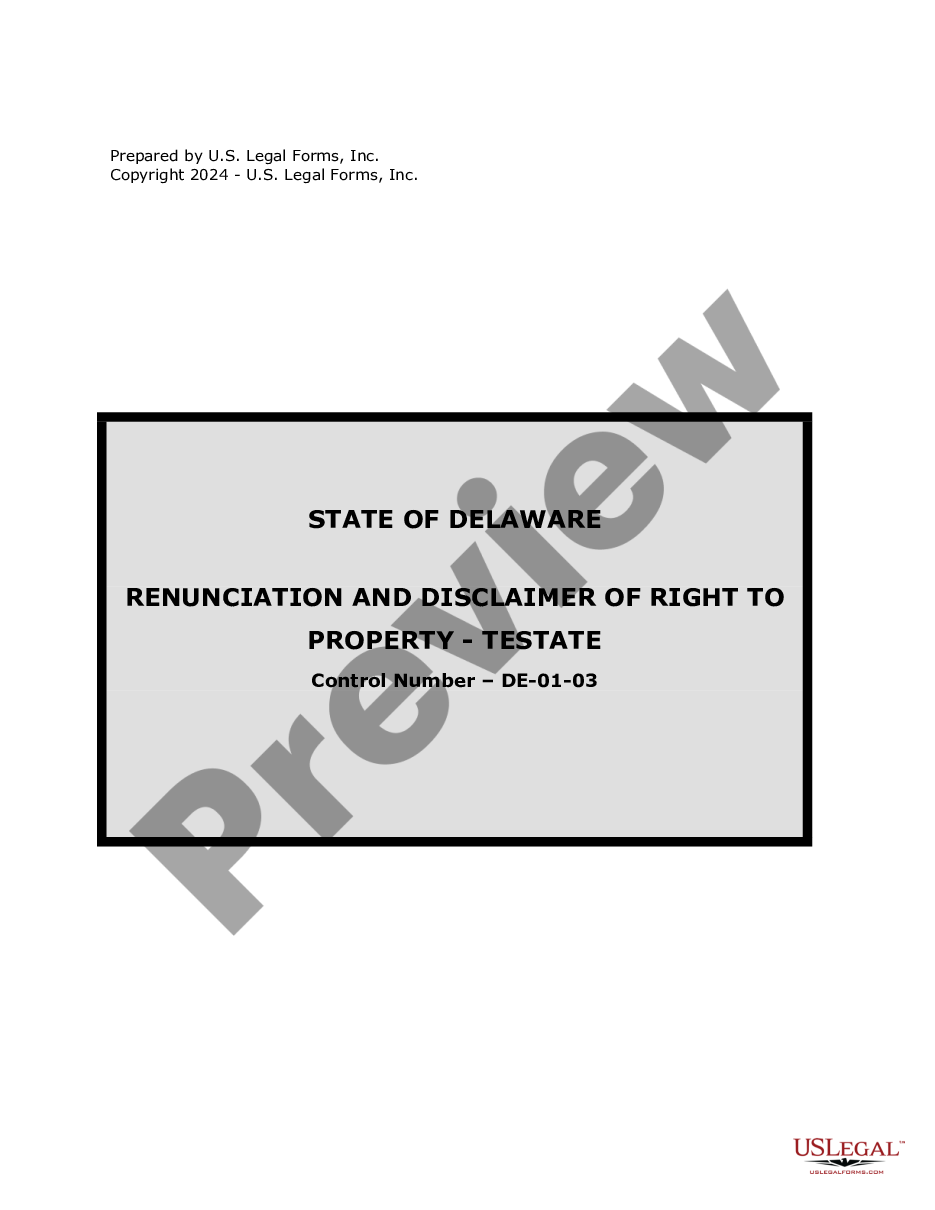
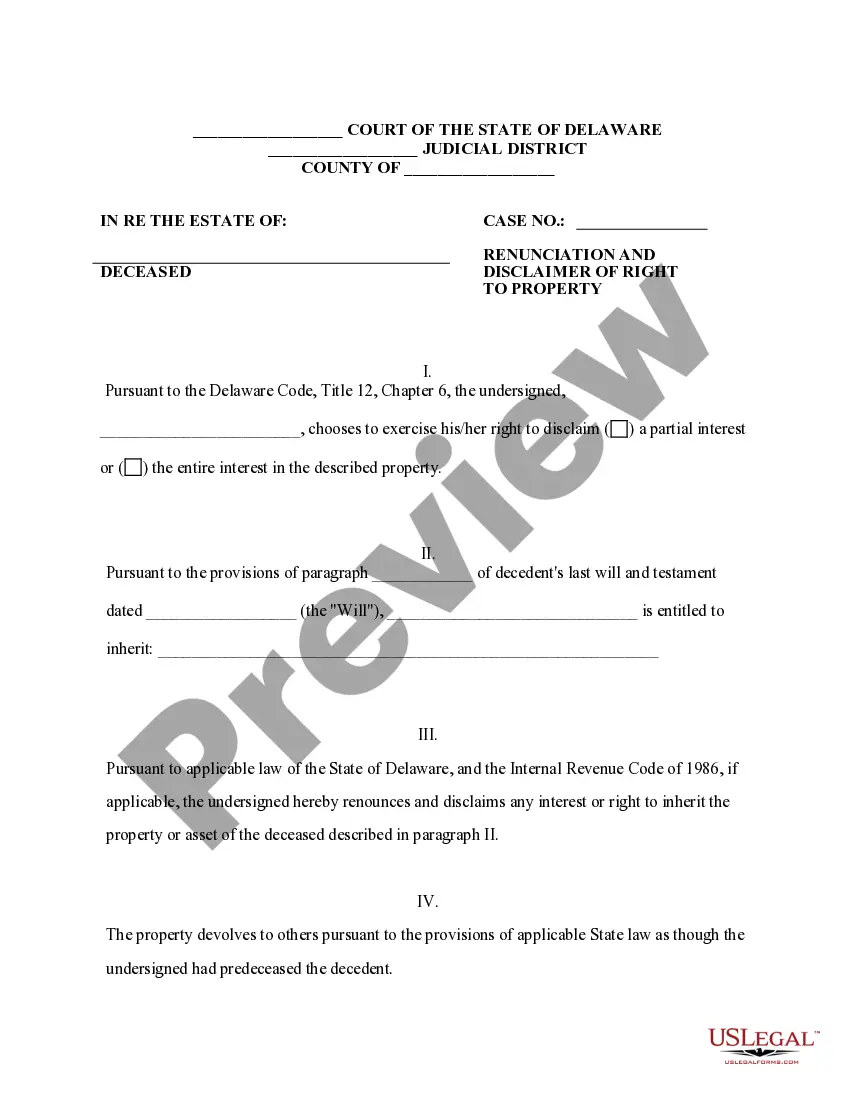
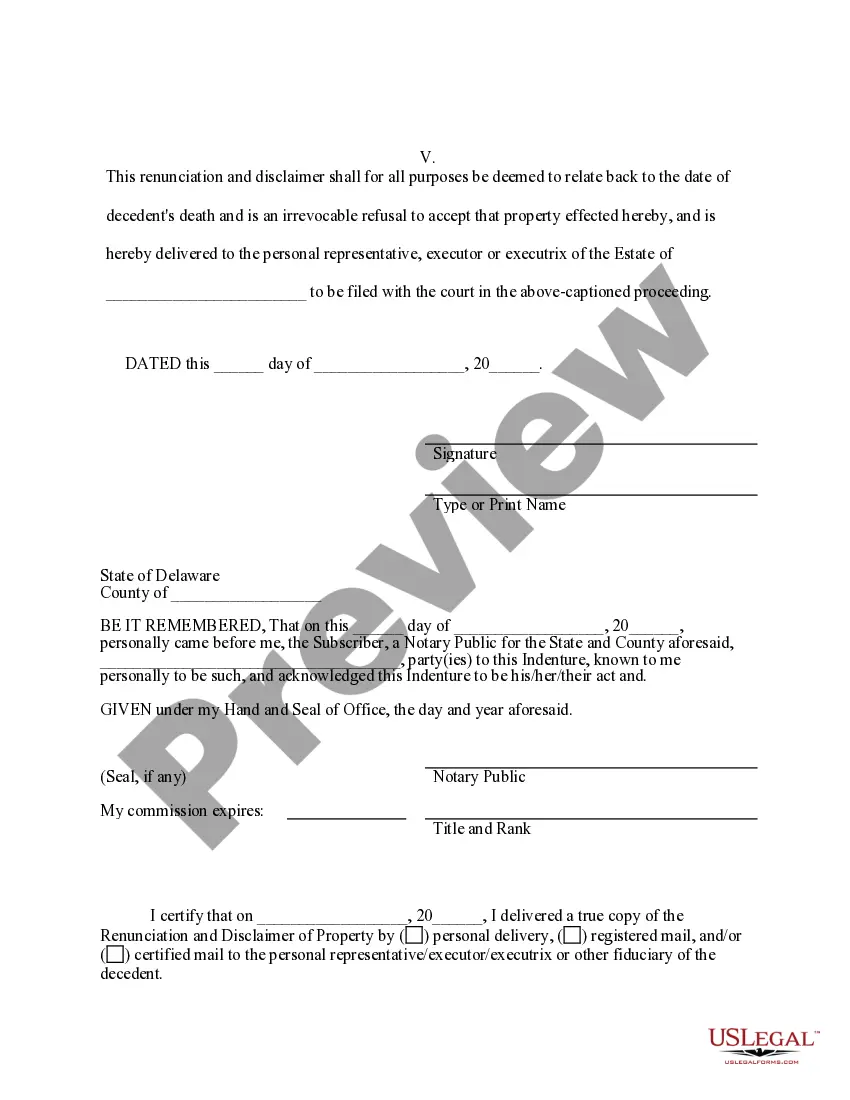
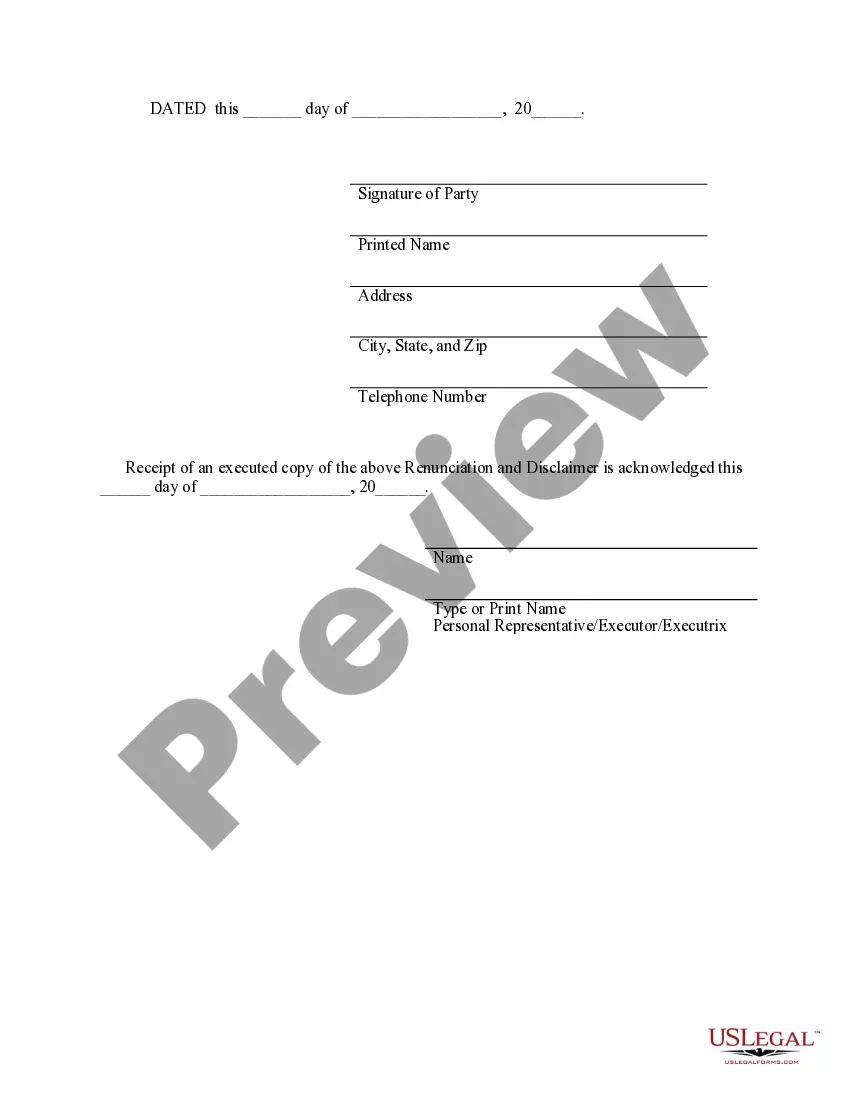
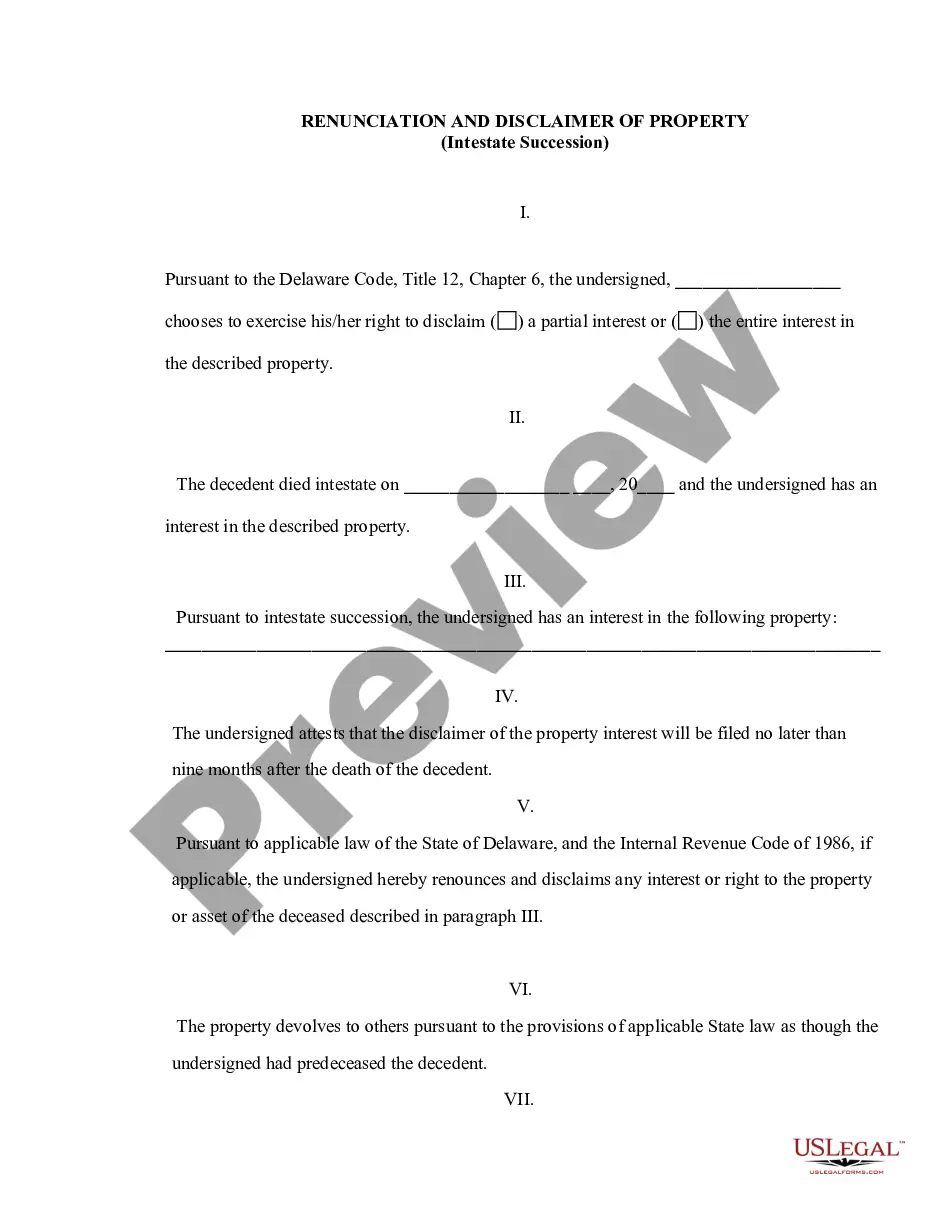
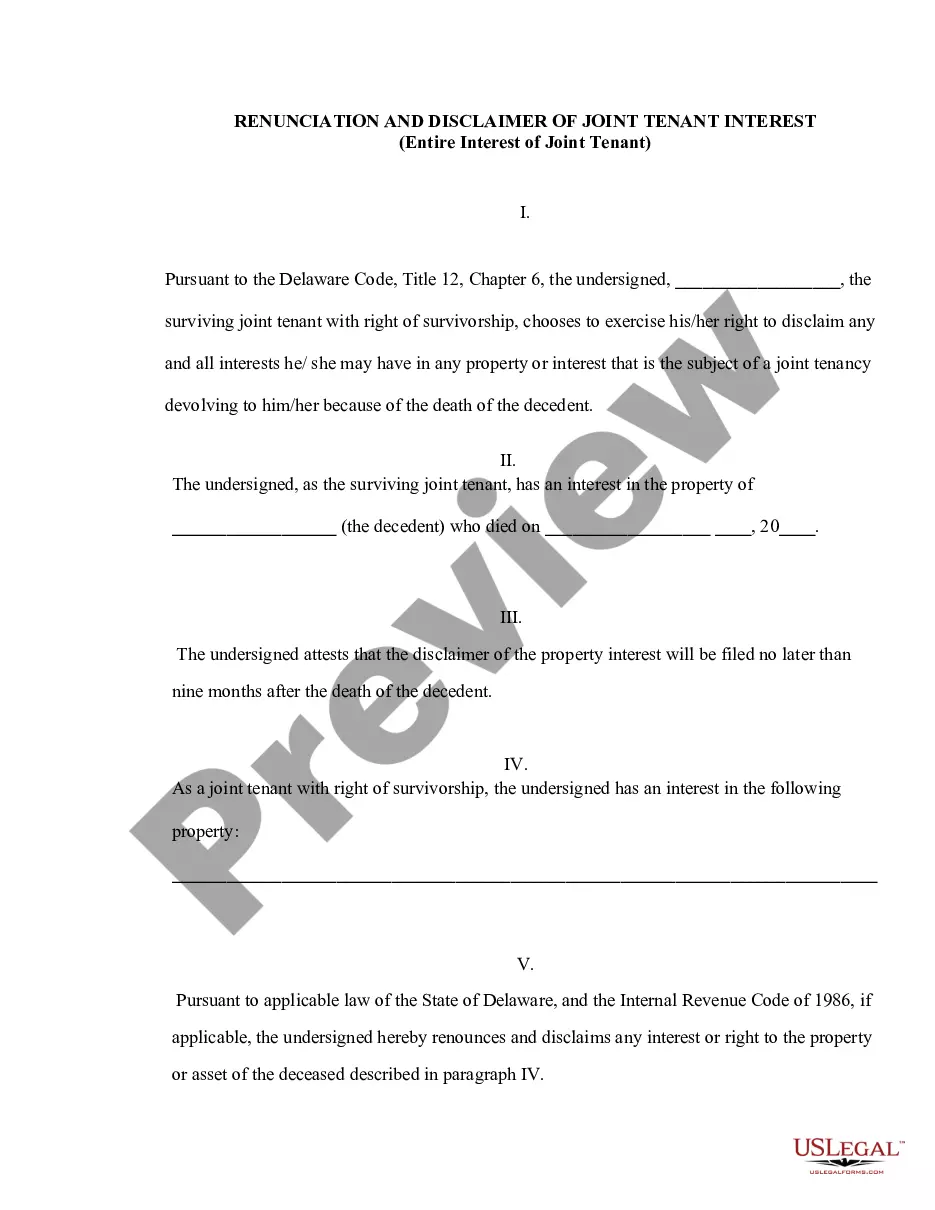
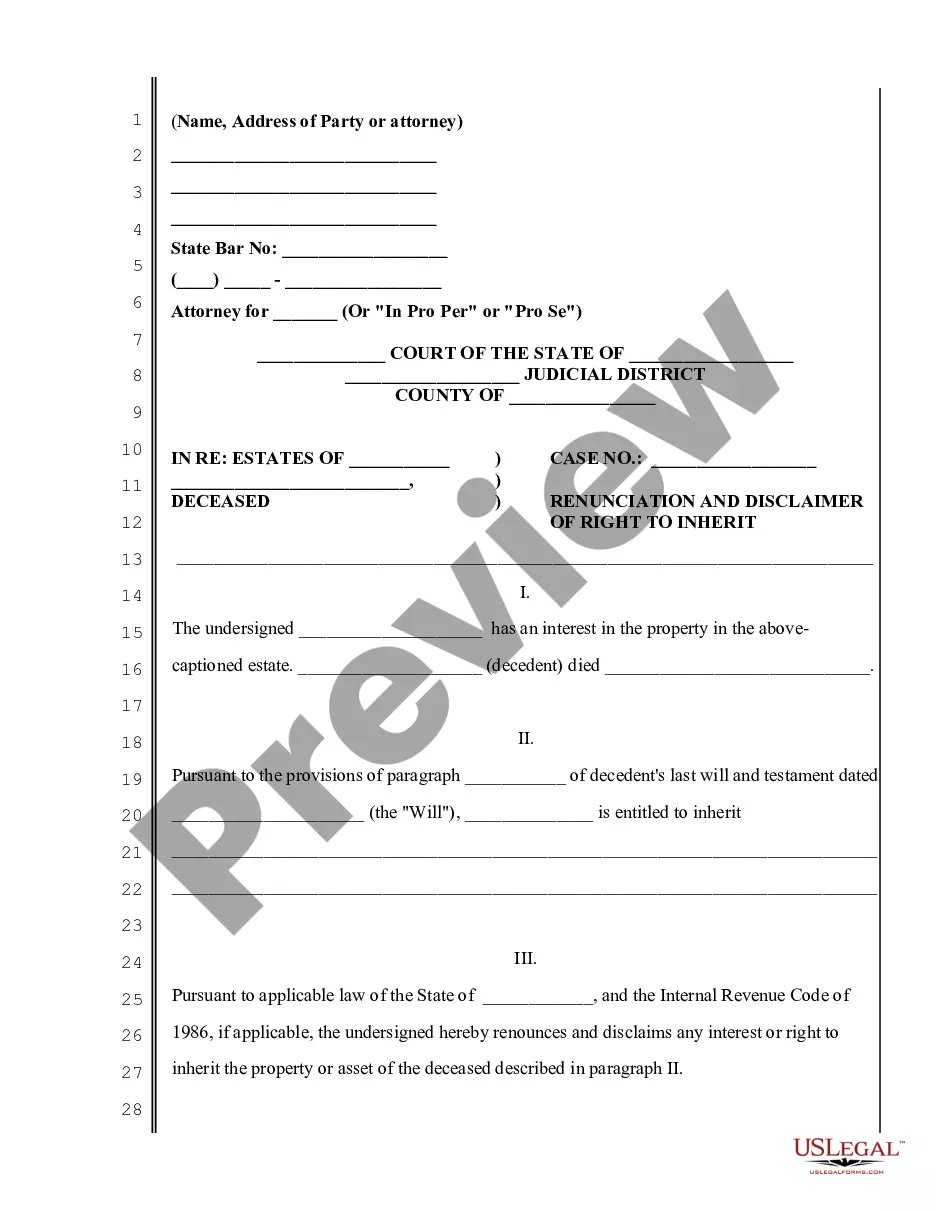
This form is a Renunciation and Disclaimer of Property acquired by the beneficiary through the last will and testament of the decedent. However, pursuant to the Delaware Code, Title 12, Chapter 6, the beneficiary has chosen to disclaim a portion of or the entire interest in the bequest. The disclaimer will relate back to the death of the decedent and will serve as an irrevocable refusal to accept property. The form also contains a state specific acknowledgment and a certificate to verify delivery.
Delaware Renunciation And Disclaimer of Property from Will by Testate
State:
Delaware
Control #:
DE-01-03
Format:
Word;
Rich Text
Instant download
Description
Free preview





How to fill out Delaware Renunciation And Disclaimer Of Property From Will By Testate?
The greater the number of documents you have to assemble - the more anxious you become.
You can discover a vast array of Delaware Renunciation And Disclaimer of Property from Will by Testate templates online, but you're uncertain which ones to trust.
Eliminate the stress and simplify your search for samples with US Legal Forms.
Proceed by clicking Buy Now to initiate the registration process and select a pricing plan that suits your needs. Fill in the required information to create your account and pay for the order using PayPal or credit card. Choose a convenient file format and retrieve your document. You can access each file you obtain in the My documents section. Go there to generate a new version of your Delaware Renunciation And Disclaimer of Property from Will by Testate. Even when utilizing professionally prepared templates, it remains advisable to seek your local attorney’s guidance to verify that your document is accurately completed. Achieve more for less with US Legal Forms!
- Obtain expertly crafted documents designed to meet state regulations.
- If you have a US Legal Forms subscription, Log In to your account, and you'll notice the Download button on the page for Delaware Renunciation And Disclaimer of Property from Will by Testate.
- If this is your first time using our site, complete the registration process by following these steps.
- Confirm that the Delaware Renunciation And Disclaimer of Property from Will by Testate is valid in your jurisdiction.
- Review your choice by reading the description or by using the Preview feature where available for the selected document.
Form popularity
FAQ
In Delaware, the time limit for disclaiming an inheritance is generally nine months from the date of the decedent's death. This timeframe aligns with the state's laws regarding the Renunciation and Disclaimer of Property from Will by Testate, which aim to ensure that beneficiaries make timely decisions. It is crucial to file the disclaimer properly to avoid any complications. If you have questions or need clarity, USLegalForms can guide you through the relevant timelines and requirements.
To create a disclaimer of inheritance, start with a clear statement indicating your intention to renounce the property you are inheriting. Include your name, the decedent's name, and a reference to the will or trust document. It is essential to comply with Delaware laws surrounding the Renunciation and Disclaimer of Property from Will by Testate, which often requires the disclaimer to be in writing and submitted within a specific time frame. If you need assistance, consider using platforms like USLegalForms, which provide templates and guidance for this process.
You do not register your Will while alive, but you must file it with the probate court after you pass. This is a critical step in validating and executing your Will's intentions. Filing allows your estate to be settled according to your wishes as outlined in the Will. Knowing about Delaware Renunciation and Disclaimer of Property from Will by Testate can also aid in managing any complexities during this filing process.
For a Will to be considered legal in Delaware, it must be in writing and signed by the testator. Additionally, there should be at least two witnesses present during the signing, who also sign the Will. This legal framework ensures that the deceased's wishes are clear and enforceable. When exploring options such as Delaware Renunciation and Disclaimer of Property from Will by Testate, understanding these legal requirements is essential.
To disclaim an inherited property in Delaware, you must complete a formal disclaimer document. This document should be filed with the probate court in a timely manner after the inheritance is realized. Ensure that you meet all legal requirements, as Delaware law governs these disclaimers closely. If you need assistance, consider using ulegalforms, which can guide you through the Delaware Renunciation and Disclaimer of Property from Will by Testate.
In Delaware, you do not have to register your Will while you are alive. However, once you pass away, your Will must be filed with the court for probate. This process is necessary to validate the Will and execute your estate wishes. Understanding the implications of Delaware Renunciation and Disclaimer of Property from Will by Testate can guide those navigating this process.
Yes, Wills in Delaware are public records. Once a Will is filed with the court, anyone can access it. This transparency helps ensure that the wishes outlined in the Will are honored and understood. Remember, if you are considering Delaware Renunciation and Disclaimer of Property from Will by Testate, this public record aspect is crucial for potential claimants.
To write an inheritance disclaimer letter, start with your name and the date, and then clearly state your intention to disclaim the inheritance. Include specific details of the property or assets you are renouncing. It's crucial to follow any legal requirements set by Delaware law to ensure your disclaimer is valid. Consider using US Legal Forms to ensure your letter meets all necessary legal standards.
An example of a disclaimer can be found in situations where someone inherits property but chooses not to accept it. For instance, if a person receives a house through a will but decides that managing the property would be unwise, they may execute a property disclaimer. This withdrawal from the inheritance aligns with the principles of Delaware Renunciation And Disclaimer of Property from Will by Testate.
To write a disclaimer of inheritance, open with a clear statement showing your intention to renounce the inheritance. Specify the details of the estate you are renouncing, including any related property. Be sure to follow Delaware’s legal guidelines, as this will impact the effectiveness of the disclaimer. Using tools from US Legal Forms can simplify this process.