Assumption Endorsement - Issued by Underwriter
What is this form?
The Assumption Endorsement - Issued by Underwriter is a legal document that allows an insured party to skip intermediaries and collect benefits directly from the reinsurer. This form serves to clarify the conveyance of property and the status of any associated mortgage liabilities, distinguishing it from other endorsements that may not cover such specifics.
What’s included in this form
- Policy number and security title file number.
- Details of land conveyance (grantor, grantee, deed recording date).
- Loan assumption agreement information (date, parties involved).
- Insurance coverage terms regarding the lien and mortgage priority.
- Limitations on the endorsement regarding policy changes.
Situations where this form applies
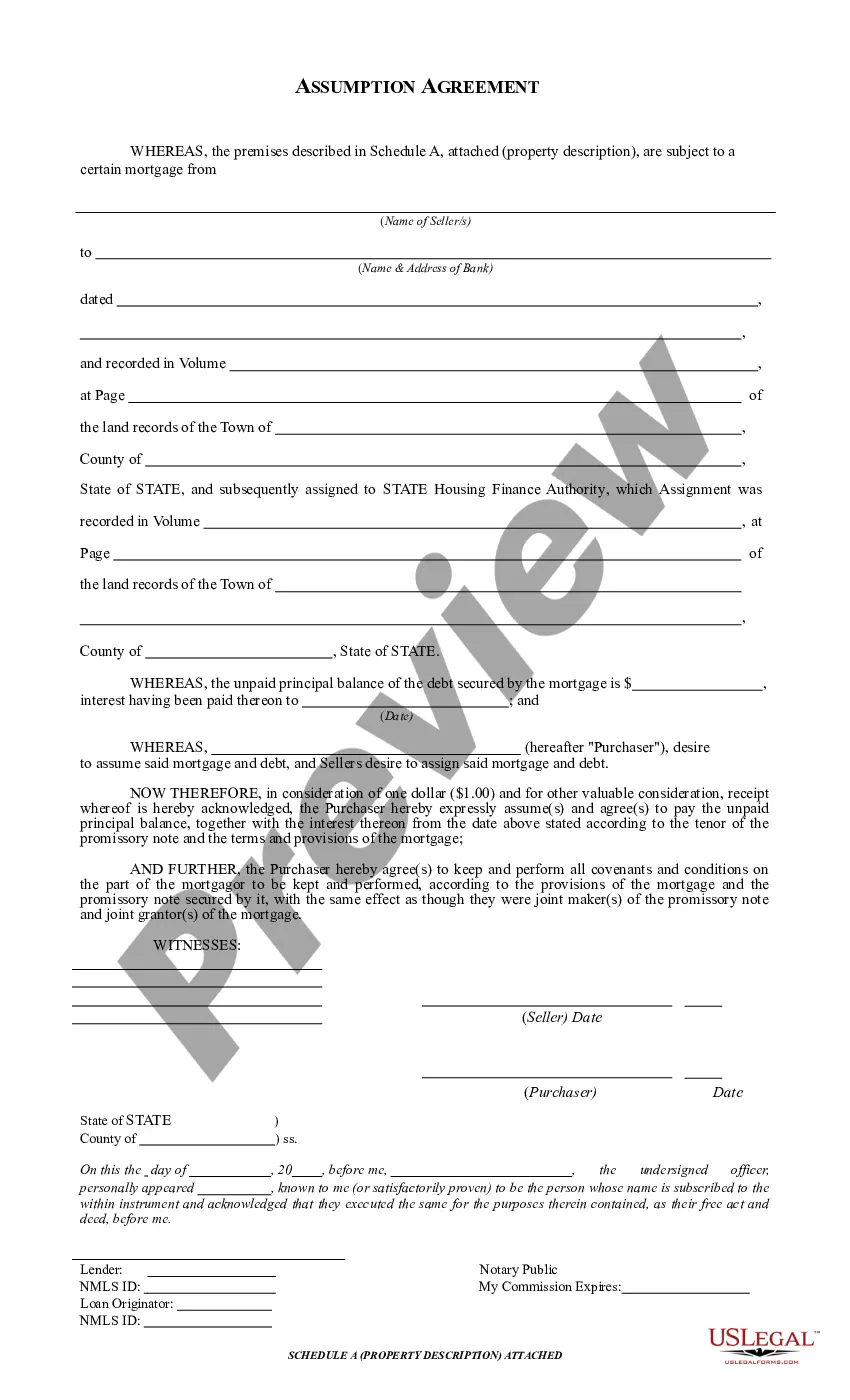
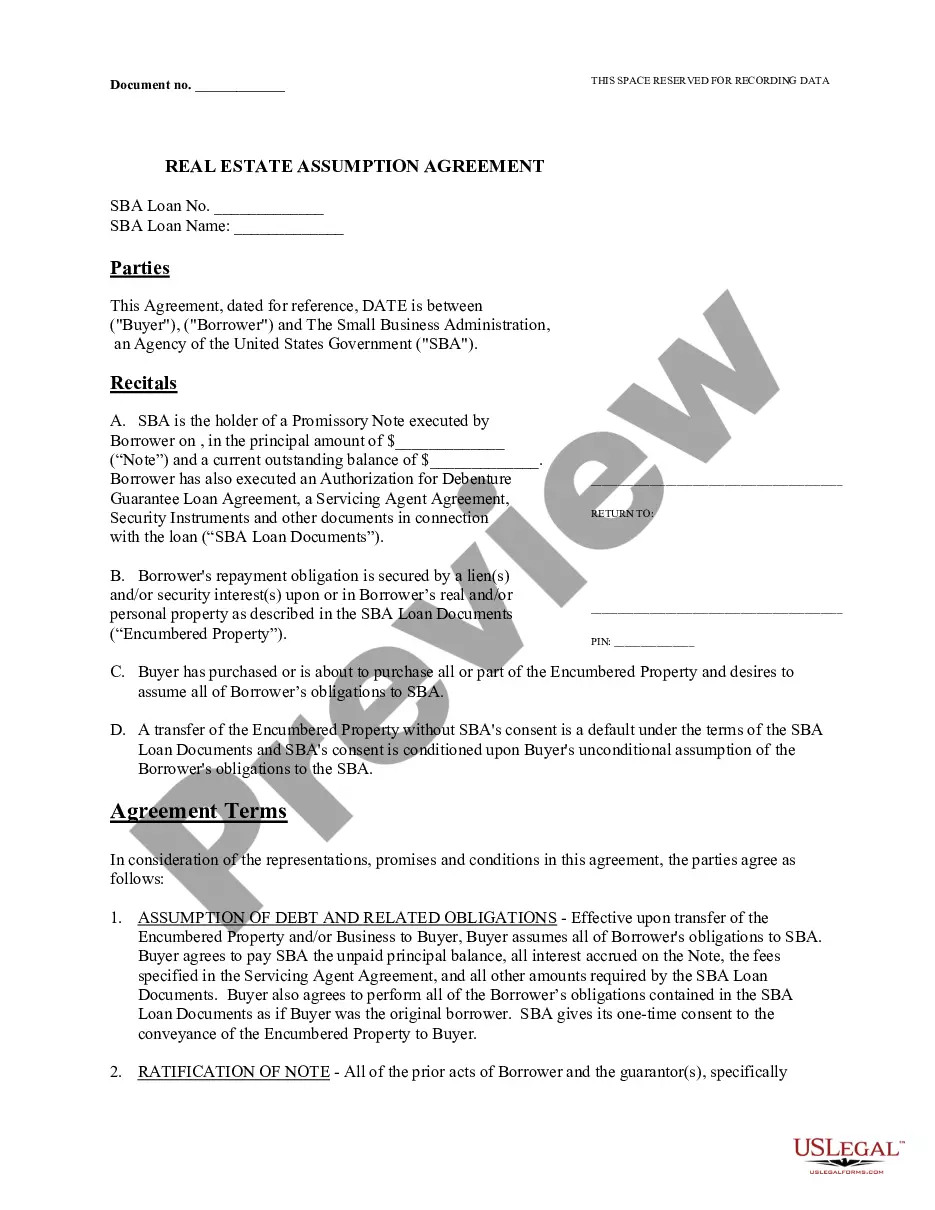
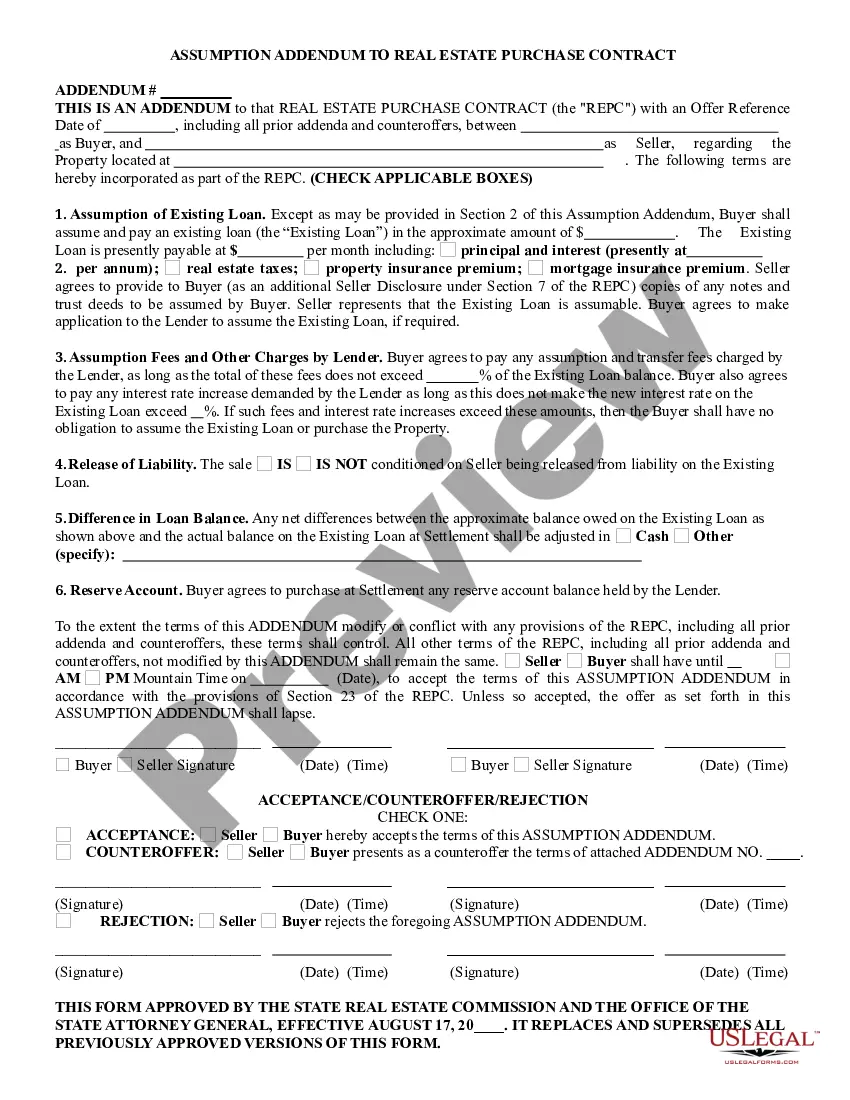
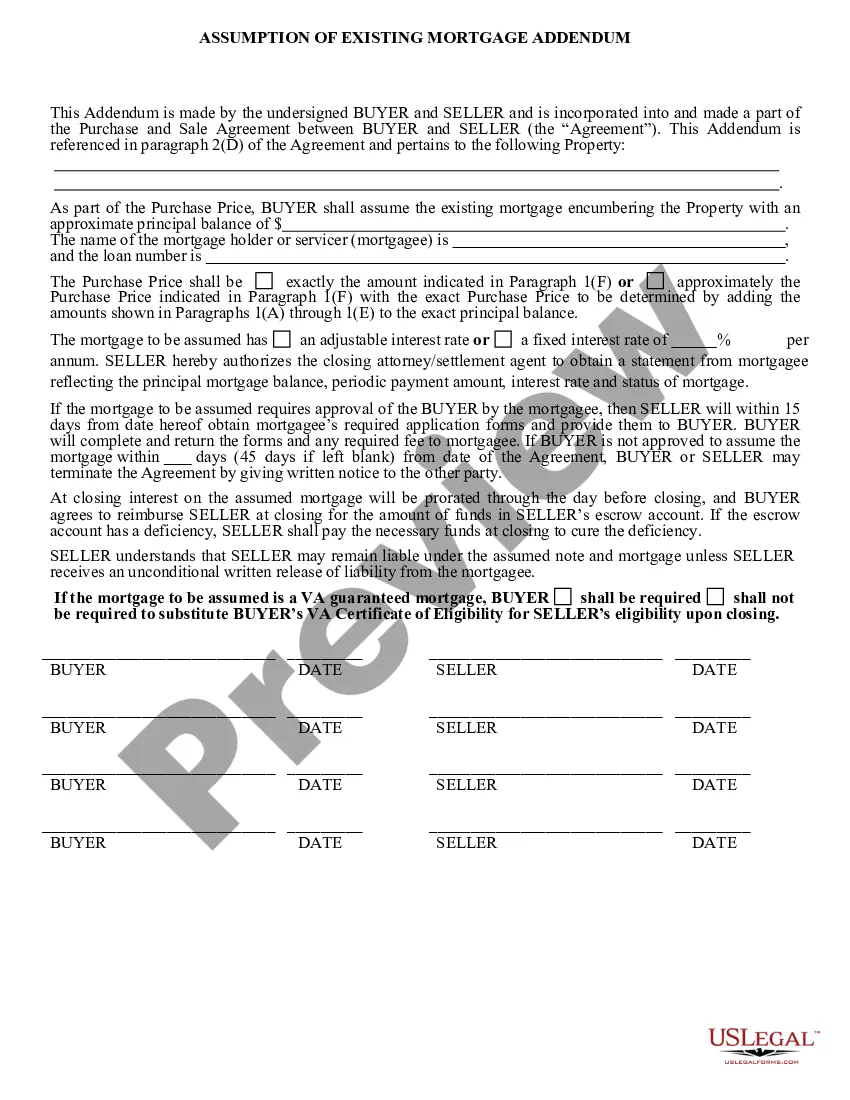
This form is essential when a property owner is transferring ownership and wants to ensure that the mortgage maintains its validity and priority. It is used in situations where a party has assumed an existing mortgage or loan. This endorsement provides protection against any potential loss if the details provided are found to be incorrect.
Intended users of this form
- Property owners conveying land with an existing mortgage.
- Borrowers who are assuming a mortgage from a seller.
- Real estate professionals managing property transactions.
- Underwriters looking to issue endorsements for special circumstances.
How to complete this form
- Identify and specify the grantor (seller) and grantee (buyer) of the property.
- Enter the relevant policy number for the title insurance and any security file numbers.
- Provide details about the land conveyance and include the deed's recording date.
- Fill in the loan assumption agreement date and parties involved.
- Review the completed form for accuracy, particularly the lien and mortgage details.
Does this document require notarization?
This form does not typically require notarization unless specified by local law. However, always check local regulations to ensure compliance.
Get your form ready online
Our built-in tools help you complete, sign, share, and store your documents in one place.
Make edits, fill in missing information, and update formatting in US Legal Forms—just like you would in MS Word.
Download a copy, print it, send it by email, or mail it via USPS—whatever works best for your next step.
Sign and collect signatures with our SignNow integration. Send to multiple recipients, set reminders, and more. Go Premium to unlock E-Sign.
If this form requires notarization, complete it online through a secure video call—no need to meet a notary in person or wait for an appointment.
We protect your documents and personal data by following strict security and privacy standards.

Make edits, fill in missing information, and update formatting in US Legal Forms—just like you would in MS Word.

Download a copy, print it, send it by email, or mail it via USPS—whatever works best for your next step.

Sign and collect signatures with our SignNow integration. Send to multiple recipients, set reminders, and more. Go Premium to unlock E-Sign.

If this form requires notarization, complete it online through a secure video call—no need to meet a notary in person or wait for an appointment.

We protect your documents and personal data by following strict security and privacy standards.
Common mistakes to avoid
- Failing to accurately record the parties involved in the transaction.
- Omitting the accurate recording date of the deed.
- Neglecting to specify the correct policy number.
- Not reviewing the endorsement terms before finalizing the form.
Benefits of using this form online
- Instant access to legally vetted form templates.
- Ease of customization to suit specific transaction needs.
- Convenient downloading and printing options.
- Secure and reliable document management.
Legal use & context
- This form legally protects the interests of the mortgagee by ensuring the priority of the mortgage remains intact.
- In cases of disputes regarding property conveyance or loan assumptions, this endorsement serves as necessary documentation.
Main things to remember
- The Assumption Endorsement is crucial for secure property transactions involving existing mortgages.
- Proper completion of the form ensures protection against potential financial loss.
- Understand specific state regulations to fully utilize this formâs benefits.
Looking for another form?


Form popularity
FAQ
Types Of Insurance Endorsements Scheduled Personal Property Endorsement.Water/Sewer Backup Endorsement.Flood Endorsement.Earthquake Endorsement.Identity Theft Endorsement.Canine Liability Exclusion Endorsement.Additional Insured Endorsement.Home Business Endorsement.
A common endorsement is scheduled personal property coverage, which you can buy as extra coverage for specific types of belongings. For example, you might have an insurance endorsement to add coverage for a valuable piece of jewelry, like an engagement ring, or expensive artwork.
Endorsements can be broadly classified into two, financial and non-financial. Financial endorsements are those which affect the premium, whereas non-financial endorsements are those which do not affect the premium amount.
An insurance endorsement/rider is an amendment to an existing insurance contract that changes the terms of the original policy. An endorsement/rider can be issued at the time of purchase, mid-term or at renewal time. Insurance premiums may be affected and adjusted as a result.
This endorsement insures the lender against loss or damage sustained by the Insured by reason of: (a) the invalidity or unenforceability of the lien of the Insured Mortgage upon the Title as a result of the Modification; (b) the lack of priority of the lien of the Insured Mortgage over defects in or liens or
An endorsement allows you to operate a certain type of commercial motor vehicle and transport specific items.
An endorser is someone who agrees to repay a Direct PLUS Loan if the borrower doesn't repay the loan, much like a cosigner does for other types of loans. If the borrower is a parent, the endorser may not be the student on whose behalf the parent is borrowing.
A signature is an endorsement. For example, when an employer issues a payroll check, it authorizes or endorses the transfer of money from the business account to the employee. The act of signing the check is considered an endorsement, which serves as proof of the payer's intent to transfer funds to the payee.