1.11 Weighing the Evidence .
What is this form?
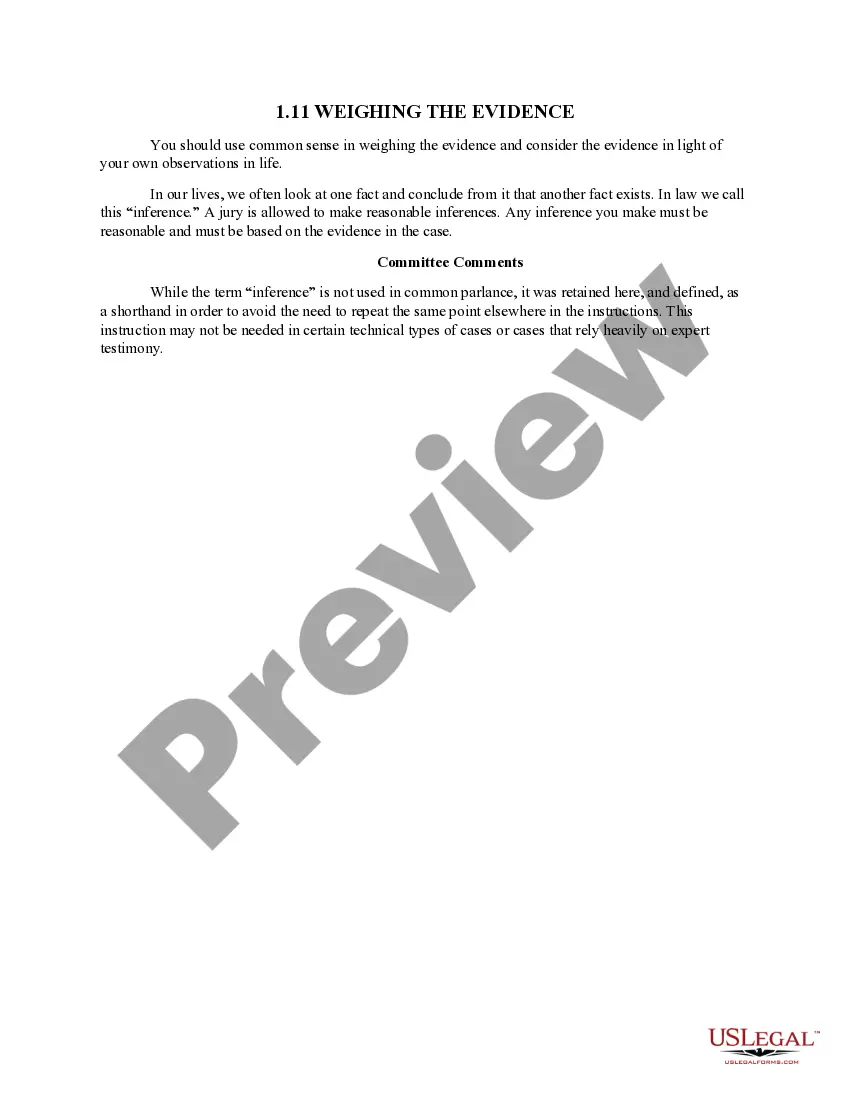
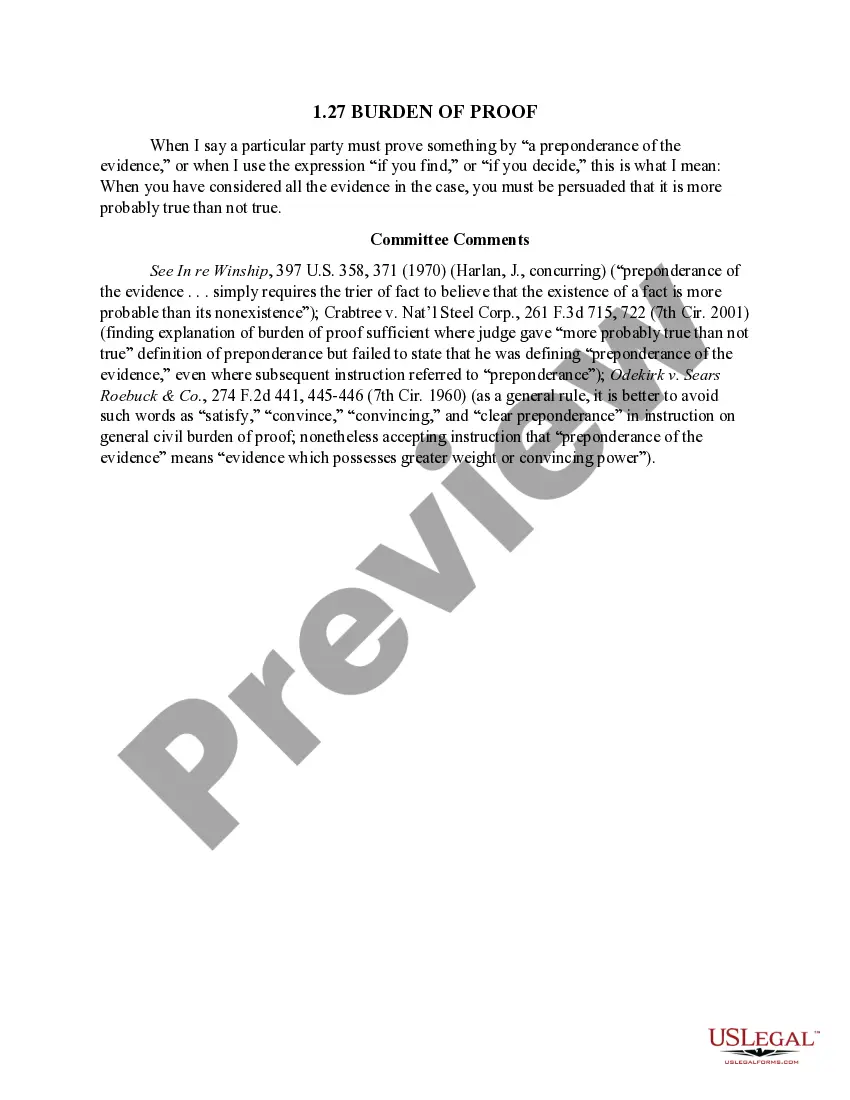
The "Weighing the Evidence" instruction is an official pattern jury instruction used in federal trials, specifically within the 7th Circuit Court. This form helps jurors understand how to evaluate and infer from the evidence presented in a case. It emphasizes the importance of using common sense in making reasonable inferences based on the evidence, ensuring that jurors adhere to the legal standards required for their decision-making. Understanding this instruction is essential for proper jury deliberation, setting it apart from other legal forms that may focus solely on procedural aspects of a trial.
Key parts of this document
- Definition of inference and its significance in jury deliberation.
- Guidance on using common sense when weighing evidence.
- Emphasis on the requirement that inferences must be reasonable and based on presented evidence.
- Comments on applicability for different types of cases, especially those relying on expert testimony.
Common use cases
This form is used during jury trials when the jury is tasked with evaluating evidence. It is necessary in cases where jurors must draw inferences from the facts presented. This instruction clarifies how to weigh the evidence fairly and sensibly, which is crucial for reaching a just verdict.
Who should use this form
- Juries in federal court cases within the 7th Circuit.
- Judges who need to instruct jurors on how to evaluate evidence.
- Lawyers preparing for jury trials who want to ensure jurors understand their role in weighing evidence.
Instructions for completing this form
- Read the instruction thoroughly to understand its meaning.
- Consider the evidence presented during the trial and identify the key facts.
- Use common sense to evaluate the evidence and understand how to make reasonable inferences.
- Discuss with fellow jurors to ensure a collective understanding of how to apply this instruction.
Notarization requirements for this form
Notarization is not commonly needed for this form. However, certain documents or local rules may make it necessary. Our notarization service, powered by Notarize, allows you to finalize it securely online anytime, day or night.
Get your form ready online
Our built-in tools help you complete, sign, share, and store your documents in one place.
Make edits, fill in missing information, and update formatting in US Legal Forms—just like you would in MS Word.
Download a copy, print it, send it by email, or mail it via USPS—whatever works best for your next step.
Sign and collect signatures with our SignNow integration. Send to multiple recipients, set reminders, and more. Go Premium to unlock E-Sign.
If this form requires notarization, complete it online through a secure video call—no need to meet a notary in person or wait for an appointment.
We protect your documents and personal data by following strict security and privacy standards.

Make edits, fill in missing information, and update formatting in US Legal Forms—just like you would in MS Word.

Download a copy, print it, send it by email, or mail it via USPS—whatever works best for your next step.

Sign and collect signatures with our SignNow integration. Send to multiple recipients, set reminders, and more. Go Premium to unlock E-Sign.

If this form requires notarization, complete it online through a secure video call—no need to meet a notary in person or wait for an appointment.

We protect your documents and personal data by following strict security and privacy standards.
Mistakes to watch out for
- Misinterpreting the concept of inference as merely guessing.
- Ignoring the requirement for evidence to support any inference made.
- Failing to apply common sense when deliberating over complex evidence.
Why complete this form online
- Instant access to a perfectly formatted legal instruction.
- Ability to edit the document as needed to fit specific case requirements.
- Trustworthy content drafted by licensed attorneys, ensuring compliance with legal standards.
Looking for another form?
Form popularity
FAQ
Weight of evidence is the believability or persuasiveness of evidence in probative value, not the quantity or amount of evidence. Weight of evidence is not determined by mathematics, but depends on its effect in inducing belief. In State v.
Weight of evidence is the believability or persuasiveness of evidence in probative value, not the quantity or amount of evidence.
Step 4: Weigh the evidence Draw on your information and emotions to imagine what it would be like if you carried out each of the alternatives to the end. Evaluate whether the need identified in Step 1 would be met or resolved through the use of each alternative.
Weighing the Evidence Formulate interpretations based upon historical evidence. Analyze, interpret, and evaluate historical documents to determine their credibility and validity as evidence. Understand how to combine and scaffold evidence to arrive at historical conclusions.
There are thirteen courts of appeals: eleven numbered circuits (First through Eleventh), the United States Court of Appeals for the District of Columbia Circuit and the United States Court of Appeals for the Federal Circuit. Not all circuits have published jury instructions: the Second and Fourth Circuits do not.