Intentionally Defective Grantor Trust
What is this form?
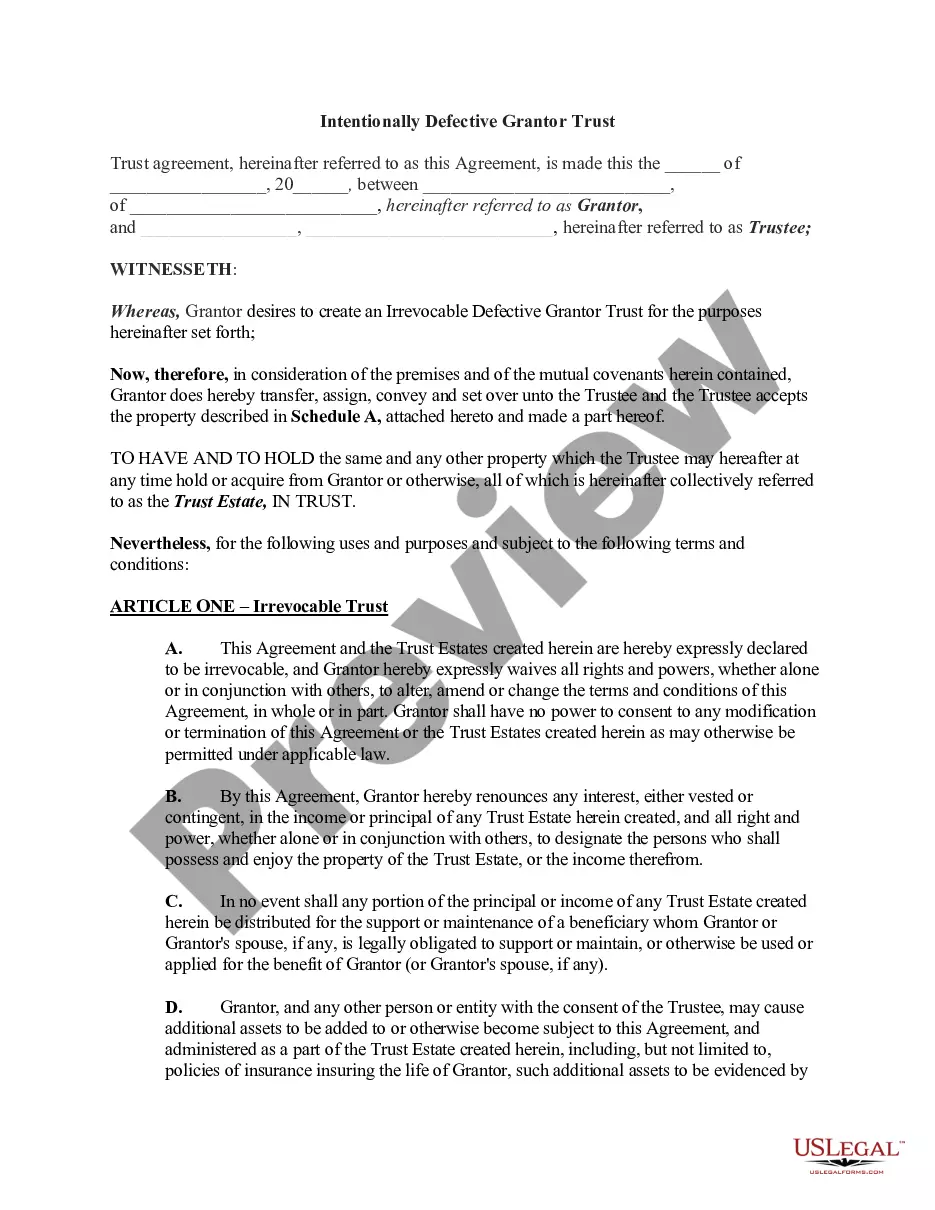
An intentionally defective grantor trust is a unique estate-planning tool designed to help individuals mitigate estate tax liabilities while allowing them to maintain responsibility for income taxes on certain assets. This type of trust enables the grantor to transfer assets while still being taxed on any income generated, resulting in tax-free growth for the beneficiaries. Unlike typical trusts, this trust intentionally retains certain features that allow the grantor to control the tax implications. This form provides a flexible framework, including alternate provisions that can be tailored to fit the specific needs of the grantor.
Key parts of this document
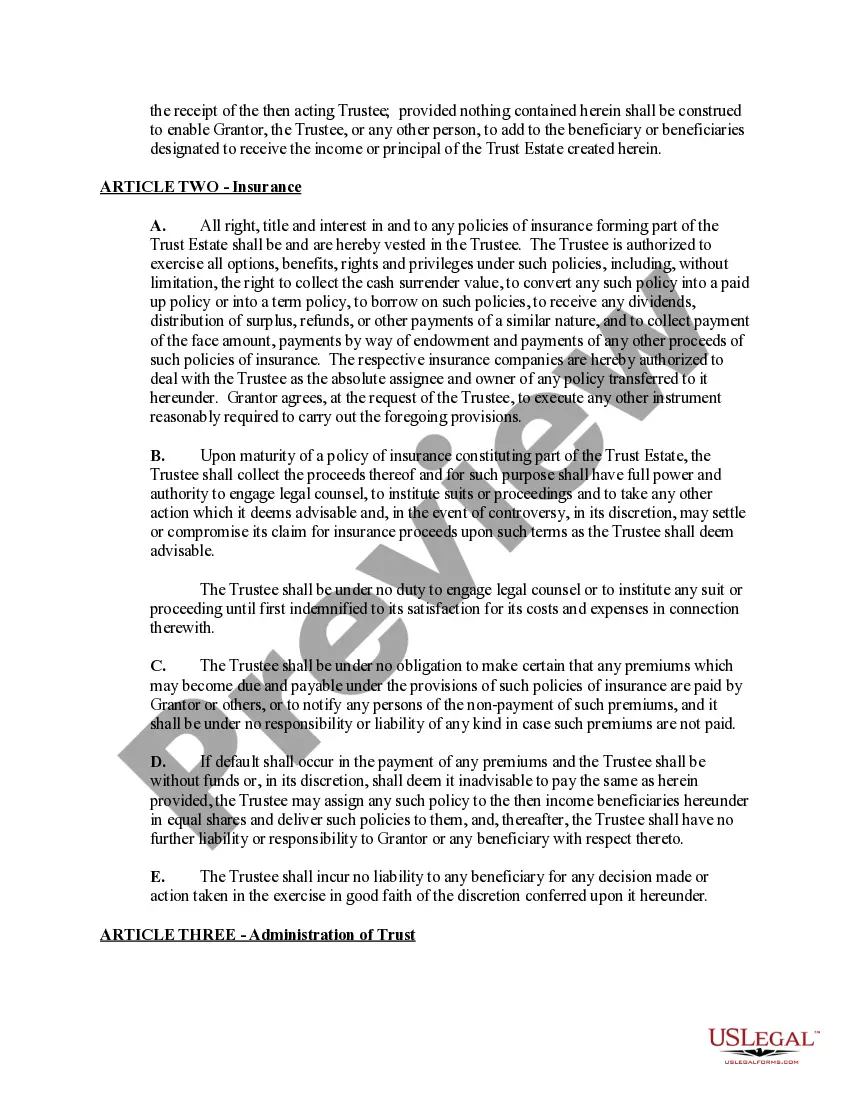
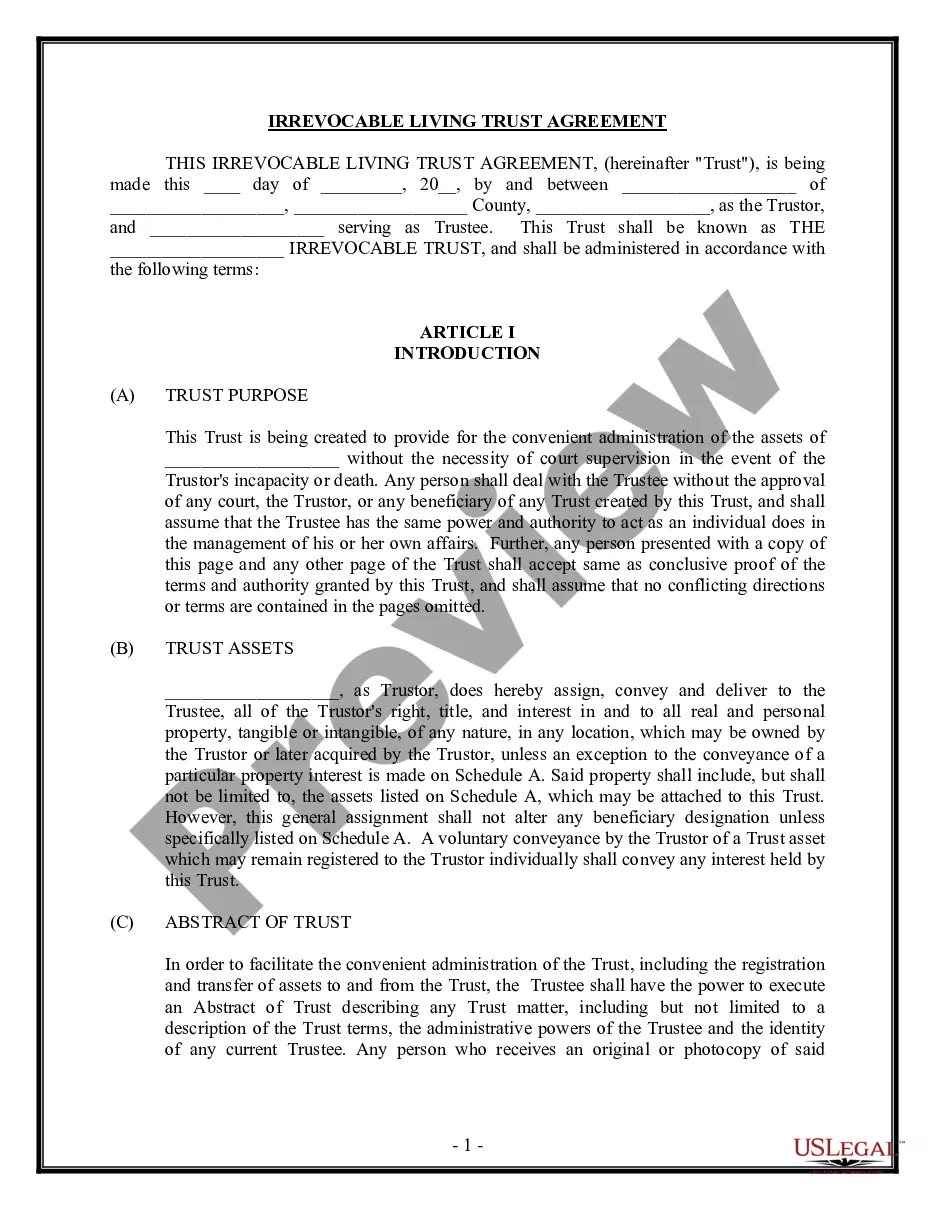
- Declaration of an irrevocable trust by the grantor.
- Transfer of property to the trust, detailed in Schedule A.
- Provisions related to insurance policies held within the trust.
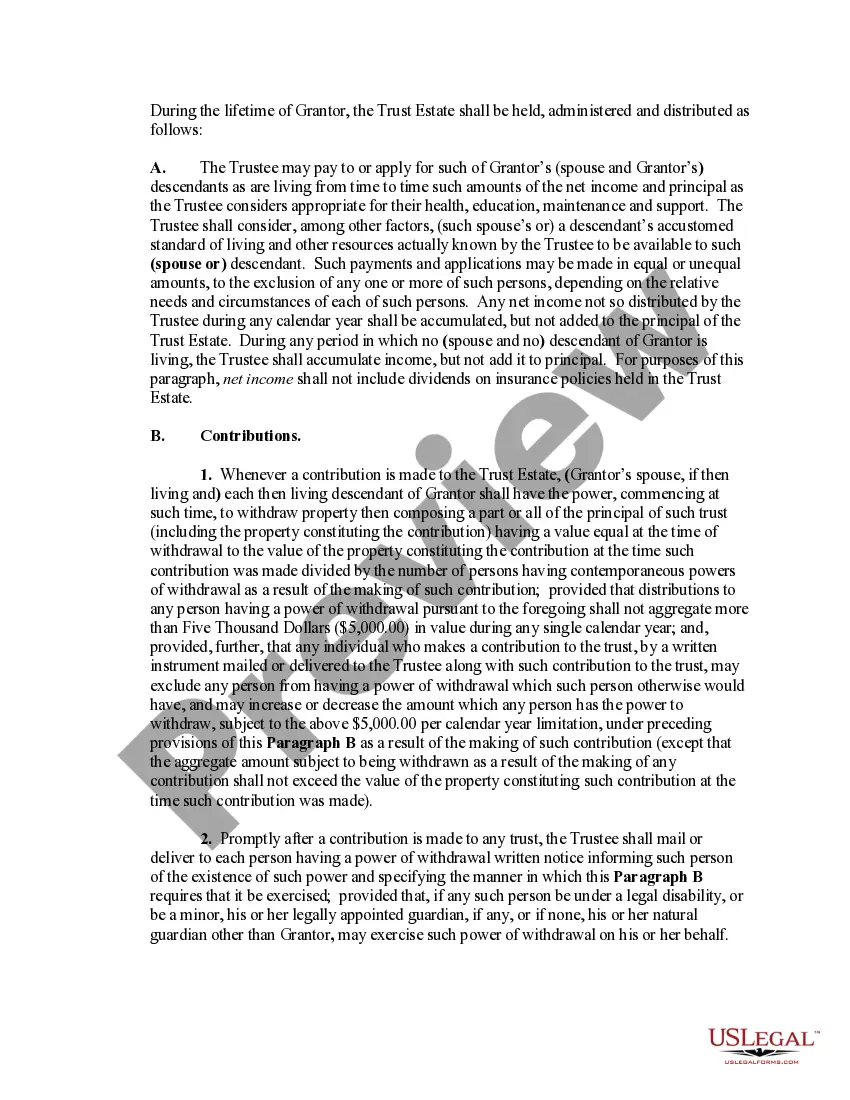
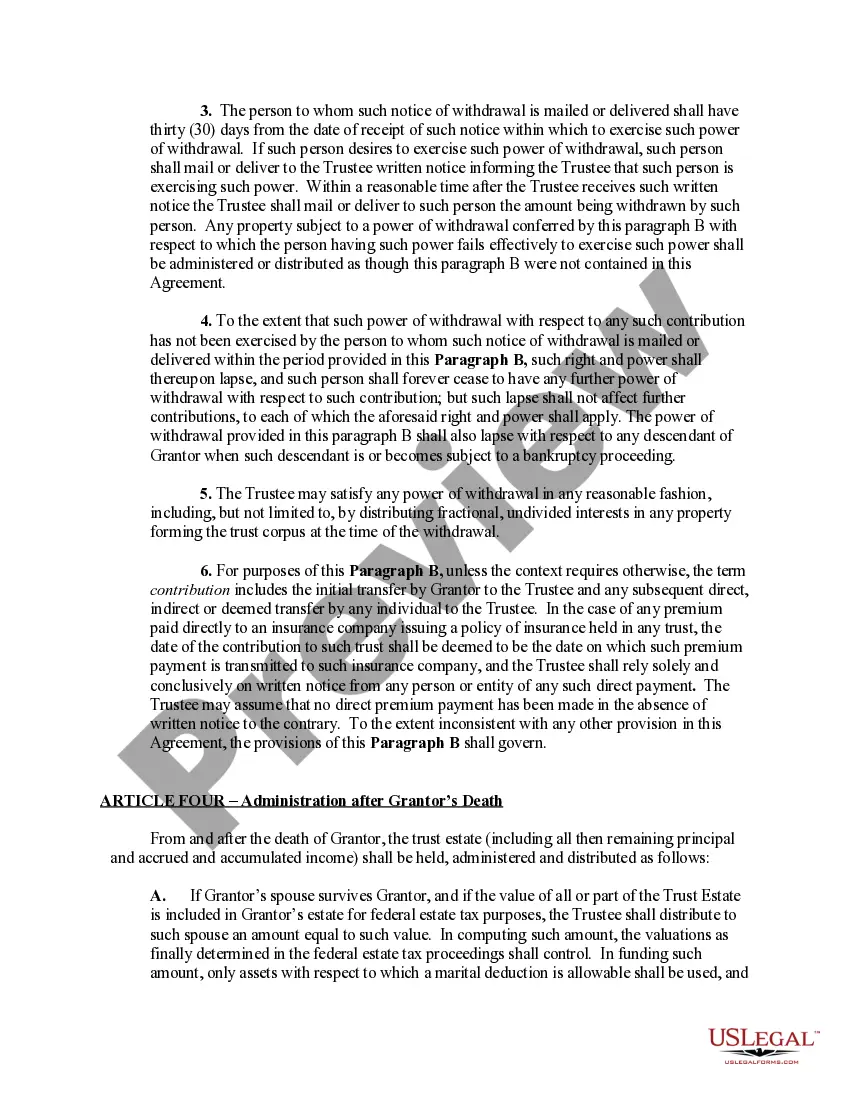
- Guidelines for trust administration during the grantorâs lifetime.
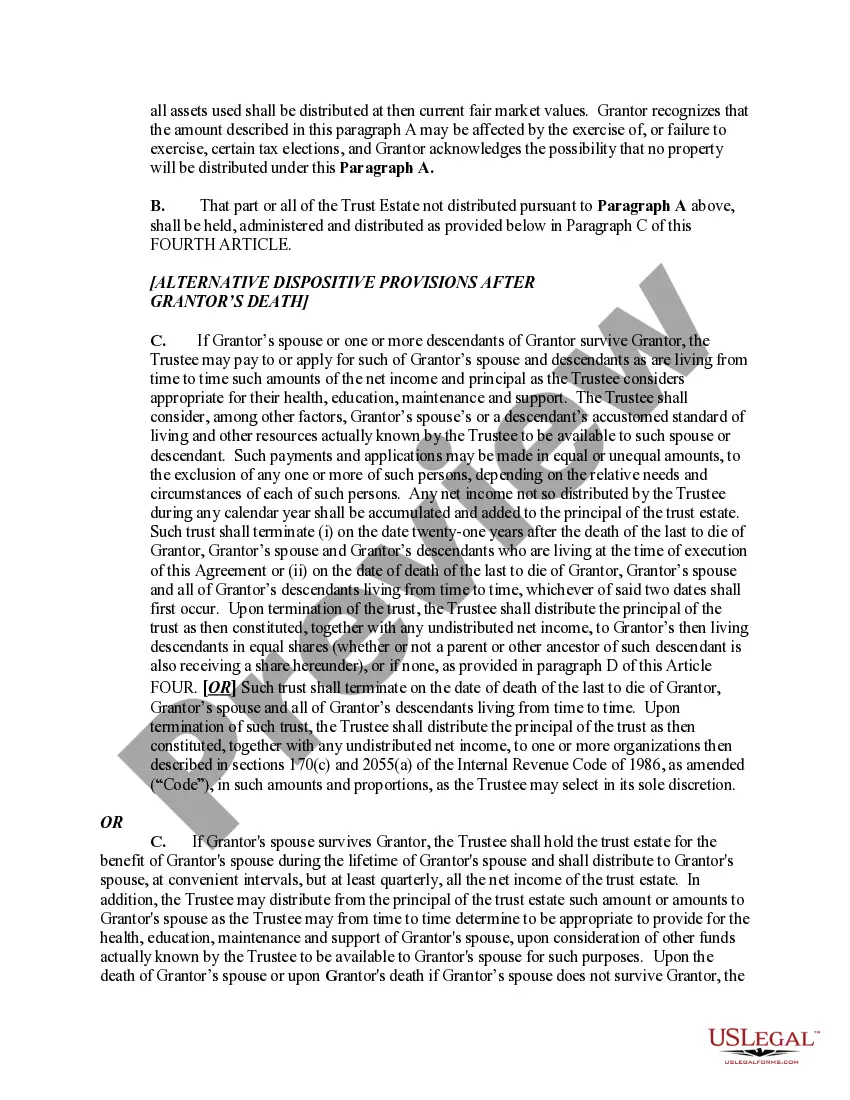
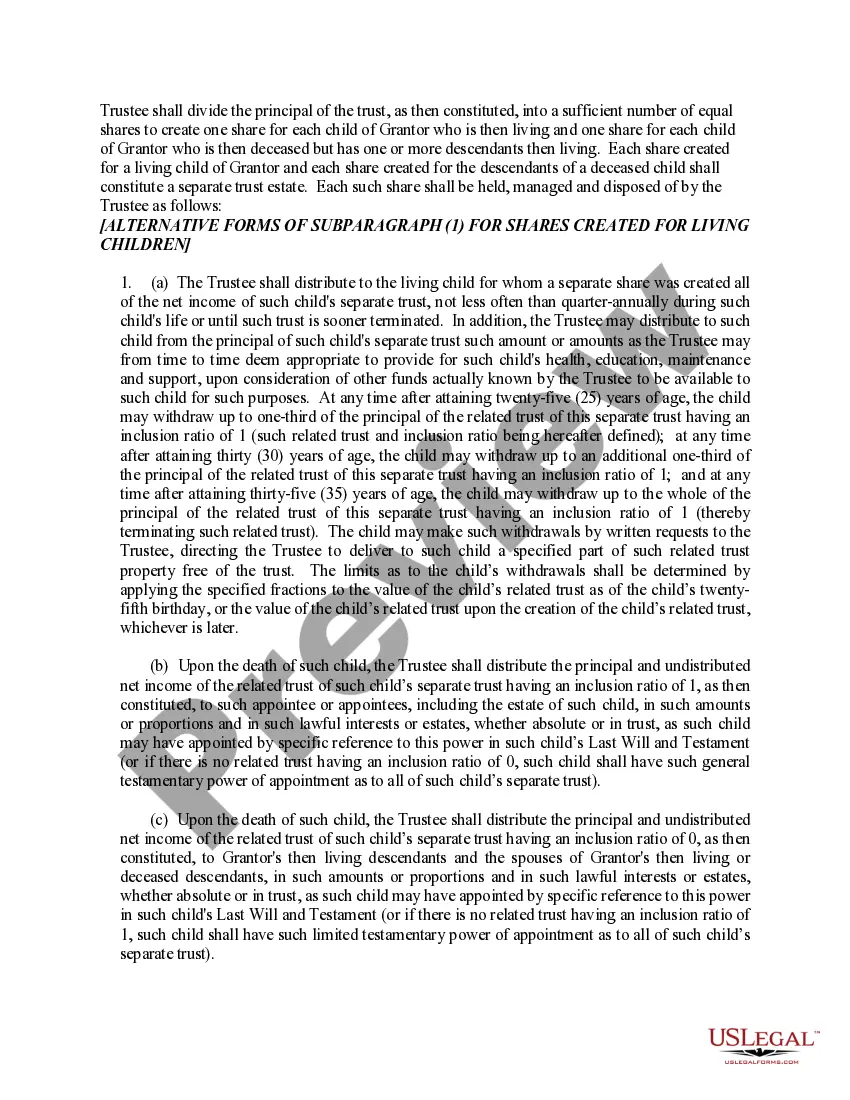
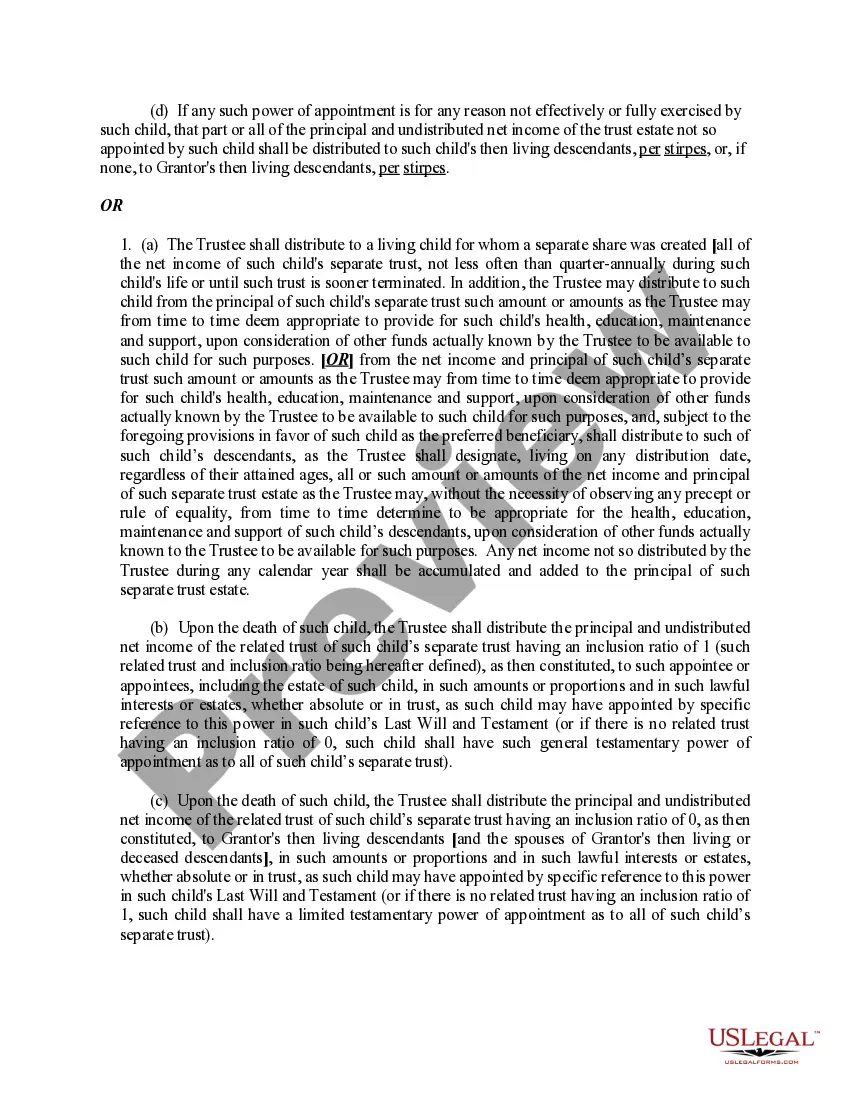
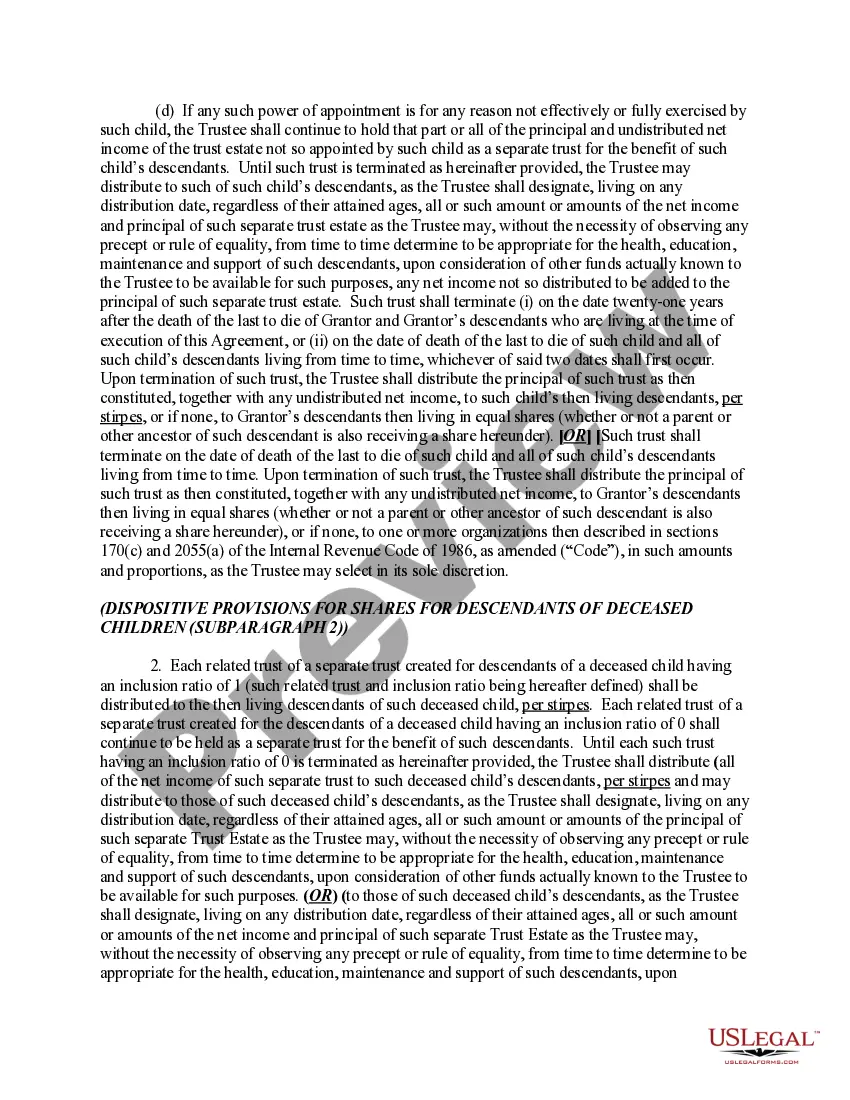
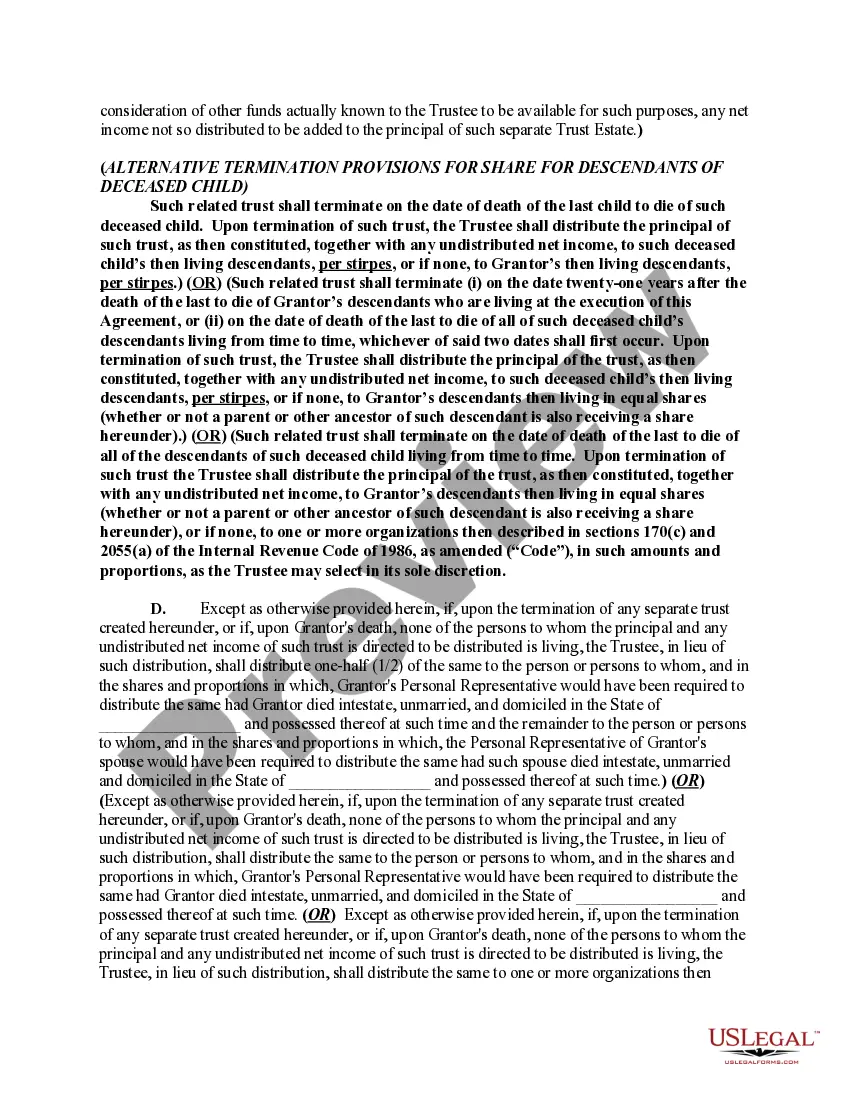
- Distribution instructions after the grantor's death.
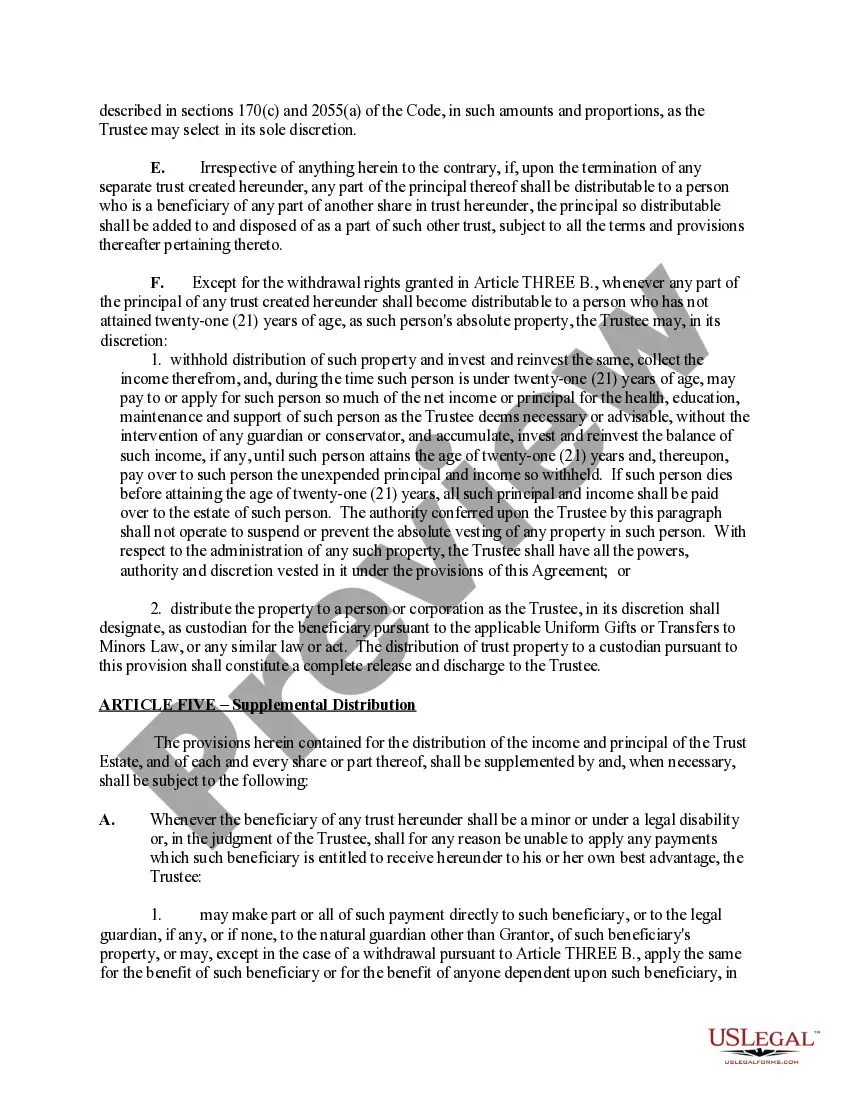
- Trustee powers, responsibilities, and limitations.


Situations where this form applies
This form is essential when an individual seeks to create an intentionally defective grantor trust as part of their estate planning strategy. It can be particularly beneficial if the grantor wishes to freeze asset values for estate tax purposes while continuing to pay taxes on the income generated by those assets. Utilizing this trust can also assist in reducing potential gift taxes for beneficiaries, making it an attractive option for individuals with significant assets or those anticipating substantial future gifts.
Who should use this form
- Individuals looking to minimize estate tax liabilities.
- Grantors who wish to retain tax responsibility for income generated by trust assets.
- Persons with substantial assets who intend to provide beneficial tax strategies for their heirs.
- Estate planning professionals assisting clients with asset protection and tax mitigation.
How to complete this form
- Identify and name the grantor and trustee involved in the trust.
- Complete Schedule A with a detailed list of the assets being transferred to the trust.
- Specify any relevant insurance policies that will be managed under the trust.
- Outline the administrative responsibilities of the trustee and the terms for distributions.
- Review and sign the document in the presence of a notary, if required.
Notarization guidance
This form does not typically require notarization unless specified by local law. However, it is advisable to consult with a legal professional to confirm any specific requirements based on your jurisdiction.
Get your form ready online
Our built-in tools help you complete, sign, share, and store your documents in one place.
Make edits, fill in missing information, and update formatting in US Legal Forms—just like you would in MS Word.
Download a copy, print it, send it by email, or mail it via USPS—whatever works best for your next step.
Sign and collect signatures with our SignNow integration. Send to multiple recipients, set reminders, and more. Go Premium to unlock E-Sign.
If this form requires notarization, complete it online through a secure video call—no need to meet a notary in person or wait for an appointment.
We protect your documents and personal data by following strict security and privacy standards.

Make edits, fill in missing information, and update formatting in US Legal Forms—just like you would in MS Word.

Download a copy, print it, send it by email, or mail it via USPS—whatever works best for your next step.

Sign and collect signatures with our SignNow integration. Send to multiple recipients, set reminders, and more. Go Premium to unlock E-Sign.

If this form requires notarization, complete it online through a secure video call—no need to meet a notary in person or wait for an appointment.

We protect your documents and personal data by following strict security and privacy standards.
Avoid these common issues
- Failing to include all relevant assets in Schedule A.
- Not specifying all trustee powers, leading to confusion later.
- Overlooking the tax implications of maintaining income responsibility.
- Not updating the trust provisions to reflect changes in personal circumstances.
Why use this form online
- Convenience of access and completion at your own pace.
- Easy to download and modify to fit specific needs.
- Reliability, as the form is developed by licensed attorneys.
- Secure and efficient document handling without the need for in-person meetings.
Looking for another form?






Form popularity
FAQ
The technique may involve a gift to the IDGT or a sale to the IDGT in exchange for a promissory note. An IDGT is a type of grantor trust, which means the grantor pays the income tax earned by the trust.
Another example is the Intentionally Defective Grantor Trust (IDGT). The IDGT is an Irrevocable Trust where, for strategic reasons, the Grantor decided to retain certain powers, so the Grantor pays the trust's income tax.
For example: Mom and Dad create an IDGT into which they wish to transfer $500,000 worth of stock. They can either gift the stock or sell it. If they sell it to the IDGT, they need to convey enough cash into the trust to cover its down payment to them. They enter into an agreement for a monthly amount.
An Intentionally Defective Grantor Trust is specifically designed to defect income taxes. Meaning the IRS has stated, for income tax purposes, the trust is tax neutral. The grantor or the irrevocable trust is required to pay income or capital gains taxes.
An Intentionally Defective Irrevocable Trust (IDIT) is a trust that contains certain provisions set forth in the Internal Revenue Code, which imputes the income to the Grantor as the creator of the trust, but excludes the trust assets from the Grantor's estate for estate tax purposes.
Remember that the grantor is responsible for the payment of income taxes incurred by the IDGT, and this includes capital gains taxes. Current federal capital gains tax rates (20%, or 23.8% if the net investment income tax applies) are lower than federal estate tax rates (40%).
For example, a client owns a business valued at $50MM, and has their entire 2021 lifetime gift exemption available ($11.7MM). If they choose to gift their maximum allowable amount to an IDGT, without discounts, they will have shifted approximately 23% of their business to the trust ($11.7MM/$50MM).
When a grantor is considered an owner of the trust for income tax purposes but has relinquished rights to the assets in the trust in a way that allows the grantor to not be considered the owner of the assets for estate tax purposes, this is called an Intentionally Defective Grantor Trust.