Grantor Retained Annuity Trust
What is this form?
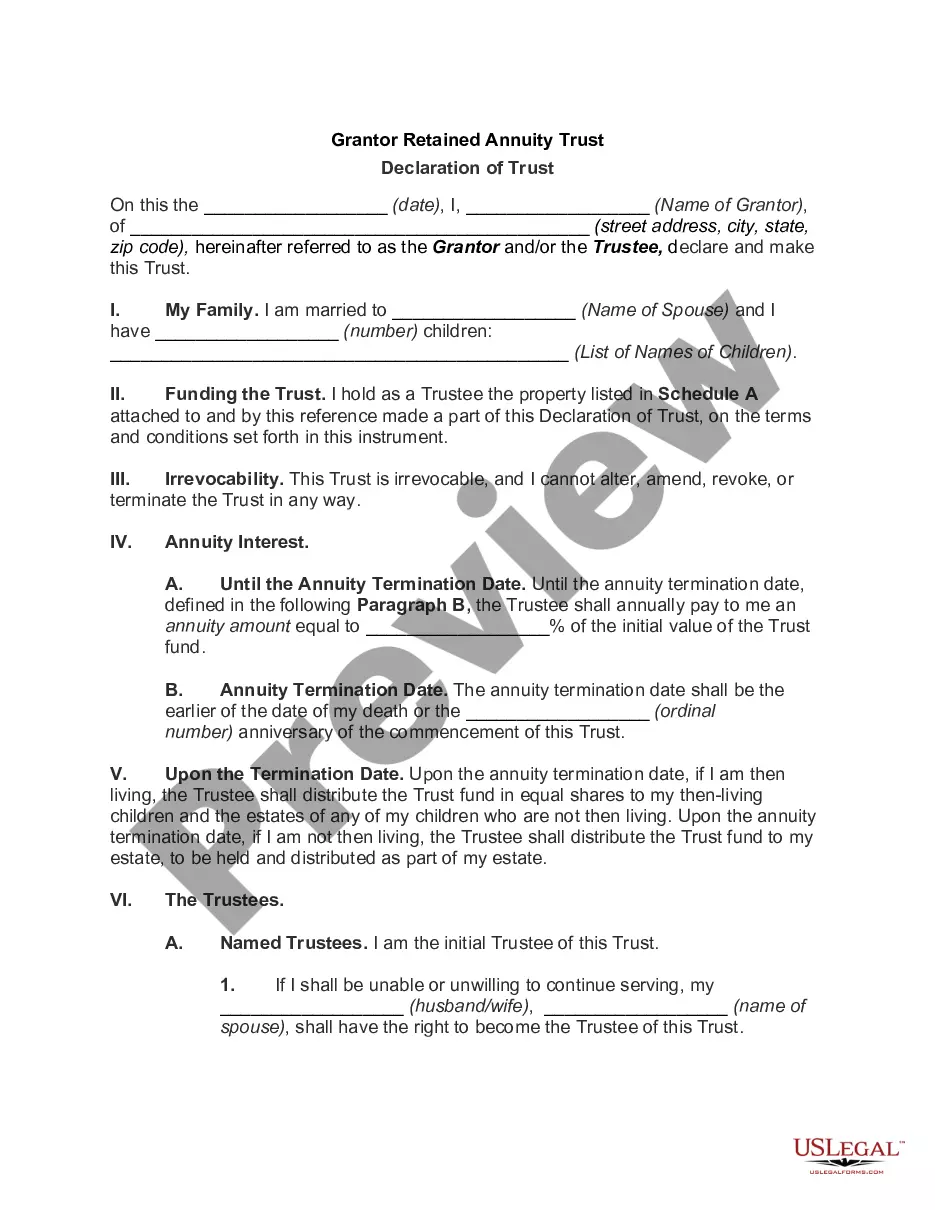
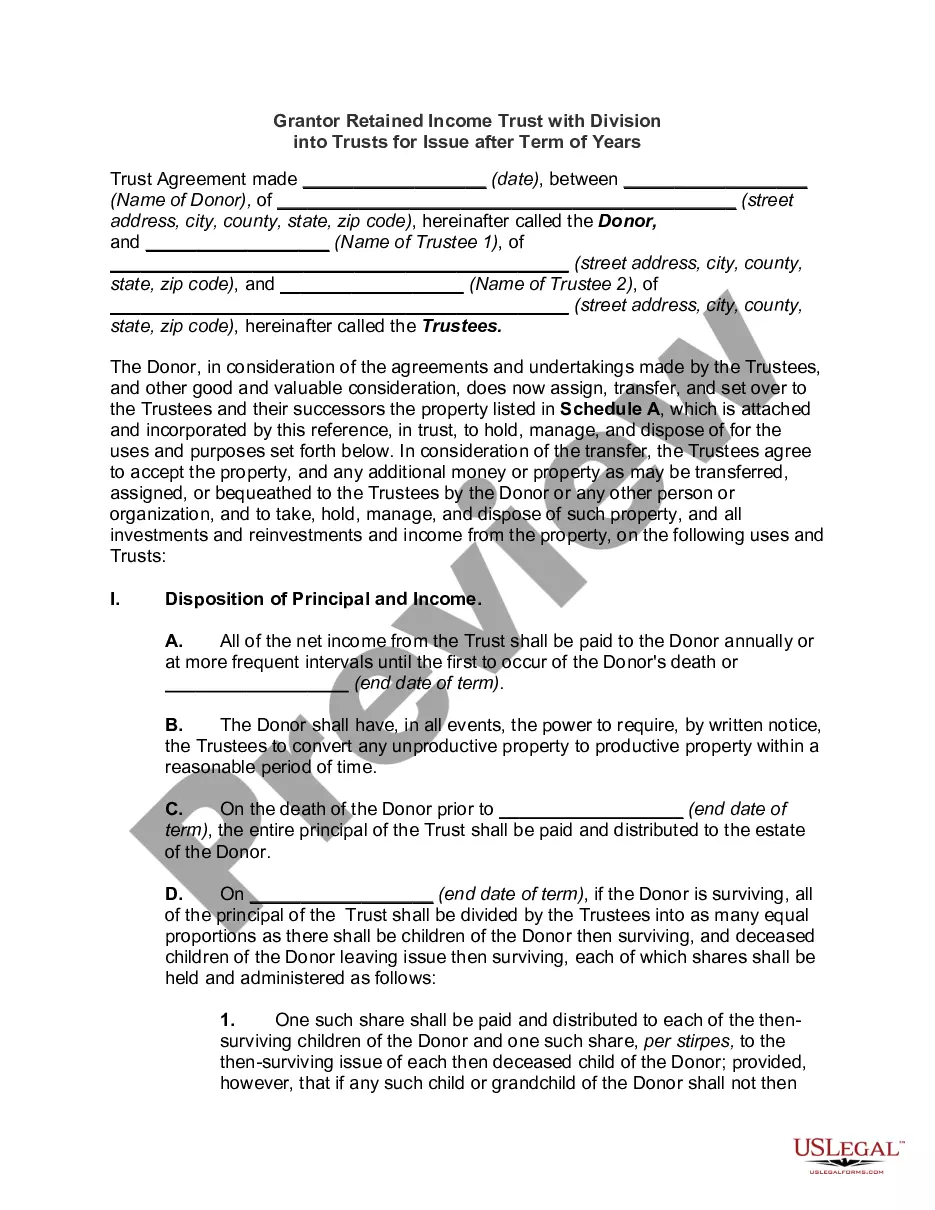
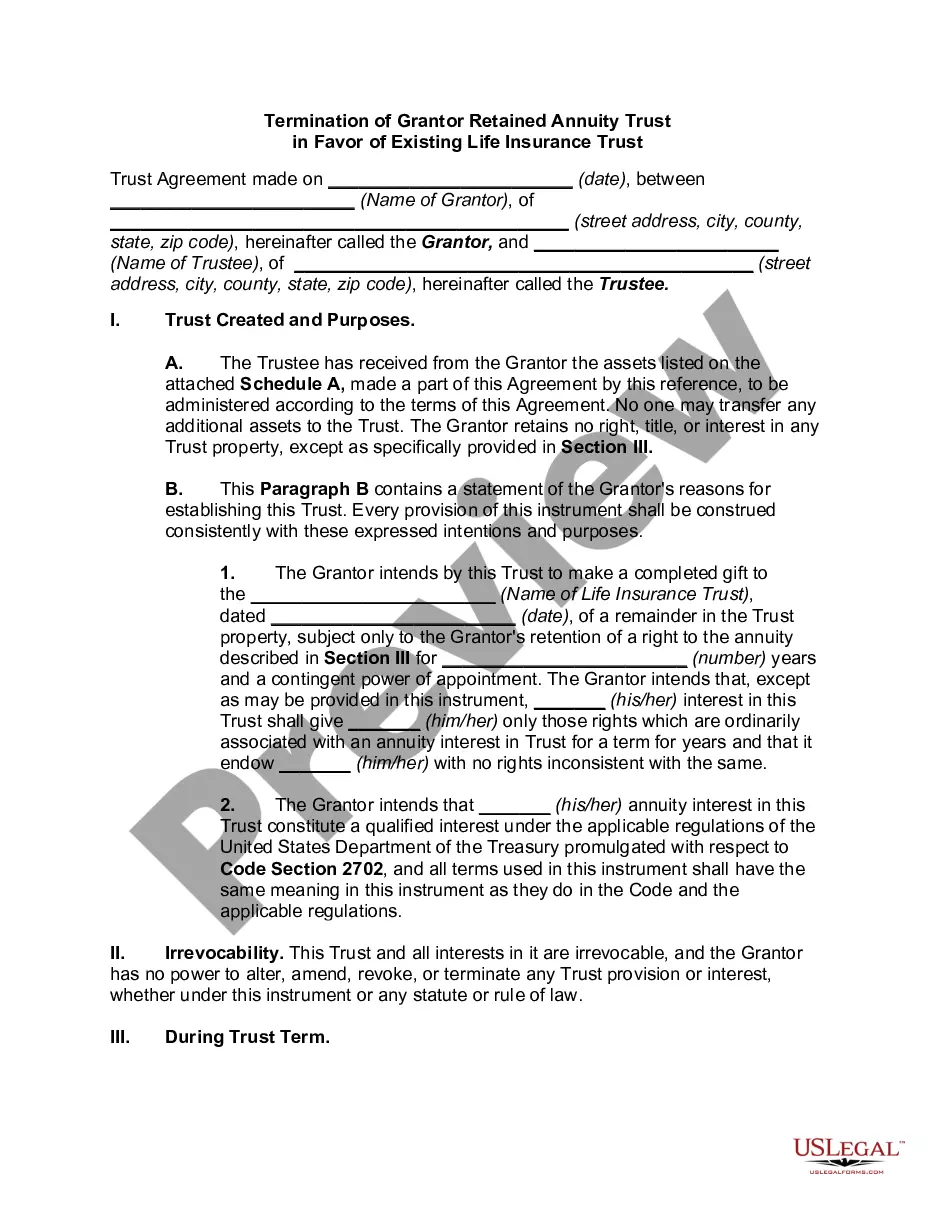
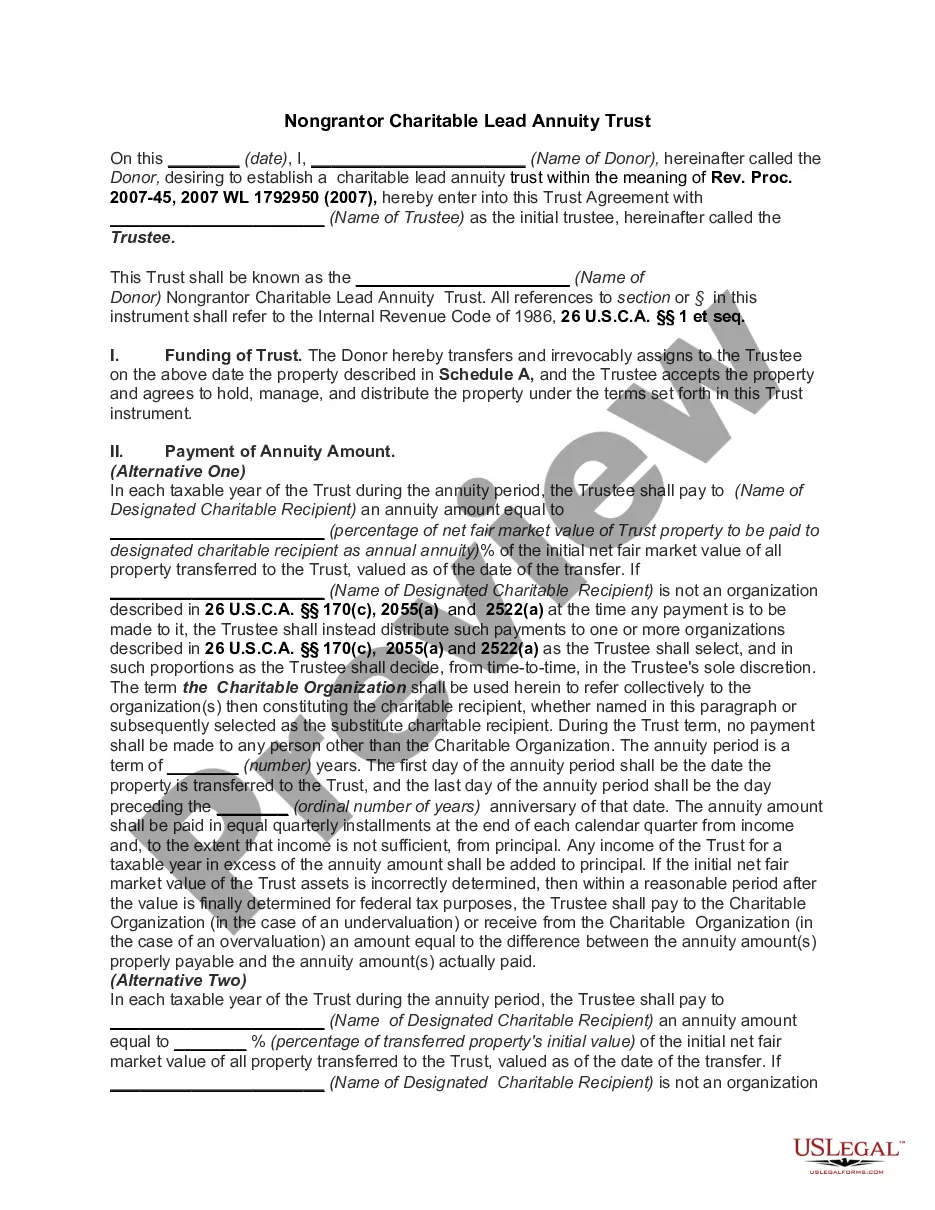
The Grantor Retained Annuity Trust (GRAT) form is a legal document used to establish a trust that provides the grantor with regular payments while facilitating a transfer of wealth to beneficiaries at a reduced tax cost. Unlike other trusts, the GRAT allows the grantor to retain an annuity interest for a specified term, thereby minimizing gift tax implications while ensuring financial benefits during their lifetime.
What’s included in this form
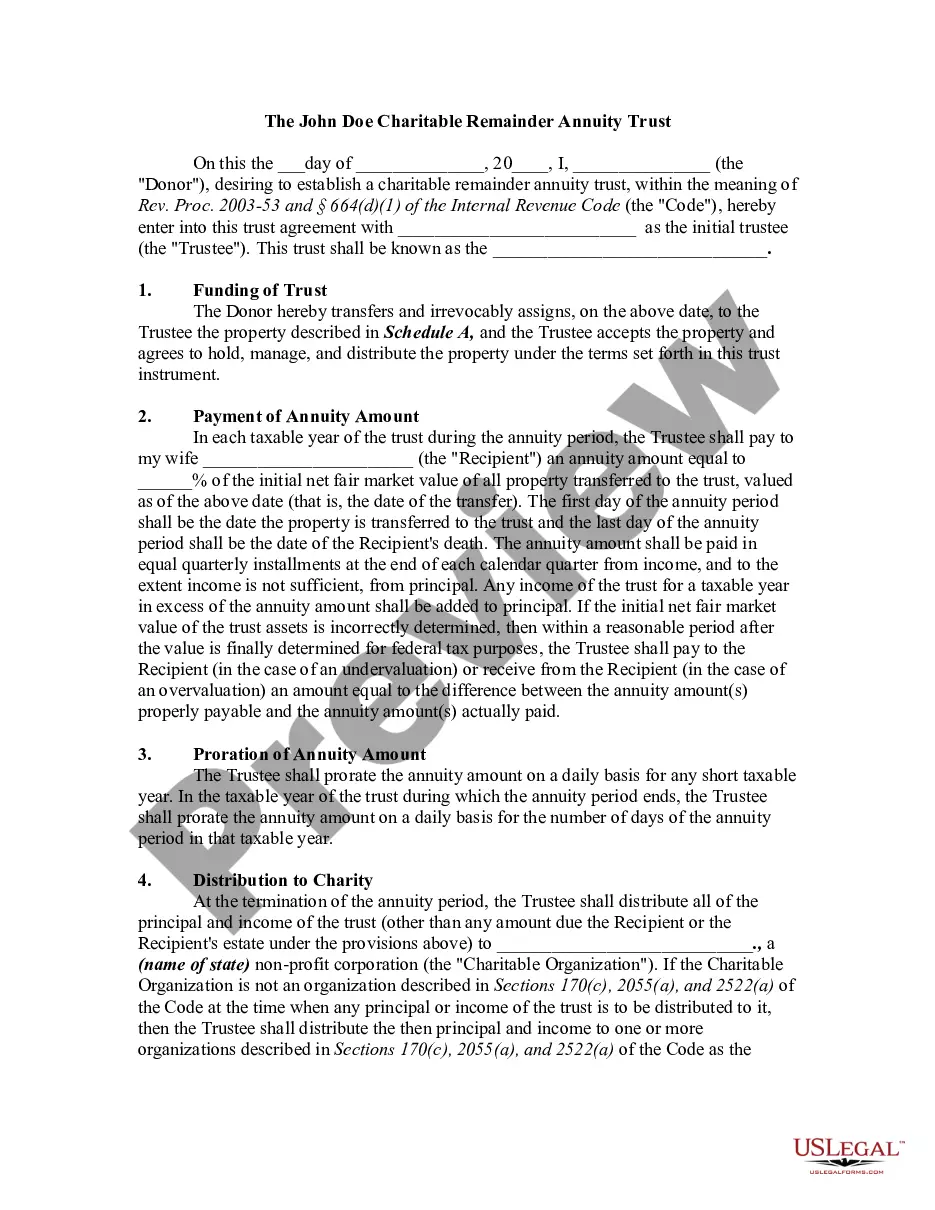
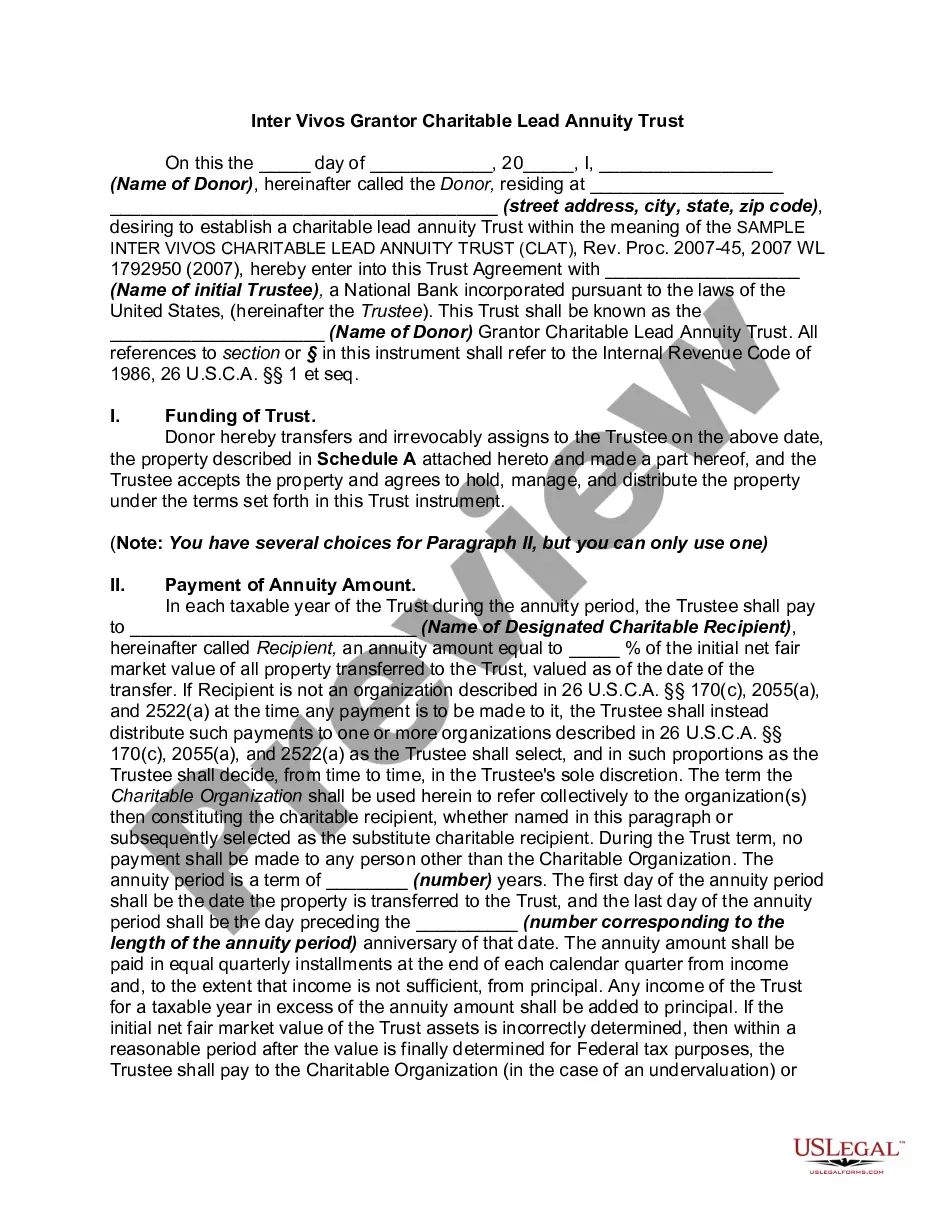
- Declaration of Trust: Outlines the formation of the trust.
- Funding the Trust: Specifies the property included in the trust.
- Irrevocability Clause: States that the trust cannot be altered or terminated by the grantor.
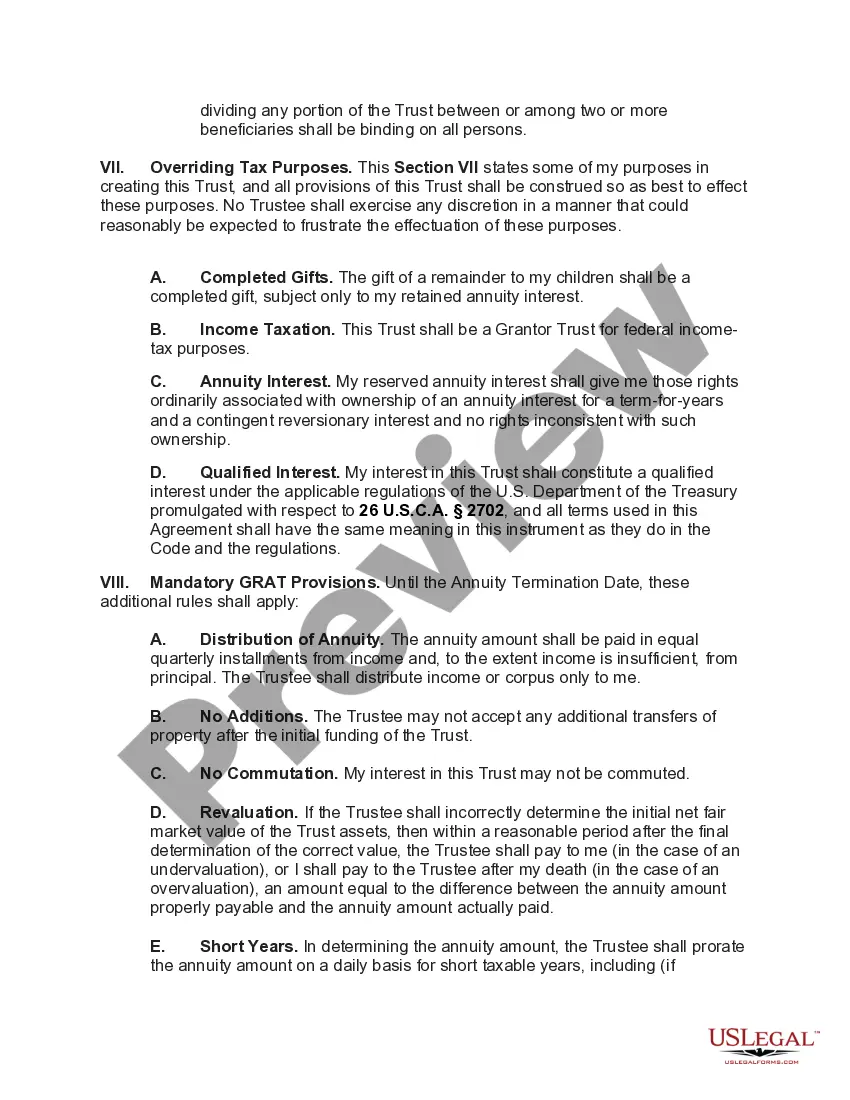
- Annuity Provisions: Details the annual payments and termination date of the annuity interest.
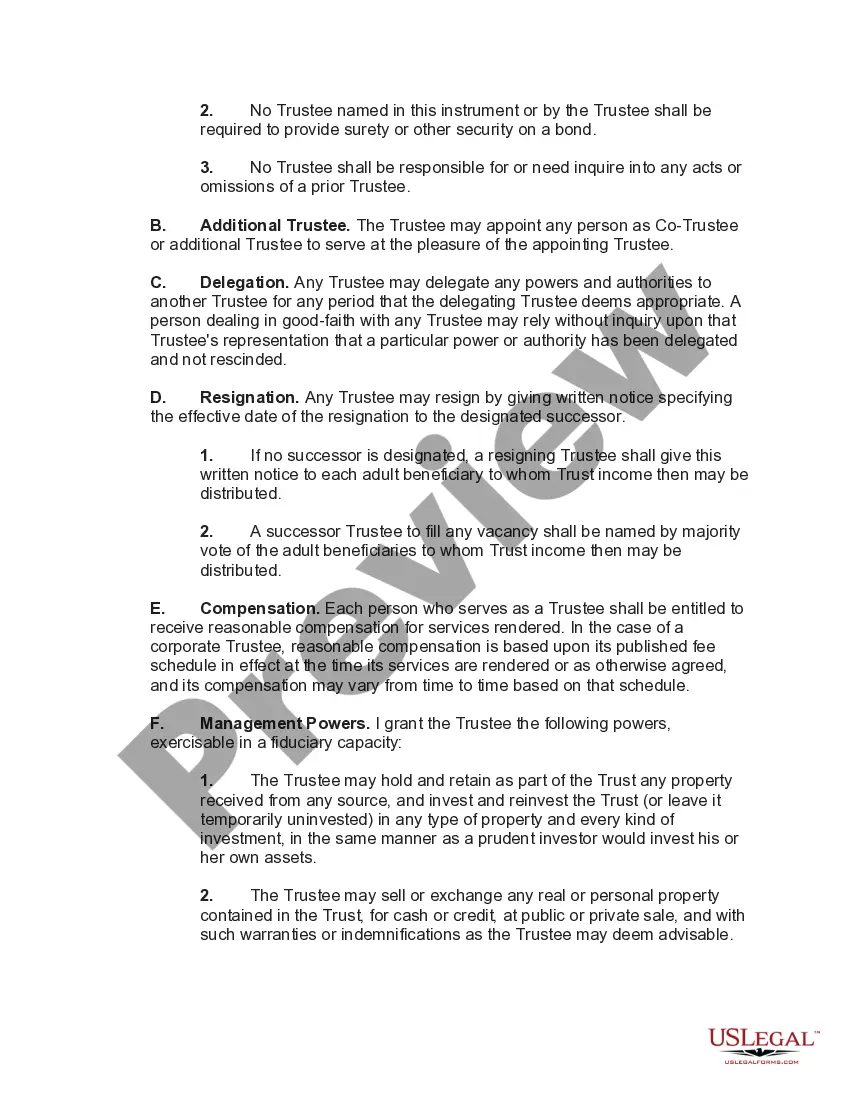
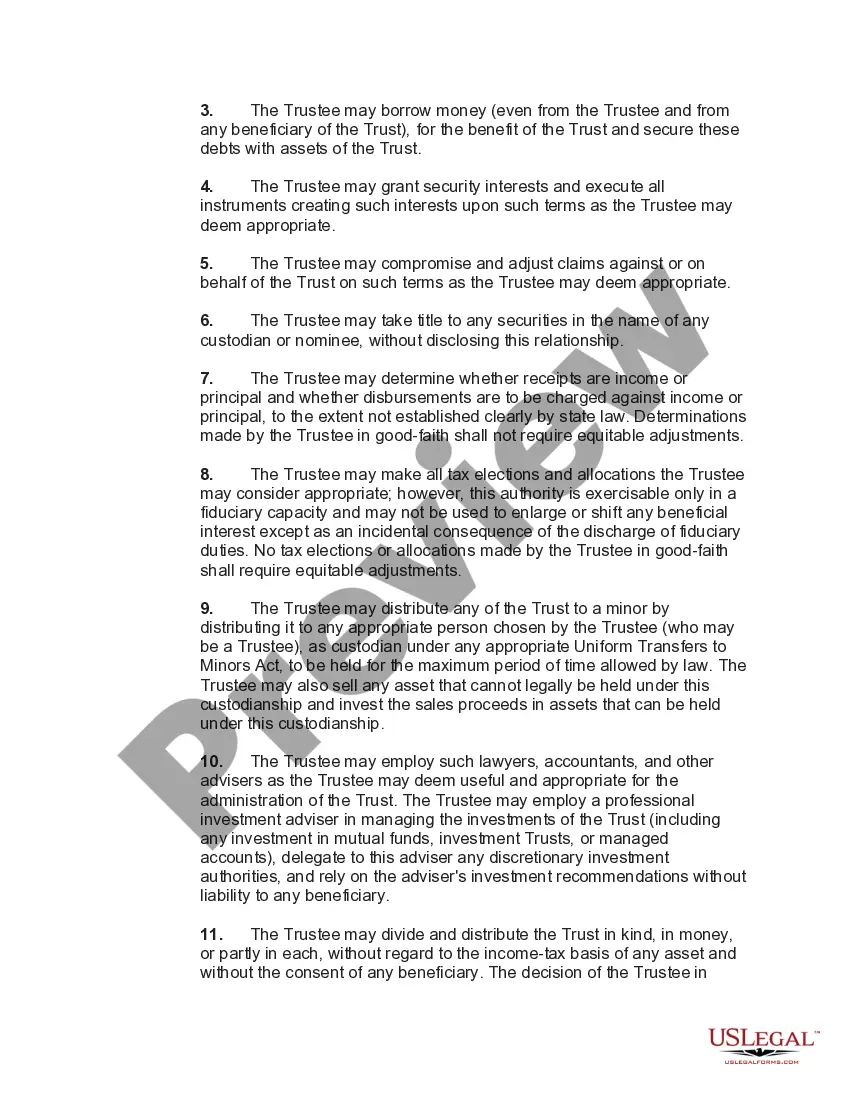
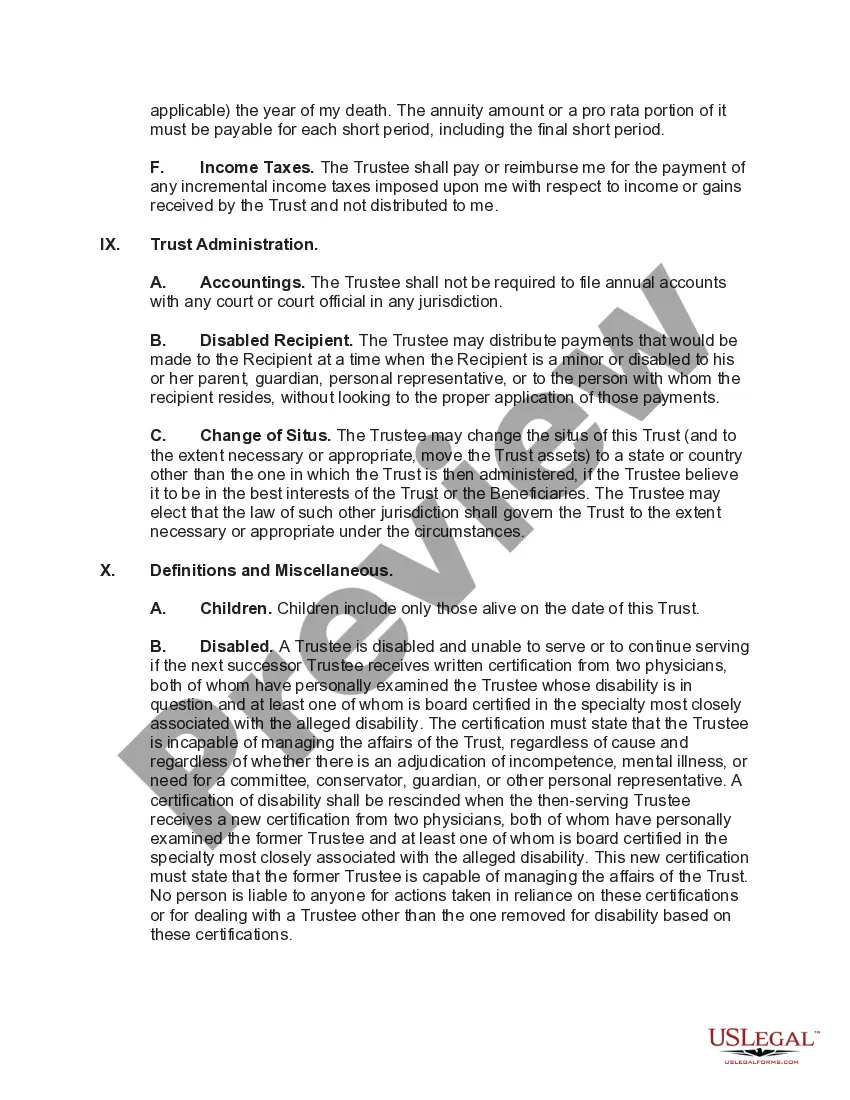
- Trustee Responsibilities: Defines the powers and duties of the trustee managing the trust.
- Tax Implications: Clarifies the trust's status for tax purposes.
Common use cases
This form is useful for individuals seeking to transfer wealth to their children or other beneficiaries while retaining an annual income from the trust assets. It is particularly beneficial in estate planning when the grantor wishes to minimize gift tax liabilities and maintain financial control during their lifetime.
Who can use this document
- Individuals with substantial assets looking to minimize tax implications of transferring wealth.
- Grantors who wish to retain income from their trust while ensuring their beneficiaries receive assets later.
- Anyone involved in estate planning, especially those considering estate tax reduction strategies.
Completing this form step by step
- Enter the date and your full name as the grantor at the beginning of the document.
- Provide your residential address, including street, city, state, and zip code.
- List your spouse's name and the names and number of your children in the designated sections.
- Specify the annuity percentage and termination date, as required by the form.
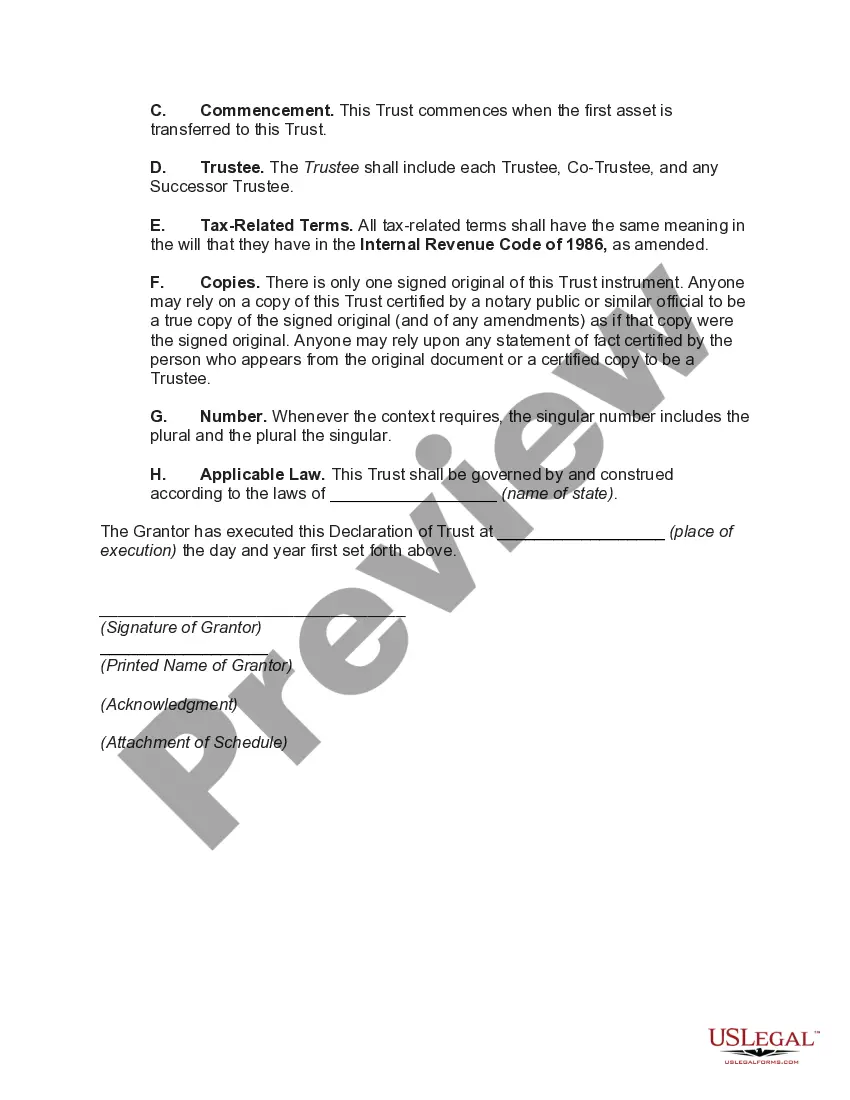
- Sign and date the document to finalize the trust agreement.
Notarization requirements for this form
This form does not typically require notarization unless specified by local law. However, it is recommended to consult a legal professional to confirm the requirements specific to your jurisdiction and situation.
Get your form ready online
Our built-in tools help you complete, sign, share, and store your documents in one place.
Make edits, fill in missing information, and update formatting in US Legal Forms—just like you would in MS Word.
Download a copy, print it, send it by email, or mail it via USPS—whatever works best for your next step.
Sign and collect signatures with our SignNow integration. Send to multiple recipients, set reminders, and more. Go Premium to unlock E-Sign.
If this form requires notarization, complete it online through a secure video call—no need to meet a notary in person or wait for an appointment.
We protect your documents and personal data by following strict security and privacy standards.

Make edits, fill in missing information, and update formatting in US Legal Forms—just like you would in MS Word.

Download a copy, print it, send it by email, or mail it via USPS—whatever works best for your next step.

Sign and collect signatures with our SignNow integration. Send to multiple recipients, set reminders, and more. Go Premium to unlock E-Sign.

If this form requires notarization, complete it online through a secure video call—no need to meet a notary in person or wait for an appointment.

We protect your documents and personal data by following strict security and privacy standards.
Common mistakes to avoid
- Failing to specify all required details, such as annuity percentage or termination date.
- Overlooking the irrevocable nature of the trust, which cannot be amended after execution.
- Not consulting a tax professional to understand the implications of creating a GRAT.
Benefits of completing this form online
- Convenience of completing the form from home without the need for in-person meetings.
- Editability allows users to adjust specific details as needed before finalizing.
- Access to templates drafted by licensed attorneys ensures legal compliance.
Looking for another form?

Form popularity
FAQ
A grantor retained annuity trust (GRAT) is a financial instrument used in estate planning to minimize taxes on large financial gifts to family members.Assets are placed under the trust and then an annuity is paid out every year. When the trust expires the beneficiary receives the assets tax-free.
One of the primary purposes of a GRAT is to move asset appreciation from the grantor to remainder beneficiaries, thereby reducing the value of the grantor's assets that will ultimately be subject to estate tax.
A grantor retained income trust (GRIT) is a specific type of trust that allows you to transfer assets while still benefiting from the income they generate. This is a little more advanced than a typical revocable living trust, but establishing a GRIT could yield some advantages.
But if the assets don't grow above the hurdle rateor if the value of the assets declineyou still get them back, minus the cost to set up and administer the GRAT, which can be about $2,000 to $5,000 in legal fees.
Grantor Retained Interest & Qualified Personal Residence Trust. A grantor retained interest trust is a trust where a grantor makes an irrevocable transfer of assets but reserves the right to receive income from or enjoyment of those assets for a period of years.
There should be no gift tax consequences upon the termination of the GRAT.If the grantor dies during the term of the GRAT and has the right to receive further annuity payments, a portion of the GRAT will be included in the grantor's gross estate for federal estate tax purposes.
A GRAT is created when a grantor contributes assets with appreciation potential to a fixed-term, irrevocable trust. The grantor then retains the right to receive an annuity stream over the trust's term.Any appreciation in excess of the Sec. 7520 rate passes to the beneficiaries free of gift tax.