Grantor Retained Income Trust with Division into Trusts for Issue after Term of Years
About this form
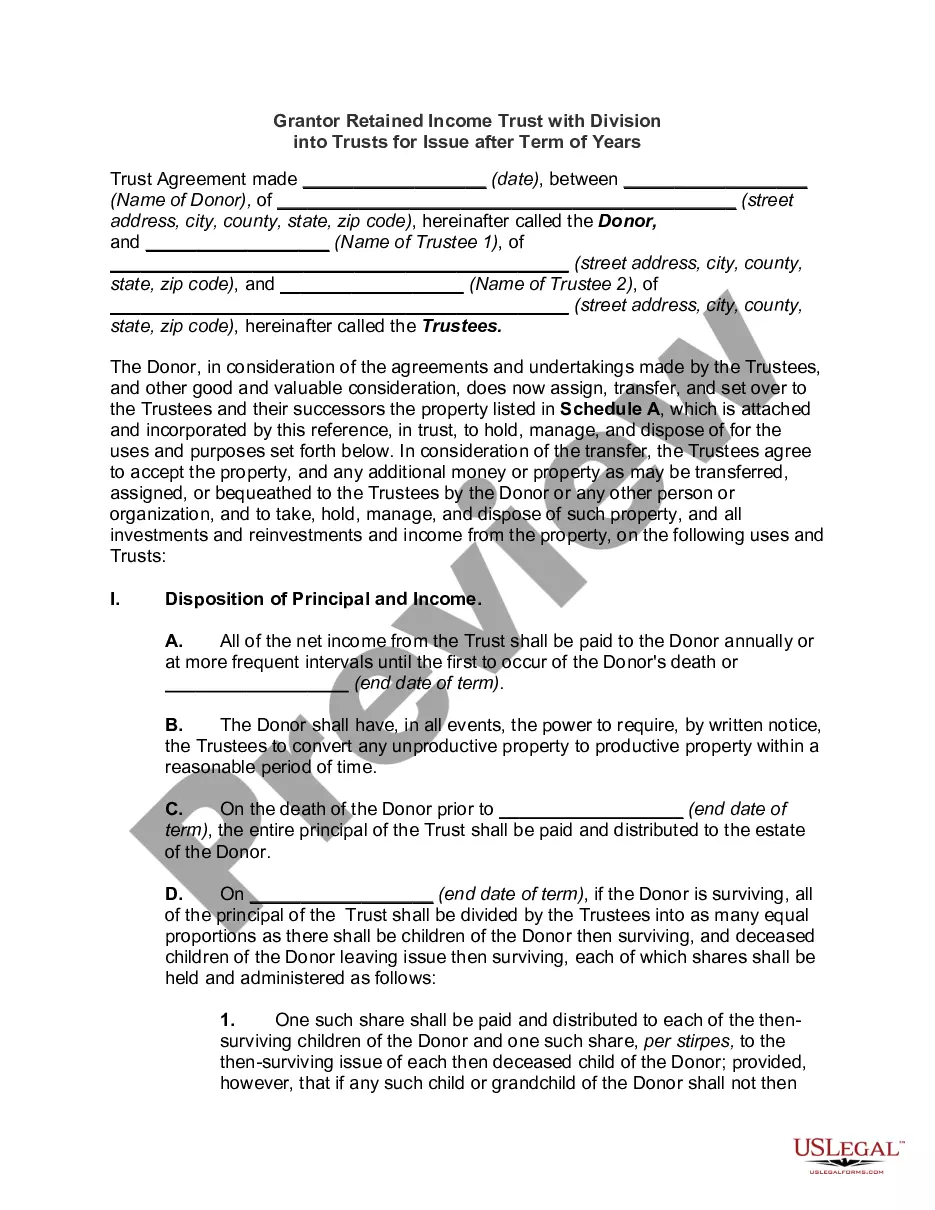
The Grantor Retained Income Trust (GRIT) is an irrevocable trust designed to allow the grantor to transfer assets while retaining the right to income from those assets for a specified period. This legal instrument is particularly beneficial for estate planning, enabling the grantor to potentially reduce taxable estate value while ensuring income generation during the trust term. Unlike a standard revocable trust, the GRIT is irrevocable, meaning once assets are transferred, the grantor cannot reclaim them.
What’s included in this form
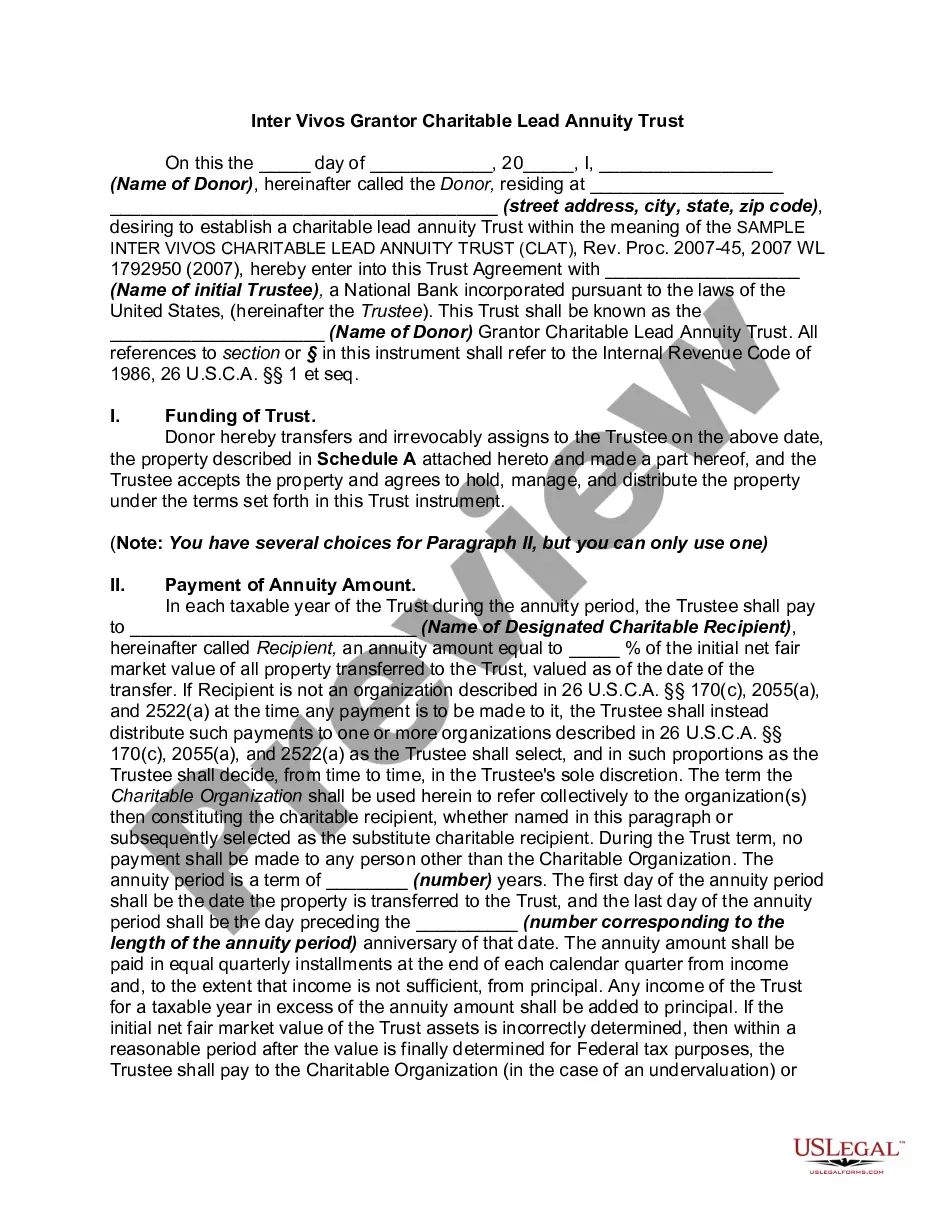
- Trust Agreement: Establishes the trust relationship between the donor and trustees.
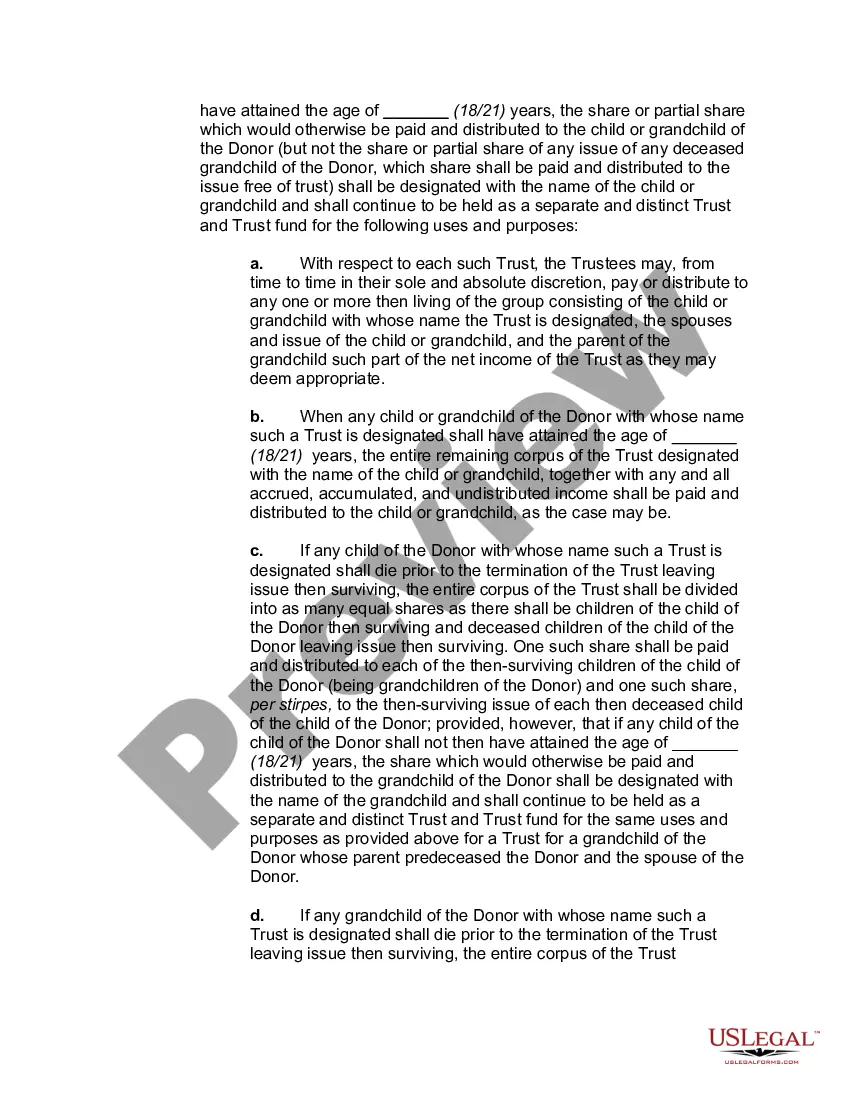
- Principal and Income Distribution: Outlines how income is paid to the donor and how the principal is allocated to beneficiaries after the specified term.
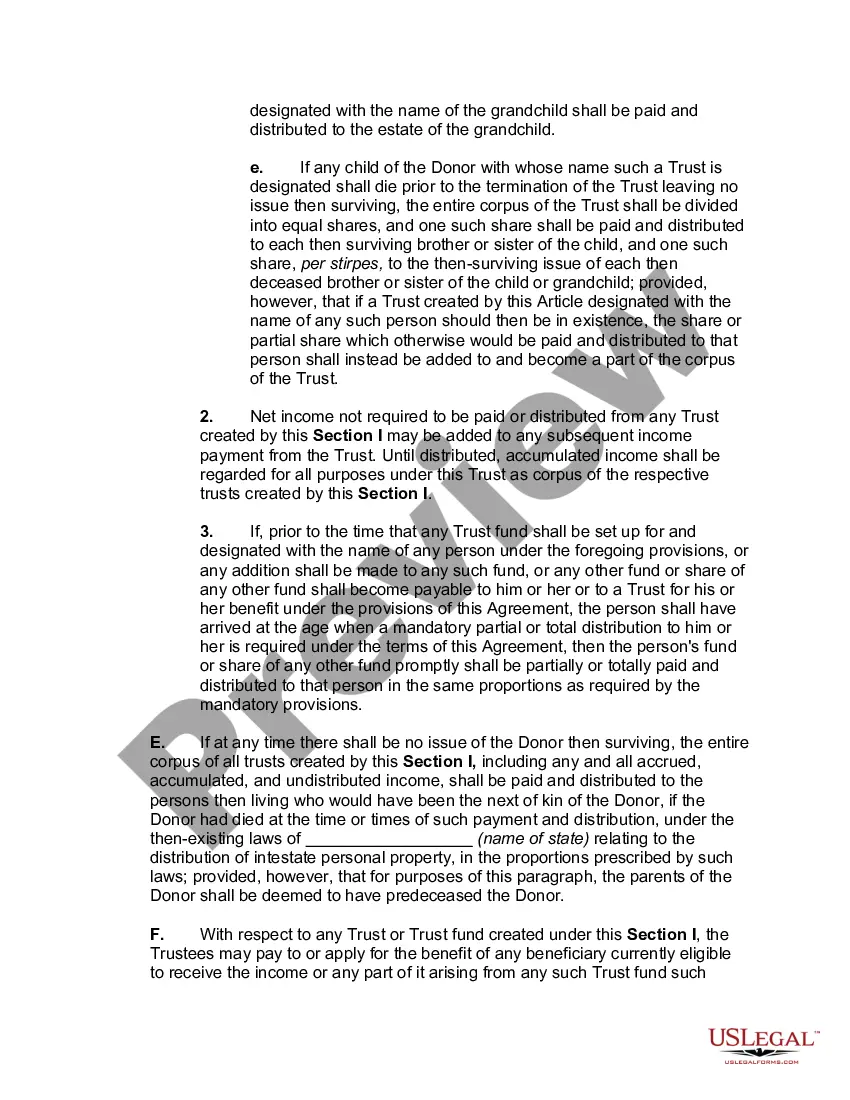
- Provisions for Minor Beneficiaries: Ensures that assets meant for beneficiaries who are minors are held in trust until they reach a specified age.
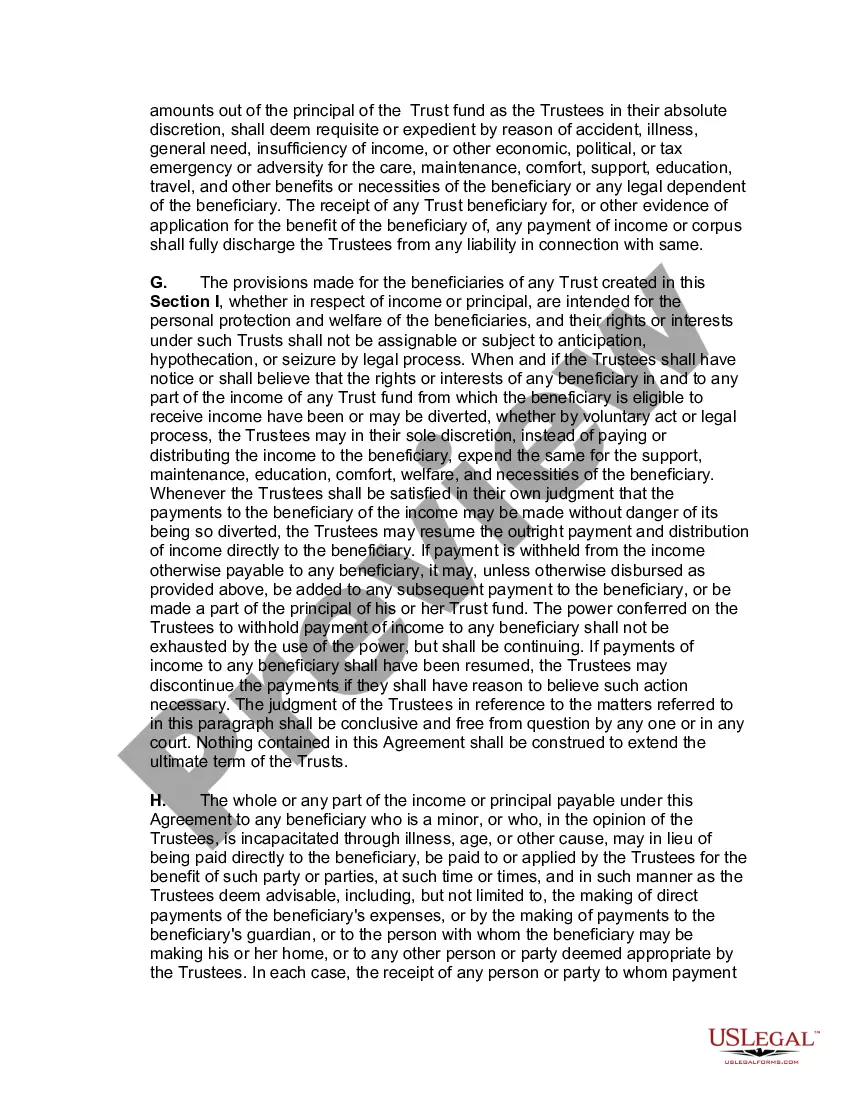
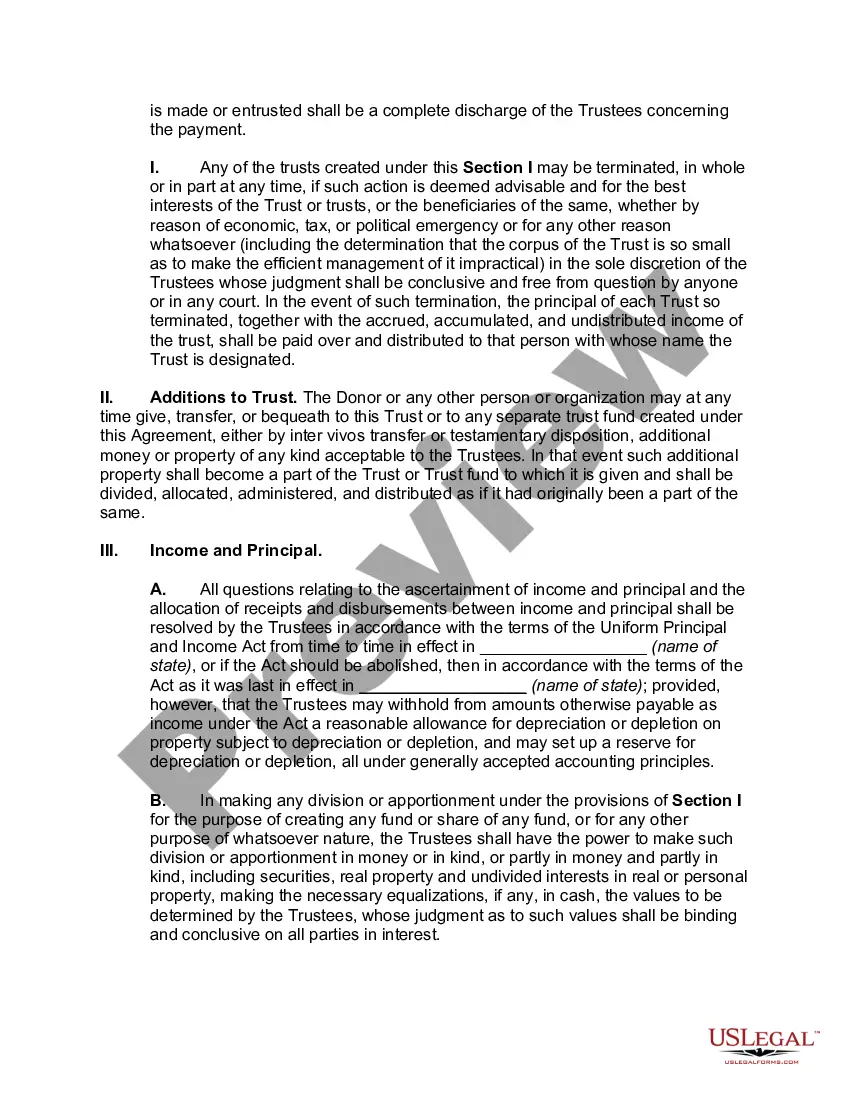
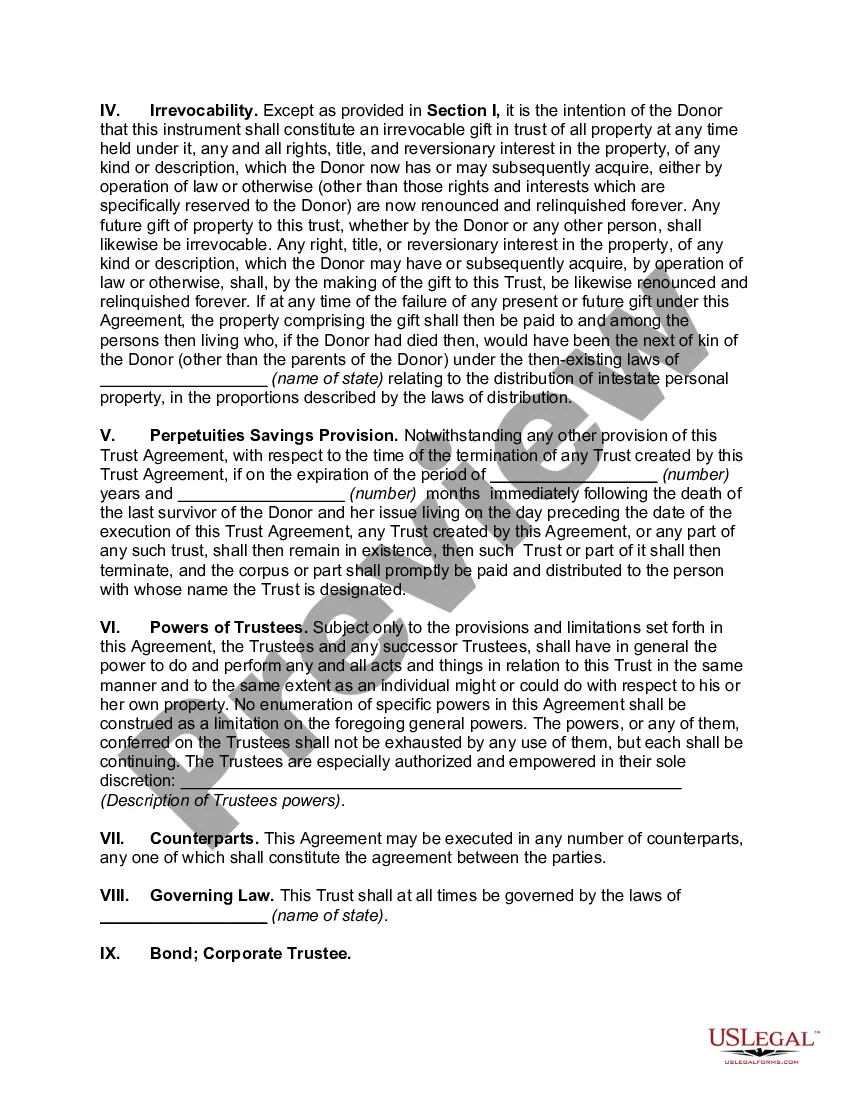
- Powers of Trustees: Grants the trustees broad authority to manage, invest, and distribute the trust assets.
- Irrevocability Clause: Confirms the irrevocable nature of the trust, emphasizing that transfers cannot be undone.

When to use this document
This form is useful in various scenarios, including when a grantor wishes to minimize estate taxes while ensuring they can utilize the income from the transferred assets during their lifetime. It may also be suitable for those looking to pass wealth to children or grandchildren while maintaining control over the income from the trust assets for a designated period.
Intended users of this form
This form is recommended for:
- Individuals seeking to establish an estate plan that reduces their taxable estate.
- Those who want to retain income from transferred assets for a specified time frame.
- Parents or grandparents who wish to set aside assets for their children or grandchildren.
Steps to complete this form
Follow these steps to complete the Grantor Retained Income Trust form:
- Identify the parties: Clearly state the names and addresses of the donor and trustees.
- Specify the property: List the assets being transferred to the trust in Schedule A.
- Enter the dates: Indicate the trust's commencement date and the term end date.
- Outline income distribution: Fill in details regarding how income will be distributed to the donor and terms for the beneficiaries.
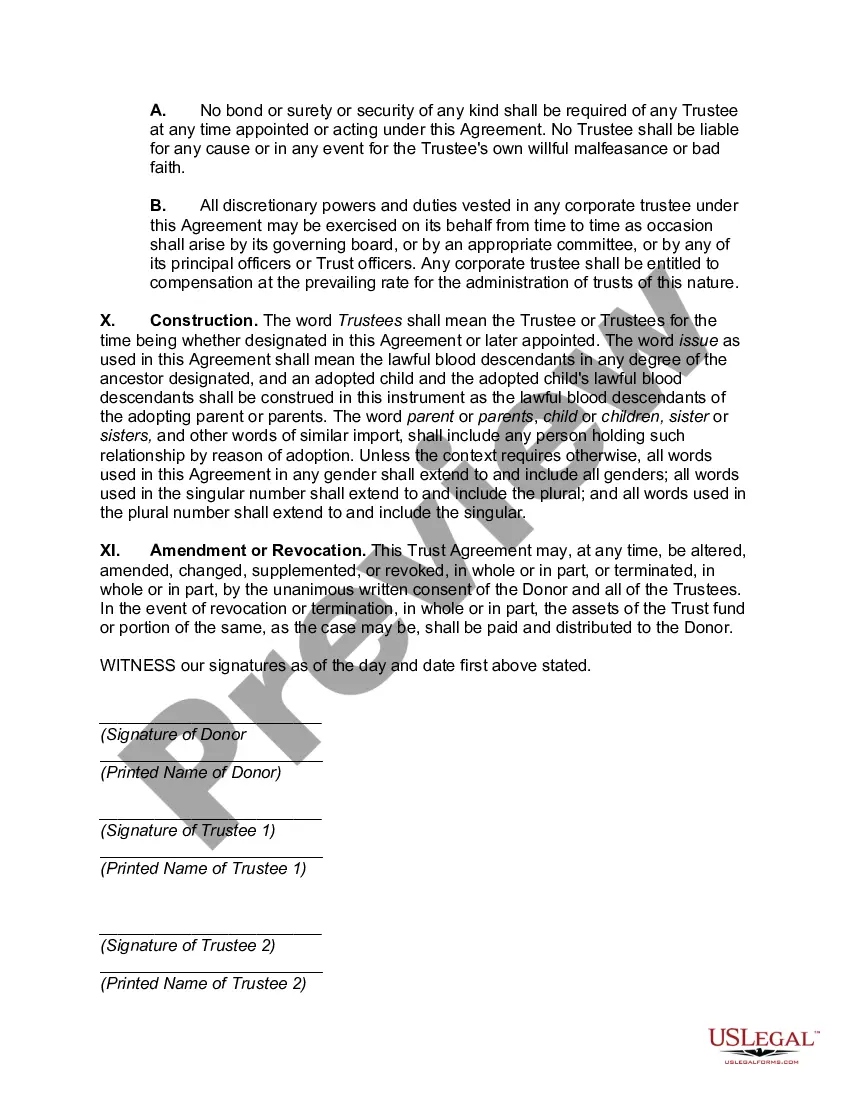
- Review and sign: Ensure all parties sign the document and consider notarization if required.
Does this form need to be notarized?
This form does not typically require notarization unless specified by local law. However, having the document notarized can provide an extra layer of legal protection and authenticity when executing the trust agreement.
Get your form ready online
Our built-in tools help you complete, sign, share, and store your documents in one place.
Make edits, fill in missing information, and update formatting in US Legal Forms—just like you would in MS Word.
Download a copy, print it, send it by email, or mail it via USPS—whatever works best for your next step.
Sign and collect signatures with our SignNow integration. Send to multiple recipients, set reminders, and more. Go Premium to unlock E-Sign.
If this form requires notarization, complete it online through a secure video call—no need to meet a notary in person or wait for an appointment.
We protect your documents and personal data by following strict security and privacy standards.

Make edits, fill in missing information, and update formatting in US Legal Forms—just like you would in MS Word.

Download a copy, print it, send it by email, or mail it via USPS—whatever works best for your next step.

Sign and collect signatures with our SignNow integration. Send to multiple recipients, set reminders, and more. Go Premium to unlock E-Sign.

If this form requires notarization, complete it online through a secure video call—no need to meet a notary in person or wait for an appointment.

We protect your documents and personal data by following strict security and privacy standards.
Common mistakes
- Not specifying the term end date, leading to unclear distribution timelines.
- Failing to accurately fill out Schedule A, which could cause disputes over the trust assets.
- Neglecting to consider state-specific requirements which may affect the trust's enforceability.
Advantages of online completion
- Convenience of having a legally vetted document ready for use.
- Editable format allows for customization according to personal circumstances.
- Access to a comprehensive template that can save time and reduce errors.
- The GRIT is enforceable under state law, assuming the trust is properly established and executed.
- It is important to maintain accurate records of distributions to comply with tax regulations.
- Consulting with a legal professional is advisable to ensure that all terms meet specific state regulatory standards.
Key takeaways
- The Grantor Retained Income Trust allows for income retention while facilitating estate planning efforts.
- It is essential to accurately detail all terms to ensure clarity for all parties involved.
- Adherence to state laws is crucial for the validity and enforcement of the trust.
Looking for another form?




Form popularity
FAQ
Interest in a closely or family-held business, including S corporation stock, may be placed in a GRAT. The Settlor may be the Trustee of the GRAT during the annuity term unless cer- tain voting stock is used to fund the GRAT.
The annuity amount is paid to the grantor during the term of the GRAT, and any property remaining in the trust at the end of the GRAT term passes to the beneficiaries with no further gift tax consequences.If the grantor lives out the term, the remainder passes to the beneficiaries without any additional transfer tax.
A grantor retained income trust (GRIT) is a specific type of trust that allows you to transfer assets while still benefiting from the income they generate. This is a little more advanced than a typical revocable living trust, but establishing a GRIT could yield some advantages.
Overview. When the grantor, who is also the trustee, dies, the successor trustee named in the Declaration of Trust takes over as trustee. The new trustee is responsible for distributing the trust property to the beneficiaries named in the trust document.
At the end of the initial term retained by the Grantor, if the Grantor is still living, the remainder beneficiaries (or a trust to be administered for the benefit of the remainder beneficiaries) receive $100,0000 plus all capital growth (which is the amount over and above the net income that was paid to the Grantor).
A grantor retained annuity trust (GRAT) is a financial instrument used in estate planning to minimize taxes on large financial gifts to family members.Assets are placed under the trust and then an annuity is paid out every year. When the trust expires the beneficiary receives the assets tax-free.
Trust Basics The trustee may be the grantor. The grantor designates the beneficiaries who are to benefit from the trust and receive its income and principal. Certain trusts allow the grantor to be both the trustee and the beneficiary.
A grantor retained annuity trust (GRAT) is a financial instrument used in estate planning to minimize taxes on large financial gifts to family members.Assets are placed under the trust and then an annuity is paid out every year. When the trust expires the beneficiary receives the assets tax-free.