Delaware Renunciation And Disclaimer of Property from Will by Testate
About this form
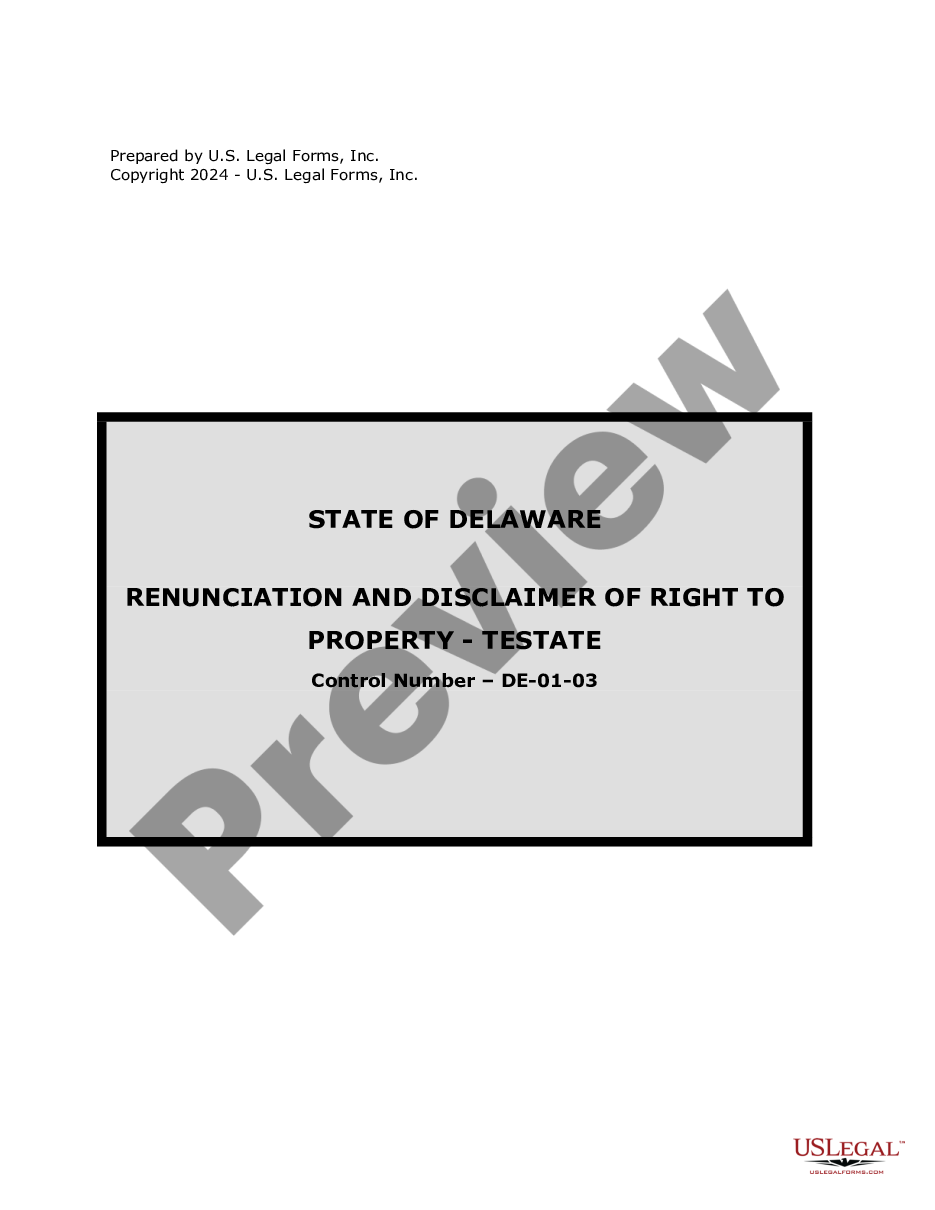
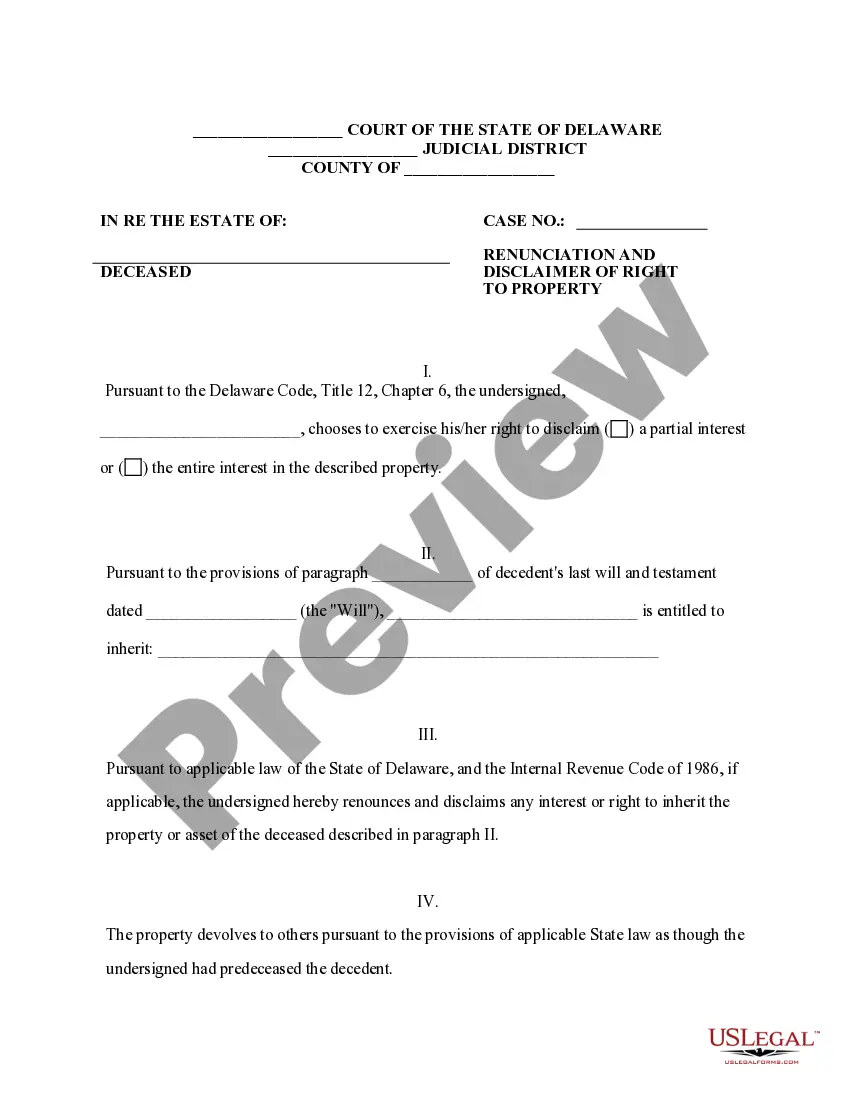
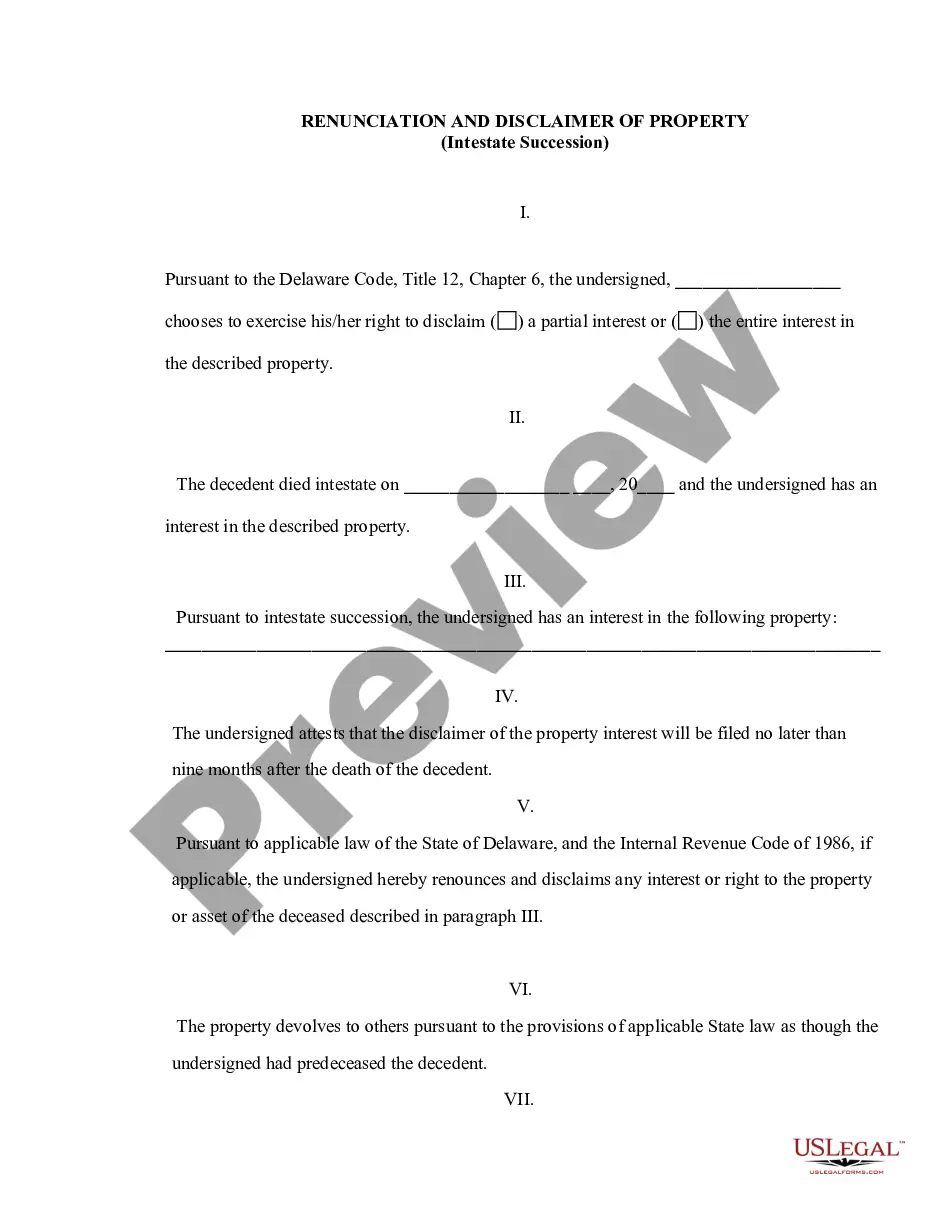
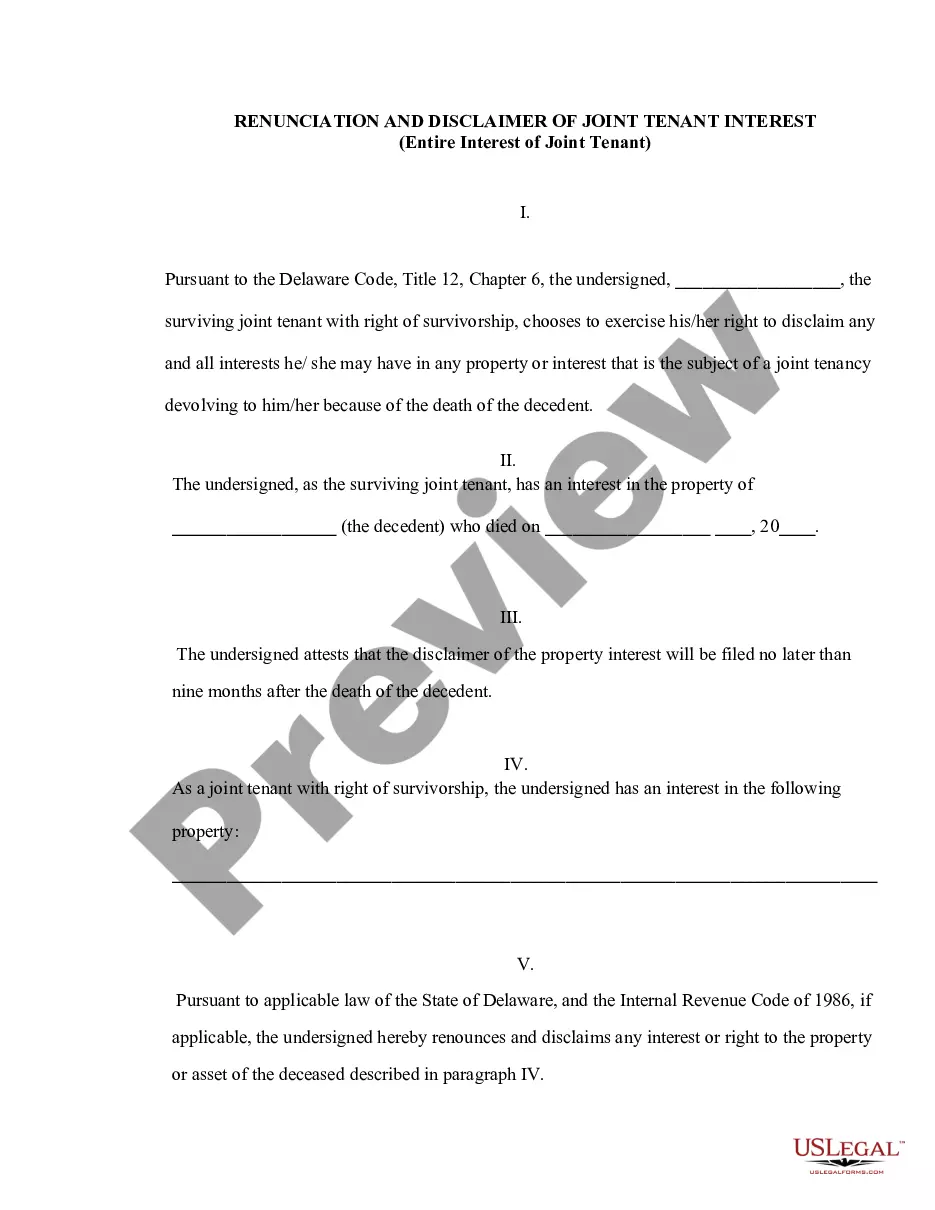
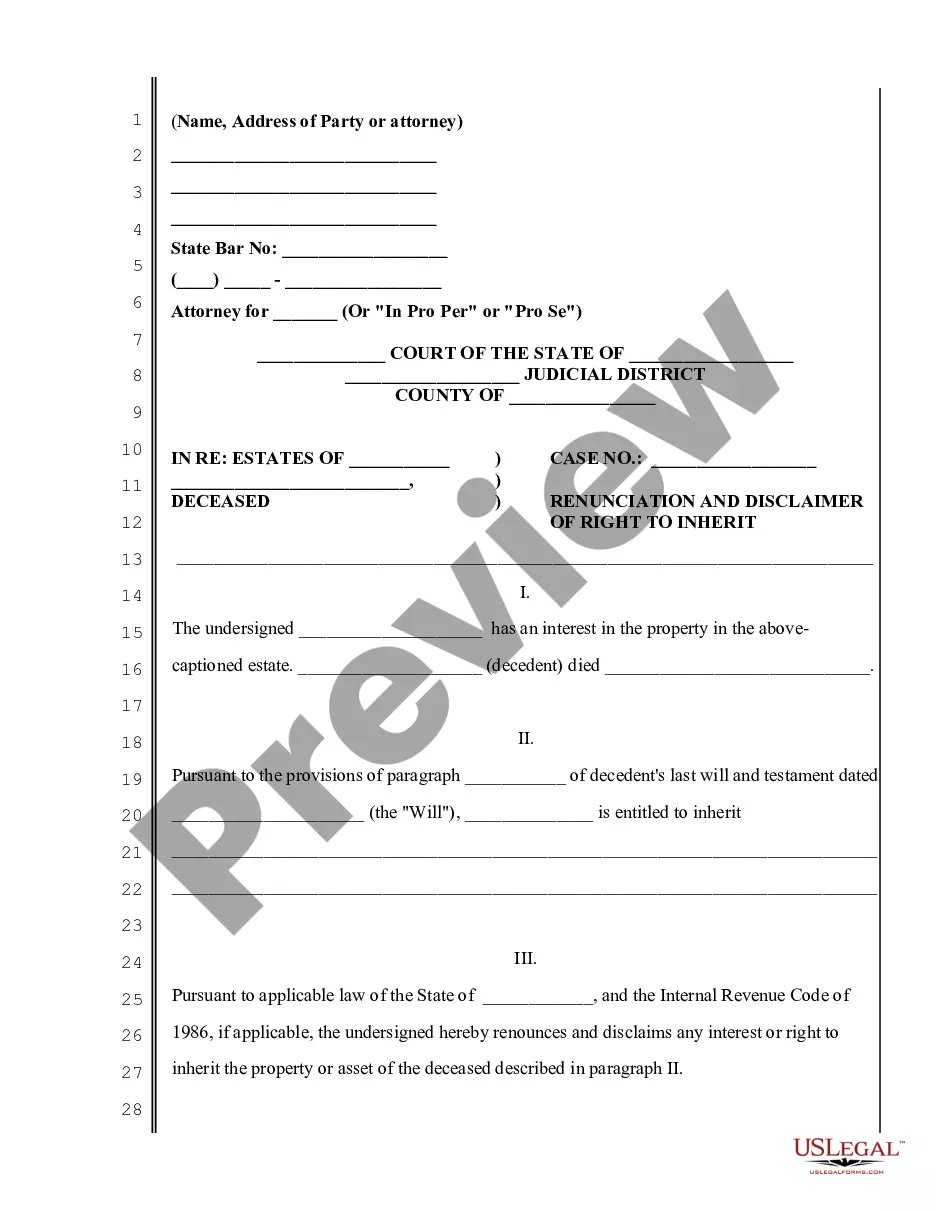
The Delaware Renunciation and Disclaimer of Property from Will by Testate is a legal document used by a beneficiary to formally refuse an inheritance designated in a decedent's last will and testament. This form allows the beneficiary to disclaim their right to any or all property bequeathed to them, ensuring that the property will be redistributed according to Delaware state law as if the beneficiary had predeceased the decedent. The form is crucial for beneficiaries who wish to decline their inheritance for personal, financial, or strategic reasons, differing from other estate planning documents that do not encompass disclaimers.
Main sections of this form
- Identification of the decedent and the beneficiary entitled to inherit.
- Details of the specific property or assets being disclaimed.
- A declaration of the beneficiary's intent to renounce any rights to the property.
- Provision for how the property will be handled in accordance with Delaware law.
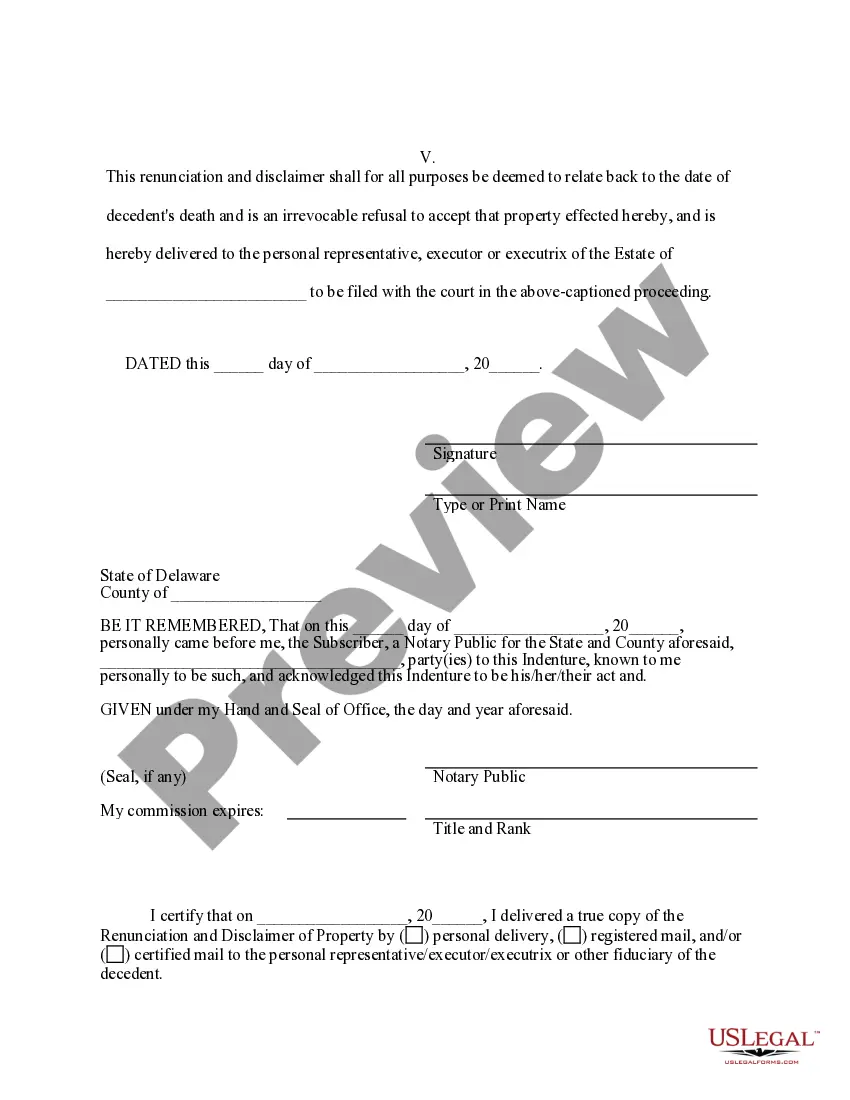
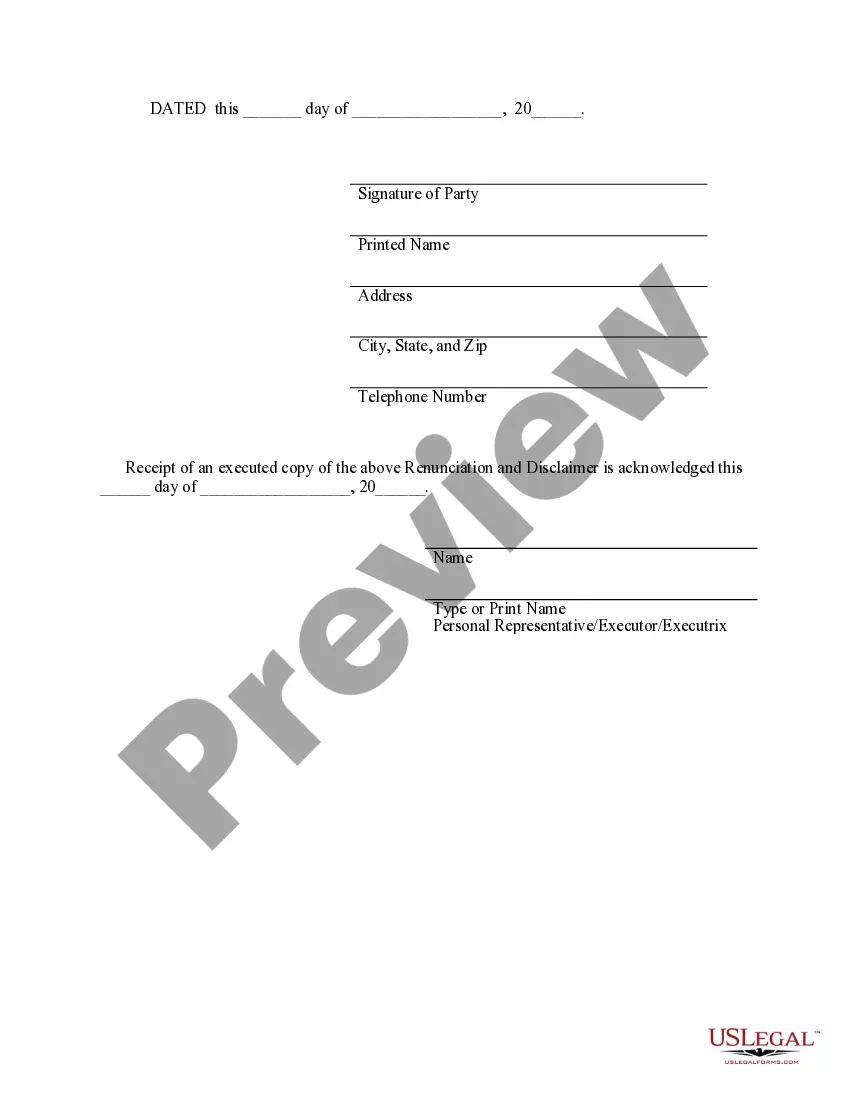
- Signature lines for the beneficiary and acknowledgment sections.


When to use this document
This form should be used when a beneficiary decides not to accept a bequest from a decedent's will. Various reasons may lead to this decision, such as potential tax implications, personal financial strategy, or to allow the inheritance to pass directly to others in the family or as designated in the will. It is essential to complete this process timely, as the disclaimer will relate back to the date of the decedent's death.
Who needs this form
- Beneficiaries designated in a will who wish to decline their inheritance.
- Individuals seeking to limit tax liabilities associated with inherited property.
- Heirs who wish to redirect inherited assets to other family members or charities.
Completing this form step by step
- Identify the decedent and specify the date and details of their last will.
- Clearly state the property or assets being renounced.
- Provide a declaration of your intent to disclaim the interest in the described property.
- Sign the form in the presence of a witness or notary, if required.
- Deliver the completed form to the personal representative or executor of the estate for filing.
Notarization requirements for this form
This form does not typically require notarization unless specified by local law. However, you may choose to have it notarized for additional assurance and to validate the execution of the document.
Get your form ready online
Our built-in tools help you complete, sign, share, and store your documents in one place.
Make edits, fill in missing information, and update formatting in US Legal Forms—just like you would in MS Word.
Download a copy, print it, send it by email, or mail it via USPS—whatever works best for your next step.
Sign and collect signatures with our SignNow integration. Send to multiple recipients, set reminders, and more. Go Premium to unlock E-Sign.
If this form requires notarization, complete it online through a secure video call—no need to meet a notary in person or wait for an appointment.
We protect your documents and personal data by following strict security and privacy standards.

Make edits, fill in missing information, and update formatting in US Legal Forms—just like you would in MS Word.

Download a copy, print it, send it by email, or mail it via USPS—whatever works best for your next step.

Sign and collect signatures with our SignNow integration. Send to multiple recipients, set reminders, and more. Go Premium to unlock E-Sign.

If this form requires notarization, complete it online through a secure video call—no need to meet a notary in person or wait for an appointment.

We protect your documents and personal data by following strict security and privacy standards.
Mistakes to watch out for
- Failing to disclose all property interests being disclaimed.
- Not completing the form within the required time frame following the decedent's death.
- Skipping the witness signature if required by local laws.
Advantages of online completion
- Immediate access to legally vetted templates ensures your disclaimer is compliant with Delaware laws.
- Editable fields allow you to complete the form quickly and accurately from your computer.
- Downloadable format enables easy printing and secure storage of your legal documents.
- Renouncing an inheritance can have significant implications for estate distribution.
- The disclaimer must be filed promptly following the decedent's death.
- Understanding Delaware law is critical to effectively use this form.
Looking for another form?
Form popularity
FAQ
In Delaware, the time limit for disclaiming an inheritance is generally nine months from the date of the decedent's death. This timeframe aligns with the state's laws regarding the Renunciation and Disclaimer of Property from Will by Testate, which aim to ensure that beneficiaries make timely decisions. It is crucial to file the disclaimer properly to avoid any complications. If you have questions or need clarity, USLegalForms can guide you through the relevant timelines and requirements.
To create a disclaimer of inheritance, start with a clear statement indicating your intention to renounce the property you are inheriting. Include your name, the decedent's name, and a reference to the will or trust document. It is essential to comply with Delaware laws surrounding the Renunciation and Disclaimer of Property from Will by Testate, which often requires the disclaimer to be in writing and submitted within a specific time frame. If you need assistance, consider using platforms like USLegalForms, which provide templates and guidance for this process.
You do not register your Will while alive, but you must file it with the probate court after you pass. This is a critical step in validating and executing your Will's intentions. Filing allows your estate to be settled according to your wishes as outlined in the Will. Knowing about Delaware Renunciation and Disclaimer of Property from Will by Testate can also aid in managing any complexities during this filing process.
For a Will to be considered legal in Delaware, it must be in writing and signed by the testator. Additionally, there should be at least two witnesses present during the signing, who also sign the Will. This legal framework ensures that the deceased's wishes are clear and enforceable. When exploring options such as Delaware Renunciation and Disclaimer of Property from Will by Testate, understanding these legal requirements is essential.
To disclaim an inherited property in Delaware, you must complete a formal disclaimer document. This document should be filed with the probate court in a timely manner after the inheritance is realized. Ensure that you meet all legal requirements, as Delaware law governs these disclaimers closely. If you need assistance, consider using ulegalforms, which can guide you through the Delaware Renunciation and Disclaimer of Property from Will by Testate.
In Delaware, you do not have to register your Will while you are alive. However, once you pass away, your Will must be filed with the court for probate. This process is necessary to validate the Will and execute your estate wishes. Understanding the implications of Delaware Renunciation and Disclaimer of Property from Will by Testate can guide those navigating this process.
Yes, Wills in Delaware are public records. Once a Will is filed with the court, anyone can access it. This transparency helps ensure that the wishes outlined in the Will are honored and understood. Remember, if you are considering Delaware Renunciation and Disclaimer of Property from Will by Testate, this public record aspect is crucial for potential claimants.
To write an inheritance disclaimer letter, start with your name and the date, and then clearly state your intention to disclaim the inheritance. Include specific details of the property or assets you are renouncing. It's crucial to follow any legal requirements set by Delaware law to ensure your disclaimer is valid. Consider using US Legal Forms to ensure your letter meets all necessary legal standards.
An example of a disclaimer can be found in situations where someone inherits property but chooses not to accept it. For instance, if a person receives a house through a will but decides that managing the property would be unwise, they may execute a property disclaimer. This withdrawal from the inheritance aligns with the principles of Delaware Renunciation And Disclaimer of Property from Will by Testate.
To write a disclaimer of inheritance, open with a clear statement showing your intention to renounce the inheritance. Specify the details of the estate you are renouncing, including any related property. Be sure to follow Delaware’s legal guidelines, as this will impact the effectiveness of the disclaimer. Using tools from US Legal Forms can simplify this process.