Connecticut Warranty Deed from Husband and Wife to Corporation
Overview of this form
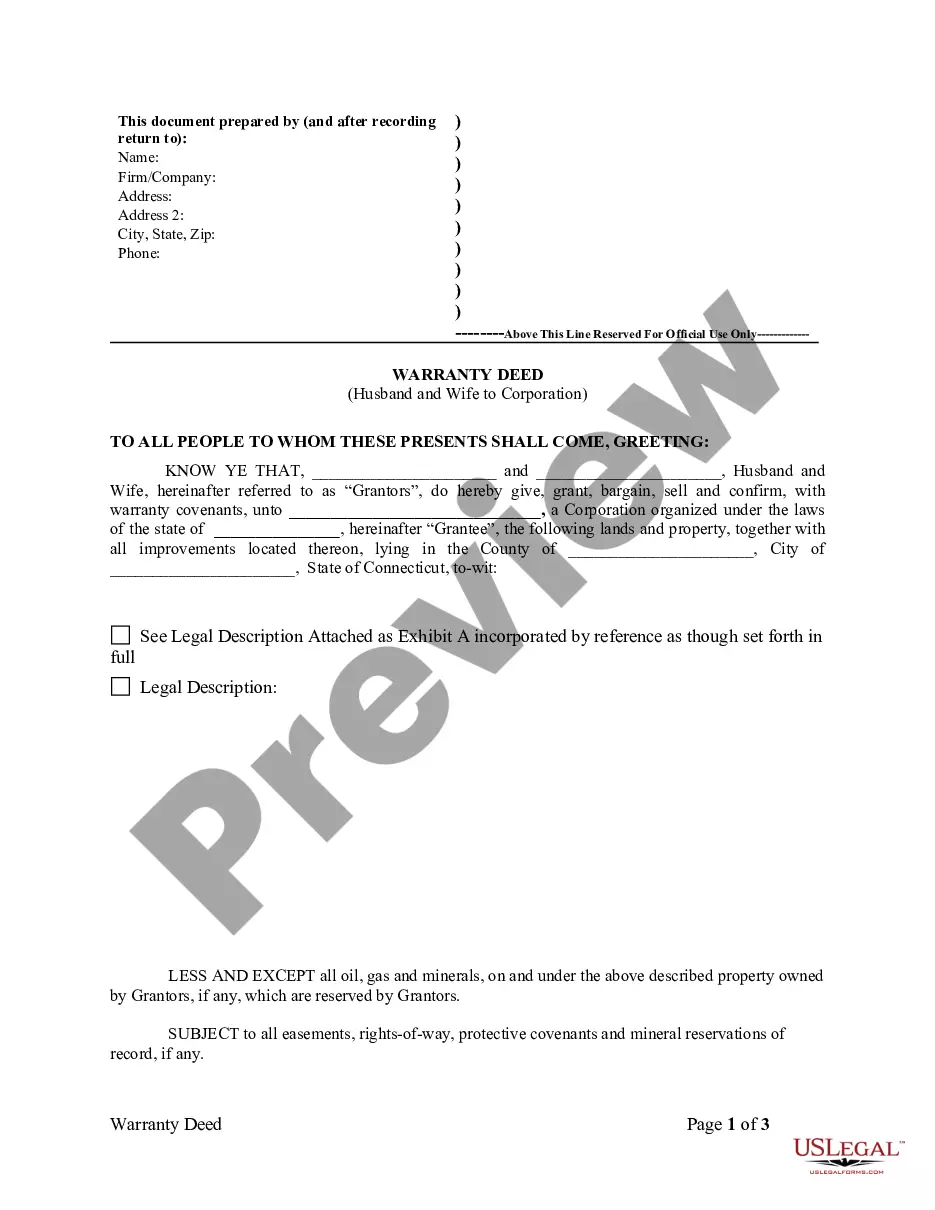
The Warranty Deed from Husband and Wife to Corporation is a legal document that transfers ownership of property from a married couple (the grantors) to a corporation (the grantee). This form serves as a warranty deed, meaning the grantors assure the corporation that they have clear title to the property and the right to sell it. Unlike other types of deeds, this one specifically addresses the transfer from a married couple to a business entity, making it suitable for various real estate transactions.
Key components of this form
- Names and addresses of the grantors (husband and wife) and the grantee (corporation).
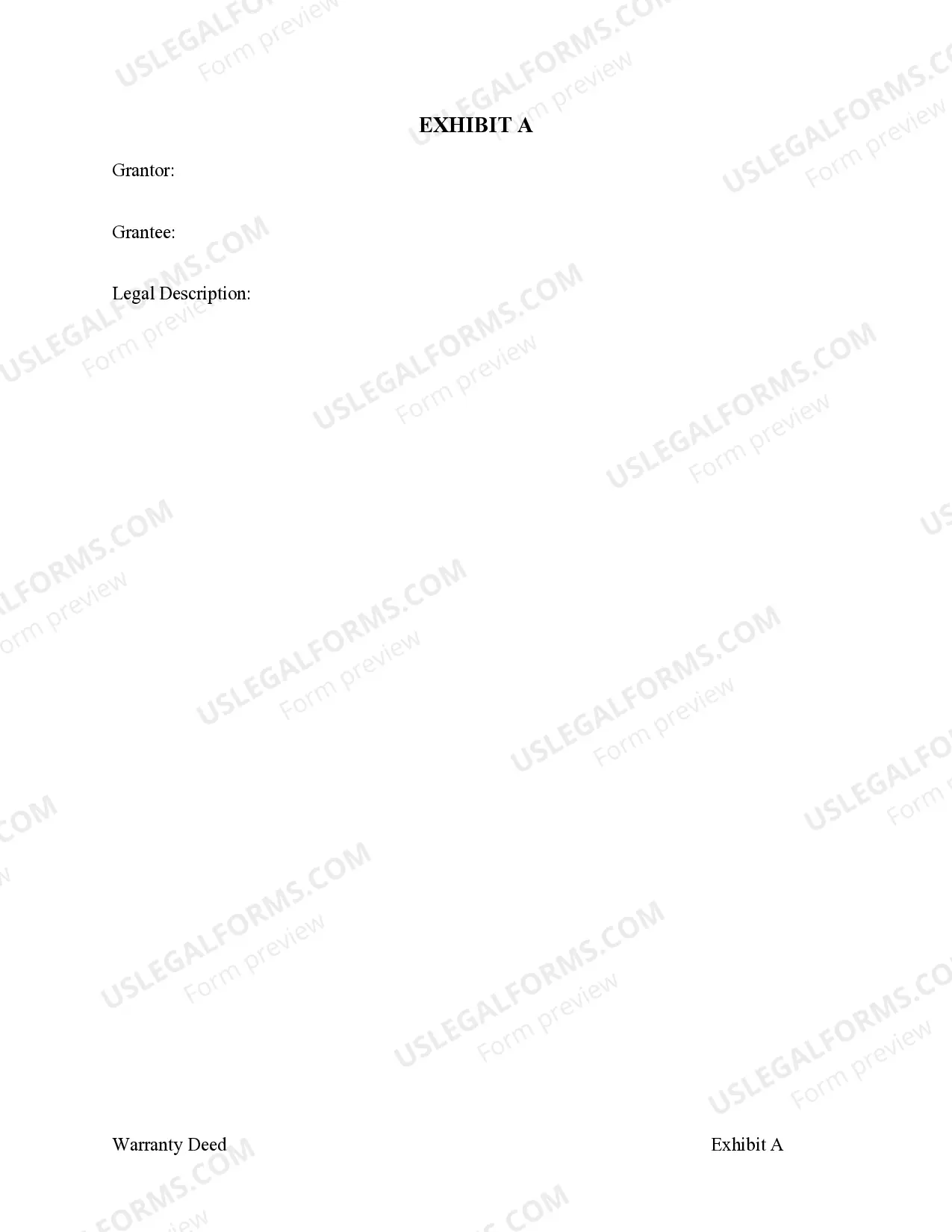
- Description of the property being transferred.
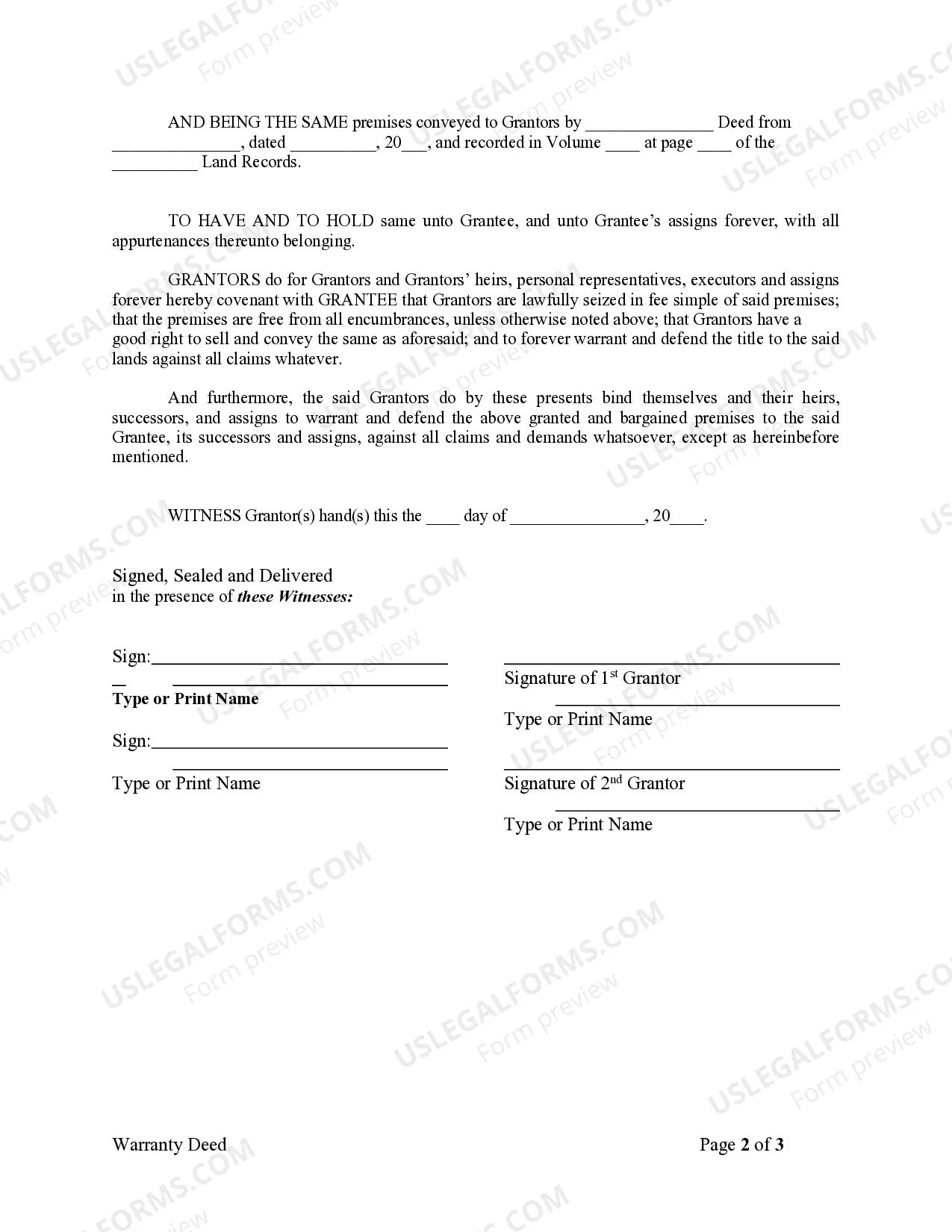
- Statement of warranty and legal assurances from the grantors.
- Exceptions for any easements, rights-of-way, and mineral reservations.
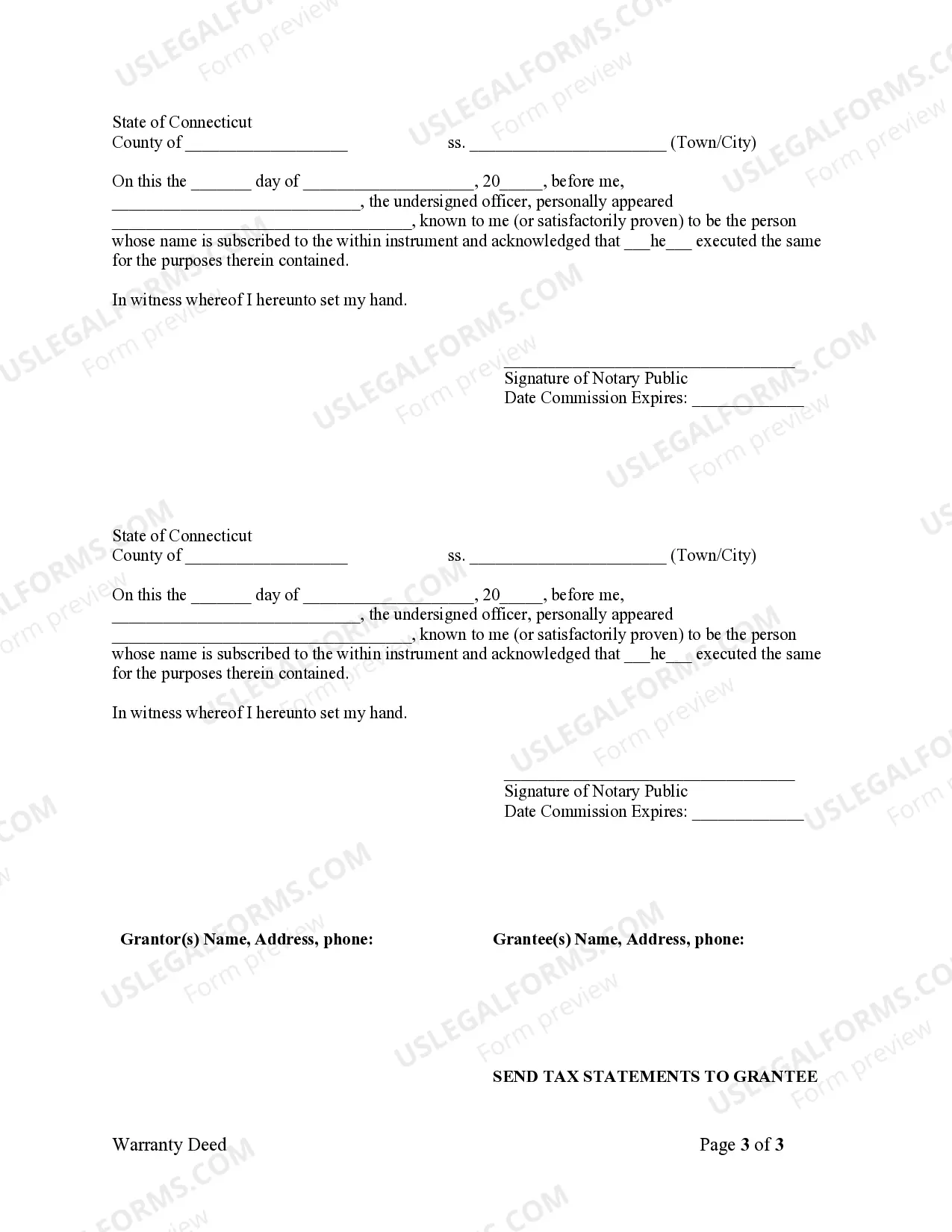
- Signature and date lines for grantors and a notary public.




Common use cases
This form is typically used when a married couple wants to transfer real estate ownership to a corporation. Situations might include selling property to a family-owned corporation or transferring property for estate planning purposes. It's essential to use this form when the intent is to ensure that the corporation receives the property with clear title and without any encumbrances.
Who this form is for
- Married couples looking to transfer property ownership to a corporate entity.
- Business owners who are consolidating property under the corporation's name.
- Real estate professionals assisting clients with property transfers.
- Attorneys preparing property transfer documents for clients.
Completing this form step by step
- Identify the parties involved: the grantors (husband and wife) and the grantee (corporation).
- Clearly describe the property being transferred, including any relevant legal descriptions.
- Note any easements, rights-of-way, or mineral reservations that apply.
- Have both grantors sign the form in the designated areas.
- Obtain notarization to ensure the document is legally valid.
Notarization guidance
To make this form legally binding, it must be notarized. Our online notarization service, powered by Notarize, lets you verify and sign documents remotely through an encrypted video session.
Get your form ready online
Our built-in tools help you complete, sign, share, and store your documents in one place.
Make edits, fill in missing information, and update formatting in US Legal Forms—just like you would in MS Word.
Download a copy, print it, send it by email, or mail it via USPS—whatever works best for your next step.
Sign and collect signatures with our SignNow integration. Send to multiple recipients, set reminders, and more. Go Premium to unlock E-Sign.
If this form requires notarization, complete it online through a secure video call—no need to meet a notary in person or wait for an appointment.
We protect your documents and personal data by following strict security and privacy standards.

Make edits, fill in missing information, and update formatting in US Legal Forms—just like you would in MS Word.

Download a copy, print it, send it by email, or mail it via USPS—whatever works best for your next step.

Sign and collect signatures with our SignNow integration. Send to multiple recipients, set reminders, and more. Go Premium to unlock E-Sign.

If this form requires notarization, complete it online through a secure video call—no need to meet a notary in person or wait for an appointment.

We protect your documents and personal data by following strict security and privacy standards.
Avoid these common issues
- Failing to include a complete property description, which can lead to disputes.
- Not providing all required signatures and dates.
- Overlooking the need for notarization, depending on state requirements.
Benefits of using this form online
- Convenience of downloading the form at any time.
- Easily editable fields allow for customization to fit your specific needs.
- Access to forms drafted by licensed attorneys, ensuring legal compliance.
What to keep in mind
- The Warranty Deed from Husband and Wife to Corporation effectively transfers property ownership to a corporation.
- Ensure all property descriptions and legal requirements are accurately completed.
- Notarization is necessary to confirm the document's validity.
Looking for another form?






Form popularity
FAQ
Two names can indeed go on a warranty deed, representing joint ownership of the property. This arrangement can help provide better clarity in legal documents and property rights. In instances of a Connecticut Warranty Deed from Husband and Wife to Corporation, having both names ensures that all parties are acknowledged in the transaction process.
Yes, two people can be on a warranty deed, and this is a common setup. It allows for shared ownership and responsibilities regarding the property. In cases like a Connecticut Warranty Deed from Husband and Wife to Corporation, this setup can provide flexibility in ownership and ease in transferring interests when needed.
When two people are on a warranty deed, they both have legal rights to the property. This arrangement can simplify decision-making and ownership duties. For those involved in a Connecticut Warranty Deed from Husband and Wife to Corporation, it becomes essential to outline responsibilities and important decisions, ensuring clarity in management and use.
Joint tenants is a term used in property law that signifies ownership between two or more people. When joint tenants are named on a warranty deed, it means they share equal rights to the property. In the context of a Connecticut Warranty Deed from Husband and Wife to Corporation, this establishes a clear understanding of ownership and rights among parties.
Yes, a warranty deed can be transferred. It involves creating a new document that indicates the change in ownership. This process is crucial when a Connecticut Warranty Deed from Husband and Wife to Corporation is involved. It ensures that all parties agree to the transfer, avoiding future disputes.
Quitclaim deeds are most commonly used to transfer property ownership without guaranteeing the title's condition. Situations such as inheritance, divorce settlements, or transferring between family members often call for them. By utilizing a Connecticut Warranty Deed from Husband and Wife to Corporation, individuals can efficiently handle these transactions. However, it is crucial to consider the lack of protection during such transfers, prompting some to seek guidance from services like uslegalforms to ensure clarity and accuracy.
The primary benefactors of a quitclaim deed are typically family members or close friends who trust one another. This method provides a swift and straightforward way to transfer property, such as a Connecticut Warranty Deed from Husband and Wife to Corporation. Ideally, those in established relationships can bypass lengthy processes while ensuring trust in the property's condition. Such a quick transfer is highly beneficial when time or simplicity is a priority.
Quitclaim deeds often receive negative attention because they don't provide protection to the buyer. When someone uses a Connecticut Warranty Deed from Husband and Wife to Corporation, they expect legal assurances regarding ownership. Quitclaims eliminate this assurance, which can put the buyer at risk if title issues arise later. Many prefer more secure options, such as warranty deeds, that ensure a clearer title transfer.
One main disadvantage of a quitclaim deed is the lack of guarantees. When transferring property using a Connecticut Warranty Deed from Husband and Wife to Corporation, the grantor does not reassure the grantee about the property's title. This means that if there are any liens or claims against the property, the grantee may inherit these issues without any recourse. Additionally, since quitclaim deeds provide no warranty, potential buyers may hesitate, impacting the property’s marketability.
To fill out a warranty deed form, you first need to gather essential details, such as the names of the buyers and sellers, property description, and the terms of the transfer. With the Connecticut Warranty Deed from Husband and Wife to Corporation, ensure that the document clearly states that the transfer is made to the corporation. You can use platforms like US Legal Forms to streamline this process and access properly structured templates to make filling out the form easier.