Colorado Roofing Contract for Contractor
What is this form?
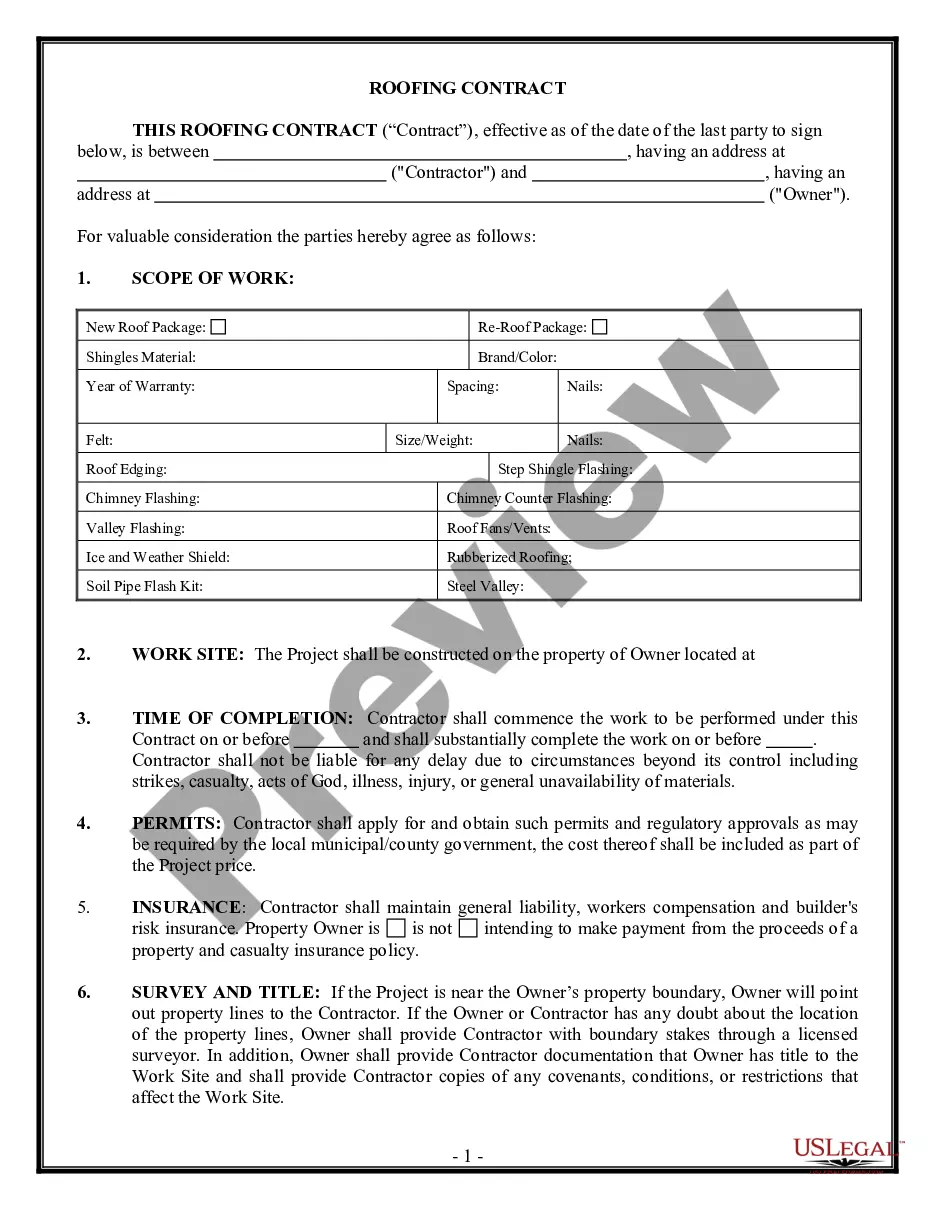
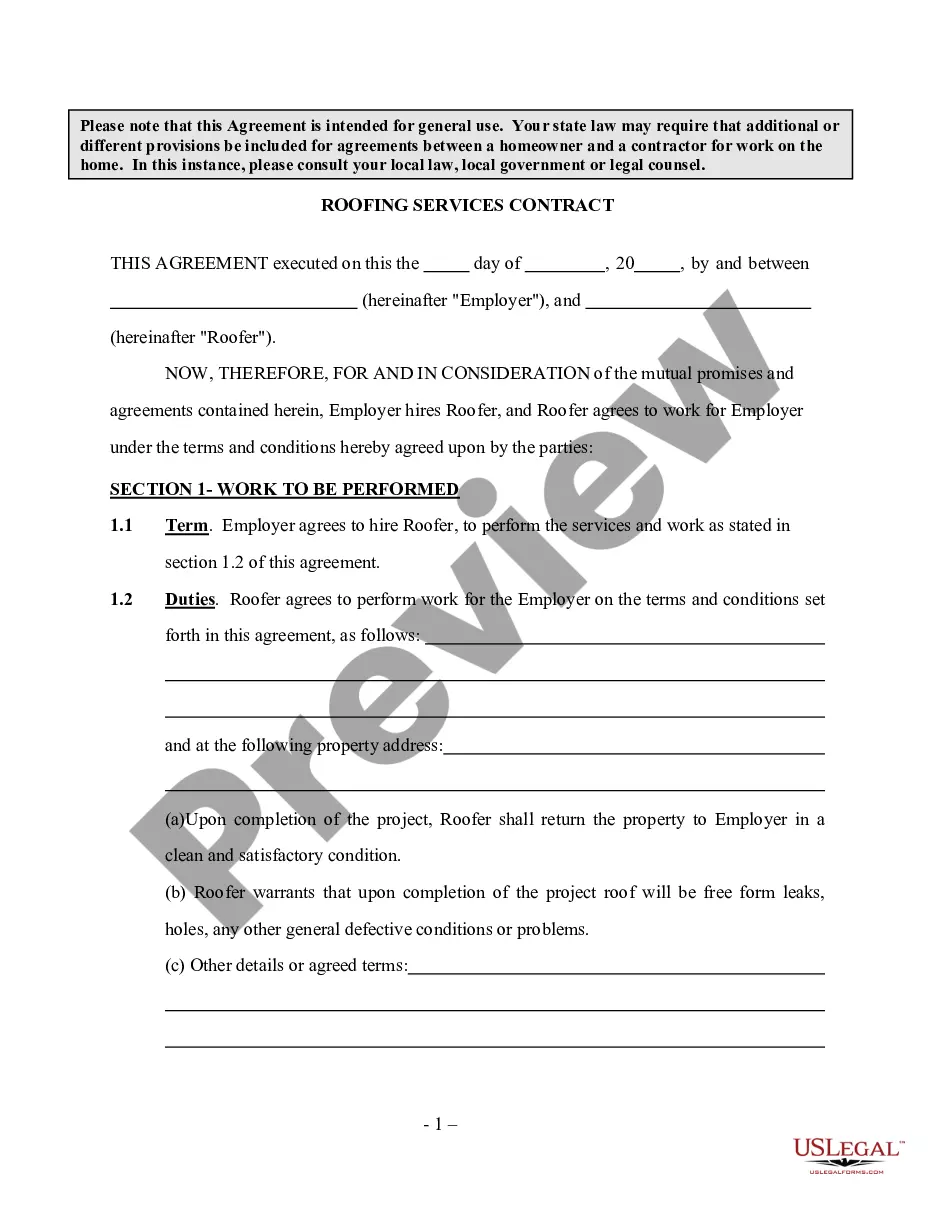
The Roofing Contract for Contractor is a legal document designed for use between roofing contractors and property owners. This contract can outline payment arrangements, whether cost plus or fixed fee, and encompasses various important aspects of the roofing project, including permits, insurance, and change orders. It is specifically tailored to comply with the laws of Colorado, ensuring that both parties understand their rights and responsibilities in the contracting process.
What’s included in this form
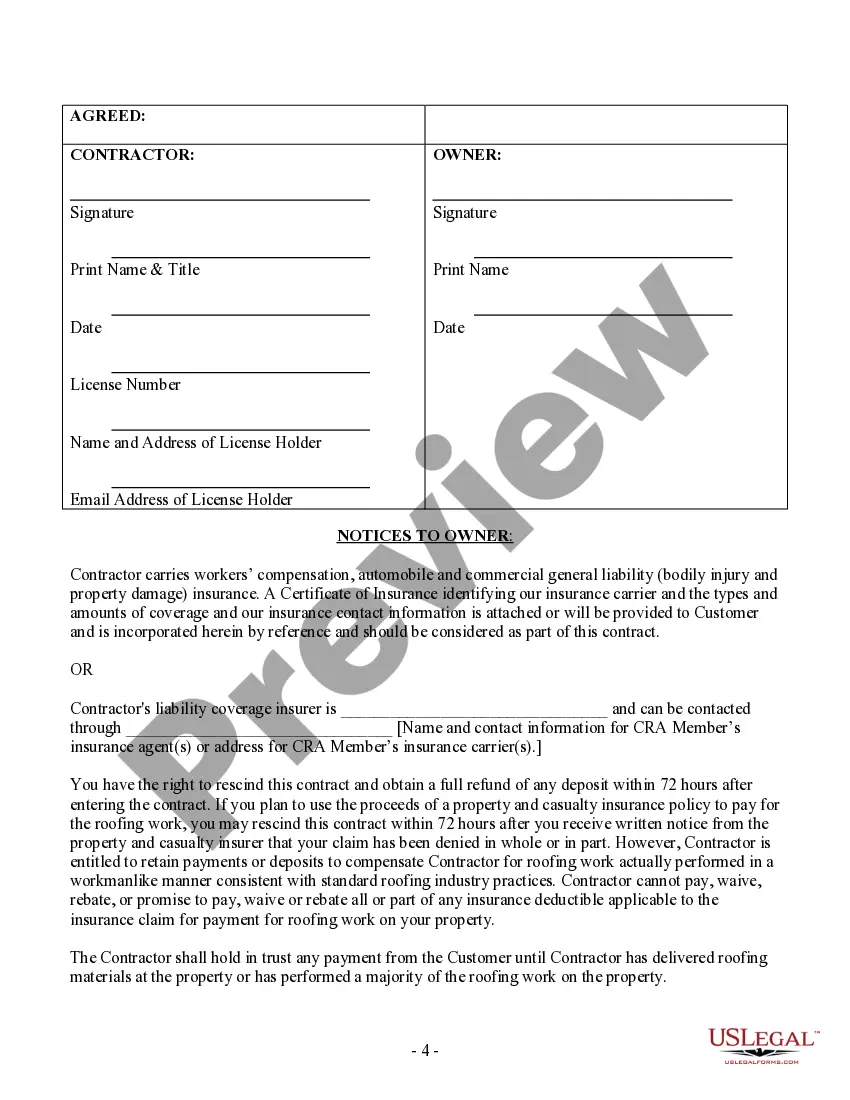
- Permits: The contractor is responsible for obtaining necessary permits and regulatory approvals.
- Insurance: Requirements for general liability, workers' compensation, and builders risk insurance are outlined.
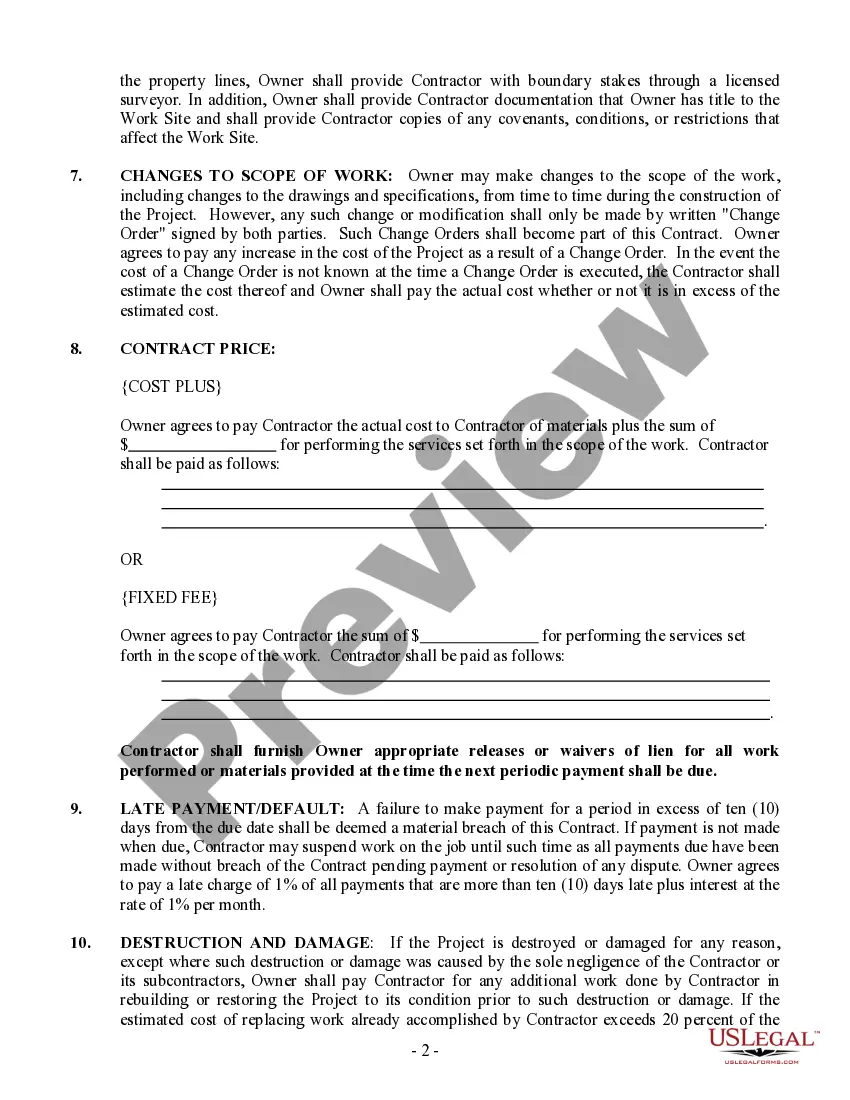
- Scope changes: A change order process is available for modifications initiated by the property owner.
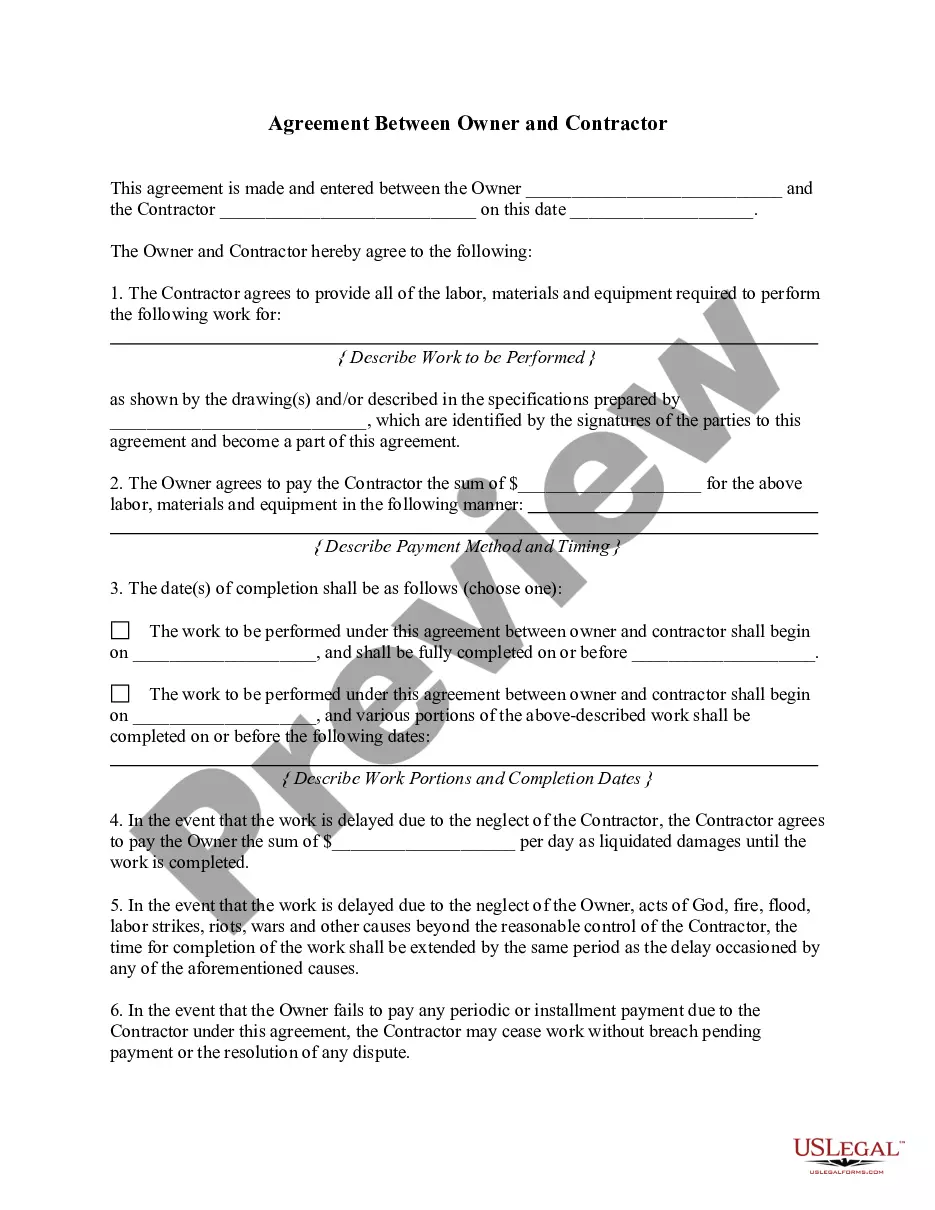
- Contract pricing: Descriptions of cost arrangements, including fixed fees and cost-plus agreements.
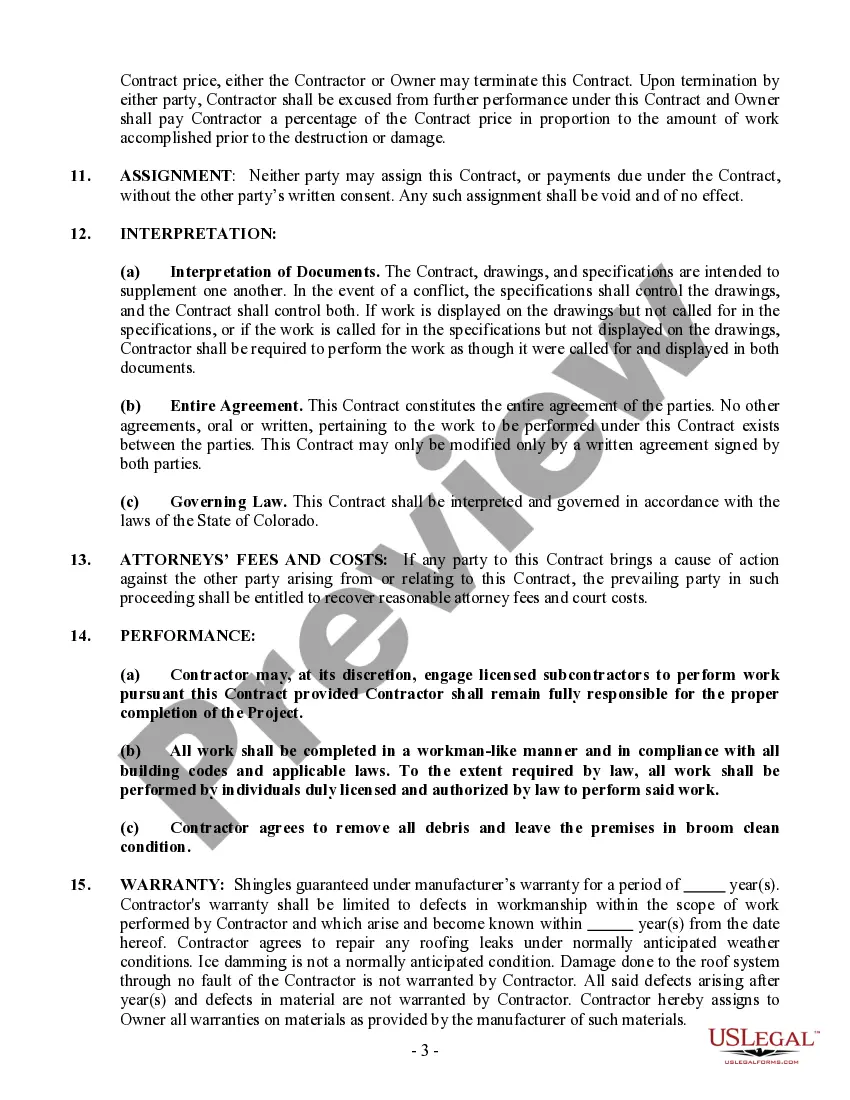
- Consequences of late payment: Details on late fees and default clauses if payments are not made on time.
- Termination provisions: Guidelines on contract termination due to project damage or other contingencies.

When this form is needed
This form should be used when a property owner hires a roofing contractor for a project in Colorado. It is essential for formalizing agreements on payment structures, ensuring both parties are clear on the project scope, managing changes effectively, and protecting both parties with insurance and liability coverage. Use this contract for residential or commercial roofing projects where legal clarity and compliance are necessary.
Who should use this form
- Roofing contractors who need a clear contract for their services.
- Property owners hiring contractors for roofing work.
- Real estate professionals facilitating roofing contracts between clients.
- Anyone involved in a roofing project in Colorado where a formal agreement is desired.
How to complete this form
- Identify the parties involved: clearly list the contractor and property ownerâs names and contact details.
- Specify the work scope: describe the roofing work to be done, including materials and specifics.
- Determine the payment structure: choose between a cost-plus or fixed fee arrangement and enter relevant details.
- Include permits and insurance information: ensure all required permits are listed and insurance coverage is documented.
- Sign and date: both parties should review the contract thoroughly and provide signatures along with the date signed.
Is notarization required?
In most cases, this form does not require notarization. However, some jurisdictions or signing circumstances might. US Legal Forms offers online notarization powered by Notarize, accessible 24/7 for a quick, remote process.
Get your form ready online
Our built-in tools help you complete, sign, share, and store your documents in one place.
Make edits, fill in missing information, and update formatting in US Legal Forms—just like you would in MS Word.
Download a copy, print it, send it by email, or mail it via USPS—whatever works best for your next step.
Sign and collect signatures with our SignNow integration. Send to multiple recipients, set reminders, and more. Go Premium to unlock E-Sign.
If this form requires notarization, complete it online through a secure video call—no need to meet a notary in person or wait for an appointment.
We protect your documents and personal data by following strict security and privacy standards.

Make edits, fill in missing information, and update formatting in US Legal Forms—just like you would in MS Word.

Download a copy, print it, send it by email, or mail it via USPS—whatever works best for your next step.

Sign and collect signatures with our SignNow integration. Send to multiple recipients, set reminders, and more. Go Premium to unlock E-Sign.

If this form requires notarization, complete it online through a secure video call—no need to meet a notary in person or wait for an appointment.

We protect your documents and personal data by following strict security and privacy standards.
Mistakes to watch out for
- Failing to specify the scope of work, which can lead to misunderstandings.
- Not including a detailed payment arrangement, resulting in potential disputes over costs.
- Overlooking the insurance requirements which could expose both parties to liability.
- Neglecting to document changes made to the contract through written change orders.
- Not obtaining necessary permits before work begins, which can cause legal issues.
Benefits of using this form online
- Convenience: Easily download and fill out the form from the comfort of your home.
- Editability: Modify the contract to suit your specific project needs.
- Expertly drafted: Forms are created by licensed attorneys to ensure legal compliance.
- Time-saving: Quick access to legal documents without lengthy consultations.
Key takeaways
- The Roofing Contract for Contractor is essential for clear agreements in roofing projects.
- Understanding the terms regarding payment, insurance, and scope changes is crucial for both parties.
- This form is tailored specifically for use in Colorado, complying with local laws.
- Careful completion of the contract can prevent misunderstandings and legal disputes.
Looking for another form?

Form popularity
FAQ
A good profit margin for roofing typically ranges from 10% to 20%, but this can vary depending on the complexity and scale of the project. To maximize profitability, ensure you carefully manage costs and maintain an efficient workflow. Utilizing a comprehensive Colorado Roofing Contract for Contractor can help you track expenses effectively, ensuring you stay within budget while achieving desired profits.
Providing accurate roofing estimates starts with understanding the client’s needs and conducting an on-site evaluation. Break down the costs by materials, labor, and other expenses, ensuring you include potential contingencies. Use a detailed Colorado Roofing Contract for Contractor to deliver your estimate, as it shows professionalism and helps clarify expectations between you and your client.
Bidding on roofing contracts requires a clear understanding of project requirements and local market conditions. Start by assessing job specifications, calculating material and labor costs, and ensuring compliance with all relevant regulations. It’s essential to present a detailed proposal that reflects your expertise, backed by a solid Colorado Roofing Contract for Contractor that outlines the services and costs.
Creating a roofing contract involves several key components, including defining the scope of work, timelines, and payment terms. Start by outlining project details and mutual responsibilities. To ensure your contract is legally sound, it can be beneficial to use templates that are tailored for roofing services. The US Legal platform provides a user-friendly way to generate a Colorado Roofing Contract for Contractor, allowing you to customize contracts to your specific needs.
Yes, a roofing company may need to issue a 1099 form for contractors who provide services. If you hire independent contractors for roofing projects, you are generally required to report their payments to the IRS using a 1099 form. This process helps ensure compliance with tax regulations. For guidance on managing paperwork, consider using the US Legal platform to simplify the creation of a Colorado Roofing Contract for Contractor.
Three main requirements define a valid contract: mutual agreement, consideration, and capacity. Mutual agreement ensures that all parties accept the terms with a clear understanding. Consideration means that something of value is exchanged, creating an obligation. Lastly, capacity refers to the legal ability of the parties involved in the contract. For a robust Colorado Roofing Contract for Contractor, it is essential to validate these requirements.
A contract becomes legally binding in Colorado when certain criteria are met. There must be a mutual agreement, clear terms, and legal consideration exchanged between parties. Furthermore, all parties must have the capacity to understand the contract and its implications. By addressing these components, you can ensure your Colorado Roofing Contract for Contractor holds legal weight and protects your interests.
In Colorado, specific requirements govern the formation of a contract. These include mutual agreement, consideration, and the legal capacity of all parties involved. Additionally, the terms of the contract must be legal and not misleading. Understanding these factors is crucial for creating a solid Colorado Roofing Contract for Contractor, ensuring compliance with local laws.
For a contract to be valid, five key requirements must be fulfilled. Firstly, there must be mutual agreement through offer and acceptance. Secondly, all parties must provide something of value, known as consideration. Thirdly, competent parties must engage in the agreement, affirming their legal ability. Fourthly, the terms must be clear and specific, avoiding ambiguities. Finally, the contract's purpose must not violate the law, aligning with the requirements for a Colorado Roofing Contract for Contractor.
A standard roofing contract outlines the agreement between the contractor and the homeowner in Colorado. This contract typically includes a detailed description of the work to be performed, payment terms, and timelines. It serves to protect both parties by clearly defining their responsibilities and expectations. Whether you are a contractor or a homeowner, having a solid Colorado Roofing Contract for Contractor can help prevent misunderstandings.