Arkansas Administrator's Deed Distributing Real Property to Beneficiaries of Estate
About this form
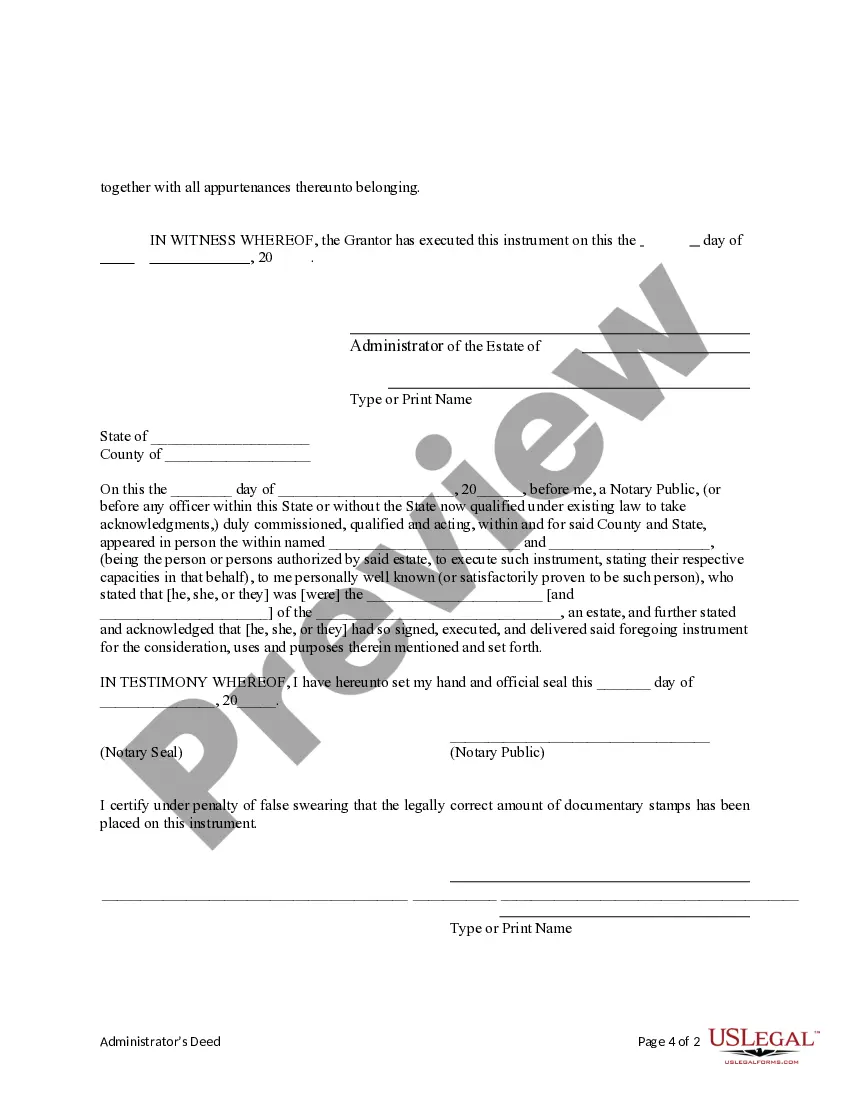
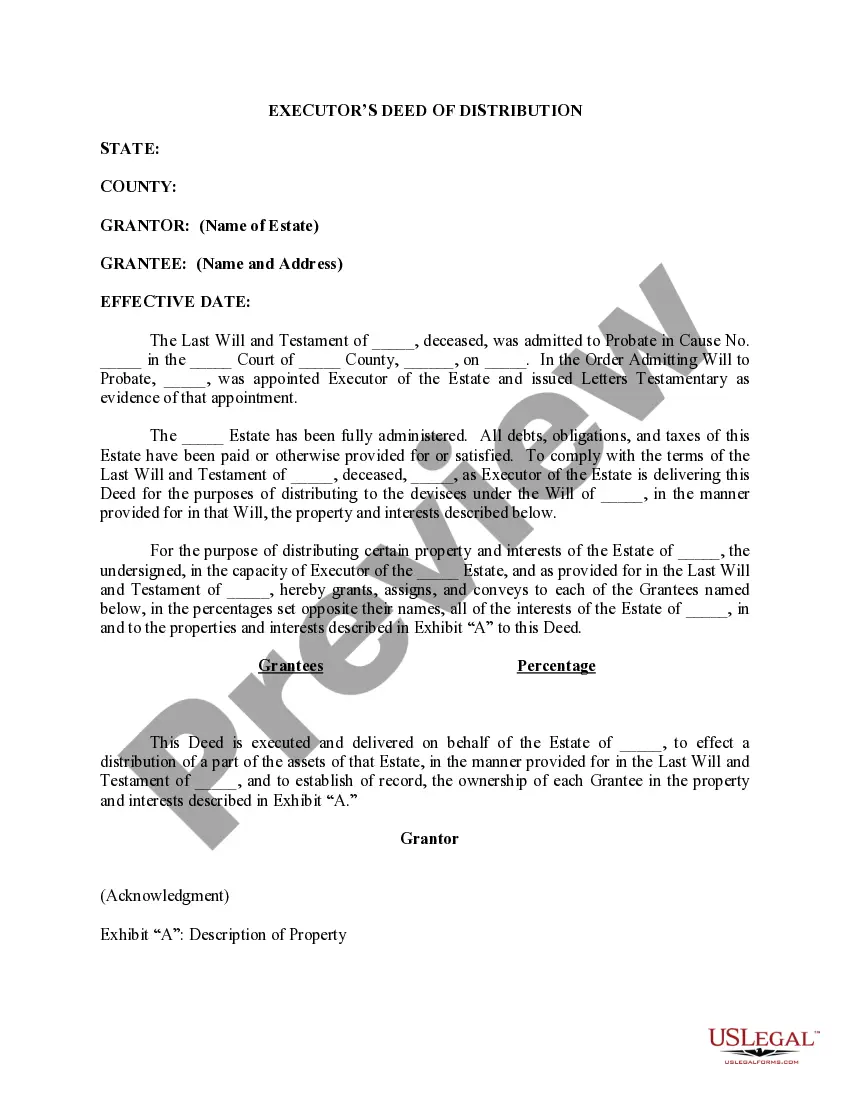
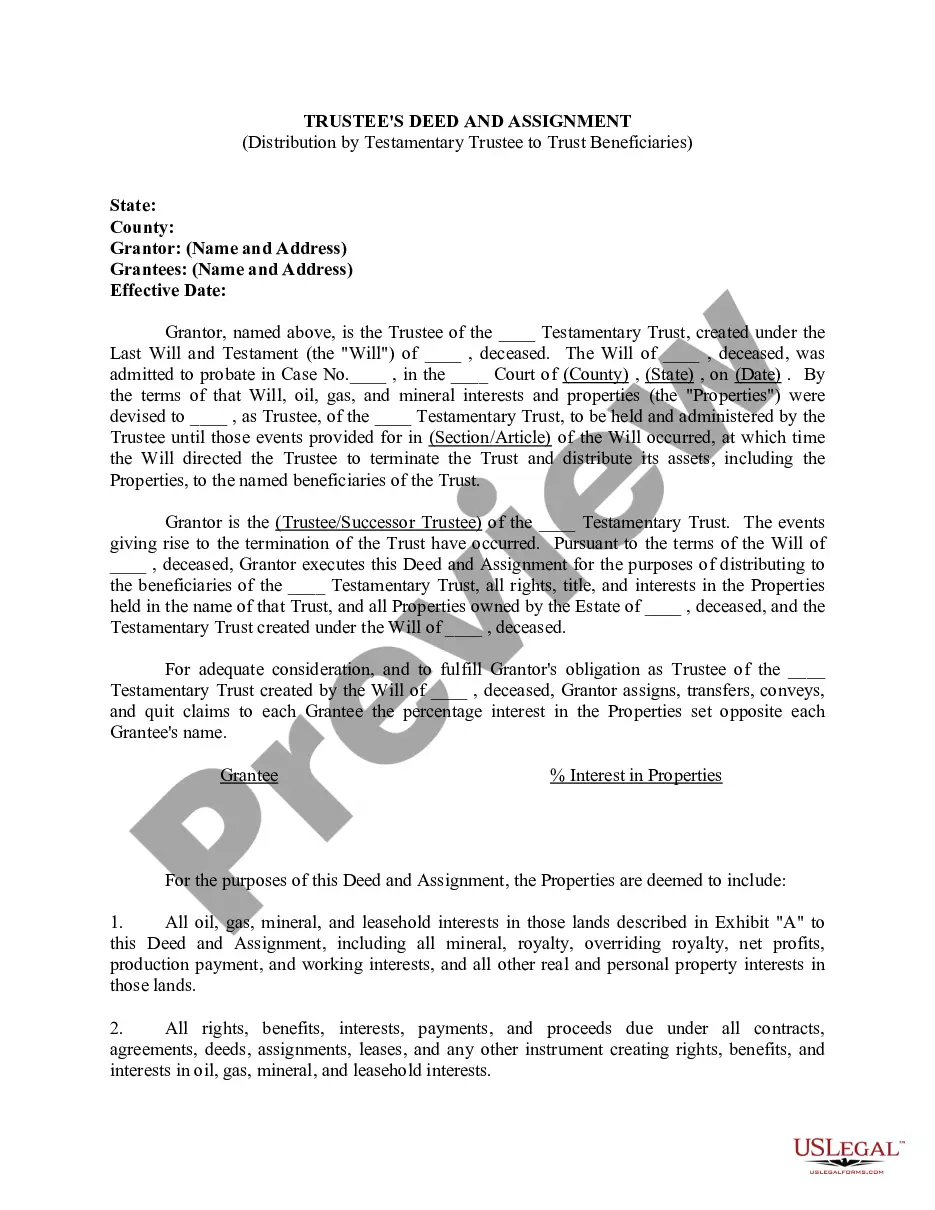
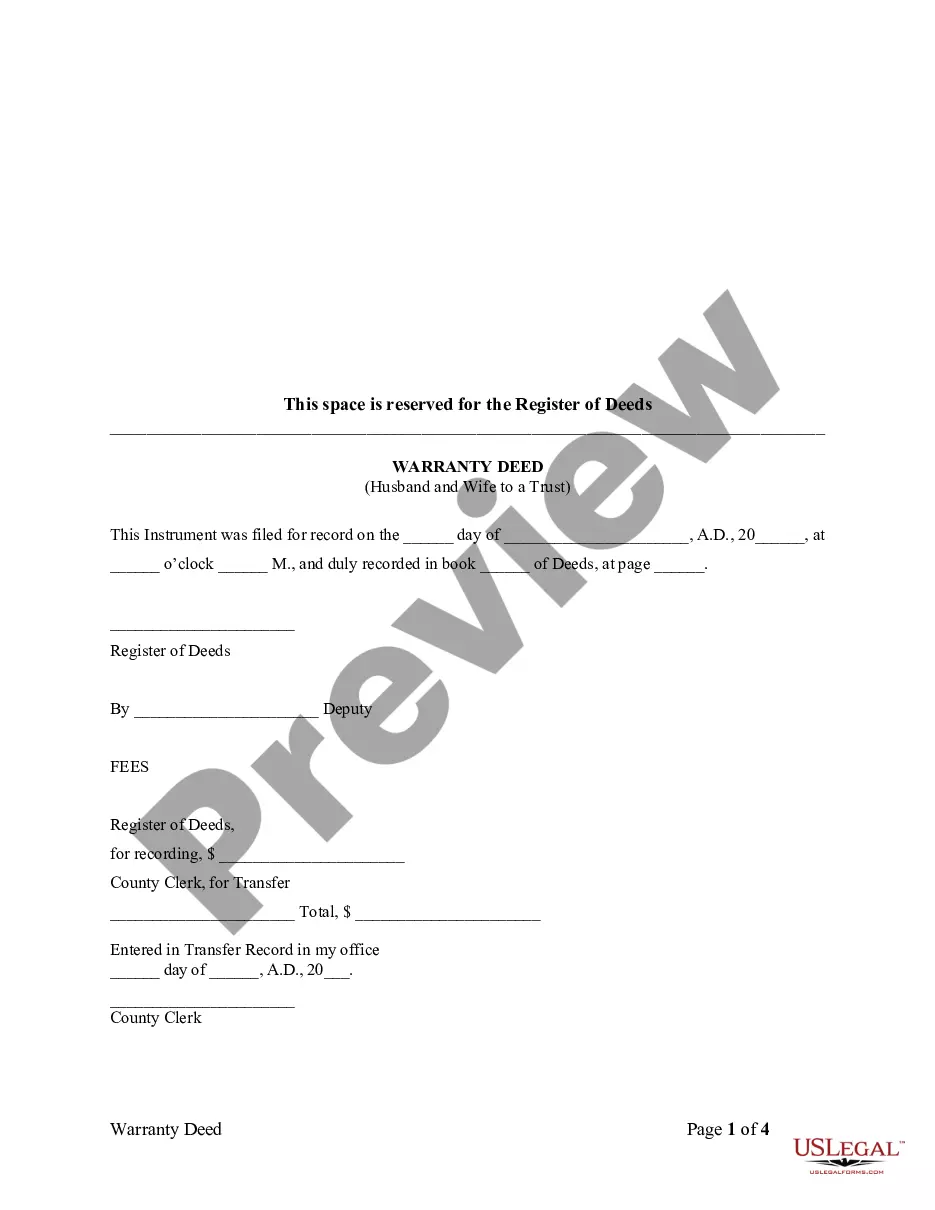
The Administrator's Deed Distributing Real Property to Beneficiaries of Estate is a legal document used by an appointed administrator or administratrix to transfer property from an estate to its beneficiaries. Unlike other property deeds, this form specifically addresses the distribution of real property following the death of an individual, ensuring that all interests in the property are formally conveyed to the designated heirs.
Main sections of this form
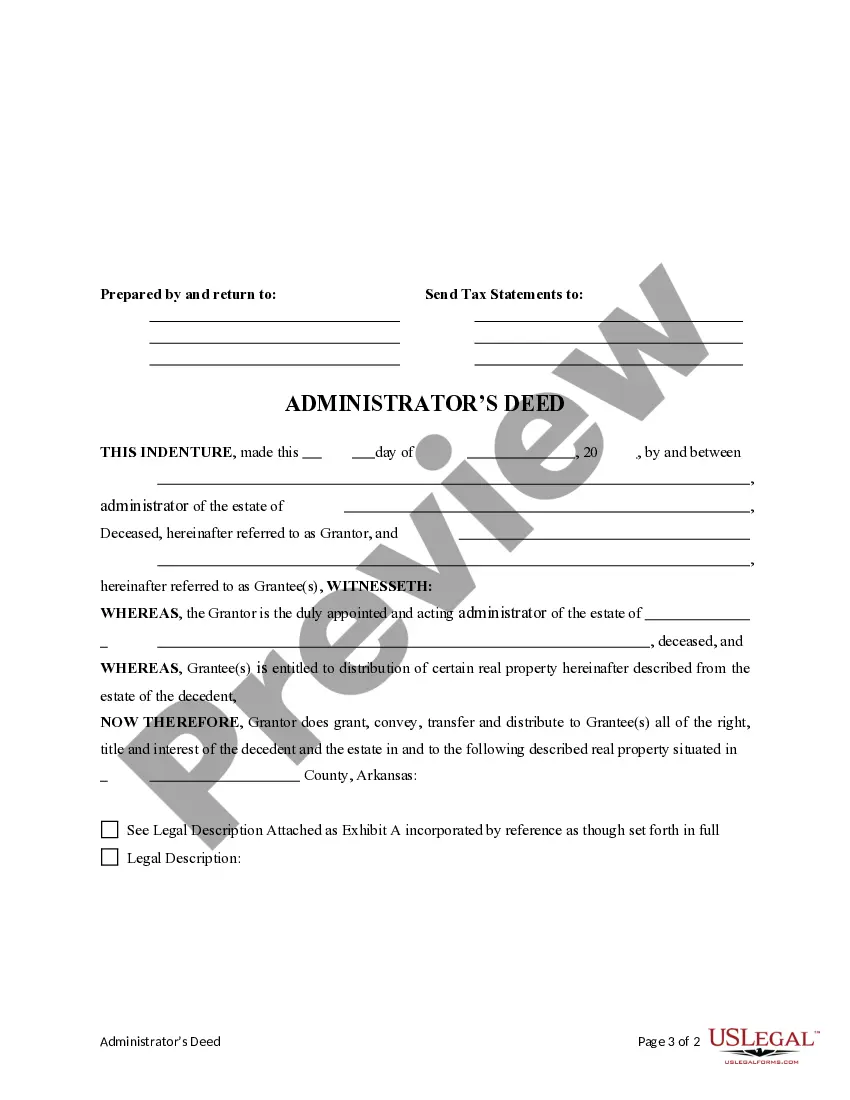
- Identification of parties: Names and details of the Grantor (administrator) and Grantee(s) (beneficiaries).
- Property description: A detailed account of the real property being transferred.
- Date: The date the deed is executed.
- Notarization section: Area for the notary public to certify the deed.

Common use cases
This form is essential when an estate is settled, and the administrator is ready to distribute real property to the beneficiaries. It is typically used in situations where the decedent's will or the laws of intestacy dictate the beneficiaries of the estate's property. Completing this deed legally formalizes the transfer of ownership and ensures that the beneficiaries obtain clear title to the property.
Who can use this document
This form is intended for:
- Appointed administrators or administratrices of an estate.
- Beneficiaries who are receiving property from the estate.
- Legal representatives handling estate matters.
Instructions for completing this form
- Identify the Grantor: Enter the name of the administrator or administratrix.
- List the Grantee(s): Provide names and details of the beneficiaries.
- Describe the property: Include the legal description of the real property being transferred.
- Enter the execution date: Fill in the date when the deed is signed.
- Notarization: Arrange for the deed to be signed in front of a notary public.
Notarization requirements for this form
Yes, this form must be notarized to be legally valid. Notarization serves as a verification of the identities of those signing the document. At US Legal Forms, online notarization services are available 24/7 through secure video calls, ensuring convenience and legal equivalence without the need for travel.
Get your form ready online
Our built-in tools help you complete, sign, share, and store your documents in one place.
Make edits, fill in missing information, and update formatting in US Legal Forms—just like you would in MS Word.
Download a copy, print it, send it by email, or mail it via USPS—whatever works best for your next step.
Sign and collect signatures with our SignNow integration. Send to multiple recipients, set reminders, and more. Go Premium to unlock E-Sign.
If this form requires notarization, complete it online through a secure video call—no need to meet a notary in person or wait for an appointment.
We protect your documents and personal data by following strict security and privacy standards.

Make edits, fill in missing information, and update formatting in US Legal Forms—just like you would in MS Word.

Download a copy, print it, send it by email, or mail it via USPS—whatever works best for your next step.

Sign and collect signatures with our SignNow integration. Send to multiple recipients, set reminders, and more. Go Premium to unlock E-Sign.

If this form requires notarization, complete it online through a secure video call—no need to meet a notary in person or wait for an appointment.

We protect your documents and personal data by following strict security and privacy standards.
Avoid these common issues
- Failing to provide complete property descriptions, which can lead to confusion
- Not obtaining notarization if required by state law
- Leaving out necessary signatures from either the Grantor or the notary
Why use this form online
- Convenience: Download and complete the form from anywhere at any time.
- Editability: Easily modify the document to fit specific needs before printing.
- Reliability: Access forms drafted by licensed attorneys to ensure legal compliance.
Legal use & context
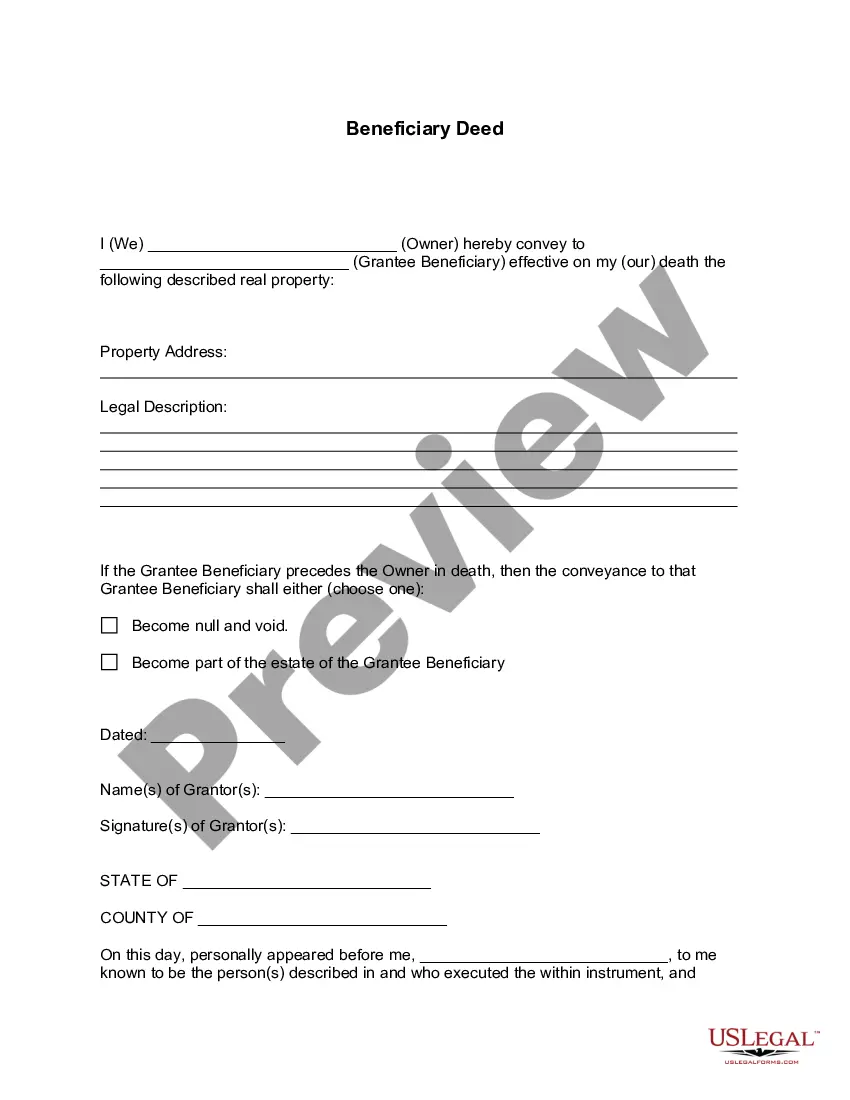
- This form serves as an official record of the transfer of property from the estate to the beneficiaries.
- It is enforceable and creates a legal chain of title.
- Users should be aware of the limitations and potential state-specific requirements that could influence its validity.
What to keep in mind
- The Administrator's Deed facilitates the distribution of an estate's property to its beneficiaries.
- Accurate completion of the form is crucial to avoid legal issues.
- Notarization is required for this deed to be legally binding.
Looking for another form?


Form popularity
FAQ
Children (or grandchildren if children have died) Parents. Siblings (or nieces and nephews over 18 if siblings have died) Half-siblings (or nieces and nephews over 18 if half-siblings have died) Grandparents. Aunts or uncles.
When the executor has paid off the debts, filed the taxes and sold any property needed to pay bills, he can submit a final estate accounting to the probate court. Once the probate court approves the accounting, he can distribute assets to you and other beneficiaries according to the terms of the will.
An administrator will take title legally on the estate's assets, and has legal responsibility to file all tax returns and pay all related taxes.In certain cases, the administrator may have personal liability for any unpaid tax amounts due for the estate.
The executor can sell property without getting all of the beneficiaries to approve.The administrator will come in with a buyer and a contract and if someone else in court wants to pay more for the property than that contract price then the judge will allow that.
Those requirements are: That the estate assets are distributed at least 6 months after the deceased's date of death; That the executor has published a 30 day notice of his/her intent to distribute the estate; and. That the time specified in the notice has expired.
If an Executor breaches this duty, then they can be held personally financially liable for their mistakes, and the financial claim that is made against them can be substantial. In an extreme example of this, one Personal Representative failed to settle the Inheritance Tax bill before distributing the Estate.
If there's enough money in the estate account, an interim payment can be made to beneficiaries, with executors holding back some money to cover potential costs. These payments should be recorded by asking the beneficiaries to sign a written receipt.
Q: How Long Does an Executor Have to Distribute Assets From a Will? A: Dear Waiting: In most states, a will must be executed within three years of a person's death.
What is probate?If no executors are named, or none of the executors is prepared to act, a beneficiary of the will can apply to the probate registry for a 'grant of letters of administration (with will annexed)'. If there is no will, a relative can apply for a 'grant of letters of administration'.