California Residential Rental Lease Application
Understanding this form
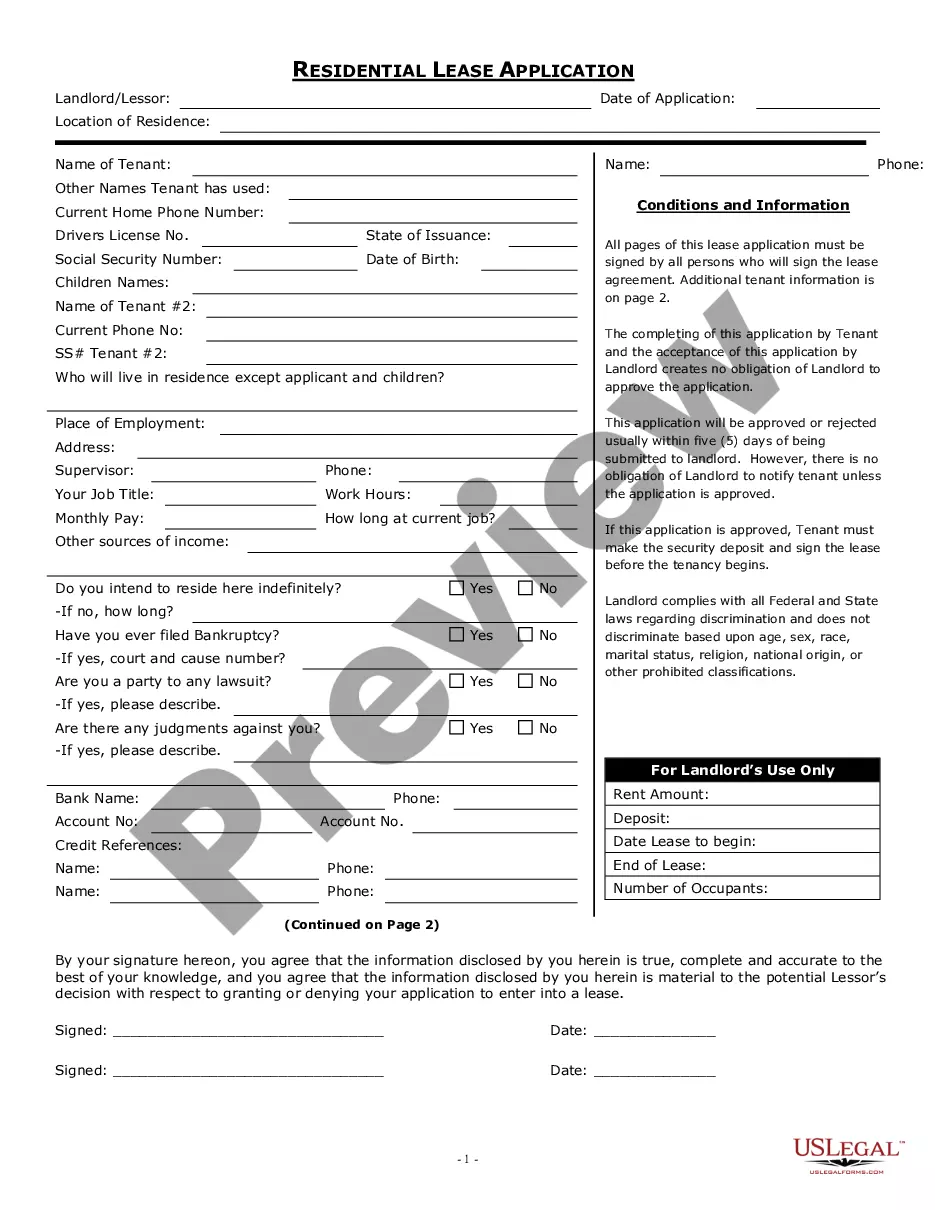
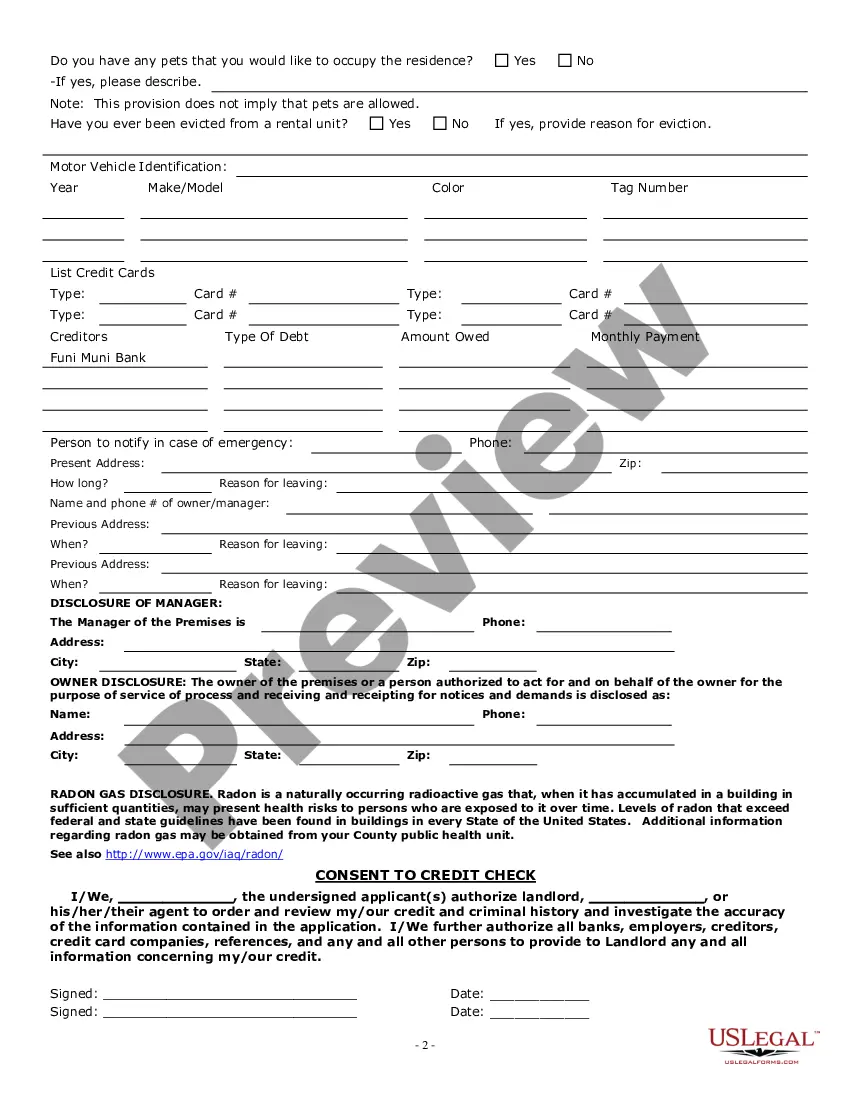
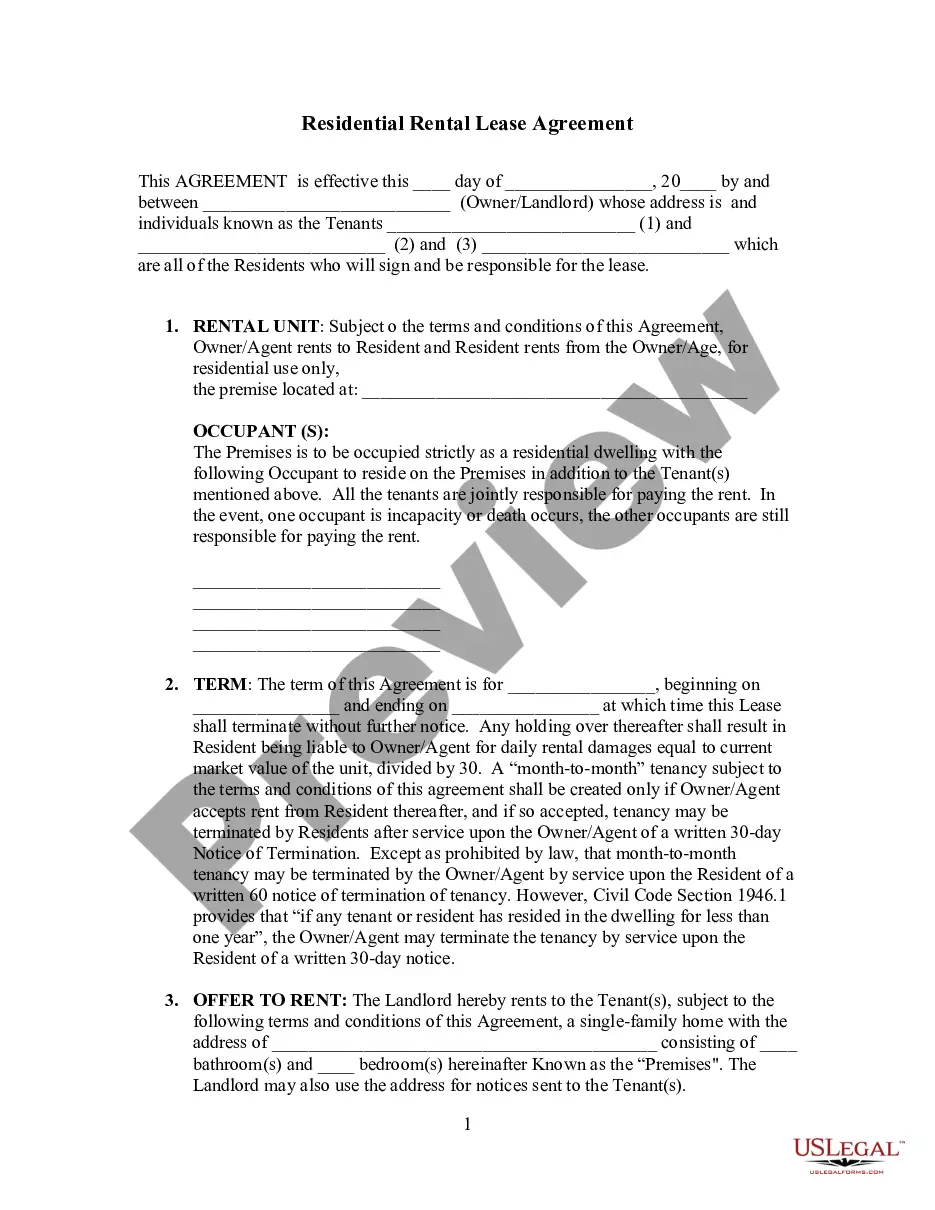
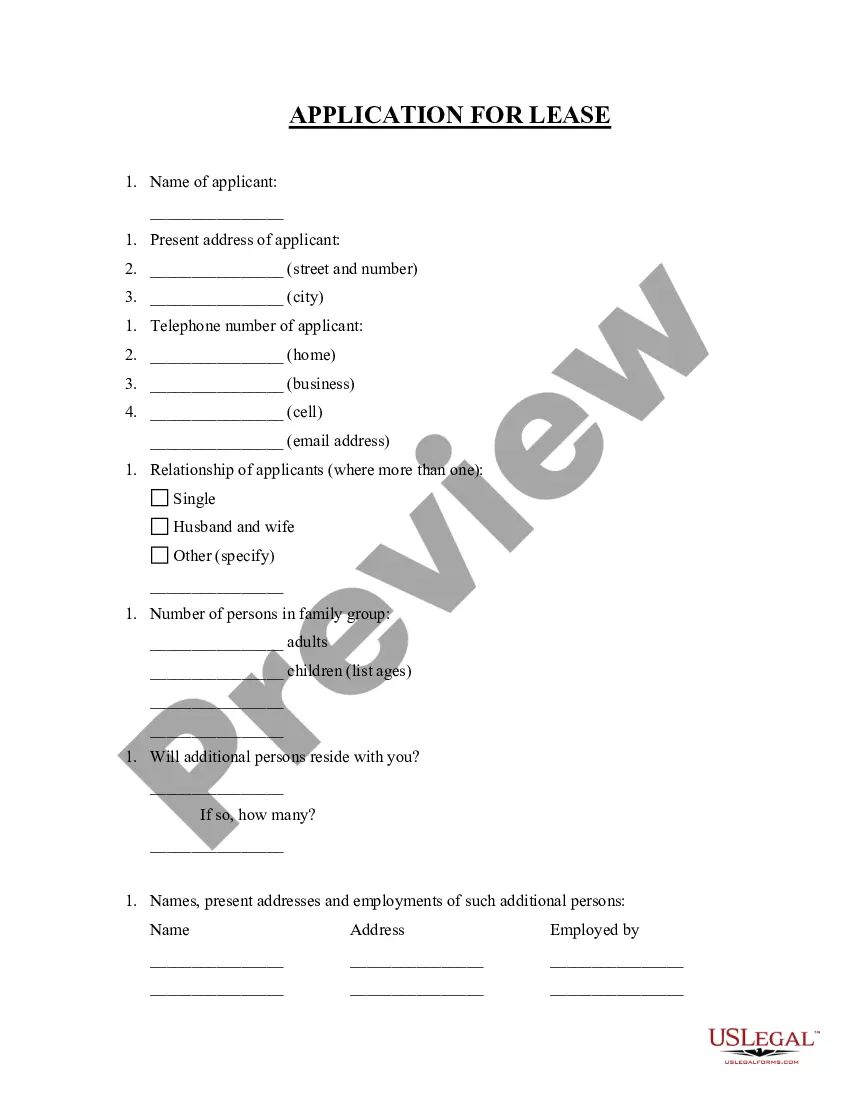
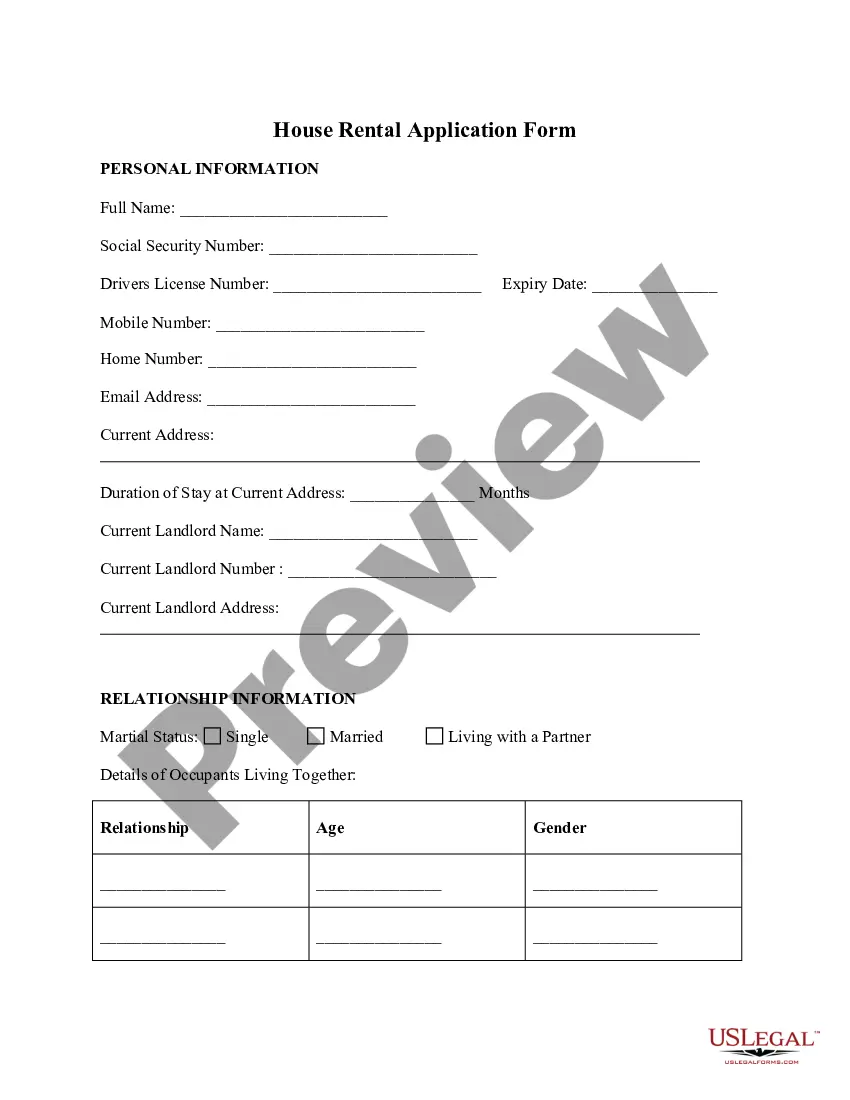
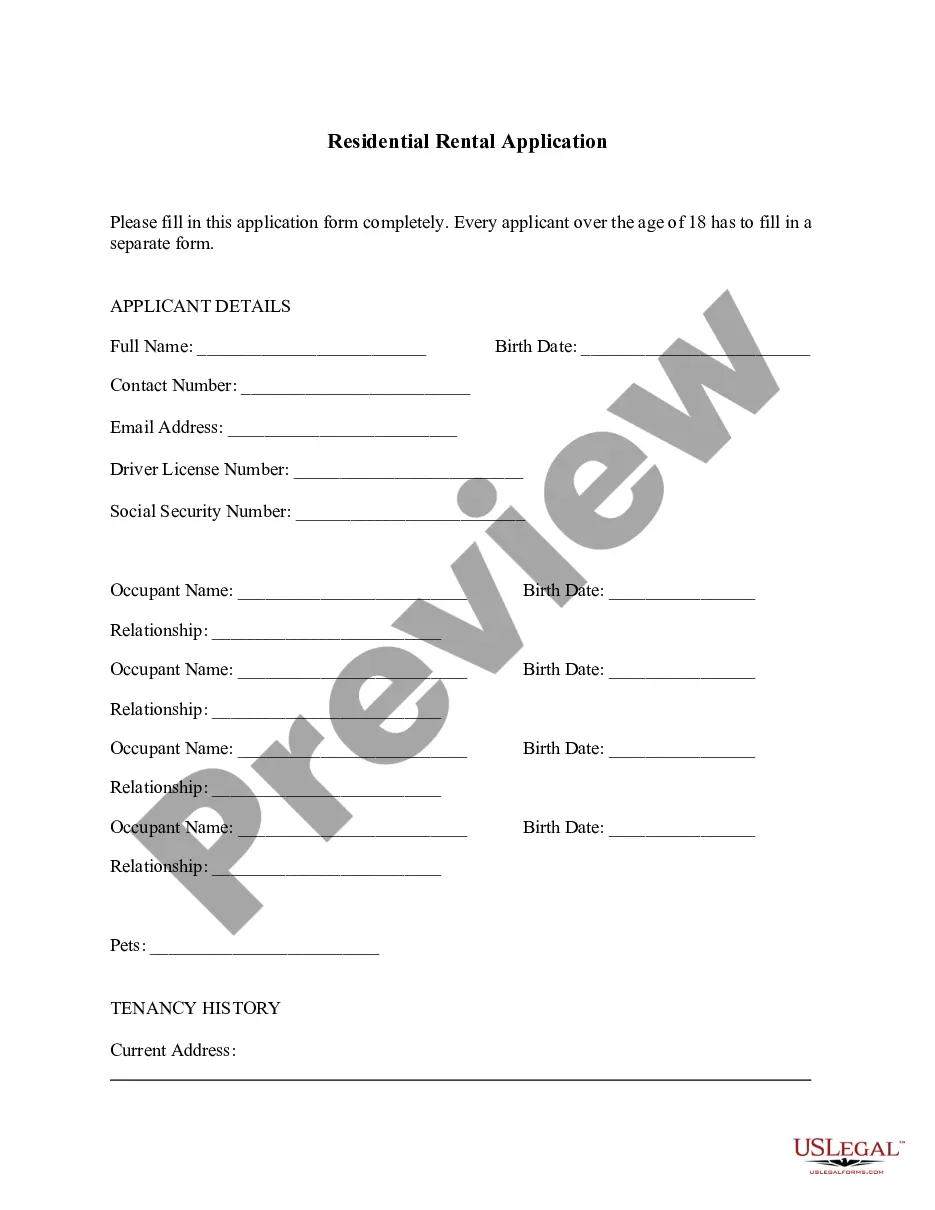
The Residential Rental Lease Application is a document used by landlords to assess potential tenants prior to entering a lease agreement. This form requires the applicant to provide personal information and allows for a credit and criminal history check. Unlike a lease agreement, which outlines the terms of rental occupancy, this application is strictly for evaluating tenant eligibility and does not guarantee lease approval.
Key parts of this document
- Applicant's personal information including name, contact details, and employment history.
- Authorization for background checks, including credit and criminal history.
- Disclosure sections pertaining to compliance with fair housing laws.
- Field for landlordâs use, detailing rent amount and lease dates.
- Signature sections to affirm the accuracy of the disclosed information.

When to use this form
This Residential Rental Lease Application should be used when a landlord is seeking to rent a property and requires interested tenants to submit their details for evaluation. It is appropriate in situations where the landlord wants to assess the financial and rental history of potential tenants before making a lease decision.
Intended users of this form
Eligible users of this form include:
- Landlords and property managers looking to evaluate potential tenants.
- Tenants interested in applying to rent a residential property.
- Real estate professionals assisting landlords in tenant selection.
How to prepare this document
- Provide the personal and employment information of the applicant, including current address and income details.
- Sign the authorization section to permit credit and criminal history checks.
- Review and acknowledge compliance with fair housing laws by signing the required disclosure.
- Fill in the landlord's fields regarding proposed rent, deposit, and lease dates.
- Submit the completed form to the landlord for review and approval.
Is notarization required?
This form does not typically require notarization unless specified by local law. Landlords and tenants should consult local regulations to ensure compliance with any applicable requirements.
Get your form ready online
Our built-in tools help you complete, sign, share, and store your documents in one place.
Make edits, fill in missing information, and update formatting in US Legal Forms—just like you would in MS Word.
Download a copy, print it, send it by email, or mail it via USPS—whatever works best for your next step.
Sign and collect signatures with our SignNow integration. Send to multiple recipients, set reminders, and more. Go Premium to unlock E-Sign.
If this form requires notarization, complete it online through a secure video call—no need to meet a notary in person or wait for an appointment.
We protect your documents and personal data by following strict security and privacy standards.

Make edits, fill in missing information, and update formatting in US Legal Forms—just like you would in MS Word.

Download a copy, print it, send it by email, or mail it via USPS—whatever works best for your next step.

Sign and collect signatures with our SignNow integration. Send to multiple recipients, set reminders, and more. Go Premium to unlock E-Sign.

If this form requires notarization, complete it online through a secure video call—no need to meet a notary in person or wait for an appointment.

We protect your documents and personal data by following strict security and privacy standards.
Typical mistakes to avoid
- Failing to provide complete and accurate information, which can lead to application denial.
- Not signing the authorization for credit checks, making the application incomplete.
- Overlooking local law requirements for disclosures that may differ by state.
Why use this form online
- Convenient access for both landlords and tenants to complete the form from anywhere.
- Editable format allows for quick adjustments and error correction.
- Reliability of professionally drafted templates ensures legal compliance.
Looking for another form?
Form popularity
FAQ
A lease agreement in California must include specific elements to be valid. Key components include the names of the landlord and tenant, a description of the rental property, the rental term, and the rent amount. Additionally, any rules concerning security deposits, maintenance responsibilities, and other important terms should be outlined clearly. Having a comprehensive agreement will support your California Residential Rental Lease Application and ensure both parties understand their commitments.
In California, a rental agreement does not require notarization to be legally binding. You can create a rental agreement by simply having both parties sign the document. However, if either party prefers added security, notarizing the agreement can serve as an extra precaution. Whether formal or simple, having a clear and signed rental agreement is crucial when submitting your California Residential Rental Lease Application.
To complete the residential lease inventory and condition form, start by carefully inspecting the property. Record any existing damages or notable features in each room, ensuring you describe the condition accurately. Once you have documented your findings, share the form with your landlord for their review. This step helps protect you during the tenancy, making your California Residential Rental Lease Application more transparent.
The new law for renters in California focuses on enhancing tenant protections and ensuring fair rental practices. One key aspect is the requirement for landlords to provide a clear California Residential Rental Lease Application that outlines terms and conditions comprehensively. This law also limits the circumstances under which landlords can evict tenants, promoting greater stability for renters. By understanding these legal changes, tenants can navigate the rental process more confidently, knowing their rights are better protected.
When preparing a rental application in California, specific documents are typically required. You will often need proof of income, identification, rental history, and references. Some landlords may also request a credit report as part of the California Residential Rental Lease Application process. Being organized and prepared with these documents can greatly enhance your chances of approval.
Filling out a California residential lease agreement requires attention to detail. Begin by carefully reading each section and providing accurate information about your personal details, rental terms, and responsibilities. Don’t overlook important details like the lease duration, rent amount, and security deposit. Familiarizing yourself with the requirements of the lease can lead to a smoother rental process.
Landlords may refuse rent for various reasons when reviewing a California Residential Rental Lease Application. A history of late payments, poor credit, or failure to meet income requirements can lead to refusal. Furthermore, inconsistencies in the application or a lack of relevant documentation can raise red flags. Understanding these factors helps you address potential concerns proactively.
While completing a California Residential Rental Lease Application, be aware of red flags that may indicate trouble. Incomplete information, unexplained gaps in rental history, and discrepancies between income and housing costs can signal issues. Additionally, if the applicant has a history of evictions, it may be a concern for landlords. Careful examination of these elements can help in your decision-making.
Identifying red flags in a lease is crucial before you sign a California Residential Rental Lease Application. Look for vague language, unusual fees, or unfavorable terms regarding security deposits. Ensure the responsibilities for maintenance and repairs are explicitly stated. Awareness of these issues can safeguard you from potential pitfalls.
Several factors can lead to the denial of a California Residential Rental Lease Application. Common reasons include insufficient income, poor credit history, and negative rental references. Additionally, a criminal record or failure to provide required documentation can also impact your application. Understanding these factors can help you prepare your application more effectively.