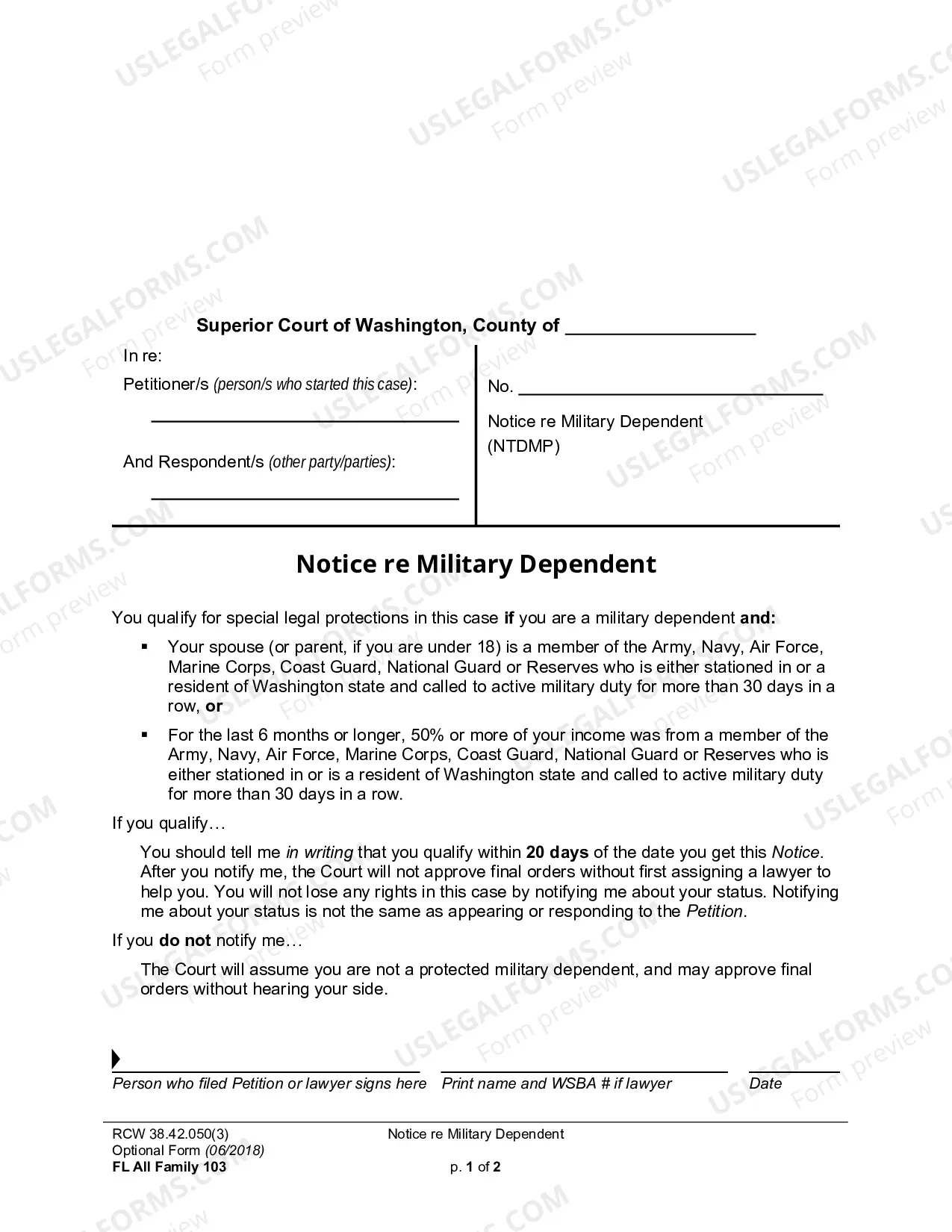
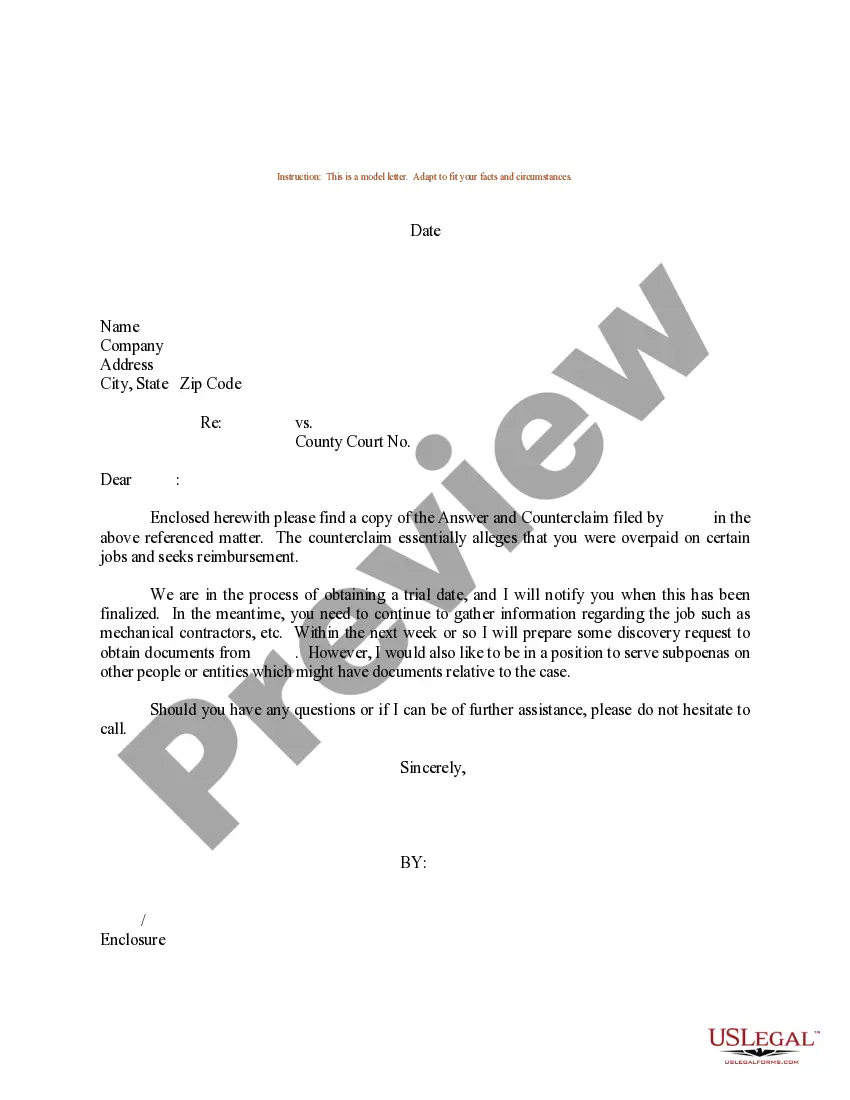
Sample Letter for Answer, Counterclaim, and Preparation of Discovery Request
Understanding this form
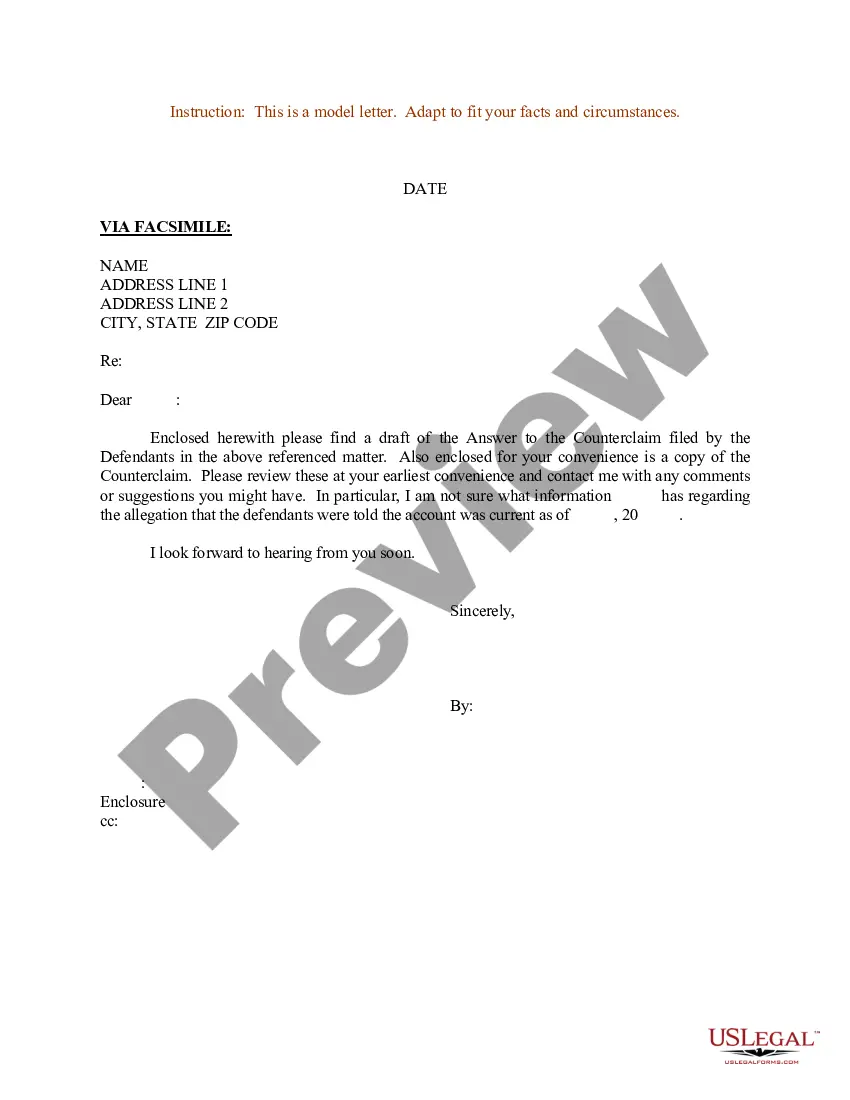
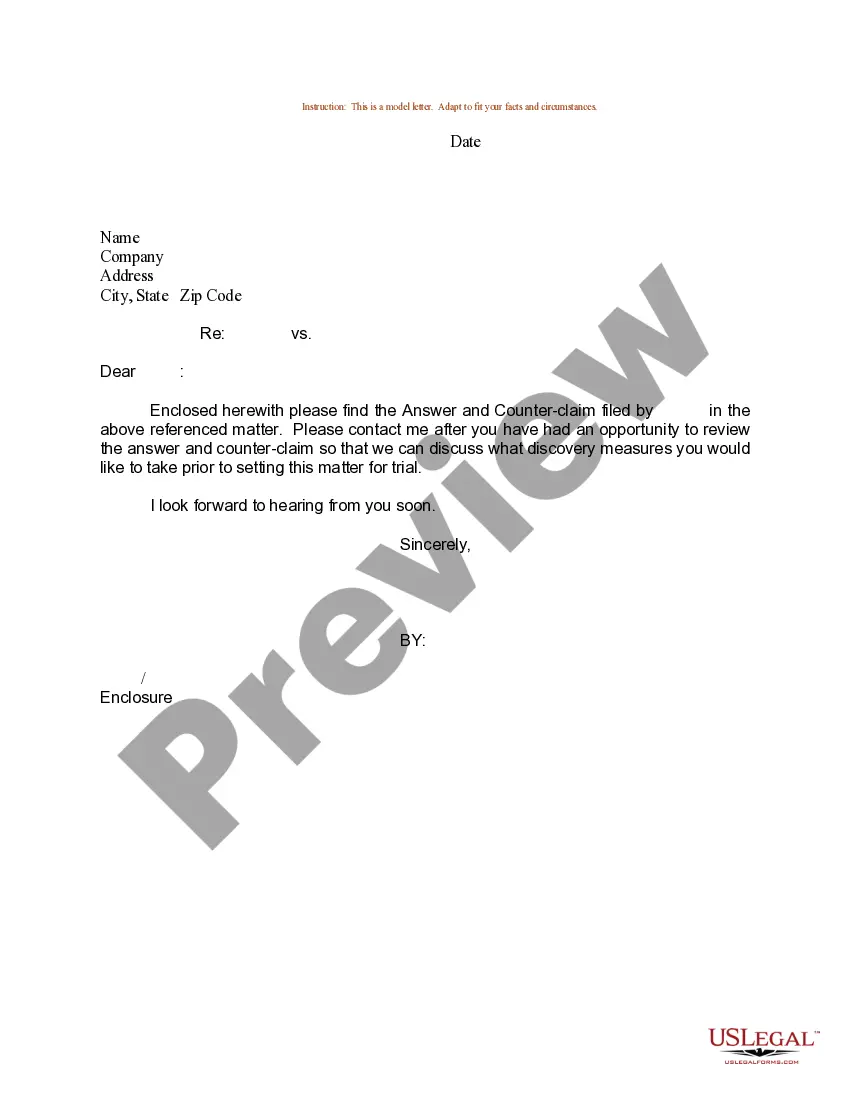
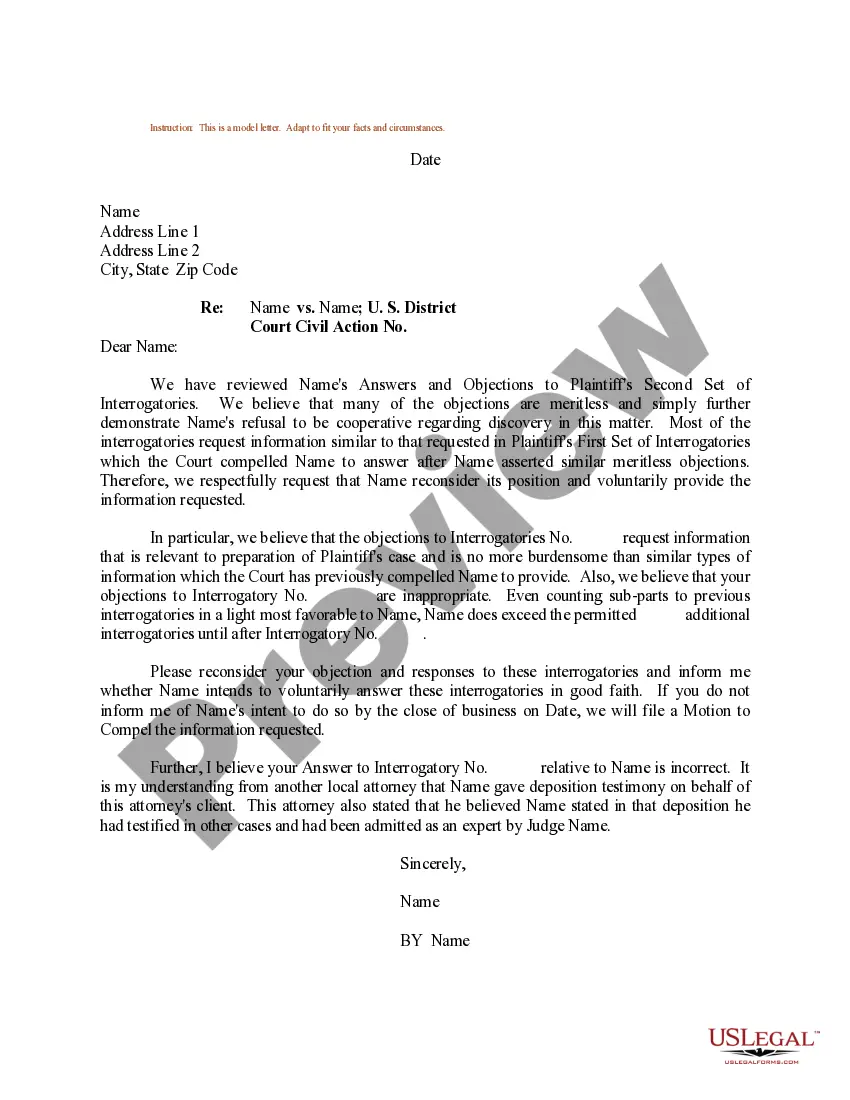
This form is a Sample Letter for Answer, Counterclaim, and Preparation of Discovery Request. It serves as a template to help individuals respond formally to legal claims, present counterclaims, and request essential discovery documents in a legal dispute. Utilizing this sample letter can simplify the process of addressing legal matters in an organized manner, differentiating it from other general response forms by including specific elements related to counterclaims and discovery preparation.
Key parts of this document
- Date section to indicate when the letter is prepared.
- Recipient's name and address for proper delivery.
- Clear statement of the answer and counterclaim being made.
- Request for specific discovery documents relevant to the case.
- Signatures and acknowledgment of the involved parties.
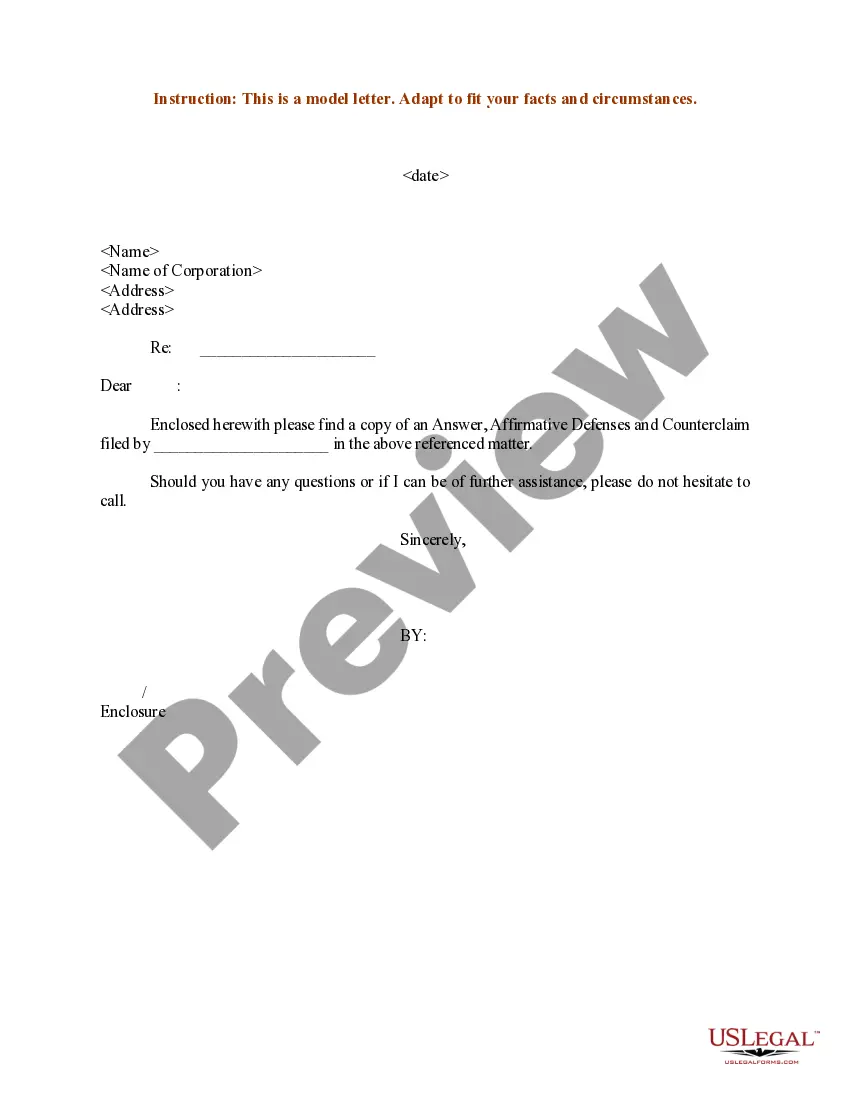
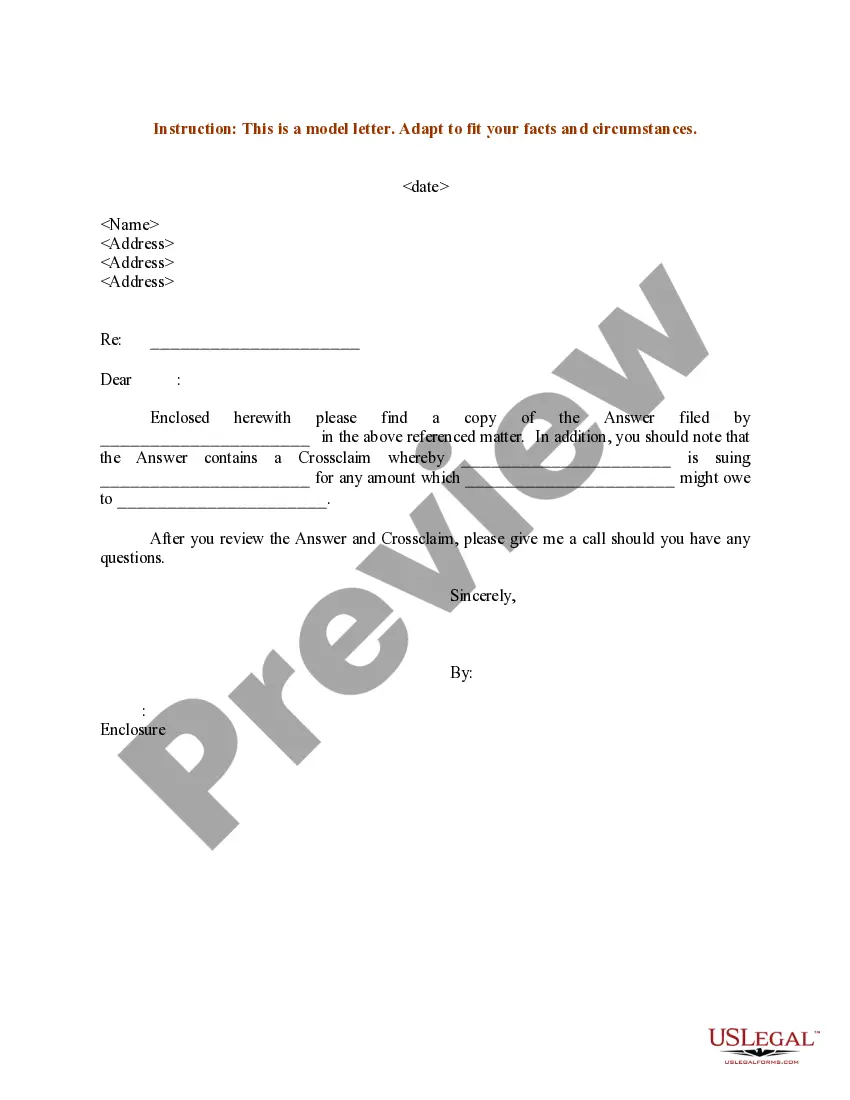
When to use this document
This form should be used when you need to respond to a complaint in a legal matter, assert a counterclaim against the opposing party, and request documents essential for gathering evidence. It is particularly useful in civil litigation where multiple claims and discovery processes are involved and can help ensure that you meet legal deadlines and procedural requirements.
Who needs this form
- Individuals involved in a legal dispute seeking to respond to a complaint.
- Defendants wanting to assert a counterclaim against the plaintiff.
- Parties who need to initiate the discovery process in civil litigation.
- People with little legal experience looking for a structured way to manage their legal response.
Instructions for completing this form
- Enter the date at the top of the letter.
- Fill in the recipient's name and address accurately.
- Clearly state your answer and outline any counterclaims you wish to present.
- List the specific discovery requests you are making.
- Provide spaces for all necessary signatures and include your contact information.
Is notarization required?
Notarization is not commonly needed for this form. However, certain documents or local rules may make it necessary. Our notarization service, powered by Notarize, allows you to finalize it securely online anytime, day or night.
Get your form ready online
Our built-in tools help you complete, sign, share, and store your documents in one place.
Make edits, fill in missing information, and update formatting in US Legal Forms—just like you would in MS Word.
Download a copy, print it, send it by email, or mail it via USPS—whatever works best for your next step.
Sign and collect signatures with our SignNow integration. Send to multiple recipients, set reminders, and more. Go Premium to unlock E-Sign.
If this form requires notarization, complete it online through a secure video call—no need to meet a notary in person or wait for an appointment.
We protect your documents and personal data by following strict security and privacy standards.

Make edits, fill in missing information, and update formatting in US Legal Forms—just like you would in MS Word.

Download a copy, print it, send it by email, or mail it via USPS—whatever works best for your next step.

Sign and collect signatures with our SignNow integration. Send to multiple recipients, set reminders, and more. Go Premium to unlock E-Sign.

If this form requires notarization, complete it online through a secure video call—no need to meet a notary in person or wait for an appointment.

We protect your documents and personal data by following strict security and privacy standards.
Common mistakes
- Failing to provide complete and accurate recipient information.
- Inefficiently stating the counterclaims or discovery requests.
- Missing deadlines for submitting the letter.
- Not signing the letter or omitting contact details.
Why use this form online
- Convenient access to a professionally drafted template.
- Editable format allows for customization to your specific situation.
- Streamlined process ensures that all necessary components are included.
- Immediate download capability for timely use in legal matters.
Key takeaways
- This form allows for a comprehensive response to legal complaints, including counterclaims.
- Preparation and submission of this form are key steps in the legal process.
- Ensure compliance with state-specific regulations when using this form.
Looking for another form?

Form popularity
FAQ
Have a strategy. Adjust the scope of your requests to the questions at issue. Send clear requests. Always consider how your client would be prepared to respond to similar requests. Make your objections clear and specific.
When responding to Requests for Admissions, remember to answer as follows: Admit: If any portion of the Request for Admission is true then you must admit to that portion of the request. You are also allowed to have a hybrid response admit the part of the request that is true while denying another part.
Your name and address. The Court's name. The title of the case. Case number. Fill your name in as the Requesting Party. On the following pages, choose which questions you wish to ask by checking boxes next to the questions you wish to ask.
The plaintiff must respond to your requests for discovery. The plaintiff must respond by the deadline. There are different ways to make sure you get each kind of discovery if the plaintiff does not give it to you by the deadline.
Your answers to the interrogatories should usually be short, clear, and direct and should answer only the question that is being asked. This is not the time to set out your entire case or defense to the other side. Take the time to make sure your answers are correct and truthful.
Requests for Admissions involves one party asking the opposing to admit, deny, or prove the validity of certain facts or documents. This portion of the discovery saves time during the trial and allows the party to trust the facts or documents in question.
You must answer each interrogatory separately and fully in writing under oath, unless you object to it. You must explain why you object. You must sign your answers and objections.
Be concise when answering narrative questions. Provide accurate, complete information, but do not answer more than is necessary. If adding some particular details will help your case, then include them. But do not feel compelled to include details that may not help your case.
Organize documents. Organize according to the demand number. Don't duplicate documents. If you're providing three years of bank statements in response to one demand, and the same documents contain information responsive to another demand, state so. Comply with the due date. Communicate. Do a complete job.