Utility Easement
What is this form?
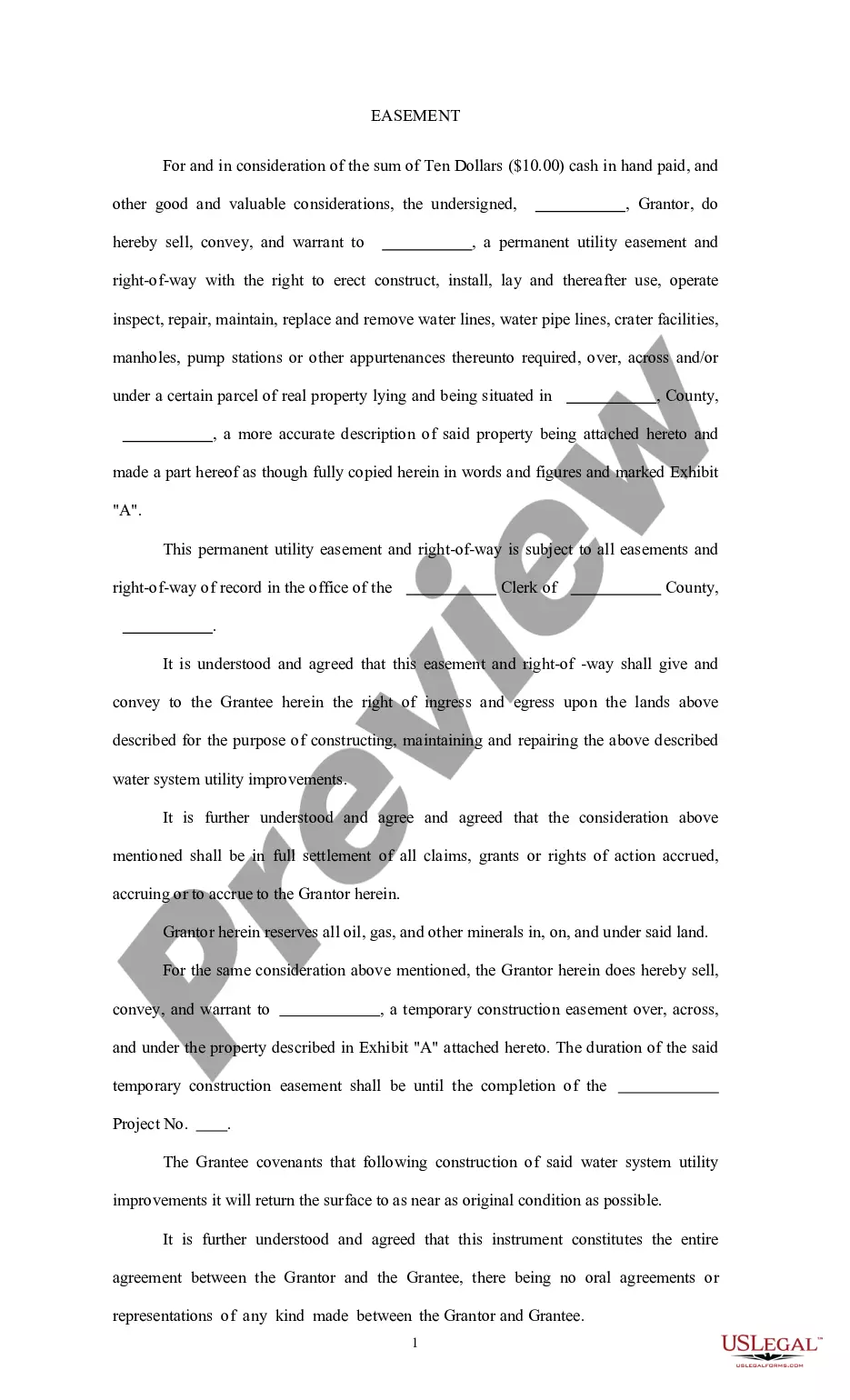
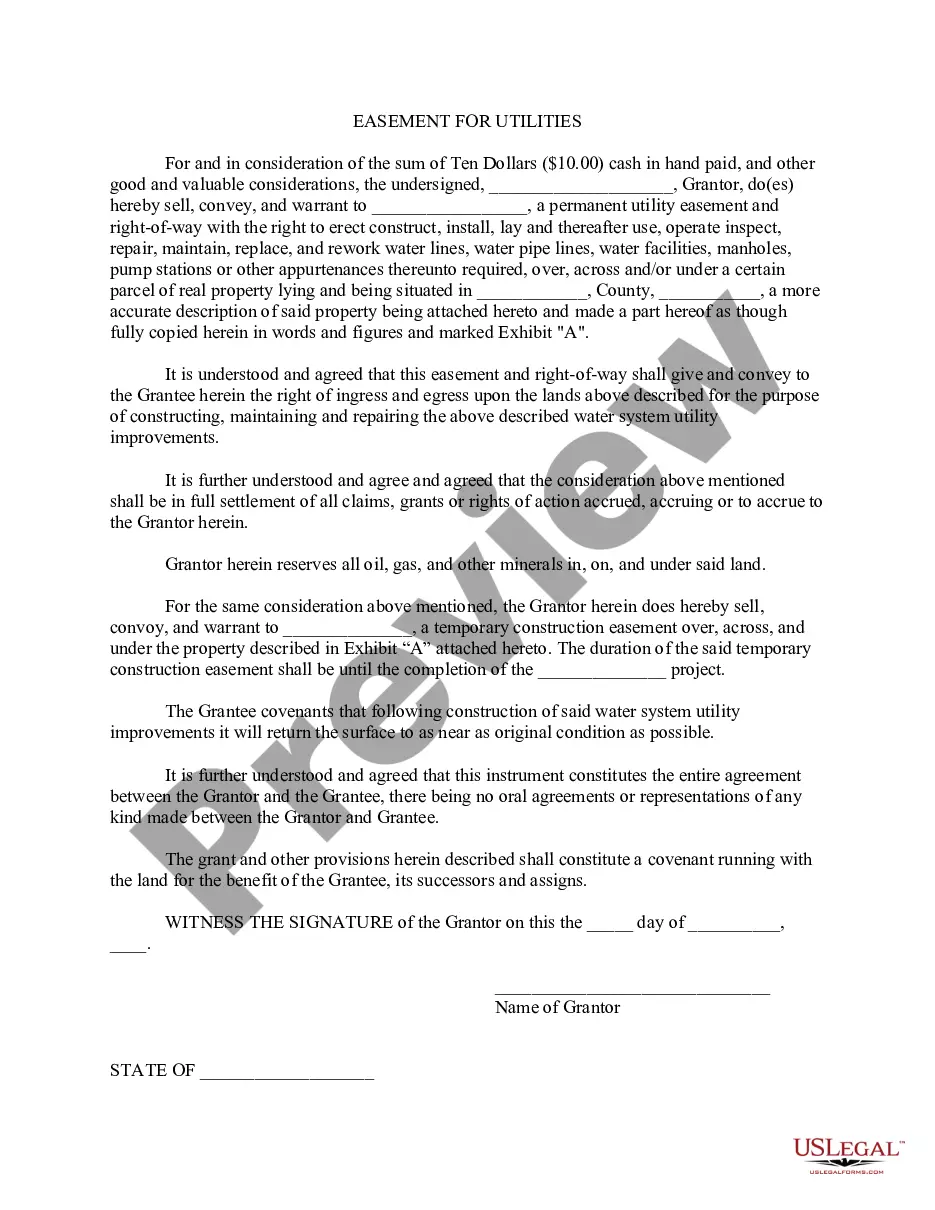
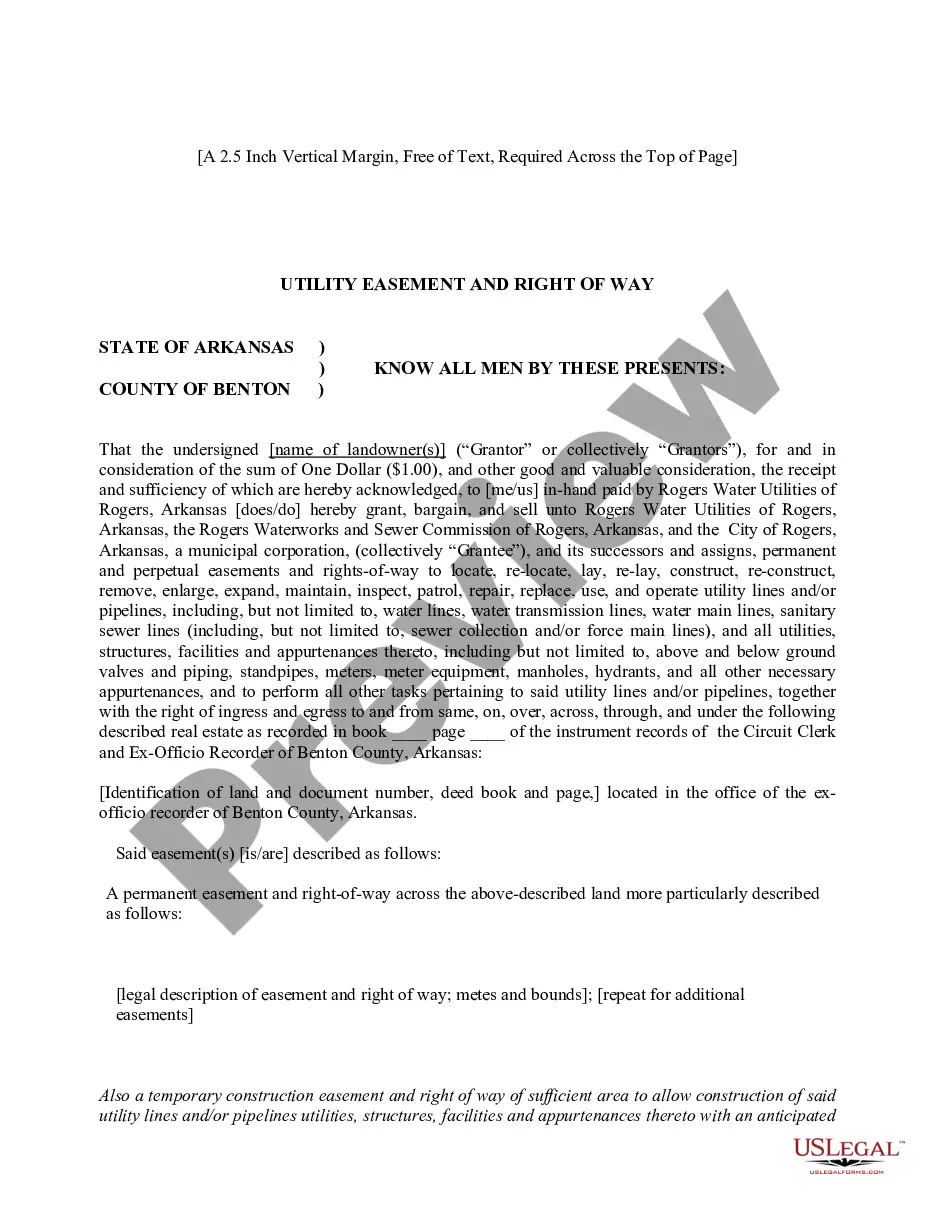
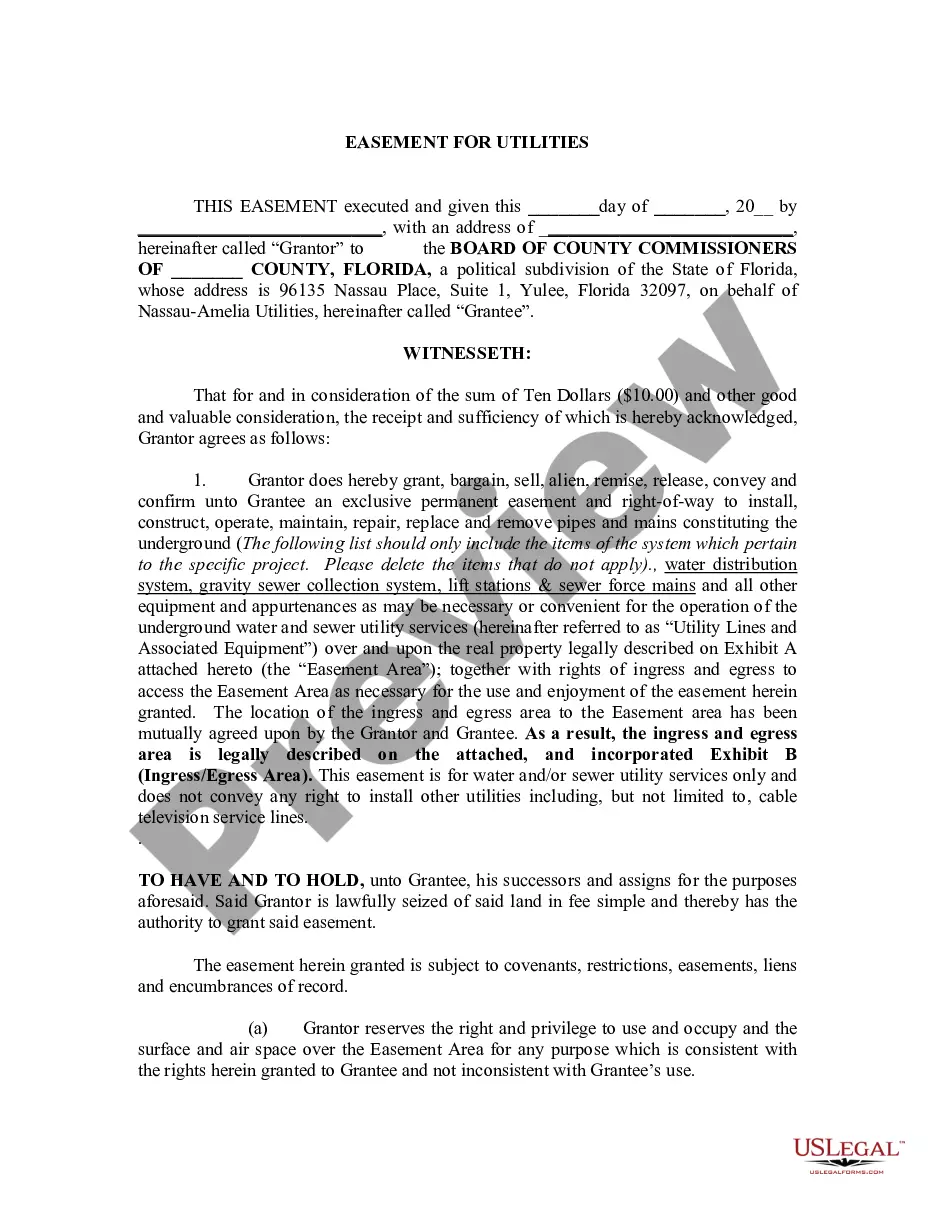
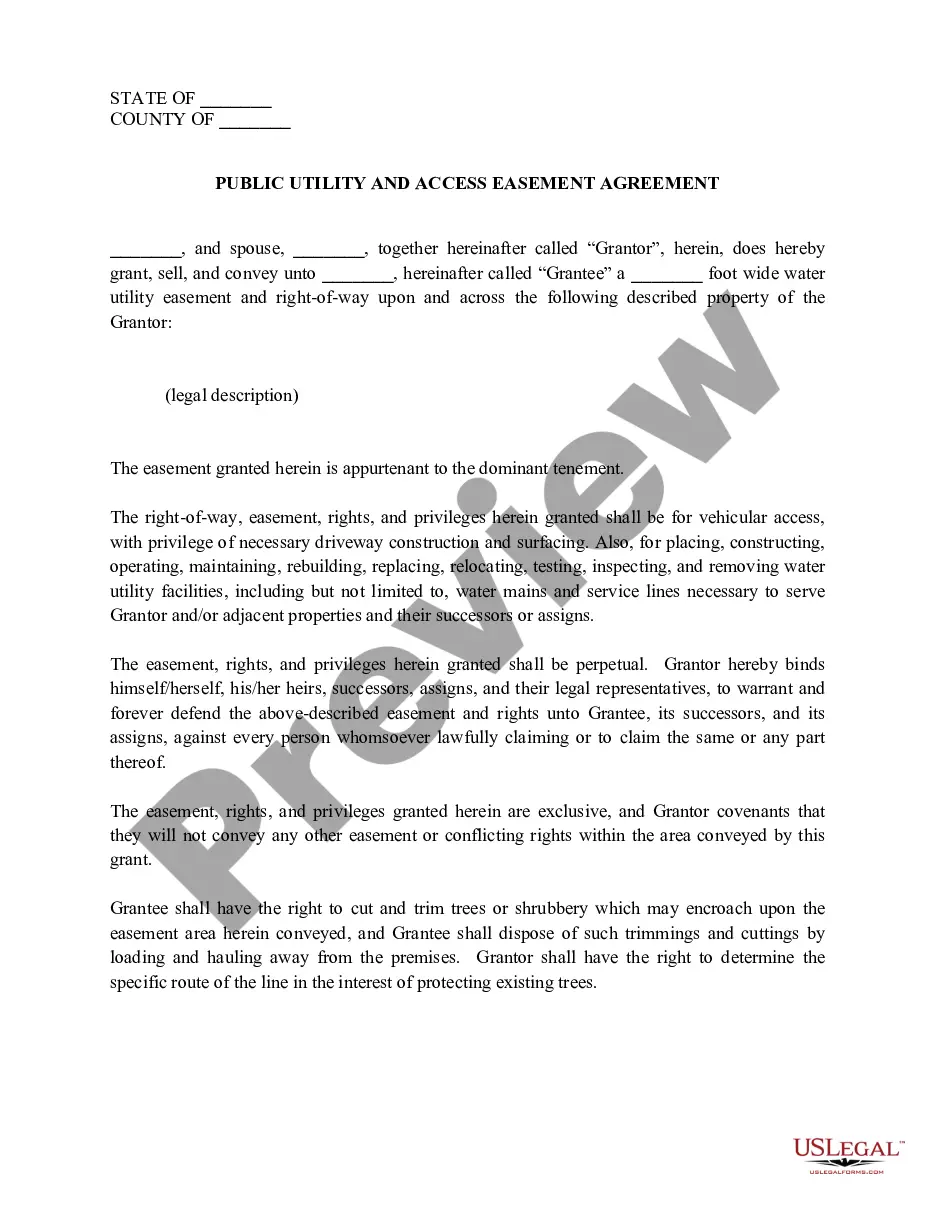
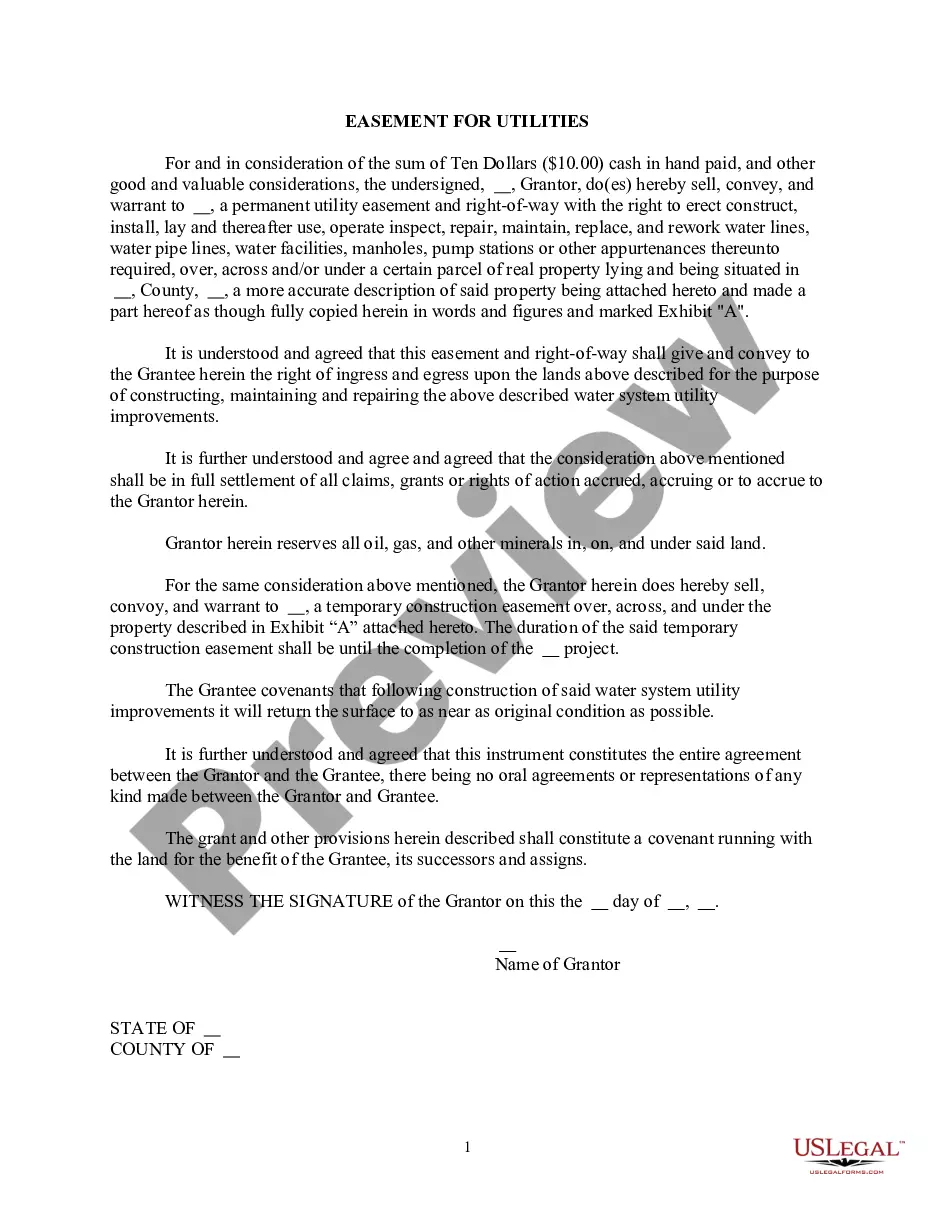
The Utility Easement form is a legal document that grants one party the right to use a portion of another party's property for utility purposes. This easement ensures that necessary water facilities, including pipelines and pump stations, can be installed and maintained. Unlike other property agreements, a utility easement specifically addresses the needs of utility providers while clarifying the rights and obligations of the property owner.
Main sections of this form
- Grantor and Grantee identification
- Description of the easement area and purpose
- Terms of ingress and egress rights
- Conditions for temporary easements, if applicable
- Clauses addressing maintenance and restoration of property
- Reservation of mineral rights by the Grantor
Common use cases
This form is essential when a utility company or other entity needs legal permission to access private property for the installation, maintenance, or operation of water infrastructure. It is commonly used in situations where new pipelines or water systems are being developed, or when repairs to existing utilities are required. Homeowners and property managers may also use this form to establish clear rights when granting access for utility work.
Intended users of this form
- Property owners planning to grant easements to utility companies
- Utility service providers seeking legal access to property
- Real estate professionals involved in property transactions
- Land developers managing easements for construction projects
Instructions for completing this form
- Identify and enter the names of the Grantor and Grantee.
- Provide a detailed description of the property. Specify its location and attach a more accurate description if needed.
- Clearly state the purpose and terms of the easement, including the rights being granted.
- Include any temporary easement terms if necessary, including the duration and project details.
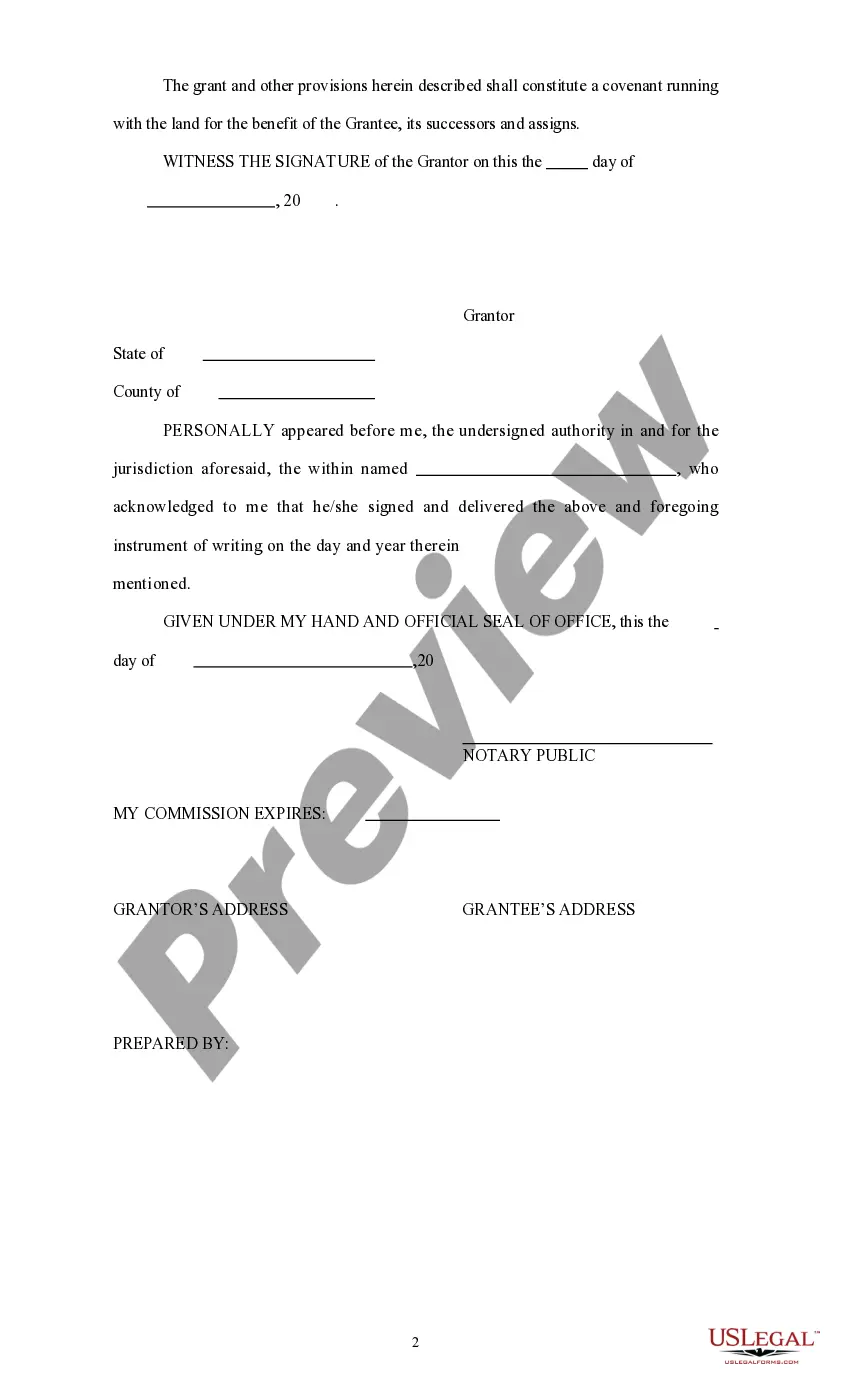
- Sign and date the document to finalize the agreement.
Is notarization required?
This document requires notarization to meet legal standards. US Legal Forms provides secure online notarization powered by Notarize, allowing you to complete the process through a verified video call, available 24/7.
Get your form ready online
Our built-in tools help you complete, sign, share, and store your documents in one place.
Make edits, fill in missing information, and update formatting in US Legal Forms—just like you would in MS Word.
Download a copy, print it, send it by email, or mail it via USPS—whatever works best for your next step.
Sign and collect signatures with our SignNow integration. Send to multiple recipients, set reminders, and more. Go Premium to unlock E-Sign.
If this form requires notarization, complete it online through a secure video call—no need to meet a notary in person or wait for an appointment.
We protect your documents and personal data by following strict security and privacy standards.

Make edits, fill in missing information, and update formatting in US Legal Forms—just like you would in MS Word.

Download a copy, print it, send it by email, or mail it via USPS—whatever works best for your next step.

Sign and collect signatures with our SignNow integration. Send to multiple recipients, set reminders, and more. Go Premium to unlock E-Sign.

If this form requires notarization, complete it online through a secure video call—no need to meet a notary in person or wait for an appointment.

We protect your documents and personal data by following strict security and privacy standards.
Mistakes to watch out for
- Failing to provide a precise description of the property affected by the easement.
- Not specifying the rights of ingress and egress clearly.
- Missing signatures from all necessary parties.
- Omitting to attach any required property maps or exhibits.
Benefits of completing this form online
- Convenience of downloading the form instantly.
- Editable templates allow customization to fit specific needs.
- Access to attorney-drafted forms ensures legal reliability.
- Easy to store and share electronically, simplifying document management.
Key takeaways
- The Utility Easement form is crucial for formalizing utility access to private property.
- Accurate completion of the form ensures clarity in rights and responsibilities.
- Consult local regulations to ensure compliance with state-specific requirements.
Looking for another form?
Form popularity
FAQ
The Utility Easement form is a legal document that grants one party the right to use a portion of another party's property for utility purposes, such as water facilities, pipelines, and pump stations. It defines the easement area, ingress and egress rights, and maintenance and restoration obligations, and it reserves the grantor’s mineral rights. It is typically used when a utility needs legal access for installation, operation, or maintenance.
An easement obtained with this form defines the right to use a portion of property for utility purposes and sets the terms for access, maintenance, and restoration. Challenging or fighting the easement would involve separate legal action outside the form and depends on state law. A licensed attorney can advise on options if a dispute arises.
No. You are not obligated to sign; this form is used when you choose to grant the easement. It describes the easement area, ingress/egress, and maintenance terms. If you do not consent, the utility cannot obtain the rights described in this document through this form.
This form does not remove an easement. Ending an easement typically requires a separate release or termination agreement signed by both parties, or another appropriate action under law. To pursue removal, consult an attorney to explore options consistent with the recorded document.
This form identifies the easement area and its purpose, including rights of ingress and egress. To change or avoid the impact of an existing easement, parties generally negotiate an amendment, relocation, or release agreement, and may need new or updated documents. Any modification should be in writing and recorded.
This form is specifically tailored for utility facilities and access. It uniquely addresses maintenance and restoration obligations, describes the easement area and ingress/egress rights, and reserves mineral rights by the grantor, ensuring utility providers can operate water facilities like pipelines and pump stations. Other easement forms may not include these water-specific provisions or mineral reservations.