Audio/Video Recordings - Transcripts (revised 2017)
What is this form?
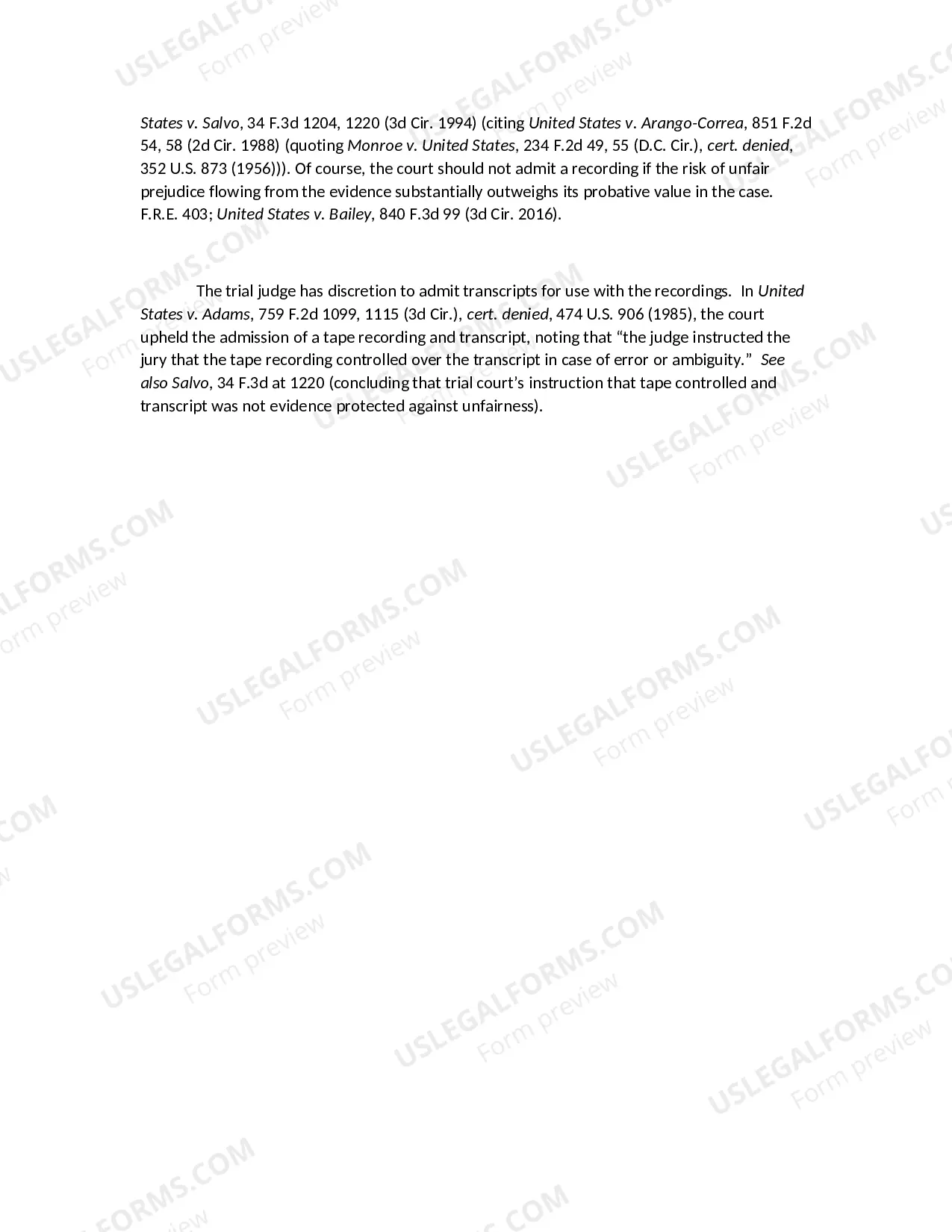
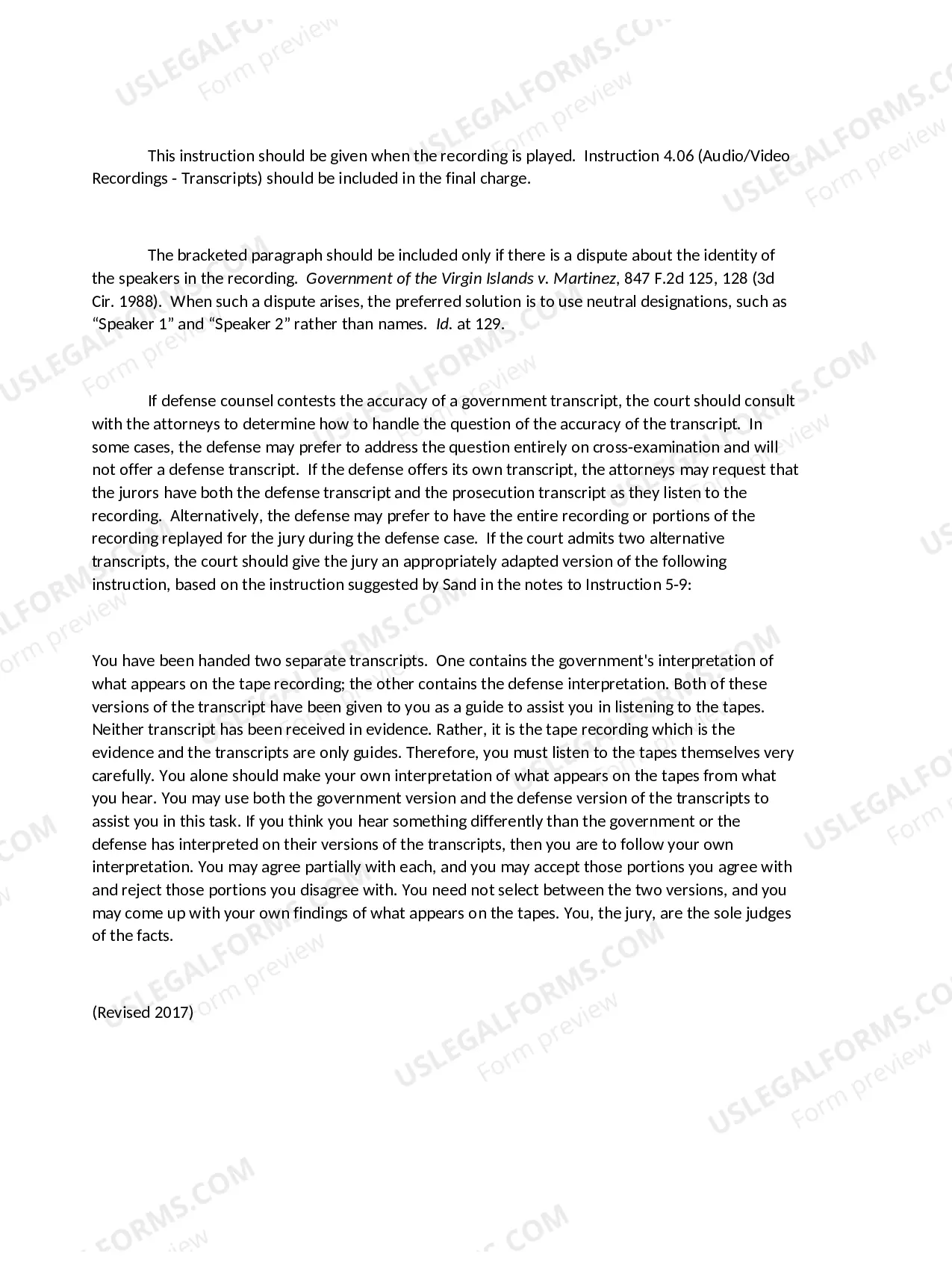
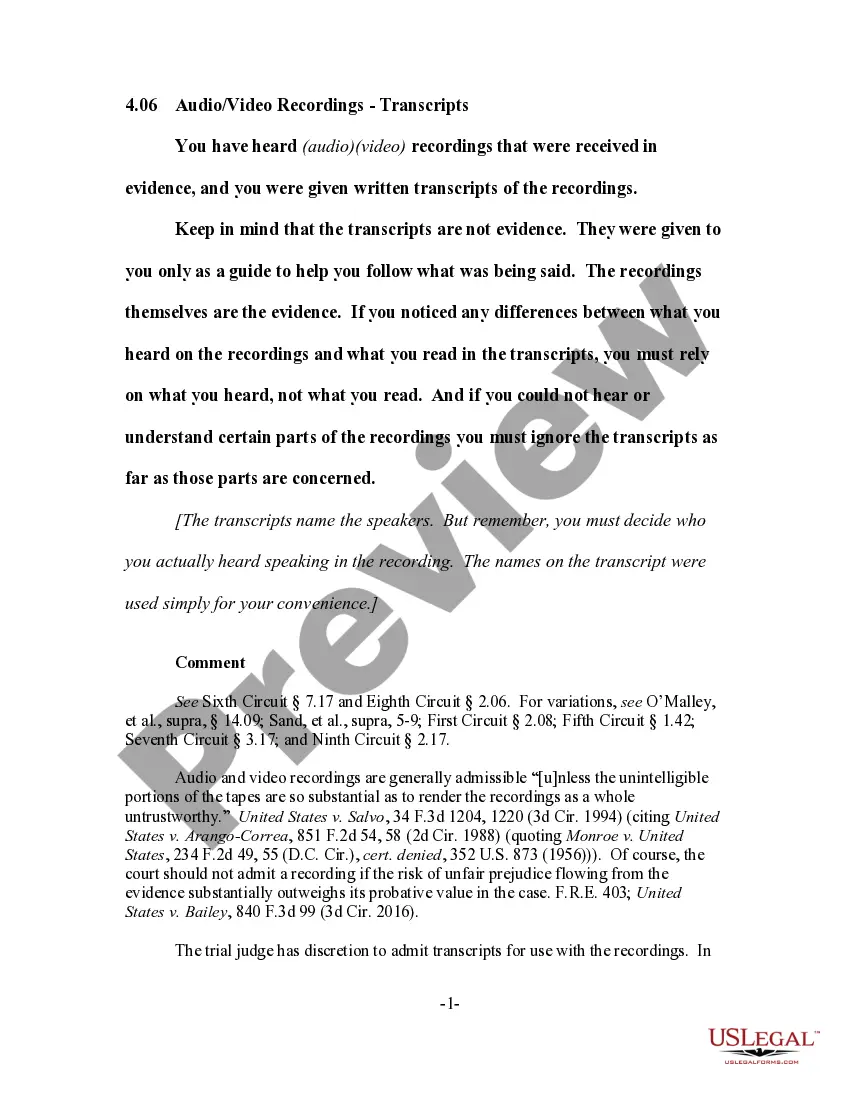
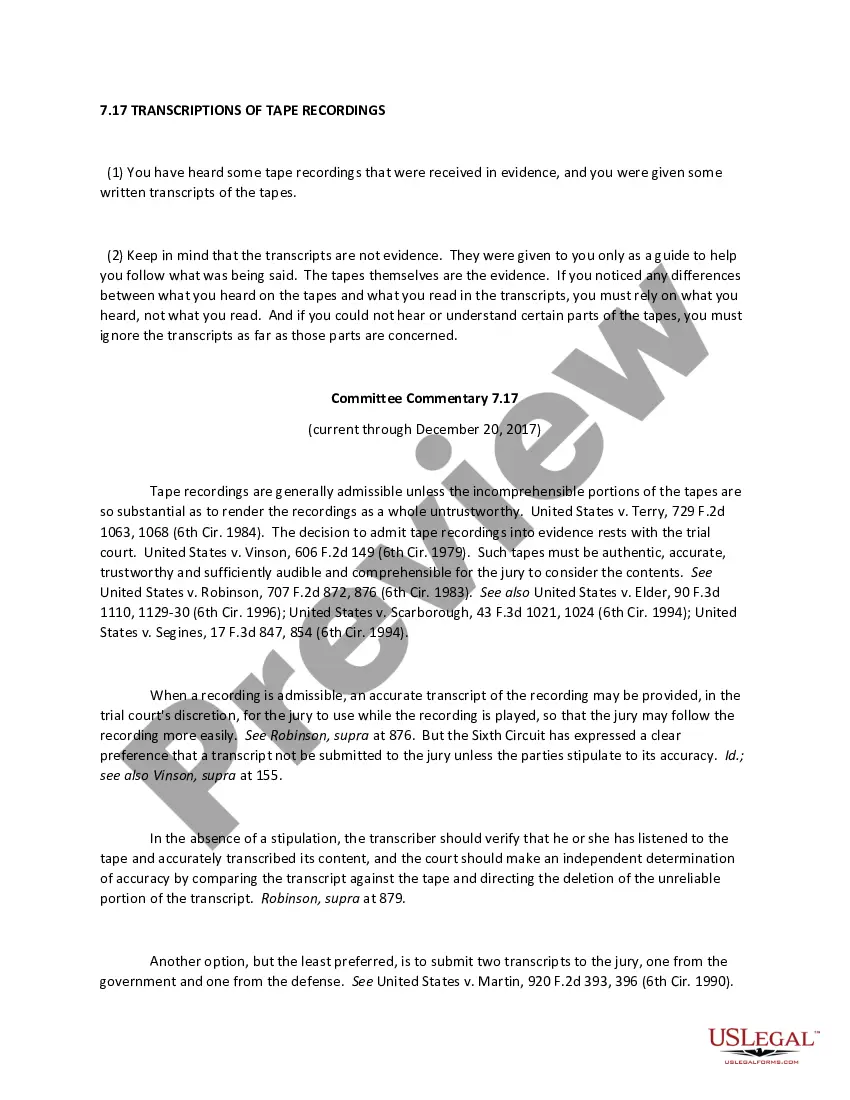
The Audio/Video Recordings - Transcripts form, revised in 2017, is designed to provide jurors with written transcripts of audio or video recordings that are accepted as evidence in a court trial. This form serves as a guide to assist jurors in understanding the content of the recordings while emphasizing that the actual audio or video evidence holds more legal authority than the written transcripts. Unlike similar forms, this one specifically addresses the context of using transcripts alongside audio or video evidence in legal proceedings.
Main sections of this form
- Instructions that clarify the transcripts' role as guides, not evidence.
- A warning that jurors should prioritize what they hear over what they read.
- Guidelines on addressing discrepancies between recordings and transcripts.
- Parental options for naming speakers if identification is disputed.
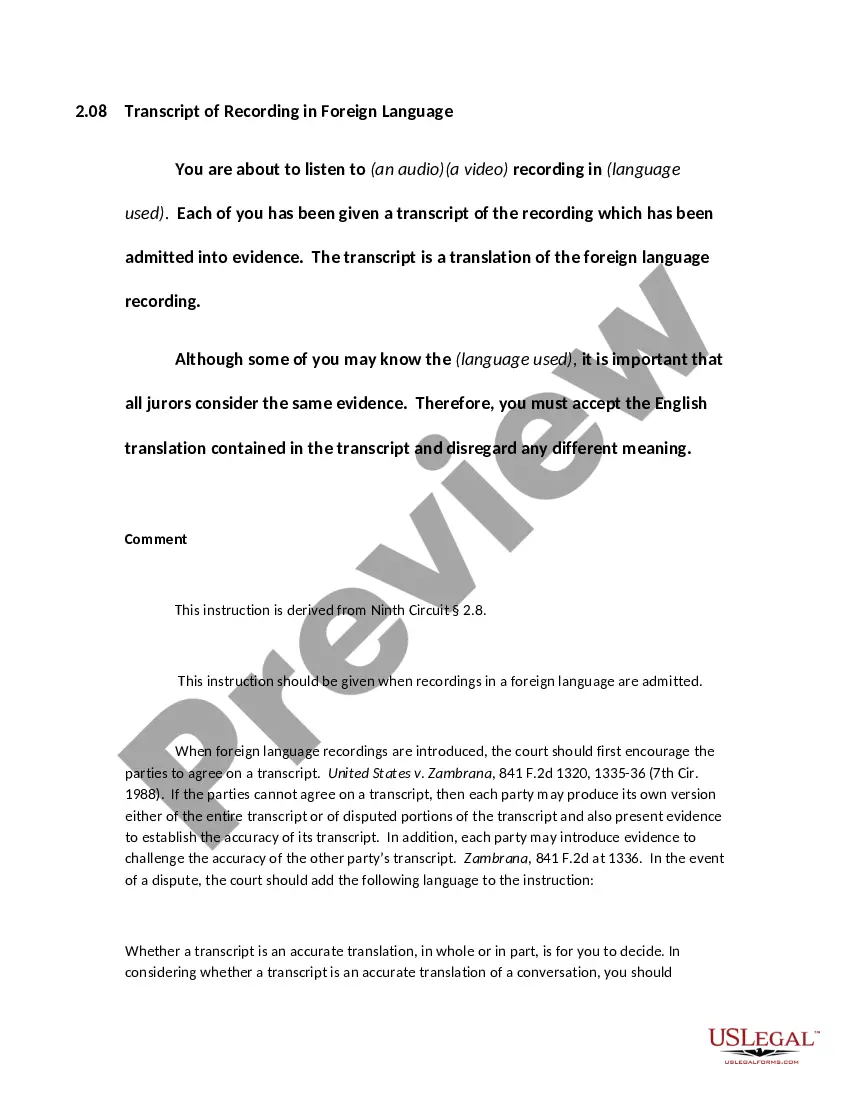
- Considerations for various circuit court requirements related to transcripts.


When to use this document
This form is used in court cases where audio or video recordings are introduced as evidence. It is particularly relevant when jurors need assistance in understanding complex recordings that contain important testimony or evidence. The transcripts help clarify discussions but are not to be treated as factual evidence themselves.
Intended users of this form
- Judges who preside over cases involving audio or video evidence.
- Lawyers who may need to submit transcripts along with recordings for jury consideration.
- Jurors who are tasked with interpreting and weighing the presented evidence in a trial.
Instructions for completing this form
- Gather the audio or video recordings to be used in the trial.
- Prepare the transcripts, ensuring they accurately reflect the content of the recordings.
- Include speaker designations if necessary; opt for neutral labels if there are disputes.
- Ensure that jurors receive both the recordings and the transcripts simultaneously.
- Provide clear instructions to jurors on how to utilize the transcripts while emphasizing the primacy of the recordings.
Does this document require notarization?
This form does not typically require notarization to be legally valid. However, some jurisdictions or document types may still require it. US Legal Forms provides secure online notarization powered by Notarize, available 24/7 for added convenience.
Get your form ready online
Our built-in tools help you complete, sign, share, and store your documents in one place.
Make edits, fill in missing information, and update formatting in US Legal Forms—just like you would in MS Word.
Download a copy, print it, send it by email, or mail it via USPS—whatever works best for your next step.
Sign and collect signatures with our SignNow integration. Send to multiple recipients, set reminders, and more. Go Premium to unlock E-Sign.
If this form requires notarization, complete it online through a secure video call—no need to meet a notary in person or wait for an appointment.
We protect your documents and personal data by following strict security and privacy standards.

Make edits, fill in missing information, and update formatting in US Legal Forms—just like you would in MS Word.

Download a copy, print it, send it by email, or mail it via USPS—whatever works best for your next step.

Sign and collect signatures with our SignNow integration. Send to multiple recipients, set reminders, and more. Go Premium to unlock E-Sign.

If this form requires notarization, complete it online through a secure video call—no need to meet a notary in person or wait for an appointment.

We protect your documents and personal data by following strict security and privacy standards.
Common mistakes to avoid
- Assuming transcripts are evidence; they should only be used as guides.
- Neglecting to instruct jurors on prioritizing audio/video over written transcripts.
- Failing to address discrepancies between recordings and transcripts effectively.
Why complete this form online
- Convenience of easy downloading and printing from home or office.
- Editability allows adjustments to be made as needed before trial.
- Access to attorney-drafted templates that ensure legal compliance.
Legal use & context
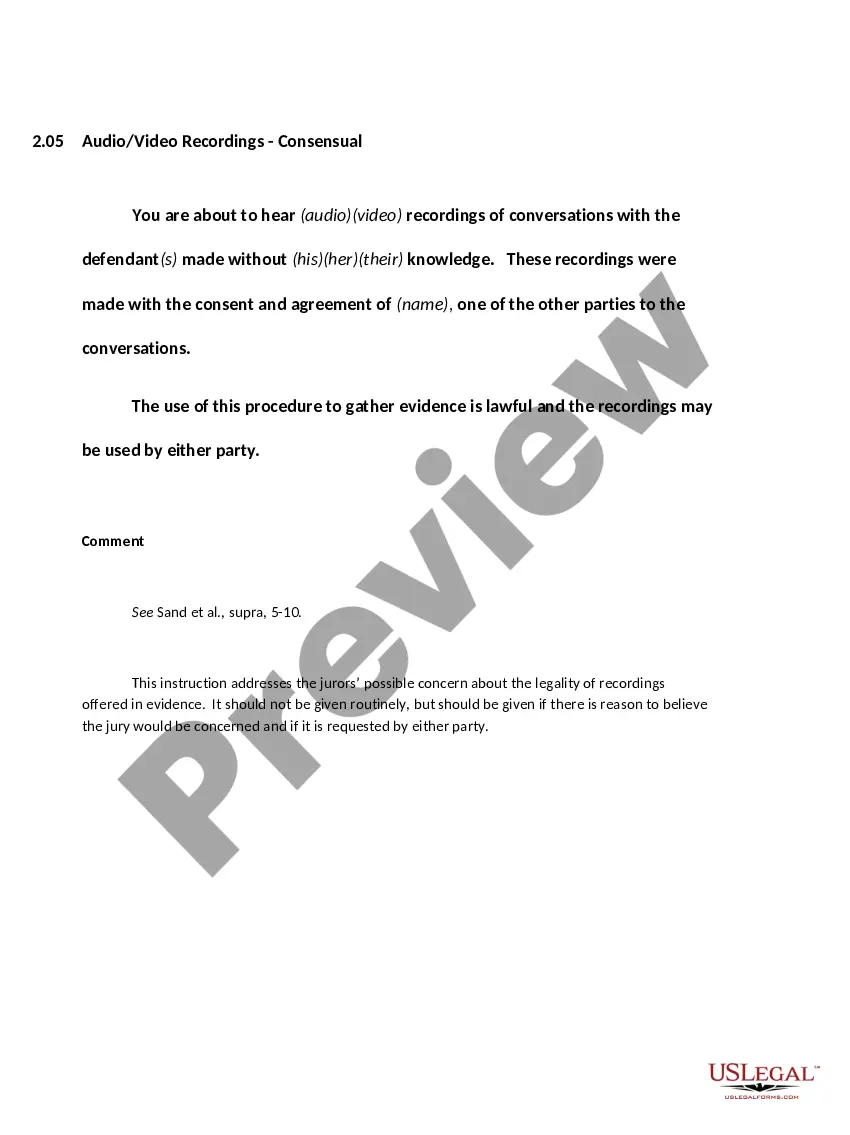
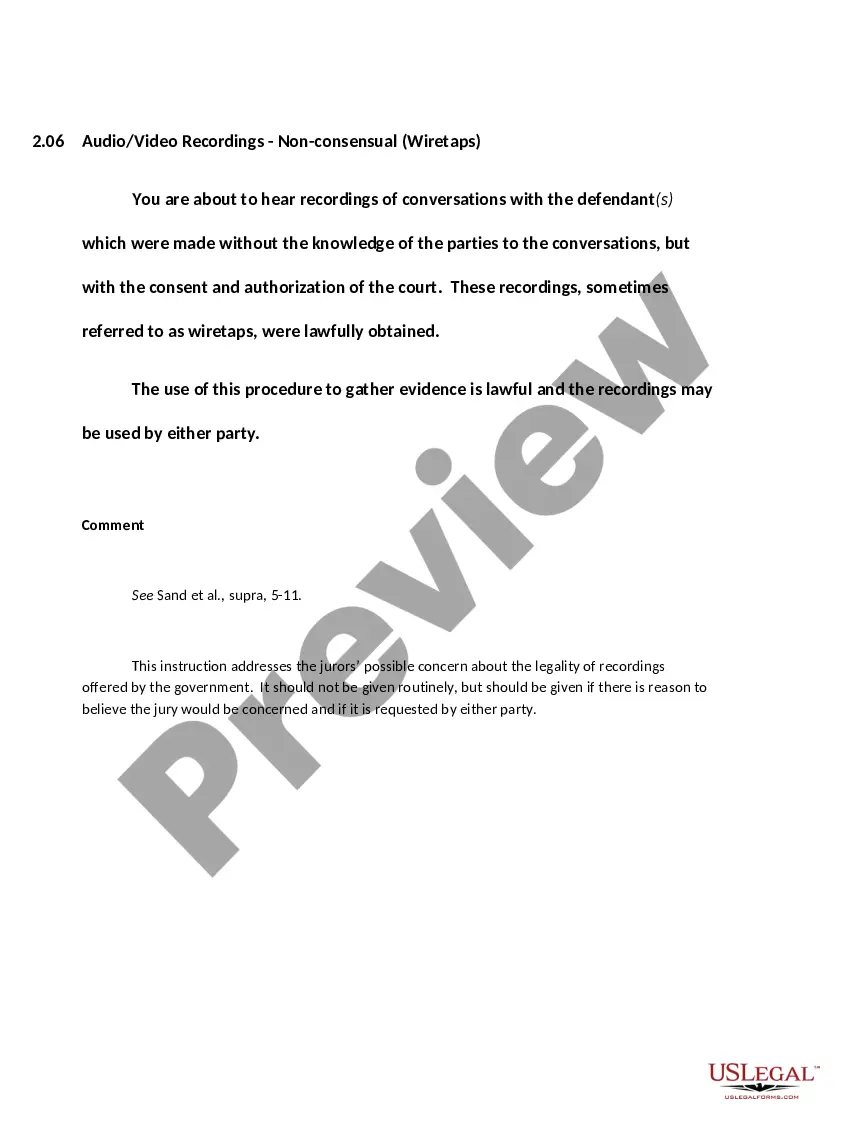
- The form assists jurors in understanding the context of audio/video evidence.
- Contains instructions on handling evidence to avoid unfair prejudice.
- Helps clarify the discretion of trial judges when admitting transcripts.
- Reiterates that the recordings must be prioritized over written guides.
Quick recap
- The Audio/Video Recordings - Transcripts form is essential for guiding jurors in audio/video evidence assessment.
- Itâs vital to understand that transcripts are not evidence themselves.
- Discrepancies between recordings and transcripts should be addressed in jury instructions.
- Legal professionals should be proactive in preparing jurors for the material presented.
Looking for another form?
Form popularity
FAQ
Note: The Court will hear all scheduled oral arguments for the Term in the Courtroom. Seating for the oral argument sessions will be provided to the public, members of the Supreme Court Bar, and press.
Prior to the argument each side has submitted a legal brief?a written legal argument outlining each party's points of law. The Justices have read these briefs prior to argument and are thoroughly familiar with the case, its facts, and the legal positions that each party is advocating.
The court files its written opinion within 90 days of oral argument. The decision becomes final 30 days after filing.
The Court began audio recording oral arguments in 1955. The recordings are maintained at The National Archives and Records Administration. Prior to the 2010 Term, the recordings from one Term of Court were not available until the beginning of the next Term.
During each two-week session, oral arguments are heard on Mondays, Tuesdays, and Wednesdays only (unless the Court directs otherwise). Oral arguments are open to the public. Typically, two cases are heard each day, beginning at 10 a.m. Each case is allotted an hour for arguments.
All oral arguments are open to the public, but seating is limited and on a first-come, first-seated basis. Before a session begins, two lines form on the plaza in front of the building.
The audio recordings may be accessed by clicking on the ?Oral Arguments? prompt on the home page, and selecting ?Argument Audio.? The recordings will be listed by case name, the docket number, and the date of oral argument, and are available in three formats.
How to Order a Court Transcript Call the Court Clerk where the case was heard and ask how you can get a copy of the audio recording.Order the DVD of the audio recording for the specific case you are looking for.Find a U.S.-based legal transcription company to transcribe your audio to a verbatim transcript format.