Mississippi Jury Instruction - General Instruction
Understanding this form
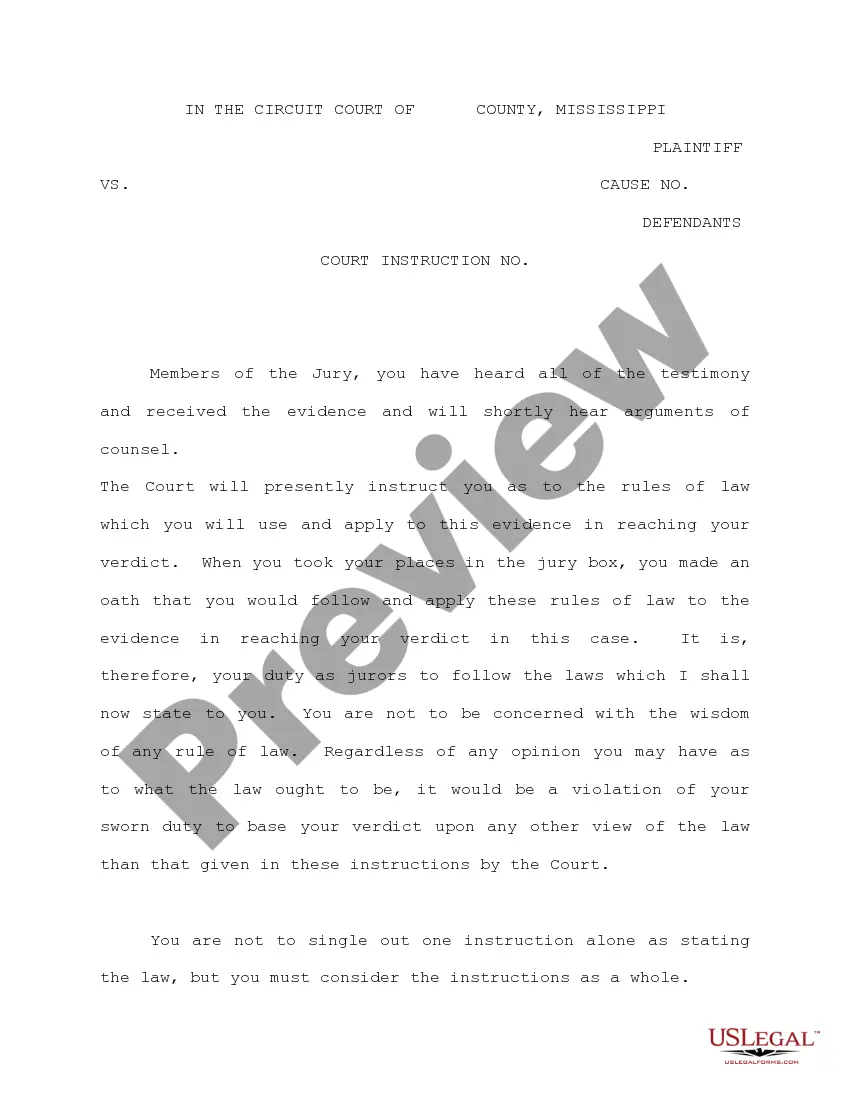
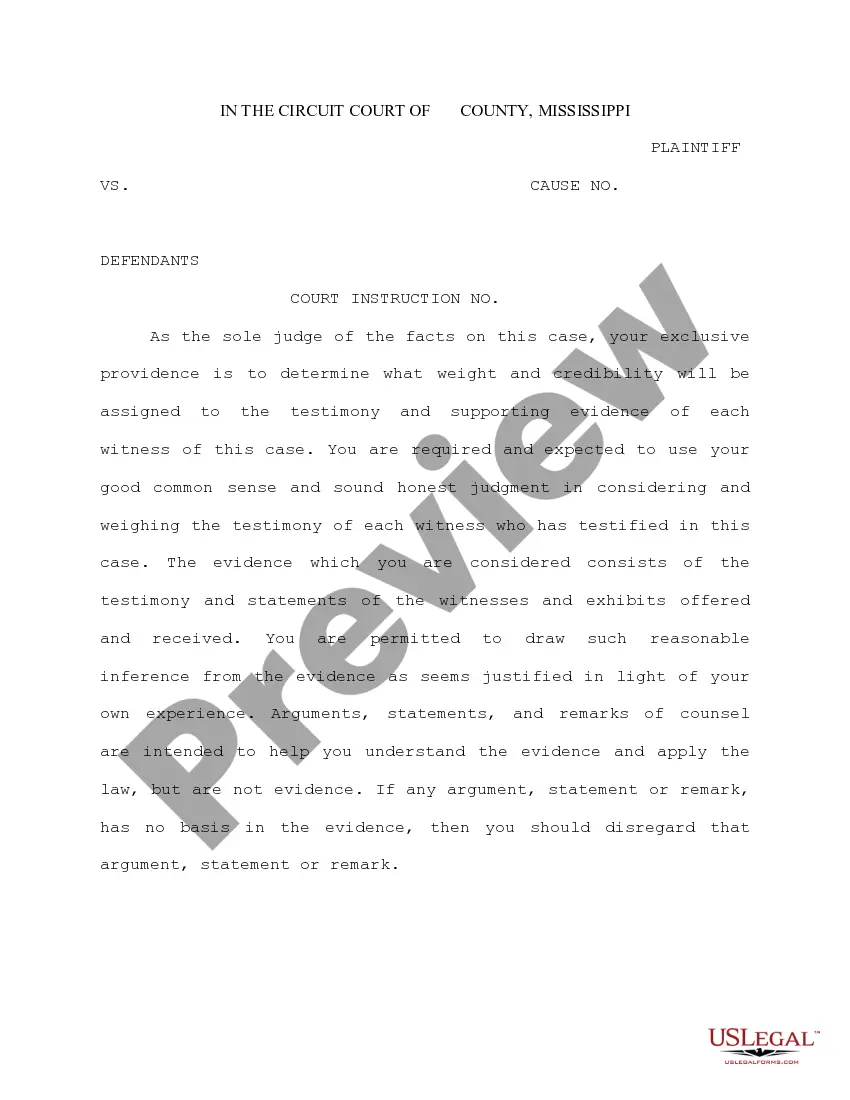
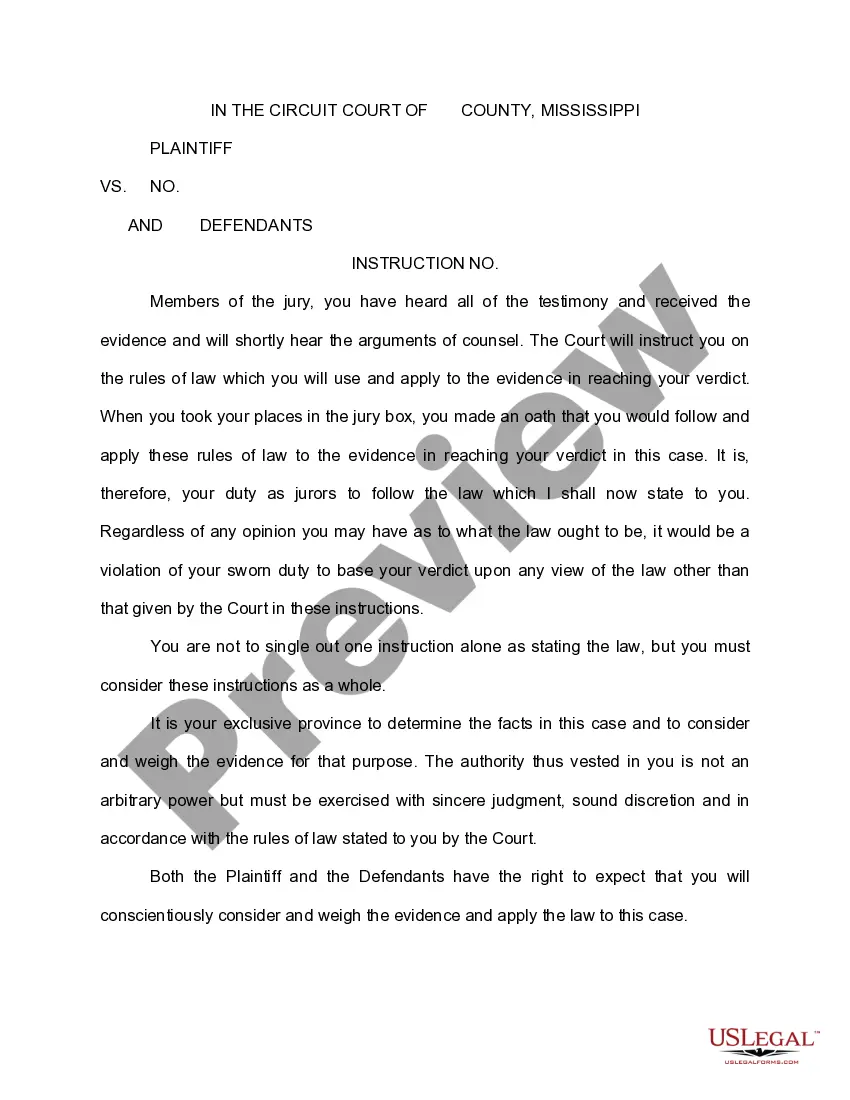
The Jury Instruction - General Instruction form is a legal document used in Mississippi courtrooms to guide jurors in their decision-making process. It outlines general principles that jurors must follow when deliberating a case and emphasizes the importance of considering all evidence presented, while adhering to the law as instructed by the court. This form is distinct from specific jury instructions that pertain to particular aspects of a case, focusing instead on the overarching responsibilities and conduct expected from jurors.
What’s included in this form
- Overview of juror duties and responsibilities in the decision-making process.
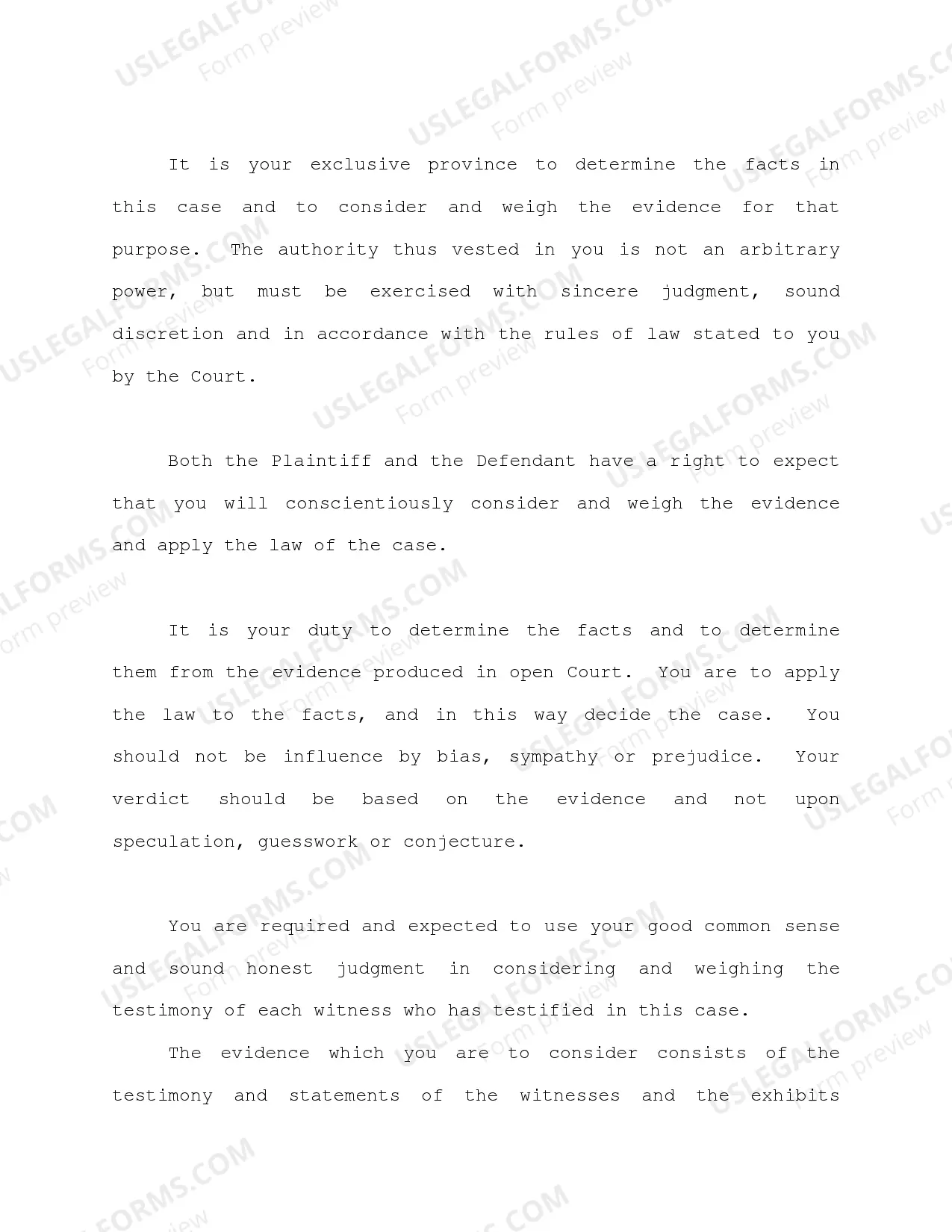
- Emphasis on impartiality and reliance on evidence, free from bias or sympathy.
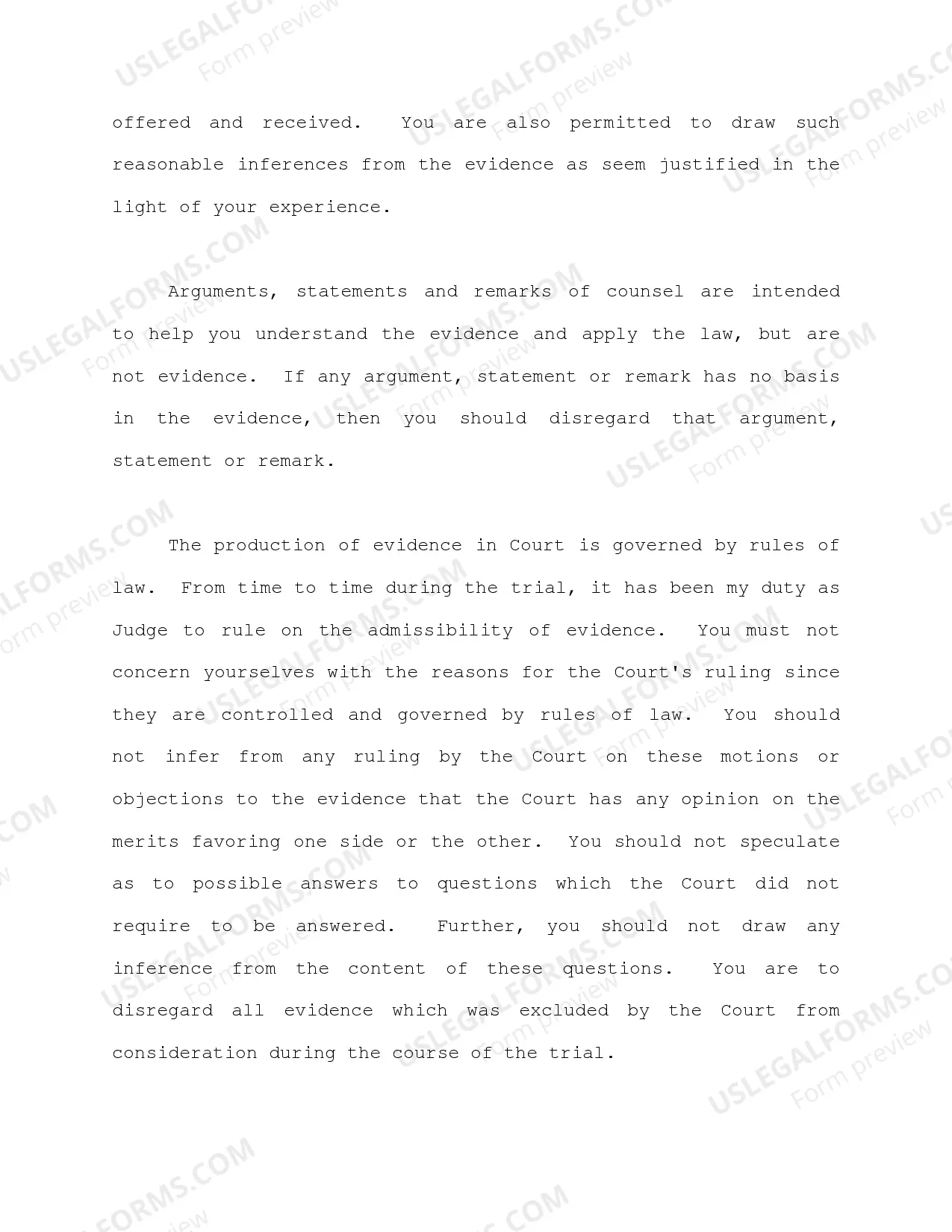
- Clarification that arguments from counsel are not evidence.
- Instructions on disregarding excluded evidence and court rulings.
- Guidance on the appropriate use of common sense and judgment in evaluating testimony.

Common use cases
This form is utilized during jury trials in Mississippi, particularly when jurors need to understand their roles and responsibilities. It is essential in cases where jury deliberations are required, helping jurors focus on the evidence and apply the law accurately. Use this document whenever you are part of a jury panel to ensure compliance with the legal standards expected in a courtroom setting.
Who can use this document
- Jurors involved in a trial in Mississippi.
- Judges needing to provide standard jury instructions during a trial.
- Legal professionals who wish to understand the general principles guiding juror behavior.
Completing this form step by step
- Read the jury instruction carefully to understand its content and implications.
- Consider how the instruction applies to the specific facts of the case being deliberated.
- Discuss the instruction with fellow jurors to ensure a shared understanding of your duties.
- Refer back to the instruction during deliberations to remain aligned with legal expectations.
- Make your verdict based on the evidence and the law as outlined in the instruction.
Notarization requirements for this form
This form usually doesn’t need to be notarized. However, local laws or specific transactions may require it. Our online notarization service, powered by Notarize, lets you complete it remotely through a secure video session, available 24/7.
Get your form ready online
Our built-in tools help you complete, sign, share, and store your documents in one place.
Make edits, fill in missing information, and update formatting in US Legal Forms—just like you would in MS Word.
Download a copy, print it, send it by email, or mail it via USPS—whatever works best for your next step.
Sign and collect signatures with our SignNow integration. Send to multiple recipients, set reminders, and more. Go Premium to unlock E-Sign.
If this form requires notarization, complete it online through a secure video call—no need to meet a notary in person or wait for an appointment.
We protect your documents and personal data by following strict security and privacy standards.

Make edits, fill in missing information, and update formatting in US Legal Forms—just like you would in MS Word.

Download a copy, print it, send it by email, or mail it via USPS—whatever works best for your next step.

Sign and collect signatures with our SignNow integration. Send to multiple recipients, set reminders, and more. Go Premium to unlock E-Sign.

If this form requires notarization, complete it online through a secure video call—no need to meet a notary in person or wait for an appointment.

We protect your documents and personal data by following strict security and privacy standards.
Common mistakes to avoid
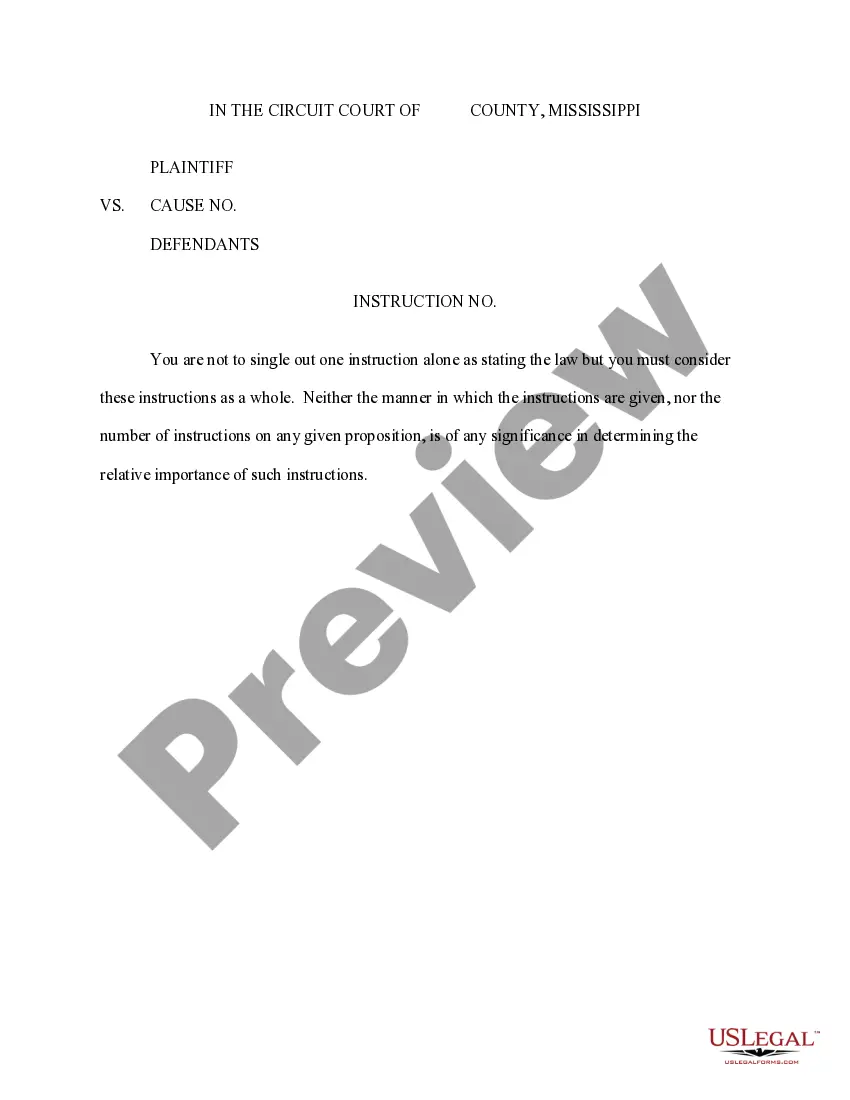
- Failing to consider the instructions as a whole, leading to incomplete understanding.
- Allowing personal biases or emotions to influence the verdict.
- Misunderstanding the distinction between arguments made by counsel and actual evidence.
- Neglecting to follow the court's rulings on admissibility of evidence.
Benefits of using this form online
- Access to a reliable and professionally drafted form created by licensed attorneys.
- Convenience of downloading the form from anywhere at any time.
- Easy editing capabilities to customize the instructions as needed.
- Quick reference for legal standards applicable in Mississippi jury trials.
Looking for another form?
Form popularity
FAQ
A judgment notwithstanding the verdict (or JNOV) is an order by a judge after a jury has returned its verdict. The judge can overturn the jury's verdict if he or she feels it cannot reasonably be supported by the evidence or if it contradicts itself.
A jury instruction is given by the judge to the jury to explain what is happening in the court, to explain the points of law relevant to the case, to explain certain aspects of the evidence presented and to assist the jurors in understanding their duties in reaching a verdict.
Jury instructions, directions to the jury, or judge's charge are legal rules that jurors should follow when deciding a case.
Who is eligible for jury service? Groups of 15 ordinary women and men are selected at random to uphold justice in their local community. It is a civic duty they are obliged to perform. Potential jurors must be at least 18 years old and they should be listed on the electoral roll.
The judge instructs the jury about the relevant laws that should guide its deliberations. (In some jurisdictions, the court may instruct the jury at any time after the close of evidence.The judge reads the instructions to the jury. This is commonly referred to as the judge's charge to the jury.
These are civil or criminal jury instructions approved by a state court, bench committee, or bar association. They are commonly used by courts in the relevant jurisdiction, as they ease the process of drafting fair jury instructions and theoretically do not have errors.
On the average, jurors serve approximately 1-3 days during a one month term of service. The Judge will adjourn the jury each evening and will instruct you on what time you must return the following morning. You must check in with the Jury Department each morning.
One may be excused from jury duty if their presence is required at home or if there is an emergency or personal illness. If you are 65 years of age or older and wish to be exempt from service, a juror's affidavit of excuse should be signed and mailed to the Circuit Clerk's office.
If the juror fails to show good cause for noncompliance with the summons, the juror may be held in civil contempt of court and may be fined not more than Five Hundred Dollars ($ 500.00) or imprisoned not more than three (3) days, or both.