Plaintiff's Response to Show Cause Order
About this form
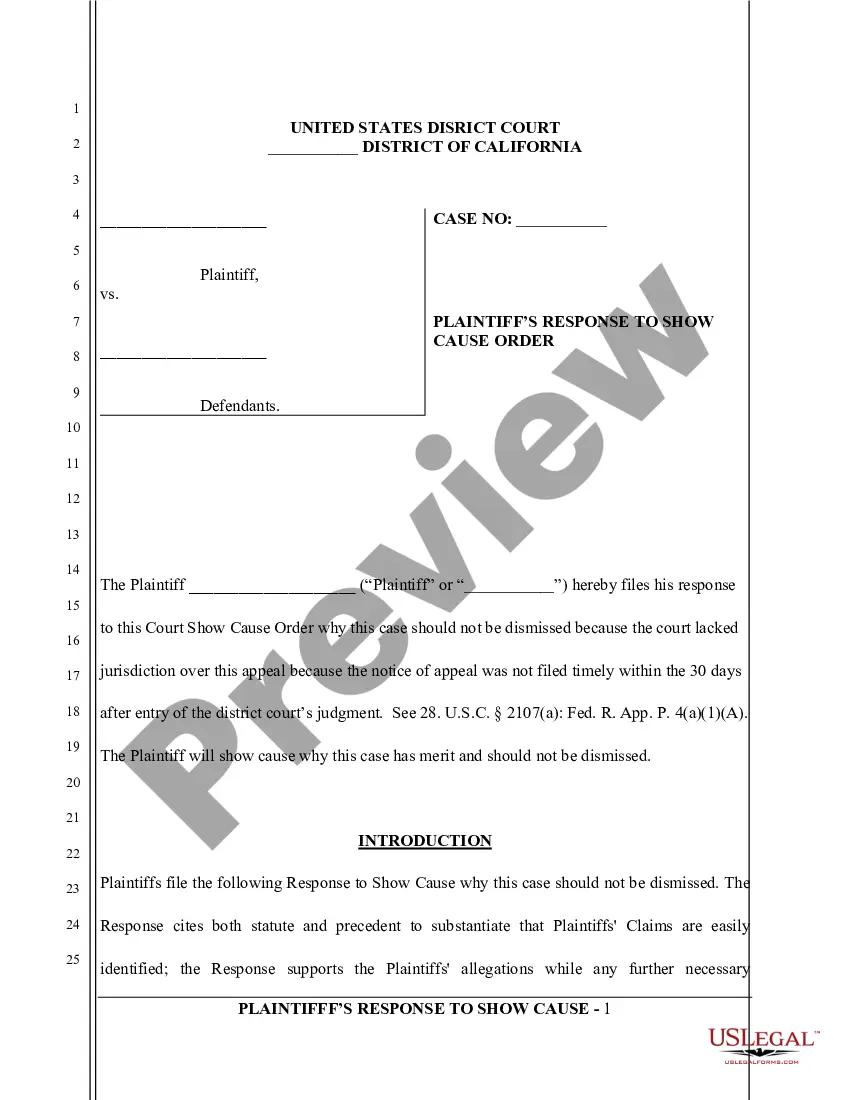
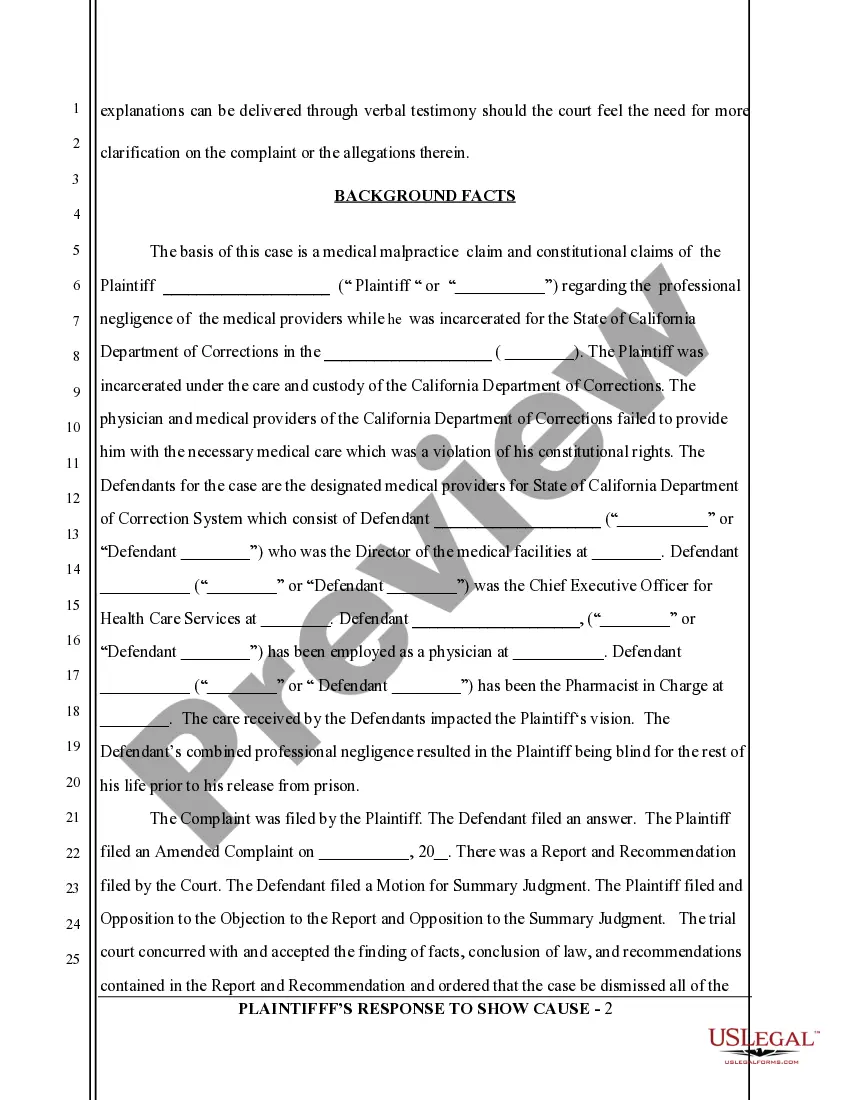
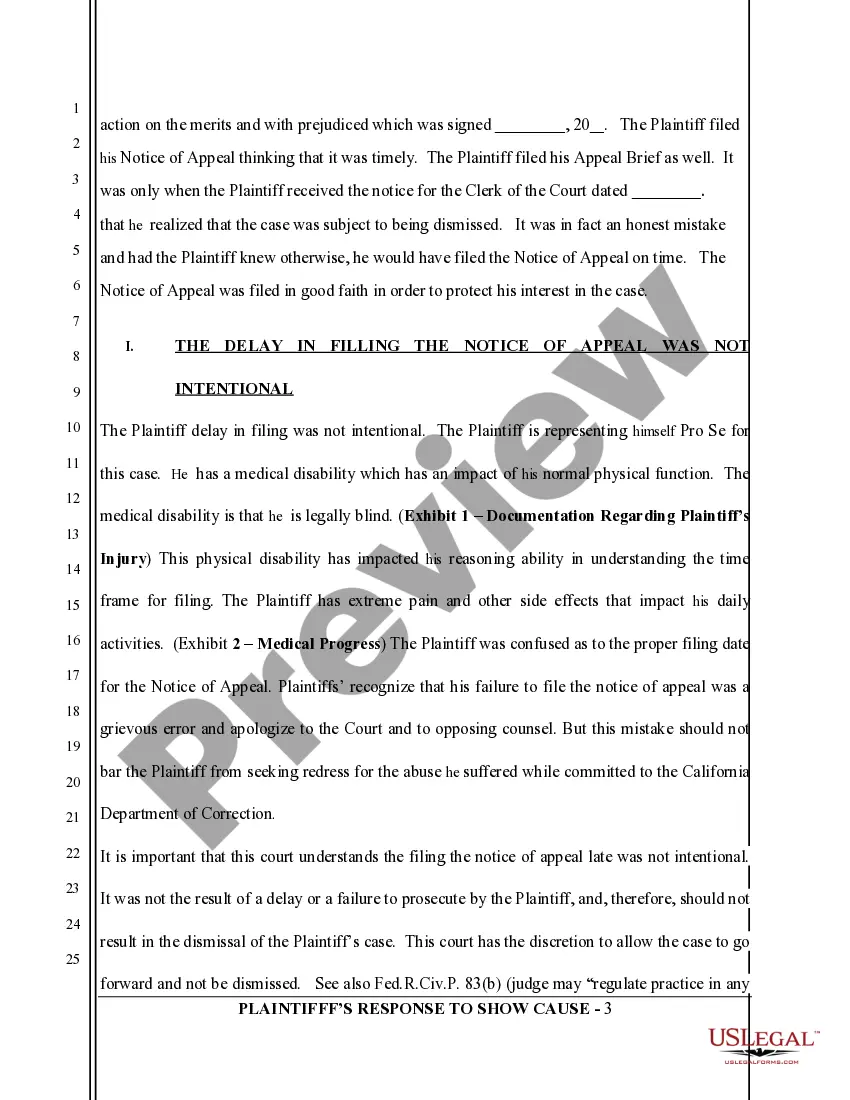
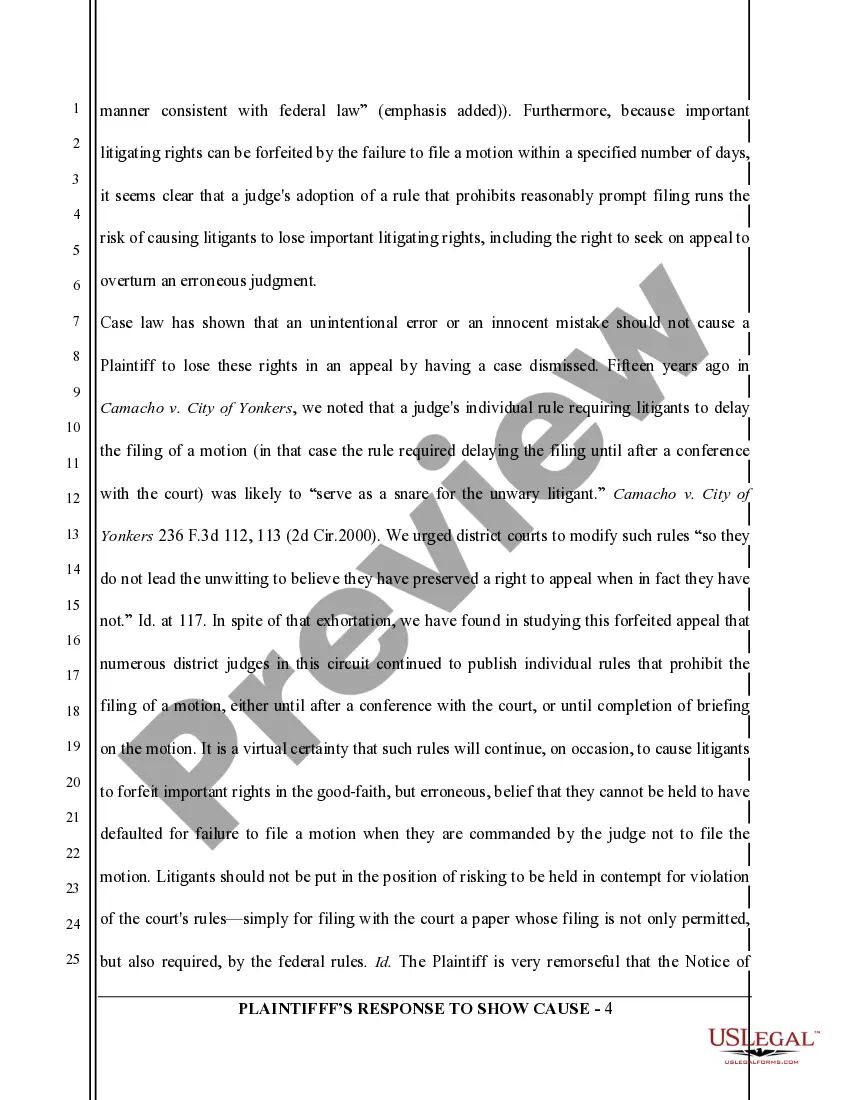
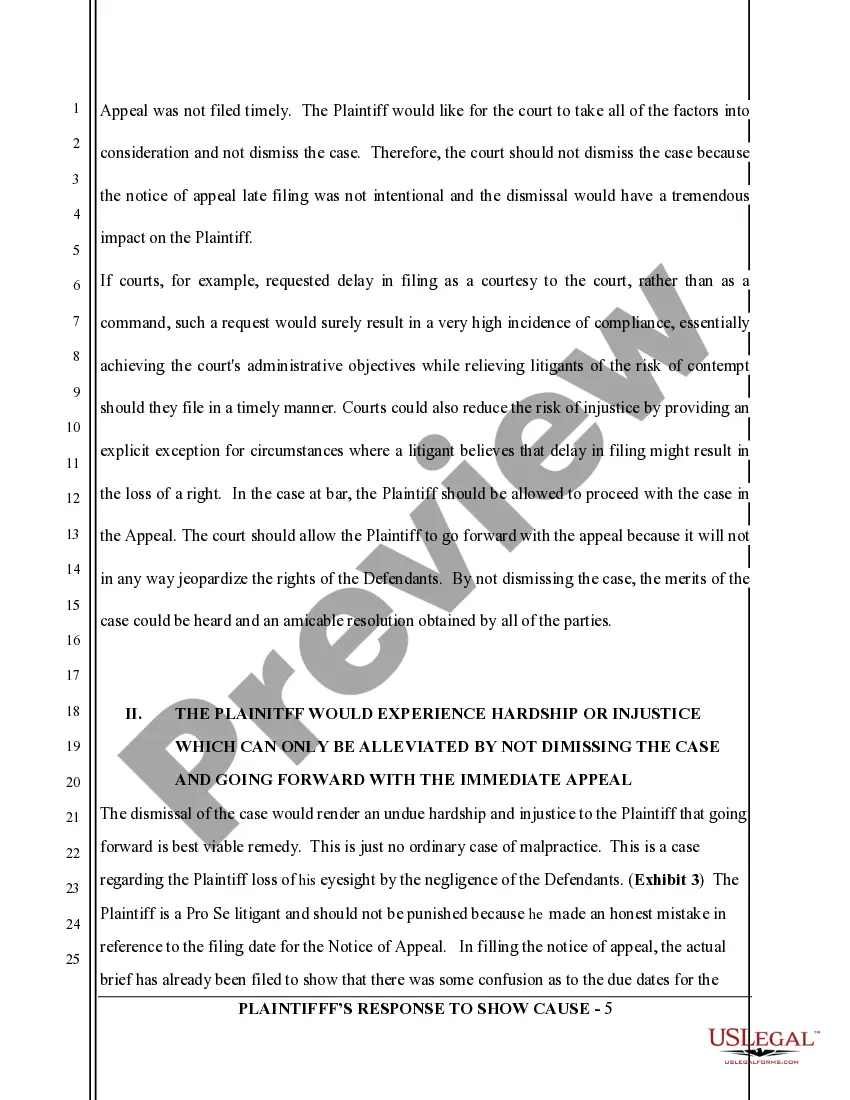
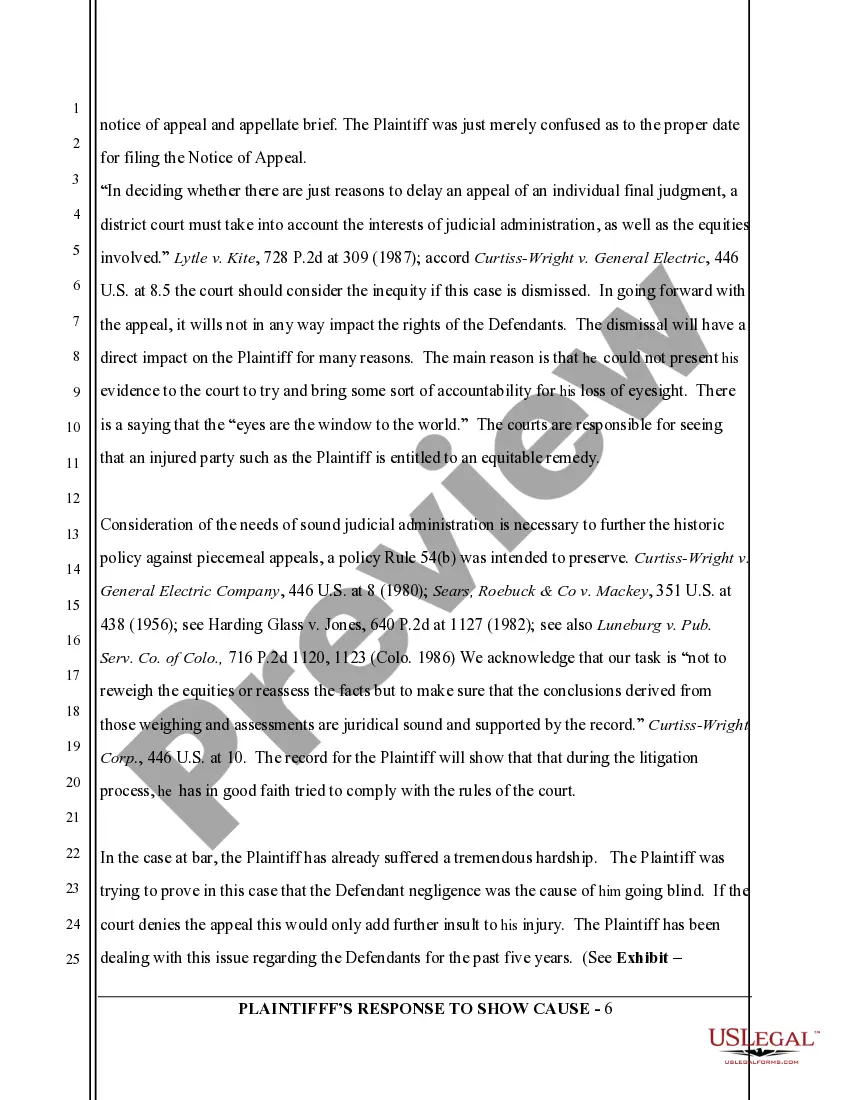
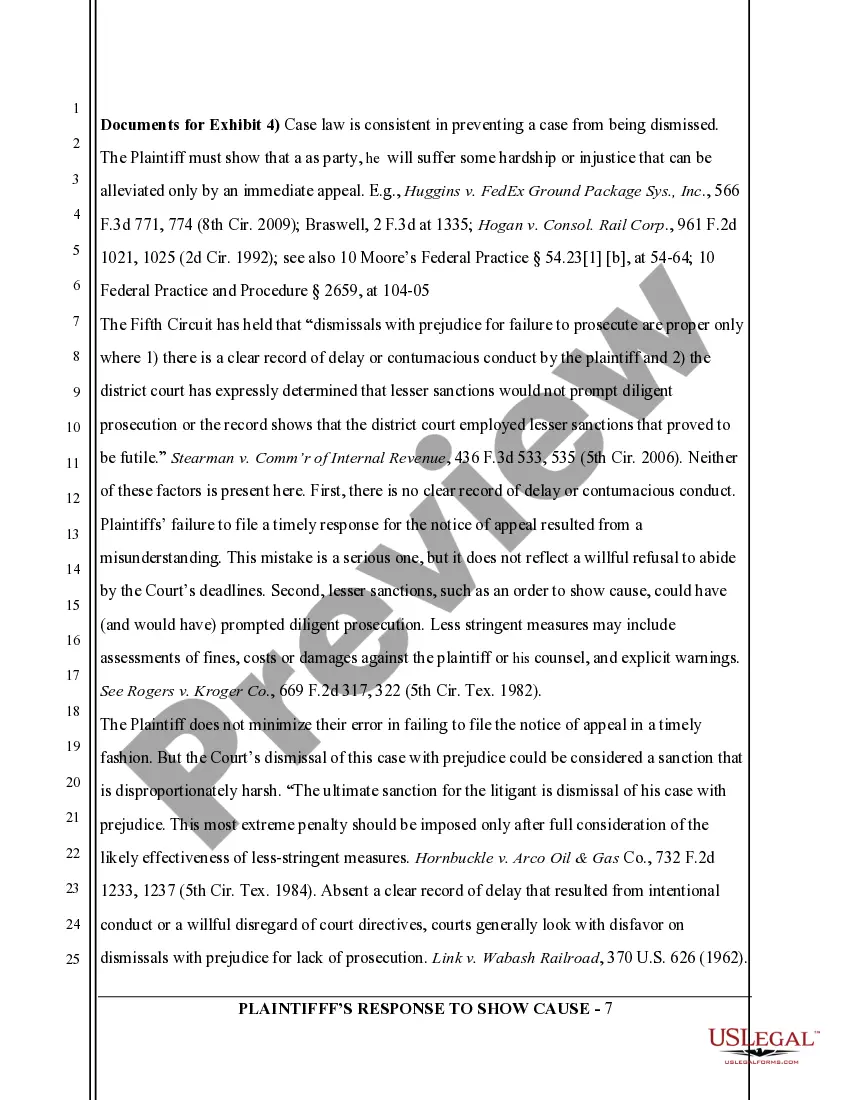
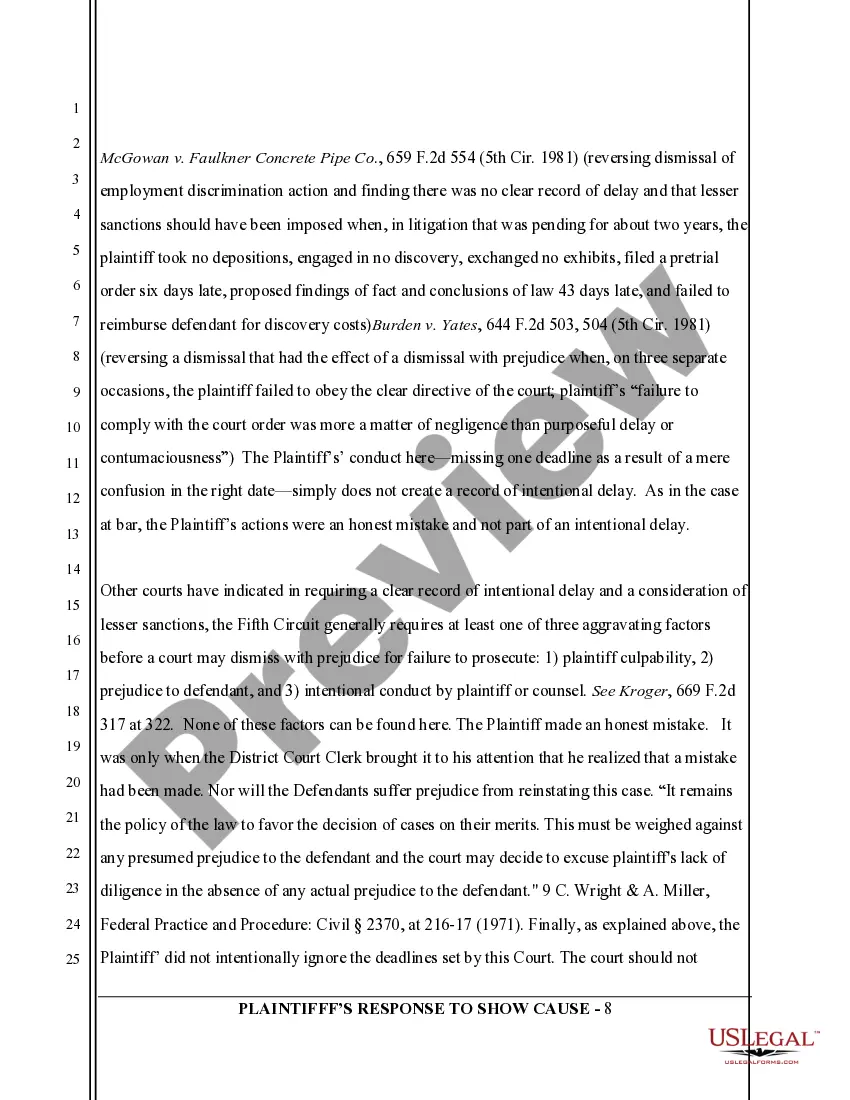
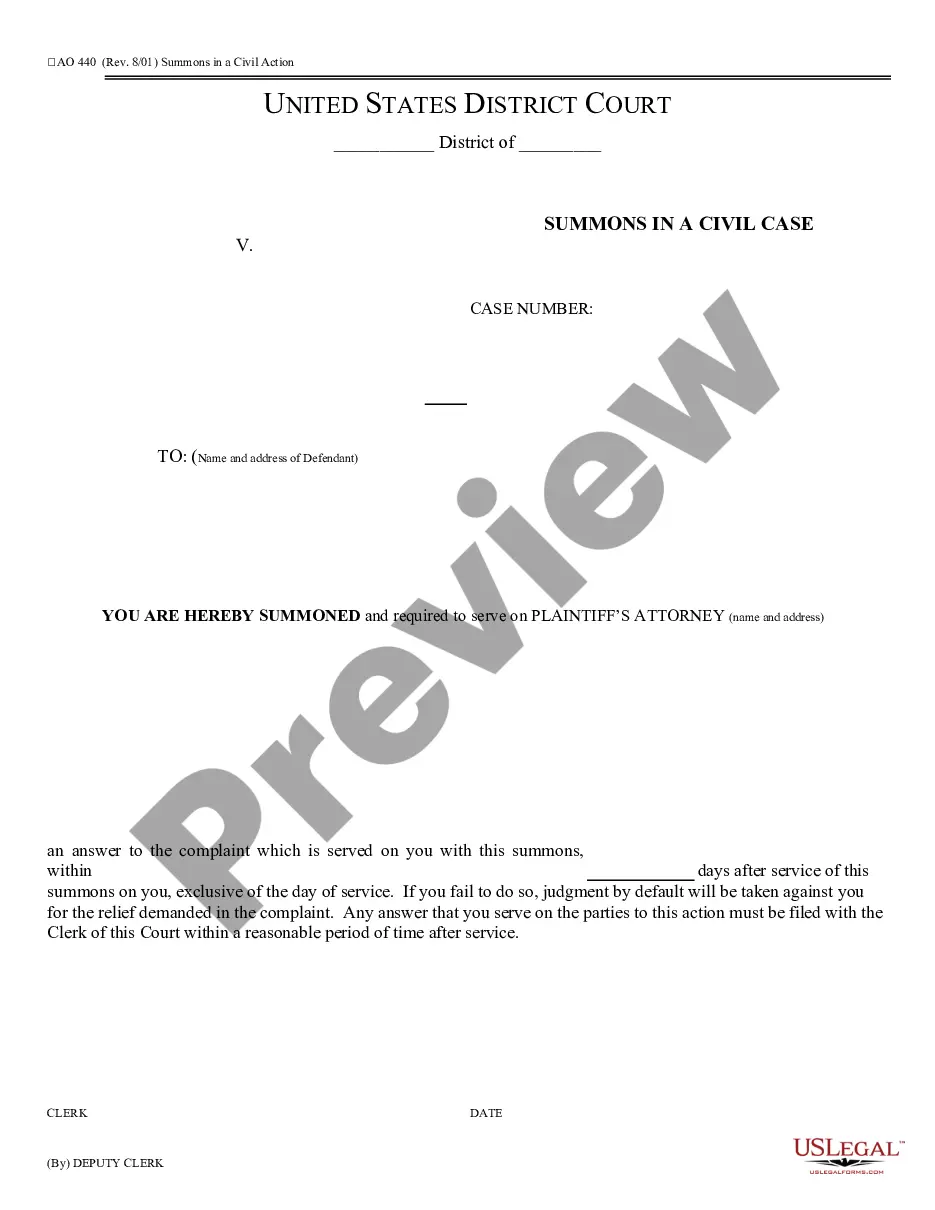
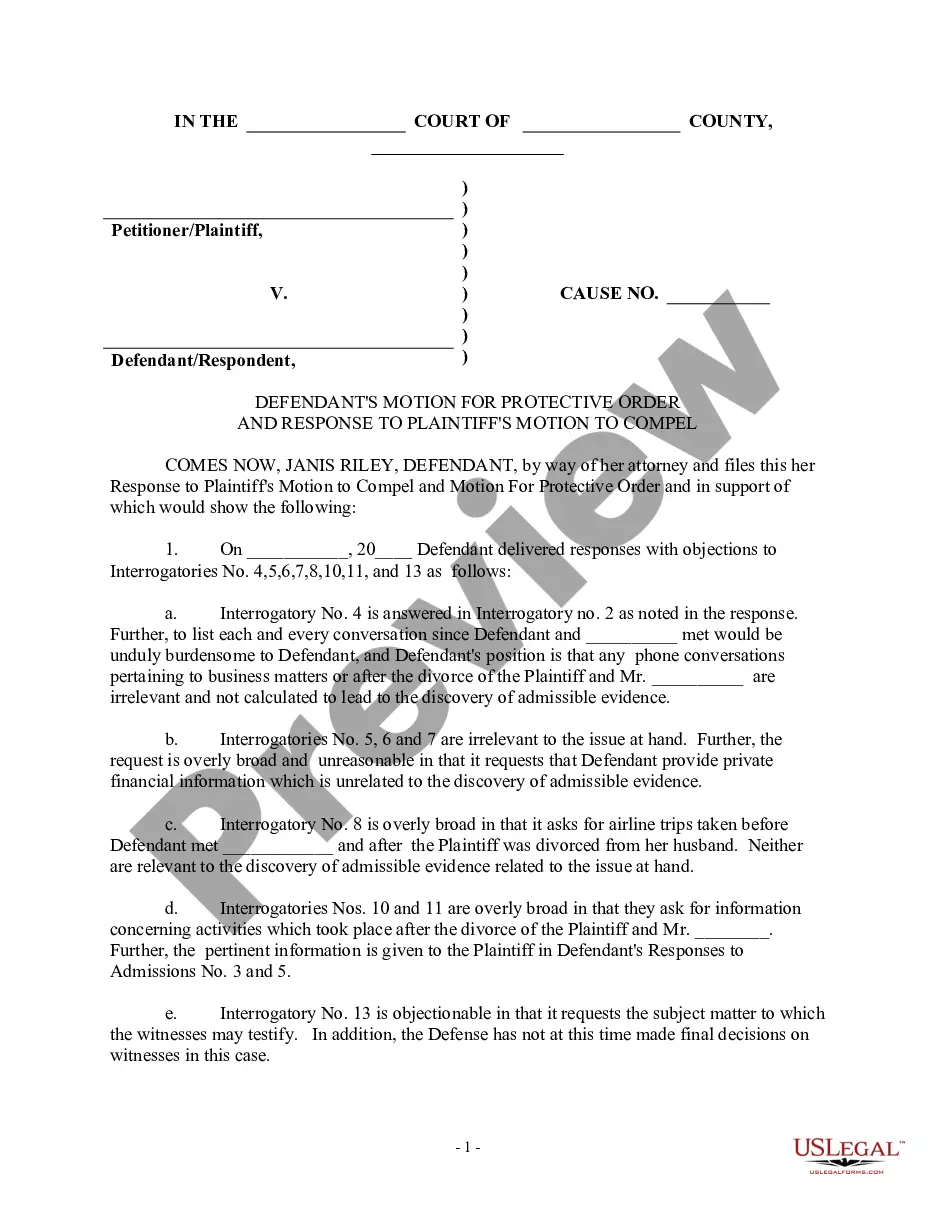
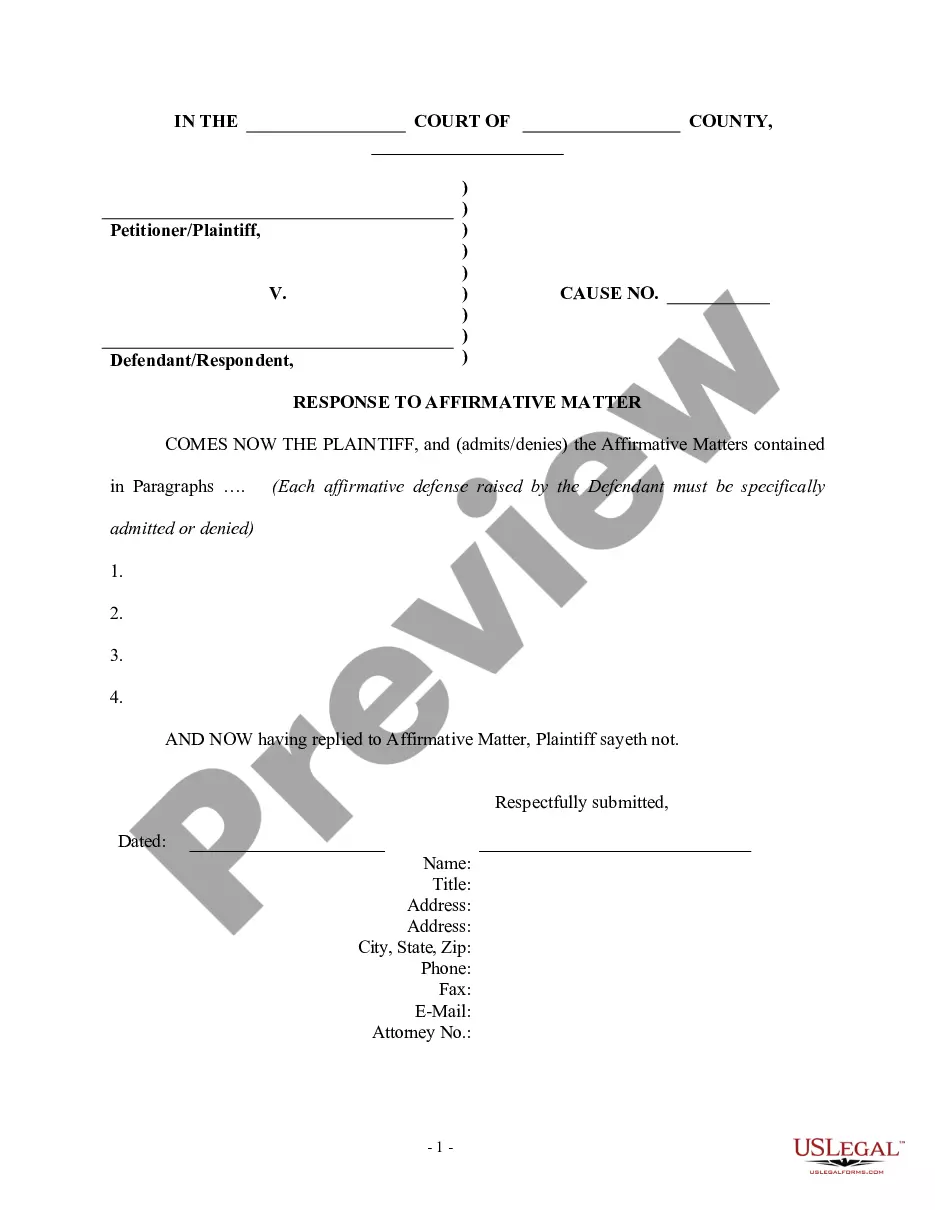
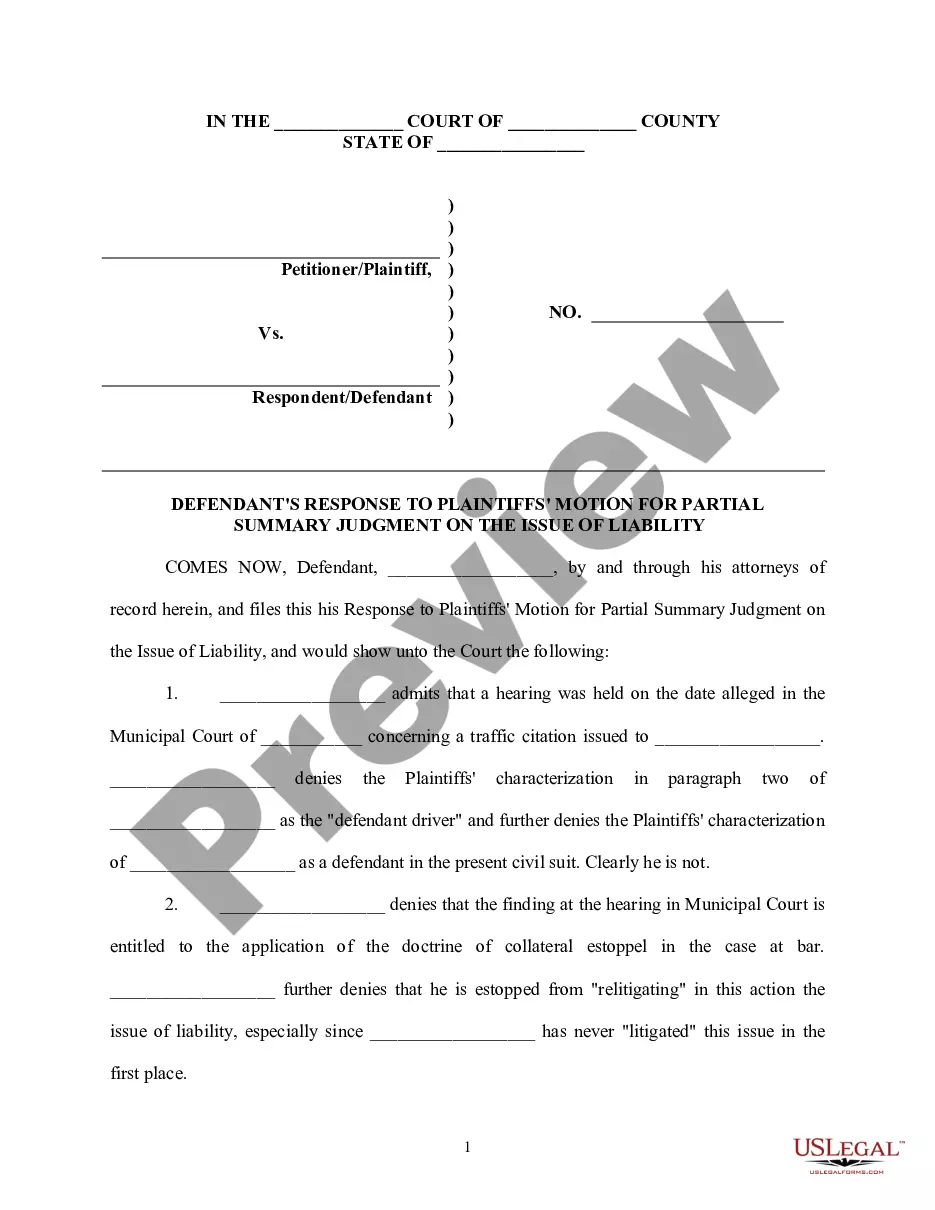
The Plaintiff's Response to Show Cause Order is a legal form used in the U.S. District Court in California. This response is filed to address a court's order that questions the basis for continuing a case. It specifically argues why the case has merit and should not be dismissed, particularly in matters concerning medical malpractice and employment discrimination claims. By filing this response, the plaintiff outlines the reasons for the delay in filing an appeal and requests that the court allow the case to proceed.
What’s included in this form
- Case details including plaintiff and defendant names, and case number
- Introduction outlining the purpose of the response
- Background facts detailing the context of the allegations
- Information regarding the delay in filing and its justification
- Arguments supporting why the case should not be dismissed
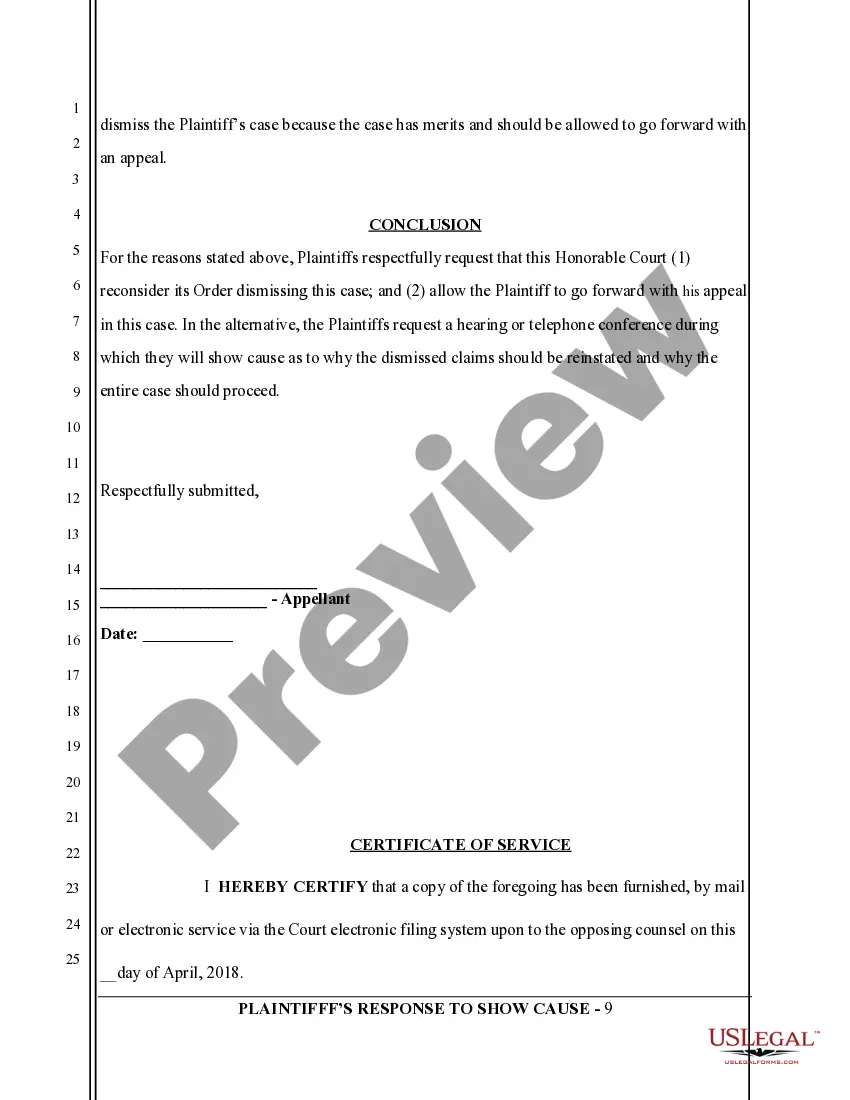
- Conclusion and request for the courtâs reconsideration
When this form is needed
This form should be used when a plaintiff needs to respond to a court's order questioning the grounds for a case's continuation. It is particularly applicable in situations where the plaintiff has missed a deadline for filing an appeal due to misunderstandings or extenuating circumstances, such as health issues or lack of legal representation.
Who this form is for
- Individuals who are plaintiffs in a legal case involving medical malpractice or employment discrimination.
- Pro se litigants (individuals representing themselves in court) who have missed filing deadlines.
- Those seeking to explain a delay in their legal proceedings and argue against dismissal of their case.
How to complete this form
- Fill in the case number, plaintiff, and defendant names at the beginning of the form.
- Draft the introduction to clearly state the purpose of your response.
- Provide background facts to outline the circumstances surrounding the case and the delay in appeal.
- Include a section detailing the reasons for the delay in filing an appeal and any extenuating circumstances.
- Conclude with a request for the court to allow the appeal to proceed and provide justification for the request.
Is notarization required?
This form does not typically require notarization unless specified by local law.
Get your form ready online
Our built-in tools help you complete, sign, share, and store your documents in one place.
Make edits, fill in missing information, and update formatting in US Legal Forms—just like you would in MS Word.
Download a copy, print it, send it by email, or mail it via USPS—whatever works best for your next step.
Sign and collect signatures with our SignNow integration. Send to multiple recipients, set reminders, and more. Go Premium to unlock E-Sign.
If this form requires notarization, complete it online through a secure video call—no need to meet a notary in person or wait for an appointment.
We protect your documents and personal data by following strict security and privacy standards.

Make edits, fill in missing information, and update formatting in US Legal Forms—just like you would in MS Word.

Download a copy, print it, send it by email, or mail it via USPS—whatever works best for your next step.

Sign and collect signatures with our SignNow integration. Send to multiple recipients, set reminders, and more. Go Premium to unlock E-Sign.

If this form requires notarization, complete it online through a secure video call—no need to meet a notary in person or wait for an appointment.

We protect your documents and personal data by following strict security and privacy standards.
Common mistakes to avoid
- Failing to include all relevant case details, such as names and case number.
- Not addressing the specific reasons for the delay in filing an appeal.
- Using unclear or overly complicated language that may confuse the court.
- Neglecting to proofread for errors that can undermine credibility.
Why use this form online
- Immediate access to essential legal documents tailored for your case.
- Easy editability allows for personalization to match your specific case details.
- Convenience of downloading forms anytime, without needing to visit a physical location.
- Drafted by licensed attorneys, ensuring that the forms are legally sound and up-to-date.
Looking for another form?


Form popularity
FAQ
An order to show cause (O.S.C.), is a court order or the demand of a judge requiring a party to justify or explain why the court should or should not grant a motion or a relief. For example, if a party requests a restraining order from a judge, the judge may need more information.
A request for a rule to show cause or an adjudication of indirect criminal contempt or indirect civil contempt must be made by written petition, must specifically identify the order or provision alleged to have been violated, and must be properly served on the responding party.
A petition for rule to show cause why a person should not be held in contempt for failure or refusal to comply with a subpoena issued pursuant to this rule shall be filed with the court. Service of the petition shall be made in any manner in which service of process is authorized by Rule 765(a).
You can agree or disagree with the request of the order or even provide a statement about how you would like something handled differently and why. If you fail to appear in court and respond to the order, you could be charged with contempt of court and face significant monetary fines or even imprisonment.
If the defendant communicates with the complaining witness outside court, they could be guilty of indirect criminal contempt. But because the judge was not a witness to it, it is indirect. Criminal contempt of court has a penalty of up to 180 days jail and a maximum fine of $500.
An order to show cause (O.S.C.), is a court order or the demand of a judge requiring a party to justify or explain why the court should or should not grant a motion or a relief. For example, if a party requests a restraining order from a judge, the judge may need more information.
A response to an order to show cause typically requires you to show up in-person to the hearing. You can provide an answer to the order and state why you object to the order being issued.
A Petition for Rule to Show Cause may be used by a person who says that another person has not followed a court order or judgment. The petition will: Say which order or judgment has not been followed, and. Explain what the petitioner thinks the other party did or did not do.