Washington Warning of Default on Residential Lease
What this document covers
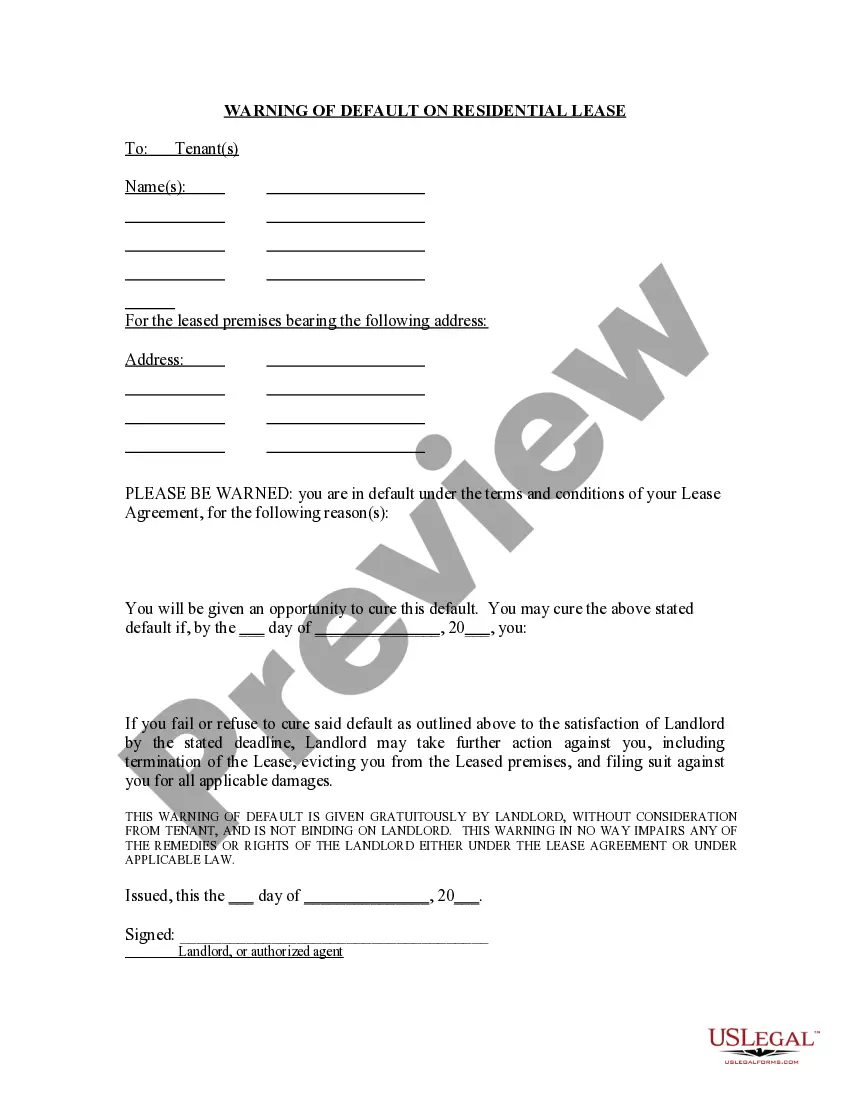
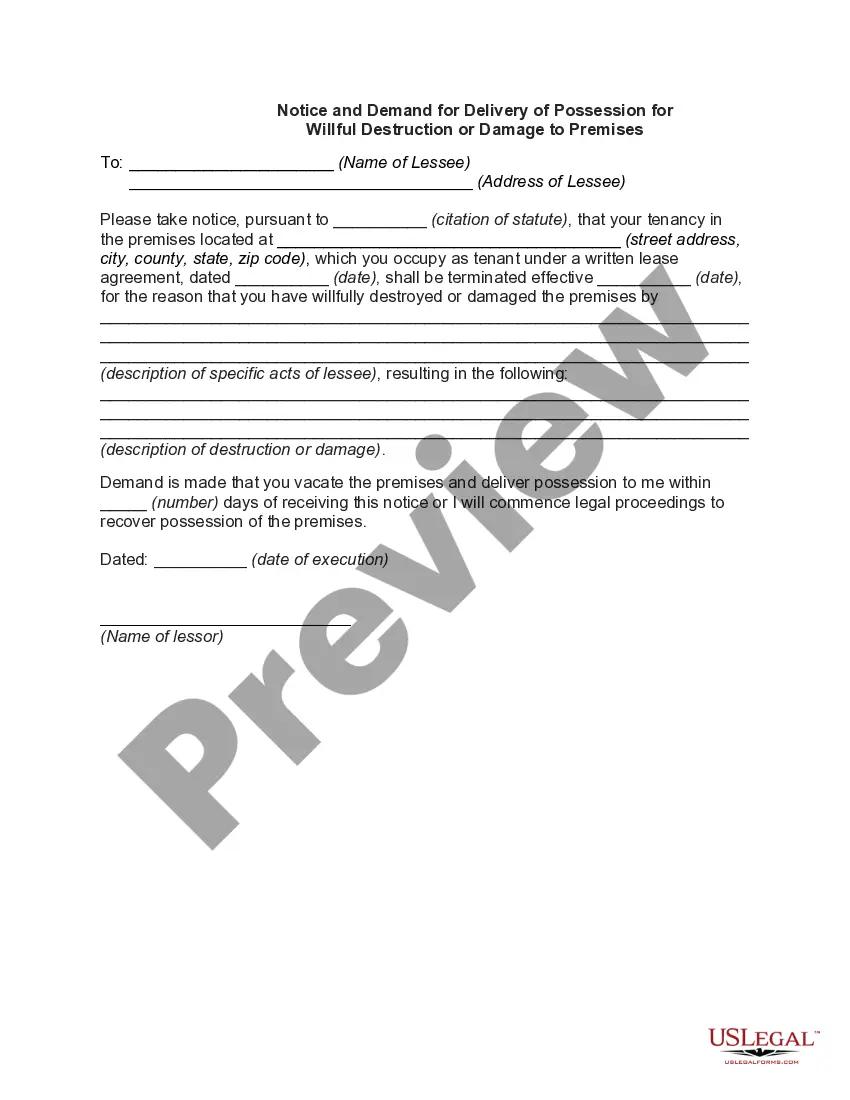
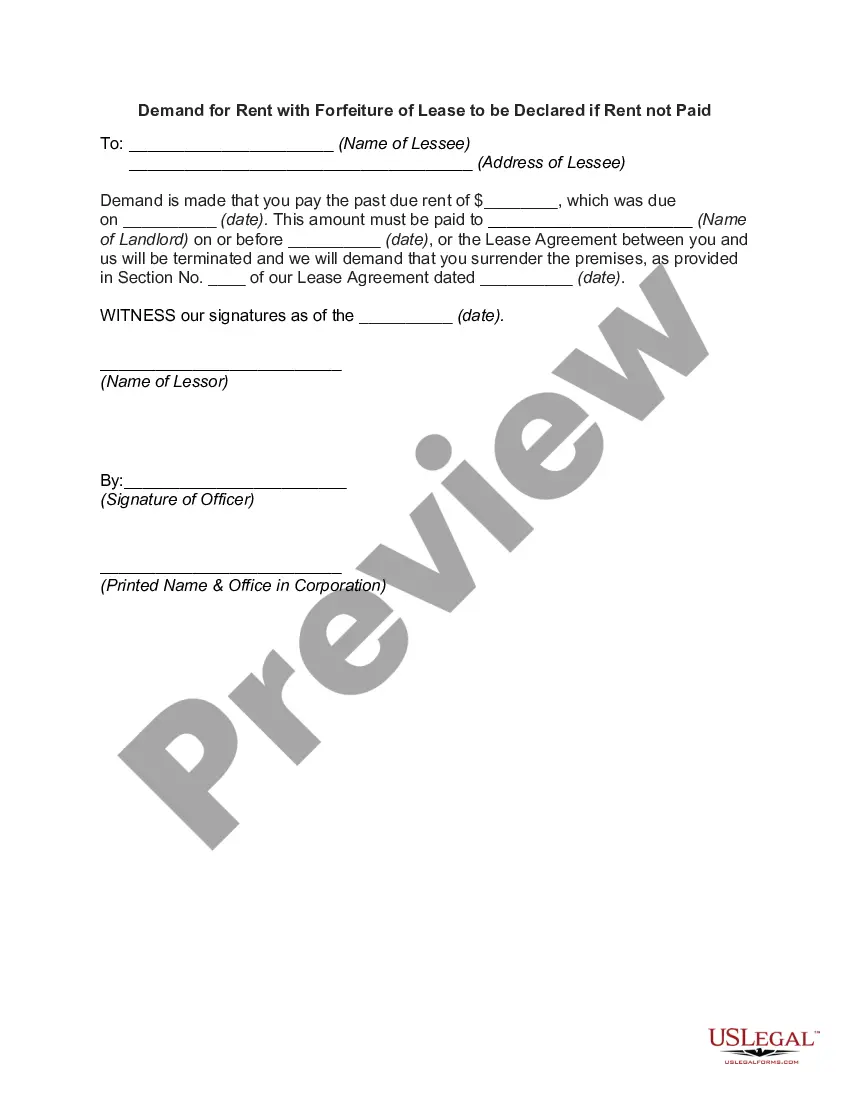
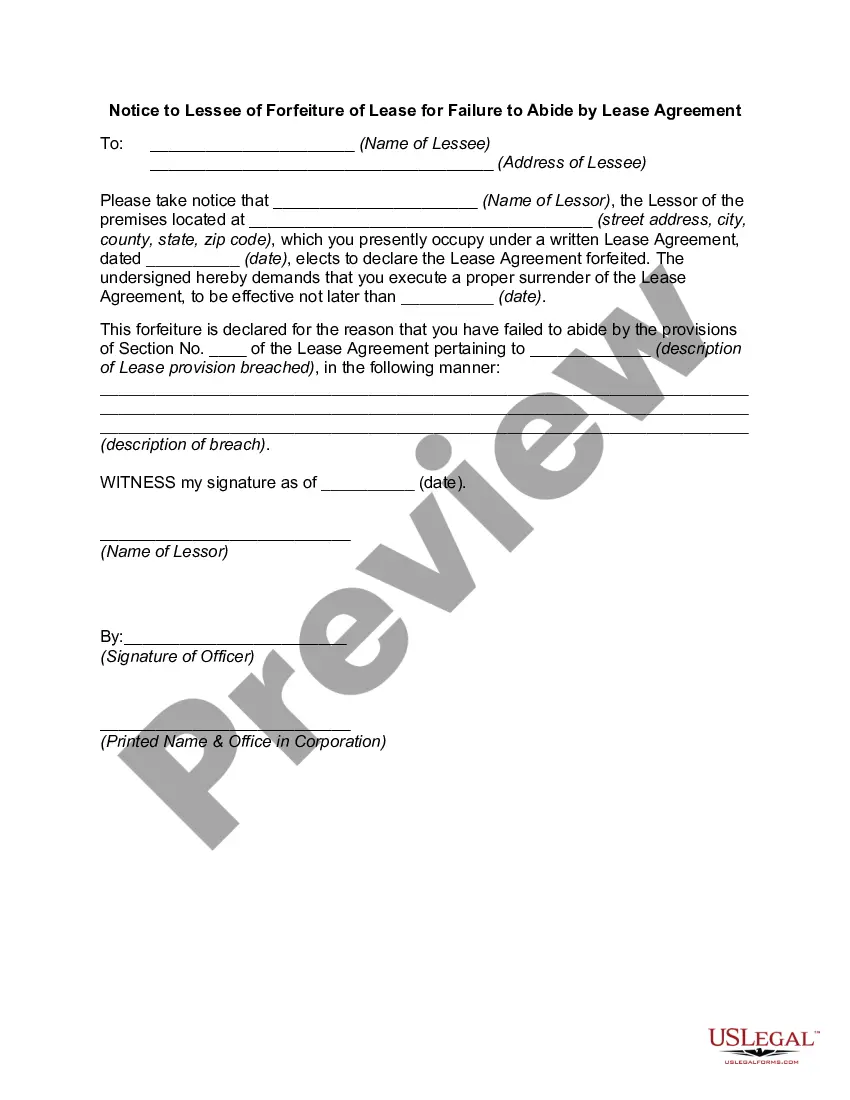
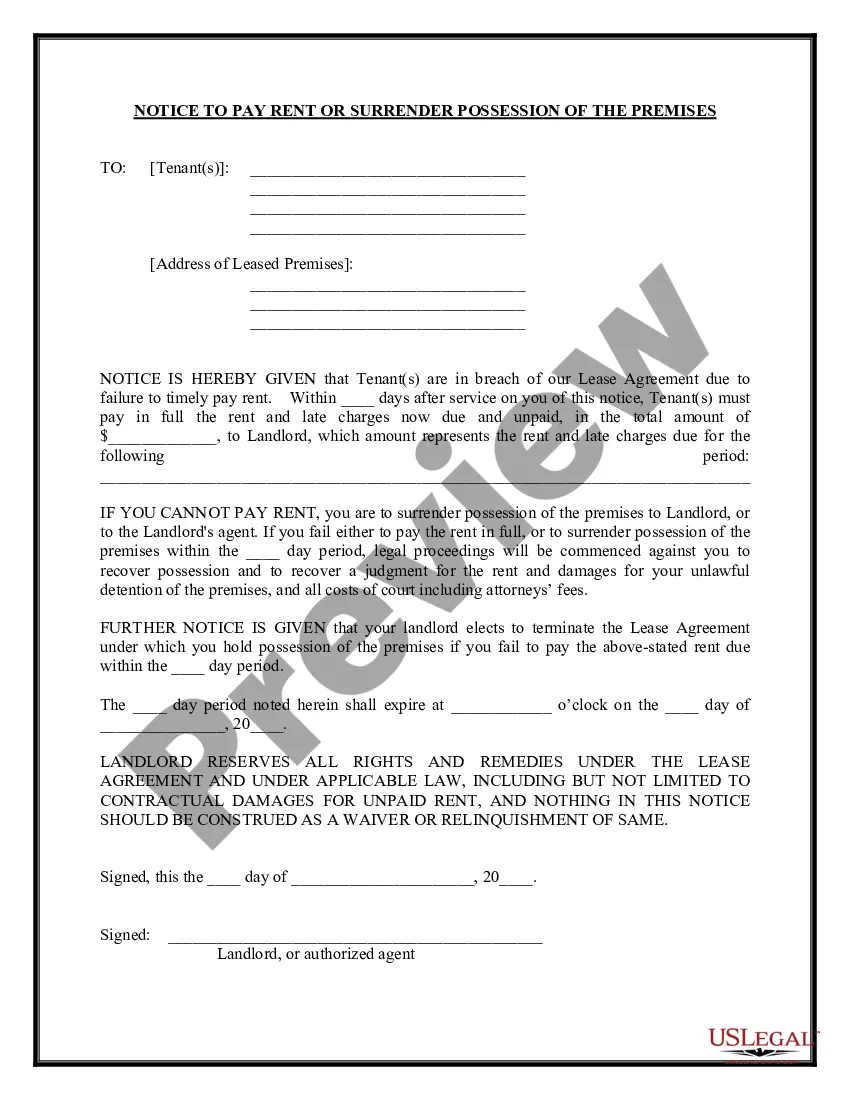
The Warning of Default on Residential Lease is a formal notice from a landlord to a tenant, indicating concerns about potential lease violations. This document serves to alert the tenant that if specified issues are not resolved, they may be in default of the lease agreement. Unlike eviction notices, this warning is an initial step that gives the tenant an opportunity to remedy the situation before further legal actions are taken.
Key components of this form
- Date of issuance
- Landlord's signature
- Identification of the tenant and leased property
- Details on the alleged lease violation
- Statement of rights and remedies available to the landlord

When to use this document
This form is used when a landlord notices a tenant is not adhering to the conditions outlined in their residential lease. Common scenarios include late rent payments, unauthorized occupants, or property damage. It provides a documented warning that can be important for any future legal proceedings.
Intended users of this form
- Landlords or property managers renting residential properties
- Tenants who have received notice of potential lease violations
- Legal professionals advising clients on lease agreements
Completing this form step by step
- Identify the parties involved by entering the landlord and tenant names.
- Specify the property address where the lease is in effect.
- Detail the specific lease violation or issue prompting this warning.
- Complete the date of issuance in the designated section.
- Ensure the landlord or authorized agent signs the document.
Notarization guidance
This form does not typically require notarization unless specified by local law. Ensure you check any specific regulations that may apply to your state or situation.
Get your form ready online
Our built-in tools help you complete, sign, share, and store your documents in one place.
Make edits, fill in missing information, and update formatting in US Legal Forms—just like you would in MS Word.
Download a copy, print it, send it by email, or mail it via USPS—whatever works best for your next step.
Sign and collect signatures with our SignNow integration. Send to multiple recipients, set reminders, and more. Go Premium to unlock E-Sign.
If this form requires notarization, complete it online through a secure video call—no need to meet a notary in person or wait for an appointment.
We protect your documents and personal data by following strict security and privacy standards.

Make edits, fill in missing information, and update formatting in US Legal Forms—just like you would in MS Word.

Download a copy, print it, send it by email, or mail it via USPS—whatever works best for your next step.

Sign and collect signatures with our SignNow integration. Send to multiple recipients, set reminders, and more. Go Premium to unlock E-Sign.

If this form requires notarization, complete it online through a secure video call—no need to meet a notary in person or wait for an appointment.

We protect your documents and personal data by following strict security and privacy standards.
Mistakes to watch out for
- Failing to provide sufficient details about the lease violation.
- Not including the date of issuance.
- Neglecting to acquire the necessary signature from the landlord.
Benefits of using this form online
- Immediate access to a professionally drafted legal document.
- Easy customization to fit specific circumstances.
- Secure and reliable, ensuring that your form is compliant with applicable laws.
Legal use & context
- The form serves as a documented attempt to notify the tenant of a default situation, which can be useful in any subsequent legal proceedings.
- Providing this warning may help demonstrate the landlord's effort to resolve issues amicably prior to initiating eviction actions.
Main things to remember
- The Warning of Default is a crucial step in landlord-tenant communications.
- It offers tenants a chance to correct issues before facing legal consequences.
- Proper completion and delivery of this form can help landlords document tenant defaults effectively.
Looking for another form?






Form popularity
FAQ
Declare a Constructive Eviction. Point Out Landlord Breaches to Reduce Your Debt. Landlords Have a Duty to Mitigate Their Damages. Consequences for Breaking Your Lease. Look for These Clauses in Your Lease. Your Landlord May Have a Duty to Mitigate. Declare a Constructive Eviction.
In landlord-tenant law, default refers to the failure of a tenant to timely pay rent due.In general, the landlord is required to give the tenant notice of the default before bringing eviction proceedings or applying security deposit proceeds to the payment in default.
The best protection for tenants breaking their leases is to get something in writing and signed by the landlord agreeing upon a mutual termination of the lease that releases the tenant from any further financial obligation and guarantees a return of the deposit according to the terms set out in the lease.
Consider other options for getting out of your lease early. Figure out if you can break your lease under Washington law. Re-read your lease agreement. Negotiate with your landlord. Move out and hope your landlord re-rents quickly. Make it official with paperwork.
These clauses typically allow tenants to end their lease early by providing advance notice and paying a fee, such as one month's extra rent. There is no set amount for what the termination fee can be, but it generally must be reasonable and not penalizing.
Unless your lease says otherwise simply breaking it is not an option. This is known as "unilateral breach" and typical penalties can include: Paying the rent - One way or another, if you walk away from your lease and no one else rents the apartment then you will owe the landlord this money.
The tenant moves without permission or agreement from the landlord, and the landlord must follow the state's law regarding abandonment (RCW 59.18. 310). An early-termination agreement is reached between the landlord and that tenant that stipulates terms for ending the tenancy early.
While some jurisdictions may have provisions that allow consumers to change their minds with no consequences, generally there is no cooling-off period for leasing real property. Once the landlord and tenant sign a lease and a copy is delivered to the both parties, it becomes a valid contract.