Consent to Assignment
What is this form?
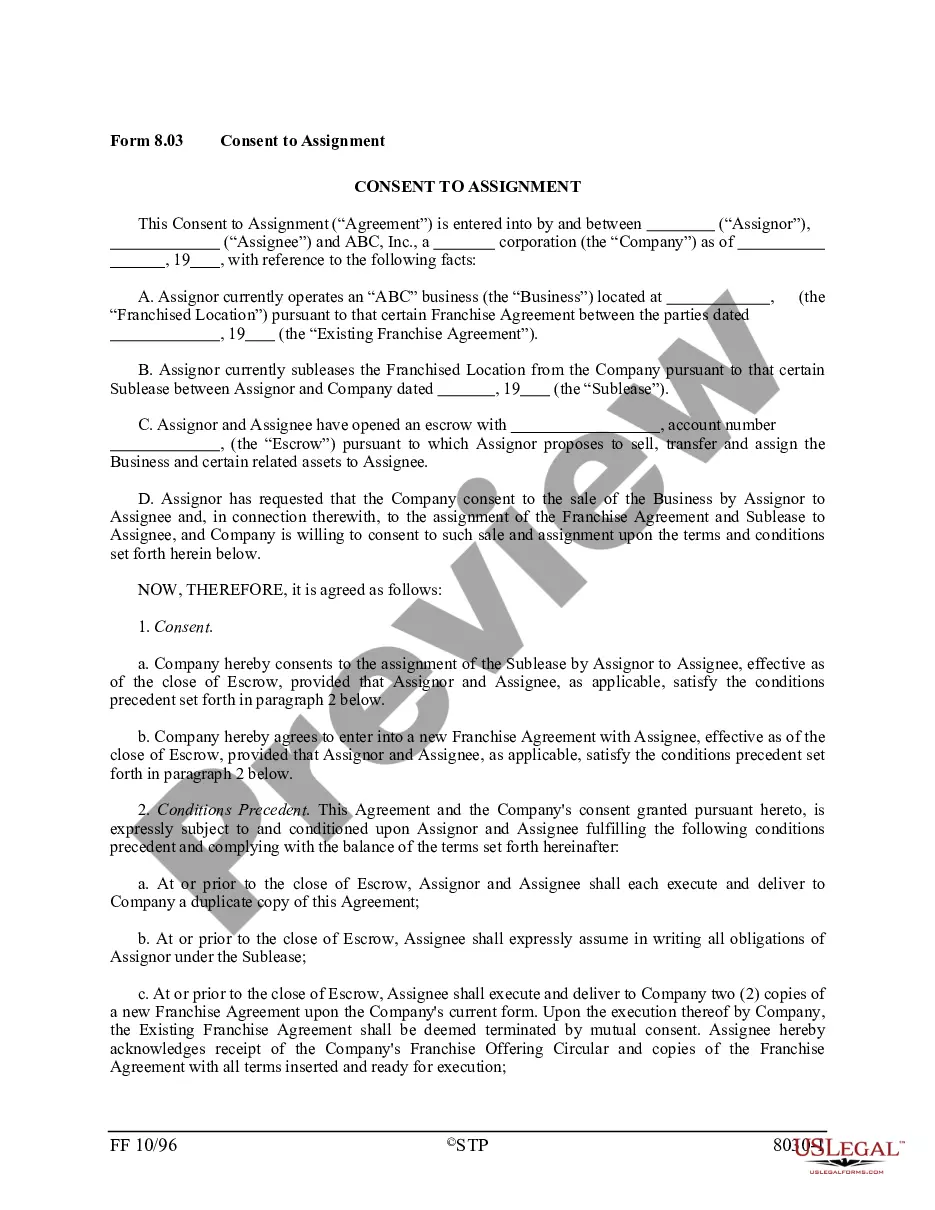
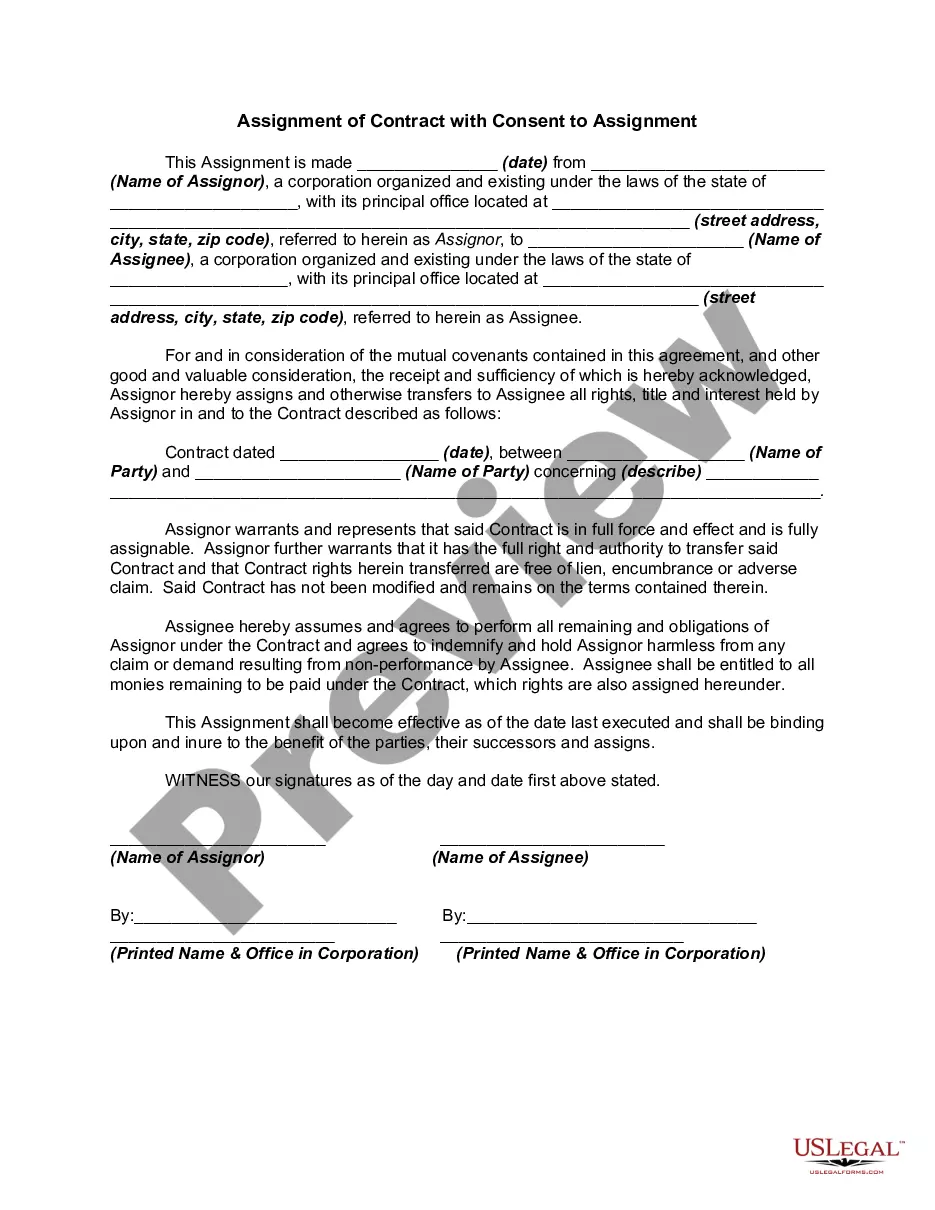
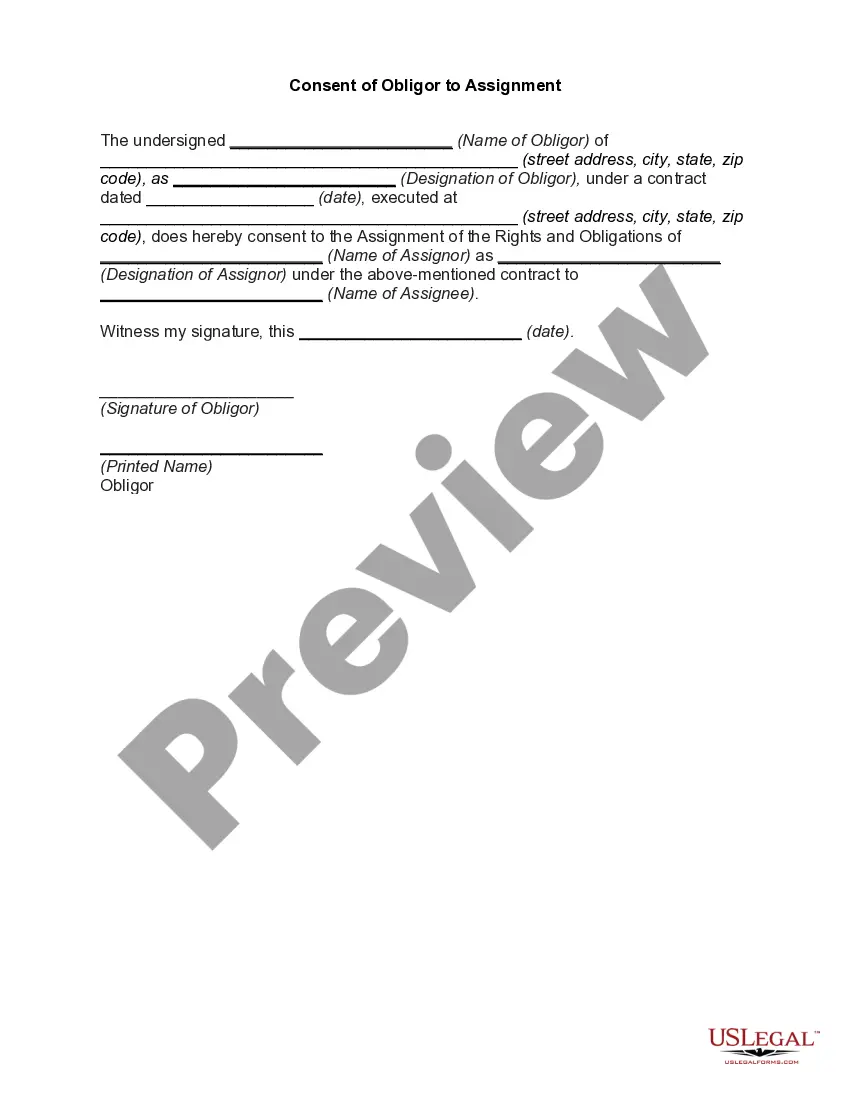
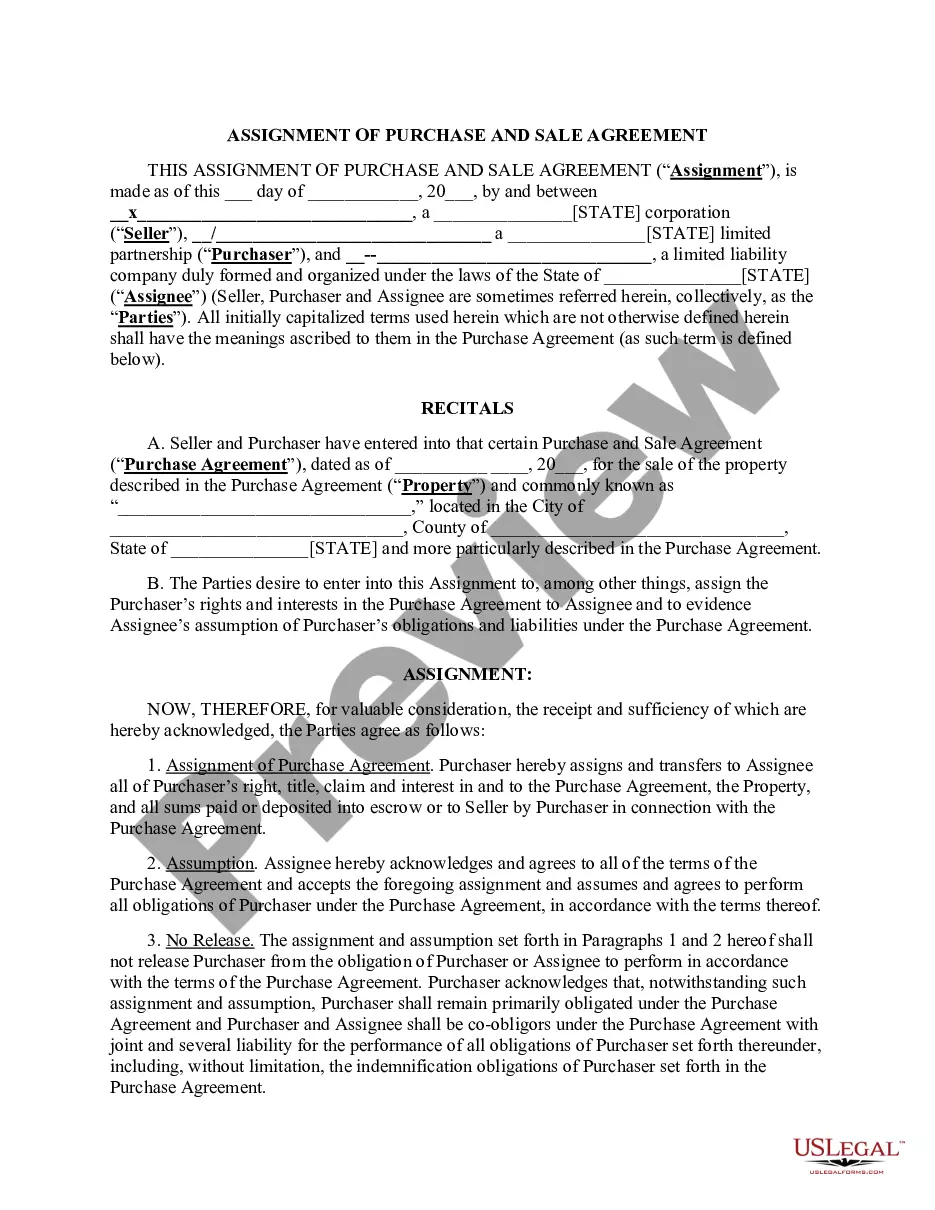
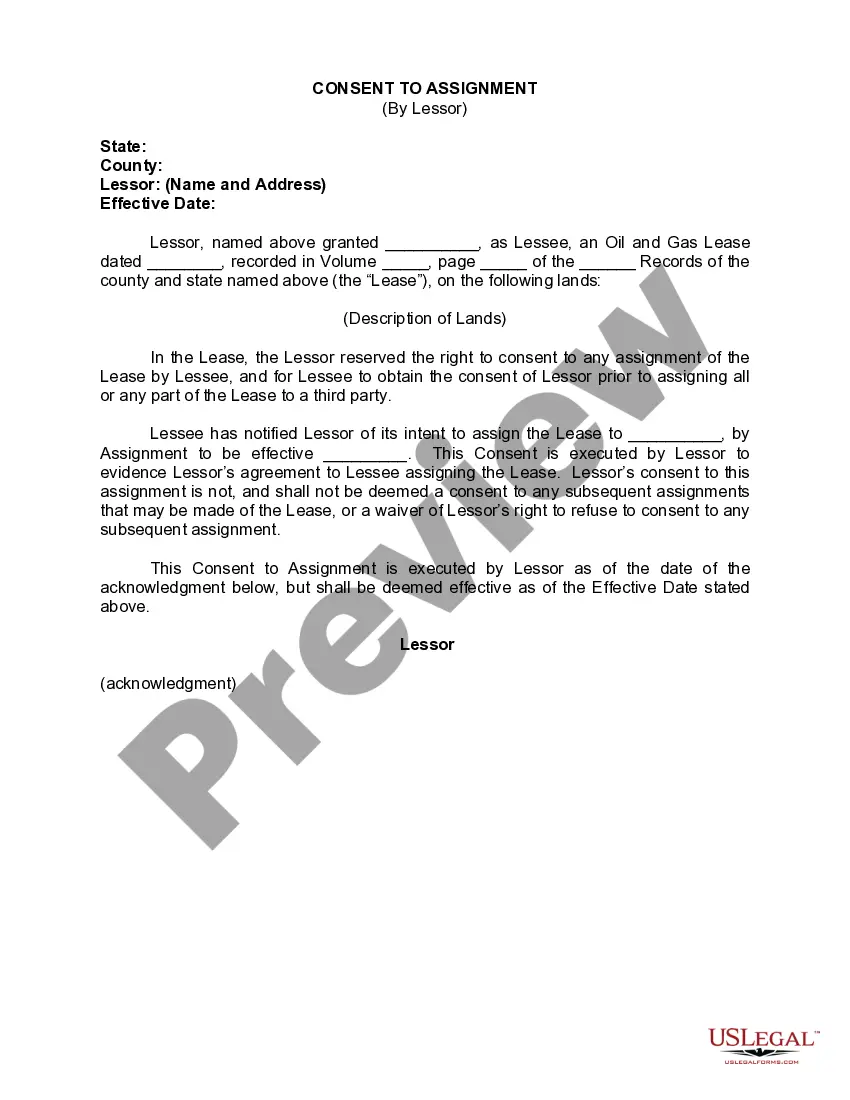
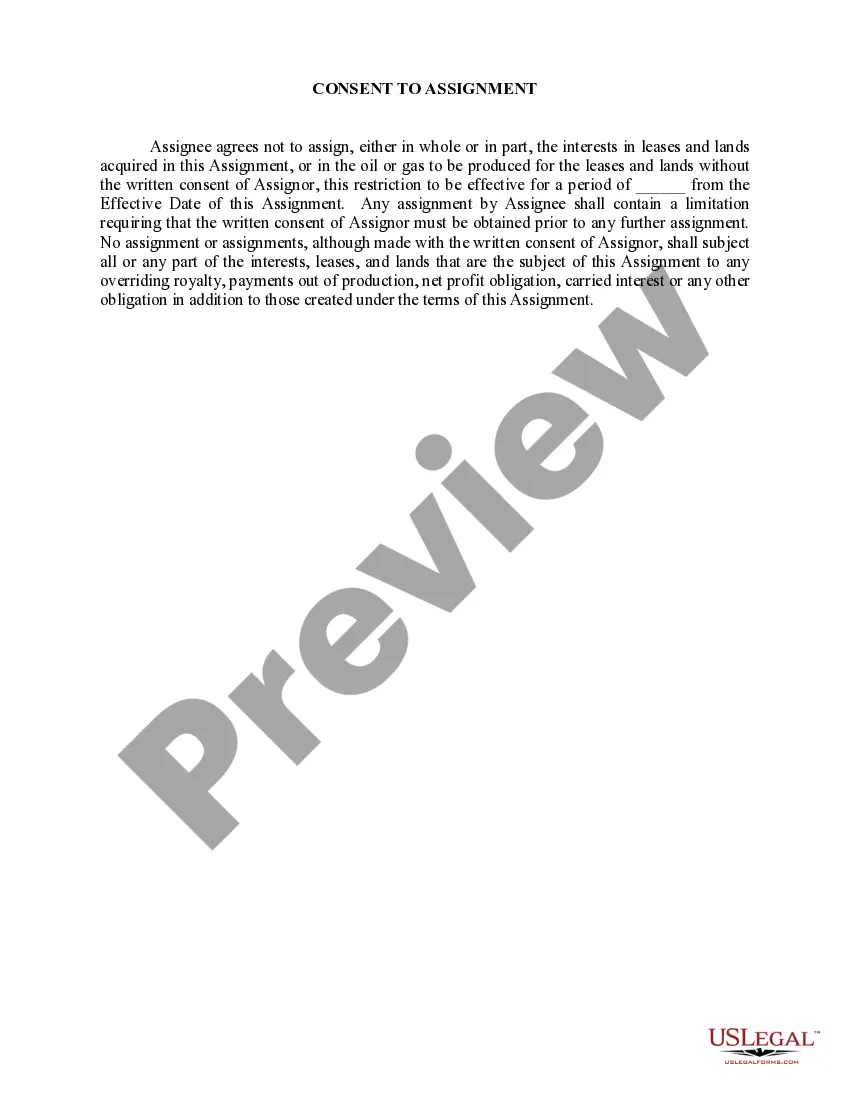
The Consent to Assignment is a legal document that allows an assignor to transfer their business interests to an assignee with the consent of the company involved. It ensures that while the business is sold, the company's rights and obligations remain unchanged. This form is essential in formalizing the agreement between parties involved in the business transfer, distinguishing it from other transfer or assignment agreements by emphasizing the need for company approval.
What’s included in this form
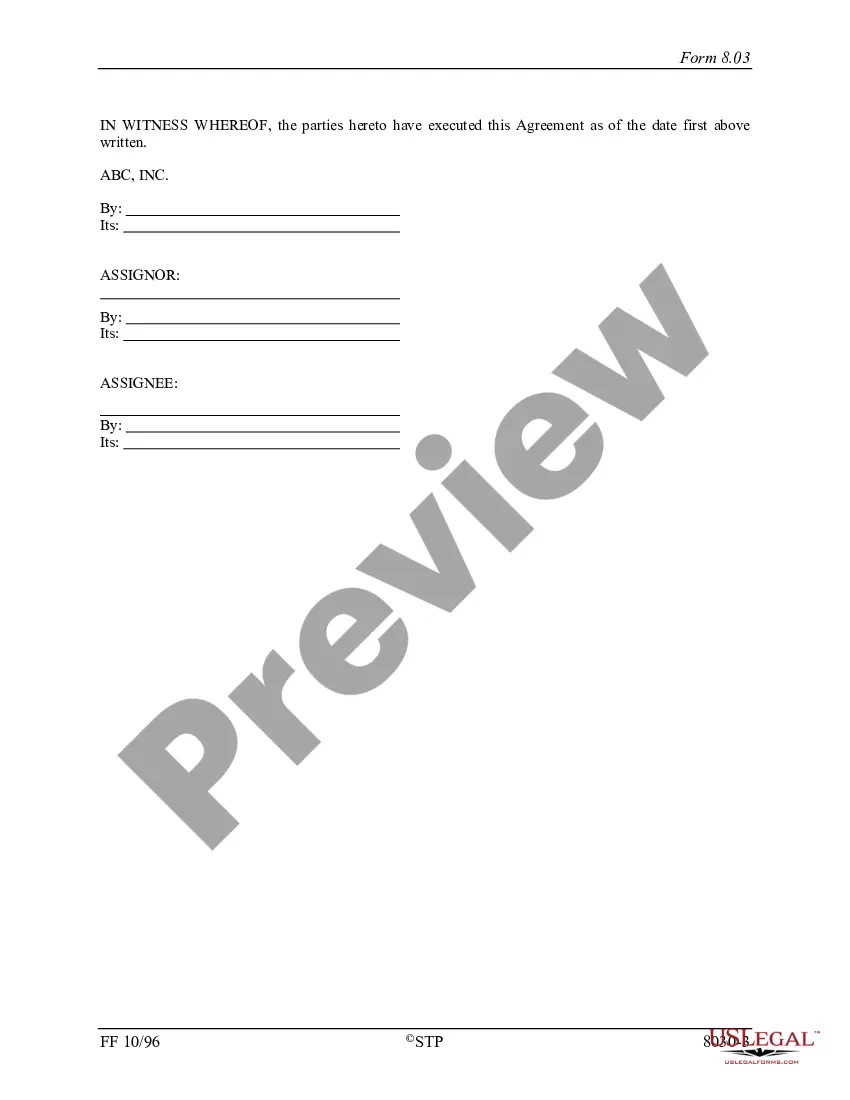
- Identification of the Assignor, Assignee, and Company.
- Terms regarding the consent to assign the business and related agreements.
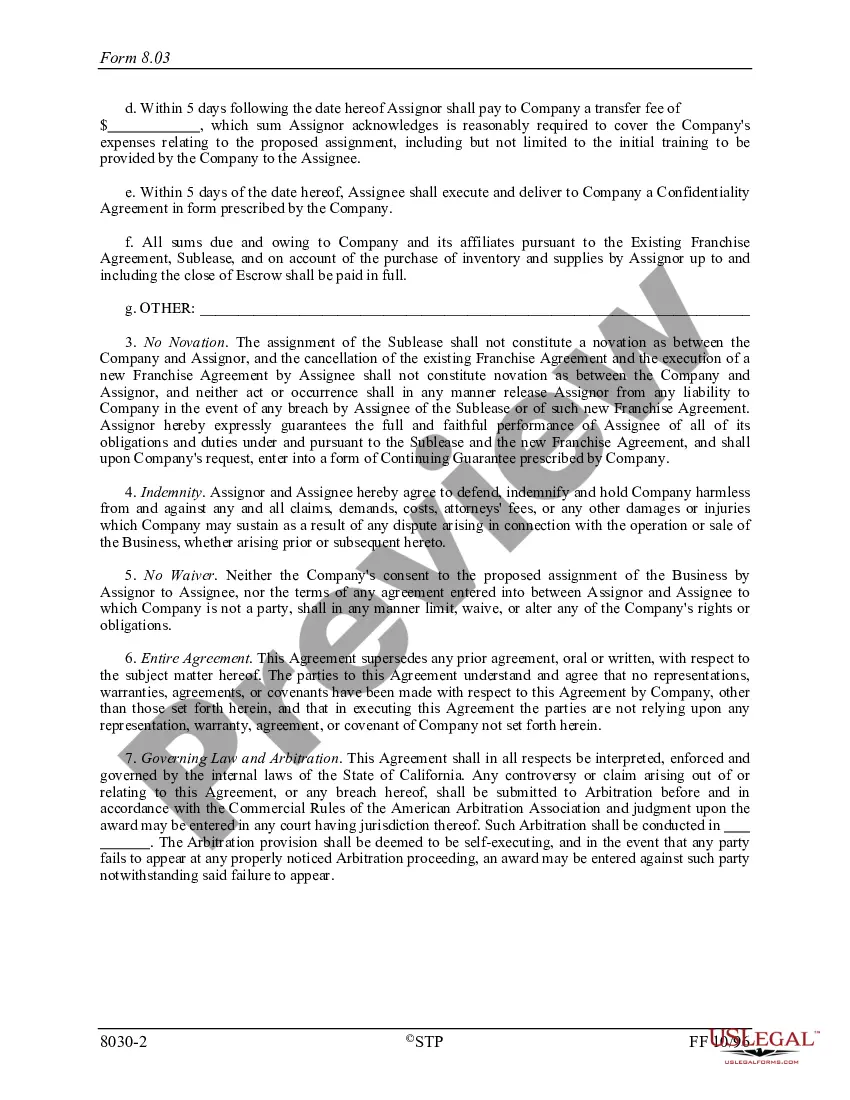
- Conditions that must be fulfilled for the assignment to take effect.
- Statement regarding the lack of novation for existing agreements.
- Indemnity clause protecting the company from claims arising from the business sale.
- Arbitration clause for resolving disputes related to the agreement.
Situations where this form applies
This form should be used when a business owner (the Assignor) wants to sell their franchise or business interests to another party (the Assignee) and needs the approval of the company's governing entity. It is often necessary when specific contractual obligations are tied to the business and must be formally transferred as part of the sale process. Typical scenarios include when an entrepreneur wants to sell their franchise to another investor or when a business partnership is being dissolved and one partner is selling their share.
Who can use this document
- Business owners looking to sell their business interests.
- Individuals or entities acquiring a business or franchise.
- Companies that require formal consent for business assignments.
- Franchisees wishing to transfer their franchise agreement to another party.
How to complete this form
- Identify all parties involved: Assignor, Assignee, and Company.
- Enter the date the agreement is executed.
- Specify the business being transferred and any related agreements, like subleases.
- Ensure both Assignor and Assignee meet the conditions stipulated in the form.
- Sign and date the form where indicated.
Does this form need to be notarized?
This form usually doesn’t need to be notarized. However, local laws or specific transactions may require it. Our online notarization service, powered by Notarize, lets you complete it remotely through a secure video session, available 24/7.
Get your form ready online
Our built-in tools help you complete, sign, share, and store your documents in one place.
Make edits, fill in missing information, and update formatting in US Legal Forms—just like you would in MS Word.
Download a copy, print it, send it by email, or mail it via USPS—whatever works best for your next step.
Sign and collect signatures with our SignNow integration. Send to multiple recipients, set reminders, and more. Go Premium to unlock E-Sign.
If this form requires notarization, complete it online through a secure video call—no need to meet a notary in person or wait for an appointment.
We protect your documents and personal data by following strict security and privacy standards.

Make edits, fill in missing information, and update formatting in US Legal Forms—just like you would in MS Word.

Download a copy, print it, send it by email, or mail it via USPS—whatever works best for your next step.

Sign and collect signatures with our SignNow integration. Send to multiple recipients, set reminders, and more. Go Premium to unlock E-Sign.

If this form requires notarization, complete it online through a secure video call—no need to meet a notary in person or wait for an appointment.

We protect your documents and personal data by following strict security and privacy standards.
Common mistakes to avoid
- Failing to include all necessary signatures from the Assignor and Assignee.
- Neglecting to meet the conditions precedent outlined in the agreement.
- Overlooking the need for compliance with state-specific regulations.
Why use this form online
- Quick and easy access to necessary legal documents without visiting a lawyer.
- Ability to edit and customize the form to fit specific business needs.
- Reliable templates drafted by licensed attorneys to ensure legal compliance.
Looking for another form?



Form popularity
FAQ
Generally speaking, contracts can be freely assigned to third parties.This contract cannot be assigned to anyone without the written consent of both parties.
The difference between assignment and transfer is that assign means it's legal to transfer property or a legal right from one person to another, while transfer means it's legal to arrange for something to be controlled by or officially belong to another person.
In both instances, assignment is the process whereby a person, the assignor, transfers rights or benefits to another, the assignee.While novation requires the consent of all parties, assignment needs no consent from other non-assigning parties.
A deed of assignment is used to assign just the beneficial interest in land/property from one party to another. A deed of trust can also be used to do this, however it also includes other clauses such as how to sell the property.
In order for an assignment to be a legal assignment, the assignment must be agreed in writing, signed by the assignor, and the other party to the contract must be given notice of the assignment.Contracts often require the consent of the other party before any assignment can take place.
A deed of Assignment is an Agreement between the Seller of a Land or Property and a Buyer of that Land or property showing evidence that the Seller has transferred all his rights, his title, his interest and ownership of that land to that the Seller that has just bought land.
To transfer rights, property, or other benefits to another party (the assignee) from the party who holds such benefits under contract (the assignor). This concept is used in both contract and property law.
Consent to assignment refers to allowing a party of a contract (the assignor) to assign a contract and move the obligations to another party (the assignee).
Primary tabs. Assignment is a legal term whereby an individual, the assignor, transfers rights, property, or other benefits to another known as the assignee. This concept is used in both contract and property law. The term can refer to either the act of transfer or the rights/property/benefits being transferred.