Circuit Board Alliance Agreement Contract
About this form
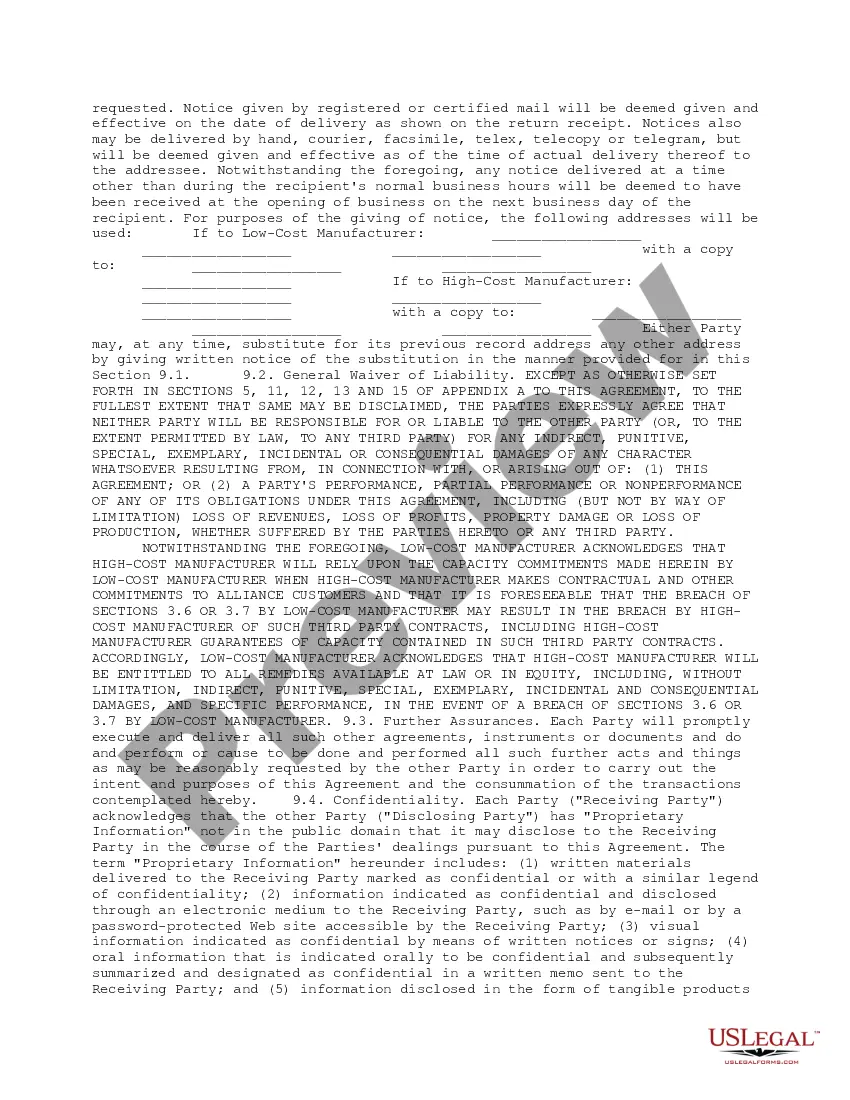
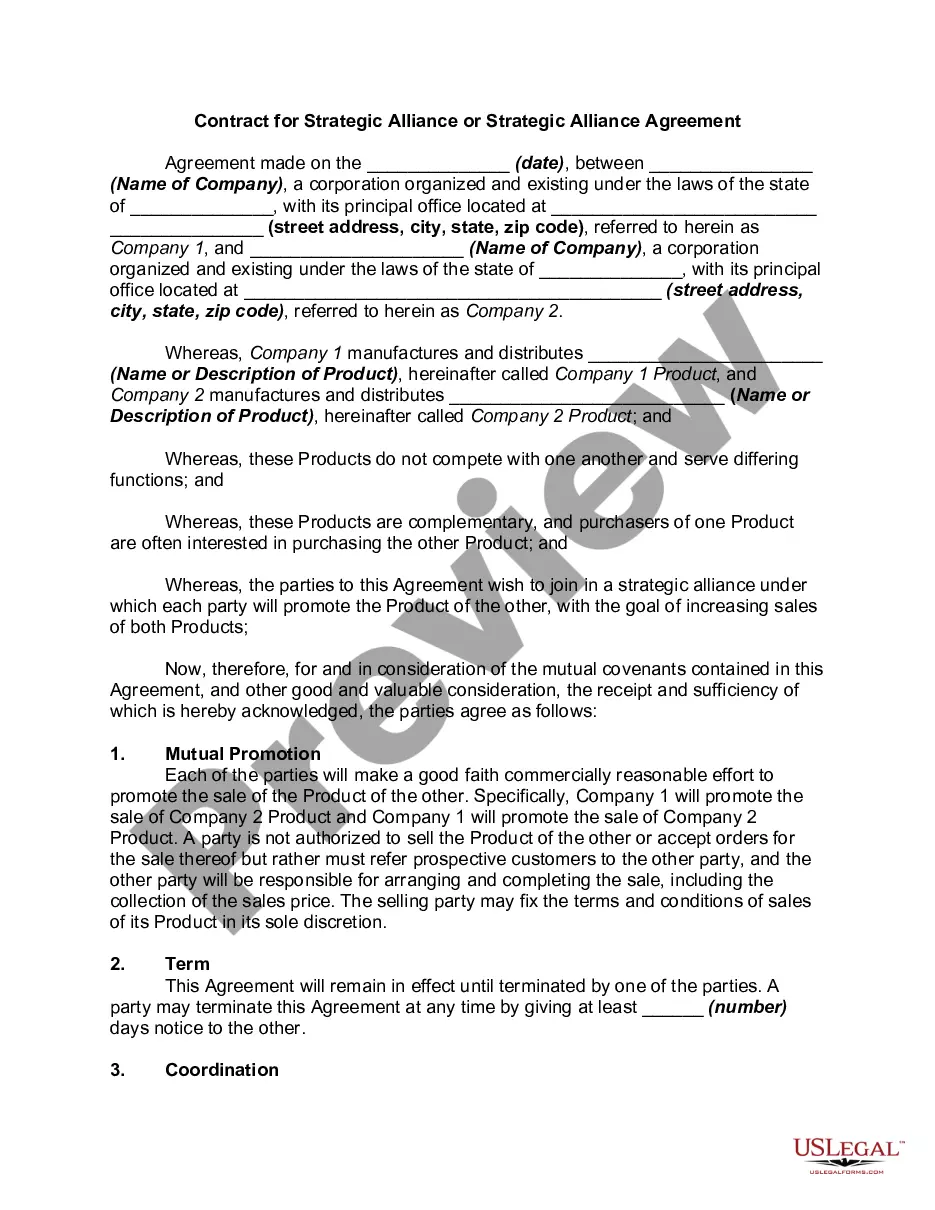
The Circuit Board Alliance Agreement Contract is a legally binding document designed for establishing a formal agreement between a high-cost manufacturer and a low-cost manufacturer of circuit boards. This contract outlines their collaborative efforts to combine high-quality production with cost-effective manufacturing capabilities. Unlike other agreements, this document specifically focuses on defining the roles, expectations, and business relationship between the two manufacturers in the circuit board industry.
Main sections of this form
- Introduction of the parties involved, identifying the low-cost and high-cost manufacturers.
- Definitions section outlining key terms such as âAllianceâ, âAlliance Customersâ, and legal responsibilities.
- Marketing terms that describe how the manufacturers will collaborate to sell products to identified customers.
- Commercial and operational terms detailing price quotations and delivery procedures between the parties.
- Indemnification and representation warranties ensuring both parties uphold their responsibilities.
- Termination clauses explaining conditions under which the agreement may be dissolved.













Common use cases
This form is essential when two manufacturers in the circuit board industry aim to establish a partnership that leverages each other's strengths. It is particularly useful when the high-cost manufacturer seeks to enter low-cost markets and the low-cost manufacturer aims to gain credibility and market presence within the U.S. Specifically, this agreement is appropriate when both parties want clarity on shared goals, marketing strategies, customer engagement, and any financial considerations involved in the collaboration.
Who needs this form
This form is intended for:
- Businesses involved in the manufacturing of circuit boards.
- Manufacturers seeking to establish cost-effective production partnerships.
- Companies aiming for strategically defined collaborative relationships to enhance market access.
- Legal representatives and advisors drafting contractual agreements between manufacturers.
Steps to complete this form
To complete this form, follow these steps:
- Identify and enter the names and addresses of both the low-cost manufacturer and the high-cost manufacturer.
- Clearly define the terms of the partnership, including each partyâs roles, responsibilities, and contributions.
- Specify the customer base and market areas that each party will target.
- Enter applicable pricing structures, production capacities, and timelines for delivery.
- Review the terms thoroughly to ensure that all parties understand and agree to the conditions set forth in the agreement.
- Sign the agreement to formalize the partnership and ensure that all parties retain copies for their records.
Notarization guidance
This form does not typically require notarization unless specified by local law. However, it is advisable to have it reviewed by a legal professional to ensure enforceability in your jurisdiction.
Get your form ready online
Our built-in tools help you complete, sign, share, and store your documents in one place.
Make edits, fill in missing information, and update formatting in US Legal Forms—just like you would in MS Word.
Download a copy, print it, send it by email, or mail it via USPS—whatever works best for your next step.
Sign and collect signatures with our SignNow integration. Send to multiple recipients, set reminders, and more. Go Premium to unlock E-Sign.
If this form requires notarization, complete it online through a secure video call—no need to meet a notary in person or wait for an appointment.
We protect your documents and personal data by following strict security and privacy standards.

Make edits, fill in missing information, and update formatting in US Legal Forms—just like you would in MS Word.

Download a copy, print it, send it by email, or mail it via USPS—whatever works best for your next step.

Sign and collect signatures with our SignNow integration. Send to multiple recipients, set reminders, and more. Go Premium to unlock E-Sign.

If this form requires notarization, complete it online through a secure video call—no need to meet a notary in person or wait for an appointment.

We protect your documents and personal data by following strict security and privacy standards.
Common mistakes
- Failing to clearly define the roles and expectations of each party in the agreement.
- Neglecting to specify terms for termination or dispute resolution.
- Omitting key definitions, which can lead to misunderstandings in interpretation.
- Not reviewing the relevant local laws which may affect the validity of the agreement.
Why complete this form online
- Convenience of having a customizable template that can be easily filled and modified as needed.
- Access to professionally drafted content that reflects legal standards and terminology commonly used in the industry.
- The ability to download and store the form electronically for easy access and sharing.
- The agreement establishes a clear partnership framework, which helps prevent disputes.
- Ensures both manufacturers adhere to agreed standards for production and marketing.
- This document, when executed properly, holds legal weight and can be enforced in a court of law.
Quick recap
- The Circuit Board Alliance Agreement is crucial for manufacturers looking to collaborate effectively.
- Clear definitions and roles in the agreement protect both parties and facilitate successful partnerships.
- Proper execution of the agreement helps mitigate legal risks and enhances market opportunities.
- Alliance Customers: The customers that will be serviced under the terms of this agreement.
- Indemnification: The financial protection each party provides to the other against certain liabilities.
- Exclusivity: The rights granted to one party to be the sole provider for certain customers within specified terms.
Looking for another form?
Form popularity
FAQ
An alliance agreement, sometimes called a joint venture agreement or a strategic alliance agreement, between two independent entities that agree to work together, without forming a jointly owned entity, to compete for and work on a project or series of projects.
The simple answer is YES. You can write your own contracts. There is no requirement that they must be written by a lawyer. There is no requirement that they have to be a certain form or font.
Name of your partnership. Contributions to the partnership and percentage of ownership. Division of profits, losses and draws. Partners' authority. Withdrawal or death of a partner.
Create a preliminary plan for an alliance. This plan should detail how the alliance will benefit both companies. Approach the key decision maker. Build a relationship with your contact first. Present your idea. Listen and adapt your proposal as necessary.
Although there's no requirement for a written partnership agreement, often it's a very good idea to have such a document to prevent internal squabbling (about profits, direction of the company, etc.) and give the partnership solid direction. Limited liability partnerships do have a writing requirement.
Get it in writing. Keep it simple. Deal with the right person. Identify each party correctly. Spell out all of the details. Specify payment obligations. Agree on circumstances that terminate the contract. Agree on a way to resolve disputes.
Partnership DeedPartnership deeds, in very simple words, are an agreement between partners of a firm. This agreement defines details like the nature of the firm, duties, and rights of partners, their liabilities and the ratio in which they will divide profits or losses of the firm.
Share the same values. Choose a partner with complementary skills. Have a track record together. Clearly define each partner's role and responsibilities. Select the right business structure. Put it in writing. Be honest with each other.
Name of the partnership. Contributions to the partnership. Allocation of profits, losses, and draws. Partners' authority. Partnership decision-making. Management duties. Admitting new partners. Withdrawal or death of a partner.