Carjacking
Overview of this form
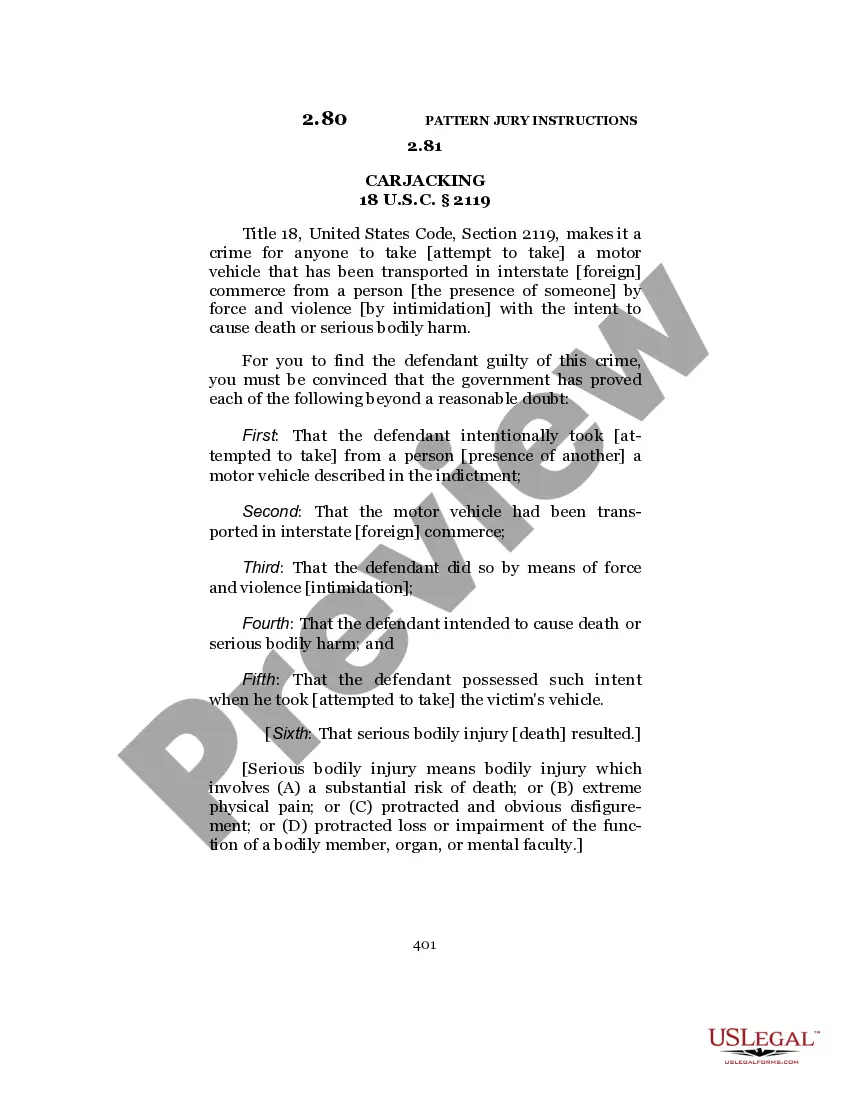
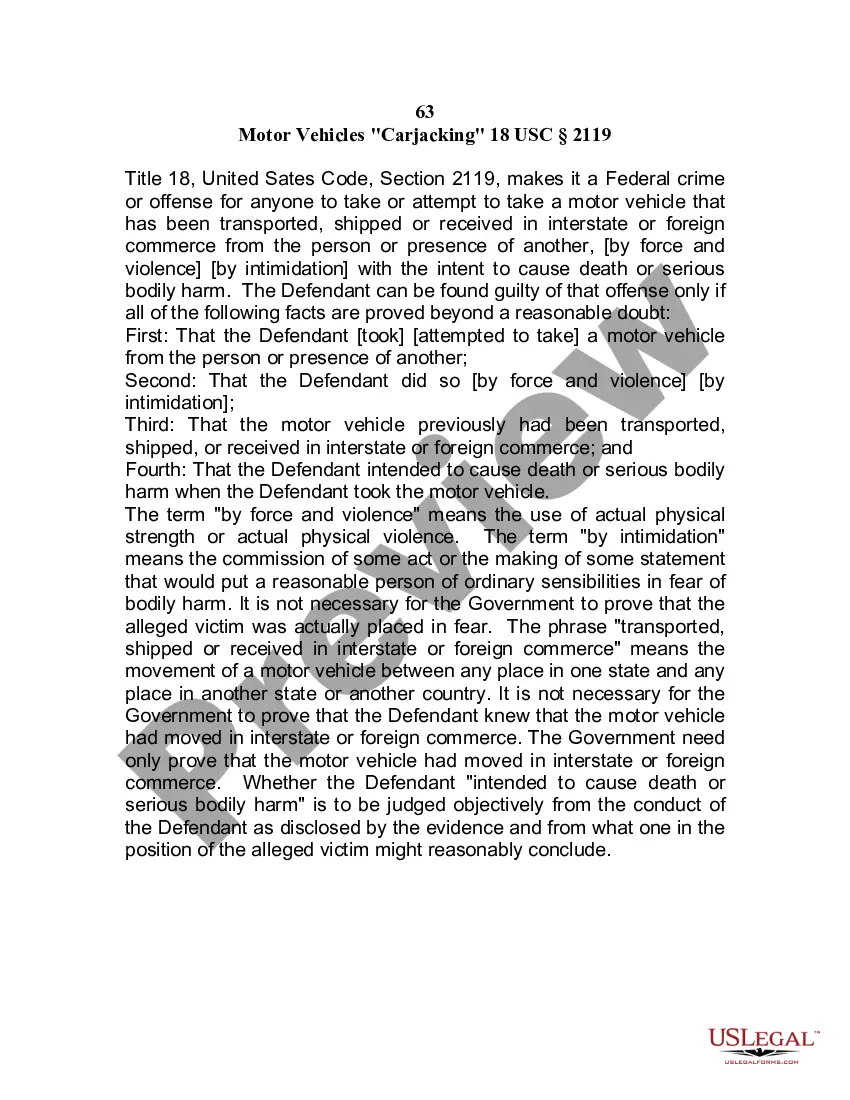
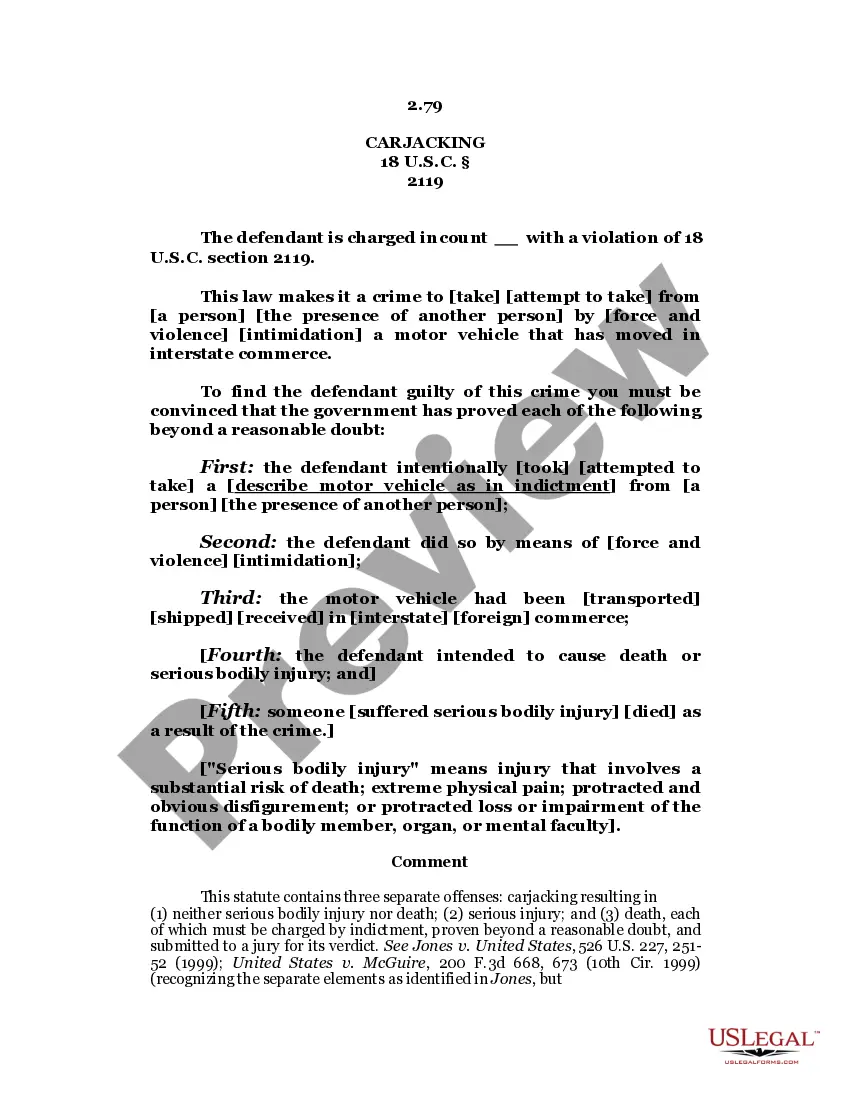
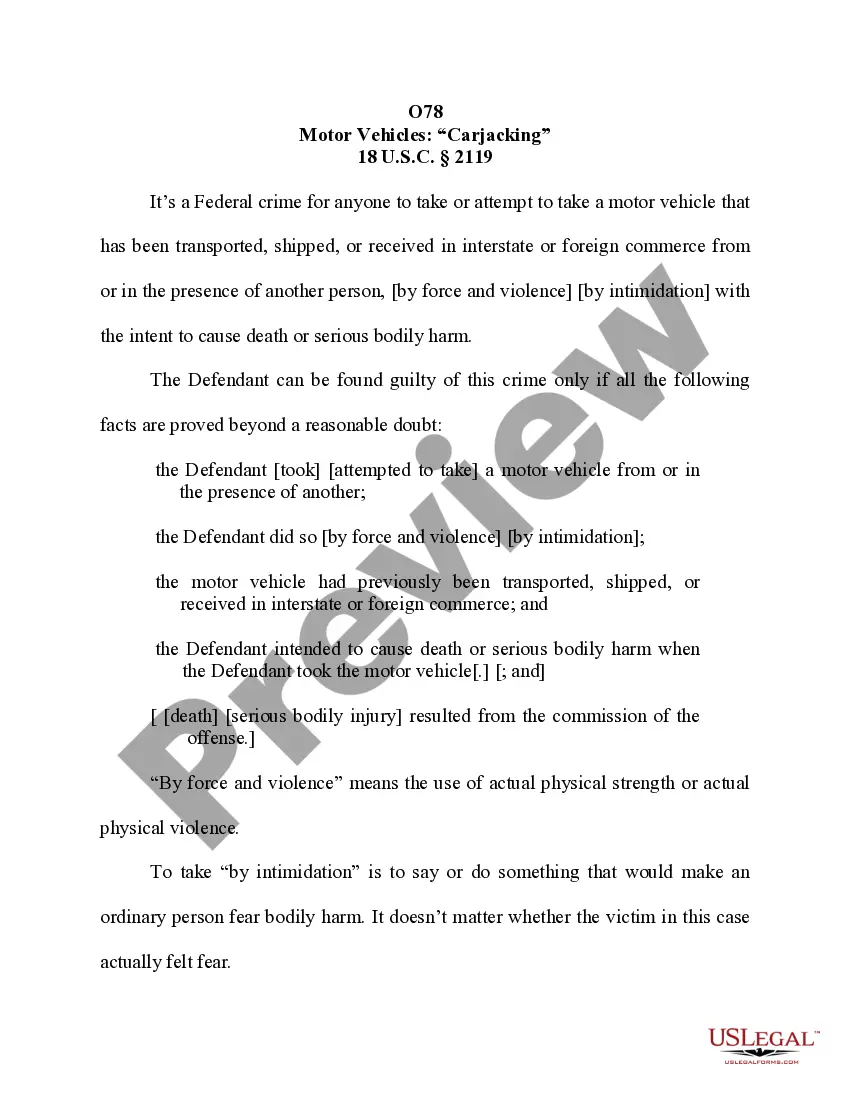
The Carjacking form is a legal document related to the criminal offense of unlawfully taking a motor vehicle by force or intimidation. Under Title 18, United States Code, Section 2119, carjacking is defined as the act of taking a vehicle from another individual with the intent to cause serious harm. This form serves as a guide to understanding the elements of this crime and how to legally address charges related to it. It provides clarity on the legal definitions, potential consequences, and specific scenarios that may arise during carjacking offenses.
Key parts of this document
- Definition of carjacking, including elements required for conviction.
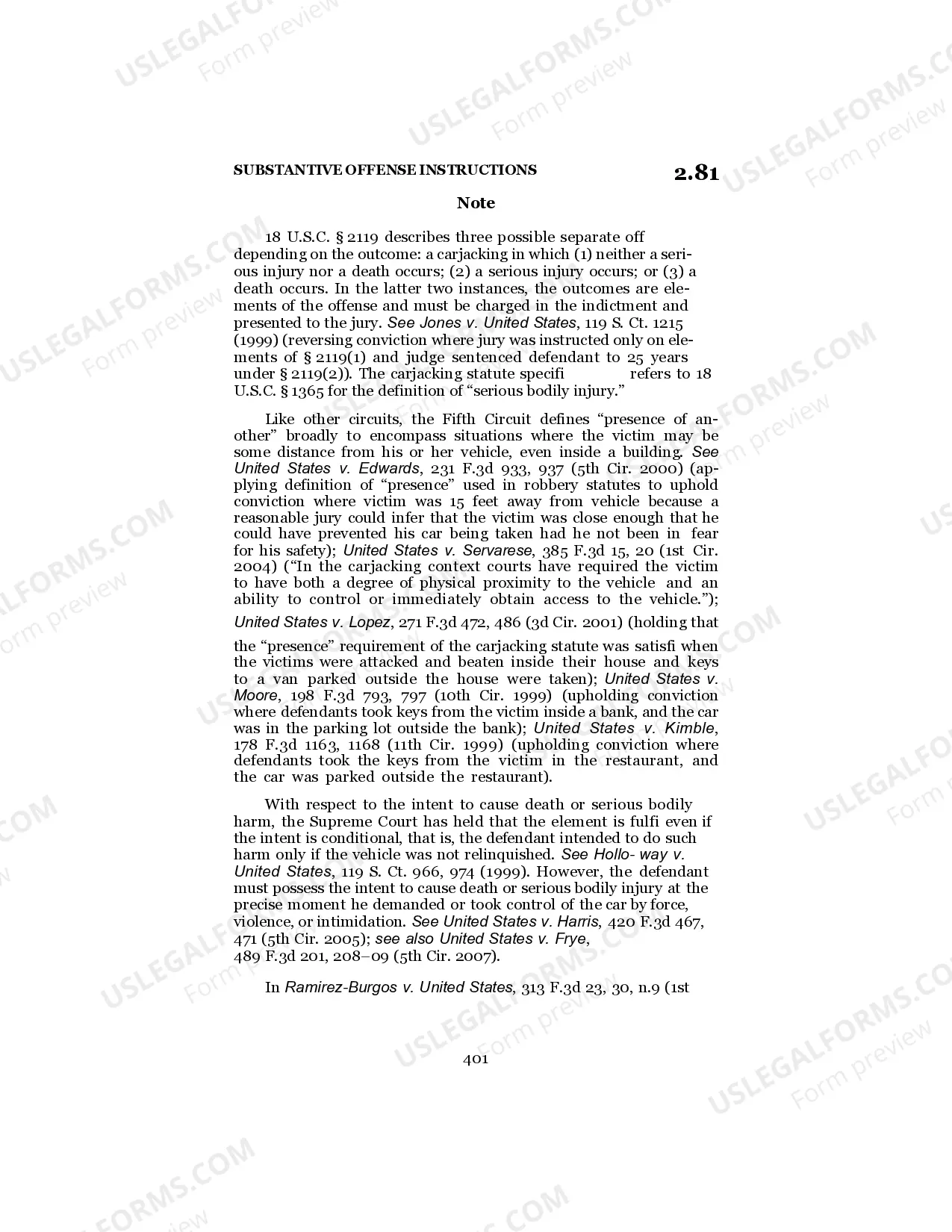
- Explanation of serious bodily injury and the conditions for its classification.
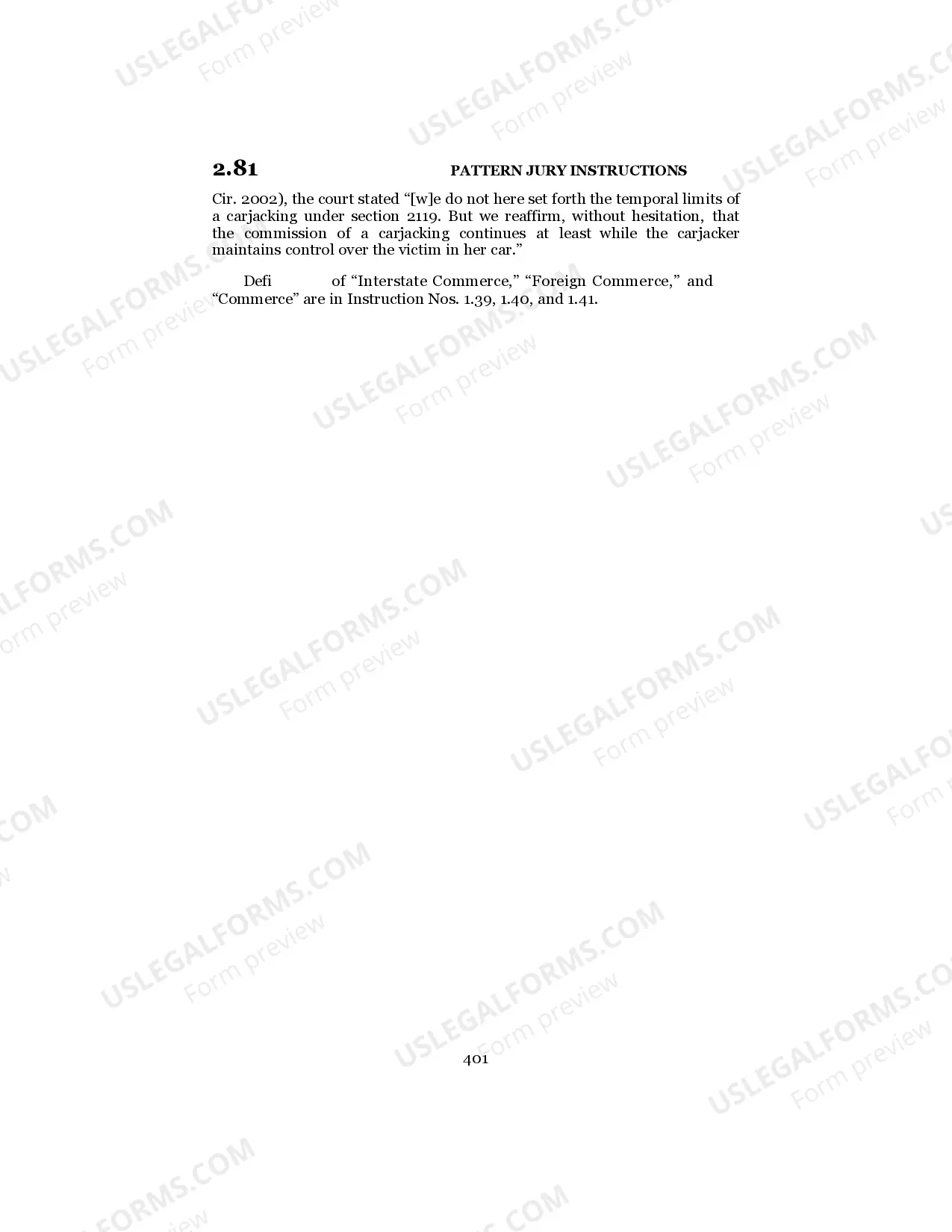
- Jurisdictional considerations regarding the victim's proximity to the vehicle.
- Clarification of the intent requirement at the time of the offense.
- Details about the potential outcomes based on the severity of the carjacking incident.
Situations where this form applies
This form is necessary when dealing with legal matters related to accusations of carjacking. It is useful for defendants who need to understand their rights and the elements that must be proven in court. Additionally, it can aid attorneys representing clients in carjacking cases by providing essential details regarding the crime's legal framework.
Intended users of this form
- Individuals accused of carjacking and seeking to understand the charges against them.
- Defense attorneys representing clients in carjacking cases.
- Victims of carjacking wanting to familiarize themselves with their rights and possible legal actions.
- Legal practitioners looking for a comprehensive overview of carjacking statutes and elements.
How to complete this form
- Identify the parties involved in the carjacking incident, including the accused and the victim.
- Clearly state the details of the motor vehicle taken, including make, model, and condition.
- Specify the circumstances surrounding the incident, including the location and any witnesses present.
- Document any injuries sustained or threats made during the carjacking.
- Include relevant dates, such as the time of the incident and any legal deadlines.
Is notarization required?
In most cases, this form does not require notarization. However, some jurisdictions or signing circumstances might. US Legal Forms offers online notarization powered by Notarize, accessible 24/7 for a quick, remote process.
Get your form ready online
Our built-in tools help you complete, sign, share, and store your documents in one place.
Make edits, fill in missing information, and update formatting in US Legal Forms—just like you would in MS Word.
Download a copy, print it, send it by email, or mail it via USPS—whatever works best for your next step.
Sign and collect signatures with our SignNow integration. Send to multiple recipients, set reminders, and more. Go Premium to unlock E-Sign.
If this form requires notarization, complete it online through a secure video call—no need to meet a notary in person or wait for an appointment.
We protect your documents and personal data by following strict security and privacy standards.

Make edits, fill in missing information, and update formatting in US Legal Forms—just like you would in MS Word.

Download a copy, print it, send it by email, or mail it via USPS—whatever works best for your next step.

Sign and collect signatures with our SignNow integration. Send to multiple recipients, set reminders, and more. Go Premium to unlock E-Sign.

If this form requires notarization, complete it online through a secure video call—no need to meet a notary in person or wait for an appointment.

We protect your documents and personal data by following strict security and privacy standards.
Avoid these common issues
- Failing to provide detailed information about the incident, which can lead to misunderstandings.
- Not properly identifying the vehicle involved, causing confusion in legal proceedings.
- Overlooking the requirement to demonstrate intent, which is crucial for legal definitions.
- Neglecting to include witness statements or evidence that could support the case.
Benefits of using this form online
- Convenient access to download and fill out the form at any time.
- Editability allows users to input specific details relevant to their case.
- Reliable legal information drafted by licensed attorneys ensures accuracy.
- Saves time compared to manual drafting by providing a structured format.
Legal use & context
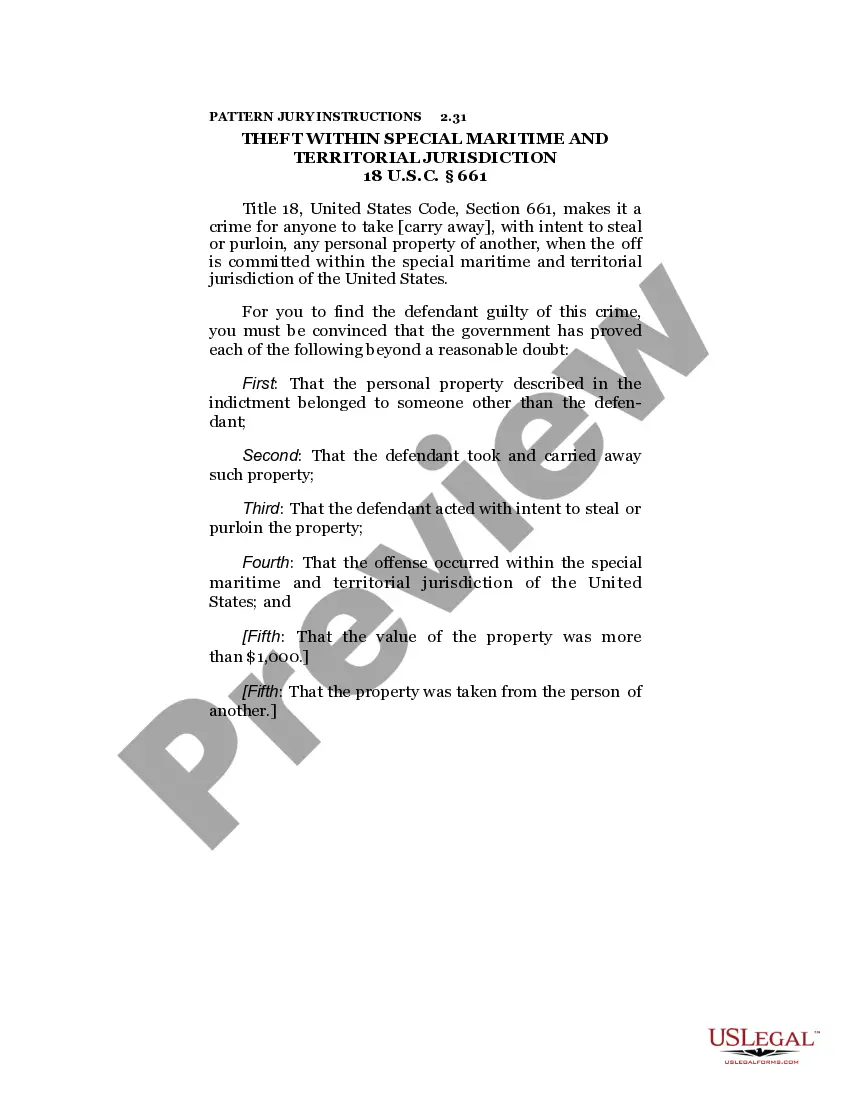
- The carjacking form sets out the necessary legal definitions and elements needed for conviction under federal law.
- Understanding the nuances of how the crime is charged can aid in defense strategies.
- Jurisdictions may have additional provisions or slightly different definitions, so localized understanding is important.
Summary of main points
- The Carjacking form helps clarify the legal implications of the crime of unlawfully taking a vehicle.
- It outlines essential components required for a successful charge or defense in court.
- Individuals involved in such incidents should ensure all details are correct and complete to avoid legal pitfalls.
Looking for another form?


Form popularity
FAQ
It is a kind of property theft usually considered a state offense. The consequences for grand theft auto vary by state, but they may include fines and imprisonment. A carjacking often involves the offender using force or the threat of force to seize possession of the vehicle and steal it from the owner or operator.
Example Sentences The police are investigating another carjacking.
56% of carjackers were identified by victims as black, 21% white, 16% Asian or Native American, and 7% mixed race or unknown. Some 93% of carjackings occurred in urban areas.
Prevent motor vehicle theft Keep your doors locked and windows shut anytime you're not in your car, even for a few minutes. Make valuables invisible.Park in secure, highly trafficked and well-lit areas.Make use of anti-theft devices.Exploit your vehicle identification (VIN) number.
Carjacking is often a violent crime when One or more robbers approach a driver who is either in his or her car or about to enter or leave it. The robber(s) point a gun or other weapon at the driver and force the driver to turn over the car. Often times the victim is robbed of other valuables, abducted and/or raped.
The elements of the original armed carjacking statute are: that the defendant possessed a firearm; that the defendant took a motor vehicle from the person or presence of another; that the defendant took a motor vehicle by force and violence or by intimidation; and.
Carjacking is punished by as many as nine years in a state prison, a fine of up to $10,000, or both a prison sentence and a fine. Carjacking is also punished as a form of violent felony under California's ?Three Strikes?system.
Avoid parking near dumpsters, woods, large vans or trucks, or anything else that limits your visibility. Never leave valuables in plain sight; lock your car and take the keys. Even if you are rushed, look around before you exit your vehicle and stay alert to your surroundings.