Maine Assignment to Living Trust
Understanding this form
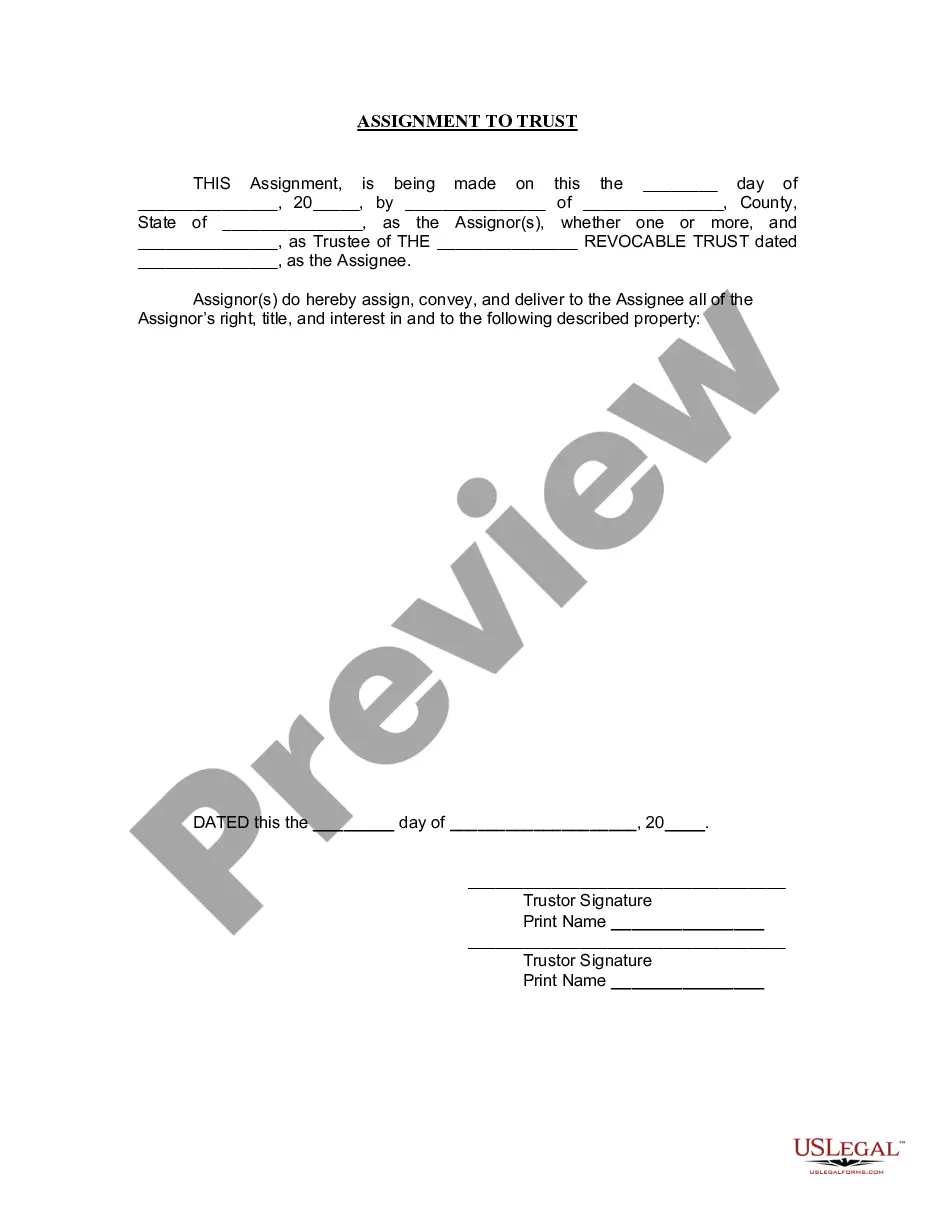
The Assignment to Living Trust form is a legal document used to transfer ownership of specific property into a living trust established during a person's lifetime. This form is crucial for individuals looking to manage their assets and streamline estate planning. Unlike other types of transfers, this document specifically focuses on assigning rights, title, and interest in property to a trust, ensuring that the assets are handled according to the grantor's wishes after their passing.
Main sections of this form
- Date of assignment.
- Name and address of the Assignor (the person transferring the property).
- Name and address of the Trustee (the person managing the trust).
- Name of the Living Trust being assigned to.
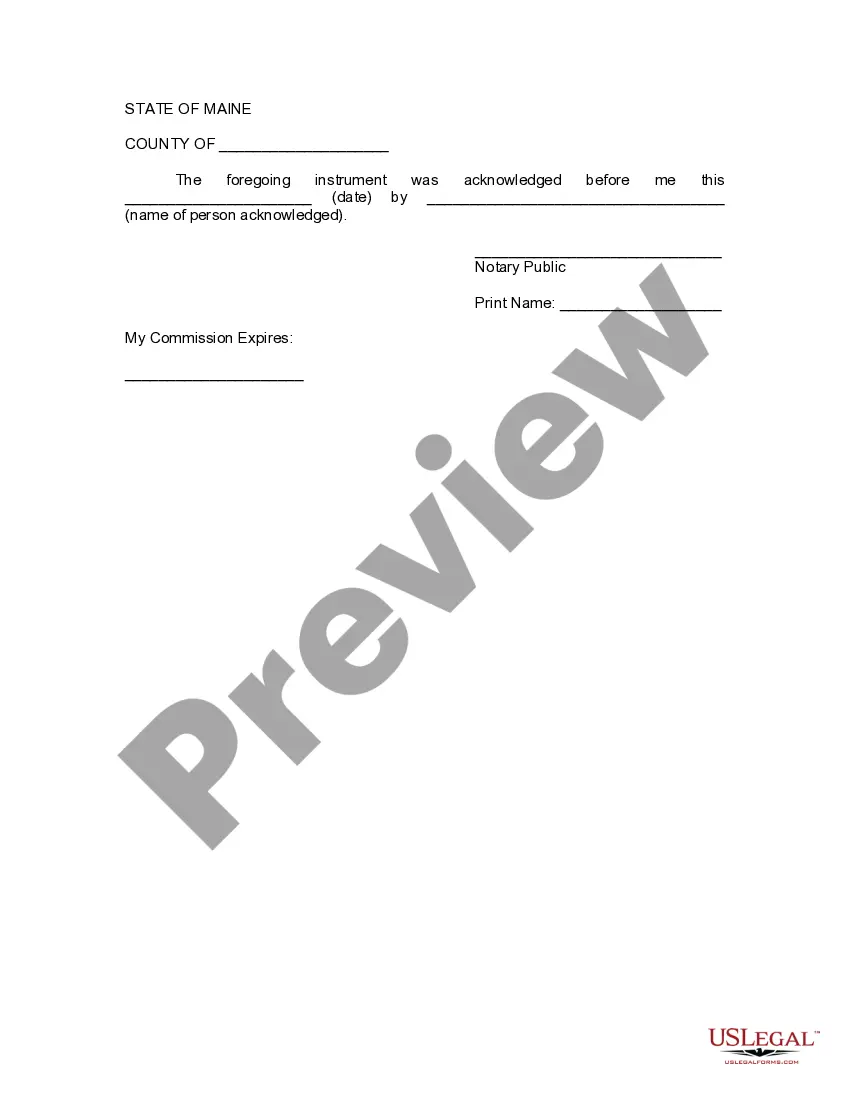
- Notary acknowledgment section to verify the signature.

When this form is needed
This form should be used when you wish to assign property to your living trust, thus ensuring that your assets are managed as intended during your lifetime and after your passing. It's particularly useful when you have acquired new assets that you want to place in your trust, such as real estate, vehicles, or other significant property holdings.
Who needs this form
- Individuals with a living trust who want to assign property to it.
- Estate planners managing multiple assets for clients.
- Property owners looking to simplify their estate management.
- Anyone responsible for executing estate plans that involve transferring property to a trust.
How to complete this form
- Identify the date of the assignment.
- Enter the Assignor's full name and address.
- Specify the name of the Trustee and the Living Trust involved.
- Sign the form in front of a notary public.
- Complete the notary acknowledgment section, ensuring the notary signs and affixes their seal.
Notarization guidance
Yes, this form must be notarized to be legally valid. It requires the Assignor's signature to be witnessed by a notary public, ensuring authenticity and preventing disputes regarding the document's legitimacy. US Legal Forms provides integrated online notarization services that are secure and available 24/7, allowing you to complete the notarization process via video call without the need to travel.
Get your form ready online
Our built-in tools help you complete, sign, share, and store your documents in one place.
Make edits, fill in missing information, and update formatting in US Legal Forms—just like you would in MS Word.
Download a copy, print it, send it by email, or mail it via USPS—whatever works best for your next step.
Sign and collect signatures with our SignNow integration. Send to multiple recipients, set reminders, and more. Go Premium to unlock E-Sign.
If this form requires notarization, complete it online through a secure video call—no need to meet a notary in person or wait for an appointment.
We protect your documents and personal data by following strict security and privacy standards.

Make edits, fill in missing information, and update formatting in US Legal Forms—just like you would in MS Word.

Download a copy, print it, send it by email, or mail it via USPS—whatever works best for your next step.

Sign and collect signatures with our SignNow integration. Send to multiple recipients, set reminders, and more. Go Premium to unlock E-Sign.

If this form requires notarization, complete it online through a secure video call—no need to meet a notary in person or wait for an appointment.

We protect your documents and personal data by following strict security and privacy standards.
Avoid these common issues
- Failing to provide complete names and addresses of the Assignor and Trustee.
- Not having the document notarized, which is essential for its validity.
- Forgetting to specify the property being assigned to the trust.
- Signing the form without the presence of a notary public.
Benefits of using this form online
- Convenience of downloading and completing the form at your own pace.
- Easier editing to tailor the document to your specific needs.
- Access to reliable legal templates drafted by licensed attorneys.
- Compliance with current legal standards for estate planning documentation.
Summary of main points
- The Assignment to Living Trust form facilitates the transfer of property into a living trust during the Assignor's lifetime.
- Proper completion and notarization of the form are crucial for its legal validity.
- This form helps avoid probate, ensuring a smoother transition of assets for beneficiaries after death.
- It is essential to specify the property and comply with any state-specific regulations.
Looking for another form?


Form popularity
FAQ
You don't need a lawyer to complete most of your tasks during the first few months of a trust administration.If you'll be distributing all the trust property to beneficiaries quickly, you'll probably get most of your work done in about six months.
The average cost for an attorney to create your trust ranges from $1,000 to $1,500 for an individual and $1,200 to $1,500 for a couple. Legal fees vary by location, so your costs could be much higher or slightly lower.
Qualified retirement accounts 401ks, IRAs, 403(b)s, qualified annuities. Health saving accounts (HSAs) Medical saving accounts (MSAs) Uniform Transfers to Minors (UTMAs) Uniform Gifts to Minors (UGMAs) Life insurance. Motor vehicles.
To transfer assets such as investments, bank accounts, or stock to your real living trust, you will need to contact the institution and complete a form. You will likely need to provide a certificate of trust as well. You may want to keep your personal checking and savings account out of the trust for ease of use.
Assuming you decide you want a revocable living trust, how much should you expect to pay? If you are willing to do it yourself, it will cost you about $30 for a book, or $70 for living trust software. If you hire a lawyer to do the job for you, get ready to pay between $1,200 and $2,000.
Pick a type of living trust. If you're married, you'll first need to decide whether you want a single or joint trust. Take stock of your property. Choose a trustee. Draw up the trust document. Sign the trust. Transfer your property to the trust.
No, you don't need a lawyer to set up a trust, but it might be a good idea to seek legal advice to ensure the trust is set up correctly and that you have considered all long-term financial and estate planning aspects of the trust.Some living trusts are revocable, which means the trust can be changed at any time.