Home-Based Worker Policy
What this document covers
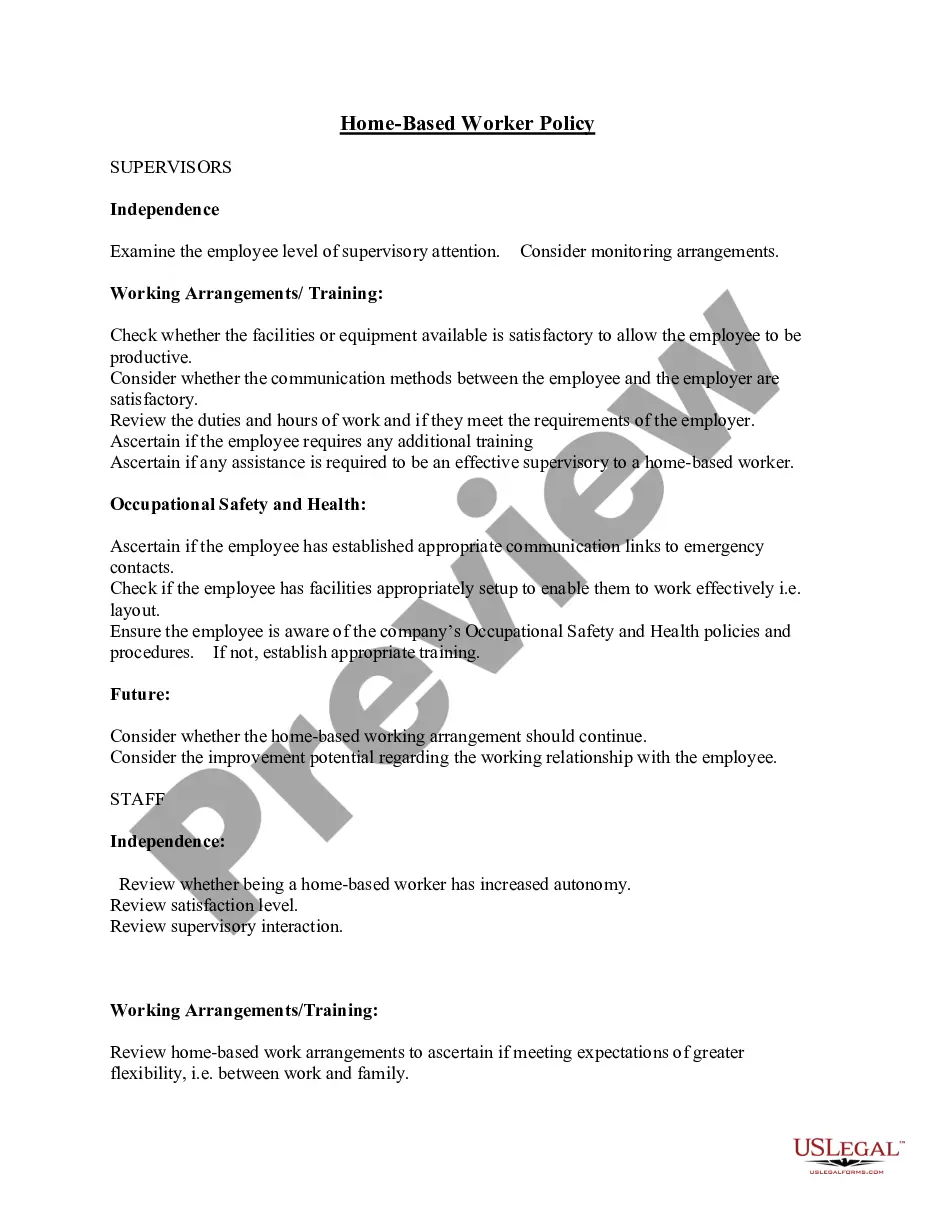
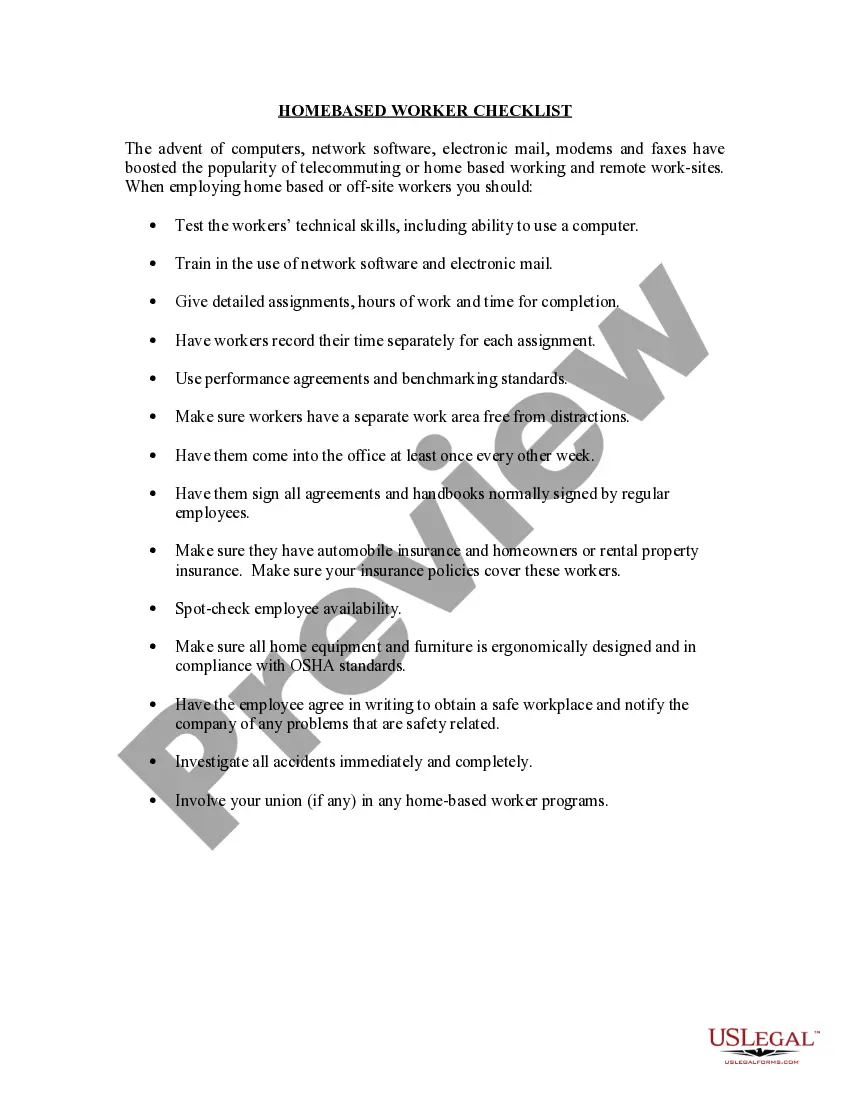
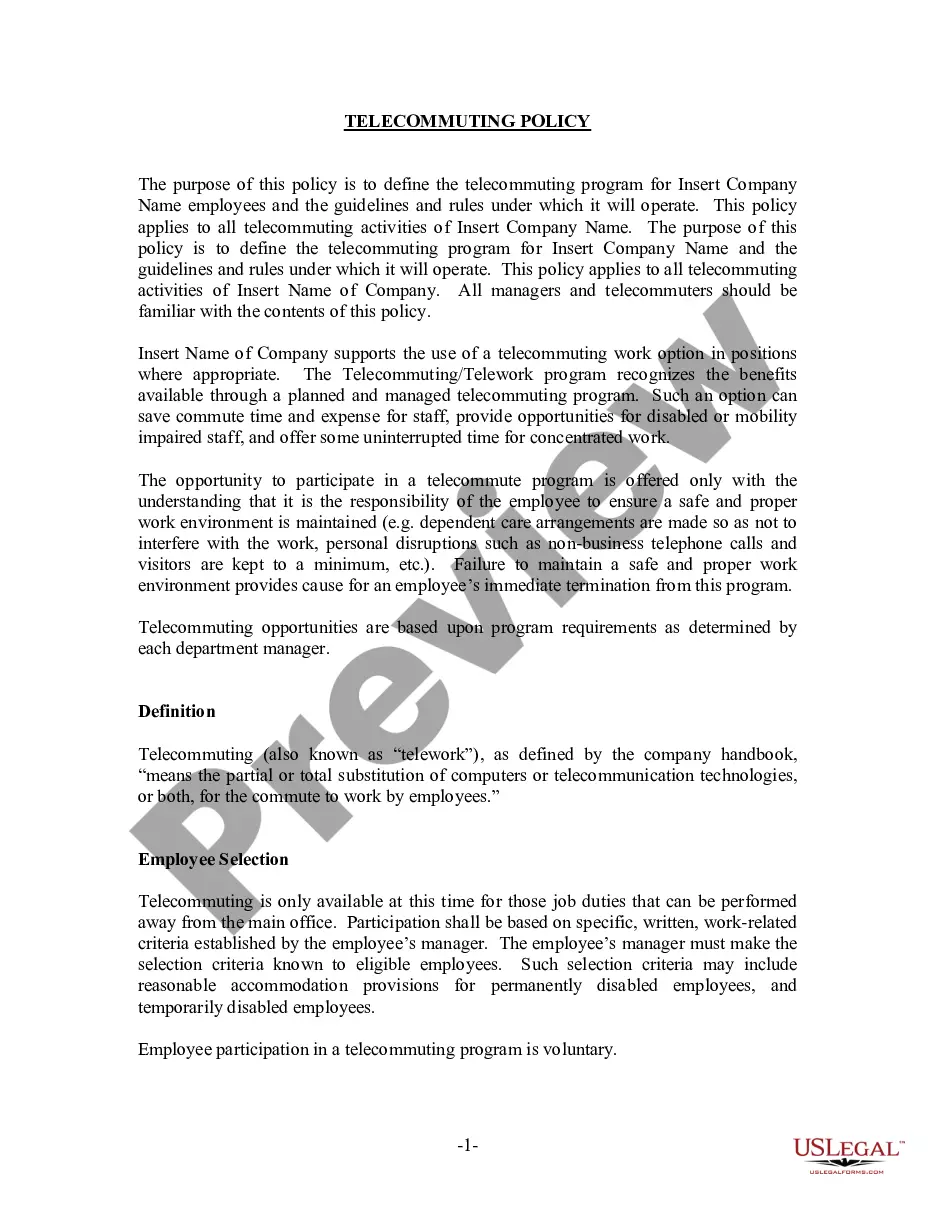
The Home-Based Worker Policy is a legal document used by employers to establish guidelines for workers who are primarily based at home. This form outlines the responsibilities and expectations for both the employer and the home-based employees, focusing on supervision, working arrangements, training, and occupational safety. Unlike other employee policies, it specifically targets remote work environments, ensuring that both parties understand their obligations and the necessary safety protocols.
Form components explained
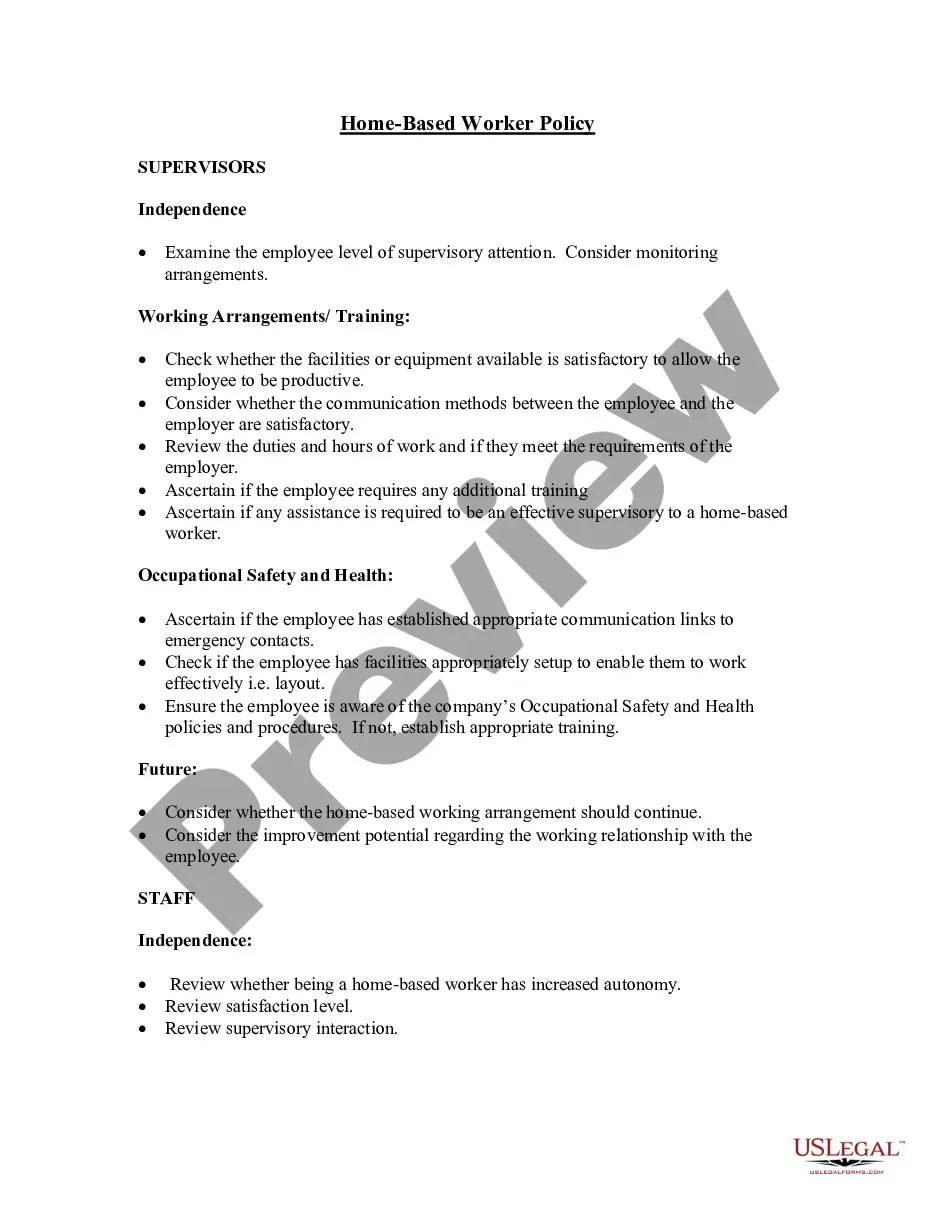
- Supervisory Independence: Outlines the level of supervision required and the monitoring arrangements in place.
- Working Arrangements/Training: Details the adequacy of facilities and equipment to support productivity and identifies any training needs.
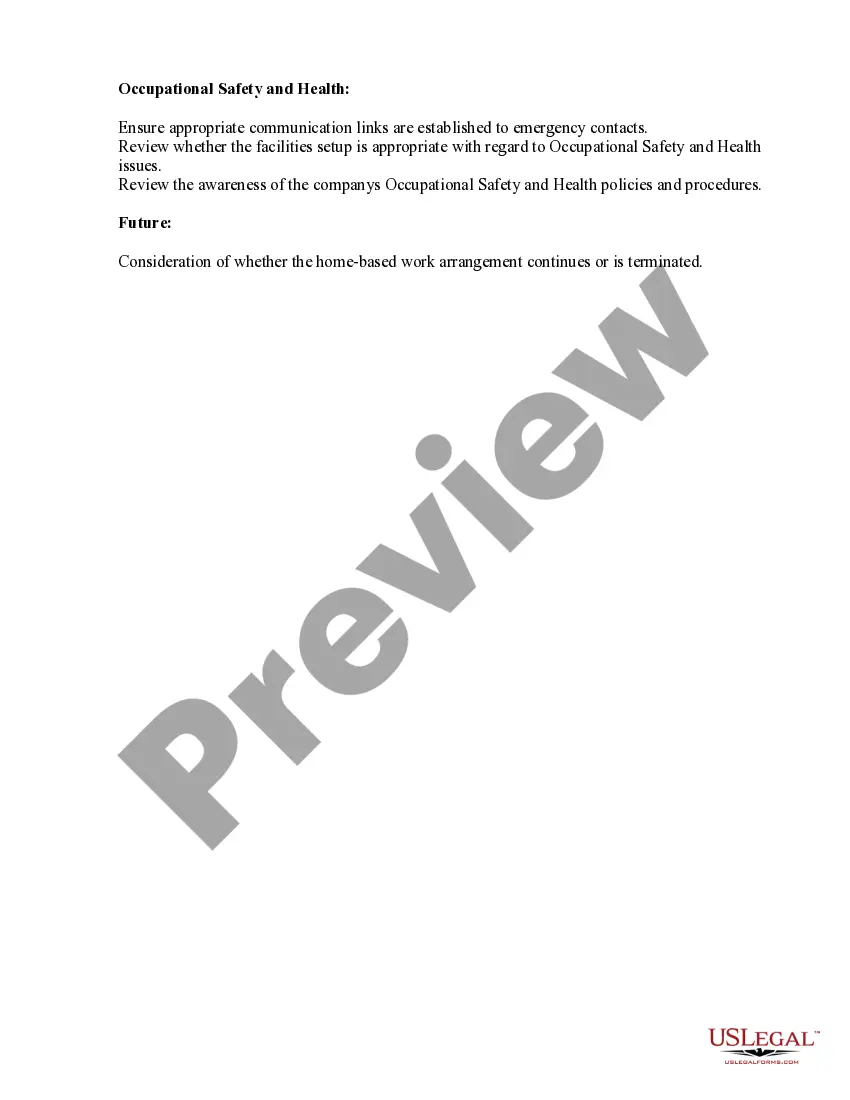
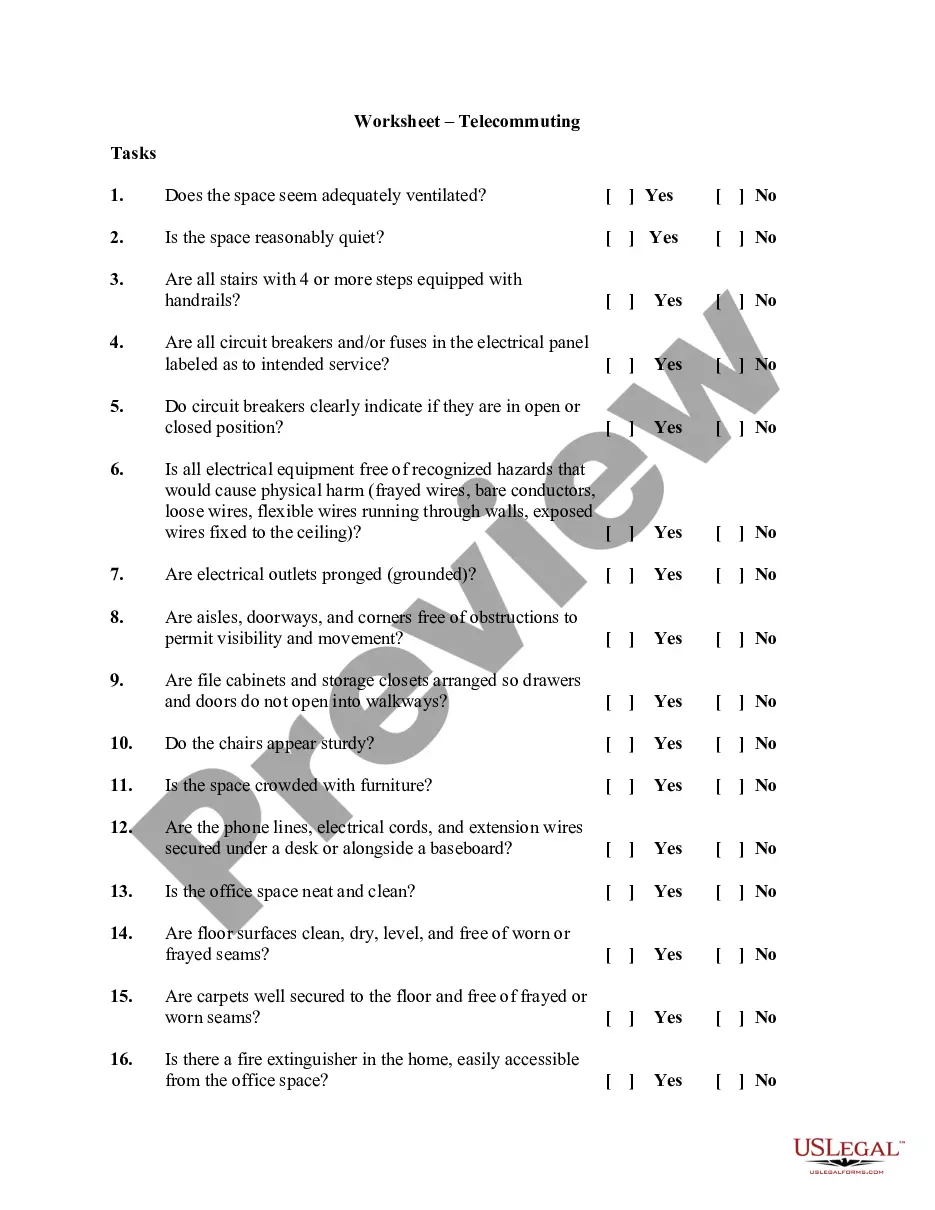
- Occupational Safety and Health: Establishes communication protocols and safety guidelines to ensure a safe working environment.
- Future Considerations: Provides guidance on evaluating the effectiveness of home-based arrangements and whether they should continue.
When this form is needed
This form should be used when an employer wishes to formalize the policies surrounding home-based work arrangements. It is particularly important during or after transitions to remote work, ensuring that both the employer and employees are aligned on expectations, responsibilities, and safety procedures. Additionally, it is useful when introducing new remote positions or revising existing home working arrangements.
Who this form is for
The Home-Based Worker Policy is intended for:
- Employers seeking to establish clear policies for remote employees.
- Human resources professionals responsible for employee policies and safety compliance.
- Supervisors and managers who oversee home-based workers and need guidelines for performance and safety.
- Employees who work from home, to understand their rights and responsibilities within the company.
How to prepare this document
- Identify the supervisory requirements for home-based workers and outline any necessary monitoring arrangements.
- Evaluate the facilities and equipment available to the employee and specify any additional training or resources needed.
- Establish protocols for Occupational Safety and Health, including communication methods for emergency situations.
- Include future consideration clauses to assess the effectiveness of the home-based working arrangement periodically.
- Ensure both employer and employee acknowledge and sign the policy to confirm understanding and agreement.
Does this document require notarization?
This form does not typically require notarization to be legally valid. However, some jurisdictions or document types may still require it. US Legal Forms provides secure online notarization powered by Notarize, available 24/7 for added convenience.
Get your form ready online
Our built-in tools help you complete, sign, share, and store your documents in one place.
Make edits, fill in missing information, and update formatting in US Legal Forms—just like you would in MS Word.
Download a copy, print it, send it by email, or mail it via USPS—whatever works best for your next step.
Sign and collect signatures with our SignNow integration. Send to multiple recipients, set reminders, and more. Go Premium to unlock E-Sign.
If this form requires notarization, complete it online through a secure video call—no need to meet a notary in person or wait for an appointment.
We protect your documents and personal data by following strict security and privacy standards.

Make edits, fill in missing information, and update formatting in US Legal Forms—just like you would in MS Word.

Download a copy, print it, send it by email, or mail it via USPS—whatever works best for your next step.

Sign and collect signatures with our SignNow integration. Send to multiple recipients, set reminders, and more. Go Premium to unlock E-Sign.

If this form requires notarization, complete it online through a secure video call—no need to meet a notary in person or wait for an appointment.

We protect your documents and personal data by following strict security and privacy standards.
Common mistakes to avoid
- Failing to regularly update the policy to reflect changing work conditions or legal requirements.
- Not specifying training needs or resources that remote workers might require.
- Overlooking the importance of clear communication protocols for safety and emergencies.
- Neglecting to involve employees in discussions about the policy, which could lead to misunderstandings.
Why complete this form online
- Convenience of immediate access and download without the need for physical paperwork.
- Editability allows for quick updates and adjustments as policies change.
- Reliability in terms of quality, as forms are drafted by licensed attorneys.
- Time-saving, as it eliminates delays in obtaining legal documentation.
Legal use & context
- This form is intended to create a legally binding agreement between the employer and home-based worker.
- It outlines clear expectations and responsibilities, promoting accountability and safety.
- Enforceability may depend on adherence to local labor laws and regulations regarding remote work.
Main things to remember
- The Home-Based Worker Policy is essential for clear communication and expectations between employers and remote employees.
- It helps promote safety and compliance with occupational health standards.
- Regular updates and employee involvement can enhance the effectiveness of such policies.
Looking for another form?


Form popularity
FAQ
Mitigate Compliance Risk: There are a variety of risk factors including payroll withholding, changing tax judications, permanent establishment, and immigration issues. Even if you do not allow for remote work explicitly, without a policy, you may be exposing your employees and your organization to unnecessary risk.
model: Employees spend three days in the office and two days at home. This hybrid work policy is easy to coordinate and allows everyone to be in the office on the same days of the week.
What to include in a work from home policy Working hours.Timekeeping and hourly reporting.Communication guidelines.Technology usage.Security protocols.Virtual meeting etiquette.Approval procedure.Expenses.
5 Essential components of a work from home policy Eligibility. Not everyone can work from home.Schedule requirements. Your work from home policy should clearly outline the expectations you have in terms of employee availability.Productivity measurements.Managing communication.Security.
Work from home policy ensures that working from home is beneficial to the employee and the company. This policy allows employees to maintain a healthy work-life balance and improve employee productivity.
Put simply, a work-from-home policy is a formal agreement that provides guidelines for employees working outside a company's office. These guidelines can include who's allowed to work from home, how to request to work from home, where and when employees can do their work, and other WFH best practices to follow.
Communicative. Easily one of the most important characteristics of a successful remote employee, top-notch communication skills are essential to your remote work success. We often tell people to choose over-communication over under-communication when it comes to working remotely.
Here are 10 remote work rules to follow that will help you be a better remote worker: Elevate your communication game.Create a dedicated workspace.Set a schedule and stick to it.Focus on your peak hours.Identify your weaknesses.Dress for success.Don't be a loner.Remember to take breaks.