Motion in Limine to Prevent Evidence of Remedial Measures
Understanding this form
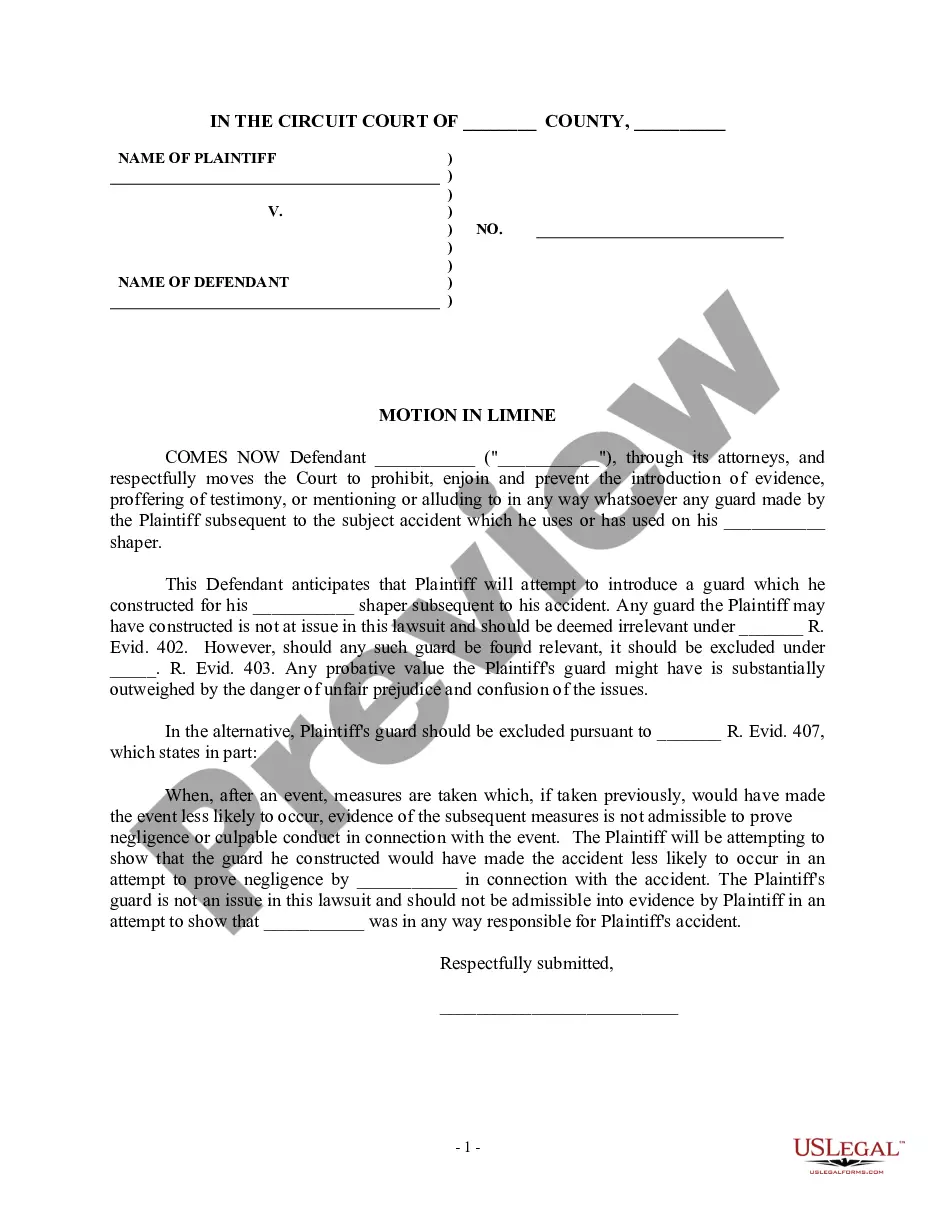
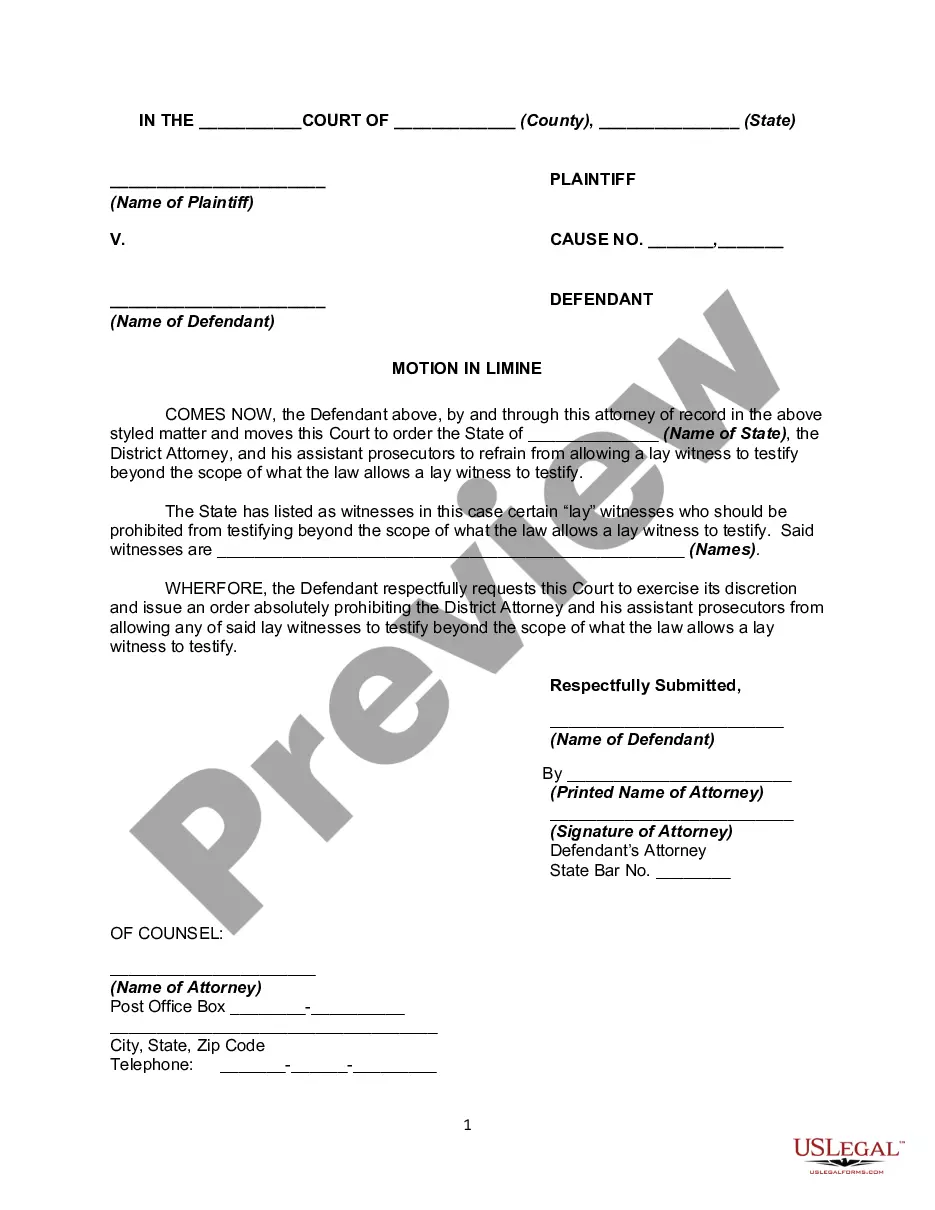
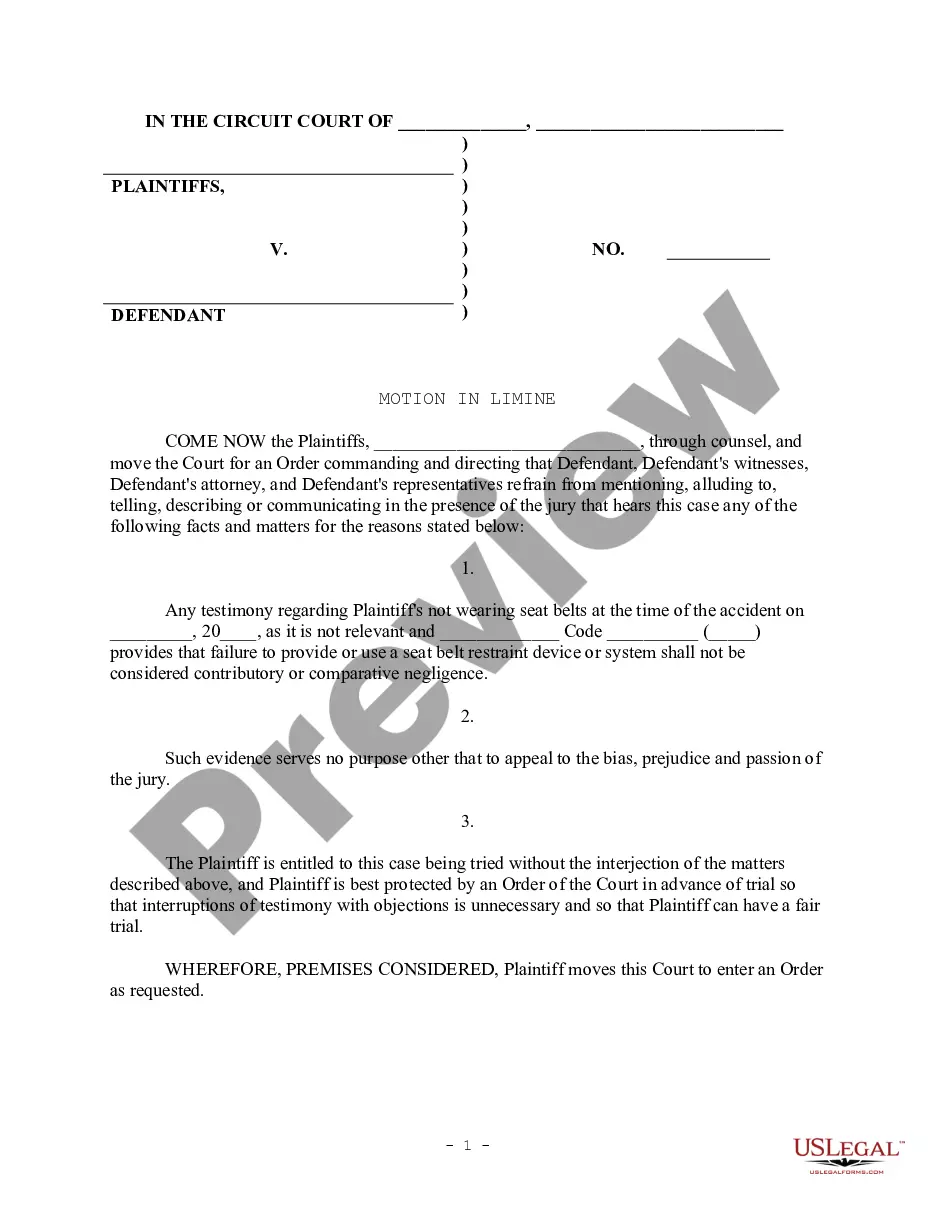
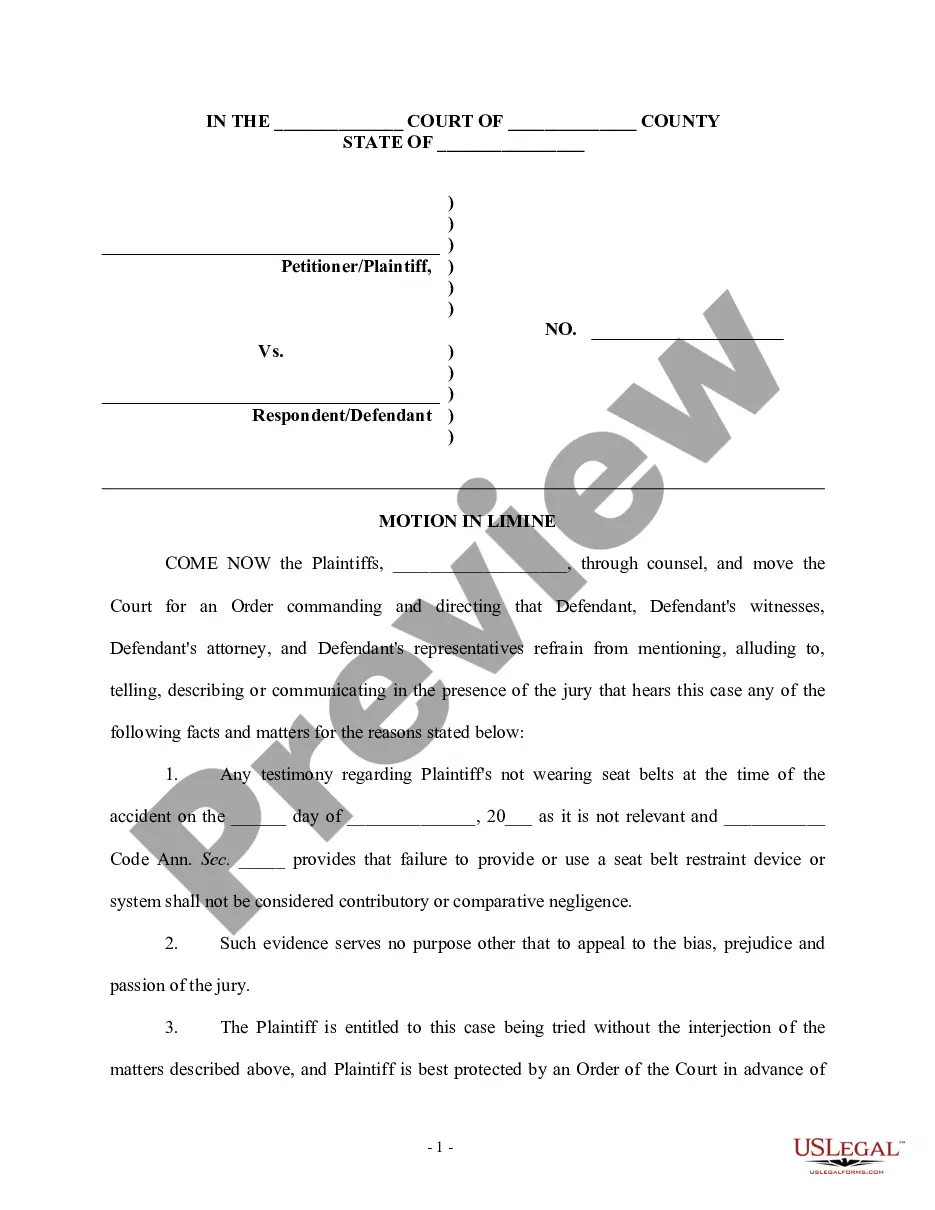
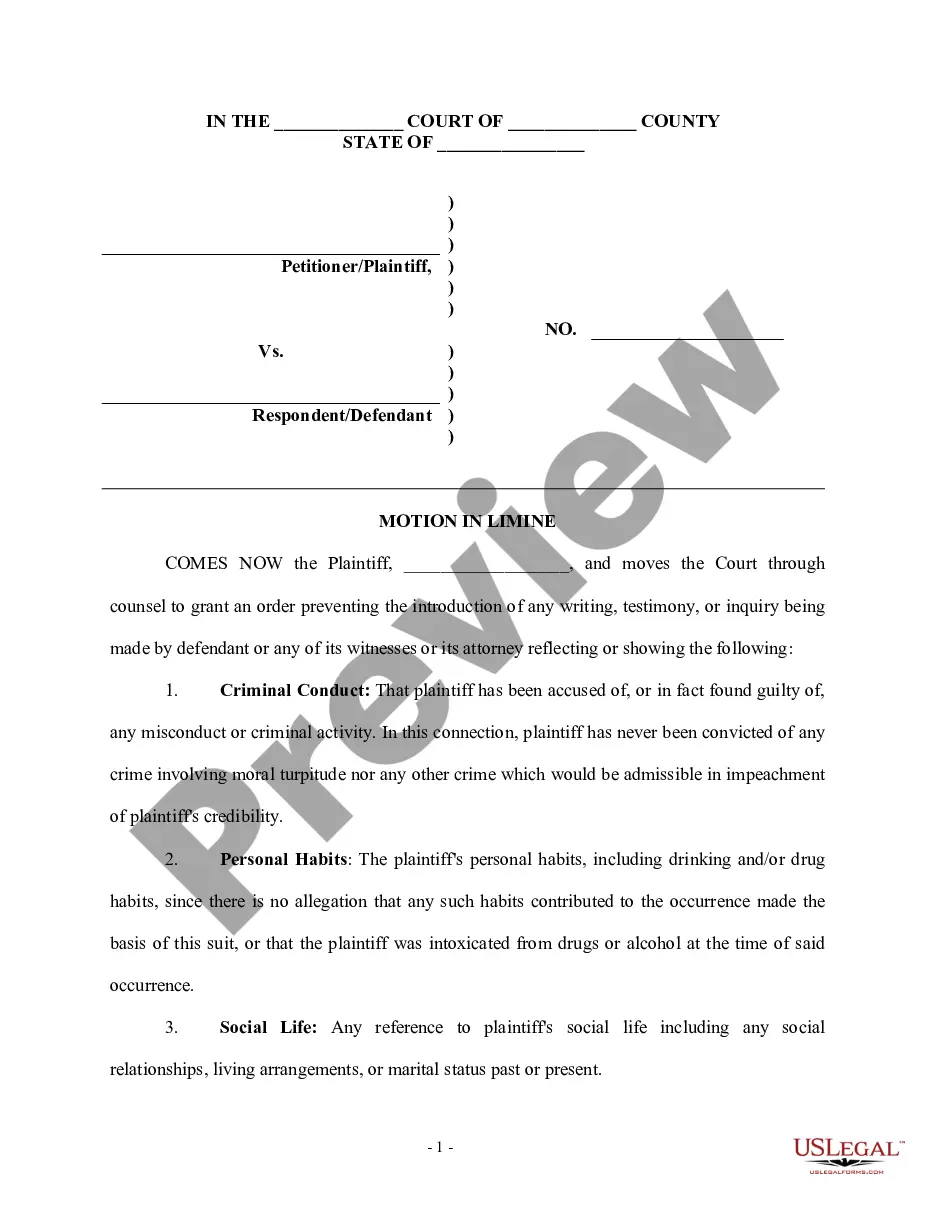
The Motion in Limine to Prevent Evidence of Remedial Measures is a legal document that seeks to exclude evidence related to post-accident safety measures taken by the plaintiff. This motion serves to argue that such evidence is not relevant to the case and could prejudice the jury by confusing the issues at hand. Unlike other motions, this particular form specifically targets evidence that could imply negligence or culpable conduct based on remedial actions taken after an incident.
Key components of this form
- Defendant's anticipation of plaintiff's introduction of a guard related to the accident.
- The application of relevant rules of evidence for exclusion (e.g., Rule 402, Rule 403, Rule 407).
- Arguments for the irrelevance of the guard and potential risks of unfair prejudice.
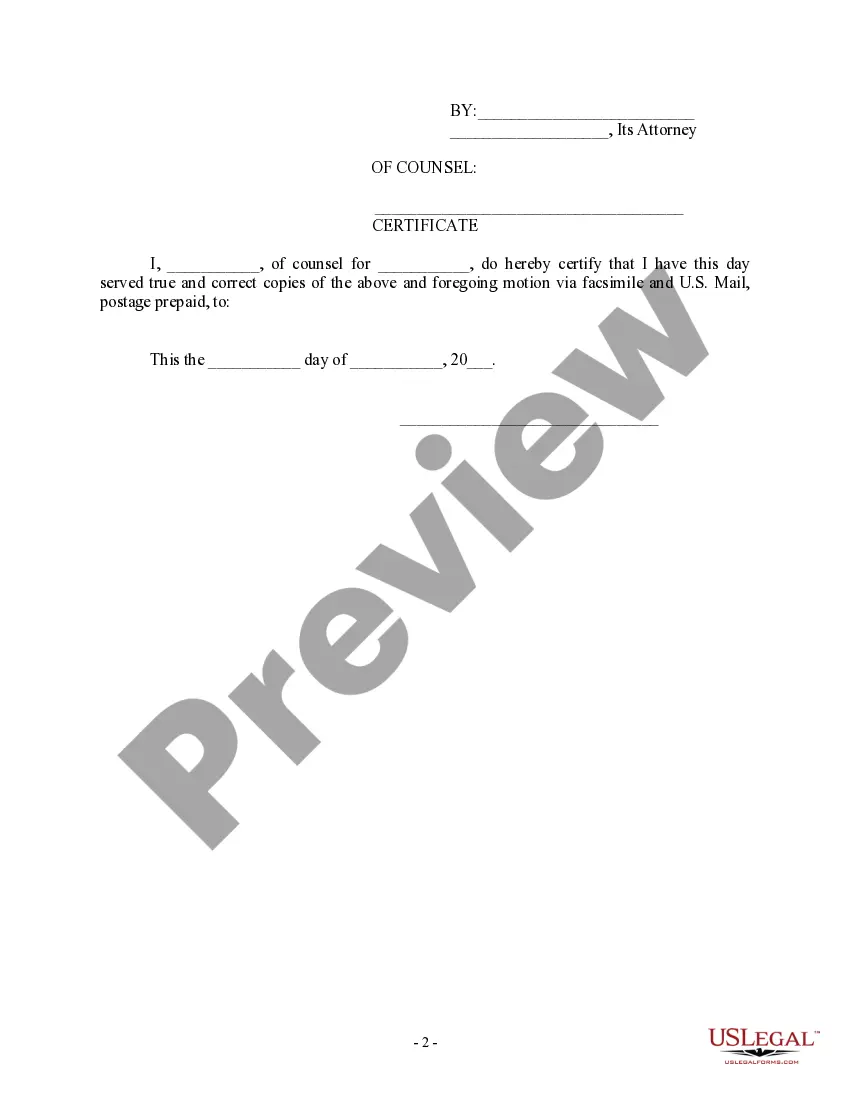
- Certification of service to other parties involved in the lawsuit.
Situations where this form applies
This form should be used when a defendant anticipates that the plaintiff may attempt to introduce evidence of corrective safety measures taken after an accident. It is particularly relevant in cases where such evidence could unfairly influence a jury's perception of liability or fault in the incident. Using this motion is a proactive step to safeguard against irrelevant and potentially damaging information being presented in court.
Who this form is for
- Defendants in personal injury or negligence cases.
- Attorneys representing clients facing potential evidence of remedial measures.
- Legal professionals needing to ensure fair trial standards by excluding prejudicial evidence.
How to complete this form
- Identify the parties involved, including the plaintiff and defendant.
- Specify the nature of the evidence to be excluded (e.g., details about the guard).
- Fill in applicable rules of evidence for arguments against the admission of this evidence.
- Certify that you have served copies of the motion to all parties involved in the case.
- Sign the form as the attorney of record.
Notarization guidance
This form does not typically require notarization to be legally valid. However, some jurisdictions or document types may still require it. US Legal Forms provides secure online notarization powered by Notarize, available 24/7 for added convenience.
Get your form ready online
Our built-in tools help you complete, sign, share, and store your documents in one place.
Make edits, fill in missing information, and update formatting in US Legal Forms—just like you would in MS Word.
Download a copy, print it, send it by email, or mail it via USPS—whatever works best for your next step.
Sign and collect signatures with our SignNow integration. Send to multiple recipients, set reminders, and more. Go Premium to unlock E-Sign.
If this form requires notarization, complete it online through a secure video call—no need to meet a notary in person or wait for an appointment.
We protect your documents and personal data by following strict security and privacy standards.

Make edits, fill in missing information, and update formatting in US Legal Forms—just like you would in MS Word.

Download a copy, print it, send it by email, or mail it via USPS—whatever works best for your next step.

Sign and collect signatures with our SignNow integration. Send to multiple recipients, set reminders, and more. Go Premium to unlock E-Sign.

If this form requires notarization, complete it online through a secure video call—no need to meet a notary in person or wait for an appointment.

We protect your documents and personal data by following strict security and privacy standards.
Common mistakes to avoid
- Failing to properly cite relevant rules of evidence.
- Neglecting to serve the motion to all parties involved.
- Using vague language that does not clearly state reasons for exclusion.
Why complete this form online
- Convenient access to legal forms from anywhere, at any time.
- Editable templates that can be tailored to your specific legal needs.
- Reliable resources drafted by licensed attorneys to ensure accuracy.
Looking for another form?










Form popularity
FAQ
Remedial measures means any measures or actions required or undertaken to investigate, monitor, clean up, remove, treat, prevent, contain or otherwise remediate the presence or Release of any Hazardous Substance.
Evidence of subsequent remedial measures is generally not admissible or discoverable unless it is being used to prove something other than negligence, such as whether a party had control over or maintained a location where an injury occurred.
Remedial measures means any measures or actions required or undertaken to investigate, monitor, clean up, remove, treat, prevent, contain or otherwise remediate the presence or Release of any Hazardous Substance.
When, after the occurrence of an event, remedial or precautionary measures are taken, which, if taken previously, would have tended to make the event less likely to occur, evidence of such subsequent measures is inadmissible to prove negligence or culpable conduct in connection with the event.
Under the Federal Rules of Evidence, although subsequent remedial measures cannot be used to prove a party's wrongdoing or culpable conduct, evidence of a subsequent remedial measure can be admissible for some other relevant purpose, such as to prove ownership, or control, or that it was possible to have prevented the
(a) Remedial measures for famine are: Planned usage of water and its reuse. We should avoid wastage of food and water. Plant more and more trees to prevent soil erosion.