Absolute Release with Covenants regarding wrongful death
Understanding this form
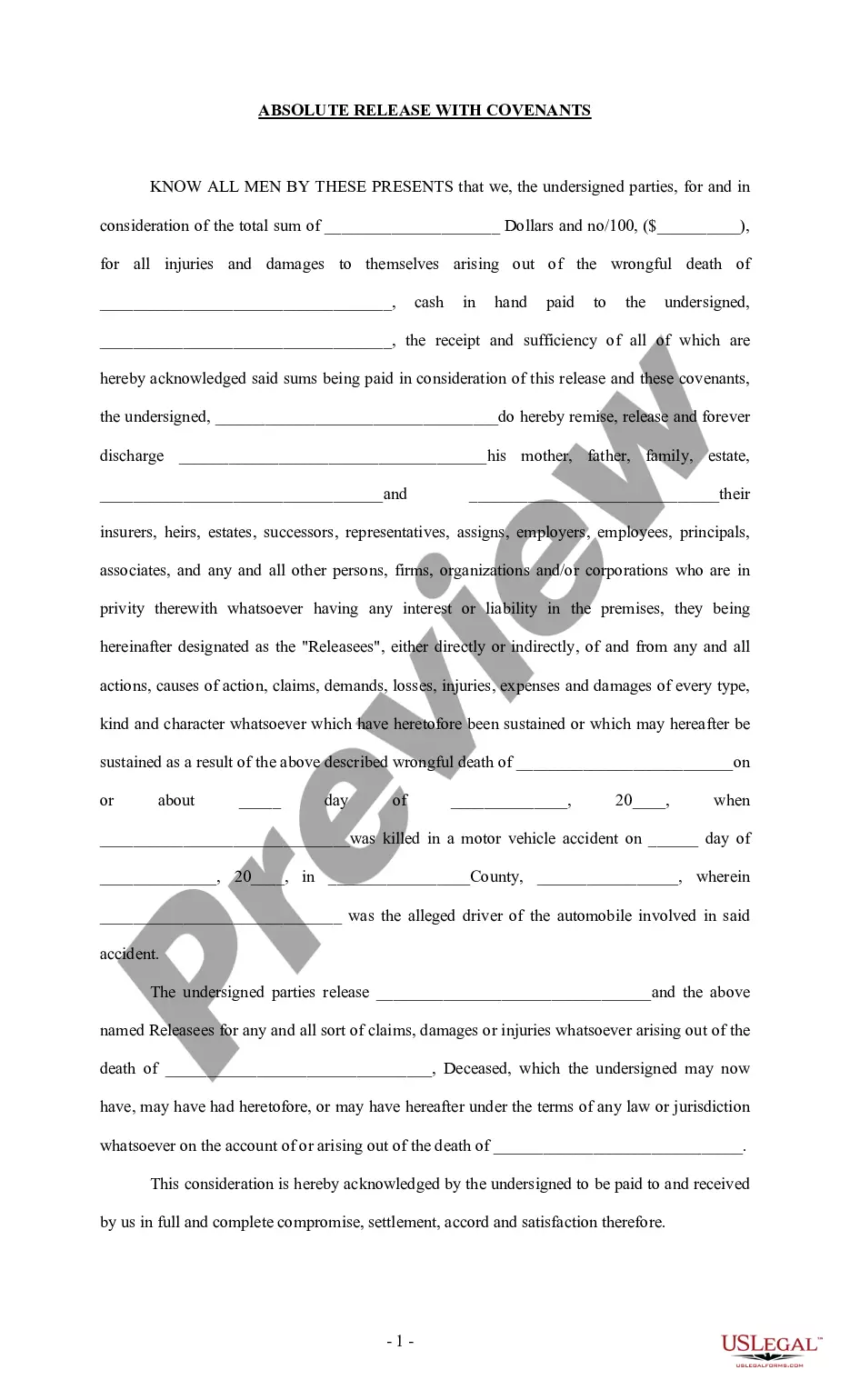
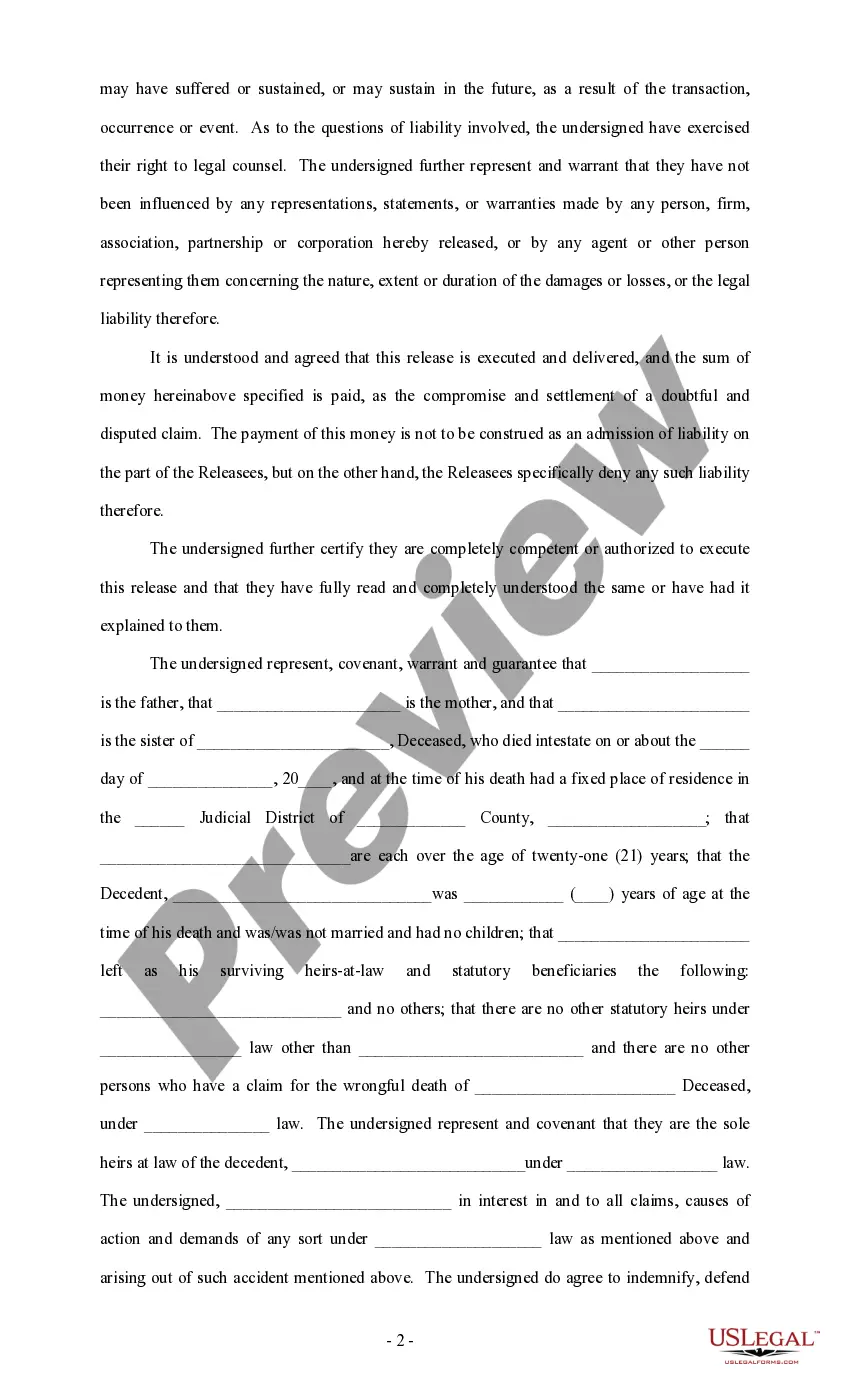
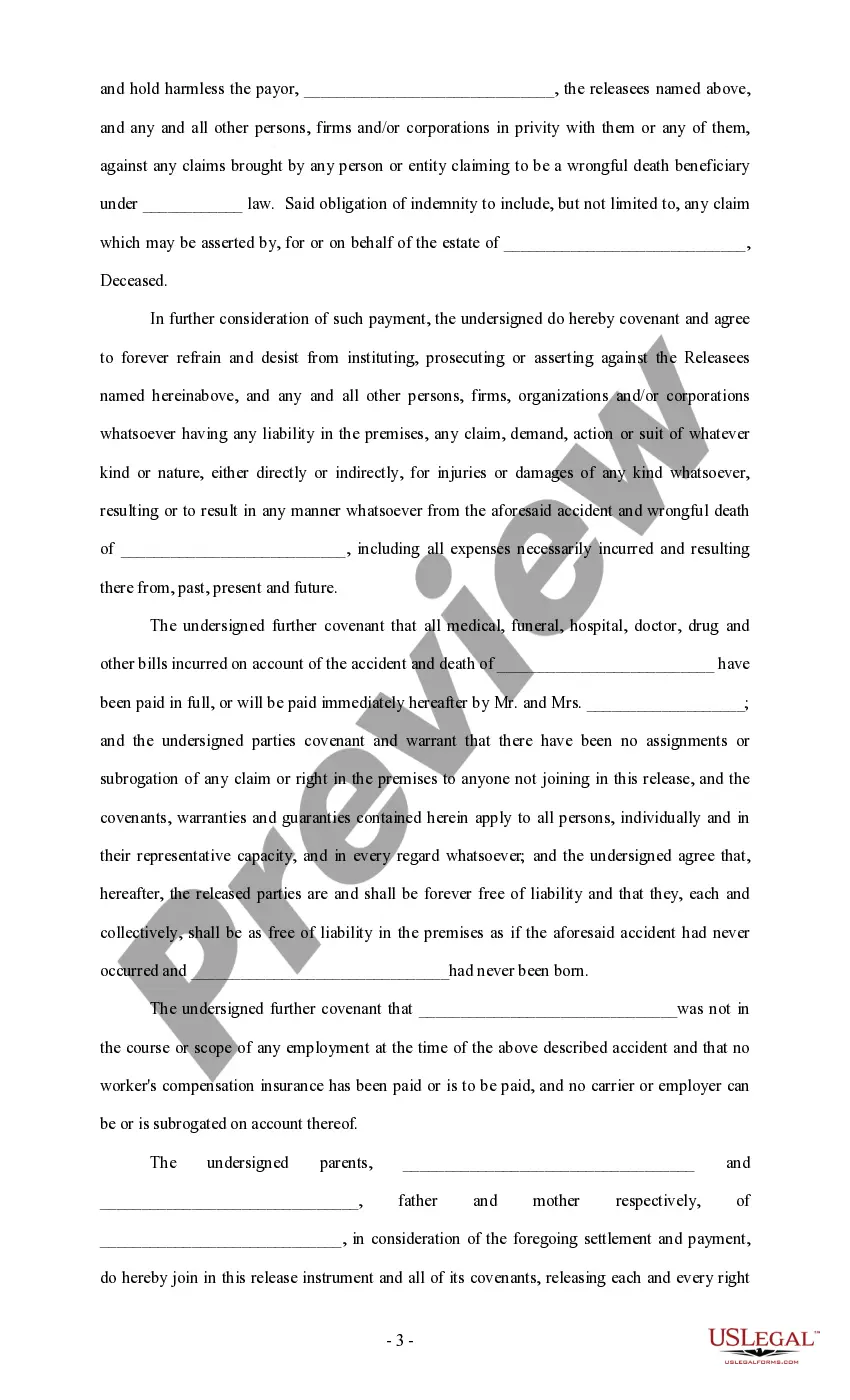
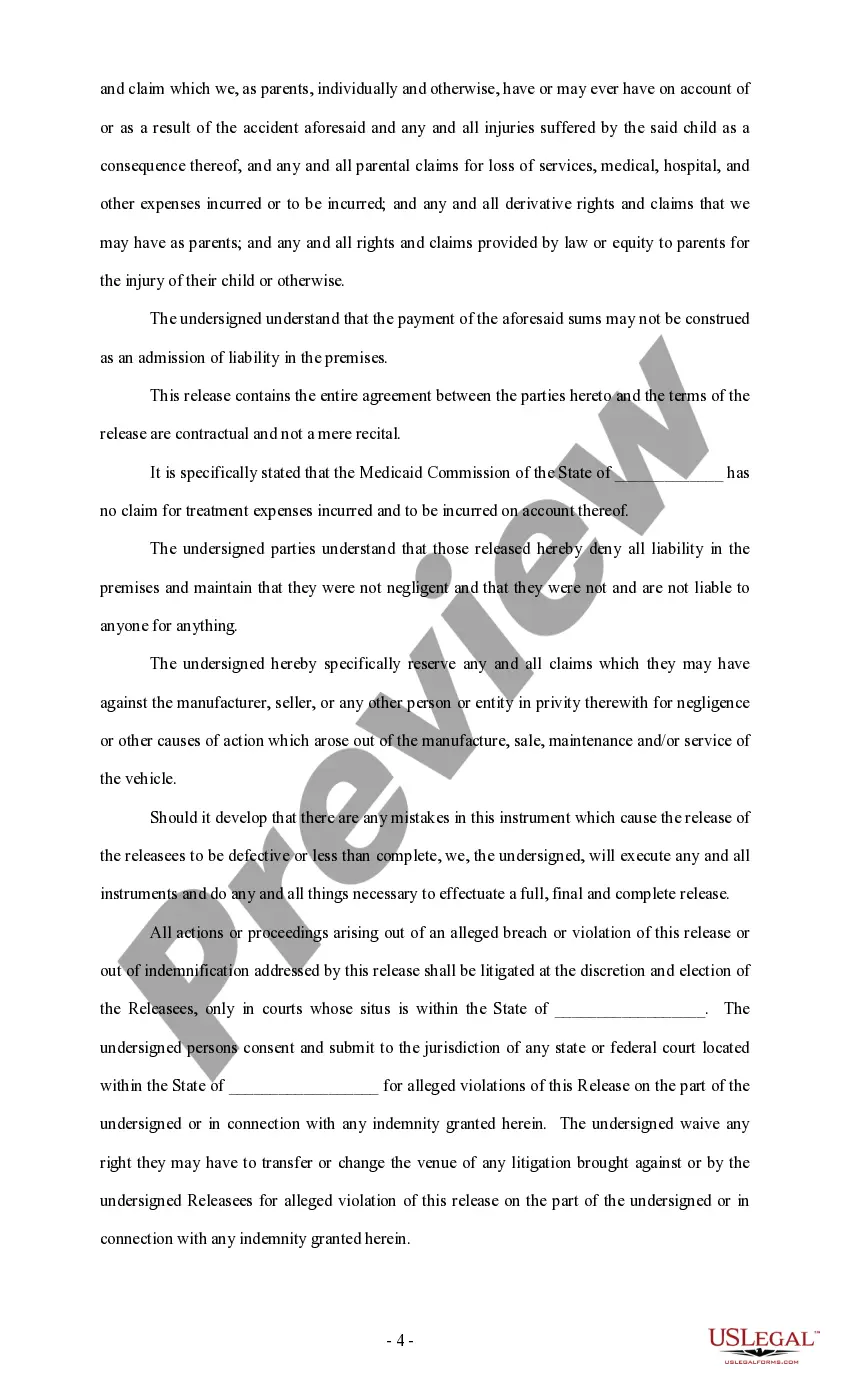
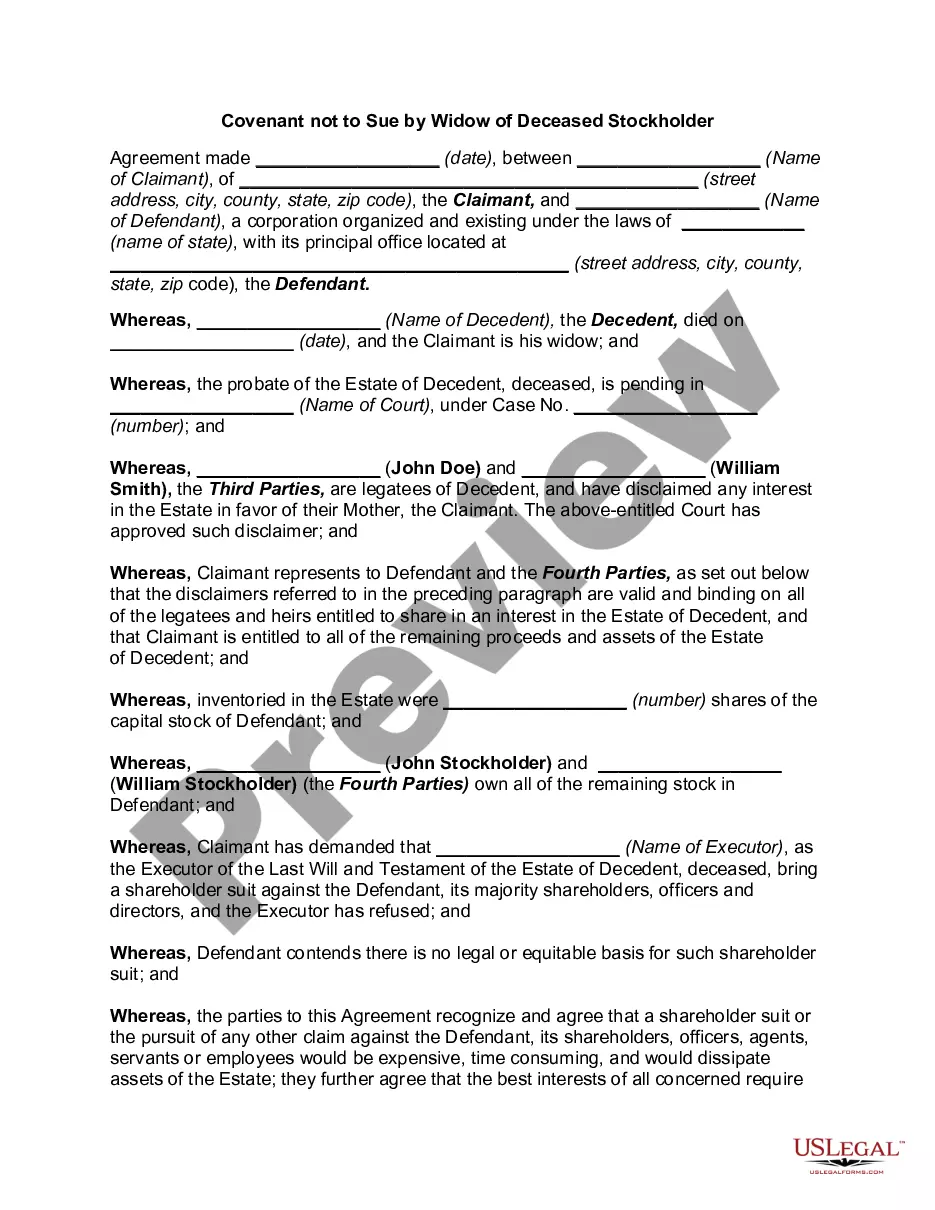
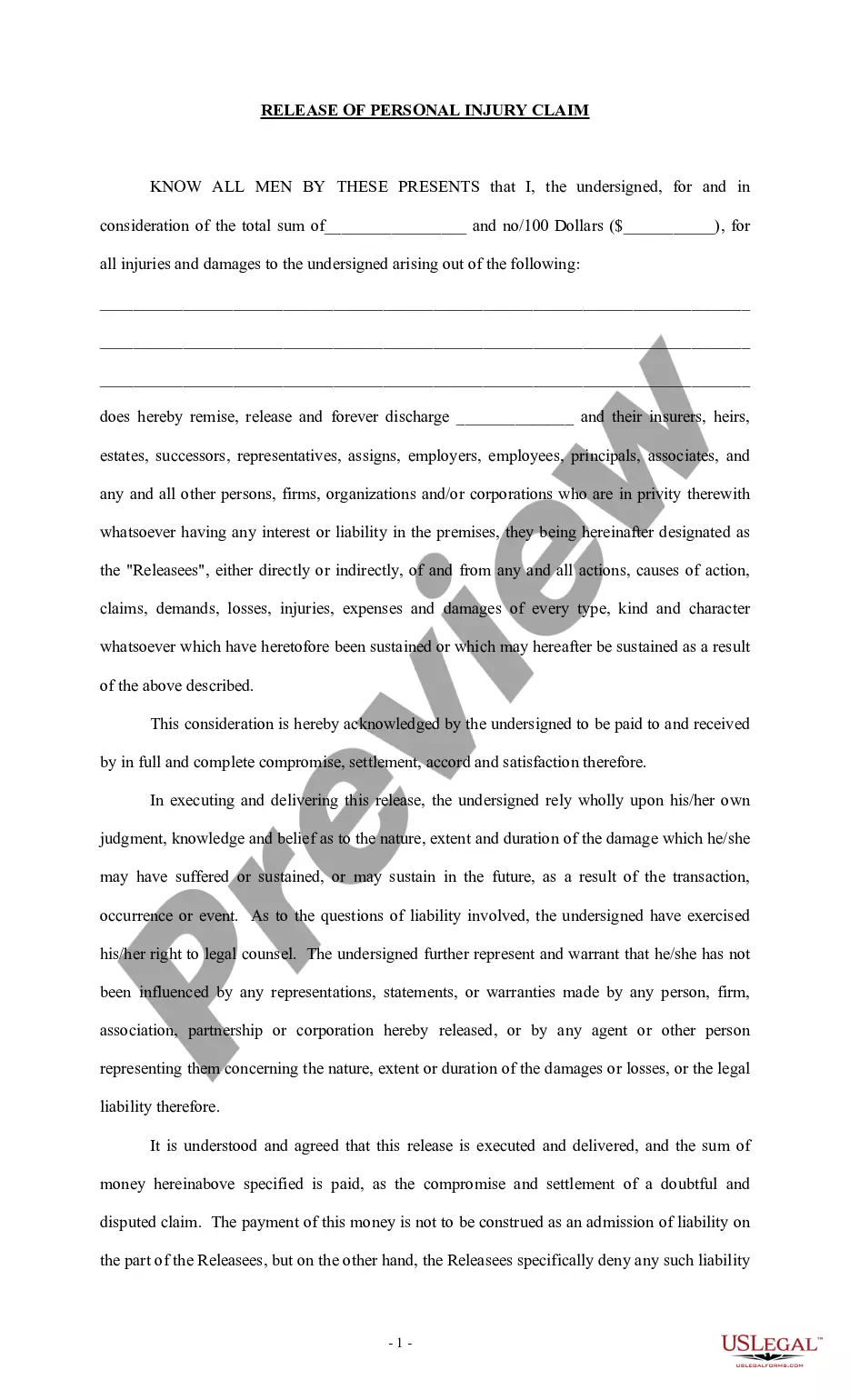
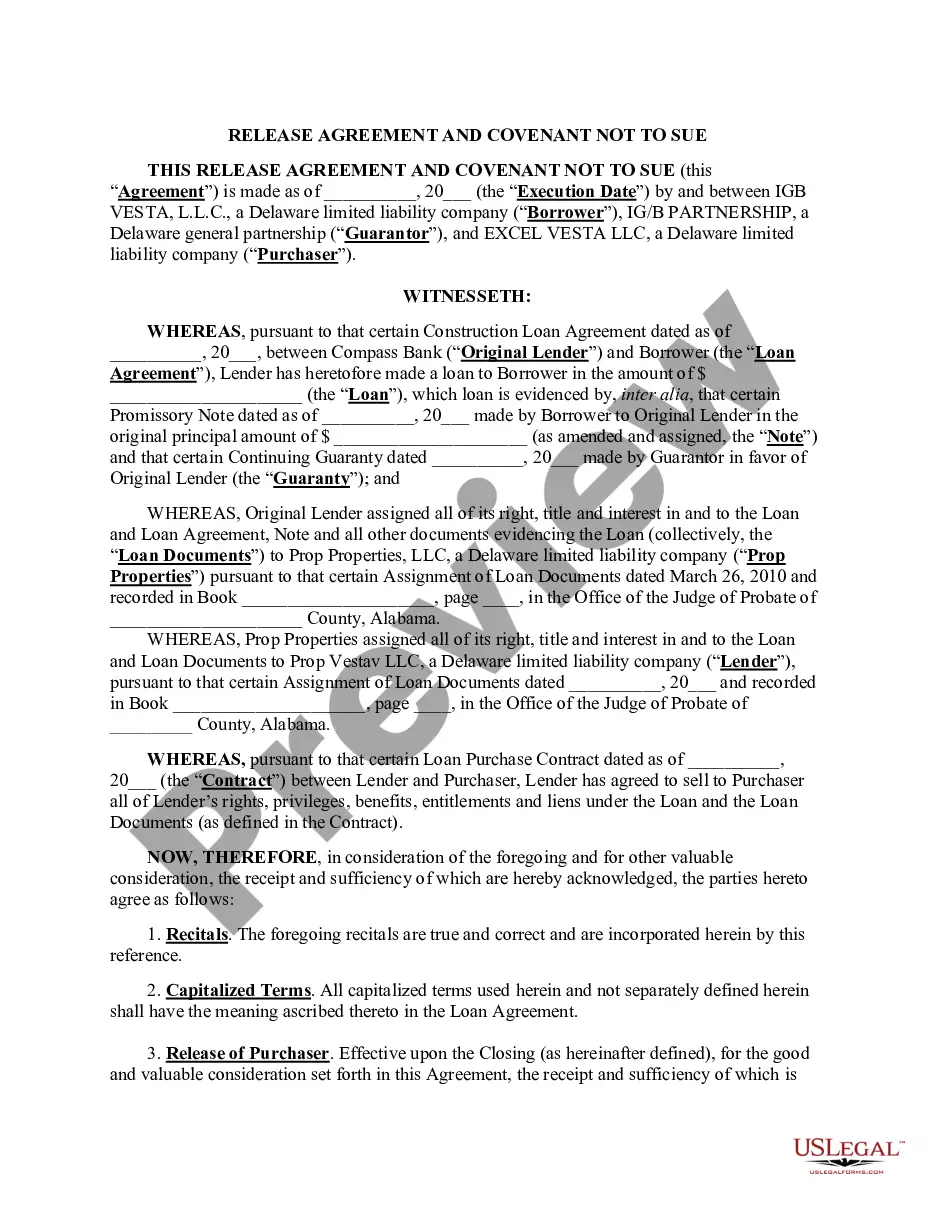
This Absolute Release with Covenants regarding wrongful death is a legal document that releases the liable parties from any future claims related to the wrongful death of a specific individual. Unlike other settlement forms, this document includes covenants that prevent further legal action concerning the incident, providing a comprehensive release from liability. It is essential for settling disputes and ensuring that the undersigned parties cannot claim additional damages after the release is executed.
Key parts of this document
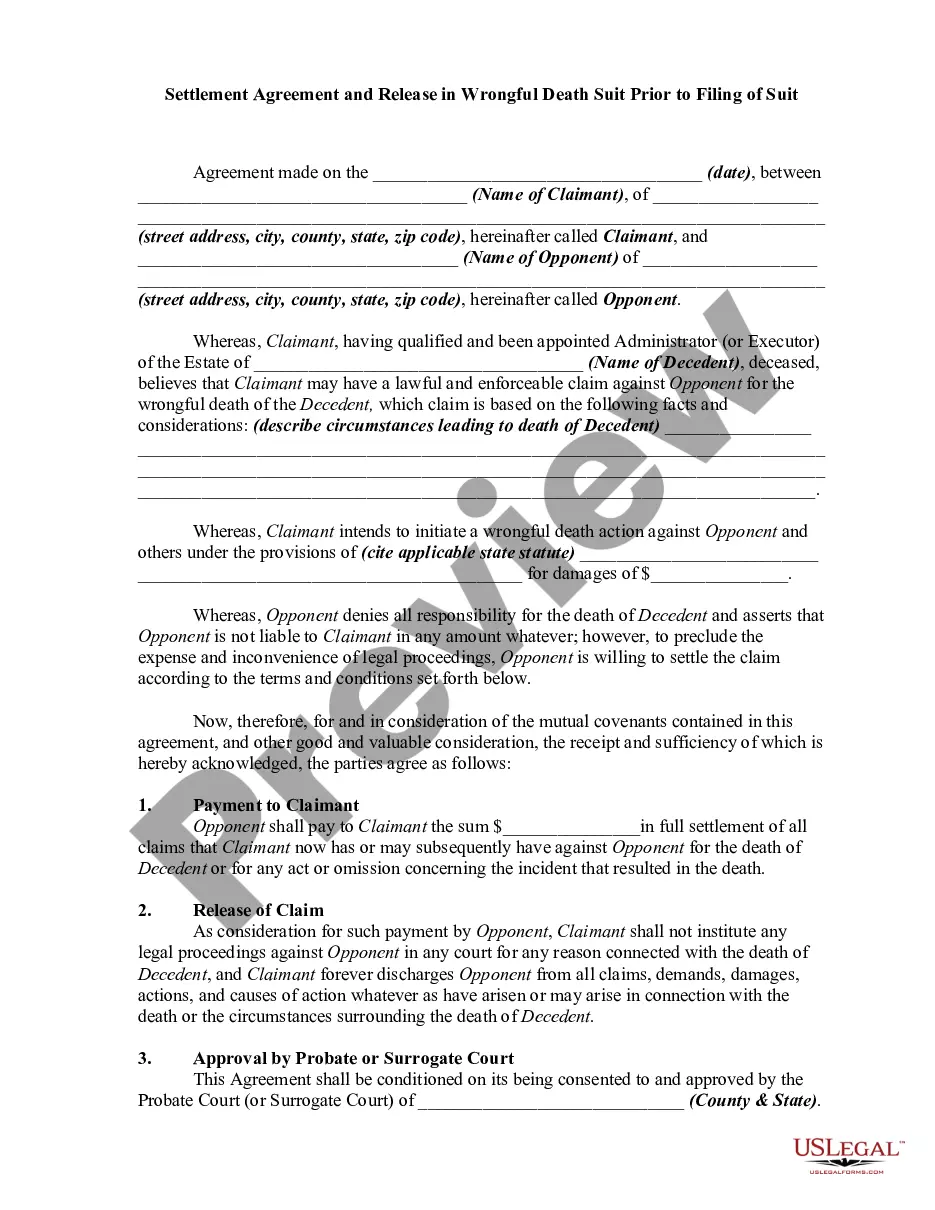
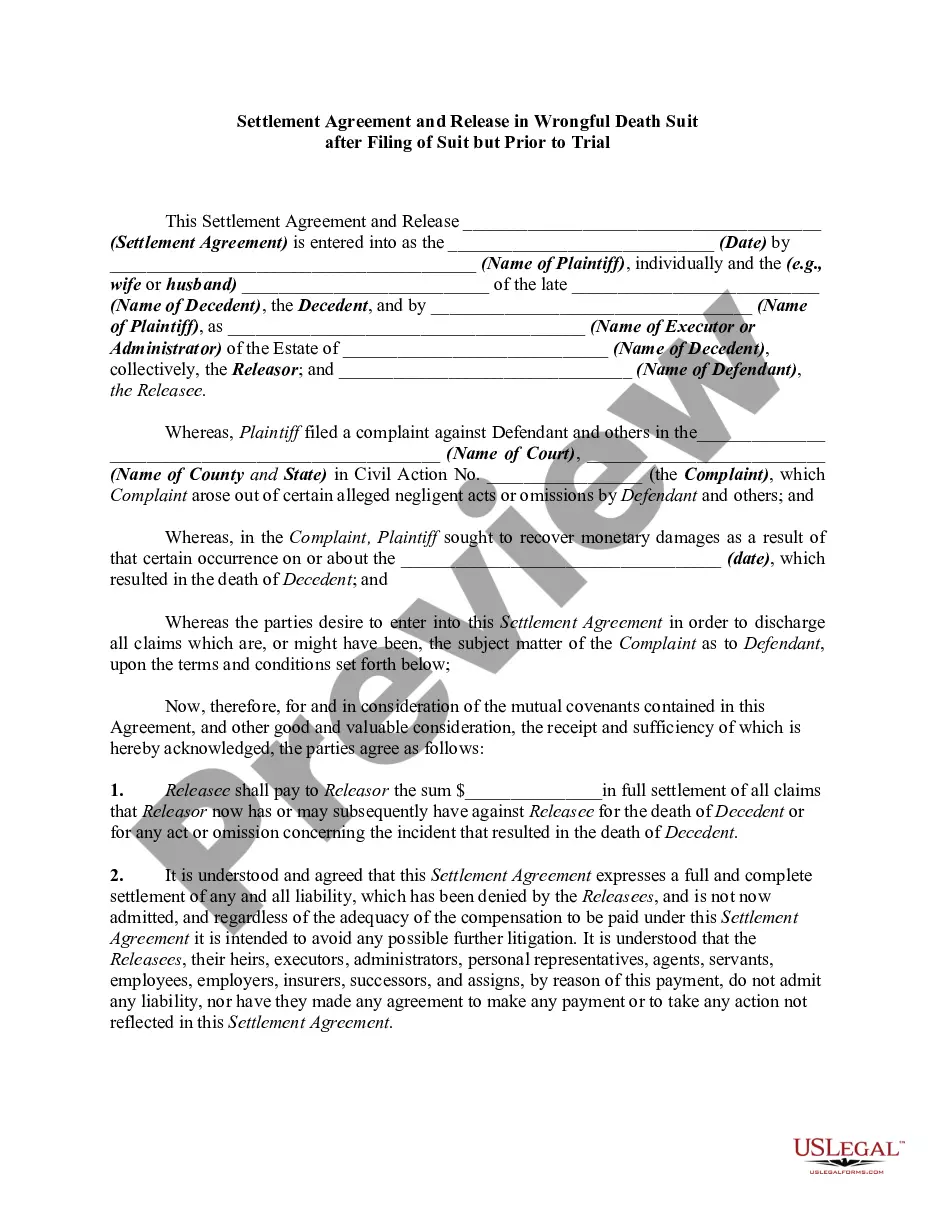
- Identifying details of the deceased, including name and date of death.
- Statement of release from liability for the named Releasees.
- Details of the compensation amount agreed upon for the settlement.
- Covenants that prevent any future claims related to the wrongful death.
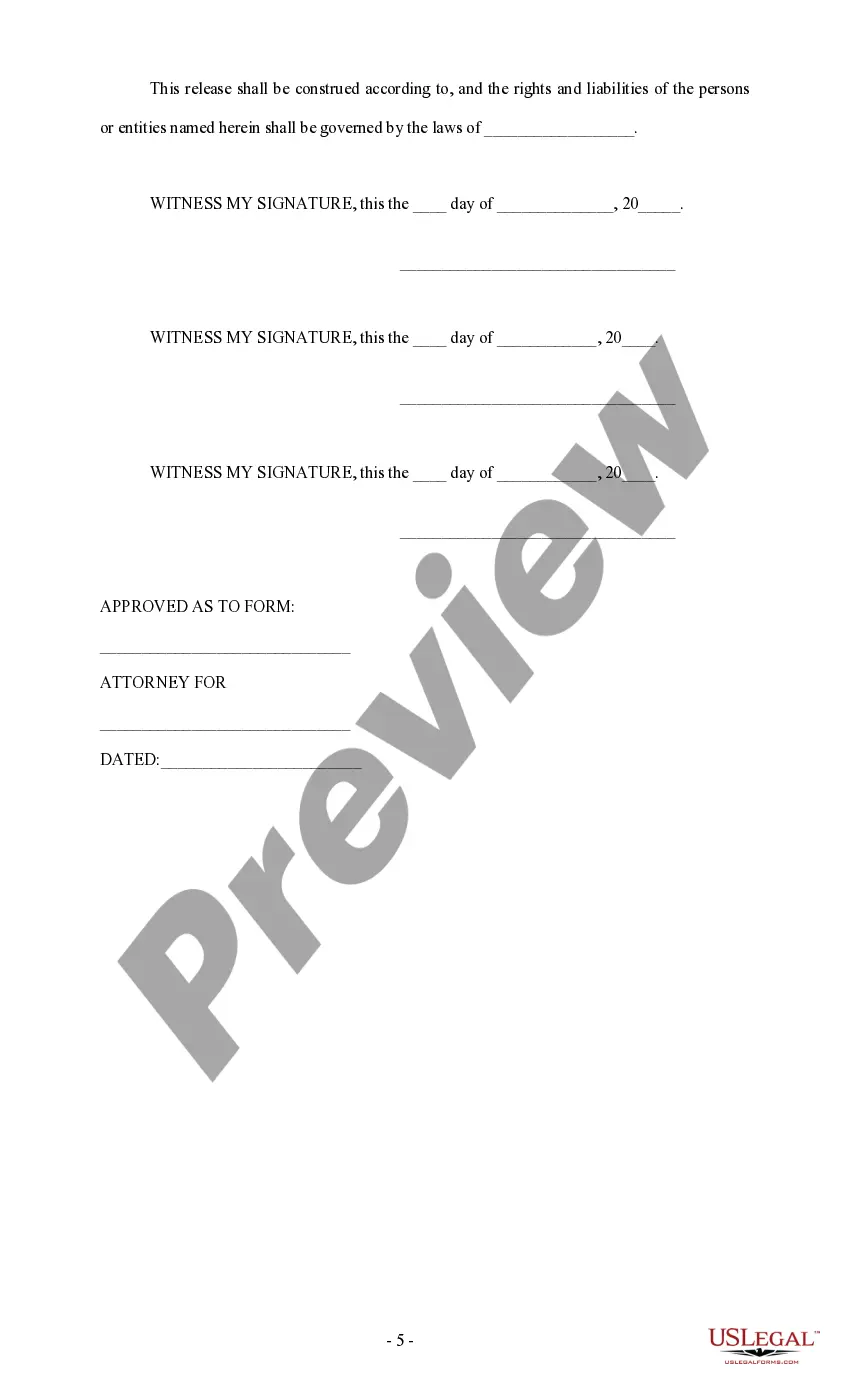
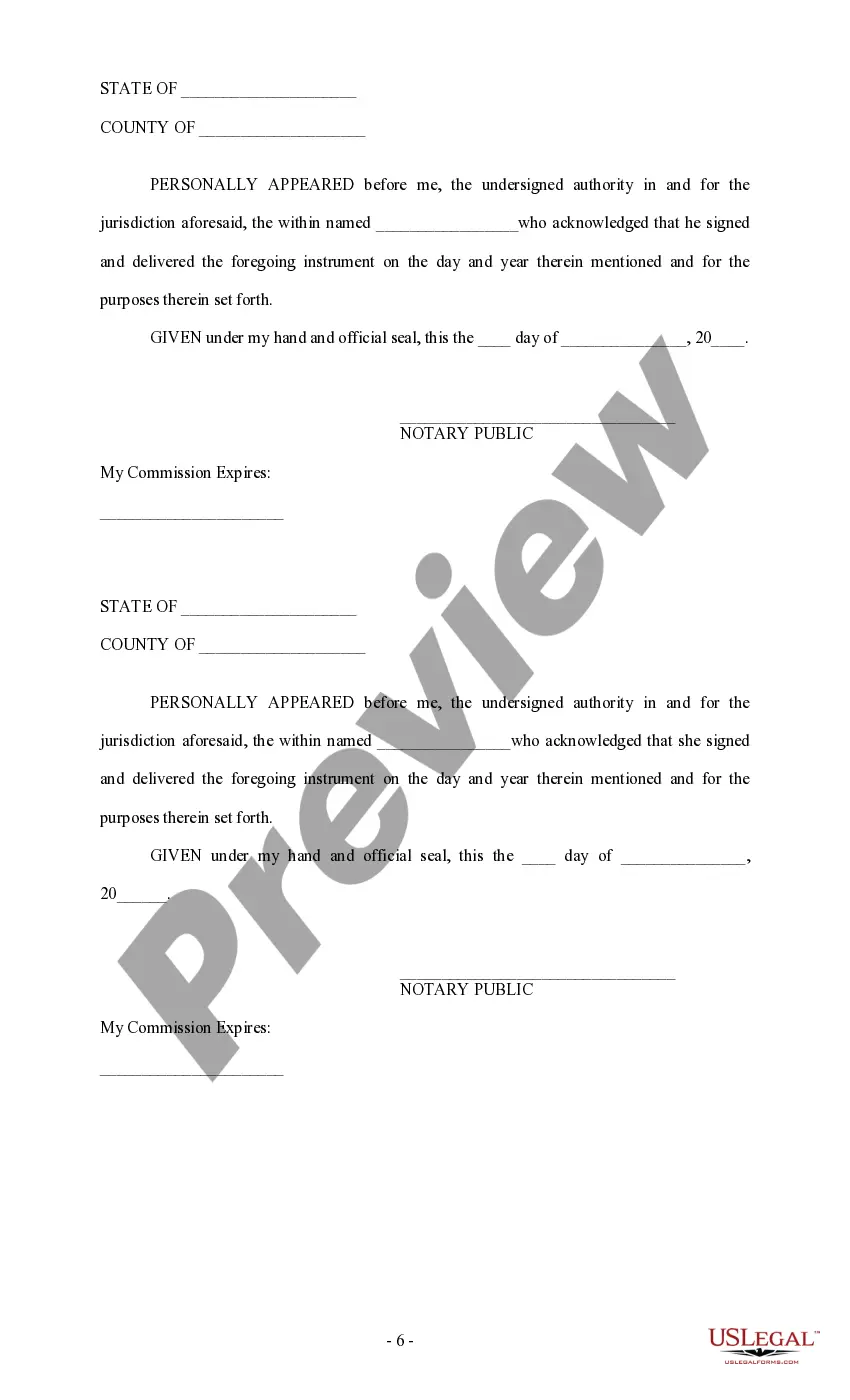
- Signature lines for all relevant parties, including witnesses and notarization provisions.
When to use this form
This form should be used when the heirs or beneficiaries of an individual who has died due to wrongful death wish to settle any claims against the responsible party in exchange for monetary compensation. It is typically employed after a legal action has been initiated or when the parties have reached an agreement outside of court to avoid prolonged litigation.
Who should use this form
- Heirs or beneficiaries of a deceased person.
- Parties involved in a wrongful death settlement.
- Individuals or families seeking to release claims against liable parties for financial compensation.
- Legal representatives of the deceased's estate or beneficiaries.
How to complete this form
- Identify the parties involved and their relationship to the deceased.
- Clearly state the total amount of settlement being paid.
- Specify the details surrounding the wrongful death incident, including dates and circumstances.
- Ensure all parties understand the release and sign it in the presence of witnesses.
- If required, obtain notarization to validate the document.
Does this document require notarization?
This form must be notarized to be legally valid. US Legal Forms provides secure online notarization powered by Notarize, allowing you to complete the process through a verified video call.
Get your form ready online
Our built-in tools help you complete, sign, share, and store your documents in one place.
Make edits, fill in missing information, and update formatting in US Legal Forms—just like you would in MS Word.
Download a copy, print it, send it by email, or mail it via USPS—whatever works best for your next step.
Sign and collect signatures with our SignNow integration. Send to multiple recipients, set reminders, and more. Go Premium to unlock E-Sign.
If this form requires notarization, complete it online through a secure video call—no need to meet a notary in person or wait for an appointment.
We protect your documents and personal data by following strict security and privacy standards.

Make edits, fill in missing information, and update formatting in US Legal Forms—just like you would in MS Word.

Download a copy, print it, send it by email, or mail it via USPS—whatever works best for your next step.

Sign and collect signatures with our SignNow integration. Send to multiple recipients, set reminders, and more. Go Premium to unlock E-Sign.

If this form requires notarization, complete it online through a secure video call—no need to meet a notary in person or wait for an appointment.

We protect your documents and personal data by following strict security and privacy standards.
Common mistakes
- Failing to include all relevant parties in the release, which could lead to complications in the future.
- Omitting specific details about the settlement amount or circumstances of the wrongful death.
- Not having the document notarized when required by state law.
- Incorrectly identifying the deceased or the relationship of the signers to the deceased.
Benefits of using this form online
- Convenience in accessing and downloading the form at any time.
- Editability allows customization to fit specific circumstances.
- Reliability of obtaining legally drafted documents prepared by experienced attorneys.
Looking for another form?


Form popularity
FAQ
A restrictive covenant is an agreement that restricts a company or other party to a contract from engaging in certain actions. For example, a restrictive covenant entered into with a public company might limit the amount of dividends the firm can pay its shareholders.
Legally, a properly recorded covenant (technically, a "restrictive deed covenant") is binding and enforceable. Even when covenants are not part of the contract and are instead signed among neighbors (such as a mutual compact), they are binding and may be litigated if breached.
What Is A Restrictive Covenant? A restrictive covenant is a document registered at the Alberta Land Titles Office. Essentially, the document includes an agreement between the owners of two or more properties. In some instances, the same person or company owns all the pieces of land to which the restriction is applied.
Restrictive covenants may contain 4 different types of promises: (1) a promise not to compete with one's former employer; (2) a promise not to solicit or accept business from customers of the former employer; (3) a promise not to recruit or hire away employees of the former employer; and (4) the promise not to use or
Limitations On Home Color. Rent And Lease Restrictions. Restrictions On Business Usage. Limitations On Permissible Pets. Requirements For Exterior Maintenance. Restrictions On Exterior Constructions.
A restrictive covenant creates a deed restricted community. It is an agreement that states what a homeowner can or cannot do with their house or land. They are binding legal obligations which sellers write into the deed or contract of the property, and they can have penalties against buyers who fail to follow them.
What happens if I breach a restrictive covenant? If you own a property and unknowingly (or otherwise) breach a restrictive covenant then you could be forced to undo any offending work (such as having to pull down an extension), pay a fee (often running into thousands of pounds) or even face legal action.
Noun. an agreement, usually formal, between two or more persons to do or not do something specified. Law. an incidental clause in such an agreement.a solemn agreement between the members of a church to act together in harmony with the precepts of the gospel.