Motion in Limine to Prevent Reference to Seat Belt Use
What this document covers
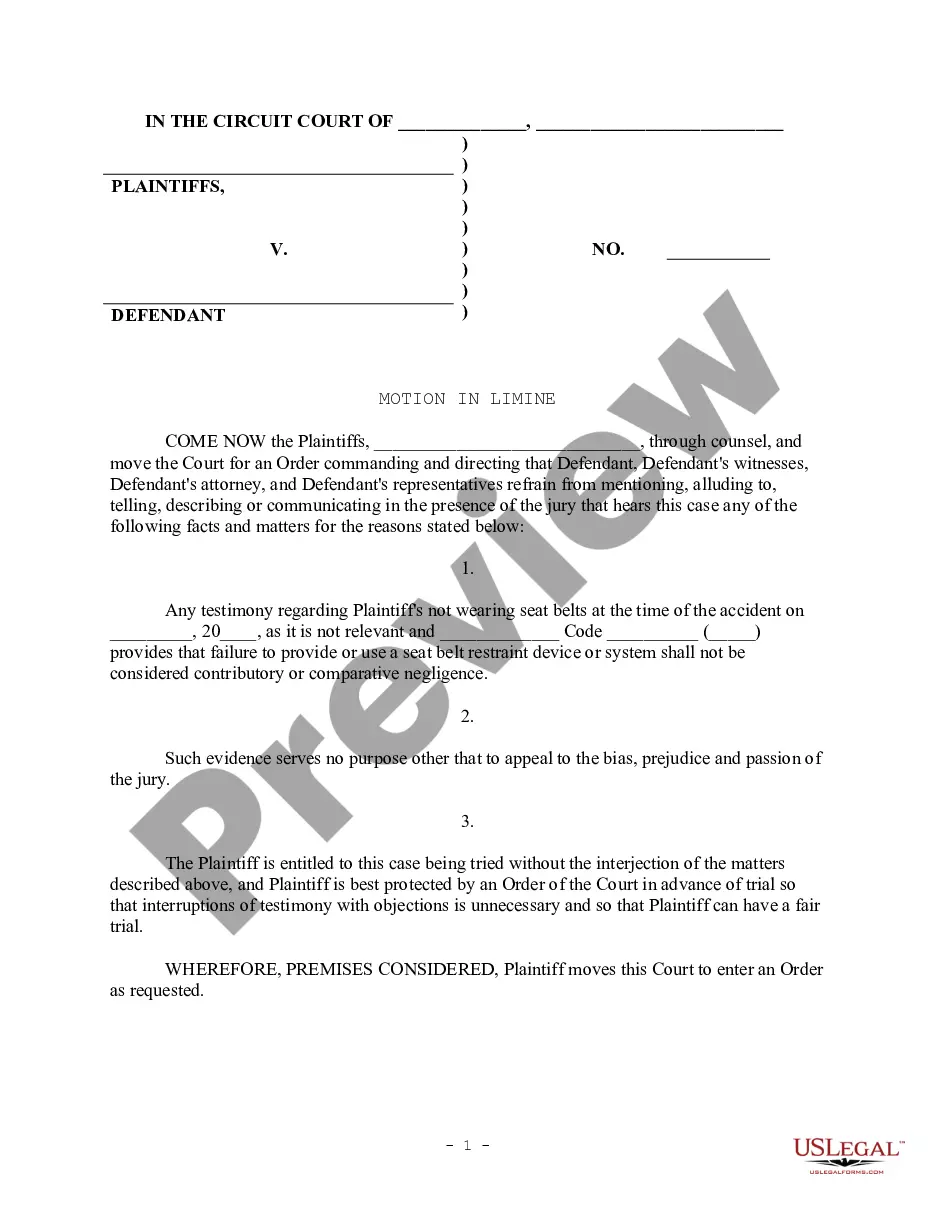
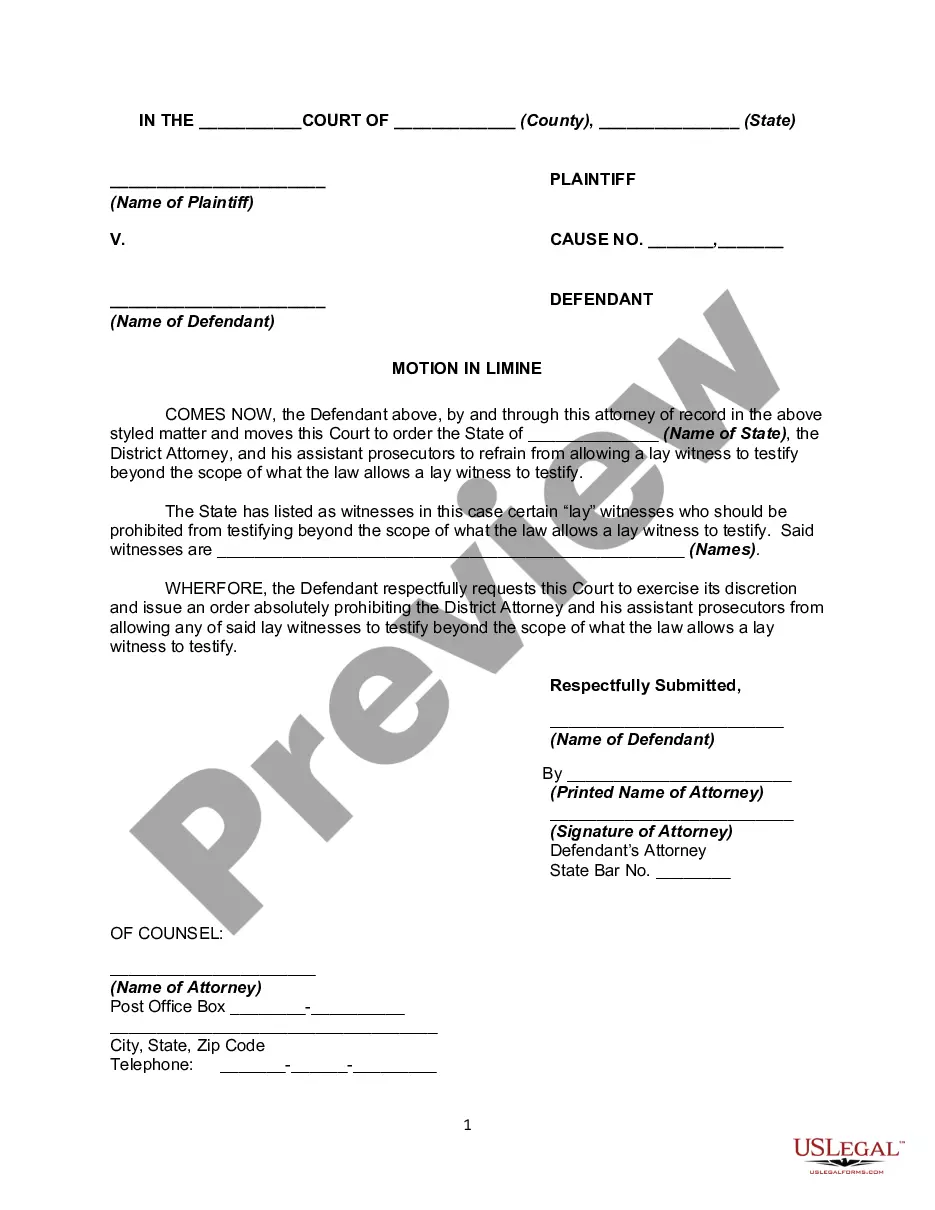
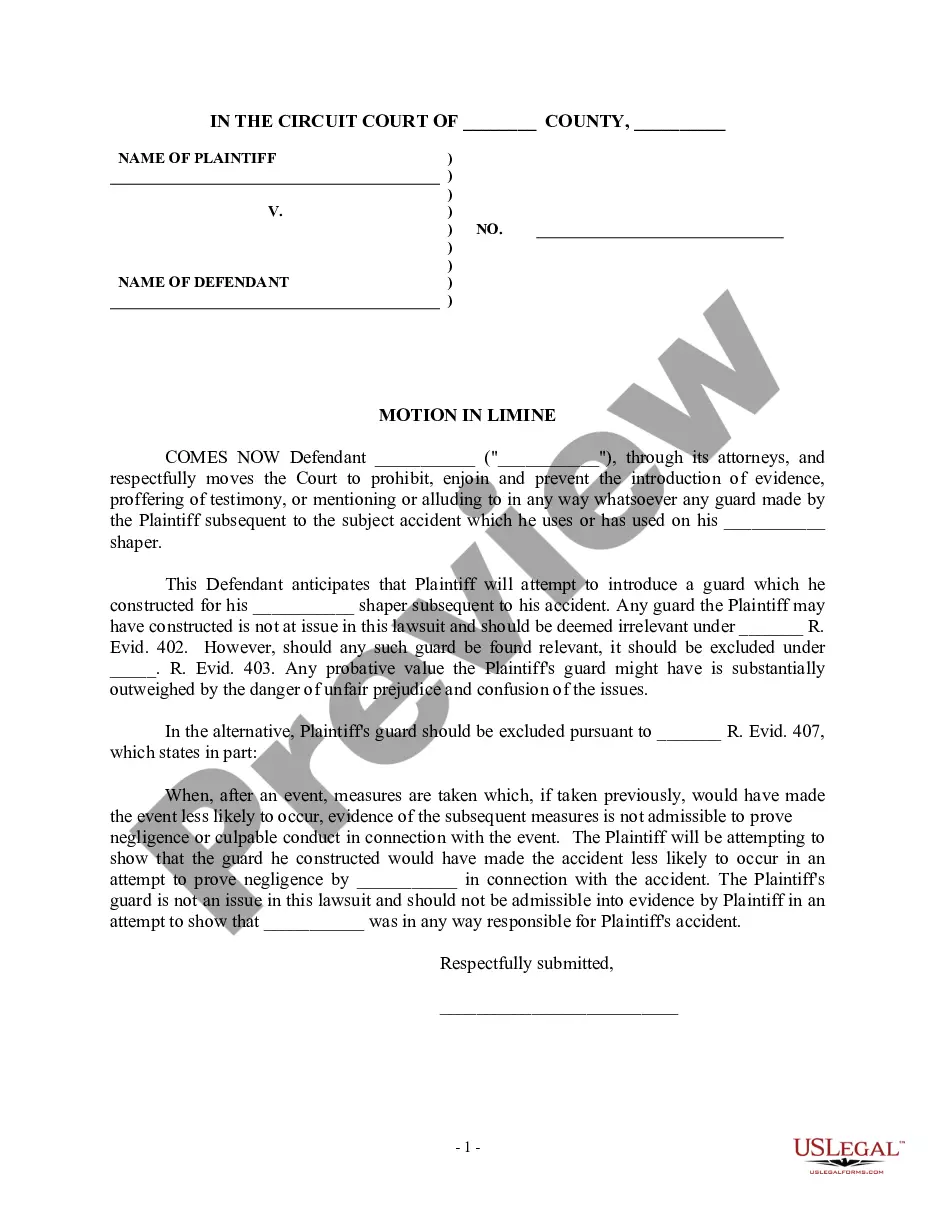
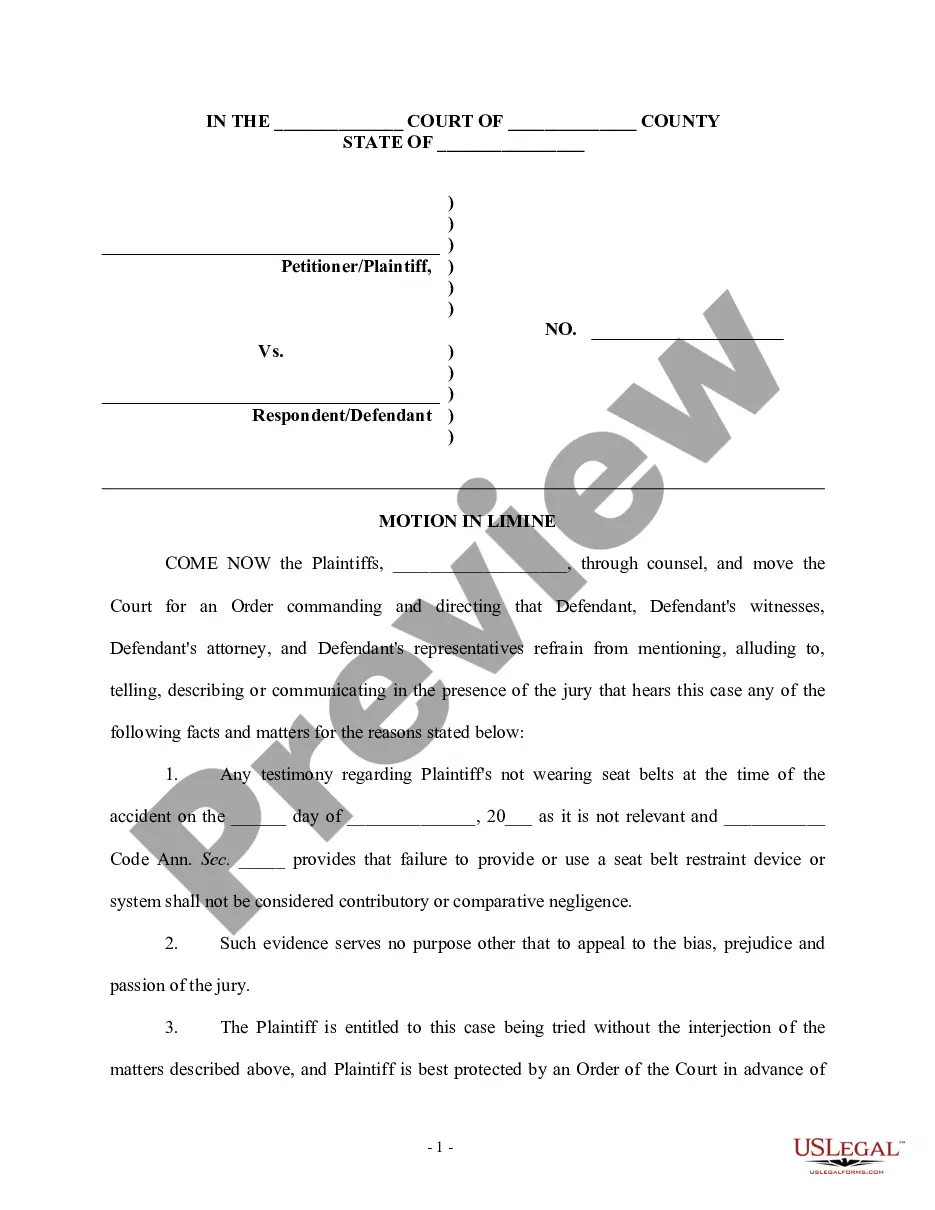
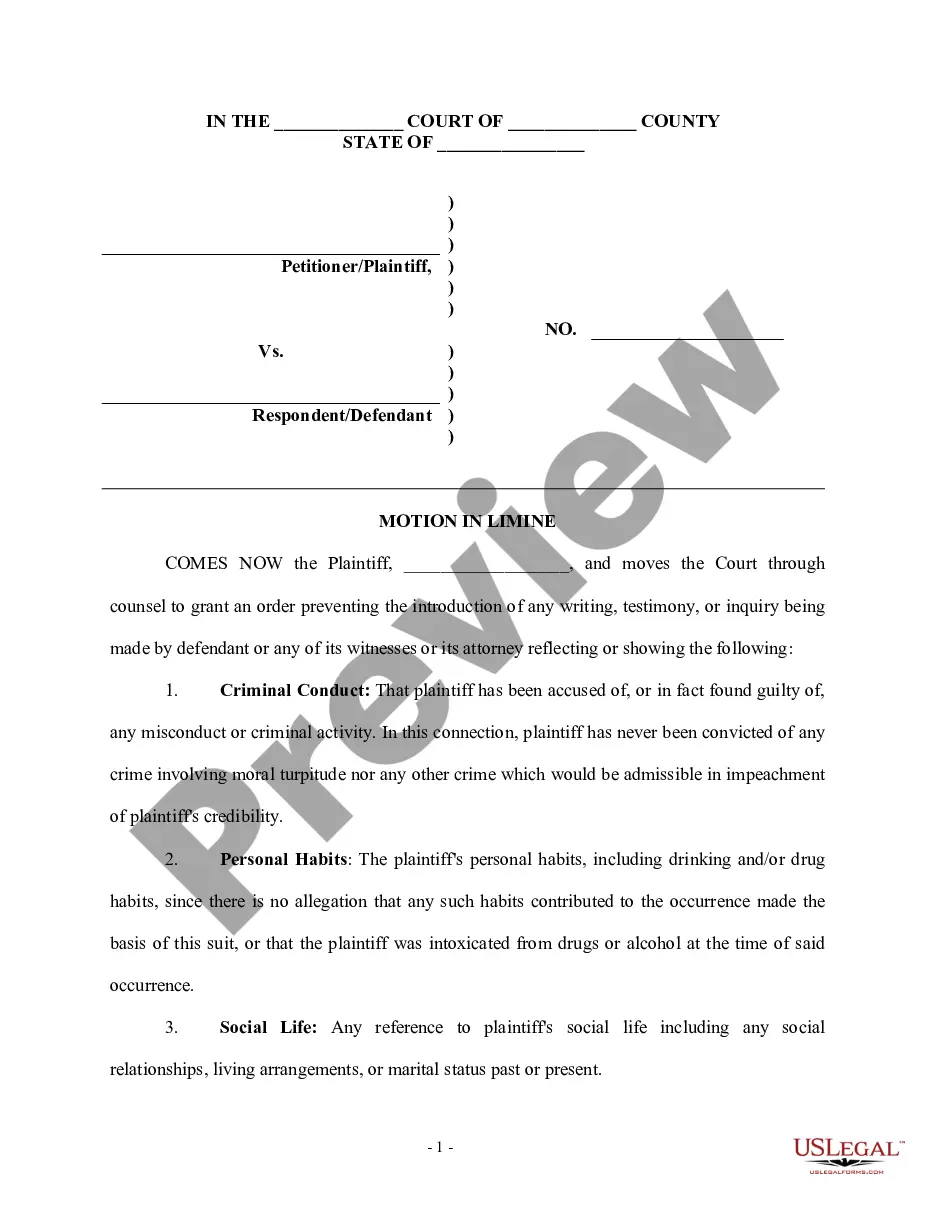
This form is a model Motion in Limine to Prevent Reference to Seat Belt Use. Its primary purpose is to request a court order that prevents any mention of a party's seat belt use, or lack thereof, during an auto accident trial. This motion allows the judge to address this issue before jury proceedings, aiming to prevent bias and protect the fairness of the trial.
What’s included in this form
- Motion title: Clearly indicates it is a Motion in Limine regarding seat belt reference.
- Parties involved: Identifies the plaintiffs and defendants in the cases.
- Grounds for Motion: Specifies the reasons for the motion, including relevance and potential bias.
- Proposed Order: Requests the court to issue an order limiting mention of seat belt use during trial.
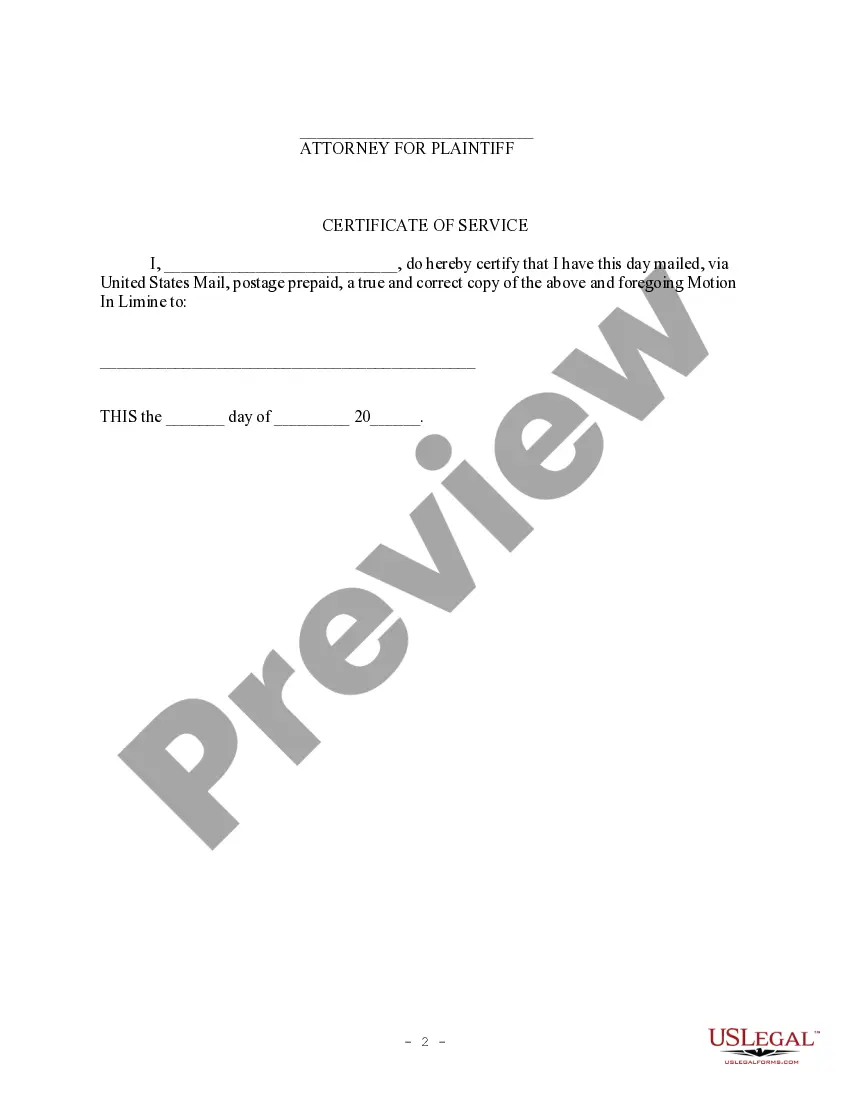
- Certificate of Service: Confirms that the motion has been served to the opposing party.
Common use cases
This form should be used in auto accident cases when one party seeks to prevent the introduction of testimony regarding seat belt use. It is particularly important in jurisdictions where such information could unfairly influence a jury's decision, despite not being relevant to the case's legal issues.
Who can use this document
This form is intended for:
- Plaintiffs or defendants involved in an auto accident lawsuit.
- Attorneys seeking to enhance the chances of a fair trial by limiting potentially prejudicial references.
- Individuals representing themselves in court (pro se litigants) who require a structured motion for this purpose.
Steps to complete this form
To complete this form, follow these steps:
- Identify the parties involved in the case, including their roles as plaintiff or defendant.
- Enter the date of the accident relevant to the motion.
- Specify relevant state code references that support your motion.
- Clearly state the reasons for preventing the mention of seat belt use.
- Sign the motion and include the attorneyâs information, if applicable.
- Complete the certificate of service to verify that the motion has been delivered to all parties involved.
Does this document require notarization?
This form does not typically require notarization unless specified by local law. It is advisable to check with your jurisdiction regarding any specific requirements that may apply.
Get your form ready online
Our built-in tools help you complete, sign, share, and store your documents in one place.
Make edits, fill in missing information, and update formatting in US Legal Forms—just like you would in MS Word.
Download a copy, print it, send it by email, or mail it via USPS—whatever works best for your next step.
Sign and collect signatures with our SignNow integration. Send to multiple recipients, set reminders, and more. Go Premium to unlock E-Sign.
If this form requires notarization, complete it online through a secure video call—no need to meet a notary in person or wait for an appointment.
We protect your documents and personal data by following strict security and privacy standards.

Make edits, fill in missing information, and update formatting in US Legal Forms—just like you would in MS Word.

Download a copy, print it, send it by email, or mail it via USPS—whatever works best for your next step.

Sign and collect signatures with our SignNow integration. Send to multiple recipients, set reminders, and more. Go Premium to unlock E-Sign.

If this form requires notarization, complete it online through a secure video call—no need to meet a notary in person or wait for an appointment.

We protect your documents and personal data by following strict security and privacy standards.
Avoid these common issues
- Failing to specify the state code that supports the motion.
- Not providing clear and concise reasons for the request.
- Neglecting to serve the motion to other parties in the case.
- Leaving out signatures or necessary contact information.
Benefits of completing this form online
- Convenience: Easily downloadable and customizable for specific needs.
- Editability: Instant access allows for quick changes as necessary.
- Legal Reliability: Crafted by licensed attorneys to ensure compliance with applicable laws.
- The motion is used to ensure a fair trial by limiting biased evidence.
- It is important for upholding the judicial process and safeguarding the rights of the plaintiff.
- Should be prepared in compliance with legal standards specific to the jurisdiction of the court.
Key takeaways
- The Motion in Limine is an essential tool in auto accident litigation to prevent potentially prejudicial seat belt use evidence.
- Properly completing this form is crucial to ensure that the court hears the plaintiff's arguments effectively.
- Understanding state-specific rules is vital for effective implementation of this motion.
Looking for another form?
Form popularity
FAQ
A pretrial motion asking that certain evidence be found inadmissible, and that it not be referred to or offered at trial.
Motions in limine should be used only for their original purpose to challenge evidence that is so inadmissible and prejudicial that its mere mention in the presence of the jury would lead to an unfair trial.On appeal this ruling of the trial court was affirmed.
Whereas the motion in limine is based on the trial court's inherent discretion to exclude prejudicial evidence, the motion to suppress is based on the court's duty to exclude evidence which has been im- properly Qbtained.
Whereas the motion in limine is based on the trial court's inherent discretion to exclude prejudicial evidence, the motion to suppress is based on the court's duty to exclude evidence which has been im- properly Qbtained.
There is also authority for the proposition that if a motion in limine is denied, the party opposing the evidence can be the first to offer the objectionable evidence without waiving the merits of the evidentiary objection on appeal.
There is also authority for the proposition that if a motion in limine is denied, the party opposing the evidence can be the first to offer the objectionable evidence without waiving the merits of the evidentiary objection on appeal.
Stated in the most general terms, a proper motion in limine is an evidentiary motion that seeks a determination as to whether to exclude (or admit) evidence before it is offered at trial.
A motion in limine is a motion filed by a party to a lawsuit which asks the court for an order or ruling limiting or preventing certain evidence from being presented by the other side at the trial of the case.